A custom hydration pack (also called a water bladder backpack or camelbak-style pack) is a backpack with a dedicated compartment for a flexible water reservoir (bladder), a drinking tube routed through the shoulder strap, and a bite valve or magnetic valve for hands-free drinking. Standard bladder capacities range from 1L (trail running) to 3L (multi-day hiking), constructed from BPA-free TPU or PE film (0.3-0.4 mm thickness). The hydration pack market is valued at approximately $950 million globally (Allied Market Research, 2024), with OEM/ODM manufacturing concentrated in Fujian province, China, where factories like Junyuan Bags produce custom hydration packs at MOQs starting from 500 pieces per style.
This pillar page covers every manufacturing specification a brand owner or sourcing manager needs: bladder compartment sizing, insulation layer materials, tube routing and valve standards, activity-specific pattern design differences, material compliance (FDA 21 CFR 177.2600, EU No 10/2011), and quality control protocols. Whether you are developing a trail running vest or a tactical hydration pack, this guide provides the technical depth for informed production decisions.

Core Components of a Hydration Pack
Every hydration pack consists of four integrated subsystems. Understanding how they interact is critical for OEM design:
- Bladder compartment (sleeve) – Holds the water reservoir against the back panel for stability and weight distribution
- Drinking tube routing system – Guides the tube from the bladder through the pack and along the shoulder strap
- Valve (bite valve or magnetic) – The user-facing drinking interface
- Pack body with harness – The backpack structure with shoulder straps, sternum strap, and storage compartments
For OEM/ODM brands, each subsystem involves different material choices, sewing techniques, and testing requirements. A failure in any one component ruins the entire product experience.
Bladder Compartment Design: Size, Structure, and Stability
The bladder compartment is the engineering heart of the hydration pack. It must securely hold a flexible water-filled bladder (weighing 1-3 kg when full) close to the wearer back while allowing easy removal for refilling and cleaning.
Compartment Dimensions by Bladder Size
| Bladder Capacity | Bladder Dimensions (filled) | Compartment Size Needed | Best For |
|---|---|---|---|
| 1L | 220 x 150 x 50 mm | 240 x 170 x 60 mm | Trail running, short cycling |
| 1.5L | 280 x 170 x 50 mm | 300 x 190 x 60 mm | Running, day cycling |
| 2L | 350 x 180 x 55 mm | 370 x 200 x 65 mm | Day hiking, general outdoor |
| 3L | 420 x 200 x 60 mm | 440 x 220 x 70 mm | Multi-day hiking, tactical |
Key Design Requirements
- Top hanging loop/hook: A reinforced loop at the top of the compartment allows the bladder to hang vertically, preventing water from pooling at the bottom and stressing the tube connector. Must withstand 3+ kg of dynamic load.
- Sleeve width tolerance: The compartment should be 10-15 mm wider than the filled bladder to allow insertion/removal, but not so wide that the bladder shifts laterally during running or climbing.
- Smooth interior lining: The compartment interior should use smooth nylon or polyester lining (not mesh) to protect the bladder from abrasion and allow easy insertion.
- Access method: Options include a dedicated zipper opening (most common), a top-loading sleeve (shared with main compartment), or a rear panel access (for MOLLE-compatible tactical packs).
- Drainage at base: A small drain hole or mesh panel at the bottom of the compartment allows condensation and minor leaks to escape, preventing mold and odor buildup.
Bladder Compartment Positioning
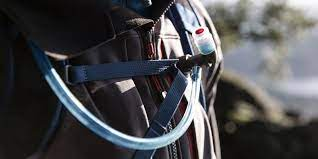
The compartment should be positioned as close to the back panel as possible, centered vertically between the shoulder blades. This keeps the water weight near the spine and improves load balance.
Insulation: Keeping Water at the Right Temperature
For brands targeting hot-climate or cold-weather markets, insulation is a critical differentiator. Without insulation, water in the bladder and tube can reach 40C+ in direct sunlight or freeze in sub-zero conditions.
Insulation Materials Comparison
| Material | Thickness | Thermal Resistance | Weight | Cost/unit | Best For |
|---|---|---|---|---|---|
| PE foam (closed-cell) | 3-5 mm | Moderate | Light | $0.20-0.40 | Budget hiking packs |
| Neoprene | 3-5 mm | Good | Medium | $0.50-0.90 | Mid-range hiking, cycling |
| EVA foam + reflective film | 5-8 mm | High | Medium | $0.70-1.20 | Premium hiking, desert use |
| Aerogel blanket | 2-3 mm | Very High | Very Light | $2.00-4.00 | Ultra-premium, military |
Where Insulation Is Applied
- Bladder compartment wall: An insulation layer between the compartment lining and the back panel slows heat transfer to/from the bladder.
- Tube insulation sleeve: A neoprene or PE foam sleeve (8-12 mm ID) over the drinking tube prevents the water in the tube from heating up or freezing. This is the single most effective insulation component.
- Combined system: Premium packs insulate both the bladder compartment and the tube sleeve, maintaining water temperature within 5C of ambient for 4+ hours in direct sun.
Tube Routing and Valve Systems: Engineering Specifications
Drinking Tube Specifications
| Specification | Standard | Premium |
|---|---|---|
| Inner diameter | 8 mm | 10-12 mm (high-flow) |
| Outer diameter | 11 mm | 14 mm |
| Material | PE (polyethylene) | Food-grade silicone or TPU |
| Length | 900-1000 mm | 1000-1100 mm (adjustable) |
| Temperature range | -10C to 60C | -20C to 80C |
| Taste/odor | Slight initial plastic taste | Taste-neutral from first use |
Tube Routing Methods
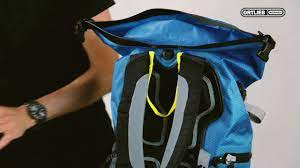
- Rear panel exit: The tube exits through a reinforced grommet at the top of the back panel, then routes over the shoulder. Simplest design, most common on entry-level packs.
- Shoulder strap channel: A fabric or elastic loop on the shoulder strap holds the tube in position near the wearer mouth. Prevents the tube from swinging during movement. Adds $0.15-0.30/unit.
- Dual-side routing: The pack has tube exit ports on both sides, allowing the user to choose left or right routing. Adds $0.30-0.60/unit.
- Magnetic clip routing: A magnet on the shoulder strap holds the bite valve in position when not drinking. The most premium option. Adds $0.50-1.00/unit.
Valve Types and Standards
| Valve Type | Mechanism | Leak Prevention | Unit Cost | Market Segment |
|---|---|---|---|---|
| Bite valve (standard) | Silicone valve opens when bitten | Self-sealing when released | $0.20-0.40 | All segments; industry standard |
| Bite valve with dust cover | Bite + protective cover | Prevents dirt ingress | $0.30-0.60 | Mid-range hiking |
| Push-pull valve | Manual open/close mechanism | Mechanical seal | $0.40-0.70 | Cycling, casual use |
| Shut-off valve | Rotary on/off switch | Positive closure | $0.50-0.80 | Premium hiking, tactical |
| Magnetic quick-disconnect | Magnetic coupling for tube removal | Auto-seals on disconnect | $1.00-2.00 | Premium, tactical, trail running |
Activity-Specific Design Variations
Hydration packs for different activities have fundamentally different design requirements. OEM brands must match the pack architecture to the target activity:
Trail Running Hydration Vests
- Capacity: 5-12L total pack; 1-1.5L bladder (or dual front soft flasks 500 mL each)
- Fit: Body-mapping, compression-fit design; must not bounce during running
- Weight: 150-300g (empty)
- Key features: Front chest pockets for phone/gels, reflective elements, mesh breathable fabric
Cycling Hydration Packs
- Capacity: 8-15L total; 2-3L bladder
- Fit: Lower profile, wider base to accommodate forward-leaning riding position
- Key features: Tool compartment, helmet attachment, high-visibility elements, ventilation back panel
- Manufacturing note: Cycling packs require abrasion-resistant bottom panels and often integrate bungee cord systems for helmet/jacket storage.
Hiking/Trekking Hydration Packs
- Capacity: 15-25L total; 2-3L bladder
- Fit: Padded hip belt, adjustable sternum strap, ventilated back panel
- Key features: Multiple compartments, trekking pole attachment, rain cover, hiking-specific organization
Skiing/Snowboarding Hydration Packs
- Capacity: 10-18L total; 1.5-2L bladder
- Key features: Insulated tube (prevents freezing), ski/snowboard attachment straps, goggle pocket, avalanche safety pocket
- Special requirement: Bladder must function at -10C to -20C. TPU bladders remain flexible at these temperatures; PE bladders become brittle.
Tactical/Military Hydration Packs
- Capacity: 15-30L total; 2-3L bladder
- Key features: MOLLE webbing for modular pouches, reinforced stitching, camouflage or coyote color options
- Manufacturing note: Uses heavier fabrics (500D-1000D Cordura nylon) and mil-spec hardware.

Bladder Materials and Compliance
Bladder Material Options
| Material | Thickness | BPA-Free | Taste-Neutral | Temperature Range | Cost/bladder |
|---|---|---|---|---|---|
| PE (polyethylene) | 0.3-0.4 mm | Yes | Moderate | -10C to 60C | $0.80-1.50 |
| TPU (thermoplastic polyurethane) | 0.3-0.4 mm | Yes | High | -20C to 80C | $1.50-3.00 |
| PEVA | 0.3-0.5 mm | Yes | Good | -15C to 60C | $1.00-2.00 |
| Silicone | 0.5-0.8 mm | Yes | Excellent | -40C to 200C | $3.00-6.00 |
Regulatory Compliance
- FDA 21 CFR 177.2600 (USA) – Repeated use food-contact surfaces.
- EU No 10/2011 (Europe) – Plastic food-contact materials.
- LFGB (Germany) – Stricter than EU standard; required by some German retailers.
- BPA-free certification – Expected by all major retailers.
- REACH/RoHS – For the pack fabric and hardware; required for EU market.
At Junyuan Bags, all hydration bladders are sourced from certified suppliers with FDA and EU food-contact compliance documentation available for each production batch.
Quality Control and Testing Protocols
Bladder Testing
- Pressure test: Inflate to 0.3 bar, submerge in water, check for bubbles. Must hold for 30 seconds without leaking.
- Burst test: Inflate to 1.0 bar; bladder should not burst (destructive test, AQL 2.5).
- Leak test (valve): Fill bladder, invert, apply 0.5 bar pressure. Zero leakage at valve when closed.
- Flow rate test: Must deliver 200+ mL/min with bite valve open.
- Flex test: Fill bladder, compress and release 1,000 cycles. Check for seam separation.
Pack Testing
- Load test: Fill bladder to capacity, add gear to rated weight, lift/drop 50 times.
- Tube routing test: Route tube through all positions, bite valve test 500 cycles.
- Bladder insertion/removal test: Insert and remove full bladder 100 times.

Cost Structure and Manufacturing Pricing
| Component | Budget (2L Hiking Pack) | Premium (2L Trail Running Vest) |
|---|---|---|
| Pack body fabric + sewing | $4.00-6.00 | $6.00-10.00 |
| Bladder (TPU 2L) | $1.50-2.50 | $2.00-3.50 |
| Tube + valve | $0.50-0.80 | $0.80-1.50 |
| Insulation (tube sleeve) | – | $0.40-0.70 |
| Shoulder strap system | $0.80-1.20 | $1.50-2.50 |
| Hardware | $0.60-1.00 | $0.80-1.50 |
| Labor | $2.00-3.00 | $3.00-5.00 |
| Packaging | $0.30-0.50 | $0.50-0.80 |
| Total FOB cost | $9.70-15.00 | $15.00-25.50 |
For detailed cost breakdowns, see our bag manufacturing cost guide.
OEM/ODM Development at Junyuan Bags
Junyuan Bags is a professional backpack manufacturer located in Quanzhou, Fujian, China. Our affiliated partner factory with the production team specializes in OEM and ODM manufacturing of outdoor and specialty bags.

- MOQ: 500 pieces per style per color
- Sampling: 6-10 days for first sample
- Production lead time: 35-50 days after sample approval
- Bladder options: 1L, 1.5L, 2L, 2.5L, 3L in TPU, PE, or PEVA
- Compliance: FDA 21 CFR 177.2600, EU No 10/2011, BPA-free certification
Our related product categories include fishing backpacks, USB charging backpacks, hiking backpacks, tool bags, and waterproof backpacks.
OEM Development Checklist for Hydration Packs
Before starting a hydration pack OEM/ODM project, buyers should define the product specifications clearly. Use this checklist to ensure all critical decisions are made before sampling begins:
| Design Decision | Why It Matters | Options |
|---|---|---|
| Target bladder size | Determines compartment dimensions and pack volume | 1L, 1.5L, 2L, 2.5L, 3L |
| Bladder included or compatible-only | Affects sourcing, compliance, and packaging | Included (higher cost, more compliance) or compatible-only (lower cost) |
| Pack capacity (total volume) | Determines overall size and market positioning | 5-8L (running), 8-15L (cycling), 15-25L (hiking), 25-35L (tactical) |
| Tube routing direction | Affects user comfort and equipment compatibility | Left shoulder, right shoulder, or dual-side |
| Insulation required | Important for hot or cold outdoor environments | None, tube-only, or full system (bladder + tube) |
| Fabric denier and type | Controls durability, cost, and weight | 210D (ultralight), 420D (standard), 600D (heavy-duty) |
| Back panel ventilation | Improves comfort during warm-weather use | Foam panel, mesh spacer, or suspended mesh |
| Compression straps needed | Helps stabilize the bladder and reduce bounce | Side straps, top strap, or both |
| Color/camo options | Affects market positioning and MOQ planning | Standard colors (black, grey, blue) or custom (higher MOQ) |
| Target certification | Reduces leakage, compliance, and market access issues | FDA, EU 10/2011, BPA-free |
For OEM/ODM projects, the best approach is to confirm the target activity first, then build the structure around that activity. A tactical hydration pack for patrol use needs MOLLE and reinforced stitching. A hydration daypack for hiking needs more storage and better back ventilation. A compact hydration carrier for trail running needs a flatter profile and simpler access.
Comparison: Hydration Pack vs. Standard Water Bottle Backpack
Many buyers ask about the difference between a hydration pack and a standard backpack with a water bottle pocket. Here is a technical comparison:
| Feature | Hydration Pack | Standard Pack + Bottle |
|---|---|---|
| Drinking method | Hands-free via bite valve | Must stop, open pocket, unscrew cap |
| Water capacity | 1-3L in bladder + optional bottle pockets | 500mL-1L per bottle pocket |
| Weight distribution | Water weight centered against back | Water weight offset to one side |
| Hydration frequency | Higher (easy access encourages drinking) | Lower (inconvenient access) |
| Manufacturing complexity | Higher (bladder compartment, tube routing, valve) | Standard |
| Retail price point | $30-120+ | $20-60 |
| Target user | Athletes, hikers, tactical users | General outdoor, commuting |
For brands looking to serve the active outdoor market, hydration packs offer significantly higher margins and stronger customer loyalty compared to standard packs with bottle pockets. The technical manufacturing requirements create a higher barrier to entry, which reduces competition from low-quality manufacturers.
Material Sourcing for Hydration Packs
All key materials for hydration packs can be sourced from the Fujian/Guangdong supply chain:
- Bladder (TPU/PE/PEVA): Sourced from specialized plastic film manufacturers in Fujian. Quanzhou has several certified bladder producers within 50 km of our affiliated partner factory.
- Drinking tubes: PE or silicone tubes from medical-grade extrusion facilities. Available in custom lengths and colors.
- Bite valves: Silicone injection-molded valves from Guangdong-based specialty manufacturers.
- Pack fabric: 210D-600D nylon/polyester from major Fujian textile mills. Available with PU coating, DWR treatment, or TPU lamination.
- Back panel mesh: 3D air mesh or suspended mesh from Zhejiang suppliers.
This concentrated supply chain means shorter lead times (7-10 days for material procurement vs. 15-20 days from other regions) and lower logistics costs for OEM clients.
Hydration pack, hydration vest or running belt: choosing the form before the specification
A hydration pack is not the only way to carry fluid, and the three forms are specified differently enough that choosing the wrong one costs a full sample cycle. A hydration pack carries the load on the back with shoulder straps and a hip belt, usually 10 to 30 litres. A hydration vest is a body-hugging harness worn against the torso, usually 2 to 12 litres, with front soft-flask pockets. A running belt sits at the waist and carries under 2 litres.
| Form | Typical capacity | Best for | What decides the specification |
|---|---|---|---|
| Hydration pack | 10–30 L | Hiking, cycling, tactical, long trail days | Bladder compartment, tube routing, back ventilation, hip-belt load transfer |
| Hydration vest | 2–12 L | Race day, ultra running, fast packing | Harness geometry, chest-circumference sizing, bounce control, front flask access |
| Running belt | 0.3–2 L | Road 5K to half marathon | Elastic modulus, lumbar pocket placement, buckle position |
| Bottle-pocket pack | 15–35 L | Commuting, general outdoor, travel | Pocket depth and retention, no bladder compartment or tube port |
The ten-litre mark is roughly where a vest becomes a pack, and the HS classification follows the form: a hydration pack, vest and belt are all bags under HS 4202, while a garment described as a “running vest” may fall under HS 61 or 62 and route an enquiry to an apparel factory. Buyers who need the harness specification in detail should read the custom hydration vest manufacturing page, which covers chest sizing, bounce control and soft-flask versus bladder selection.
Frequently asked questions about custom hydration packs
Q1. What is the minimum order quantity for custom hydration packs?
The MOQ is 500 pieces per style per colour. For private label orders that use our standard bladder designs with your own pack design, the MOQ is also 500 pieces, and the minimum applies per colourway rather than per total order.
Q2. What bladder materials are food-safe and BPA-free?
All our hydration bladders are made from BPA-free materials: TPU, PE or PEVA. All comply with FDA 21 CFR 177.2600 (US) and EU No 10/2011 (Europe). TPU is the premium choice with the best taste neutrality and the widest temperature resistance.
Q3. What bladder capacities can you build?
We offer 1 L, 1.5 L, 2 L, 2.5 L and 3 L bladders in TPU, PE or PEVA, matched to a compartment that keeps the water weight close to the wearer’s back. The compartment dimensions change with the bladder size, so capacity is decided before the pack pattern is drawn.
Q4. What is the difference between a bite valve and a magnetic valve?
A bite valve opens when the user bites down on the silicone nozzle and self-seals when released, at roughly USD 0.20–0.40 per unit. A magnetic valve uses a magnetic coupling to hold the drinking tube to the shoulder strap, at roughly USD 1.00–2.00 per unit, and is preferred on premium trail running and tactical packs.
Q5. Can you make insulated hydration packs for cold weather use?
Yes. For cold weather we use low-temperature TPU bladders that stay flexible to −20 °C, insulated neoprene tube sleeves of 3–5 mm, and optional bladder-compartment insulation so the water stays drinkable rather than slushing.
Q6. What testing do you perform on hydration bladders?
100% of bladders undergo air-pressure leak testing. Random samples undergo burst testing, flex testing, flow-rate testing and taste/odour testing, sampled to AQL 2.5, and full test reports are available with each shipment.
Q7. Can I include a branded bladder with my custom hydration pack?
Yes. Custom bladder printing requires a minimum of 500 pieces for the tooling. Below that threshold we use our standard bladder with a custom printed sleeve or label, which keeps branding on-pack without a bladder tooling cost.
Q8. How do hydration pack costs compare to standard backpacks?
A hydration pack costs roughly USD 3–8 more to manufacture than an equivalent standard backpack, driven by the bladder compartment, tube routing and valve. It commands a USD 15–30 retail premium, which is why the category carries a higher margin and a higher technical barrier to entry.
Q9. How long do samples and bulk production take?
A first sample is ready in about 6–10 days from design approval, and bulk production runs 35–50 days after sample approval, inspected to AQL 2.5 with a 12-month warranty against manufacturing defect.
Q10. What is the difference between a hydration pack and a hydration vest?
A hydration pack is carried on the back with shoulder straps, a structured back panel and a hip belt, usually 10 to 30 litres. A hydration vest is a body-hugging harness worn against the torso, usually 2 to 12 litres, with front soft-flask pockets and twin sternum straps. The 10-litre mark is roughly where one becomes the other. Full detail sits on our hydration vest manufacturing page.
Q11. Should I develop a hydration pack or a running belt for a road-running line?
For road distances up to a half marathon, a running belt under 2 litres is the correct product: the fluid and phone load does not justify a harness, and a belt is cheaper to tool and faster to sample. Above three hours of running the specification moves to a vest. Our custom running bag manufacturing page sets out the capacity bands for each distance.
Q12. What pack capacity should I choose for running, cycling, hiking and tactical use?
Running packs sit at 5–8 litres, cycling at 8–15 litres, hiking at 15–25 litres and tactical at 25–35 litres. Volume, not fluid capacity, is what separates these bands: mandatory kit and layers drive the specification once the run or hike passes a few hours.
Q13. What fabric denier should a hydration pack use?
210D for ultralight running and cycling packs, 420D for standard hiking and everyday outdoor packs, and 600D for heavy-duty and tactical builds. A higher denier on a small running pack adds weight with no durability benefit at that load, and a lower denier on a tactical pack tears in a season.
Q14. Why does tube routing direction matter, and can it be changed?
Tube routing decides whether the drinker can reach the bite valve without stopping, and it is fixed by port placement on the shoulder strap. Left shoulder, right shoulder and dual-side routing are all available, and the choice is locked on the pre-production sample because it changes the strap pattern rather than just the trim.
Start Your Custom Hydration Pack Project
Whether you are launching a trail running brand or expanding an outdoor product line, Junyuan Bags provides complete OEM/ODM hydration pack manufacturing with food-safe bladders, tested components and competitive pricing. Send the target activity, the bladder size and the target retail price, and the first response is a specification rather than a question list.
Contact us today:
- Email: [email protected]
- WhatsApp: +86 17750020688
- Base: Quanzhou, Fujian, China — FOB Xiamen
- MOQ: 500 pcs per style and colour
- Sampling: 6–10 business days · Bulk: 35–50 days
Related manufacturing guides: Custom Bag OEM/ODM | Hydration Vests | Running Bags | Outdoor Backpacks | Hiking Backpacks | Waterproof Backpack Guide | Attachment Systems