How to Build a Backpack Brand from Scratch: OEM Manufacturing, Private Label & Market Entry Guide (2026)
Starting a backpack brand in 2026 is one of the most accessible yet complex ventures in the consumer goods space. The global backpack market is projected to exceed $25 billion by 2028, driven by demand from outdoor recreation, corporate commuting, e-commerce sellers, and fashion-forward consumers. But between concept sketches and first shipment lies a labyrinth of manufacturing decisions, material sourcing, quality control standards, and brand identity development that can make or break your launch.
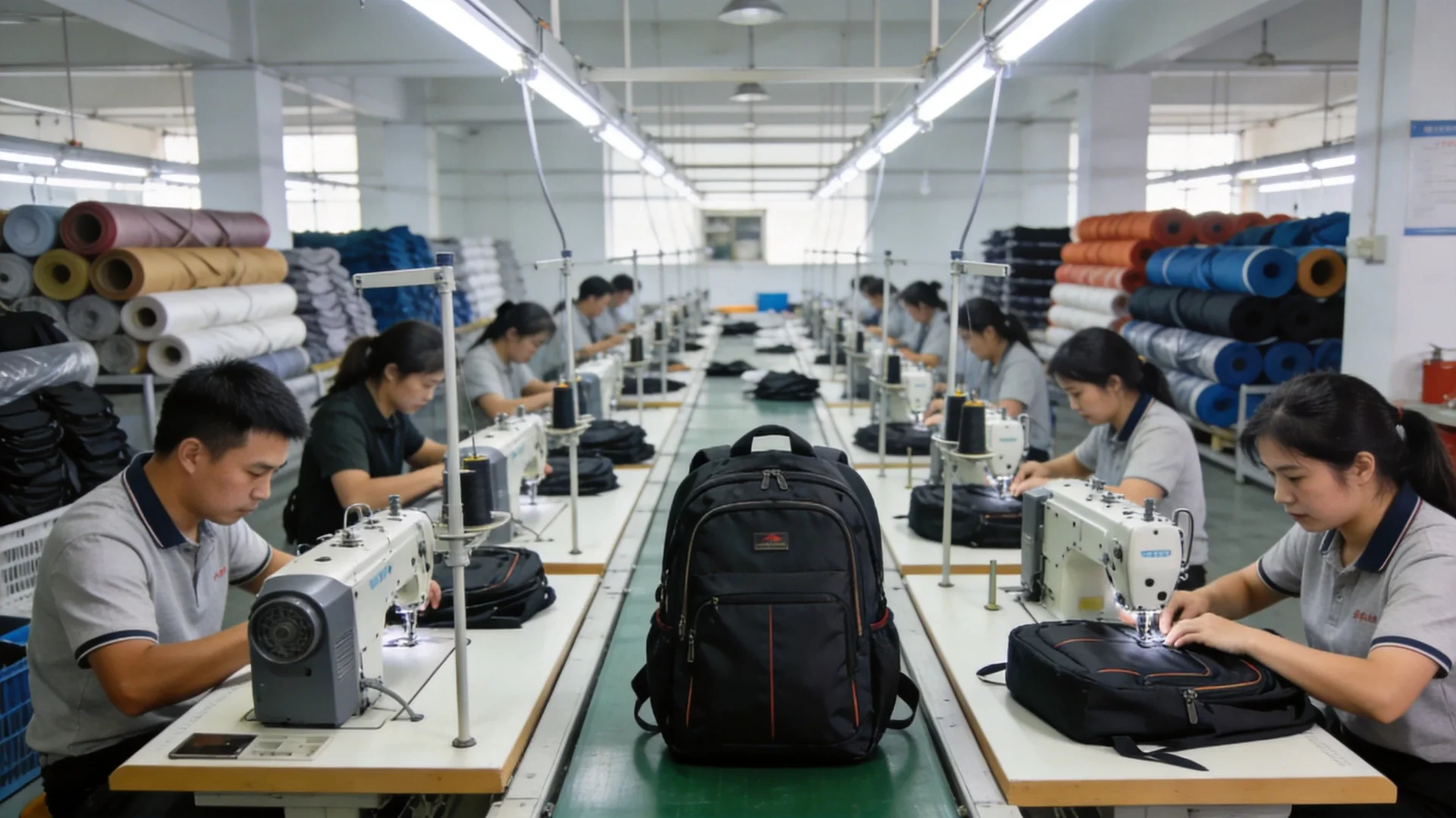
At JUNYUAN Bags, we drawn on over a decade of expertise guiding brands from concept to market. Based in Quanzhou, Fujian — one of China’s premier bag manufacturing hubs — and shipping FOB Xiamen port, we have helped hundreds of entrepreneurs, Amazon sellers, and established retailers build successful backpack lines. This guide distills everything we have learned into a comprehensive roadmap for building your backpack brand from zero.
Whether you are planning to launch a private label backpack brand, exploring OEM vs ODM supplier models, or simply trying to understand how bag manufacturing costs work, this guide will walk you through every critical step.
Step 1: Define Your Market Position and Brand Identity
Before you contact a single manufacturer or order any fabric swatches, you need crystal clarity on where your brand fits in the market. The backpack industry is vast, and successful brands thrive by owning a specific niche rather than competing across all segments simultaneously.
Outdoor & Hiking Segment
The outdoor backpack segment demands technical performance: waterproof fabrics, ergonomic suspension systems, hydration compatibility, and durable hardware. Brands in this space compete on weight-to-capacity ratios and weather resistance. If you are targeting this market, you will need a manufacturer experienced in selecting the right materials — typically 210D to 420D ripstop nylon with DWR coatings, YKK zippers, and aluminum or Delrin frame components. Consider how sustainable materials are reshaping consumer expectations in outdoor gear.
Business & Commuter Segment
Commuter backpacks prioritize organization, laptop protection, and professional aesthetics. This segment is booming with remote and hybrid work trends. Key features include padded 15.6-inch laptop sleeves, RFID-blocking pockets, USB charging pass-throughs, and water-resistant zippers. The evolution of business carry solutions shows that modern professionals want backpacks that transition seamlessly from office to gym to travel. Design language here leans toward minimalist, structured silhouettes with premium materials like ballistic nylon or PU-coated polyester.
Student & School Segment
School backpacks represent enormous volume with relatively lower price points. Success in this segment requires balancing cost efficiency with durability. Parents want bags that survive a full academic year; students want bags that look cool. Trend-driven elements like current customization trends — patch attachments, interchangeable panels, bold colorways — can differentiate your product. The MOQ dynamics are favorable here: simpler designs with fewer compartments allow higher volumes at lower unit costs.
Fashion & Lifestyle Segment
Fashion backpacks are where margins are highest but brand identity matters most. In this segment, you are not selling a bag — you are selling a lifestyle. Materials, hardware finish, brand storytelling, and packaging all contribute to perceived value. Many fashion brands start with custom hardware and branding elements — embossed leather patches, branded zipper pulls, custom woven labels — to establish premium positioning without requiring complex technical features.
Step 2: Plan Your Product Line Architecture
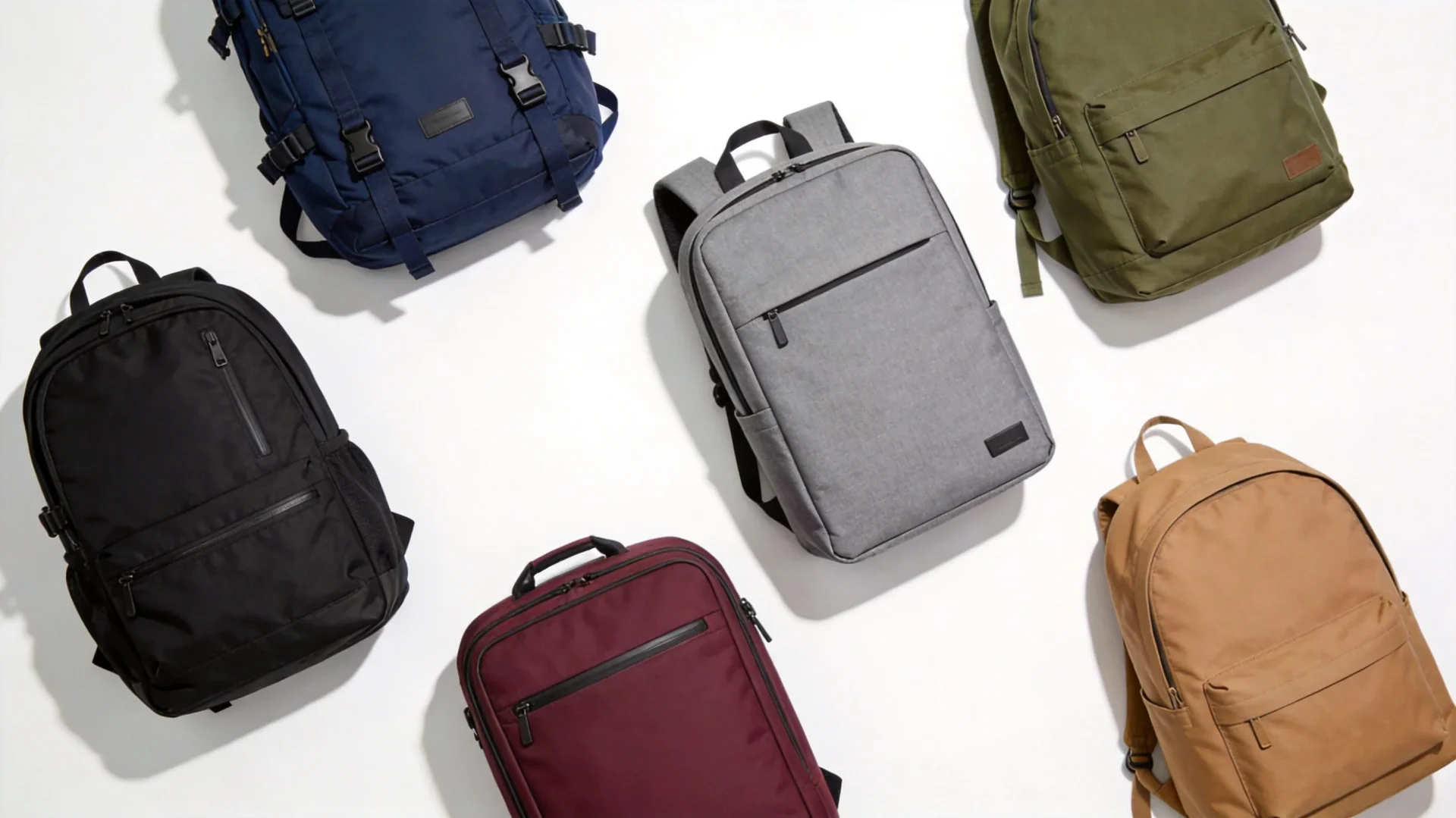
A smart product line follows a “hero + seasonal + limited” architecture that balances cash flow stability with marketing momentum.
Core Products (Hero Line)
Your core line consists of 2-4 SKUs that define your brand identity and generate consistent revenue year-round. These are the backpacks that appear in your primary marketing, dominate your Amazon listings, and anchor your retail partnerships. Core products should have:
- Timeless designs that do not feel dated after one season
- Proven material combinations with established supply chains
- Strong unit economics with 40-60% gross margins at retail
- Multiple colorways from the same pattern to maximize manufacturing efficiency
Seasonal Products
Seasonal releases create urgency and give your brand regular touchpoints with consumers. For backpacks, natural seasonal moments include back-to-school (August), holiday gifting (November), and spring travel (March). Understanding how to plan seasonal production timelines is critical — you need to finalize designs at least 6 months before your target launch date to account for sampling, revision, production, and shipping.
Limited Editions & Collaborations
Limited runs with artists, influencers, or complementary brands generate buzz and social media content. The key is keeping these small enough to minimize inventory risk while large enough to create genuine exclusivity. Many DTC brands use Kickstarter or crowdfunding platforms to validate limited-edition designs before committing to production. Smart backpack design choices can significantly boost crowdfunding performance.
| Product Tier | SKU Count | Launch Frequency | MOQ Range | Margin Target |
|---|---|---|---|---|
| Core Line | 2-4 | Year-round | 500-2000 per SKU | 45-60% |
| Seasonal | 1-2 | 2-4x/year | 300-1000 per SKU | 50-65% |
| Limited Edition | 1 | 1-2x/year | 100-500 per SKU | 55-70% |
Step 3: Choose Your Manufacturing Model — OEM, ODM, or Private Label
One of the most critical decisions you will make is which manufacturing model to adopt. Each has distinct implications for cost, timeline, intellectual property, and brand differentiation.
OEM (Original Equipment Manufacturing)
In OEM, you provide complete designs, tech packs, and specifications, and the factory produces exactly what you specify. You own the design IP. This model offers maximum differentiation but requires the most upfront investment in design and development. Ideal for brands with in-house designers or those who have developed custom bag designs through professional services.
ODM (Original Design Manufacturing)
With ODM, the factory provides existing designs that you customize with your branding, materials, and minor modifications. This is faster and cheaper but limits uniqueness. Many successful Amazon FBA sellers start with ODM to validate market demand before investing in custom OEM designs. Understanding the cost and lead time differences between OEM and ODM helps you make an informed choice for your situation.
Private Label
Private label is the simplest entry point: you select a factory’s existing product and add your logo and branding. The private label backpack process is ideal for e-commerce sellers who want to build a brand quickly without design expertise. While margins are lower and differentiation is limited, it allows you to test market response with minimal upfront investment.
Step 4: Design Development — From Sketch to Production
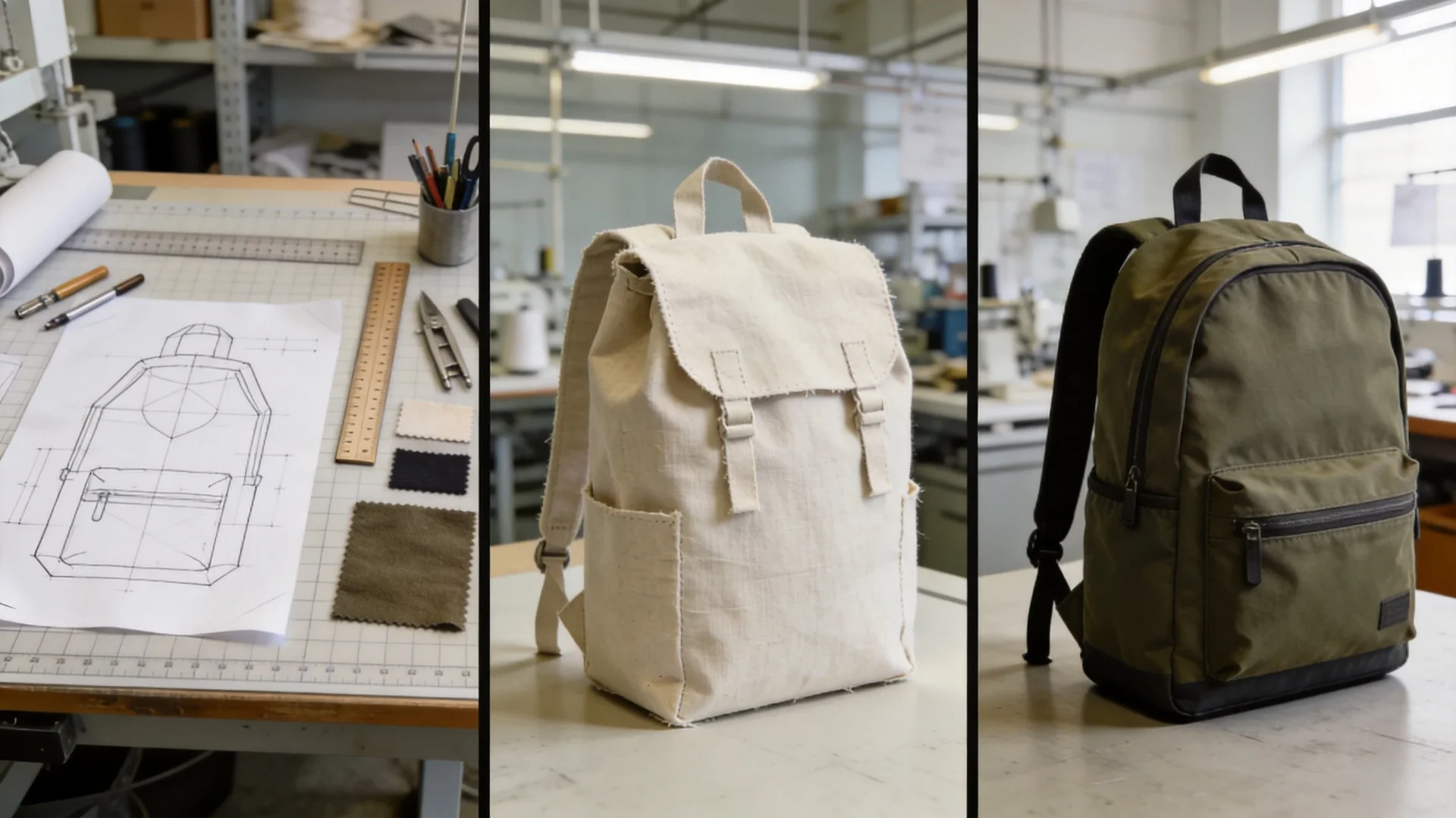
The design development phase transforms your concept into a manufacturing-ready product. This process typically takes 4-8 weeks and involves multiple rounds of sampling.
Initial Design Brief
Your design brief should include target market, intended use case, capacity requirements, material preferences, color palette, branding placement, and reference images or competitor products. The more specific you are, the more accurate the first sample will be. Preparing proper artwork and specifications upfront saves significant time and money in the sampling process.
Pattern Making
Modern bag manufacturing uses digital pattern creation software to generate precise cutting templates. Pattern accuracy directly impacts material yield, assembly efficiency, and final product quality. At JUNYUAN, our pattern engineers use CAD systems optimized for bag construction, ensuring every panel, gusset, and strap attachment point is precisely calculated.
First Sample (Proto Sample)
The first prototype is made with available materials that match your specifications as closely as possible. It is primarily for evaluating proportions, functionality, and overall design direction. Expect to receive the first sample within 7-15 working days after design confirmation.
Revision Samples
Based on your feedback, 1-3 rounds of revisions refine fit, material selection, hardware choices, and construction details. Each revision round takes approximately 7-10 days. Fast sampling capabilities are essential if you are working against a market launch deadline.
Pre-Production (PP) Sample
The PP sample is the final approval piece, made with actual production materials and construction methods. Once you approve the PP sample, mass production begins. This sample serves as the quality benchmark — every unit in the production run should match it.
Understanding the Complete Sample Development Process
A comprehensive sample development workflow ensures nothing is lost between design intent and production reality. JUNYUAN maintains detailed sample records for every project, so re-orders and modifications months or years later can replicate the exact specifications.
Step 5: Material Selection and Supply Chain Management
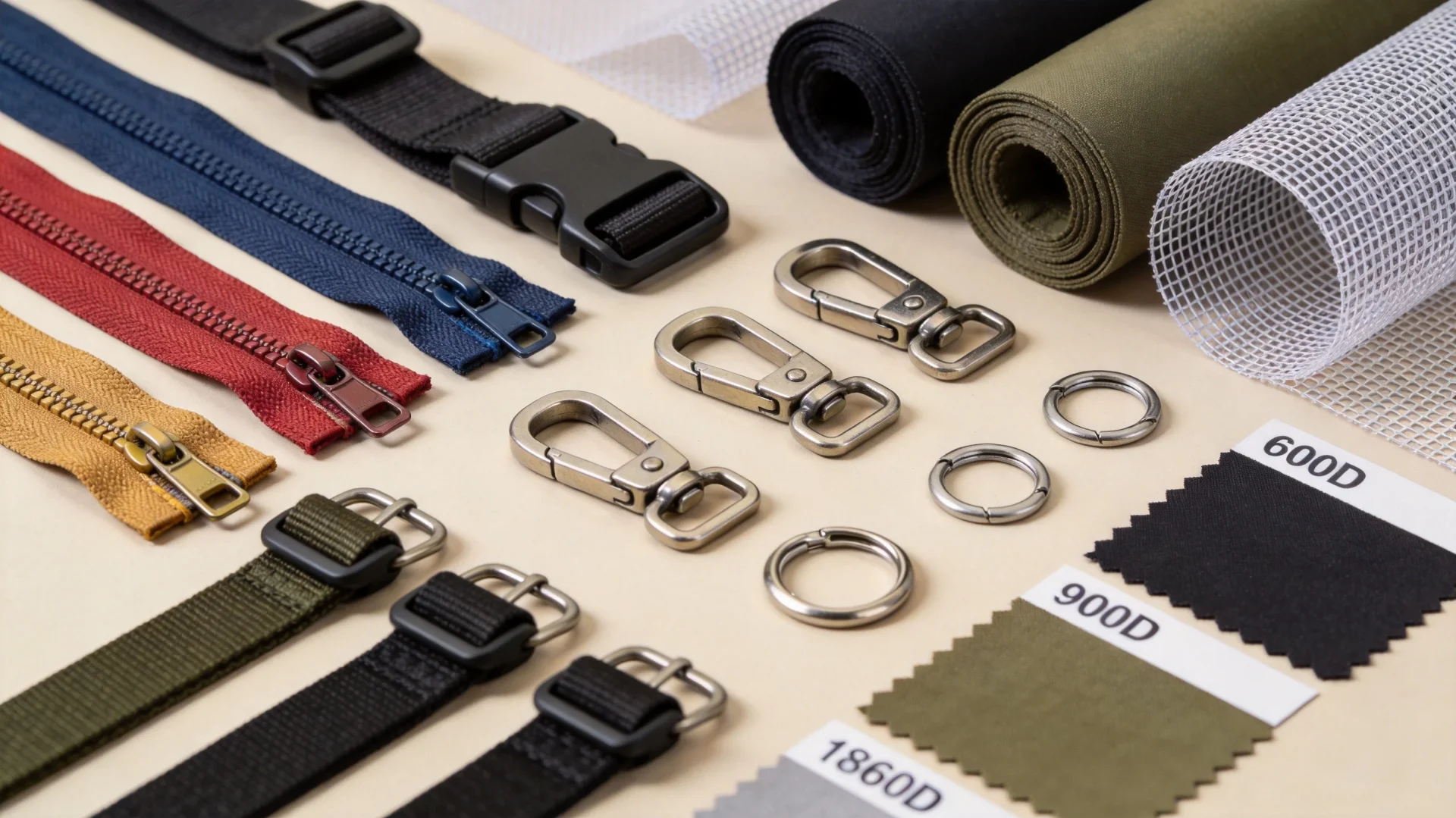
Material selection is arguably the single most impactful decision in backpack manufacturing. It affects cost, durability, weight, aesthetics, and regulatory compliance.
Primary Fabrics
| Fabric | Denier Range | Best For | Cost Index | Key Properties |
|---|---|---|---|---|
| Nylon (Cordura) | 210D – 1680D | Outdoor, tactical | $$$ | Superior abrasion resistance, lightweight |
| Polyester (600D) | 300D – 1680D | School, commuter | $$ | UV resistant, cost-effective, good durability |
| RPET Recycled | 300D – 900D | Eco-conscious brands | $$ | Sustainable, comparable performance to virgin polyester |
| Canvas (Cotton/Poly) | 8oz – 16oz | Fashion, lifestyle | $$ | Natural feel, vintage aesthetic, heavier weight |
| Ripstop | 30D – 210D | Ultralight outdoor | $$$ | Tear-resistant grid pattern, extremely lightweight |
Each fabric category has important trade-offs. Our comprehensive material selection guide breaks down the technical specifications, testing standards, and sourcing considerations for each option.
Zippers and Hardware
Zippers are the most-used component in any backpack and the most common failure point. Specify branded zippers (YKK, SBS, or Woojin) for core products. Waterproof zipper engineering is critical for outdoor and commuter backpacks. For hardware — buckles, D-rings, sliders — Duraflex and WoojinMark are industry standards. Custom hardware branding options include embossed pulls, color-matched finishes, and logo-engraved sliders.
Sustainable Material Options
The demand for sustainable bag materials has accelerated dramatically. Beyond RPET recycled polyester, options now include recycled nylon (ECONYL), organic cotton canvas, hemp blends, and cornstarch-based coatings. Many European and North American buyers now require sustainability certifications, making this a competitive necessity rather than a differentiator.
Step 6: Brand Visual System Development
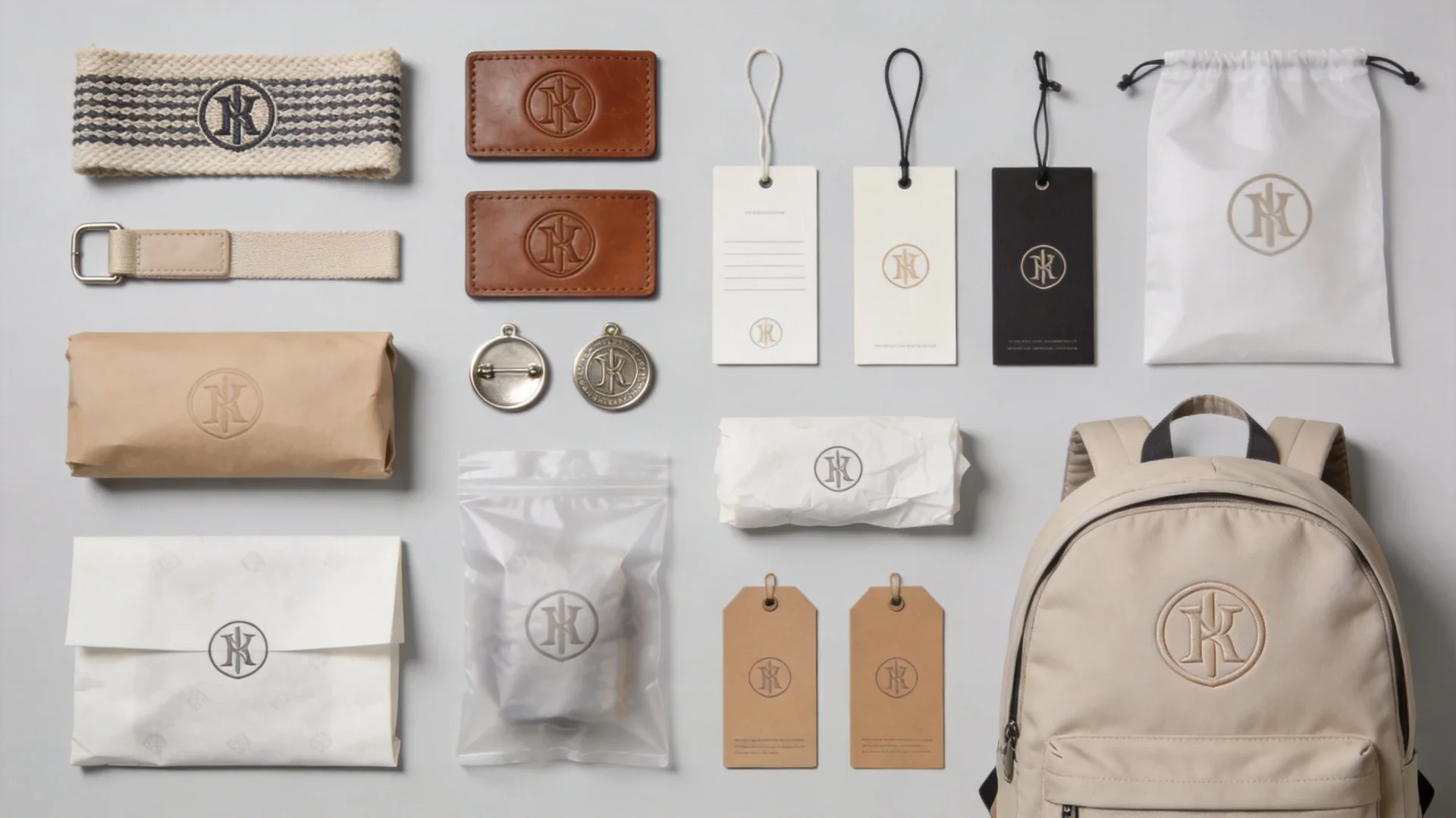
Your brand visual system is what transforms a generic backpack into a recognizable brand product. Every touchpoint should communicate your brand positioning consistently.
Logo Application Methods
- Embroidery: Classic, durable, works on most fabrics. Best for text-based logos. Higher cost but premium perception.
- Debossed/Embossed leather patches: Ideal for outdoor and fashion brands. Adds tactile dimension and perceived quality.
- Silicone labels: Modern, weatherproof, flexible. Popular in technical and sport backpacks.
- Metal badges: Premium positioning. Zinc alloy or stainless steel with enamel fills.
- Screen printing: Cost-effective for larger designs, photographic elements, or gradient graphics.
- Woven labels: For interior branding, care instructions, and size labels.
Packaging and Unboxing Experience
In the DTC era, unboxing is marketing. Custom poly bags, branded tissue paper, thank-you cards, and product story inserts transform a commodity into an experience. Budget approximately $0.50-$2.00 per unit for premium packaging — this investment pays for itself in social media content and customer reviews.
Hang Tags and Care Labels
Hang tags communicate materials, features, and brand story at the point of sale. Care labels ensure regulatory compliance in your target markets. For US market products, ensure compliance with CPSIA and Prop 65 requirements. European markets require REACH compliance documentation.
Step 7: Manufacturing, MOQ, and Pricing Negotiation
Understanding MOQ Structure
Minimum Order Quantity is the most common barrier for new brands. Here is how MOQ actually works in backpack manufacturing:
| Order Volume | Typical MOQ | Price Position | Customization Level |
|---|---|---|---|
| Sample Order | 1-5 pieces | 5-10x production cost | Full design flexibility |
| Trial Order | 100-300 pieces | 1.5-3x production cost | Most customization available |
| Standard Order | 500-1000 pieces | Base production cost | Full customization |
| Volume Order | 2000+ pieces | 5-15% discount | Full customization + priority |
JUNYUAN Bags maintains a 500-piece MOQ for new customers, specifically to support emerging brands. Our MOQ strategies for small brands can help you navigate minimum requirements even with limited initial budgets.
Pricing Structure
Backpack pricing is determined by material costs (40-55% of total), labor (20-30%), overhead and profit margin (15-20%), and packaging/branding (5-10%). Understanding the complete cost breakdown helps you negotiate effectively and set accurate retail pricing. For reference, a quality 30L commuter backpack with 600D polyester, YKK zippers, and full custom branding typically costs $8-$15 FOB depending on order volume.
Lead Time Expectations
| Phase | Duration | Notes |
|---|---|---|
| Sample Development | 2-4 weeks | 1-3 rounds depending on complexity |
| PP Sample Approval | 1-2 weeks | Final confirmation before production |
| Mass Production | 30-45 days | Based on order quantity and complexity |
| Quality Inspection | 3-5 days | AQL 2.5 standard inspection |
| Shipping Preparation | 5-7 days | Packing, labeling, container loading |
Step 8: Quality Control and Compliance
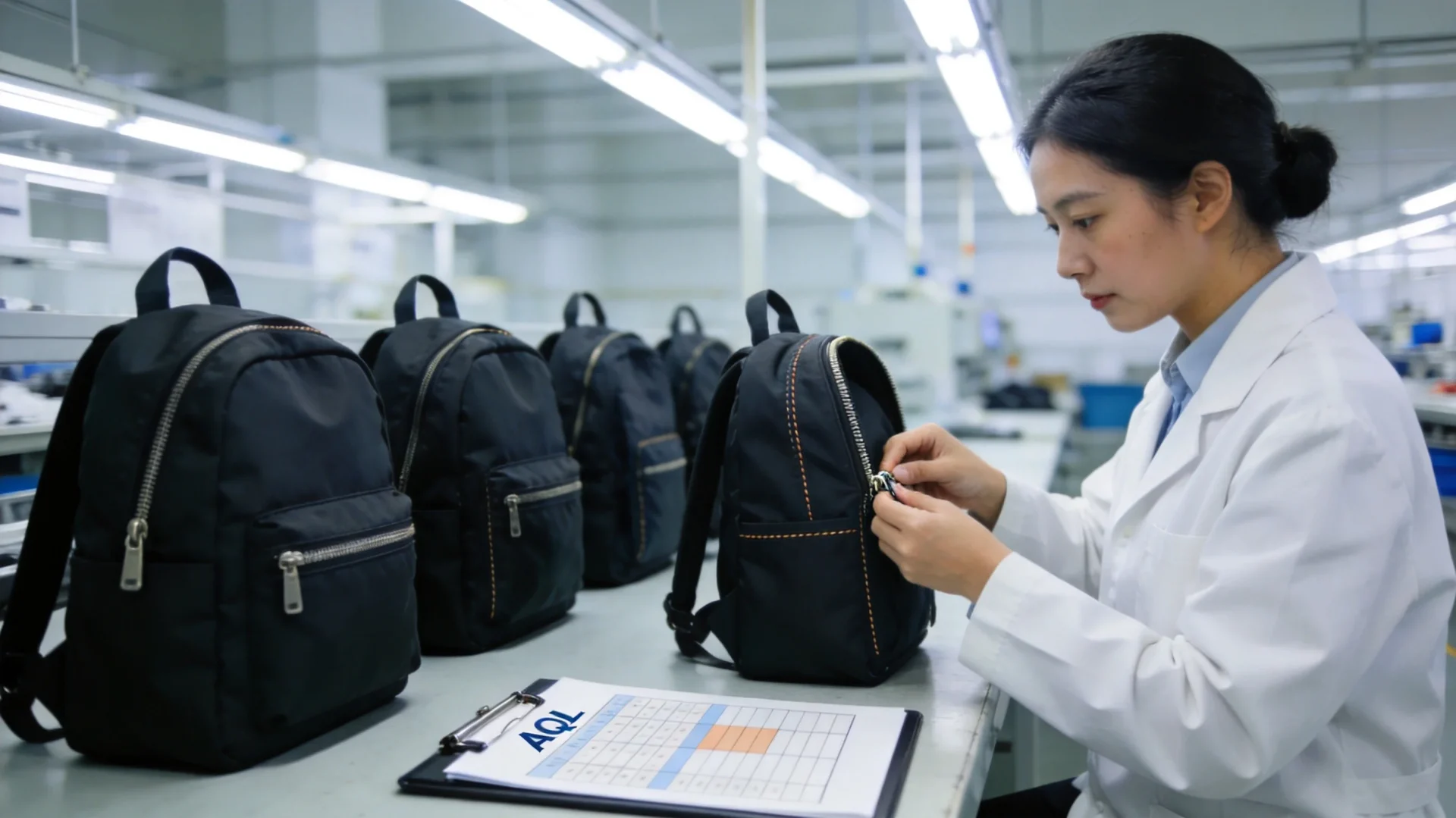
Quality control separates brands that thrive from brands that drown in returns and negative reviews. A robust QC framework should cover the entire production lifecycle, not just final inspection.
AQL Standards for Backpacks
The Acceptable Quality Level (AQL) framework defines the maximum number of defects allowed per batch. For backpacks, the industry standard is AQL 2.5 for major defects and AQL 4.0 for minor defects. Our comprehensive quality control framework details inspection checkpoints at each production stage.
Key Quality Checkpoints
- Incoming Material Inspection: Verify fabric weight, color fastness, zipper function, and hardware quality before cutting begins
- In-Process Checks: Monitor stitching density (minimum 8-10 stitches per inch), seam alignment, and pattern matching
- Final Random Inspection: Statistical sampling per AQL standards — typically 200 units sampled from a 3,000-unit batch
- Load Testing: Sample units tested at 2-3x rated capacity to verify strap and seam integrity
- Functional Testing: All zippers cycled 500 times, buckles tested to 50kg pull force, abrasion resistance verified
Factory Audits and Certifications
Before committing to a production partner, conduct a thorough factory audit. Key criteria include production capacity, quality management systems, social compliance records, and financial stability. Choosing the right bag manufacturer requires evaluating at least 10 different factors beyond price alone. JUNYUAN maintains certifications including BSCI, ISO 9001, and our facility undergoes regular third-party audits.
Regulatory Compliance
Different markets have different requirements. For the US, backpacks targeting children must comply with CPSIA lead and phthalate limits. California requires Prop 65 warning labels for products containing listed chemicals. For Europe, REACH regulation governs chemical substances. Our international compliance guide covers all major export markets. Understanding how to verify material quality at the sourcing stage prevents compliance failures downstream.
Step 9: Budget Planning — Startup Cost Estimates
Here is a realistic budget breakdown for launching a backpack brand with a 3-SKU core line, assuming OEM manufacturing with a 500-piece MOQ per SKU:
| Category | Low Estimate | High Estimate | Notes |
|---|---|---|---|
| Design & Development | $2,000 | $8,000 | Tech packs, patterns, 3D renders |
| Sampling (3 rounds) | $600 | $1,500 | Proto, revision, PP samples |
| First Production Run (1,500 units) | $12,000 | $22,500 | 500 units x 3 SKUs |
| Branding & Packaging | $1,500 | $4,000 | Labels, tags, poly bags, boxes |
| Shipping (FOB to destination) | $2,000 | $5,000 | Sea freight + customs |
| Marketing & Photography | $3,000 | $10,000 | Product photos, lifestyle shoots, ads |
| Total | $21,100 | $51,000 | Excluding ongoing operational costs |
Step 10: Why JUNYUAN Bags Is Your Ideal Manufacturing Partner
With over two decades of bag industry experience dating from 2004, JUNYUAN Bags offers a complete ecosystem for brands at every stage of growth. Here is what sets us apart:
- Full-Service OEM/ODM: From concept sketches to finished products, our in-house design and development team handles every stage. Visit our OEM/ODM service page for details.
- Low MOQ for Startups: 500-piece minimum orders allow emerging brands to launch without excessive inventory risk.
- Quanzhou Manufacturing Hub: Located in the heart of China’s bag manufacturing capital, we have direct access to the best material suppliers, zipper distributors, and hardware manufacturers. This translates to better pricing and faster sourcing.
- FOB Xiamen Shipping: Proximity to Xiamen port (one of China’s busiest container ports) means lower inland transportation costs and faster vessel access.
- Quality-First Culture: Every order undergoes multi-stage inspection with AQL 2.5 standards. We maintain detailed quality records for repeat orders.
- Registered Brand (KEEP PERFECT): Our own registered trademark demonstrates our commitment to brand-building expertise — expertise we share with our clients.
- Sustainable Manufacturing: We support RPET and sustainable material manufacturing to help brands meet growing eco-conscious consumer demand.
- Proven Track Record: From wholesale factory production to premium custom bag manufacturing, our portfolio spans every backpack segment.
Frequently Asked Questions
How much does it cost to start a backpack brand?
Realistically, $20,000-$50,000 for a proper launch including design, sampling, first production run (500+ units per SKU), branding, shipping, and marketing. You can start smaller with private label options at $5,000-$10,000, but custom OEM manufacturing requires the higher investment range.
What is the minimum order quantity for custom backpacks?
JUNYUAN Bags offers a 500-piece MOQ per style per color. This is specifically designed to support emerging brands and small businesses. For private label orders using existing designs, MOQ can be as low as 100-300 pieces depending on the model.
How long does it take to develop and produce a custom backpack?
From initial design brief to finished production, expect 8-14 weeks total: 2-4 weeks for sampling (including revisions), 1 week for PP sample approval, 4-6 weeks for mass production, and 1-2 weeks for quality inspection and shipping preparation.
What is the difference between OEM, ODM, and Private Label?
OEM means you provide the complete design and the factory manufactures it. ODM means the factory provides designs you can customize. Private Label means you select an existing product and add your branding. Each model offers different levels of customization, cost, and brand differentiation. See our detailed OEM vs ODM guide for more information.
Can I visit the JUNYUAN factory in Quanzhou?
Absolutely. We welcome factory visits from all clients and prospective partners. Our facility is located at C201-207, Huachuang Park, Tiyu Street, Huada Street, Fengze District, Quanzhou City, Fujian Province. We can arrange airport pickup from Quanzhou Jinjiang Airport or Xiamen Gaoqi Airport.
What certifications does JUNYUAN Bags hold?
We maintain BSCI social compliance certification, ISO 9001 quality management certification, and our products comply with REACH, CPSIA, and Prop 65 requirements. We regularly undergo third-party factory audits. Learn more about certifications for custom bag factories.
How do I ensure my backpack designs are protected?
We sign NDA (Non-Disclosure Agreement) and IP protection agreements with all clients before sharing design files. Your designs, patterns, and branding assets are strictly confidential. We never produce or sell your custom designs to other parties.
What materials are best for sustainable backpacks?
RPET (recycled PET from plastic bottles) is the most popular sustainable option with performance comparable to virgin polyester. Other options include recycled nylon (ECONYL), organic cotton, hemp blends, and cornstarch-based waterproof coatings. Our sustainable materials guide covers all options in detail.
Ready to Build Your Backpack Brand?
From concept to container, JUNYUAN Bags is your manufacturing partner for every step of the journey. led by a founder with bag industry experience dating from 2004, 500-piece MOQ, and FOB Xiamen shipping, we make it possible to launch your brand with confidence.