
What a custom running bag is — and which of the four forms you actually need
A custom running bag is not one product. It is an umbrella term that covers four structurally different carriers, and the first sourcing mistake is ordering the wrong one. Capacity, carry position and strap architecture decide the form before fabric or colour is discussed.
Capacity is the fastest filter: under 90 minutes of running needs a handheld or a belt under 4 litres; 1 to 3 hours needs 4 to 6 litres; anything past 3 hours needs 8 to 12 litres; and beyond 6 hours the product stops being a vest and becomes a small pack. Buyers who skip that calculation end up with an over-built belt or an under-built vest, and both are returned at retail.
| Form | Typical capacity | Best for | Key construction |
|---|---|---|---|
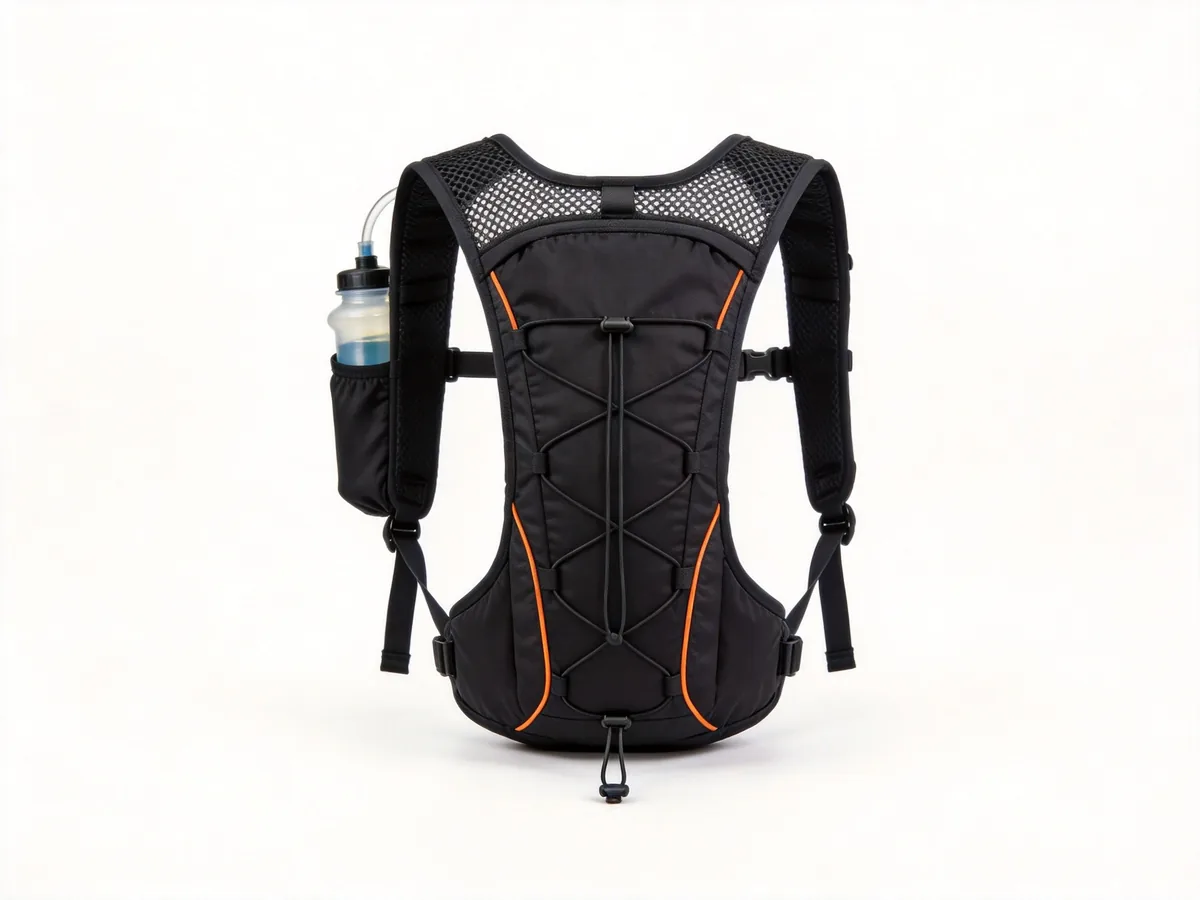
| Hydration running backpack | 8–20 L | Trail and long distance with gear | Lightweight shell, back bladder sleeve, ventilated back panel, chest buckle, bungee storage |
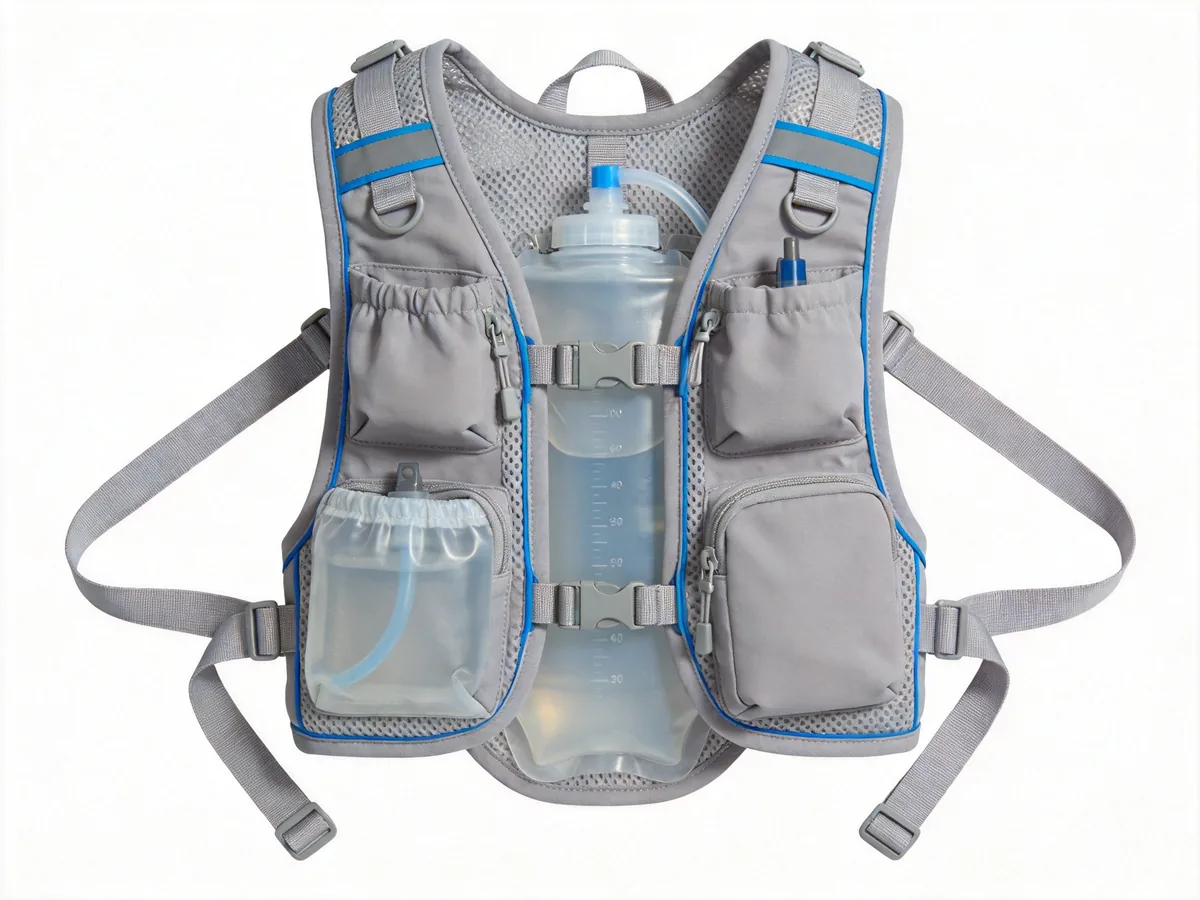
| Hydration vest | 2–12 L | Race day, ultra, fast packing | Body-hugging mesh harness, front soft-flask pockets, side compression cord, twin sternum straps |
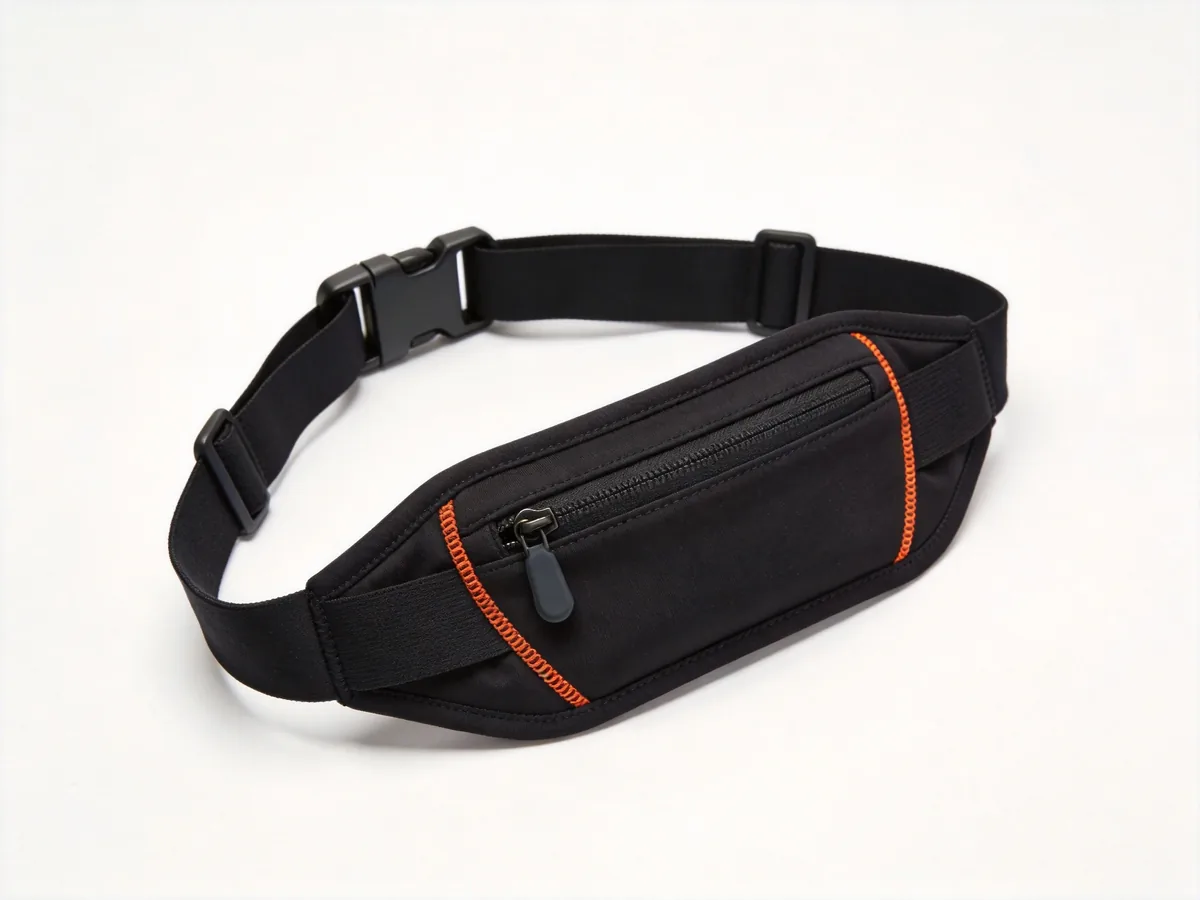
| Slim running belt | 0.3–2 L | Road 5K to half marathon, phone and keys | Stretch elastic waistband, zipped pocket, low-bounce fit, quick-release buckle |
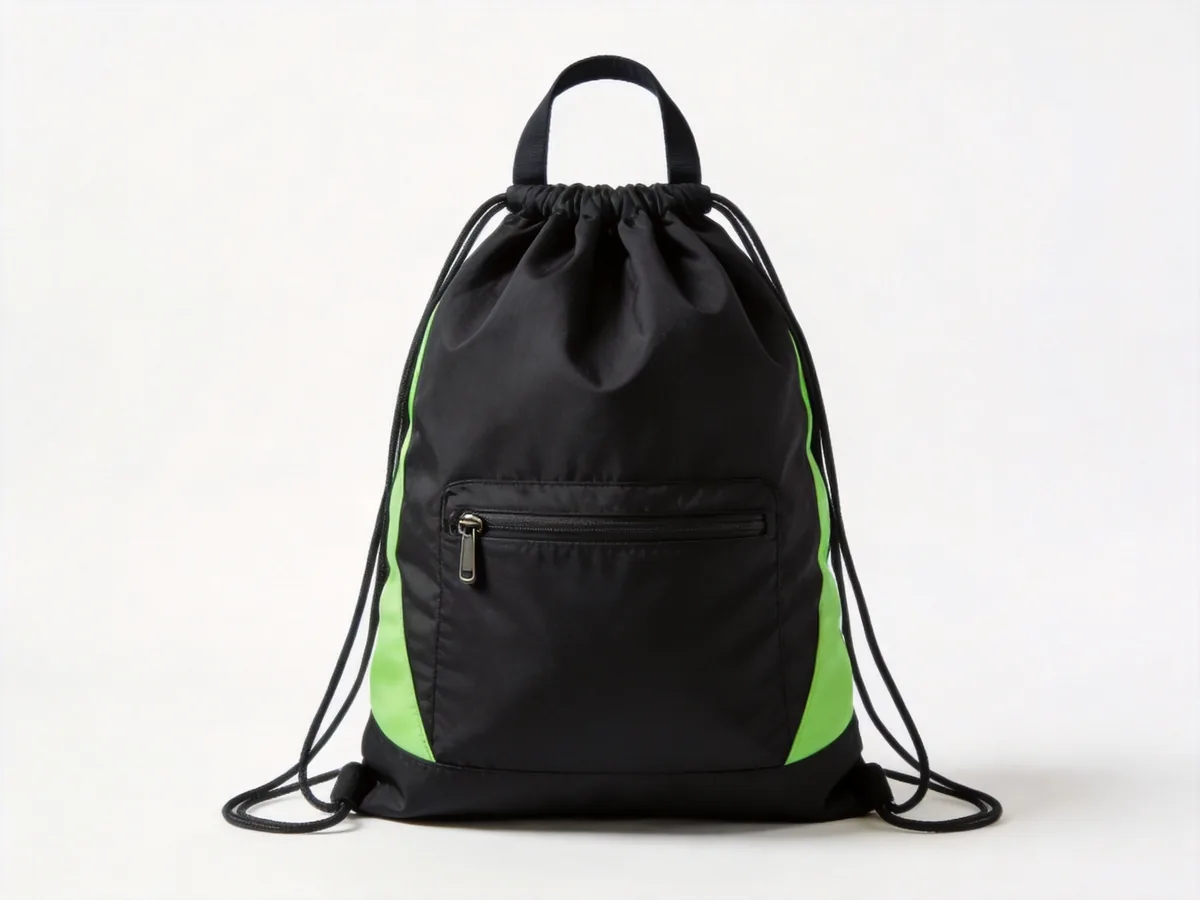
| Drawstring runner bag | 10–18 L | Gym, swim, pre and post run kit | Cinch-back shell, small zip pocket, top handle, durable polyester |
For hands-free everyday carry outside running, the same factory floor builds our custom backpacks and custom shoulder bags ranges; a compact alternative for commute and travel sits in the custom crossbody bags line.
Hydration vest vs hydration pack vs running belt: the capacity decision that sets the price
A hydration vest and a hydration pack are different products with different HS classifications and different buyers, even though retail search engines treat them as one category. A vest is a garment-form harness that sits against the torso, usually 2 to 12 litres, and is worn rather than carried. A pack has shoulder straps, a back panel and a hip belt, usually 10 to 30 litres, and is carried. The 10-litre line is where one becomes the other.
This matters commercially because the sourcing term changes the supplier type. Searching “running vest” on B2B marketplaces returns running singlets — sleeveless running T-shirts classified as garments under HS 61 or 62 — not hydration vests, which are bags under HS 4202. Buyers who use the wrong term receive quotes from apparel factories that cannot sew a harness. The term that reaches the right factory floor is hydration vest, and that distinction is documented in full on our custom hydration vest manufacturing page.
Independent comparison writing reaches the same conclusion from the consumer side: Kit Authority hydration vest vs hydration pack treats vest and pack as separate purchase decisions rather than two sizes of one product.
| Distance / duration | Capacity needed | Correct form | Why |
|---|---|---|---|
| Under 90 minutes | Up to 4 L | Handheld or slim belt | Fluid can be carried in hand or at the waist; a harness adds cost and heat for no benefit |
| 1 to 3 hours | 4–6 L | Vest or compact pack | Front flask access saves stopping time; 2 × 500 ml flasks cover roughly 2 hours in moderate conditions |
| 3 hours and beyond | 8–12 L | Vest at the top of its range, or pack | Mandatory kit, layers and nutrition join the fluid load |
| Beyond 6 hours | 6 L and up, plus gear volume | Small pack | Volume, not fluid, drives the specification once kit is mandatory |
Fluid planning follows roughly 450 to 700 ml per hour in moderate conditions, and a body that loses 2% of its water weight loses measurable performance — a threshold that can be reached inside half an hour of hard running in heat. That is the number that justifies the capacity band, not the litre figure printed on a competitor’s marketing page.
Published retail comparisons of the category, such as the Treeline Review running vest round-up and the OutdoorGearLab hydration pack test, consistently separate vests from packs on exactly this basis, and their buying guides are a useful cross-check when a spec is being written.
The four running bag lines we produce
Our order book spans private-label running bags for sports, fitness, outdoor and lifestyle brands across North America, Europe and the Middle East. Each line is configurable in capacity, pocket layout, colourway, lining, strap length and branding.
Hydration running backpack
Compact technical running backpacks with a bladder sleeve, ventilated back panel, chest buckle and bungee storage — the go-to for trail and longer runs where kit travels with the runner. Typical build: 8 to 20 litres, 300 to 600 g, ripstop nylon shell, airmesh back panel, two side compression straps and a tube port at the shoulder.
Slim running belt
Stretch waistband running belts with a low-bounce zipped pocket for phone, card and keys — an ultra-light road-run essential. The engineering is in the elastic modulus and the pocket seam: a belt that sags at 200 g of phone weight is a return, not a sale. Bounce is controlled by band tension and by placing the zip pocket against the lumbar rather than the hip bone.
Retail belt ranges converge on the same three failure points: band tension, pocket seam and buckle placement. Runner’s World running belt testing is a useful cross-check on how the category is merchandised at the sharp end.
Hydration vest
Breathable mesh vests with multiple front pockets, soft-flask pockets and bladder compatibility for race day and ultra distances. Full construction detail — harness geometry, chest-circumference sizing, bounce control and flask-versus-bladder selection — sits on the dedicated custom hydration vest manufacturer page, because a vest is specified differently from a pack and mixing the two specifications is the most common error in a first order.
Drawstring runner bag
Lightweight cinch-back drawstring bags with a zip pocket and top handle for gym, swim and pre or post run kit. Low unit cost, high print area, and the most common entry product for a new private label because the tooling barrier is close to zero.
Matching accessories
A running programme rarely ships alone. Matching training totes, duffels and weekender pieces let a brand extend the line without a second supplier: see our custom tote bags, custom duffel bags and custom weekender bags ranges for the family.
Materials and construction: what a running bag is actually made of
Fabric and breathability drive weight, bounce and comfort, and they are the two line items a buyer can most easily over-specify. A 420D shell on a 4-litre vest adds grams with no durability benefit at that load; a 70D shell on a 20-litre pack saves weight and tears in a season. The correct specification follows the load, not the price of the fabric.
| Component | Typical specification | Where it is used | What drives the choice |
|---|---|---|---|
| Shell fabric | 70–210D ripstop nylon or polyester, PU or silicone coated | Vest body, pack body, drawstring sack | Load weight and abrasion exposure; UV and water resistance |
| Back panel | 3D airmesh or perforated EVA | Pack back, vest rear | Heat build-up on continuous skin contact |
| Harness mesh | Stretch power mesh or elastic airmesh | Vest front, belt body | Breathability plus grip, so the load does not slide |
| Elastic webbing | 20–40 mm stretch webbing | Belt waistband, vest side cord | Low-bounce fit without a rigid buckle point |
| Reflective trim | High-visibility piping, transfer or woven tape | All four forms | Low-light road safety, and a retail compliance claim |
| Lining | 70–150D taffeta, contrast colour | Pack main compartment, belt pocket | Brand presentation and interior visibility |
Hardware is a separate decision and a separate cost line:
- Quick-release buckles — sternum and waist closure, sized to the strap width, tested for cycle life rather than pull strength alone.
- Water-resistant zips — #5 or #8 reverse-coil on phone pockets and main compartments.
- Bungee cord and toggles — external storage on packs and rear vest pockets.
- Cinch-back cord locks — drawstring bags, with a metal-free option for carry-on compliance.
- Soft flask and bladder fittings — bite valves, tube clips and insulated tube sleeves when the line includes hydration hardware.
Bladder size, chest-plate position, pocket layout, strap length and reflective placement are all locked on the pre-production sample so bulk pieces match. For the broader construction vocabulary shared across our bag ranges, see the bag manufacturer vs supplier guide comparison.
Retail buying guides are a practical reference for how fabric and harness specifications are explained to end customers — Runners Need pack buying guide sets out the category vocabulary in the same terms a brand would use on a product page.
Harness, bounce control and fit grading
Bounce is controlled by the harness, not the fabric. Three variables decide it: side compression cord tension, sternum strap height and count, and whether sizing is graded on chest circumference rather than body weight. A vest or pack that moves more than about a centimetre at pace is a sizing failure before it is a design failure.
- Set the side compression cord first. The load is pulled down and against the ribs before anything else is touched; adjusting the sternum strap on a loose cord just relocates the movement.
- Then set sternum strap height and count. One strap at armpit level suits a belt-supported pack; two straps — one high, one low — are what a running vest needs to stop vertical oscillation.
- Adjust shoulder straps last, and only to remove slack. Overtightening the shoulder moves weight off the hips and back onto the collarbone, which is where chafing starts.
| Size | Chest circumference | Fit note |
|---|---|---|
| XS | 80–86 cm | Grade the pattern, not the strap length alone |
| S | 87–93 cm | Most common sample size for a women’s line |
| M | 94–100 cm | Most common sample size for a unisex line |
| L | 101–107 cm | Check front pocket reach at this size |
| XL | 108–115 cm | Re-test bounce; larger sizes need more cord travel |
A representative five-size grade measured at the chest is XS 80–86 cm, S 87–93 cm, M 94–100 cm, L 101–107 cm and XL 108–115 cm. Size is graded on chest circumference, not body weight, because two runners of the same weight can differ by 20 cm at the chest — and a weight-graded range generates exchanges at retail.
Two useful public benchmarks for harness geometry: the On Ultra Vest Pro specification, which documents how a production vest is specified at the top of the market, and the Running Gear Lab fit and bounce testing, which measures bounce and fit across the category rather than repeating manufacturer claims.
Customisation: what can be changed, and what cannot be changed cheaply
Logo, colour and pocket layout are the three cheapest changes in a running bag programme; changing the harness pattern or the shell fabric is the most expensive. Knowing which side of that line a request falls on is what keeps a first order on schedule.
| Customisation | Available | Effect on cost and lead time |
|---|---|---|
| Logo and branding | Screen print, heat transfer, embroidery, woven label, silicone badge, reflective transfer | Low cost; Pantone matched on the sample |
| Colourway | Body, lining, zip tape, webbing, mesh, cord and buckle colour | Low cost above minimum per colour; below it, a surcharge |
| Pocket layout | Front flask pockets, rear zip, lumbar pocket, phone sleeve, key clip | Low to moderate; pattern change, no new mould |
| Capacity | Resize within an existing pattern family, 2–20 L | Moderate; new pattern and new sample |
| Harness architecture | Strap count, cord routing, buckle position, chest-plate geometry | High; new pattern, new fit testing, new sample cycle |
| Hydration system | Soft flask only, bladder only, or dual-compatible | Moderate; port placement, sleeve and tube routing |
| Packaging | Polybag, hangtag, header card, retail carton, barcode label | Low; quoted per piece |
Reflective detailing deserves its own note. High-visibility reflective trim, piping and reflective branding are a standard option rather than a special, and placement is set on the sample so a road-running line carries a defensible safety claim rather than a decorative stripe.
MOQ, sampling, lead time and FOB structure
The standard minimum for a custom running bag programme is 500 pieces per style and colour, with pre-production samples in 6 to 10 business days and bulk production in 35 to 50 days. Those three numbers, not the unit price, are what a launch calendar is actually built on.
| Term | Standard | Notes |
|---|---|---|
| MOQ | 500 pcs per style and colour | Lower trial quantities can be discussed for start-up brands on a first order |
| Sampling | 6–10 business days after artwork and spec approval | Sample fee refunded against the bulk order once the value threshold is met |
| Bulk production | 35–50 days after sample approval and deposit | Clock starts on approved sample plus received deposit, not on enquiry date |
| Inspection | AQL 2.5 major / 4.0 minor | Final random inspection before packing |
| Warranty | 12 months | Against manufacturing defect |
| Incoterm | FOB Xiamen | Other terms quoted on request |
| Payment | 30% deposit, balance before shipment | Negotiable for repeat programmes |
| Tooling | No mould cost on standard buckles and cord locks | Custom hardware quoted separately |
Published supplier quotes for running packs, belts and vests on B2B marketplaces cluster between roughly US$4.70 and US$11.50 per piece at 300 to 500 piece volumes, with a drawstring bag at the bottom of that band and a bladder-compatible vest at the top. Any quote far below that band is usually quoting a different product — frequently a running singlet rather than a bag.
When a programme needs a landed-cost model rather than an FOB number, ask for the packaging, carton dimension and gross weight with the quotation; freight on a low-density product like a drawstring sack is driven by volume, not by value. Our quote request form page carries the quotation path and required inputs.
Quality control and testing protocol
Inspection is AQL 2.5 for major defects and 4.0 for minor, applied at final random inspection before packing, with a 12-month warranty against manufacturing defect. Beyond the AQL count, five physical checks decide whether a running carrier survives its first season.
| Test | What is checked | Why it matters on a running carrier |
|---|---|---|
| Seam and stitch density | Stitch per inch at load-bearing seams, bartack at strap junctions | Harness seams fail first under repeated tension |
| Strap and buckle cycle | Buckle open/close cycles and webbing pull | A sternum buckle that releases under load is a safety event |
| Zipper function | Run smoothness, pull attachment, water-resistant closure | Phone pockets are opened every run |
| Elastic recovery | Waistband and cord recovery after repeated extension | A belt that sags at month three is a return |
| Colour fastness | Rubbing, water and light fastness on shell, lining and trim | Reflective and dyed trim shift differently from shell fabric |
| Weight verification | Piece weight against approved sample | Declared weight is a retail specification, not a suggestion |
| Print and logo adhesion | Cross-hatch and wash test on printed and transfer branding | Branding loss is the most visible defect at retail |
| Hardware corrosion | Salt-spray on metal components where used | Sweat is the operating environment |
| Packing and carton | Assortment, polybag, hangtag, carton drop | Arrival condition is part of the product |
A running carrier is a sweat-soaked, repeatedly loaded product, so the tests that matter are the ones that simulate repeated use rather than one-off strength. That is why buckle cycle and elastic recovery sit above raw pull strength in the protocol.
The OEM/ODM development process, step by step
A running bag programme moves through six gates. Each gate produces a document, and each document is what the next stage is measured against.
- Brief and form selection. Distance, load, hydration system and target retail price decide whether the product is a belt, a vest, a pack or a drawstring sack. Output: agreed specification sheet.
- Design and pattern. Either your artwork is translated into a pattern, or an existing ODM pattern is adapted. Output: technical drawing and bill of materials.
- Sampling. Pre-production sample in 6–10 business days, covering fit, pockets, harness and branding. Output: physical sample plus fit notes.
- Sample approval and revision. Fit, bounce and colour are signed off, or one revision round is run. Output: approved sealed sample.
- Bulk production. 35–50 days from approved sample and deposit, with in-line checks. Output: finished goods plus inspection report.
- Inspection and shipment. AQL 2.5 final random inspection, packing to the agreed assortment, FOB Xiamen. Output: inspection report and shipping documents.
Brands without an existing pattern can start from our ODM base and change colourway, pocket layout and branding without a full development cycle — the OEM/ODM service page sets out which route fits which stage of a brand.
Why running bag production concentrates in Quanzhou
Hydration vests, running packs and running belts are produced overwhelmingly in and around Quanzhou, Fujian, and that concentration is the reason a first order can be sampled in under two weeks. The city carries the fabric mills, mesh suppliers, webbing weavers, buckle moulders and sewing lines within a short drive of each other, so a harness revision does not wait on an inbound container.
Public supplier listings for hydration vests on B2B marketplaces show the same pattern: the quoting factories are clustered in Quanzhou and neighbouring Fujian cities, with minimums ranging from 100 to 500 pieces, sampling quoted at 5 to 20 days and bulk at 30 to 45 days. That is the local benchmark, and it is the benchmark any quotation should be read against.
JUNYUAN BAGS has been in the bag trade since 2004 and has operated as a Quanzhou-based export entity since 2014, producing through affiliated and partner factories and shipping FOB Xiamen. The same floor that builds running carriers builds golf bags, backpacks, duffels, dry bags and cycling bags, which matters when a brand wants one supplier across several categories rather than a different factory per SKU.
Frequently asked questions about custom running bags
Q1. What is the minimum order quantity for a custom running bag?
The standard minimum is 500 pieces per style and colour. Lower trial quantities can be discussed for start-up brands on a first order, and the minimum applies per colourway rather than per total order, so a two-colour launch is 1,000 pieces at the standard term.
Q2. How long does a custom running bag sample take?
A pre-production sample ships in 6 to 10 business days after artwork and specification approval. The sample covers fit, pocket layout, harness configuration, colourway and branding placement, and it is the document the bulk order is inspected against.
Q3. What is the bulk production lead time?
Bulk production runs 35 to 50 days after sample approval and deposit. The clock starts on the approved sealed sample plus received deposit, not on the enquiry date, which is why the sampling stage is the one worth compressing.
Q4. Do you make running backpacks, belts, vests and drawstring bags?
Yes. We produce hydration running backpacks from 8 to 20 litres, slim running belts from 0.3 to 2 litres, hydration vests from 2 to 12 litres and drawstring runner bags from 10 to 18 litres, all fully customisable to your specification.
Q5. What is the difference between a hydration vest and a hydration pack?
A hydration vest is a body-hugging harness worn against the torso, usually 2 to 12 litres, with front soft-flask pockets and twin sternum straps. A hydration pack has shoulder straps, a structured back panel and a hip belt, usually 10 to 30 litres, and is carried rather than worn. The 10-litre mark is roughly where one becomes the other.
Q6. Why does searching for a running vest manufacturer return the wrong suppliers?
Because “running vest” is ambiguous in the supply chain. In apparel it means a running singlet, a sleeveless T-shirt classified under HS 61 or 62. A hydration vest is a bag under HS 4202. Buyers who search the apparel term receive quotes from garment factories that cannot build a harness; the term that reaches the right factory floor is hydration vest.
Q7. How many litres should a running bag be for different distances?
Under 90 minutes needs a handheld or a belt under 4 litres; 1 to 3 hours needs 4 to 6 litres; 3 hours and beyond needs 8 to 12 litres; and past 6 hours the product becomes a small pack because mandatory kit, layers and nutrition join the fluid load. Fluid intake itself runs roughly 450 to 700 ml per hour in moderate conditions.
Q8. Can I choose my own pocket layout and strap fit?
Yes. Pocket placement, bladder sleeves, chest and waist straps, strap length and adjustable fit are all set on the pre-production sample. Pocket layout changes are a pattern revision rather than a tooling change, which keeps them affordable; changing the harness architecture is the expensive category.
Q9. How is sizing graded for vests and packs?
On chest circumference, not body weight. A representative five-size grade is XS 80 to 86 cm, S 87 to 93 cm, M 94 to 100 cm, L 101 to 107 cm and XL 108 to 115 cm. Weight-based grading generates exchanges at retail because two runners of the same weight can differ by 20 cm at the chest.
Q10. How do you stop a running vest or pack from bouncing?
Bounce is controlled by the harness rather than the fabric. Set the side compression cord first, then sternum strap height and count, and adjust the shoulder straps last and only to remove slack. A carrier that moves more than about a centimetre at pace is a sizing failure before it is a design failure.
Q11. What materials can I choose for a custom running bag?
70 to 210D ripstop nylon or polyester shells with PU or silicone coating, 3D airmesh or perforated EVA back panels, stretch power mesh harness, 20 to 40 mm elastic webbing, reflective piping or transfer tape, and 70 to 150D taffeta linings in a contrast colour. The specification follows the load, not the fabric price.
Q12. Can you make custom running bags with my own logo?
Yes, by screen print, heat transfer, embroidery, woven label, silicone badge or reflective transfer. All branding is Pantone matched on the sample, and print and transfer adhesion is checked by cross-hatch and wash test before bulk.
Q13. Can you add reflective detailing for night running?
Yes. High-visibility reflective trim, piping and reflective branding are standard options rather than specials, with placement locked on the sample. Colour fastness of the reflective trim is tested separately from the shell because dyed trim and reflective tape shift differently.
Q14. What quality standard do you use?
AQL 2.5 for major defects and 4.0 for minor, applied at final random inspection before packing, with a 12-month warranty against manufacturing defect. Beyond the AQL count we test seam density, buckle cycle, zipper function, elastic recovery, colour fastness, piece weight and branding adhesion.
Q15. How much does a custom running bag cost per piece?
Published supplier quotes for running packs, belts and vests cluster between roughly US$4.70 and US$11.50 per piece at 300 to 500 piece volumes, with a drawstring bag at the bottom of that band and a bladder-compatible vest at the top. Freight is quoted separately and is volume-driven on low-density products.
Start a running bag programme
Send the distance, the load and the target retail price, and we will come back with the form, the capacity band and a quotation. Include the hydration system, the colourway count and any branding requirement so the first response is a specification rather than a question list.
Email [email protected] or call / WhatsApp +86 17750020688. Sampling runs 6 to 10 business days from approved artwork, bulk 35 to 50 days from approved sample and deposit, FOB Xiamen.
Related ranges: hydration vests · hydration packs · messenger bags · travel bags · contact
Figures quoted are standard programme terms for custom running bags as of 2026 and apply per style and colour; retail comparison data is cited from published third-party gear reviews for context only. Brand names referenced belong to their respective owners.