
A custom fishing bag is a purpose-built backpack engineered to carry fishing rods, tackle boxes, lures, and accessories while protecting gear from water impact. From a manufacturing standpoint, the defining components are the rod holder system (tube diameter 22–32 mm, mounting angle 0°–45°), tackle storage compartments with removable foam dividers, waterproof or water-resistant fabric (600D–840D TPU-coated nylon or PVC tarpaulin), and drainage grommets at the base. The global fishing tackle bag market is projected to reach $2.8 billion by 2027 (Grand View Research, 2024), with OEM/ODM production centered in Fujian and Guangdong, China, where factories like Junyuan Bags produce custom designs at MOQs starting from 500 pieces per style.
This guide covers every manufacturing specification a brand owner, wholesaler, or sourcing manager needs to know—from rod holder engineering and fabric selection to compartment layout, waterproof construction methods, and quality control testing. Whether you are developing a new private-label fishing backpack or improving an existing design, this pillar page gives you the technical depth to make informed production decisions.
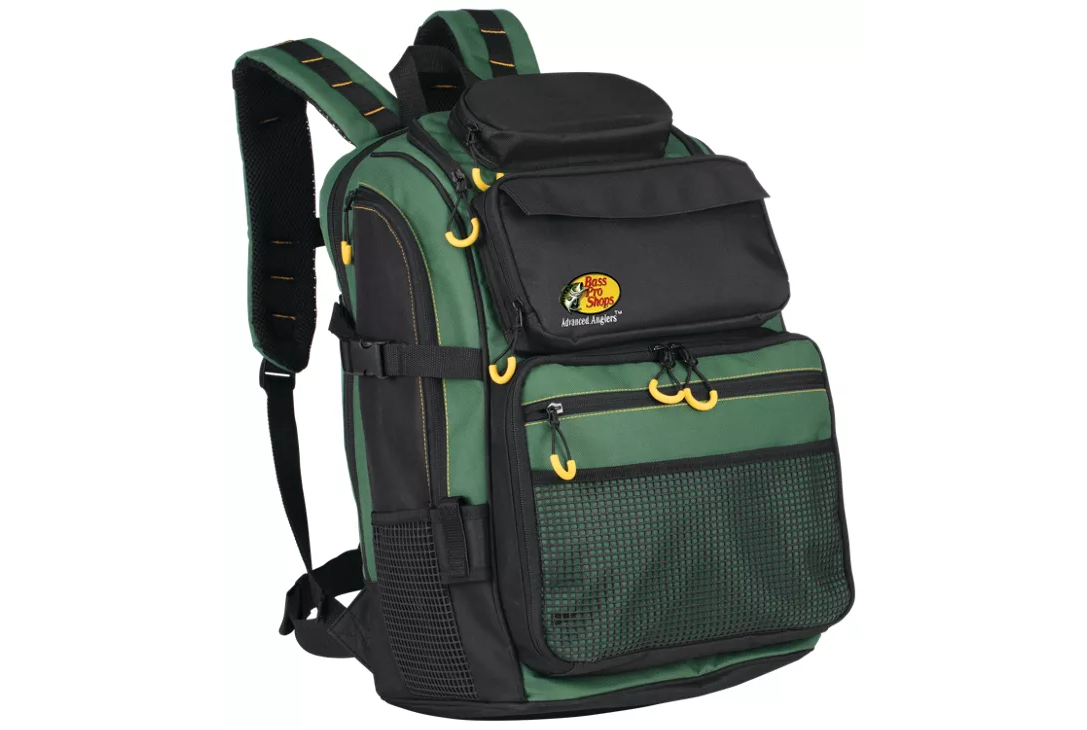
Why Fishing Backpacks Require Specialized OEM Manufacturing
Fishing backpacks differ fundamentally from standard daypacks or hiking backpacks. They must carry fragile, expensive rods alongside metal tackle boxes, resist constant exposure to water and UV, and organize dozens of small accessories for rapid access. A poorly manufactured fishing bag leads to rod breakage during transit, waterlogged tackle, and torn seams from heavy loads.
According to industry data, fishing tackle backpacks face 3× the seam stress of equivalent-volume hiking packs due to the concentrated weight of metal reels, lead weights, and hard-sided tackle trays (Source: Dowsen Bags 2024 Technical Report). This means manufacturing specifications must exceed standard outdoor bag benchmarks in reinforcement, fabric denier, and zipper corrosion resistance.
Key Design Challenges in Fishing Bag Production
- Rod protection: Rods range from 4-piece travel rods (60 cm packed) to single-piece surf rods (up to 3 meters). The holder must accommodate varying diameters (12–32 mm) without rattling or abrasion damage.
- Tackle organization: Professional anglers carry 3–8 tackle trays (Plano 3600/3700 size), each weighing 1–3 kg. Compartments need foam inserts or molded dividers that hold trays securely.
- Water exposure: Saltwater environments demand corrosion-resistant hardware (anodized aluminum or stainless steel buckles) and fabrics rated IPX6 or above.
- Load distribution: A fully loaded fishing backpack weighs 8–15 kg. Without proper hip belt and sternum strap systems, shoulder fatigue reduces fishing time by 30–40%.
Rod Holder Design: The Core Engineering Challenge
The rod holder system is what separates a fishing backpack from a generic outdoor pack. In OEM production, there are three primary rod holder architectures, each with distinct manufacturing requirements:
1. Vertical Tube Rod Holders
Construction: A rigid or semi-rigid tube (PVC, ABS, or fiberglass-reinforced nylon) is mounted vertically along one side or both sides of the backpack. The rod butt slides into the bottom; the tip is secured by an elastic strap or buckle at the top.
| Specification | Standard Range | Premium Range |
|---|---|---|
| Tube inner diameter | 22–28 mm | 28–32 mm (adjustable insert) |
| Tube material | PVC or ABS | Fiberglass-reinforced nylon |
| Mounting method | Sewn sleeve + rivet | Bolted bracket + bartack reinforcement |
| Capacity | 1–2 rods | 2–4 rods with divider |
| Compatible rod length | Up to 2.4 m (2-piece) | Up to 3.0 m (surf rods) |
Manufacturing note: When producing vertical tube holders, the critical tolerance is the inner diameter consistency (±0.5 mm). Too tight, and rod ferrules get stuck; too loose, and rods rattle, causing tip damage. At Junyuan Bags, we use CNC-molded tube inserts to maintain this tolerance across production runs.
2. Diagonal/Horizontal Rod Channels
Construction: Rods rest at a 30°–45° angle across the back or front panel of the pack, secured by elastic bungee cords or webbing straps with side-release buckles. This design is common on bungee-cord system backpacks adapted for fishing.
Advantages for OEM brands: Lower tooling cost (no rigid tubes needed), lighter weight, lower profile for hiking-to-fishing-spot scenarios. The main manufacturing requirement is reinforced attachment points where the bungees anchor—these must withstand 15–25 kg of dynamic load when the wearer bends or runs.

3. Removable/Clip-On Rod Holder Modules
Construction: A detachable rod holder unit that clips onto MOLLE webbing or D-rings on the backpack. This modular approach allows the same pack to serve as a fishing bag or a general-purpose outdoor backpack.
OEM advantage: Enables brands to market a “2-in-1” or “3-in-1” product line from a single base pack design, reducing SKU complexity. The holder module can be sold as an add-on accessory, increasing average order value by 15–25%.
Tackle Storage: Compartment Architecture
Professional fishing backpacks require dedicated tackle storage that goes far beyond simple zippered pockets. The internal architecture depends on the target user segment:
Tackle Tray Compatibility
The industry-standard tackle tray sizes are:
- Plano 3600 (27.9 × 17.8 × 4.6 cm) — compact lures and terminal tackle
- Plano 3700 (35.6 × 23.2 × 5.1 cm) — medium tackle with multiple trays
- Plano 3800 (43.2 × 23.2 × 6.4 cm) — large tackle for multi-day trips
When designing a custom fishing bag, the main compartment should accommodate at least 2–3 Plano 3700 trays side by side, with removable EVA foam dividers to prevent rattling. For OEM orders, we recommend specifying foam density at 30–40 kg/m³ for optimal cushioning without excessive bulk.

Specialized Pockets and Features
- Pliers holster: Magnetic or elastic retention, positioned on the hip belt or side panel for instant access. Production cost add: $0.30–0.80/pc.
- Line spool pocket: Mesh-lined, with elastic retention loops for 2–4 spools of fishing line.
- Waterproof phone pocket: TPU-welded transparent pocket on the shoulder strap or chest panel.
- Cooler compartment: Insulated pocket (PE foam 5–8 mm) for keeping bait fresh. Capacity: 2–4L. This feature is now standard on 60%+ of premium fishing backpacks sold in North America.
- Fold-out workstation: A zip-down front panel with elastic loops for lures and hooks—adds $1.50–3.00 to unit cost but increases retail price by $15–25.
Waterproof Materials and Construction Methods
Fishing bags face a unique waterproof challenge: they must resist water splashes, rain, accidental submersion, and saltwater corrosion simultaneously. The waterproofing strategy depends on the product tier:
Fabric Selection by Tier
| Tier | Fabric | Coating | Waterproof Rating | FOB Cost Range |
|---|---|---|---|---|
| Entry | 600D polyester | PU 1000mm | IPX4 (splash) | $4.50–7.00 |
| Mid-range | 600D nylon | PU 2000mm + DWR | IPX5 (water jets) | $7.00–12.00 |
| Premium | 840D TPU-laminated nylon | TPU membrane | IPX7 (submersion) | $15.00–25.00 |
| Ultra-premium | PVC tarpaulin / welded TPU | RF-welded seams | IPX8 (sustained submersion) | $25.00–45.00 |
For saltwater fishing bags, an additional consideration is UV resistance. TPU-laminated fabrics maintain color and structural integrity for 2000+ hours of UV exposure, while standard PU-coated polyester begins degrading after 500–800 hours. This matters for brands targeting coastal and offshore anglers.
Seam Construction Methods
- Standard stitched + seam tape: Needle-and-thread construction with waterproof tape over the seam. Effective for IPX4–IPX5 ratings. Lowest cost.
- Welded seams (RF/ultrasonic): No needle holes—seams are heat-welded. Required for IPX7–IPX8 ratings. Common in waterproof backpack manufacturing. Adds $2–5/unit.
- Airtight zippers: YKK Aquaseal or equivalent. Adds $3–8/unit depending on zipper length. Essential for submersible fishing bags.
Drainage Design
Every fishing bag should include drainage grommets (brass or stainless steel, 6–8 mm diameter) at the base of the main compartment and rod holder tubes. Standard placement: 4 grommets on the bottom panel, spaced 8–10 cm apart. For fully waterproof bags, a one-way drainage valve (like those used in dry suits) is an alternative that maintains the IPX rating while allowing water to escape.

Load-Bearing and Comfort Systems
A fully loaded fishing backpack weighs 8–15 kg. Without proper load transfer, anglers experience shoulder fatigue, neck pain, and reduced mobility. OEM manufacturers must match the carrying system to the pack’s intended capacity:
Shoulder Strap Specifications
- Width: 50–65 mm for packs under 25L; 65–80 mm for packs 25–45L
- Padding: EVA foam 10–15 mm thickness, covered with breathable mesh
- Load range: Comfortable carry up to 12 kg with 65 mm straps; 15+ kg requires 75 mm+ straps
Hip Belt and Sternum Strap
For fishing backpacks above 25L capacity, a padded hip belt is essential. It transfers 40–50% of the load from shoulders to the pelvis. Standard hip belt width: 80–100 mm with 10–12 mm EVA foam. The sternum strap (20–25 mm webbing) with a whistle buckle stabilizes the shoulder straps during walking.
For hiking-to-fishing backpacks above 35L, an adjustable torso length system (like those used in premium hiking packs) adds significant value. This requires a hook-and-loop or ladder-adjust shoulder yoke, adding $1.50–3.00/unit to production cost.

Hardware and Accessories Specifications
Corrosion Resistance Requirements
Standard backpack hardware (zinc alloy buckles, steel zippers) corrodes rapidly in saltwater environments. For fishing bags targeting coastal or offshore anglers, OEM specifications should include:
| Component | Standard | Saltwater-Grade |
|---|---|---|
| Zippers | YKK #5 coil | YKK #5 Vislon (corrosion-resistant) |
| Buckles | Zinc alloy | Duraflex acetal or stainless steel |
| D-rings | Plated steel | 316 stainless steel or anodized aluminum |
| Grommets | Brass | 316 stainless steel |
| Webbing | Nylon | Polypropylene (resists salt absorption) |
External Attachment Points
Fishing backpacks typically require 4–8 external attachment points for:
- Net holster (D-ring + elastic retention)
- Fish grip holder
- Trekking pole attachment (for hiking-to-fishing models)
- Headlamp clip
- Wader strap loops
Each attachment point must be bartacked (minimum 42 stitches per point) to withstand dynamic loads. For more details on attachment systems, see our backpack attachment systems guide.
Manufacturing Process and Quality Control
Production Workflow
- Pattern cutting: CNC die-cutting for fabric panels (tolerance ±1 mm)
- Printing/embroidery: Logo application (screen print, heat transfer, or embroidered patch)
- Sewing assembly: Main body → compartments → rod holder attachment → straps → hardware
- Reinforcement: Bartack at all stress points (strap anchors, D-rings, rod holder base)
- QC inspection: Visual + functional testing
QC Testing Protocols
- Load test: Fill pack to 120% of rated capacity, lift 50 times. Check for seam separation or strap deformation.
- Zipper cycle test: 3,000 open/close cycles on all zippers (per YKK standard).
- Waterproof test: Spray test (IPX5) or submersion test (IPX7) on random samples per AQL 2.5.
- Rod holder test: Insert weighted rod (2 kg), shake vigorously 100 cycles. Check for tube deformation or mounting failure.
- Salt spray test: 48-hour salt spray exposure on hardware per ASTM B117 for saltwater-grade products.

Cost Structure and Pricing Guide
Understanding the cost breakdown helps brand owners set realistic retail prices and negotiate with manufacturers. Here is a typical cost structure for a mid-range fishing backpack (25–35L, 600D nylon, PU coating, 2 rod holders, tackle tray compatible):
| Cost Component | FOB Price (500 pcs) | FOB Price (2000 pcs) |
|---|---|---|
| Fabric + lining | $2.50–3.50 | $2.00–2.80 |
| Rod holder tubes (×2) | $1.20–1.80 | $0.90–1.40 |
| Hardware (buckles, zippers, D-rings) | $1.50–2.20 | $1.20–1.80 |
| Shoulder straps + hip belt | $1.00–1.50 | $0.80–1.20 |
| Labor (cutting + sewing + assembly) | $2.00–3.00 | $1.50–2.50 |
| Packaging (polybag + hangtag + carton) | $0.40–0.60 | $0.30–0.50 |
| Total FOB cost | $8.60–12.60 | $6.70–10.20 |
| Suggested retail price (3× markup) | $25.80–37.80 | $20.10–30.60 |
For a more detailed breakdown, see our bag manufacturing cost guide.
Market Segments and Product Positioning
Different fishing segments require different bag specifications. Understanding these helps OEM brands develop targeted product lines:
| Segment | Capacity | Key Features | Target Retail Price |
|---|---|---|---|
| Fly fishing | 15–25L | Lightweight, breathable back, fly box pockets, rod holder for 2-piece rods | $60–120 |
| Freshwater bass/walleye | 25–35L | Tackle tray slots, pliers holster, cooler pocket, 1–2 vertical rod holders | $50–100 |
| Saltwater/inshore | 30–40L | Corrosion-resistant hardware, waterproof fabric, drainage, net holster | $80–160 |
| Kayak fishing | 35–50L | Low-profile design, sit-on-top compatible, multiple rod holders, dry bag compatibility | $100–200 |
| Surf fishing | 40–55L | Extended rod holders (3m+ rods), sand-resistant zippers, heavy-duty hip belt | $120–250 |
OEM/ODM Development Process at Junyuan Bags
Junyuan Bags is a professional backpack manufacturer based in Quanzhou, Fujian, China. With a 4,950 sqm production facility and 137 skilled workers, we specialize in OEM and ODM manufacturing of outdoor and specialty bags, including fishing backpacks, hydration packs, USB charging backpacks, anti-theft backpacks, and tool bags.

Our Capabilities for Fishing Bag OEM/ODM
- MOQ: 500 pieces per style for custom fishing bags
- Sampling: 7–10 days for first sample; 3–5 days for revisions
- Production lead time: 35–45 days after sample approval
- Customization: Fabric, color, rod holder design, compartment layout, logo (embroidery, screen print, woven labels, rubber patches), packaging
- Compliance: BSCI, ISO 9001, REACH, Prop 65 testing available
- QC: In-line and final inspection per AQL 2.5 standard
Development Timeline
| Phase | Duration | Deliverable |
|---|---|---|
| Design consultation | 1–3 days | Spec sheet with materials, dimensions, features |
| 3D design/mockup | 2–3 days | Digital prototype for approval |
| First sample | 7–10 days | Physical sample for evaluation |
| Sample revision | 3–5 days | Revised sample (if needed) |
| Pre-production sample | 5–7 days | Final approval sample from production line |
| Mass production | 35–45 days | Finished goods ready for shipment |
Frequently Asked Questions
What is the minimum order quantity (MOQ) for custom fishing backpacks?
At Junyuan Bags, the MOQ for custom fishing backpacks is 500 pieces per style per color. This applies to OEM orders with your own design or ODM orders based on our existing molds with custom branding. For private label orders using our standard designs, MOQ is 500 pieces per style.
What rod holder designs are available for OEM fishing bags?
We offer three main rod holder types: vertical tube holders (PVC/ABS/fiberglass, 22–32 mm ID), diagonal bungee channels (30°–45° angle), and removable clip-on modules that attach to MOLLE or D-rings. Custom rod holder designs are available with a mold fee of $200–500 depending on complexity.
What fabrics do you recommend for saltwater fishing backpacks?
For saltwater environments, we recommend 840D TPU-laminated nylon with RF-welded seams and 316 stainless steel hardware. This combination provides IPX7 waterproof rating and withstands 2,000+ hours of UV exposure. For budget-conscious brands, 600D nylon with PU 2000mm coating and DWR finish offers adequate protection at a lower cost.
Can you produce fishing bags with waterproof/welded construction?
Yes. We offer both stitched-and-taped and fully RF/ultrasonic-welded construction. Welded construction eliminates needle holes and provides true waterproof (IPX7–IPX8) protection. This requires specialized equipment and adds 15–25% to production cost compared to standard stitched construction. See our waterproof backpack manufacturing guide for details.
What tackle tray sizes do your fishing backpack compartments fit?
Our standard fishing backpack compartments are designed to fit Plano 3600, 3700, and 3800 series tackle trays. Custom compartment dimensions can be designed to fit any specific tray model or proprietary tackle storage system.
How do you ensure corrosion resistance for coastal fishing bags?
We use 316 stainless steel for D-rings and grommets, Duraflex acetal buckles, YKK Vislon zippers, and polypropylene webbing (which does not absorb salt). All hardware undergoes 48-hour salt spray testing per ASTM B117 before shipment.
What is the typical production cost for a mid-range fishing backpack?
For a 25–35L fishing backpack with 600D nylon, 2 vertical rod holders, tackle tray compartment, and standard hardware, the FOB cost ranges from $8.60–12.60 at 500 pieces and $6.70–10.20 at 2,000 pieces. See our detailed bag manufacturing cost guide for more information.
Do you offer design assistance for new fishing bag brands?
Yes. Our in-house design team can help you develop a complete fishing backpack line from concept to production. We provide free design consultation, 3D mockups, material recommendations, and competitive cost analysis. Contact us at [email protected] to start your project.
Start Your Custom Fishing Bag Project
Whether you’re launching a new fishing brand or expanding your product line, Junyuan Bags has the manufacturing expertise and capacity to deliver high-quality custom fishing backpacks at competitive prices.
Contact us today:
- 📧 Email: [email protected]
- 📱 WhatsApp: +86 17750020688
- 🏭 Factory: Quanzhou, Fujian, China
- 📐 MOQ: 500 pcs/style
Explore our other manufacturing guides: Custom Backpack OEM/ODM | Outdoor Backpack Manufacturer | Waterproof Backpack Guide | Private Label Backpacks | Custom Hiking Backpacks