
Your Trusted Waterproof Backpack Manufacturer | OEM/ODM Factory Led by a founder with bag industry experience dating from 2004
JUNYUAN Bags is a leading waterproof backpack manufacturer based in Quanzhou, Fujian, China, specializing in custom OEM/ODM waterproof bags for global brands. Led by a founder with bag industry experience dating from 2004, we deliver premium waterproof backpacks engineered for outdoor adventures, water sports, urban commuting, and industrial applications.
Established
Brand Partners
Countries Exported
Units/Year Capacity
As a dedicated waterproof backpack factory in Fujian Province, JUNYUAN Bags combines advanced manufacturing technology with rigorous quality control to produce waterproof backpacks that meet international standards. Our facility in Quanzhou — one of China’s largest bag manufacturing hubs — houses state-of-the-art equipment for high-frequency welding, heat sealing, and precision stitching, enabling us to produce waterproof bags that achieve IPX6 and IPX7 ratings.
Whether you need full OEM customization with your own designs or ODM solutions from our in-house design library, our team handles every stage from concept to container. We serve outdoor brands, promotional companies, tactical gear suppliers, and retail chains across North America, Europe, and Asia-Pacific.
Waterproof Backpack Styles We Manufacture
Our custom waterproof backpack range covers every application — from lightweight day-use packs to heavy-duty expedition gear. Each style is fully customizable in materials, dimensions, colors, branding, and features to match your market requirements.
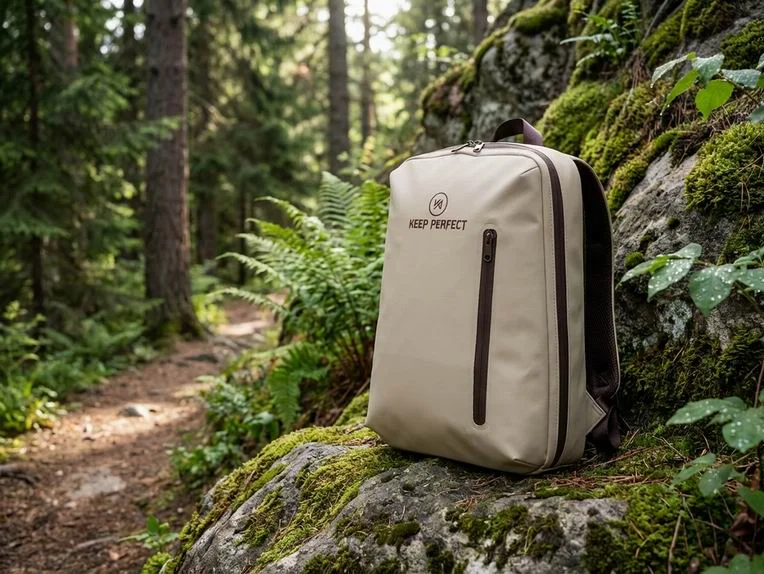
Waterproof Hiking Backpack
30L–65L with ergonomic suspension system, rain cover, and hydration sleeve. Built for multi-day treks in extreme weather.

Waterproof Duffel Bag
40L–100L capacities with PVC tarpaulin construction. Perfect for expedition travel, boating, and base camp transport.

Waterproof Cooler Backpack
Insulated waterproof construction keeping contents cold for 24+ hours. Leak-proof design for fishing, camping, and outdoor events.
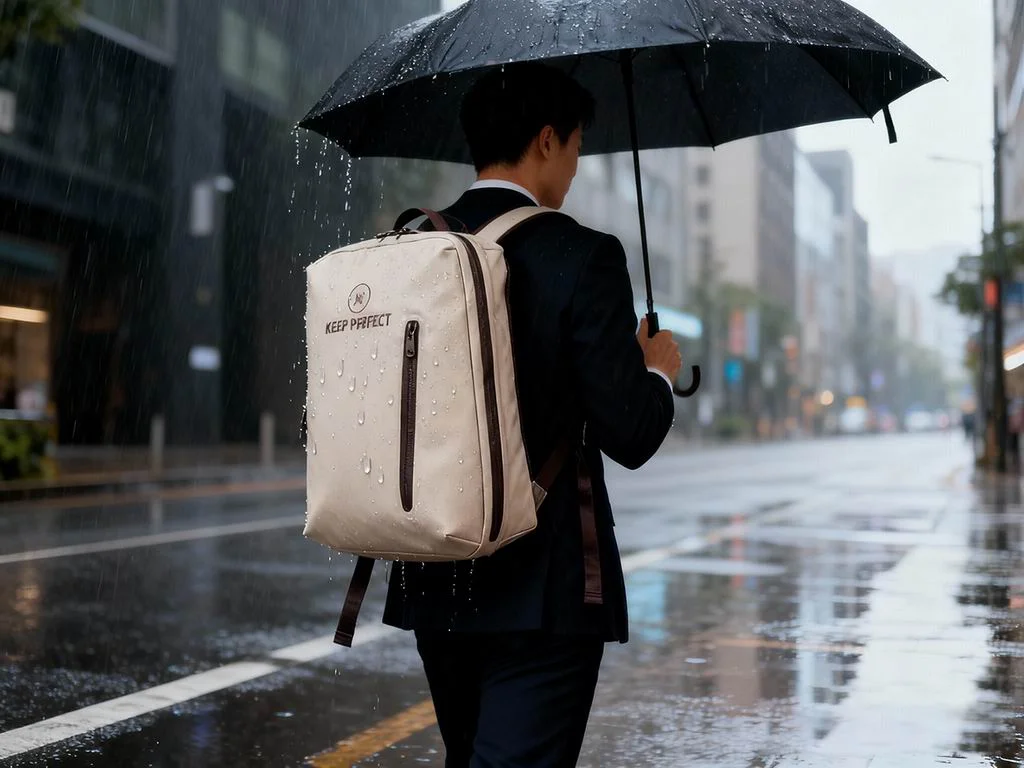
Waterproof Laptop Backpack
Urban commuter design with waterproof zippers, padded laptop sleeve (up to 17″), and anti-theft features. Business-meets-outdoor.
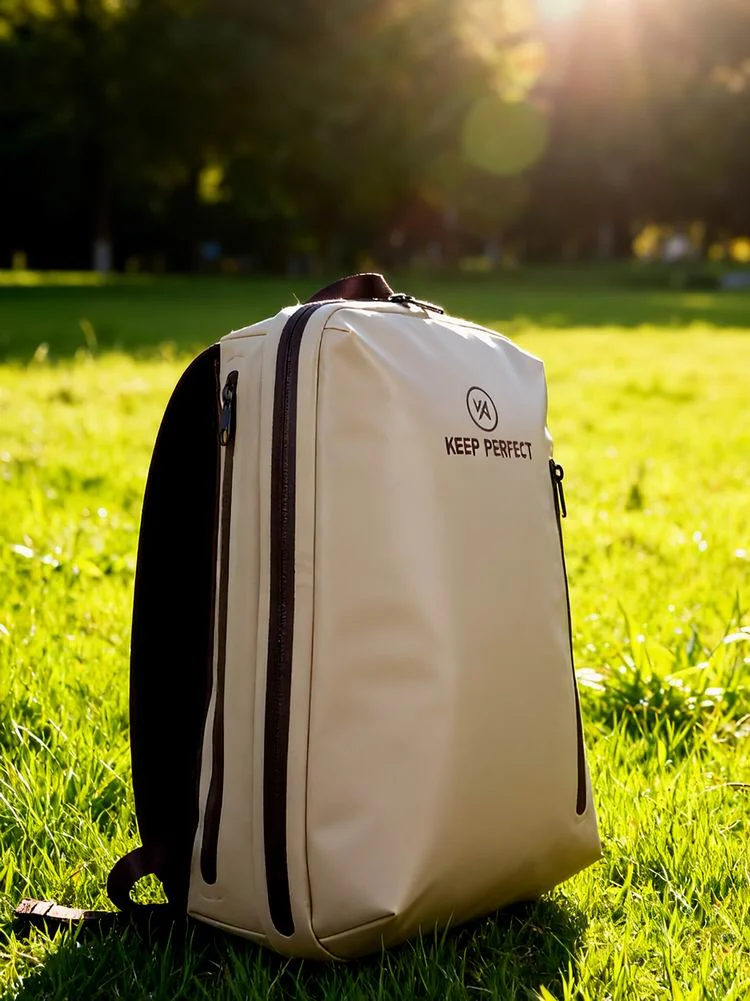
Waterproof Fishing Backpack
Specialized tackle storage with rod holders, bait trays, and fully submersible compartments. Designed for freshwater and saltwater anglers.
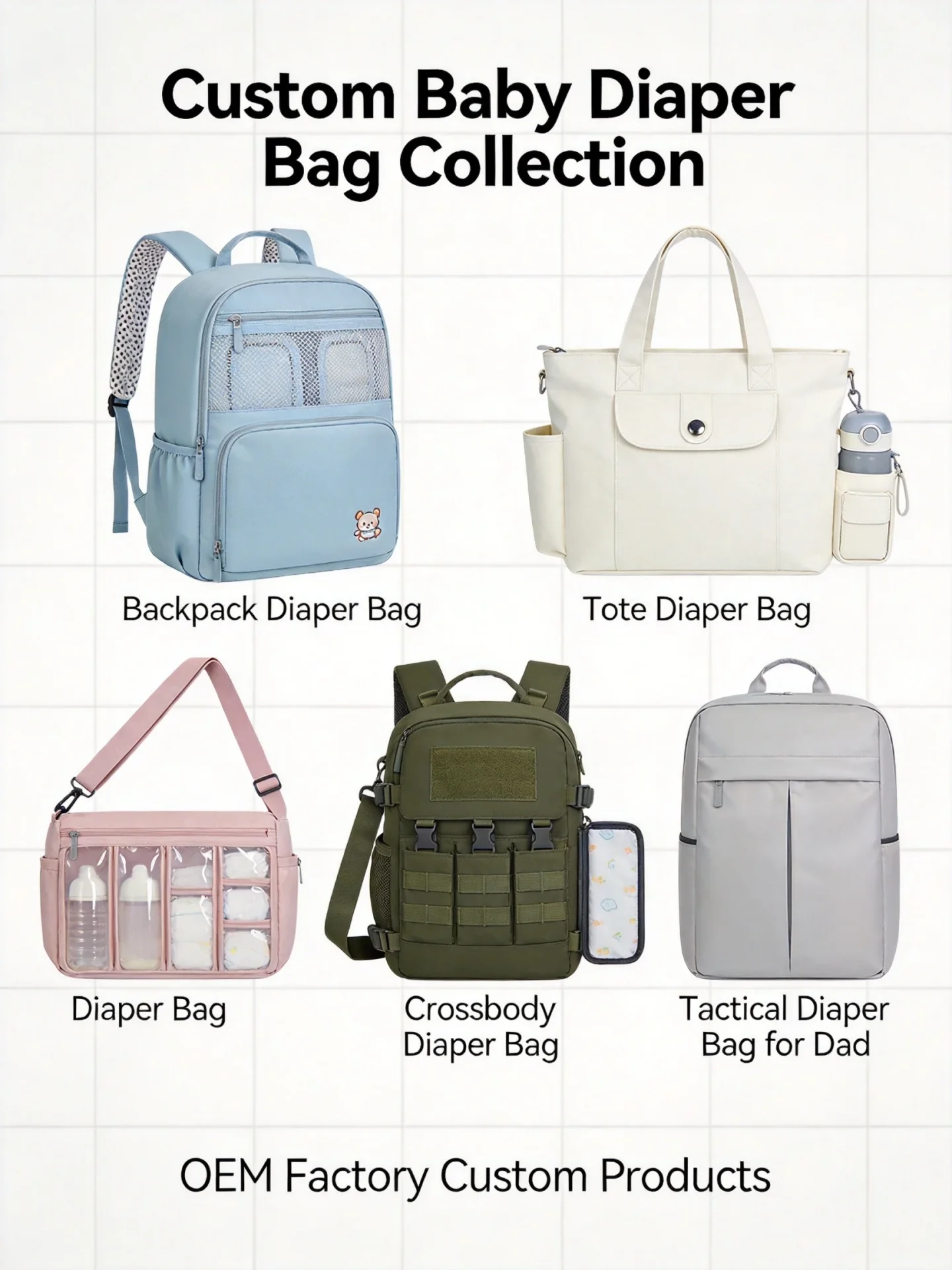
Waterproof Baby Care Backpack
BPA-free TPU materials, insulated bottle pockets, and wipe-clean interior. Safe, practical, and stylish for modern parents.
Browse our complete range of tactical bags, outdoor backpacks, and sports bags — all available with full waterproof customization options.
Waterproof Fabrics Used in Our Backpacks
The choice of fabric is the single most important factor in waterproof backpack performance. As an experienced OEM waterproof bag manufacturer, we work with four primary waterproof materials — each with distinct characteristics, cost profiles, and ideal applications. Here’s a detailed comparison to help you make the right material decision for your product line.
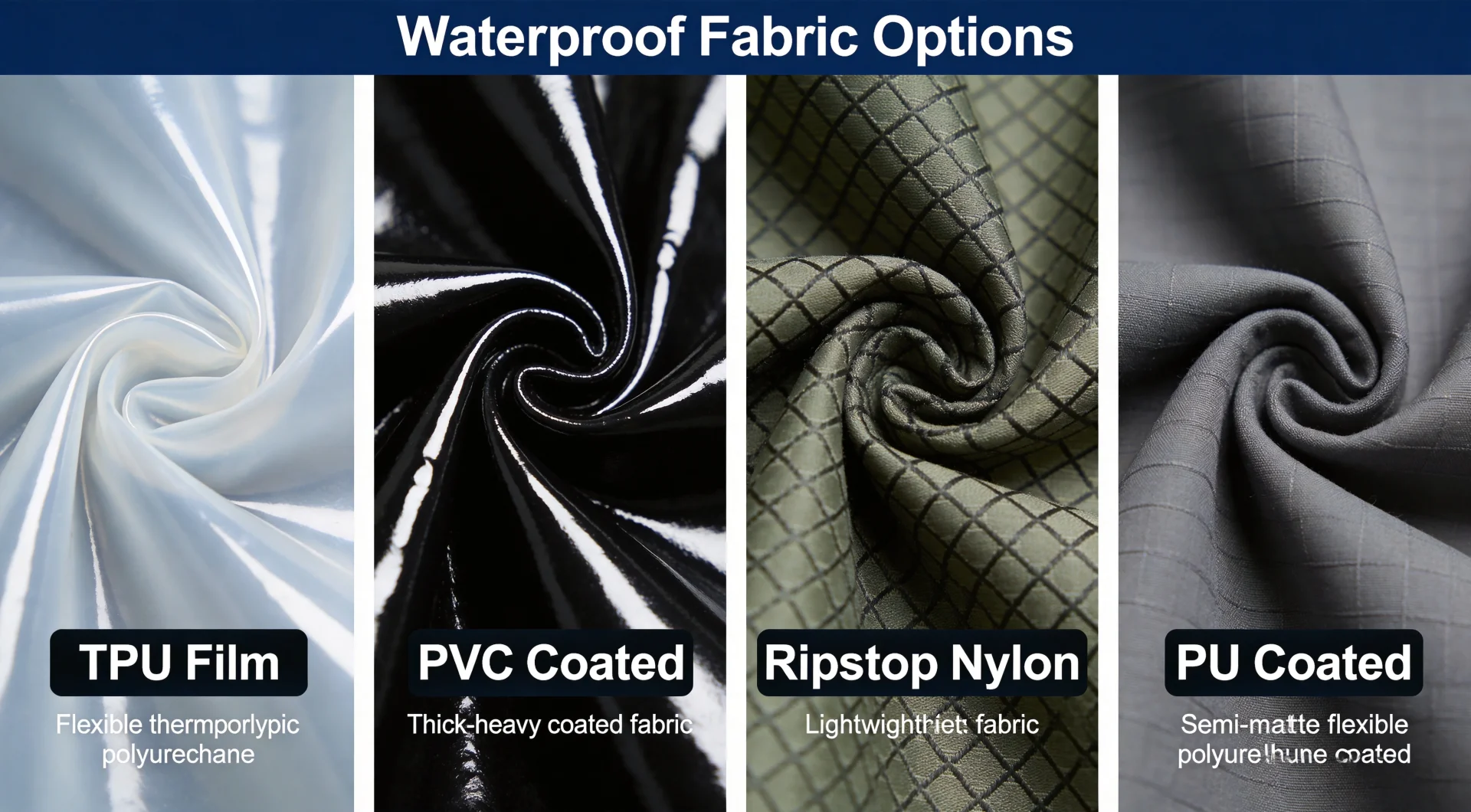
TPU (Thermoplastic Polyurethane) Coated Fabric
- Waterproof Rating: 5,000mm–10,000mm hydrostatic head
- Temperature Range: -30°C to +70°C, stays flexible in extreme cold
- Weight: Moderate (200–400 gsm)
- Key Benefits: Eco-friendly, non-toxic, high abrasion resistance, excellent transparency options
- Applications: Premium outdoor backpacks, baby products, medical bags, eco-conscious brands
PVC (Polyvinyl Chloride) Coated Fabric / Tarpaulin
- Waterproof Rating: 5,000mm+ hydrostatic head
- Temperature Range: -20°C to +50°C
- Weight: Heavy (400–1000 gsm)
- Key Benefits: Extremely durable, cost-effective, UV resistant, easy to clean and weld
- Applications: Dry bags, boat bags, heavy-duty expedition gear, industrial waterproof bags
Nylon (with TPU/PVC/PU coating)
- Waterproof Rating: 3,000mm–8,000mm (depends on coating)
- Denier Options: 210D, 420D, 600D, 1000D, 1680D
- Weight: Light to moderate (150–350 gsm)
- Key Benefits: Superior tensile strength, excellent tear resistance, lightweight, packable
- Applications: Hiking backpacks, lightweight daypacks, packable rain covers, premium outdoor gear
PU (Polyurethane) Coated Polyester / Nylon
- Waterproof Rating: 1,500mm–5,000mm hydrostatic head
- Temperature Range: -15°C to +60°C
- Weight: Light (100–300 gsm)
- Key Benefits: Cost-effective, good flexibility, breathable options available, easy to print on
- Applications: Urban commuter backpacks, school bags, promotional bags, entry-level waterproof products
Fabric Comparison Table
| Property | TPU Coated | PVC Tarpaulin | Nylon + Coating | PU Coated |
|---|---|---|---|---|
| Waterproof Level | ★★★★★ | ★★★★☆ | ★★★★☆ | ★★★☆☆ |
| Weight | Moderate | Heavy | Light | Light |
| Durability | Excellent | Excellent | Very Good | Good |
| Eco-Friendliness | ★★★★★ | ★★☆☆☆ | ★★★★☆ | ★★★☆☆ |
| Cost per m² | $4–$7 | $2–$4 | $3–$6 | $2–$5 |
| Best For | Premium/Eco | Heavy-Duty/Budget | Lightweight Outdoor | Urban/Entry-Level |
| Welding Compatibility | HF + Hot Air | HF Welding | Sewing + Seam Seal | Sewing + Coating |
Not sure which fabric is right for your product? Our material engineers can recommend the optimal fabric based on your target price point, performance requirements, and compliance standards. Contact us for a material consultation.
Pantone Color Options for Custom Waterproof Backpacks
We support full Pantone color matching across all fabric types. Below are 10 of our most popular stock colors for waterproof backpacks — ideal for brands looking to maintain color consistency across product lines. Custom Pantone matching is available for orders of 500+ pieces.
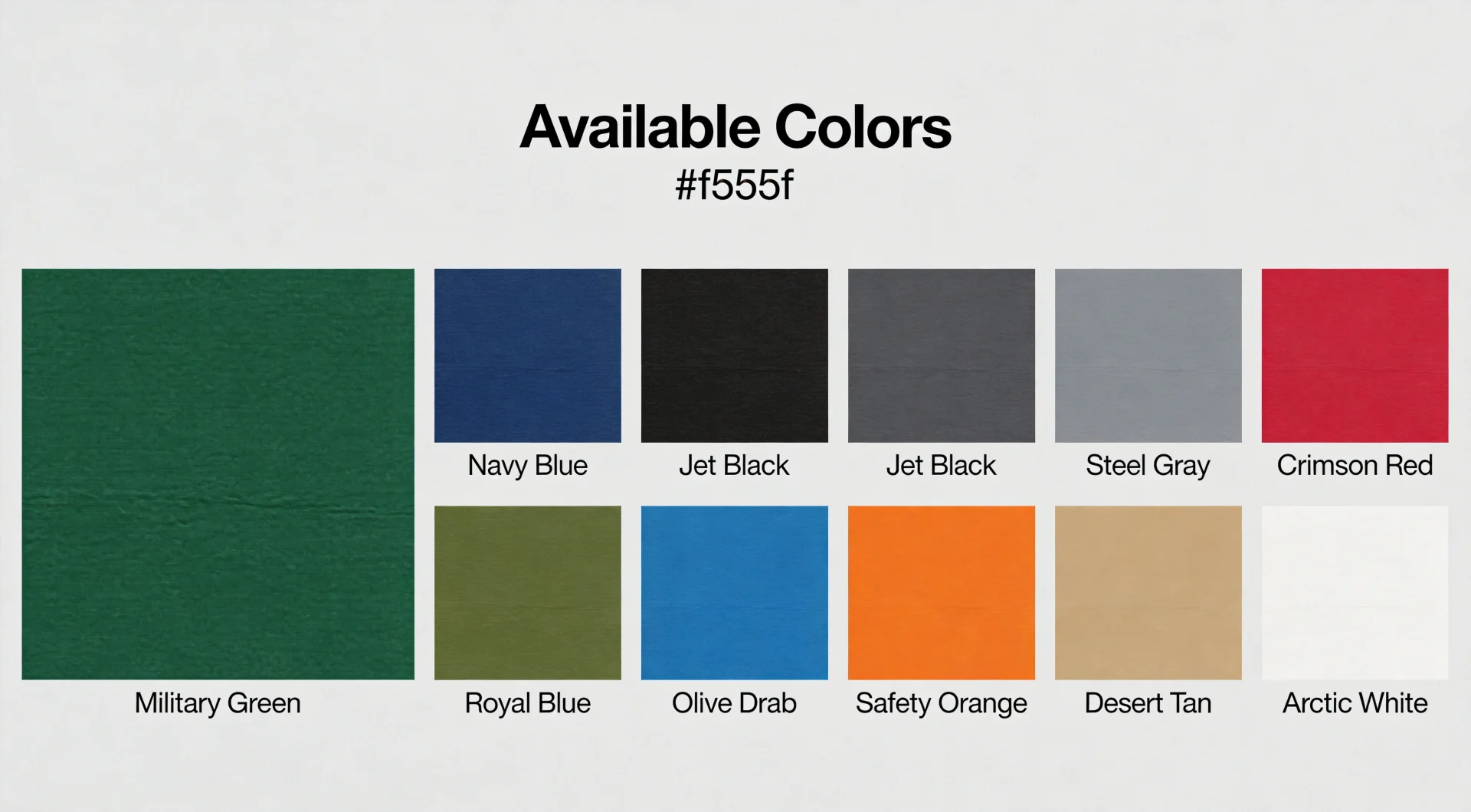
Custom Color Matching: Provide any Pantone code, and we’ll match it within ΔE ≤ 1.5. We also offer dual-tone combinations, camo patterns, and reflective color options for safety-oriented products. Stock color swatches can be mailed to you free of charge — request your free color kit.
Manufacturing Details That Define Quality
Every waterproof backpack we produce goes through 14+ precision manufacturing steps. These details are what separate a truly waterproof bag from a merely water-resistant one. As a professional waterproof bag manufacturer in China, we invest in the processes and equipment that ensure every bag meets IPX6/IPX7 standards.
RF welding creates molecular-level bonds between fabric layers — no needle holes, no leak points. Stronger than traditional stitching.
We use YKK Aquaguard and Vislon waterproof zippers with PU-coated teeth, rated for 5,000mm water column pressure.
TPU Waterproof Membrane
Multi-layer TPU lamination provides both waterproofing and breathability, achieving 10,000mm HH rating.
Triple-fold roll-top design with buckle closure creates a watertight seal — the industry’s most reliable closure for submersible bags.
All stitch lines are sealed with waterproof seam tape applied at 400°C, preventing water ingress through needle penetrations.
Durable Water Repellent finish causes water to bead and roll off the outer fabric surface, maintaining breathability.
Bar-Tack Reinforcement
High-stress points (strap attachments, grab handles, D-rings) are reinforced with automated bar-tack stitching for 3x durability.
Computer-controlled laser cutting ensures ±0.5mm accuracy on every panel, ensuring perfect alignment during assembly.
EVA Molded Back Panel
Ergonomic back panels with EVA foam provide structure, ventilation channels, and impact protection for contents.
All buckles, D-rings, and snaps use anodized aluminum or marine-grade stainless steel — rated for saltwater exposure.
Every production batch undergoes water column testing to verify waterproof ratings meet spec (3,000mm–10,000mm).
Cold Crack Resistance
Materials tested at -30°C to ensure flexibility and coating integrity in freezing conditions — critical for winter markets.
Fabric undergoes 50,000+ cycle Taber abrasion testing to ensure long-term surface durability under real-world use.
UV-inhibitor additives in coatings prevent color fading and material degradation during prolonged sun exposure.
Printing & Branding Methods for Custom Waterproof Backpacks
Your brand identity deserves to look sharp on every product. We offer four professional printing methods for waterproof backpacks, each optimized for different design complexity, durability requirements, and order volumes.
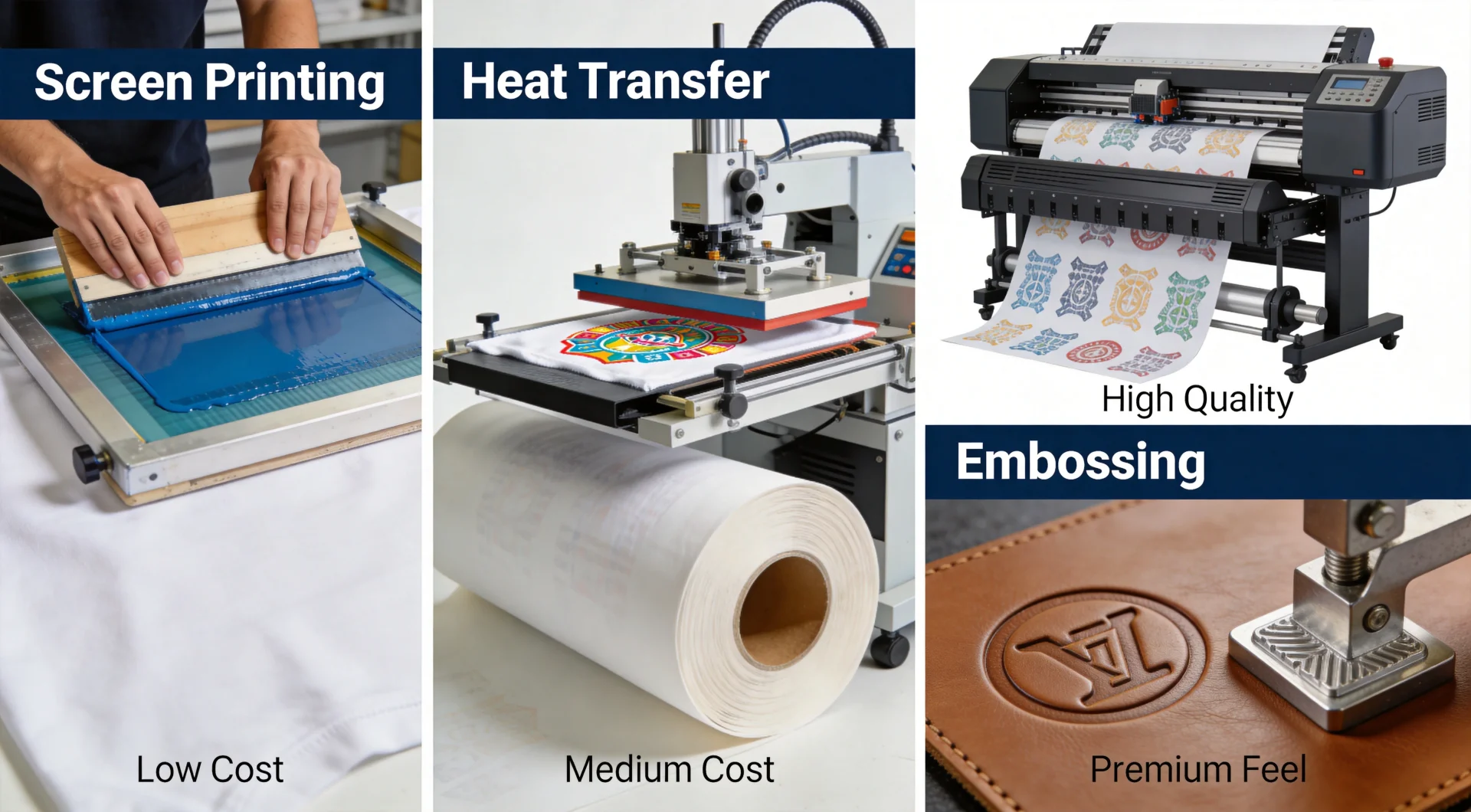
Silk Screen Printing
The most cost-effective method for bold, single-color logos on waterproof fabrics. Ink is pushed through a mesh screen onto the fabric surface. Best for simple logos, text, and high-contrast designs.
- ✅ Best for: 1–4 color designs, large volume orders
- ✅ Durability: Excellent resistance to water and abrasion
- ✅ MOQ: No minimum beyond bag MOQ
$0.50–$3.00 / piece
*Screen setup fee: $20–$40 per color
Heat Transfer Printing
Full-color designs are printed onto transfer paper and heat-pressed onto the fabric at 160–200°C. Ideal for complex artwork, gradients, and photographic images on waterproof materials.
- ✅ Best for: Full-color artwork, gradients, small-medium runs
- ✅ Durability: Very good; may soften after 50+ washes
- ✅ No setup fees for digital files
$1.50–$5.00 / piece
*Free heat transfer for orders 2,000+ pcs
Digital Printing (DTG/Dye-Sub)
Direct-to-garment or dye-sublimation printing applies ink directly onto fabric using digital inkjet technology. Enables unlimited colors, photo-quality output, and all-over print patterns.
- ✅ Best for: All-over prints, complex designs, prototypes
- ✅ Durability: Excellent (ink bonds with fibers)
- ✅ No minimum quantity for printing
$3.00–$8.00 / piece
*Best for short runs and all-over patterns
Debossed / Embossed Rubber Logo
Custom silicone or PVC rubber badges are molded to your design and sewn or heat-adhered to the bag. Creates a premium, tactile 3D effect that resists water, UV, and abrasion.
- ✅ Best for: Premium brand positioning, 3D effects
- ✅ Durability: Exceptional — lifetime outdoor durability
- ✅ Mold fee applies (reusable for reorders)
$1.00–$5.00 / piece
*Mold fee: $50–$150 depending on design complexity
Printing Method Comparison
| Method | Cost Range | Colors | Best For | Durability | Min. Order |
|---|---|---|---|---|---|
| Silk Screen | $0.50–$3.00 | 1–4 spot colors | Bold logos, large runs | ★★★★★ | 500 pcs |
| Heat Transfer | $1.50–$5.00 | Full color + gradients | Complex artwork | ★★★★☆ | 100 pcs |
| Digital Printing | $3.00–$8.00 | Unlimited colors | All-over prints | ★★★★★ | 50 pcs |
| Rubber Logo | $1.00–$5.00 | Pantone matched | Premium 3D effect | ★★★★★ | 500 pcs |
OEM/ODM Service Process: From Design to Delivery
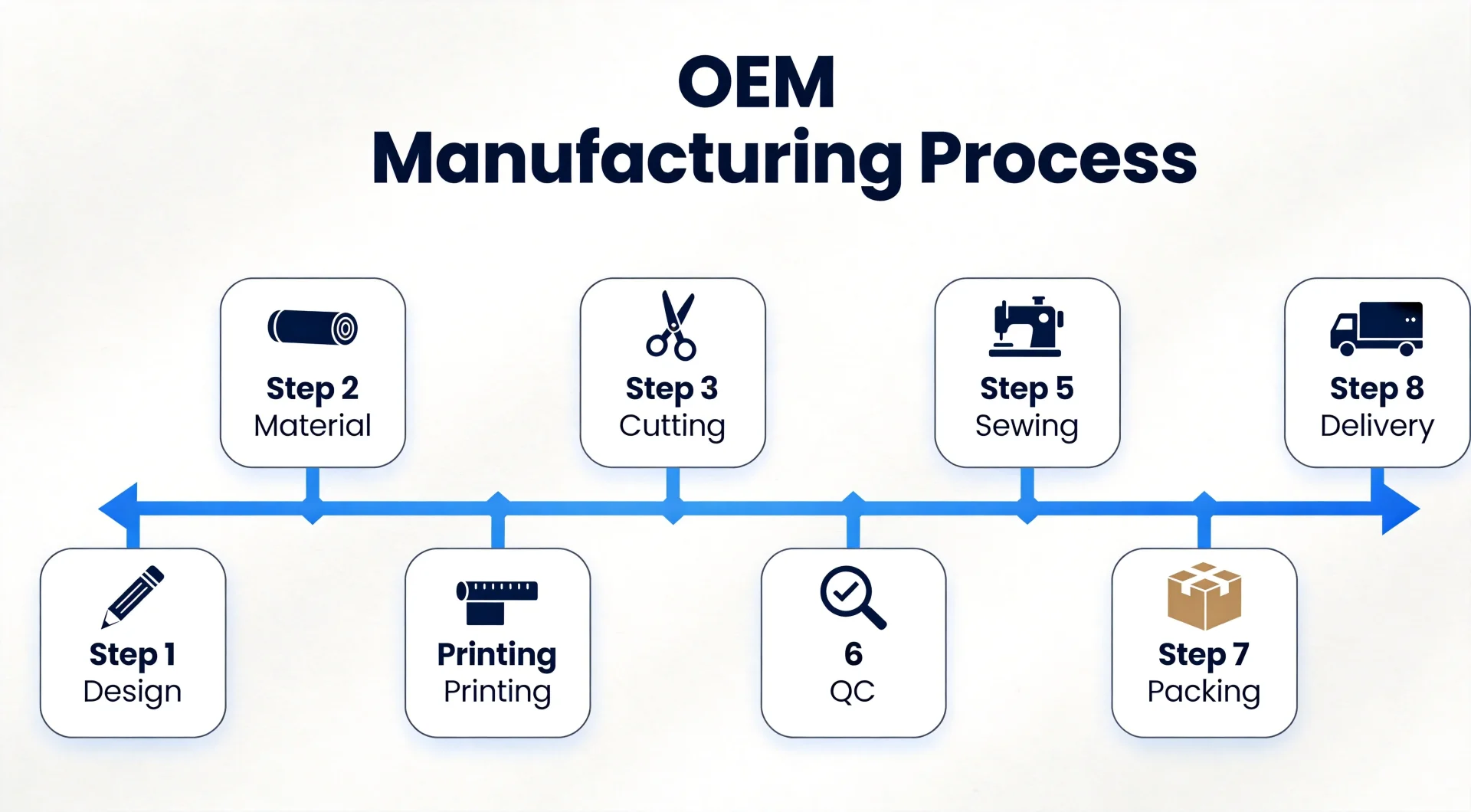
Our streamlined 8-step waterproof backpack manufacturing process ensures transparency, quality, and on-time delivery for every order. Whether you’re a startup launching your first product line or an established brand scaling production, our team guides you through each stage.
Inquiry & Consultation
Share your design, specs, or concept. Our team provides material recommendations and initial pricing within 24 hours.
Design & Development
Our R&D team creates tech packs, 3D renderings, and material selections. Free design support for all OEM projects.
Sample Production
Pre-production samples delivered in 7–15 days. Includes your logo, materials, and all custom features for approval.
Sample Approval
Review and test the sample. Request modifications if needed — we iterate until you’re 100% satisfied.
Bulk Production
Production begins upon deposit. 15–35 days depending on order quantity. Weekly progress reports with photos.
Quality Inspection
Multi-point QC including waterproof testing, load testing, zipper function checks, and visual inspection on every unit.
Packaging & Labeling
Custom packaging, hangtags, UPC codes, and retail-ready packaging. FBA-compliant labeling available.
Shipping & Delivery
FOB Xiamen port. Sea freight (30–45 days), air freight (5–7 days), or express (3–5 days). Full tracking support.
Learn more about our complete OEM/ODM service capabilities — including private labeling, custom packaging design, and dropshipping support for e-commerce brands.
Quality Certifications & Compliance
Our waterproof backpack factory maintains all major international quality and social compliance certifications. These certifications ensure that your products meet the regulatory requirements of your target markets.
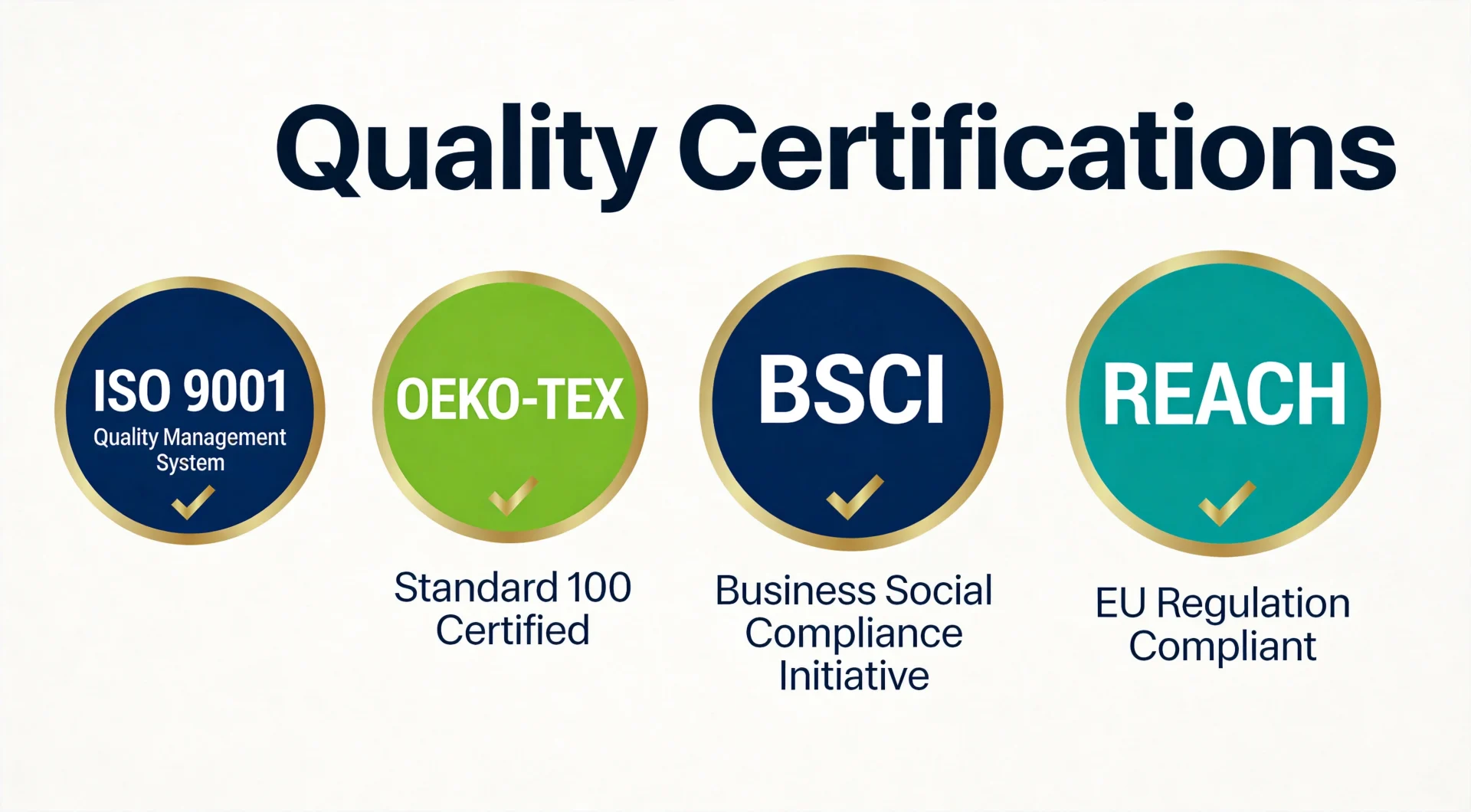
ISO 9001:2015
Quality Management System — ensures consistent production standards and continuous improvement
BSCI
Business Social Compliance Initiative — ethical labor practices and safe working conditions
SEDEX / SMETA
Sedex Members Ethical Trade Audit — comprehensive supply chain transparency
OEKO-TEX® Standard 100
Tested for harmful substances — safe for human use, required by many European retailers
REACH Compliant
EU chemical safety regulation — ensures no restricted substances in materials or coatings
All certifications are available for audit and can be provided to your compliance team upon request. We also support GRS (Global Recycled Standard) certification for brands using recycled materials in their waterproof backpack lines.
Trusted by Leading Brands Worldwide
JUNYUAN Bags has partnered with 200+ brands across outdoor, tactical, sports, and lifestyle categories in over 100 countries. Here are some of the brand types we manufacture for:
Outdoor Brand
Tactical Brand
Sports Brand
Retail Chain
Amazon FBA Brand
Promotional Brand
From Amazon FBA sellers launching private-label waterproof backpacks to Fortune 500 companies sourcing promotional gear, our manufacturing flexibility accommodates every business model and scale. We maintain strict NDA policies to protect our partners’ designs and intellectual property.
Frequently Asked Questions About Waterproof Backpack Manufacturing
Ready to Start Your Custom Waterproof Backpack Project?
Get a detailed quote within 24 hours. Share your requirements — our team handles design, sampling, and production.
Email: [email protected]
WhatsApp: +86 177-5002-0688
Factory: C201-207, Huachuang Park, Tiyu Street, Fengze District, Quanzhou City, Fujian Province, China
Shipping Port: FOB Xiamen, China
Explore More JUNYUAN Bag Manufacturing Categories
As a full-service bag manufacturer in China, JUNYUAN Bags produces a wide range of custom bags beyond waterproof backpacks:
- OEM/ODM Service Overview — Full-spectrum custom bag manufacturing solutions
- Custom Tactical Bags — Military-grade backpacks, MOLLE bags, and tactical duffels
- Custom Golf Bags — Stand bags, cart bags, and travel covers with waterproof options
- Custom Pickleball Bags — Paddle backpacks, totes, and duffels
- Custom Tennis Bags — Racket backpacks and gear bags
- Custom Basketball Bags — Team gear bags and equipment backpacks
- Custom Sneaker Bags — Shoe bags, travel organizers, and laundry bags
- Custom Pet Bags — Pet carriers, travel bags, and airline-approved carriers
- Contact Us — Request a quote, factory visit, or sample
Waterproof Fabric Comparison: TPU vs PVC vs Coated Nylon
Choosing the right waterproof material depends on your brand's price point, durability, and comfort needs. JUNYUAN sources all three options and can laminate, coat, and HF-weld to the required IPX waterproof rating.
| Criteria | TPU | PVC Tarpaulin | Coated Nylon |
|---|---|---|---|
| Waterproof rating | Up to IPX7 (submersible) | Up to IPX6 (heavy rain) | Up to IPX4-IPX6 (showerproof) |
| Durability | High tear & abrasion | Very high, industrial | Medium |
| Weight & softness | Soft, lightweight | Heavy, stiff | Lightweight, packable |
| Typical cost | $$ | $ | $$ |
| Best for | Hiking, submersible, baby care | Fishing, industrial, cooler | Urban commuter, laptop |
Waterproof ratings follow the Ingress Protection (IPX) scale: IPX4 resists splashes, IPX6 resists powerful jets and heavy rain, and IPX7 survives temporary submersion to 1 meter. Seams are sealed with waterproof tape applied at 400degC or HF-welded for a fully bonded, leak-proof construction.