To keep food warm for a picnic, pack it piping hot into preheated insulated containers, nestle them in a foil-lined, foam-insulated cooler bag with towels filling every air gap, and keep the bag closed and shaded until serving — done correctly, hot food stays comfortably above 60 °C (140 °F) for 2 to 4 hours, and quality vacuum food jars hold safe heat for 5 to 7 hours. The same insulation science — sealed air, reflective foil and zero empty space — that keeps drinks cold works in reverse for hot food, which is why an insulated picnic tote, rather than a wicker basket alone, is the single most useful piece of kit. For brands and retailers sourcing this category, custom insulated picnic and food bags are built to exactly those principles: our standard MOQ is 500 pieces per style, sampling takes 6–10 days, bulk production runs 35–50 days under AQL 2.5 inspection, and every bag carries a 12-month warranty.
How Long Can You Keep Food Warm for a Picnic?
Food-safety guidance gives a clear rule: hot food should be kept hot at 60 °C (140 °F) or above, and food sitting between about 5 °C and 60 °C (40–140 °F) — the familiar temperature danger zone — should not sit out for more than two hours total, or one hour when the ambient temperature is above 32 °C (90 °F). Those thresholds come from standard food-safety advice for transporting and serving perishable food, and they apply just as firmly to a picnic blanket as to a commercial kitchen.
Real-world holding times then depend on the equipment. A disposable foil tray wrapped in a tea towel inside a backpack might manage 45 to 60 minutes of warmth. A closed-cell foam cooler bag with a foil lining and hot packs keeps food hot for roughly 2 to 4 hours. A stainless-steel vacuum food jar, because it removes the air that conducts heat, holds soups, stews and rice hot for 5 to 7 hours when preheated properly. For a longer day out, the winning system is a vacuum jar for the hero dish plus an insulated tote for bread, sides and serving pieces.

— A group picnic only works when the hot food actually arrives hot — insulation and packing order decide that, not luck.
Why Insulation Works Both Ways: The Same Science as Keeping Food Cold
Heat moves in three ways — conduction through touching materials, convection through moving air, and radiation as infrared energy — and a good insulated bag slows all three. Foam traps millions of tiny pockets of stationary air, and still air is a poor conductor, so a closed-cell foam or EPE layer cuts conductive loss. A reflective aluminum-foil or metalized lining bounces radiant heat back toward the food. A zippered, sealed lid stops warm air escaping by convection. Our companion guide explains the same mechanism in reverse: how to keep food cold at a picnic, and the deeper physics behind both sit in our breakdown of how insulated lunch bags work.
That symmetry is useful for buyers: one well-built bag serves winter hot-food picnics and summer cold-drink trips, which is why the best retail lines position insulated totes as year-round gear rather than seasonal stock.
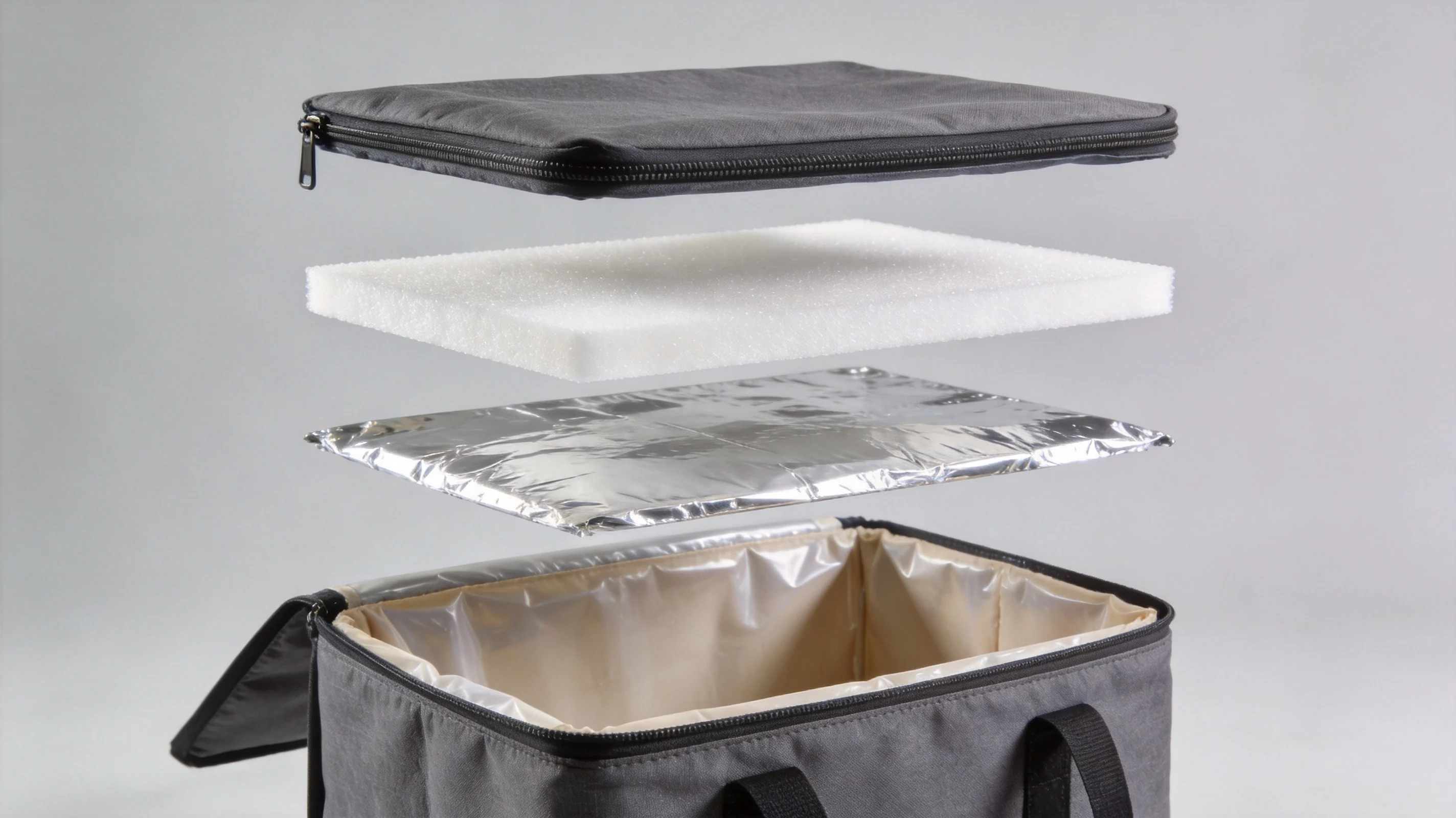
— The four-layer system: tough polyester shell, closed-cell foam, reflective foil barrier and food-contact PEVA lining.
Insulated Picnic Bag Anatomy: Materials and Structure
A bag that genuinely keeps food hot is a laminated sandwich of four layers, and each one does a specific job:
- Outer shell. 600D polyester, 420D ripstop or recycled PET fabric resist abrasion, light rain and picnic-table spills. A DWR coating or TPU backing adds water resistance.
- Foam core. 5–10 mm closed-cell EPE, EVA or EPP foam supplies the stationary air pockets. Thicker walls help, but sealed seams matter just as much — heat leaks through stitching holes.
- Radiant barrier. Aluminum foil or metalized film laminated to the foam reflects radiated heat back inward. Foil is more effective than a plain silver print, which is worth checking in sampling.
- Inner lining. Food-safe PEVA, aluminum-foil laminate or food-grade PVC is heat-sealed at the base and corners so spills and grease wipe out instead of soaking the foam. PEVA is the current mass-market default because it is flexible, wipeable and BPA-free.
Structure completes the system: a full perimeter zipper rather than a flap closure, an insulated base gusset so the bottom is insulated too, a front pocket for utensils and napkins, and carry options (short handles, a removable shoulder strap, or backpack straps for hikers). Heat-sealed or taped inner seams prevent both leaks and the convection gaps that quietly empty a bag of its warmth.

— Shared platters of curries, pasta or pulled meat are exactly the foods that need an insulated carrier between kitchen and table.
Step-by-Step: Packing Hot Food for a Picnic
The method is short, and every step matters more than buying an expensive product.
- Heat the container first. Fill the vacuum jar or lidded dish with boiling water, wait two or three minutes, then empty and add the food. A warm steel wall does not steal the first 20 °C from your stew.
- Fill to the brim. Air inside a half-full container is the biggest heat leak. Choose a jar the meal fills completely, or top up with hot gravy, sauce or boiled vegetables.
- Pack food at a genuine simmer. Food should go in piping hot, not lukewarm — insulation preserves heat, it does not create it.
- Wrap in foil and a towel. A foil layer reflects heat; a cotton towel is extra trapped air and physical cushioning for glass bakeware.
- Pre-warm the cooler bag. A minute with a hot-water bottle or a bowl of hot water inside stops cold lining panels chilling the food on contact.
- Fill every gap. Nestle jars with folded tea towels, napkins or extra socks so nothing can shift or convect. A loosely packed bag loses heat fast.
- Keep it closed and shaded. Every unzipped minute dumps warm air. Put the bag under the picnic table or a tree, never in direct sun or a hot car trunk after arrival.
- Serve within the safe window. Use the 2-hour / 1-hour rule above, and reheat leftovers to steaming before eating if in doubt.
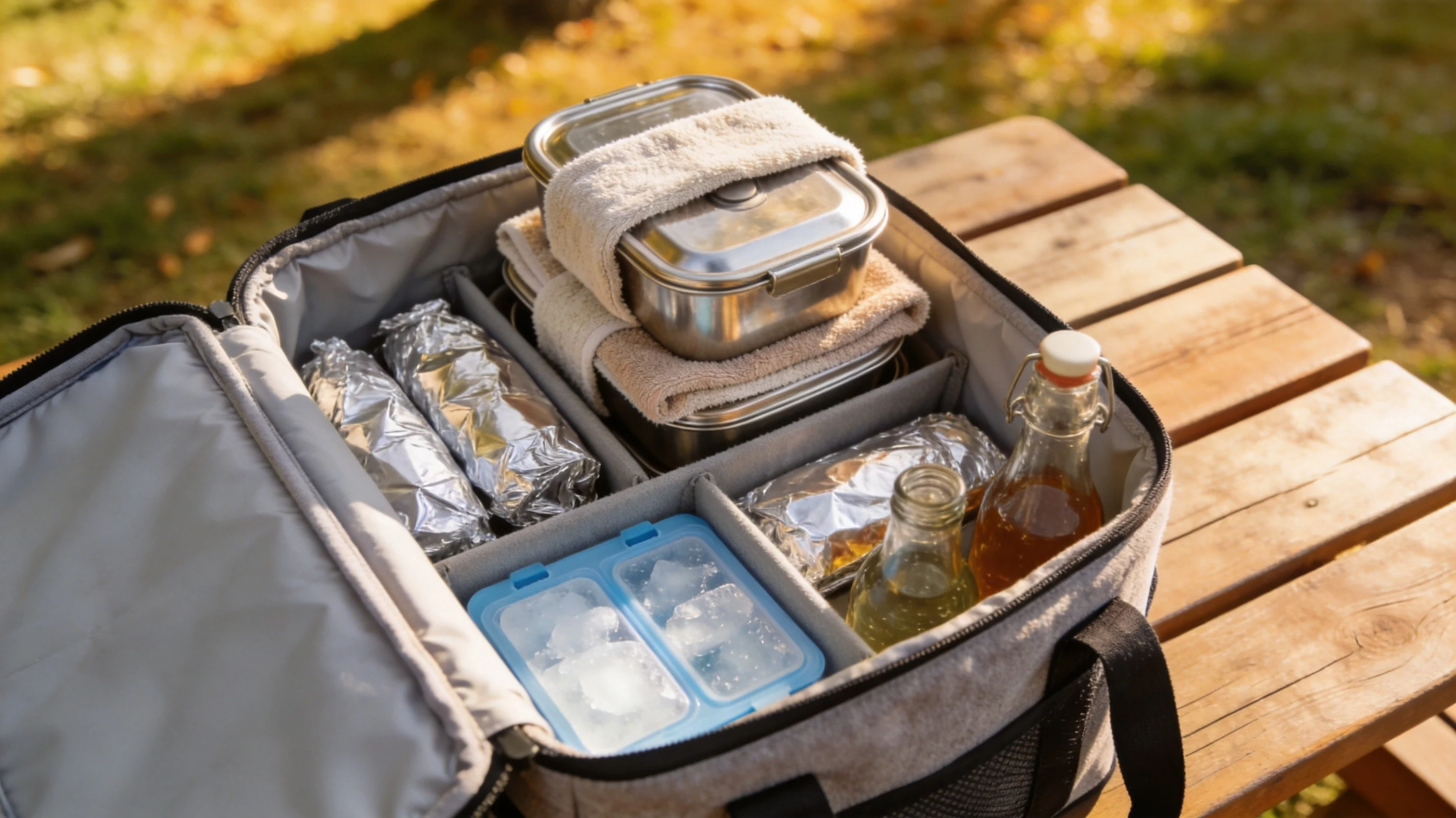
— Preheated containers, towel gaps and foil layers: the packing order that turns a tote into a four-hour hot cabinet.
Hot Packs, Vacuum Jars and Cooler Bags: What Actually Works
Three tools dominate the hot-picnic category, and they stack rather than compete. Reusable heat packs — microwavable gel or phase-change packs — add a thermal battery alongside the food; the original Vesture-style heat pack format was designed for commercial casserole transport and is the model many retail packs follow. Vacuum-insulated stainless jars and stacked bento boxes, built like thermos flasks with a wide mouth, are the longest-holding option for wet food like soup, curry, chili, rice and pasta. Soft cooler bags with high-density foam insulation are the flexible carrier that holds the jars, bread, hot packs and serving ware together — the same form factor sold for cold cans works for hot food.

— Reusable heat packs add stored thermal mass between the kitchen and the picnic table.

— Hot/cold pack sets pair a heat-retaining pack with an insulated sleeve for bakeware and casserole dishes.

— A high-density insulated soft cooler works in reverse for hot food: close the lid and the foam does not know which direction heat should travel.

— Slow-cooker carrier bags are purpose-built around one hot vessel — thick foam, foil lining and a tight zip.

— Bakeware sets sold with insulated carriers train the exact customer habit: hot dish straight from oven into the bag.

— Expandable casserole luggers use wipeable foil linings and padded walls to protect rectangular hot dishes.

— Stacked stainless bento boxes keep rice, protein and sides separately hot for office lunches and picnics alike.

— Vacuum-insulated bowls with silicone seals are the longest-holding single vessels for soups and stews.

— Wide-mouth food jars hold hot meals for five to seven hours and eat straight from the lid.
For more gear context, our roundup of the best insulated picnic baskets covers basket-and-cooler hybrids, and the business case for personalization is laid out in our guide to the benefits of personalized insulated lunch bags. Cool-weather picnic menus are covered in our winter picnic ideas, while the broader cooler format is explained in our lunch cooler bag guide.
Best Picnic Foods to Keep Warm — and What Travels Poorly
Dense, moist, sauce-rich foods hold heat best and forgive a few hours in an insulated bag: chili, curry and stews; pulled meat and meatballs in sauce; pasta bakes and lasagna; fried rice and risotto; sausages and grilled chicken in a foil tray; baked potatoes wrapped in foil and a towel; soups and hot chocolate in vacuum flasks. Foods with a high water content simply stay hot longer because water stores a lot of heat.
Crispy foods are the weak link — fried chicken, roasted potatoes and pastry lose their crunch in a sealed, steamy bag, so pack those in a vented foil container and add them last. Delicate greens and dressed salads should travel cold separately. Eggs, dairy, cooked rice left warm too long and shellfish are the highest-risk items for food-safety abuse; use a thermometer, keep to the two-hour rule, and when a winter picnic turns into an all-afternoon event, reheat on a camp stove rather than guessing.
Custom Insulated Picnic Bags: OEM/ODM for Retail Brands
For retailers, promotional companies and outdoor brands, an own-label insulated picnic line sits at a rare intersection: it is functional year-round, giftable, logo-friendly and technically differentiated once buyers understand foil grades, foam density and lining welds. JUNYUAN manufactures custom insulated totes, casserole carriers, picnic backpacks with detachable coolers, lunch bags and larger delivery-grade thermal bags, with shell fabric, foam thickness, foil lamination, PEVA lining color, zipper system, straps and branding all specified by the customer. Our overview of cooler bag factories for custom insulated picnic and beach bags explains how this supplier category compares.
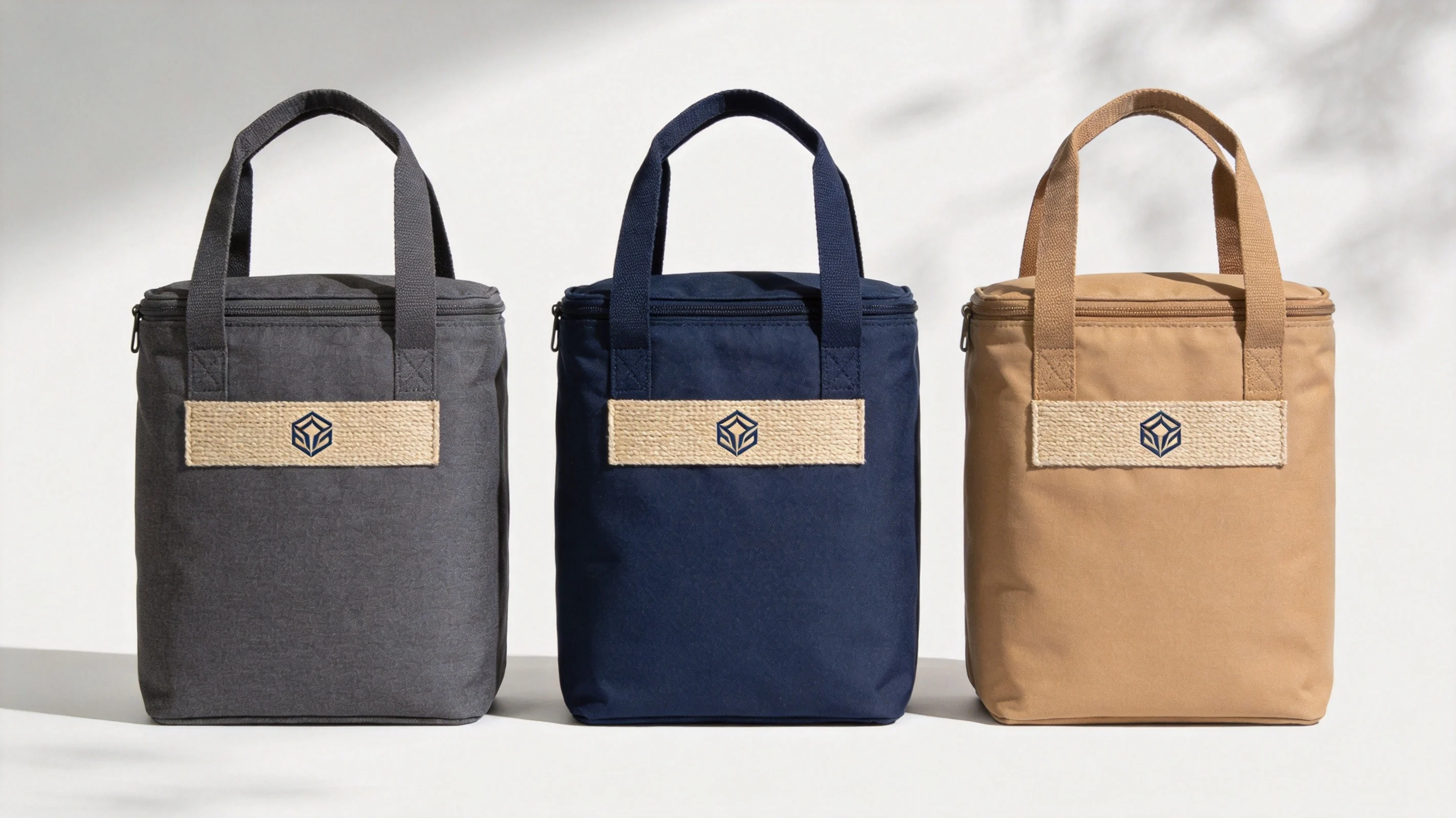
— A private-label color line: same four-layer insulation system, differentiated by palette, trims and woven branding.
Why a 500-Piece MOQ?
Our standard MOQ for custom insulated bags is 500 pieces per style. Five hundred units is the volume at which a custom shell color, foil lamination run and branded woven-label and packaging setup all become economic without forcing a buyer into container-load commitments on a single SKU; it also leaves room to split a first order across two or three colors to test retail reaction. Below that threshold, per-unit costs climb quickly because foam lamination and printing are planned as continuous runs.
That order architecture runs through our network of affiliated and partner factories with insulated-bag production experience since 2014, coordinated end to end by our in-house sampling and QC teams rather than handed to a broker. Individual factory names and headcounts are not part of how we present a program — customers buy the consistency of a documented process.
What that means operationally for buyers: pre-production samples are finished in 6–10 days so lining welds, zipper pull and heat performance can be tested on a real bag; bulk production completes in 35–50 days depending on fabric and custom hardware; each shipment releases under AQL 2.5 final inspection covering seams, lining seals, zippers, labeling and finish; and the finished bag carries a 12-month warranty against manufacturing defects. JUNYUAN, for many years, has run this exact production rhythm for brands across outdoor, gifting and food-service channels for a decade.
Frequently Asked Questions
How do you keep food warm for a picnic without a thermos?
Pack the food piping hot in a preheated lidded container, wrap it in aluminum foil and a thick towel, and place it in a foil-lined foam cooler bag with towels filling every gap and a microwaved heat pack alongside. A tight, pre-warmed, full cooler bag keeps food hot for roughly 2 to 4 hours.
How long does an insulated bag keep food hot?
A well-packed foam and foil cooler bag typically holds hot food for 2 to 4 hours, while a stainless-steel vacuum food jar keeps food hot for 5 to 7 hours. Preheating containers, filling them full and eliminating air gaps make the difference between the low and high ends.
What temperature should hot picnic food stay above?
Keep hot food at 60 °C (140 °F) or above. Food in the 5–60 °C (40–140 °F) danger zone should be eaten within two hours, or one hour when outdoor temperatures exceed 32 °C (90 °F).
Can I use a cooler bag meant for cold drinks to carry hot food?
Yes. Insulation is direction-neutral: foam and foil slow heat transfer in both directions. Make sure the lining is heat-safe and wipeable (PEVA and foil linings are), and keep raw cold food separate from ready-to-eat hot food to avoid cross-contamination.
What is the best material for an insulated picnic bag?
The best construction is a four-layer laminate: a durable polyester or recycled-fabric outer shell, closed-cell EPE or EVA foam, an aluminum-foil radiant barrier, and a food-safe, heat-welded PEVA lining, closed with a full perimeter zipper.
Do foil blankets or extra towels really help?
Yes. Aluminum foil reflects radiant heat and towels trap stationary air and fill empty space. Wrapping hot containers in foil, then towels, inside an insulated bag measurably extends holding time compared with putting bare containers inside.
Should I preheat my insulated bag?
Yes. A couple of minutes with a hot-water bottle or bowl of hot water inside warms the lining and foam so the food’s first minutes do not spend their heat warming cold panels. Empty the water before packing.
What picnic foods stay hot the longest?
Dense, moist, water-rich foods like chili, curry, stew, pasta bake, fried rice, sausages in sauce and foil-wrapped baked potatoes hold heat longest. Crispy fried foods lose texture in a sealed bag and are best added last or eaten first.
Can I reheat picnic food at the park?
Yes, with a camp stove or portable burner and a lidded pot. Bring food to a full steam rather than merely warming it, and discard anything that has spent more than the safe window in the temperature danger zone rather than reheating it for rescue.
How do vacuum food jars keep soup hot for so long?
A double steel wall with the air removed (a vacuum) eliminates conductive and convective heat transfer, while a reflective inner layer reduces radiation. Preheating the jar and filling it to the brim maximizes the rated 5 to 7 hour performance.
Can you custom manufacture insulated picnic bags with our brand logo?
Yes. JUNYUAN builds custom insulated totes, casserole carriers, picnic backpacks and lunch bags as OEM/ODM, with logo printing, embroidery, woven labels, custom colors, lining colors and retail packaging specified by the buyer.
What is the MOQ for custom insulated picnic bags?
The standard MOQ is 500 pieces per style, which supports custom colors and branded packaging while keeping first orders across two or three colorways viable.
What are the sampling and bulk production lead times?
Pre-production samples take 6–10 days after specs and artwork are confirmed, and bulk production runs 35–50 days depending on material readiness and order complexity. Freight to destination is quoted separately.
What quality control and warranty apply?
Every batch releases under AQL 2.5 final inspection covering insulation assembly, lining welds, zippers, seams, labeling and appearance, and the bags carry a 12-month warranty against manufacturing defects. Third-party food-contact and material testing can be arranged for the destination market.
Is PEVA lining food-safe?
PEVA is a widely used food-contact lining for coolers and lunch bags because it is flexible, wipeable, chlorine-free and BPA-free. Buyers selling into regulated markets should request the supplier’s material test reports and, where required, arrange independent food-contact testing in the brand’s own name.