Searching for a quilted bag supplier returns thousands of results, and almost all of them describe the same thing: “we are a professional manufacturer with 10 years of experience, low MOQ, fast delivery.” None of that tells you whether the supplier can hold a quilting stitch density tolerance across a 5,000-piece run, or whether the “low MOQ” comes with a per-colour surcharge that triples your unit cost.
This guide is written for buyers who are past the browsing stage — brand owners, promotional distributors and retail buyers who need to place a real order and want to know what to verify before the deposit leaves the account. It covers what “personalized” actually means at factory level, the five questions that separate a real manufacturer from a trading agent, and the quilting specifications that determine whether the bag looks premium in month one and still looks premium in month twelve.

What “Personalized” Actually Means at Factory Level
The word “personalized” covers four very different levels of customisation, and they cost very different amounts. Before you ask a supplier for a quote, decide which level you actually need — most buyers over-specify on decoration and under-specify on construction, which is the opposite of where the value sits.
Level 1 — Branding Only
An existing quilted bag design with your logo applied. Options include woven labels, metal hardware plates, embossed leather patches and printed lining. This is the cheapest and fastest route: no new pattern, no new quilting mould, sampling in roughly 6–10 days. It suits promotional programs and first orders where you want to test the market before committing to tooling.
Level 2 — Material and Pattern Customisation
Same silhouette, but you change the shell fabric, the quilting pattern, the thread colour or the padding weight. This is where most brand programs sit. A diamond quilting pattern in a different pitch, executed in a matte nylon rather than a gloss PU, produces a visibly different product from the same base pattern — and costs far less than developing a new shape.
Level 3 — Structural Customisation
New silhouette or meaningfully modified dimensions: a wider base, an added exterior pocket, a convertible strap, a different closure system. This requires a new pattern and usually a new quilting template, which means sampling takes longer and tooling may be charged. Expect 2–3 sampling rounds before approval.
Level 4 — Full Development
Design from a sketch or reference image with no existing base pattern. This is a genuine development project: pattern drafting, quilting template creation, prototype iterations, wear testing. It is also where a supplier’s actual capability shows — a trading agent cannot do this, and will either decline or subcontract the work without telling you.

The Five Questions That Separate Suppliers From Traders
Roughly half the “manufacturers” you will find on B2B platforms are trading companies. That is not automatically disqualifying — good traders add real value in coordination and QC — but you need to know which one you are dealing with, because it changes who is accountable when something goes wrong. These five questions surface the difference quickly.
- “What is the quilting stitch density you run, and can you show me a sample at that density?” A real quilting operation knows its stitch-per-inch range and can produce a physical sample. A trader will answer in generalities and send you a stock photo.
- “Which factory will my order actually run in?” Ask for the address and, ideally, a short video walkthrough of the specific line. Vague answers about “our cooperative factories” without naming any are a warning sign.
- “What are the MOQ and the per-colour surcharge, separately?” A quoted MOQ of 100 pieces often means 100 per colour, or 100 with a surcharge below 300. Get both numbers in writing before comparing suppliers.
- “Can you supply the material test report for the shell fabric?” Abrasion, colourfastness and REACH compliance documentation for the actual fabric, not a generic certificate. This is the single fastest way to identify a supplier who does not control their material sourcing.
- “What happens if the quilting pattern misaligns at the seam?” Ask how they handle pattern matching at panel joins. A manufacturer has a defined process; a trader has never thought about it.
Quilting Construction: What to Specify
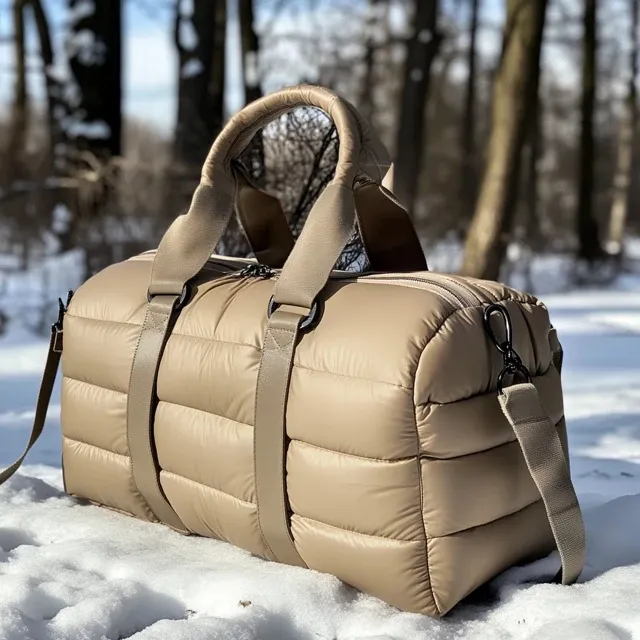
Quilting is the defining feature of this product category and the most common source of quality complaints. Four parameters determine the result:
- Stitch density. Measured in stitches per inch. Below 8 SPI the padding shifts and the pattern looks loose after a few months of use; above 12 SPI the fabric perforates and seam strength drops. The practical range for bags is 9–11 SPI.
- Padding weight and type. Typically 60–120 gsm. Polyester wadding is the standard; a thin foam layer holds shape better but adds stiffness. Specify the gsm, not just “padded.”
- Pattern alignment at seams. The difference between a premium and a mid-market quilted bag is usually whether the diamond pattern lines up across panel joins. Specify pattern matching as a requirement, not an expectation.
- Thread specification. Bonded nylon thread at a suitable tex rating resists abrasion far better than standard polyester. Thread is a small cost line and a large durability factor.
Material Selection for Quilted Bags
| Shell Material | Hand Feel | Quilting Suitability | Best For |
|---|---|---|---|
| Matte Nylon (420D–840D) | Soft, dry | Excellent — holds stitch definition | Everyday shoulder and crossbody bags |
| PU-Coated Polyester | Smooth, slight sheen | Good — needs backing stabiliser | Promotional and volume programs |
| Recycled PET Ripstop | Technical, crisp | Good — pattern reads sharply | Sustainability-led ranges |
| Quilted PU Leather | Structured, premium | Very good — resists padding shift | Premium and gifting programs |
| Velvet / Corduroy | Rich, textured | Requires care — pile can flatten at stitch line | Seasonal and fashion-led drops |
One note on recycled materials: if your brand markets sustainability, the certification matters as much as the material. A GRS-certified recycled PET with documented chain of custody is a different product from an uncertified rPET blend, and the price gap reflects that. Ask for the transaction certificate, not just a claim on the spec sheet.
MOQ, Sampling and Lead Times
| Stage | Typical Range | Notes |
|---|---|---|
| Minimum order quantity | 500 pcs per style | Lower MOQ usually carries a per-unit surcharge |
| Sampling | 6–10 days | Longer for structural customisation (Level 3–4) |
| Sample revision rounds | 1–3 | Budget for two if quilting pattern is new |
| Bulk production | 35–50 days | After sample approval and deposit |
| Sample fee | Charged, credited back | Credited against first bulk order above threshold value |
The MOQ figure is where most first-time buyers get surprised. 500 pieces per style is standard for genuine customisation because quilting templates and pattern grading carry fixed setup costs. If your requirement is smaller, the practical options are to choose an existing pattern and customise only branding, or to accept a per-unit surcharge on a smaller run.
Red Flags in Supplier Vetting
- A price that is 30% below every other quote. In quilted bags, that gap almost always comes from padding weight, thread quality or stitch density — all of which are invisible in a photo and obvious in month three.
- Unwillingness to send a paid sample. A supplier who will not produce a physical sample before an order is either a trader without production access or does not want you to see the actual output.
- No answer on pattern matching. If the supplier cannot explain how they align the quilting pattern at panel seams, they have not done it at a premium level.
- Certificates that name a different company. A REACH or GRS certificate is issued to a specific legal entity. If the name does not match the supplier, ask who it actually belongs to.
- Pressure to skip the sample stage. No legitimate manufacturer needs to skip sampling on a new quilting pattern; the risk sits entirely on your side.
What Junyuan Bags Can Offer
Junyuan was established in 2014, with a founding team whose bag-manufacturing experience goes back to 2004. Quilted bag production runs through affiliated and partner factories in Fujian, which gives programs access to specialised quilting, embroidery and hardware lines without every process sitting under one roof.
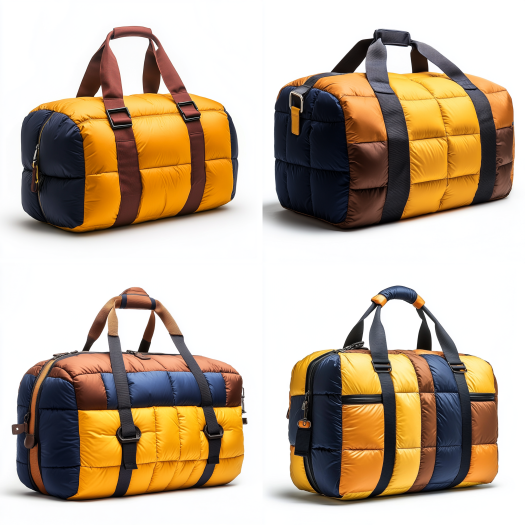
- Quilting capability — diamond, chevron, channel and custom patterns, with stitch density specified per program rather than fixed at a house default.
- Branding options — woven labels, metal plates, embossed leather patches, printed lining and custom hardware.
- Material sourcing — matte nylon, PU-coated polyester, recycled PET with GRS documentation where available, and quilted PU leather.
- Sampling — 6–10 days for branding and material customisation; longer for new silhouettes.
- MOQ — 500 pieces per style for full customisation.
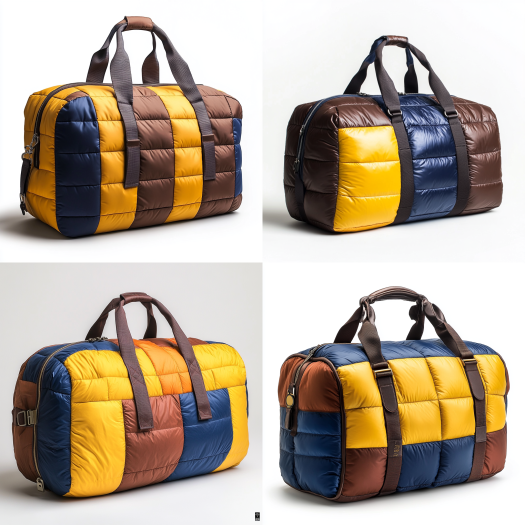
For the fuller capability picture, see our personalized quilted bag manufacturing page. If your range extends beyond quilting, we also produce custom tote bags and custom shoulder bags on the same QC framework, and the complete B2B guide to tote bag manufacturing covers the wider sourcing process.

Design Direction: What Sells in 2026
If you are still deciding what to produce, three directions are converting well in the current market:
- Oversized soft quilting. Larger diamond pitch in a matte nylon, unstructured silhouette. Reads as contemporary and photographs well, which matters for DTC brands.
- Technical quilting. Tighter pitch, ripstop shell, matte hardware. Bridges the outdoor and lifestyle categories and holds price better than plain nylon.
- Quilted leather for gifting. Structured, small-format, with a metal plate or embossed patch. The strongest corporate gifting category for quilted bags because perceived value is high relative to unit cost.
Our overviews of the main quilted bag types and current quilted bag styles show how these directions translate into actual product, and puffer and quilted purse formats cover the smaller-format end of the range.
Frequently Asked Questions
What is the minimum order for personalized quilted bags?
500 pieces per style for full customisation including material, quilting pattern and branding. Smaller quantities are possible where an existing pattern is used with branding changes only, usually with a per-unit surcharge.
How long does a quilted bag sample take?
6–10 days for branding or material customisation. A new silhouette or a new quilting pattern typically needs two to three revision rounds, so allow 3–4 weeks before you have an approvable sample.
Can you match a specific quilting pattern?
Yes. Send a reference image or a physical sample and we will confirm the achievable stitch density and pattern pitch. Where the reference comes from another brand’s product, we will produce a pattern in the same family rather than an exact copy.
Is recycled material available?
Yes, recycled PET is available for quilted shells. If your marketing claims recycled content, tell us at enquiry stage so we can source with GRS chain-of-custody documentation rather than uncertified rPET.
Do you manufacture in your own factory?
Production runs through affiliated and partner factories in Fujian that we have worked with for years. This structure gives access to specialised quilting and embroidery lines, and we manage QC, sampling and delivery across the whole chain.
What are the payment terms?
Standard terms are a deposit on order confirmation with the balance due before shipment. Terms can be discussed for established repeat programs.
Next Step
Send us a reference image, your target quantity and your launch date. We will tell you which customisation level your requirement actually needs — most buyers can reach their design intent at Level 2 rather than Level 3, which saves both tooling cost and four weeks of development time.
Email [email protected] with your requirements, or start with the personalized quilted bag capability overview.