
A dog carrier purse is a handbag-shaped soft carrier, and it succeeds or fails on three structural decisions: how the base panel is reinforced, how the zipper is locked against an animal pushing from the inside, and how the shoulder strap is anchored to the shell. Everything else — colour, hardware finish, whether it passes as a designer bag — is secondary, because a carrier that sags at the base or opens at the zip will be retired within a month regardless of how it looks.
This page is written from the manufacturing side. We build pet carriers for brands and retailers, we inspect them to AQL 2.5 before they ship, and we have seen the same three failures come back from the field year after year. What follows is the inspection logic we apply, translated into questions a buyer can ask in a shop or on a product page.
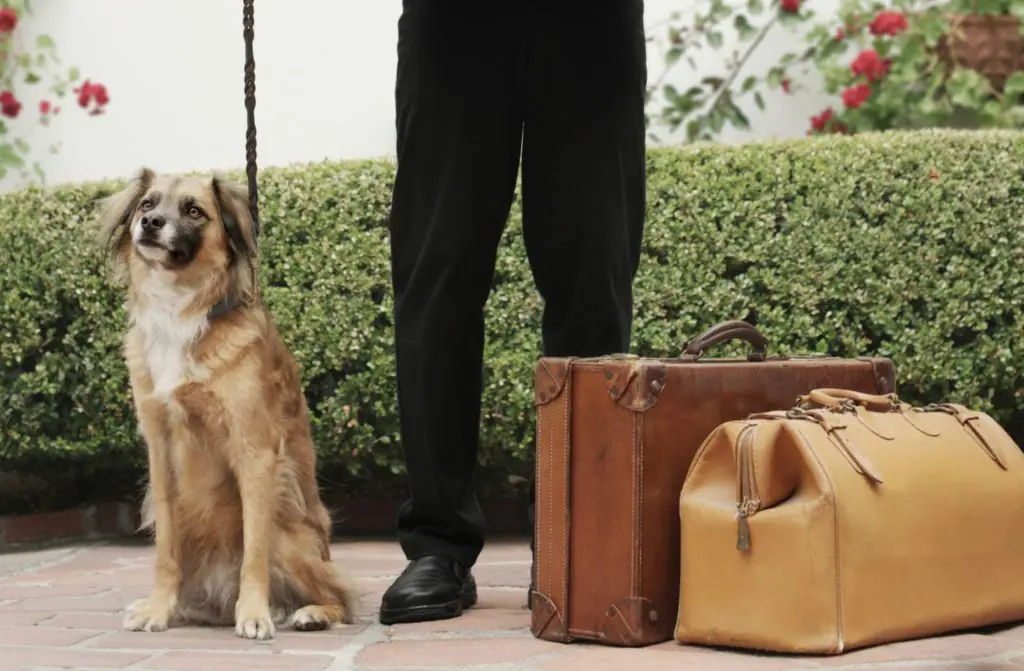
A dog carrier purse fails in three predictable places: the base panel collapses, the zip opens under internal pressure, or the strap anchor tears out of the shell. Material choice and brand have far less to do with longevity than these three joints.
What Actually Separates a Dog Carrier Purse From a Tote or a Sling
Three carrier shapes get used interchangeably in product listings, and the confusion is not accidental — it lets a seller borrow search traffic from a category the product does not belong to. The physical differences matter because each shape puts load through a different part of the bag.
| Shape | Load path | Typical pet ceiling | Best use | Weakest joint |
|---|---|---|---|---|
| Dog carrier purse | Two short handles or one shoulder strap, load concentrated on a 3–6 cm contact strip | Up to roughly 7 kg / 15 lb | Errands, cafés, vet visits, public transport | Strap anchor and base panel |
| Dog carrier tote | Two longer handles, load split across the palm | Up to roughly 10 kg / 22 lb | Day trips, shopping, car travel | Handle root and side seam |
| Dog sling carrier | One wide strap across the torso, load carried on the hip and chest | Up to roughly 5 kg / 11 lb | Short walks, hands-free errands | Strap width and buckle |
| Dog carrier backpack | Two shoulder straps plus, ideally, a hip belt | Up to roughly 15 kg / 33 lb | Hiking, cycling, long transit | Frame and hip belt transfer |
The purse shape is the hardest of the four to engineer, because the visual brief and the mechanical brief pull in opposite directions. A handbag silhouette wants a slim profile, a clean unbroken face and minimal visible hardware. A carrier needs internal volume, cross-ventilation on at least two faces, a rigid floor and a strap that can take a live load shifting its centre of gravity every few seconds. Most of the failures described below are the result of resolving that conflict in favour of the silhouette.

The Three Fail Points, and How to Test for Each One
Fail point 1 — The base panel collapses under a live load
A soft bag with no floor support does not fail dramatically. It sags. The pet’s weight pushes the base fabric into a hammock shape, the pet slides toward the centre, and the whole bag rotates around the shoulder because the centre of gravity has moved. Owners describe this as “the bag feels unstable” and usually blame the strap. The strap is rarely the problem.
A properly built carrier purse uses one of three base constructions. A removable PE (polyethylene) board of 2–3 mm sits in a sleeve and is the cheapest reliable option. A laminated EVA base with a fabric wrap is more expensive, lighter and does not crease. A moulded PP shell base is the most rigid and is what hard-bottom fashion carriers use. Anything described only as “padded base” or “soft cushion bottom” has none of these and will sag within weeks.
Test it in ten seconds: turn the bag upside down with the base toward you and press both thumbs into the centre of the floor. A board-backed base deflects less than about 5 mm and springs back. A foam-only base deflects 15 mm or more and stays dished. You can run this test on any bag in a shop without damaging it.
Fail point 2 — The zip opens under pressure from inside
This is the failure that gets reported as an escape, and it is the one buyers under-investigate because it is invisible until it happens. Two mechanisms cause it. The first is a coil zip with a slider that has no locking mechanism — a pet pressing against the closed zip from inside can walk the slider open along the chain, particularly on a curved top opening. The second is a zip positioned on a face that the pet’s back is pressed against when the bag is carried, which converts the animal’s own body weight into opening force.
The fix is not a heavier zip. It is a locking slider, a two-way zip with the sliders parked at opposite ends, or a mechanical secondary closure — a clip, a snap or a strap-over flap — that takes the load off the zip entirely. Carrier purses with a top opening and a single non-locking slider are the single most common escape vector we see in returned samples.
Test it: close the zip, then push the slider along the chain with one finger while the fabric is under slight tension. If it moves without the pull tab being lifted, it is not locking. Then push the two sides of the zip apart from inside with your hand — a good zip with a locking slider will not separate.
Fail point 3 — The strap anchor tears out of the shell
Strap anchors fail at the point where the webbing is sewn to the bag body, and they fail because the load is concentrated on a short stitch run through thin material with no backing. A 6 kg dog in a bag that swings produces dynamic loads well above 6 kg — every step adds a spike. The stitch line sees that spike hundreds of times per walk.
Three details separate a durable anchor from a decorative one. First, the webbing should continue down the inside of the shell and be bar-tacked to the base seam, not just stitched to the top edge. Second, there should be a reinforcement patch — a second layer of the shell fabric or a webbing tape — behind the stitch line. Third, the stitch pattern should be a box-X, not a single straight run. A straight run of eight stitches is a visual anchor; a box-X with 30 or more stitches through a reinforced patch is a structural one.
Test it: hold the bag by the strap and let it hang with a 3–4 kg weight inside (a bag of rice works). Then rotate your wrist sharply, as if you were changing direction. A bag that creaks, or where the shell puckers around the anchor, has an under-built joint.

Carry Mechanics: Why the Same Bag Feels Fine on One Person and Painful on Another
Shoulder pain from a pet carrier is a pressure problem, not a strength problem. Pressure is force divided by contact area, so the variable you control is the width of the strap and how much of the load the strap actually carries.
| Carry mode | Contact area | Practical pet weight | Comfortable duration | What to look for |
|---|---|---|---|---|
| Short top handles (hand carry) | Palm and fingers | Up to 4 kg / 9 lb | 10–20 minutes | Handle drop of 8–12 cm; rolled or padded grip |
| Single narrow shoulder strap | 3–4 cm strip on one shoulder | Up to 5 kg / 11 lb | 20–40 minutes | Strap at least 4 cm wide; sliding pad |
| Single wide shoulder strap | 5–7 cm strip, or a pad | Up to 7 kg / 15 lb | 45–90 minutes | Pad that stays put; no hard edge at the seam |
| Crossbody | Diagonal across torso, load on hip | Up to 8 kg / 18 lb | 1–2 hours | Adjustable length; wide pad at the hip |
A single shoulder strap narrower than 4 cm carrying more than 5 kg will produce shoulder discomfort within 40 minutes in most adults, regardless of how well the bag is made.
Crossbody is the most under-specified mode on carrier purses and the most useful for anyone carrying a pet for more than half an hour. It moves load off the trapezius and onto the hip, which is where the body is designed to carry weight. The catch is that crossbody requires a longer strap, and a longer strap means a longer lever arm on the anchor — so the anchor construction described above matters more, not less, in crossbody use.
Materials: What “Pet-Safe” Should Mean on a Carrier Purse
Pet carriers sit against an animal’s skin and mouth for hours. That makes two material questions relevant that are usually ignored on fashion bags: what happens when the surface is licked, and what happens when it is clawed.
PU leather, coated canvas and genuine leather are not interchangeable
Polyurethane (PU) is a plastic coating on a knitted or woven backing. It is cheap, wipes clean, holds a crisp shape and can be embossed convincingly. Its weakness is hydrolysis: over two to four years the coating softens, becomes tacky, and eventually peels away from the backing. In a carrier purse this shows up first at the strap folds and the base corners. If your dog licks the interior, the relevant point is not the PU itself but what is underneath it — a cheap PU on an unstabilised backing can release plasticiser smell that dogs find interesting and then chew.
Coated canvas (cotton or polyester canvas with a PU or PVC back-coating) is the most durable option in the mid range. The woven substrate takes abrasion far better than a PU film, and it does not peel because the coating is bonded into the weave rather than laid on top. It also creases less at the base, which matters for the sag problem described above.
Genuine leather looks the best and behaves the worst in a carrier, for a reason that has nothing to do with quality: leather is a skin, and a pet’s claws will mark it permanently. Chrome-tanned leather is the industry default and is fine for the exterior of a bag that a dog sits inside. Vegetable-tanned leather is softer and has fewer residual chemicals, but it stains from water and urine and is a poor choice for an interior floor.
| Shell material | Abrasion | Shape retention | Lick / chew risk | Expected life |
|---|---|---|---|---|
| PU on knit backing (thin) | Low | High when new, falls off | Plasticiser smell; coating can flake | 1–3 years |
| PU on woven backing (thicker) | Medium | High | Low if coating is intact | 3–5 years |
| Coated canvas 600D | High | Medium–high | Low | 4–6 years |
| Genuine leather | Medium (marks easily) | High | Low, but stains | 5+ years with care |
| Uncoated cotton canvas | Medium | Low | Low | 2–3 years |
For the interior, the two things that matter are a removable, washable base mat and a lining that does not hold odour. A non-removable lining turns a carrier into a disposable item after the first accident. A mat that lifts out and can go in a washing machine at 30 °C extends the working life of the bag by years.

Ventilation Without Breaking the Handbag Silhouette
Ventilation is normally described in product copy as “breathable mesh panels”, which tells you nothing. The useful measure is the proportion of the interior surface area that is open mesh, and the position of that mesh relative to airflow.
A carrier with mesh on one face only will not cross-ventilate. Air moves when there is an inlet and an outlet at different pressures, which in a carried bag means two mesh zones on different faces — ideally one high and one low, so the bag works like a chimney when the animal is inside. A single large mesh panel on the front, with a solid back panel against the carrier’s body, is the most common and least effective configuration, because the solid panel blocks the only route for air to enter or leave.
A soft pet carrier needs open mesh on at least two opposing faces to cross-ventilate; a single mesh panel on one face produces almost no air exchange once the bag is held against a body.
The practical minimum for a purse used in warm weather is mesh on the front face and one end, plus a top opening that can be left partly unzipped with a secondary closure holding the animal in. Below that, interior temperature climbs within 20–30 minutes in summer, and the animal’s only cooling route — panting — is working against a rising ambient temperature.
There is a real trade-off here, and it is worth stating plainly: the more mesh, the less the bag looks like a handbag. Brands that sell a “discreet” carrier are choosing silhouette over airflow, and that is a legitimate product decision for short trips in mild weather. It is not a legitimate decision for a product marketed for daily commuting or air travel.
Sizing: Measure Chest Girth and Standing Height, Not Weight
Weight tells you how much your arm will feel. It does not tell you whether the animal fits. Two dogs at 5 kg can differ by 8 cm in chest girth and by 10 cm in standing height, and the dog that is too tall for a bag will spend the whole trip with its head jammed against a closed top.
The three measurements that matter are chest girth (around the widest part of the ribcage, just behind the front legs), body length (base of neck to base of tail), and standing height (floor to the top of the shoulder blades). Add 2–3 cm to each for movement clearance, then compare against interior dimensions — not exterior dimensions, which include the walls and hardware.
| Typical breed group | Chest girth | Body length | Interior floor needed | Interior height |
|---|---|---|---|---|
| Toy (Chihuahua, Yorkie, Pomeranian) | 28–36 cm | 20–28 cm | 30 × 18 cm | 22–26 cm |
| Small (Shih Tzu, Maltese, French Bulldog) | 36–46 cm | 28–36 cm | 36 × 22 cm | 26–30 cm |
| Small-medium (Poodle mini, Cocker Spaniel) | 46–56 cm | 36–46 cm | 42 × 26 cm | 30–34 cm |
| Medium (Beagle, Border Collie) | 56–66 cm | 46–56 cm | Not suitable for a purse — use a tote or backpack | — |
Two sizing rules that are worth more than any chart. First, if the animal cannot stand fully upright inside with the lid closed, the bag is a transport device, not a carrier — fine for the vet, wrong for a day out. Second, if the bag’s own weight exceeds about 15% of the animal’s weight, the combination becomes uncomfortable to carry for more than 20 minutes regardless of how well it is built.

Cabin Fit: Measure the Seat, Not the Airline’s Published Number
Published under-seat dimensions are a starting filter, not a guarantee. The number on an airline’s website describes a typical seat, and the actual space depends on the aircraft type, the seat position, and whether there is an entertainment box under the seat in front of you. On several narrow-body configurations the box occupies a third of the under-seat volume, which is where “airline approved” carriers end up being refused at the gate.
| Airline (US carriers, check current policy before travel) | Published carrier limit | Practical note |
|---|---|---|
| American Airlines | 18 × 11 × 11 in | Soft-sided only; pet plus carrier under 20 lb |
| Delta Air Lines | Fits under seat; practical limit around 18 × 11 × 11 in | No published weight cap; animal must turn around |
| United Airlines | Hard-sided 17.5 × 12 × 7.5 in; soft-sided 18 × 11 × 11 in | Two different limits depending on construction |
| Southwest Airlines | 18.5 × 8.5 × 13.5 in | Unusual proportions; check the height figure carefully |
| Alaska Airlines | Soft-sided 17 × 11 × 9.5 in; hard-sided 17 × 11 × 7.5 in | Among the tighter soft-sided limits |
| JetBlue | 17 × 12.5 × 8.5 in | Lowest height allowance of the group |
Two facts resolve most of the confusion around this category. The first is that no authority certifies pet carriers — the TSA screens animals at the checkpoint but does not approve carrier designs, so “TSA approved” is marketing language rather than a certification. The second is that the binding constraint is almost always height, not length, because soft carriers compress front-to-back but not top-to-bottom.
The measurement that actually works: before you fly, look up your flight number on a seat-map site, identify the aircraft type, and search for the under-seat dimensions of that specific aircraft and cabin. Then subtract 2 cm from the height figure to allow for the seat rail. A carrier that clears that number by 1 cm is safer than one that matches the published maximum exactly.
If you are buying for a brand rather than for yourself, this is the argument for building a carrier with a compressible body and a rigid base rather than a rigid body. Soft bodies absorb the variance between aircraft; rigid shells do not, and a rigid shell that misses by 1 cm is a returned product.
What a Factory Actually Checks Before a Carrier Purse Ships
Buyers rarely get to see this part, and it explains why two bags that look identical online perform completely differently. A production run of carrier purses is not signed off on appearance. It is signed off on a sampling standard and a set of functional tests, and the sampling standard is what determines how many defects are tolerated in the batch you receive.
The standard we work to is AQL 2.5 for major defects and AQL 4.0 for minor defects, applied to a random sample drawn from the finished lot. In plain terms: major defects — a non-locking zip, a strap anchor with a single stitch run, a base panel that deflects more than 10 mm — are tolerated at a much lower rate than cosmetic issues such as a scuff on the lining. Buyers who specify only “good quality” get whatever the factory’s default is. Buyers who specify AQL 2.5 major / 4.0 minor get a number they can hold a supplier to.
| Check | Method | Pass criterion | Why it matters |
|---|---|---|---|
| Base rigidity | Load the floor panel centrally, measure deflection | Under 10 mm at rated load | Predicts sagging in the first month |
| Zip locking | Push slider along closed chain under tension | No movement without lifting the tab | Primary escape vector |
| Strap anchor pull | Static pull at 3× rated load, then inspect stitch line | No stitch elongation, no shell puckering | Dynamic loads far exceed pet weight |
| Handle and hardware | Cycle and salt-spray on metal fittings | No corrosion after 24 h salt spray | Cheap hardware stains fabric and skin |
| Ventilation area | Measure open mesh as a share of interior surface | Meets the spec agreed at sampling | Prevents “breathable” claims with no airflow |
| Seam integrity | Pull test on load-bearing seams | No separation at rated load | Second most common field failure |
| Interior finish | Check lining seams, mat removability, odour | No exposed seam allowance, mat removable | Determines usable life after an accident |
For reference on what the commercial terms behind this look like: custom pet carrier production typically runs from a minimum of 500 pieces per style and colour combination, with sampling at 6–10 business days after design and material confirmation, and bulk production at 35–50 days after sample sign-off depending on quantity, size variants and customisation depth. Freight sits on top of that — roughly 14–20 days by ocean to the US West Coast. These numbers are worth knowing even if you never place an order, because they tell you how much of a carrier’s price is labour and inspection rather than materials.
Custom pet carrier production typically starts at 500 pieces per style and colour, with 6–10 business days for sampling and 35–50 days for bulk production after sample approval.
If you want the full manufacturing picture — materials, construction, documentation, HS classification and cost structure — it is covered in our complete B2B guide to custom pet carrier manufacturing, and the OEM/ODM process itself is set out on the custom pet bag manufacturer page. This page stays on the consumer question: which carrier purse is right for a specific animal and a specific trip.
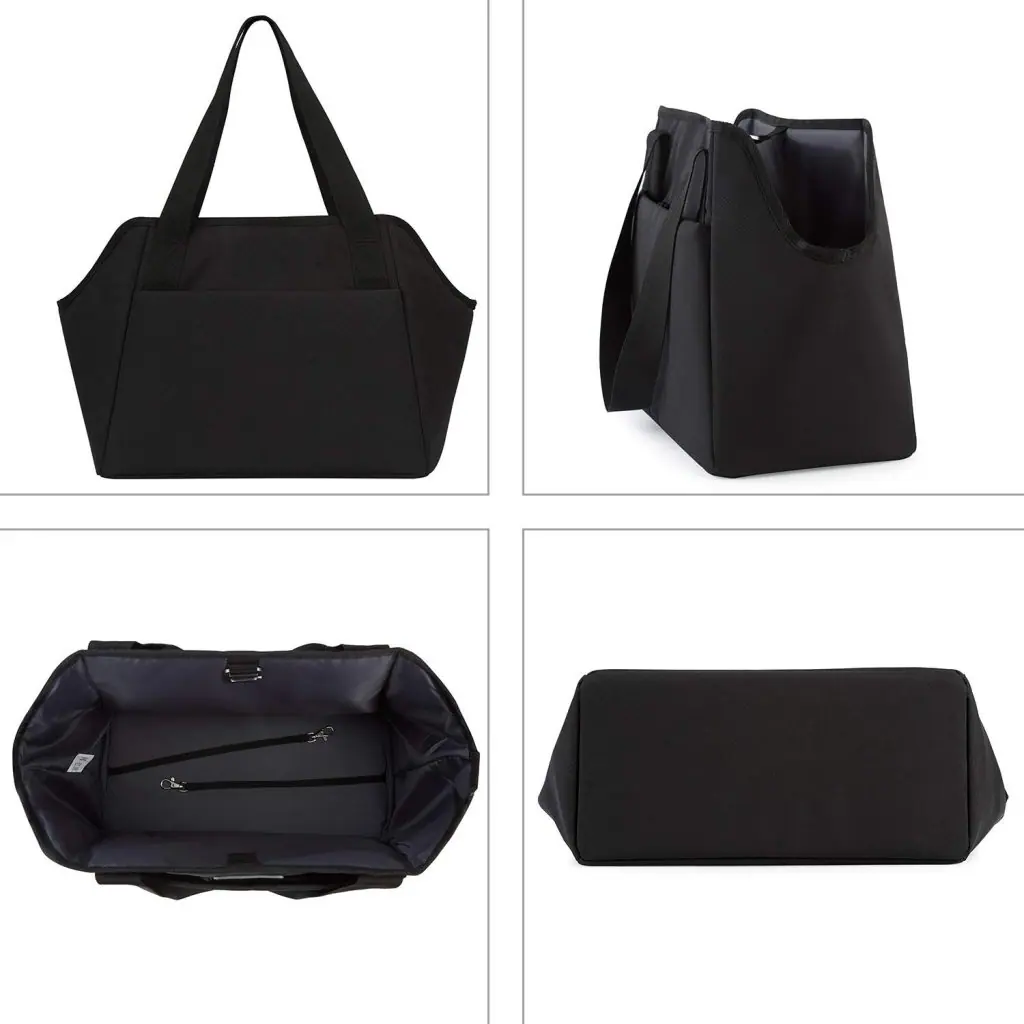
Six Carrier Purses We Build, and the Problem Each One Solves
The models below are our own production, and each exists because a buyer asked for a specific fix rather than a specific look. Describing them by the problem they solve is more useful than describing them by colourway.


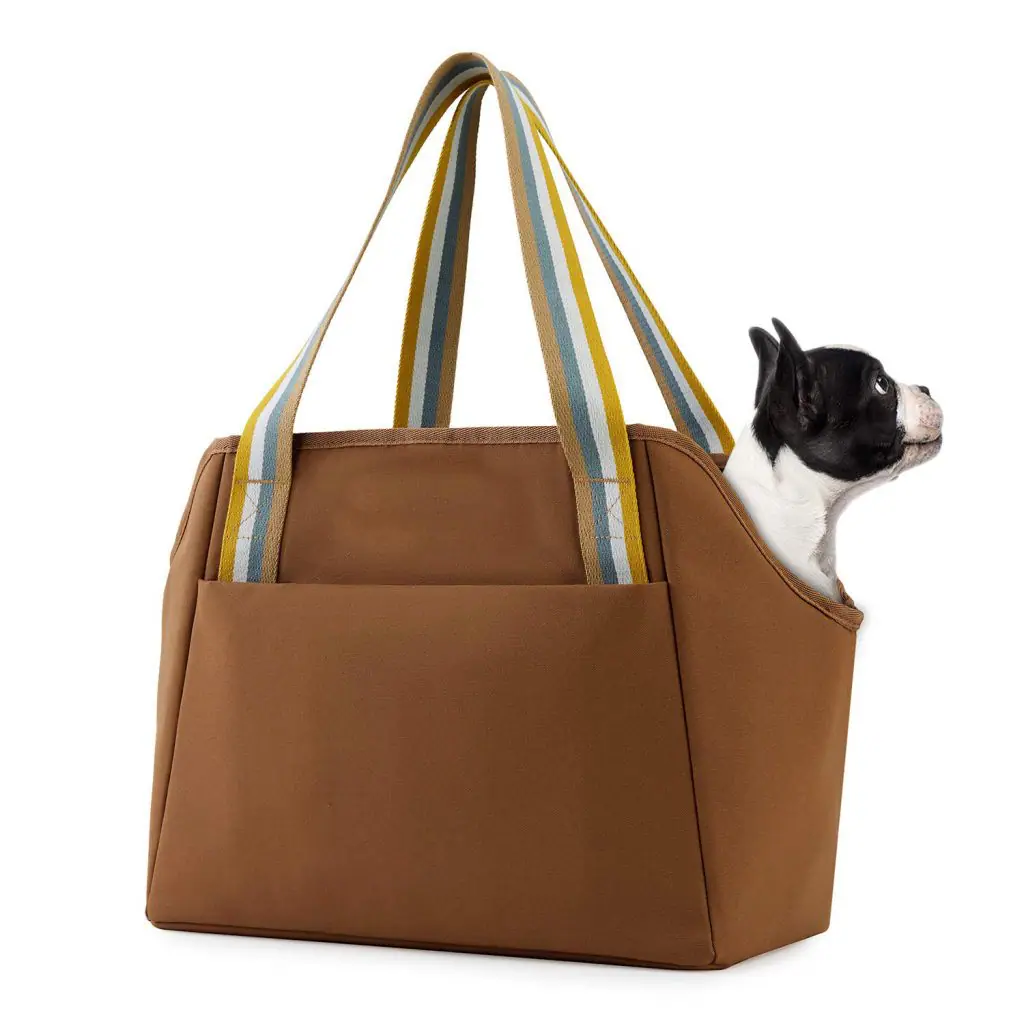
The rest of the current pet range — slings, backpacks, foldable travel carriers and hard-sided boxes — is on the pet bag collection page. If you are comparing materials more broadly before choosing a shape, our breakdown of whether an expensive pet carrier is actually necessary covers the cost-versus-durability question in more detail.



Frequently Asked Questions
What is the most common reason a dog carrier purse fails?
The base panel. A soft bag without a rigid or semi-rigid floor deflects under the animal’s weight, the pet slides to the centre, and the carrier rotates on the shoulder. Owners experience this as an unstable or uncomfortable bag and replace it, usually within three months. Base construction — a 2–3 mm PE board, a laminated EVA panel or a moulded shell — is the single specification most worth checking before purchase.
How much weight can a carrier purse shoulder strap actually hold?
The strap itself is rarely the limit; the anchor is. A well-built anchor with a box-X stitch through a reinforcement patch will hold several times the rated pet weight in static load. The failure mode is fatigue at the stitch line under the repeated dynamic spikes of walking, which is why a straight eight-stitch run fails where a 30-stitch box-X survives. Test by hanging 3–4 kg from the strap and rotating your wrist sharply — listen and watch the anchor.
Is PU leather safe if my dog licks or chews the bag?
The PU coating itself is inert once cured. The risk sits underneath it: cheap PU on an unstabilised knit backing can release plasticiser odour that attracts chewing, and a coating that has begun to hydrolyse will flake into small pieces. A carrier with an intact, thick PU on a woven backing, or a coated canvas, is the safer choice for a dog that mouths things. Replace any carrier where the interior coating has started to peel.
How do I stop my dog from unzipping the carrier from inside?
Use a zip with a locking slider, a two-way zip with the sliders parked at opposite ends, or a secondary mechanical closure — a clip, snap or strap-over flap — that carries the load instead of the zip. Avoid single-slider coil zips on a curved top opening: a pet pressing from inside can walk the slider open along the chain. Test any bag by pushing the slider with one finger while the fabric is under tension.
How much ventilation does a dog carrier purse need?
Open mesh on at least two opposing faces, ideally one high and one low so the bag behaves like a chimney. A single mesh panel with a solid panel against your body produces almost no air exchange once the bag is carried. For warm-weather use, add a top opening that can be left partly unzipped with a secondary closure holding the animal in.
Should I size a dog carrier purse by weight or by chest girth?
Chest girth, body length and standing height. Weight predicts how heavy the bag feels to you, not whether the animal fits. Two 5 kg dogs can differ by 8 cm in chest girth and 10 cm in height. Measure around the widest part of the ribcage, base of neck to base of tail, and floor to shoulder blades, then add 2–3 cm clearance and compare against interior dimensions rather than exterior ones.
Can a dog carrier purse be used as an everyday handbag when empty?
Yes, and that is the main reason the shape exists — but only if the ventilation is routed through end panels rather than the front face, and if the interior mat is removable. A carrier with a large front mesh panel does not read as a handbag when empty, and one with a fixed interior lining will hold odour and cannot be used for anything else after the first trip.
What is the difference between a dog carrier purse and a dog sling carrier?
Load path. A purse carries from two short handles or one shoulder strap, concentrating force on a narrow contact strip; a sling carries from one wide strap across the torso, putting load on the hip and chest. Slings are more comfortable for longer carries but hold less weight and offer less structure. Purses hold shape better and look more like a bag, but become uncomfortable above roughly 5 kg on a narrow strap.
How do I measure under-seat space on the actual aircraft?
Look up your flight number on a seat-map site to identify the aircraft type, then find the under-seat dimensions for that aircraft and cabin, and subtract 2 cm from the height figure to allow for the seat rail. Published airline maximums describe a typical seat. On some narrow-body aircraft an entertainment box occupies a third of the under-seat volume, which is where carriers that matched the published number still get refused at the gate.
Why does the base of a soft dog carrier purse sag?
Because there is no board. Foam padding compresses permanently under a live load; a PE board, laminated EVA panel or moulded shell does not. Test any bag by turning it upside down and pressing both thumbs into the centre of the floor: a board-backed base deflects less than about 5 mm and springs back, a foam-only base deflects 15 mm or more and stays dished.
How do I clean a leather or PU dog carrier purse without damaging it?
Remove the base mat and wash it separately at 30 °C. Wipe the shell with a damp microfibre cloth and a pH-neutral soap, then dry it open and away from direct heat. Do not use alcohol or solvent cleaners on PU — they accelerate hydrolysis and cause the coating to lift at fold lines. For genuine leather, use a dedicated leather cleaner and recondition the strap folds, which dry out first.
What hardware should I check before buying a carrier purse?
Three items. The zip slider should lock when the tab is released. The strap rings should be welded or stitched closed, not split rings that can open under load. The rivets and feet should be solid metal rather than hollow caps — hollow rivets crush and then the anchor loosens. A 24-hour salt-spray test is the manufacturing standard; in a shop, look for plating that is already dulling at the edges.
How long can a small dog stay in a carrier purse?
For a well-ventilated carrier at comfortable ambient temperature, 1–2 hours is a reasonable continuous limit for a small dog, with a break every 45–60 minutes to drink and toilet. Above 26 °C ambient, shorten that substantially and check the interior temperature by hand every 20 minutes. A carrier purse is a transport device, not a place for an animal to spend a working day.
What does a manufacturer inspect before shipping dog carrier purses?
At minimum: base deflection under load, zip locking behaviour, strap anchor pull at three times rated load, hardware salt spray, measured ventilation area, load-bearing seam integrity, and interior finish including mat removability and odour. The sampling standard we work to is AQL 2.5 for major defects and AQL 4.0 for minor. Buyers who specify only “good quality” receive the factory default instead of a standard they can enforce.
Building a carrier purse line, or sourcing one for a retail programme? We produce custom pet carriers from 500 pieces per style and colour, with sampling at 6–10 business days and bulk at 35–50 days. Send a specification or a reference sample and we will quote against it — or start with the OEM/ODM pet bag manufacturing page for the full capability list.