
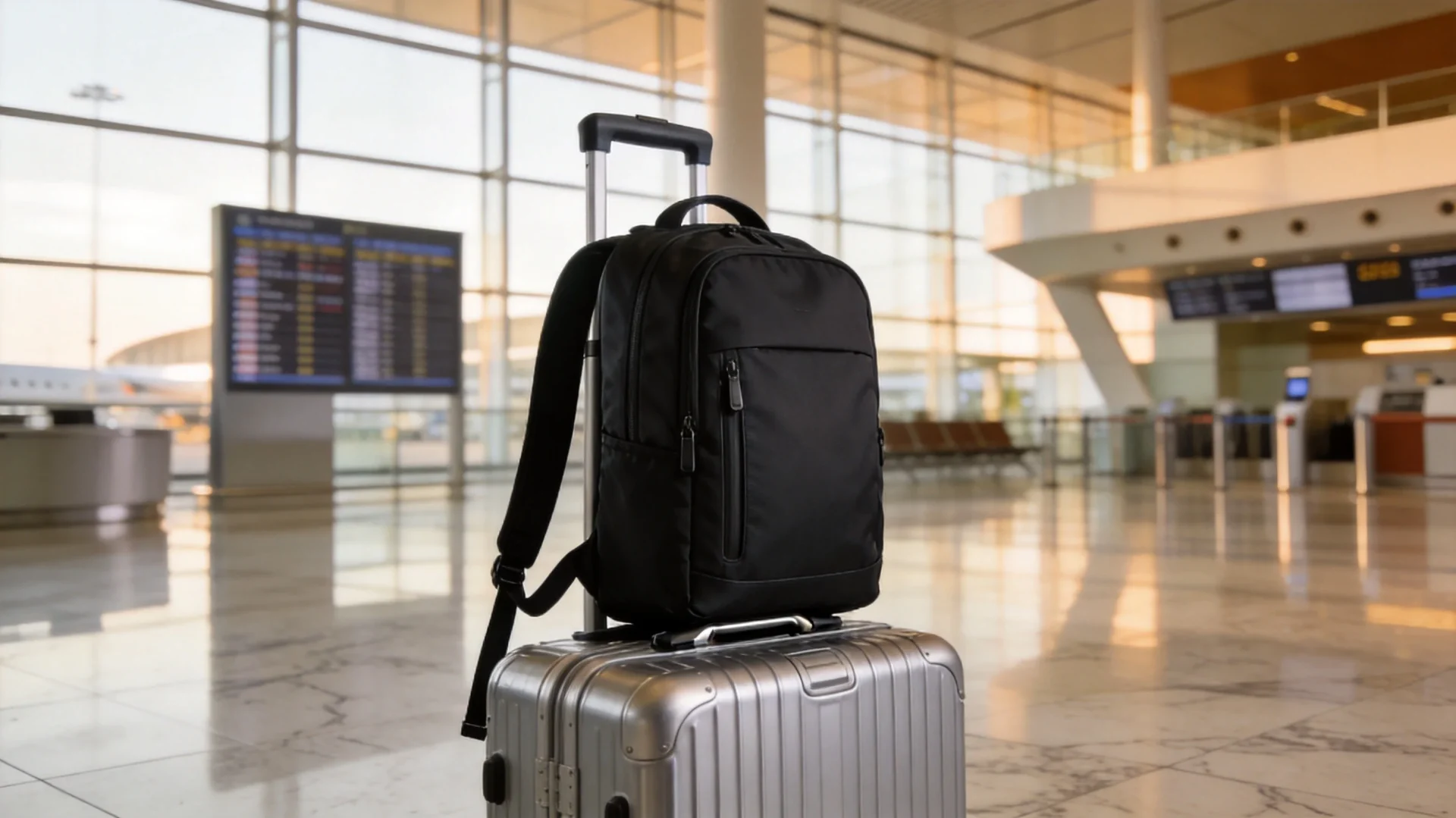
Trolley Sleeve Backpack OEM: Luggage Integration Design, Manufacturing & B2B Sourcing Guide (2026)
The custom bag design landscape has evolved dramatically in the business travel segment, and few features have become as essential as the trolley sleeve — the integrated pass-through strap on the back panel of a backpack that allows it to slide securely over a rolling suitcase’s telescoping handle. For B2B buyers, brand owners, and e-commerce sellers entering the corporate travel accessories market, understanding the engineering, material science, and manufacturing nuances behind a well-executed trolley sleeve is no longer optional. It is a competitive requirement.
At JUNYUAN Bags, we drawn on over a decade of expertise perfecting the art of OEM/ODM bag manufacturing from our facility in Quanzhou, Fujian, China. Our wholesale factory has produced hundreds of thousands of trolley sleeve backpacks for brands across North America, Europe, and Asia-Pacific — from entry-level commuter packs to premium business travel systems that rival Tumi-level quality. This comprehensive guide covers every dimension of trolley sleeve backpack design and manufacturing, giving you the technical depth needed to make informed sourcing decisions for your 2026 product line.
Understanding the Trolley Sleeve: Design Anatomy and Functional Specifications
A trolley sleeve — also called a luggage strap, suitcase pass-through, or baggage handle sleeve — is fundamentally a fabric channel sewn onto or integrated into the back panel of a backpack. When deployed, it allows the backpack to slide over the extended handle of a rolling suitcase, effectively converting two separate carry items into a single rolling unit. This simple concept, however, involves sophisticated engineering decisions that directly impact user experience, product durability, and manufacturing cost.
Core Components of a Trolley Sleeve System
Every trolley sleeve assembly consists of three primary elements: the sleeve body (the fabric channel itself), the closure mechanism (which keeps the backpack secured to the handle), and the reinforcement structure (which distributes load across the back panel). The sleeve body is typically constructed from a high-elasticity fabric tube or a folded-and-stitched panel that creates a horizontal passage. The width of this passage must accommodate handle diameters ranging from 22mm (slim aluminum handles) to 38mm (heavy-duty telescoping handles found on premium luggage).
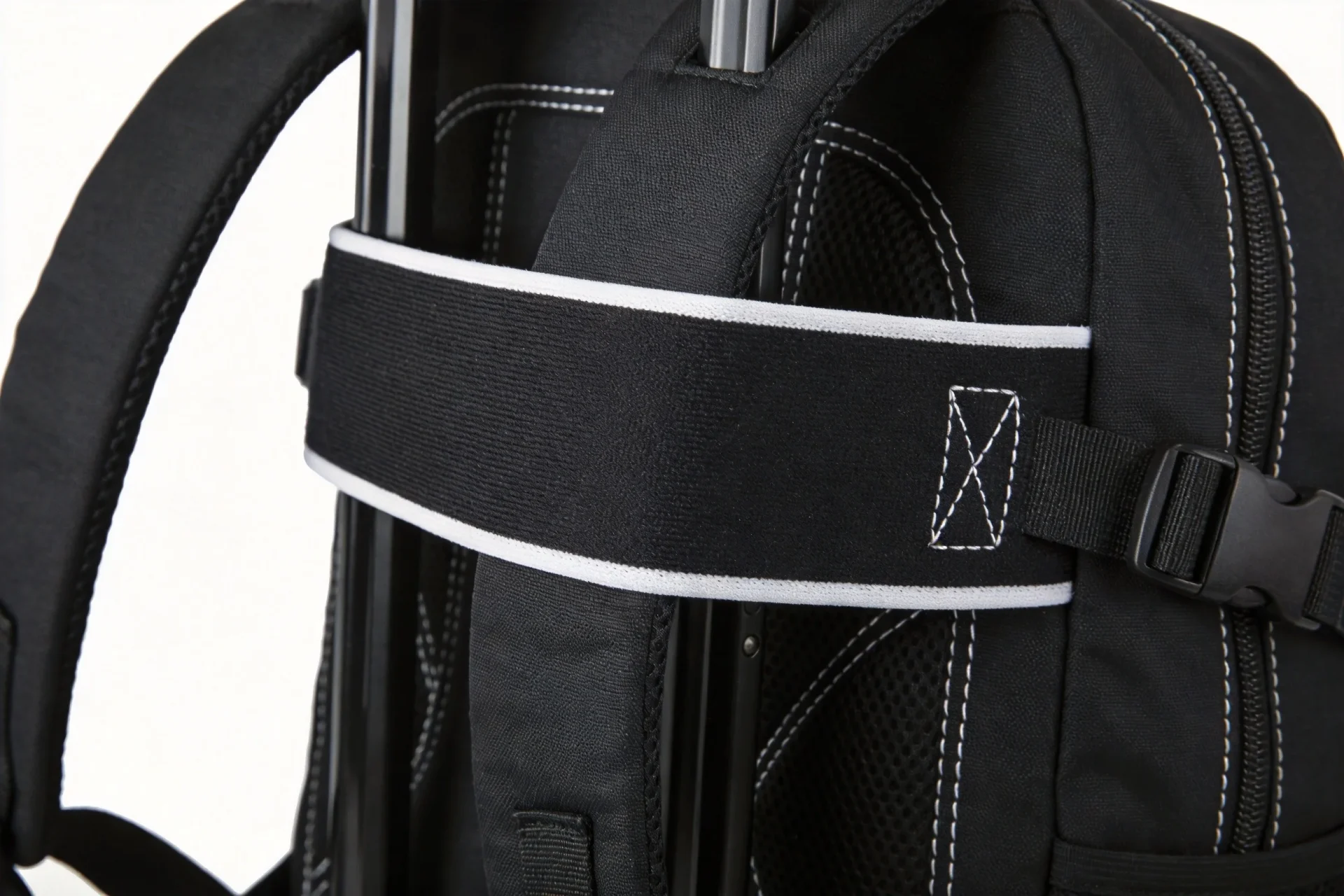
The closure mechanism varies by design tier. Entry-level products use a simple open-top sleeve where friction alone holds the bag in position. Mid-range products add a hook-and-loop (Velcro) strap or snap button closure. Premium implementations feature magnetic Fidlock closures, elasticized drawcord systems, or even zippered enclosures that fully wrap around the handle. At JUNYUAN, we recommend the hook-and-loop system for most B2B applications because it offers the best balance of security, ease of use, and manufacturing cost.
Dimensional Specifications by Luggage Size
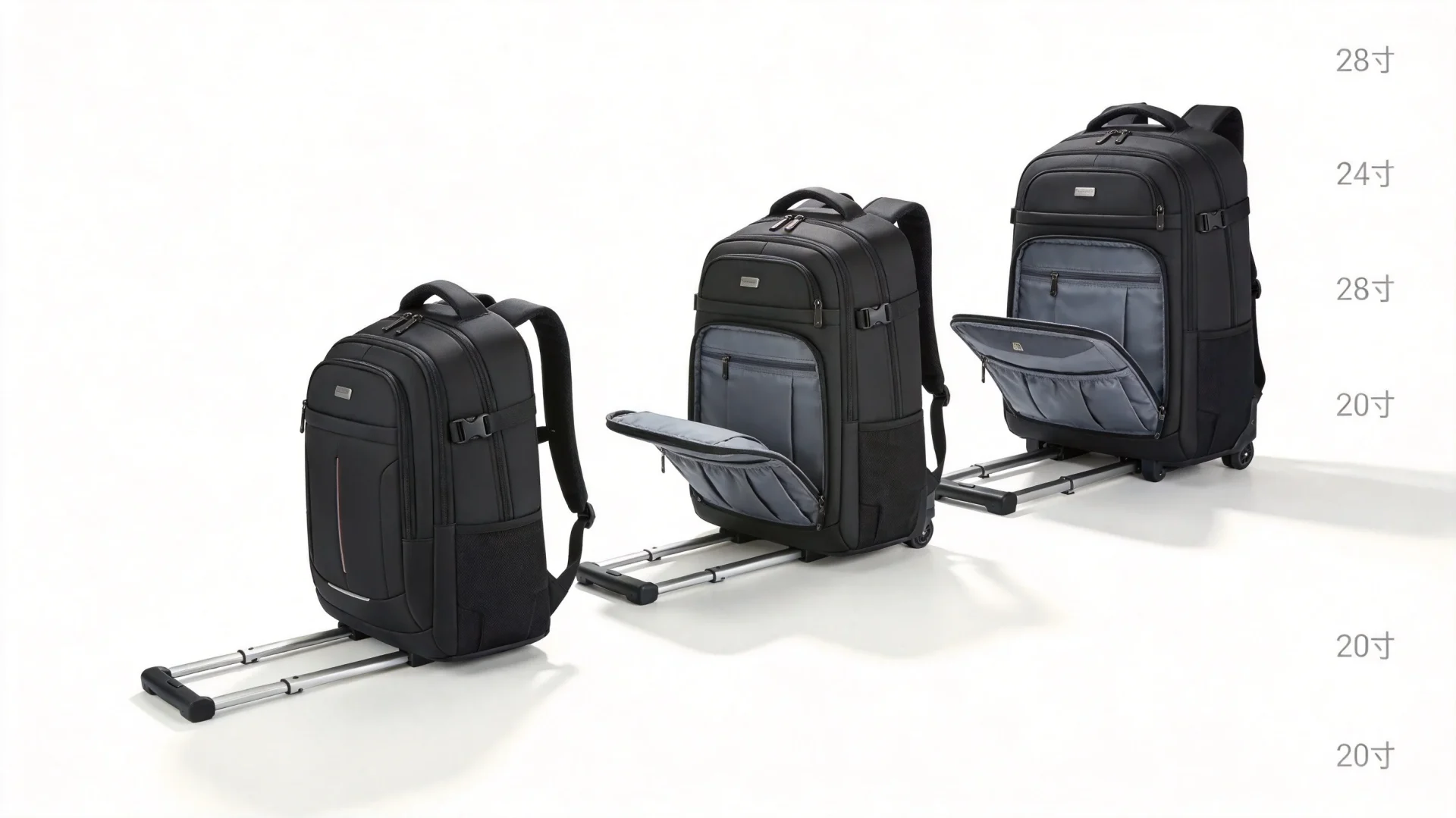
One of the most critical decisions in trolley sleeve design is specifying the correct dimensions for your target luggage pairing. The sleeve must be wide enough to slide over the handle, tall enough to provide adequate support, and positioned correctly on the back panel to maintain the backpack’s center of gravity when mounted.
| Luggage Size | Handle Width (Typical) | Sleeve Width (Min) | Sleeve Height | Sleeve Position from Base |
|---|---|---|---|---|
| 20-inch Carry-On | 22–28 cm | 24–30 cm | 10–12 cm | 8–12 cm |
| 24-inch Medium Check-In | 28–34 cm | 30–36 cm | 12–15 cm | 10–15 cm |
| 28-inch Large Check-In | 34–40 cm | 36–42 cm | 14–18 cm | 12–18 cm |
Fabric Selection: High-Elastic Nylon, Polyester, and Neoprene Compared
The choice of sleeve fabric is arguably the single most impactful material decision in trolley sleeve backpack design. The fabric must stretch enough to accommodate different handle widths, recover its shape after repeated use, resist abrasion from the metal handle edges, and maintain its appearance after thousands of mount-dismount cycles. Let us examine the three dominant fabric options used in OEM manufacturing.
High-Elastic Nylon (Spandex-Blend)
Nylon blended with 8–15% spandex (elastane) offers the highest elasticity recovery rate — typically 95%+ after 5,000 stretch cycles. This makes it the premium choice for high-end business backpacks where the sleeve must look pristine even after years of daily use. The smooth surface of nylon also minimizes friction against suitcase handles, reducing wear on both the sleeve and the luggage. However, nylon is the most expensive option, adding approximately $0.80–$1.50 to the unit cost depending on weight and blend ratio. For brands targeting the $80+ retail segment, high-elastic nylon is the recommended standard. Learn more about material selection in our backpack material selection guide.
Polyester Elastic Blend
Polyester with elastane offers a compelling mid-range option. While polyester has slightly lower elasticity recovery (approximately 85–90% after 5,000 cycles), it excels in UV resistance and colorfastness — important qualities for backpacks that may be exposed to sunlight during travel. Polyester elastic blends are also 15–20% less expensive than nylon equivalents, making them ideal for mid-tier product lines in the $40–$80 retail range. The material accepts dye-sublimation printing well, allowing brands to add custom patterns or logos directly on the sleeve.
Neoprene (Chloroprene Rubber)
Neoprene — the same material used in wetsuits — has emerged as a popular choice for premium and lifestyle-oriented backpack lines. At 3–5mm thickness, neoprene provides a padded, protective layer around the luggage handle while offering excellent grip to prevent the backpack from sliding during transit. Its inherent water resistance adds a functional bonus. However, neoprene sleeves are heavier (adding 60–100g to total bag weight), more expensive to source, and require specialized sewing techniques to prevent edge delamination. JUNYUAN’s production team has extensive experience with neoprene lamination and edge-binding processes, ensuring long-term durability even under heavy daily use.
| Material | Elasticity Recovery | Unit Cost Impact | Weight (per sleeve) | Best For |
|---|---|---|---|---|
| High-Elastic Nylon | 95%+ (5K cycles) | +$0.80–$1.50 | 35–50g | Premium business lines ($80+) |
| Polyester Elastane | 85–90% (5K cycles) | +$0.40–$0.80 | 30–45g | Mid-tier products ($40–$80) |
| Neoprene 3mm | 88–92% (5K cycles) | +$1.20–$2.00 | 60–100g | Lifestyle/premium lines |
Reinforced Sewing Techniques and Load-Bearing Standards
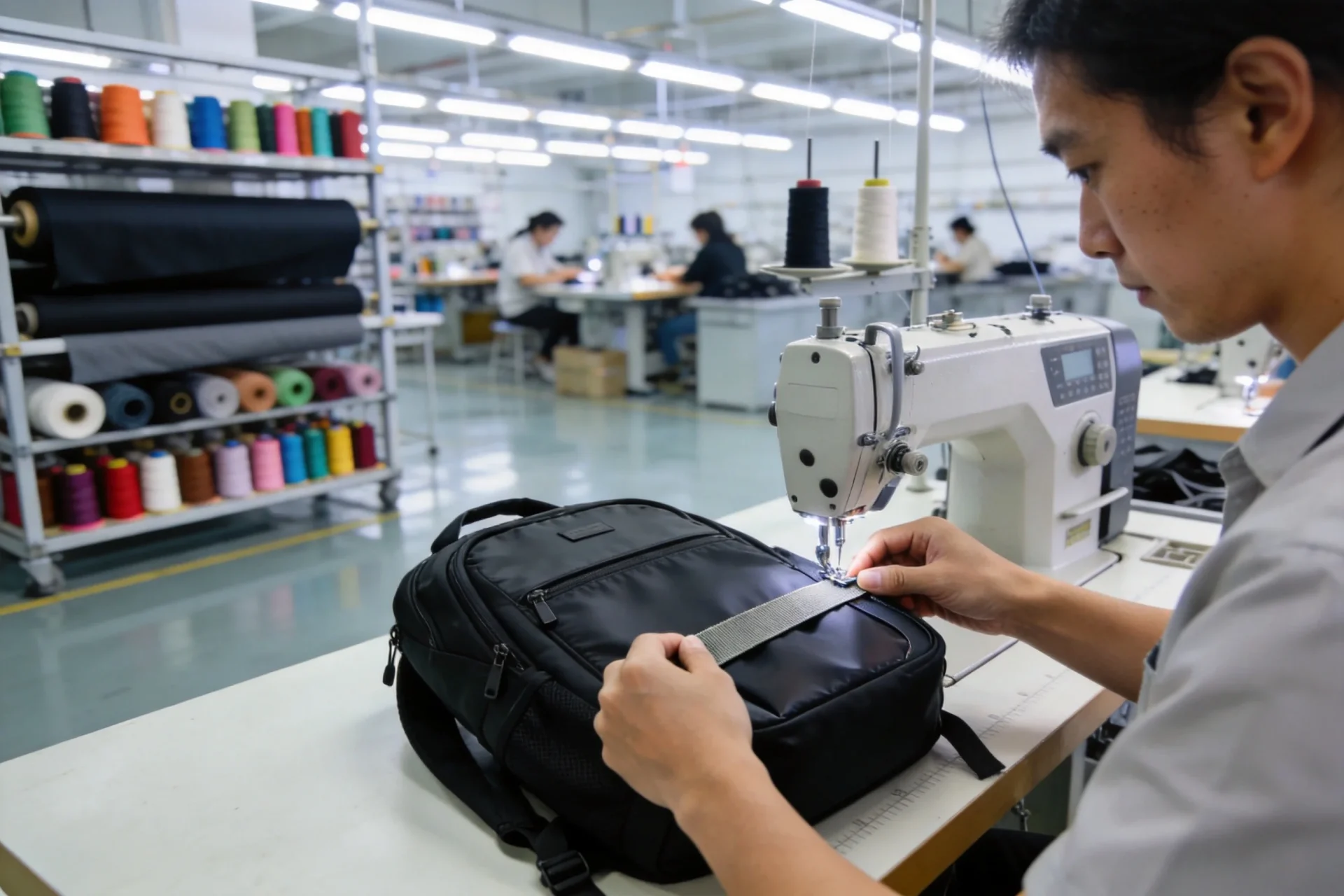
A trolley sleeve is only as strong as its attachment to the backpack. When a loaded 15L+ backpack is mounted on a rolling suitcase handle, the sleeve attachment points experience significant shear and peel forces — especially during transit over uneven surfaces, curbs, and cobblestone streets. JUNYUAN’s engineering team follows a rigorous reinforcement protocol for every trolley sleeve backpack we produce.
Bar-Tack Reinforcement at Stress Points
The four corners where the sleeve attaches to the back panel are the highest-stress locations. We specify bar-tack stitching at each corner using 7–9 stitch density per millimeter with bonded nylon thread (typically T-70 or T-90 weight). A properly executed bar-tack distributes force across a wider fabric area, reducing the risk of thread breakage or fabric tear. Each bar-tack should measure 10–15mm in length and span the full width of the seam allowance.
Load-Bearing Testing Protocol
Before any trolley sleeve design enters mass production at our Quanzhou facility, we conduct a standardized load test. The backpack is loaded with 12kg of weight (simulating a fully packed travel scenario), mounted on a standard 30cm luggage handle, and subjected to 500 cycles of lateral oscillation at 15 degrees — simulating the forces experienced when rolling over uneven airport floors. The sleeve attachment must show zero seam failure, less than 5% fabric stretch deformation, and no visible stress marks on the back panel after testing. This protocol aligns with the testing rigor described in our quality control framework for bulk bag orders.
Business Travel vs. Outdoor Travel: Design Differentiation Strategies
While the core trolley sleeve function remains the same across categories, the design implementation varies significantly between business travel backpacks and outdoor/travel adventure packs. Understanding these differences is crucial for brands developing product lines that serve distinct user segments.
Business Travel Backpack Design
Business travel trolley sleeve backpacks prioritize a clean, professional aesthetic and seamless integration with corporate luggage systems. The sleeve is typically recessed into a dedicated back panel compartment with a zippered or magnetic closure, keeping it hidden when not in use. This hidden trolley sleeve design preserves the bag’s sleek profile for boardroom-to-hotel transitions. The back panel itself tends to be structured with EVA foam padding and breathable mesh, providing laptop protection and ergonomic comfort simultaneously. Hardware finishes are typically muted — matte black, gunmetal, or brushed nickel — to match corporate aesthetics. For brands developing business lines, our guide on luxury features for custom travel bags provides additional design insights.
Outdoor/Adventure Travel Backpack Design
Outdoor-oriented trolley sleeve designs face a completely different set of requirements. These packs must accommodate larger luggage handles (28-inch and 32-inch suitcases commonly used for extended trips), resist environmental degradation from UV exposure, moisture, and abrasion, and maintain functionality even when the sleeve fabric is wet or muddy. The sleeve is typically exposed rather than hidden, constructed from quick-dry mesh or coated polyester that can handle rough handling. Attachment points use heavier-duty webbing (25mm or 38mm) with double-layer reinforcement. For adventure brands, pairing a trolley sleeve with waterproof fabric technology ensures the entire system performs in adverse weather conditions.
Detachable and Hidden Trolley Sleeve Designs: Innovation Trends for 2026
The market is moving toward modular backpack systems, and the trolley sleeve is at the forefront of this evolution. Three key design innovations are shaping the 2026 product landscape:
Fully Detachable Sleeve Systems
Some brands are now offering backpacks where the trolley sleeve can be completely removed when not needed. This is achieved through a pair of reinforced MOLLE-compatible attachment points on the back panel, with the sleeve clipping in via heavy-duty webbing tabs and snap buttons. The advantage is twofold: the backpack looks cleaner without the sleeve for daily carry use, and the sleeve can be replaced independently if damaged — extending the overall product lifespan.
Retractable Sleeve Mechanisms
Inspired by retractable cup holders in automobiles, some premium designs incorporate a spring-loaded sleeve that deploys from a slim slot in the back panel when a release button is pressed. When retracted, the sleeve sits flush within the panel, completely invisible. This mechanism adds $2–$4 to the BOM cost and requires precision plastic injection-molded components, but delivers an exceptional unboxing and daily-use experience that commands premium pricing.
Magnetic Quick-Attach Systems
Using embedded neodymium magnets (N35 or N42 grade) in both the backpack back panel and the sleeve component, magnetic quick-attach systems allow users to snap the sleeve on or off in under two seconds. This approach is gaining traction in the $100+ premium segment where user experience differentiation is critical. JUNYUAN has developed proprietary magnet-embedding techniques that prevent magnet migration through the fabric over time — a common failure point in competitor products. For more on custom hardware integration, see our custom hardware and branding guide.
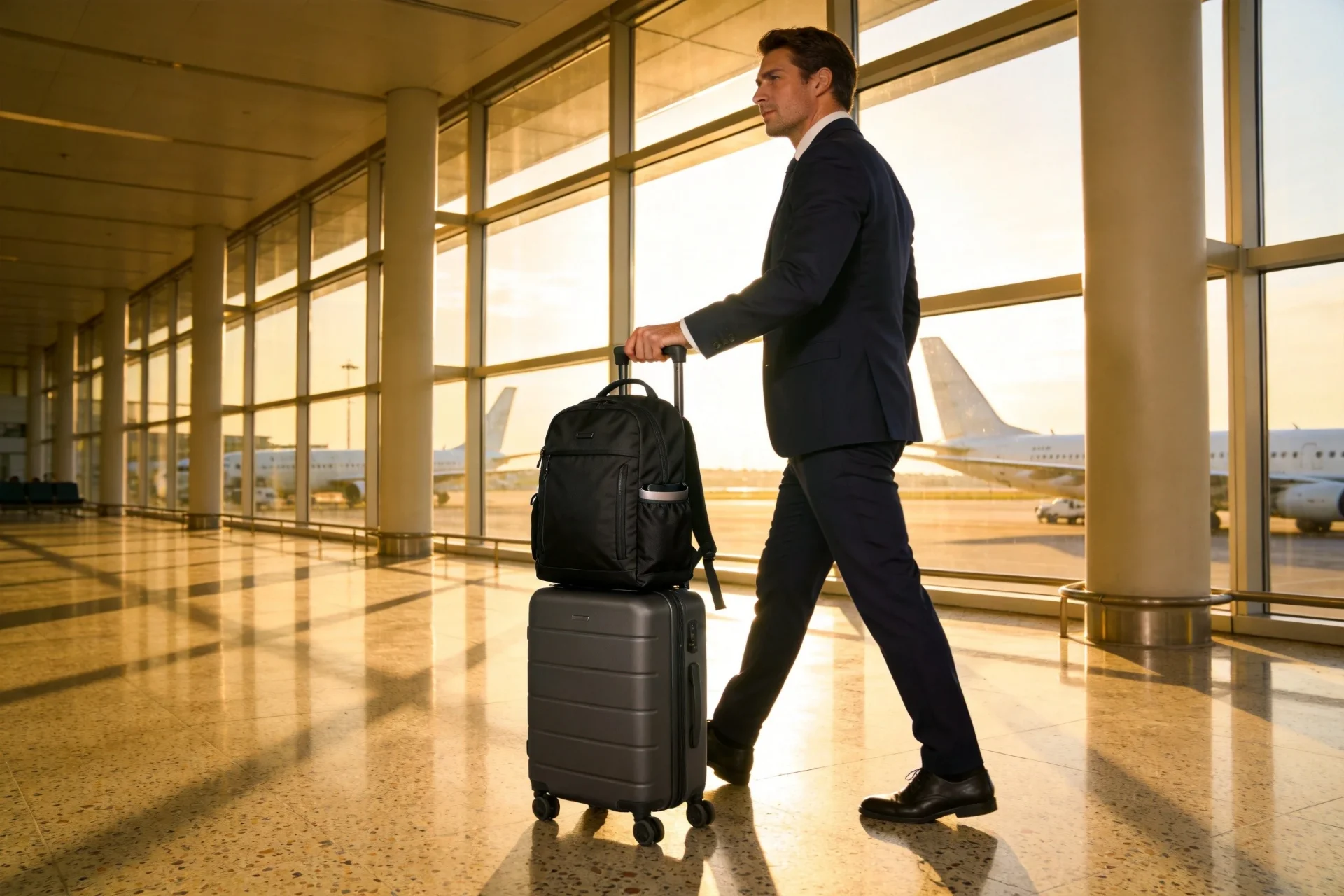
The Complete Travel System: Backpack and Luggage Integration
Forward-thinking brands are no longer designing trolley sleeve backpacks in isolation. Instead, they are developing complete travel ecosystems where the backpack and luggage are engineered as complementary products. This integrated approach requires careful coordination of handle dimensions, color matching, fabric harmonization, and proportional design language.
For OEM buyers, this means working with a manufacturer that can produce both the backpack and the luggage — or at minimum, one that understands luggage handle specifications intimately enough to design a perfectly compatible sleeve. leadership by a founder with bag industry experience dating from 2004 spans both bags and luggage, giving us a unique ability to design integrated travel systems. Our manufacturing cost breakdown guide explains how system-level design thinking can actually reduce per-unit costs through shared materials and streamlined production.
Compatibility Testing Across Luggage Brands
A well-designed trolley sleeve backpack should work with the most popular luggage brands in its target market. During the sampling phase, JUNYUAN tests every sleeve design against a standard set of reference luggage from Samsonite, Rimowa, Travelpro, Away, and Delsey — covering the five best-selling luggage brands in the US and European markets. Handle diameters, handle heights from the case body, and handle spacing all vary between brands, and a truly universal design must accommodate this variance.
OEM Custom Manufacturing Process: From Concept to Mass Production
Bringing a trolley sleeve backpack from concept to mass production involves several critical stages. Understanding this process helps B2B buyers plan timelines, budgets, and quality expectations effectively.
Step 1: Design Brief and Technical Specification
The process begins with a detailed design brief covering target market, price point, luggage pairing requirements, material preferences, and branding requirements. At JUNYUAN, we provide a comprehensive tech pack template that captures all specifications — including the trolley sleeve dimensions, fabric type, closure mechanism, and reinforcement requirements. This stage typically takes 5–7 business days and involves close collaboration between the buyer’s design team and our Quanzhou-based product development team.
Step 2: Sampling and Prototyping
First samples are produced within 15–20 days of tech pack approval. The sample includes the complete trolley sleeve assembly, and we conduct fit tests with the buyer’s specified luggage (or our reference luggage set). Sample development iterations typically involve 2–3 rounds to perfect the sleeve tension, attachment alignment, and overall ergonomics. Each sample undergoes our internal QC inspection before shipping to the buyer for evaluation.
Step 3: Pre-Production and Material Sourcing
Once the final sample is approved, material sourcing begins. For trolley sleeve fabrics, lead times vary: high-elastic nylon (7–10 days), polyester elastane blends (5–7 days), and neoprene (10–14 days). All materials undergo incoming quality inspection — including elasticity testing, colorfastness verification, and abrasion resistance assessment — before being cleared for production. Our material quality verification guide details the testing methods we employ.
Step 4: Mass Production and Quality Control
Mass production of trolley sleeve backpacks follows the same AQL inspection framework as all JUNYUAN products. The trolley sleeve receives specific attention during inline inspection: seam strength, sleeve elasticity, closure mechanism function, and back panel alignment are all checked at defined hold points. Final random inspection follows AQL 2.5 standard for major defects and AQL 4.0 for minor defects.
Step 5: Packaging and Shipping
Finished backpacks are packed with the trolley sleeve in its deployed position (for hidden sleeves, the compartment is left open with a card explaining the feature). Shipping from our facility follows export compliance guidelines for the destination market, with FOB Xiamen as our standard shipping term. Our 6-month production planning timeline helps buyers align orders with seasonal demand peaks in the business travel category.
2026 Business Travel Backpack Market Trends
Several key trends are shaping the trolley sleeve backpack market heading into 2026. Understanding these trends helps buyers make product decisions that align with evolving consumer preferences and market dynamics.
Sustainability Integration
RPET (recycled polyester from post-consumer plastic bottles) is increasingly being specified for trolley sleeve components. While RPET elastic blends currently offer slightly lower elasticity recovery than virgin nylon (approximately 82% vs. 95%), the technology is improving rapidly. Brands targeting eco-conscious business travelers are requesting RPET sleeves as a differentiator. Learn more in our RPET manufacturing guide and our exploration of sustainable materials beyond RPET.
Smart Travel Integration
Emerging designs are incorporating RFID-protected pockets, USB charging pass-throughs, and GPS tracker compartments into the same backpack that features the trolley sleeve. The engineering challenge is maintaining the structural integrity of the back panel while accommodating electronic components. JUNYUAN’s engineering team has developed specialized compartment designs that isolate electronics from the mechanical stress of the trolley sleeve system.
Hybrid Work Travel
The rise of hybrid work models has created demand for backpacks that transition seamlessly from airport to office to hotel. Trolley sleeve backpacks in this category need laptop compartments sized for 16-inch workstations, professional aesthetics, and quick-access organization for tech accessories — all while maintaining a slim enough profile to fit over luggage handles without looking bulky. Our experience producing bags that meet the criteria of top-performing brands positions us well for this growing segment.
Why JUNYUAN for Your Trolley Sleeve Backpack OEM Project
With over two decades of bag industry experience dating from 2004, JUNYUAN Bags offers a distinct advantage for brands looking to develop trolley sleeve backpacks. Our Quanzhou facility — strategically located near FOB Xiamen port — houses dedicated production lines for business travel bags, with specialized teams trained in the precise sewing techniques that trolley sleeve construction demands.
Our capabilities span the entire product development lifecycle: from initial concept design and 3D prototyping through sampling, factory-audited mass production, and internationally compliant export logistics. With a MOQ of just 500 pieces per design, we serve both established brands expanding their travel lines and emerging DTC brands launching their first business travel collection.
Our brand KEEP PERFECT reflects our commitment to every detail — from the bar-tack reinforcement on each sleeve attachment point to the elasticity testing of every fabric roll. Whether you need a simple exposed sleeve for a value-priced Amazon offering or a fully integrated hidden magnetic-attach system for a premium brand launch, JUNYUAN has the technical capability and manufacturing flexibility to deliver.
Frequently Asked Questions
What is the standard width for a trolley sleeve on a travel backpack?
The standard width ranges from 24cm (for 20-inch carry-on pairing) to 42cm (for 28-inch large luggage). For a universal-fit design targeting the broadest market, we recommend 32cm width with high-elasticity fabric that can accommodate handles from 22cm to 36cm.
How much does adding a trolley sleeve increase manufacturing cost?
Depending on the material and closure mechanism chosen, a trolley sleeve adds approximately $0.50–$2.50 to the unit manufacturing cost. High-elastic nylon sleeves with magnetic closures are at the premium end, while polyester mesh sleeves with hook-and-loop closures are the most cost-effective option.
Can a trolley sleeve be added to an existing backpack design?
Yes, but with limitations. Adding a sleeve to an existing design requires sufficient back panel real estate and may affect the laptop compartment placement. We recommend designing the trolley sleeve into the backpack from the initial concept stage for optimal results. See our custom bag design guide for integration best practices.
What is the MOQ for custom trolley sleeve backpacks at JUNYUAN?
Our minimum order quantity is 500 pieces per color per design. This applies to both OEM (your design) and ODM (our design with your branding) projects. For first-time customers, we offer a trial order option with reduced MOQ for initial market testing.
How long does the sampling process take for a trolley sleeve backpack?
First samples are typically ready within 15–20 business days of tech pack approval. Including revision rounds, the complete sampling process usually takes 4–6 weeks before mass production can begin. Our production planning guide helps you map this timeline against your launch schedule.
What testing standards do JUNYUAN trolley sleeve backpacks meet?
Our trolley sleeve backpacks undergo internal load testing exceeding ISTA 3A standards, along with material-specific tests for elasticity recovery, abrasion resistance, and colorfastness. All products comply with REACH, CPSIA, and Prop 65 requirements for the destination market. Learn more about our export compliance framework.
Ready to Develop Your Trolley Sleeve Backpack Collection?
Partner with JUNYUAN Bags — expertise dating from 2004 in OEM/ODM excellence from Quanzhou, China. From concept to container, we deliver precision-engineered trolley sleeve backpacks that elevate your brand.