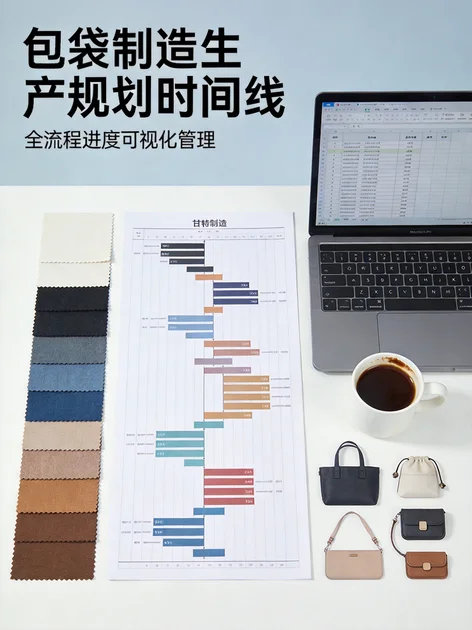
For B2B brands sourcing bags from overseas manufacturers, seasonal production planning is one of the most critical yet frequently underestimated aspects of supply chain management. A single miscalculation in your production timeline can mean missed retail windows, excess inventory costs, or stockouts during peak selling seasons.
At Junyuan Bags, we’ve drawn on over a decade of expertise helping over 200 brands across 100+ countries optimize their bag production schedules. This guide walks you through a proven 6-month timeline for seasonal bag production, covering everything from initial concept to final delivery — so you can launch on time, every time.
Why Seasonal Bag Production Planning Matters for B2B Brands
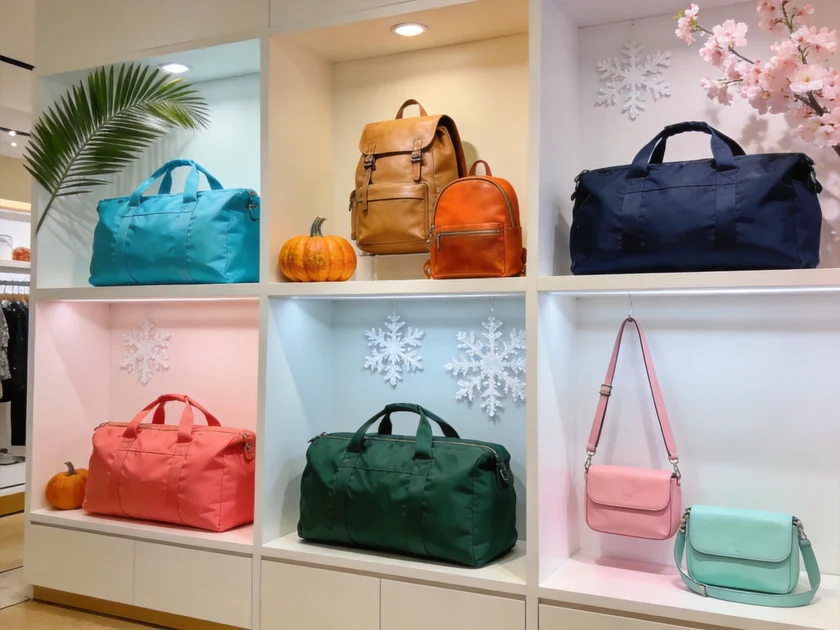
The global bag market is highly seasonal. Spring/summer collections drive demand for lightweight totes, beach bags, and drawstring packs. Fall/winter seasons shift demand toward backpacks, duffel bags, and padded laptop bags. Each transition requires coordinated production cycles that account for design finalization, material sourcing, manufacturing, quality control, and international shipping.
Without a structured planning timeline, brands face several common pitfalls:
Missed retail windows: Holiday and seasonal merchandise that arrives late loses significant sales potential. A backpack that lands in stores in January instead of August misses the entire back-to-school season.
Rush order premiums: Compressed timelines force expedited shipping and overtime labor costs, inflating unit prices by 20-40%.
Quality compromises: Rushed production often skips critical quality control checkpoints, leading to higher defect rates and customer returns.
Material availability issues: Popular fabrics and hardware components have lead times of their own. Last-minute sourcing may force substitutions that compromise your design vision.
Month 1: Design Finalization and Specification Lock
The first month of your 6-month timeline is dedicated to locking down every detail of your bag design. This is where precision pays dividends later in the process.
Key activities:
Tech pack development: Your tech pack should include detailed CAD drawings with dimensions (length × width × depth), material specifications (fabric weight in GSM, lining type, interlining), hardware details (zipper size and type, buckle specifications, slider finish), stitching requirements (SPI — stitches per inch, seam type), and branding placement (logo position, embroidery vs. print, label specifications).
Material selection: Choose your main fabric, lining, interlining, webbing, and thread colors. For brands prioritizing sustainability, explore options like RPET recycled polyester or organic cotton canvas. Request physical swatches from your manufacturer to verify color accuracy under different lighting conditions.
Prototype brief: Clearly communicate your sample requirements. How many prototype rounds do you need? What’s your approval process? At Junyuan Bags, we typically complete 2-3 prototype rounds for new designs, with each round taking 7-10 business days.
Costing and MOQ confirmation: Get a detailed cost breakdown including unit price, mold charges (if custom hardware), sample fees, and packaging options. Confirm your MOQ — at Junyuan Bags, our minimum order quantity is 500 pieces per style per color, which is competitive for factory-direct manufacturing.
Month 2: Prototyping and Sample Approval
Month 2 transforms your specifications into physical samples. This is the most iterative phase of bag production planning.
First sample (proto sample): Your manufacturer creates the first physical sample based on your tech pack. Expect this to take 7-15 business days depending on material availability. Evaluate the sample for proportions, functionality, material quality, and overall aesthetic. Document every change needed — it’s easier to fix issues now than during bulk production.
Second sample (fit sample): After incorporating your feedback, the manufacturer produces a revised sample. Focus on structural integrity — load-bearing seams, strap attachment points, zipper smoothness, and overall durability. This is also when you test functionality: fill the bag with your intended contents, test pocket accessibility, and evaluate weight distribution.
Pre-production sample (PP sample): Once approved, the PP sample becomes the gold standard for bulk production. Sign off on this sample formally — it’s what your quality control team will reference during inspection. Request 2-3 copies: one for your records, one for the factory floor, and one for the QC inspector.
Month 3: Material Procurement and Production Scheduling
With an approved PP sample, you can confidently proceed to material procurement and production scheduling.
Material ordering: Your manufacturer places orders for all fabrics, hardware, thread, and packaging materials. Lead times vary significantly: standard fabrics (7-10 days), custom-dyed fabrics (15-25 days), custom hardware (20-35 days), specialty materials like RPET or waterproof fabrics (15-20 days).
Production line allocation: Your manufacturer schedules your order on specific production lines. At a well-organized factory like ours in Quanzhou, China, production capacity is managed to avoid bottlenecks. Ask your manufacturer about their current production load and whether your order can be accommodated within the target timeline.
Pre-production meeting: Schedule a call or visit to review the production plan. Confirm quantities, delivery dates, QC checkpoints, and packaging requirements. This is also the time to discuss any last-minute concerns before machines start running.
Month 4: Bulk Production and In-Process Quality Control
Bulk production is where your planning pays off — or where gaps become costly. A well-managed factory conducts multiple quality checkpoints during production.
First article inspection: The first few units off the production line are inspected and compared against the PP sample. Any deviation triggers immediate correction before full production continues.
In-line QC: Trained inspectors check products at various stages — cutting accuracy, stitching quality, hardware attachment, and assembly completeness. AQL (Acceptable Quality Level) standards are applied at each checkpoint.
Production updates: Request weekly production progress reports with photos. This transparency helps you catch issues early and manage your own downstream logistics — warehousing, distribution, retail allocation.
For brands seeking deeper insights into manufacturing quality processes, our detailed guide on bag quality control and AQL inspection standards provides comprehensive coverage of inspection methodologies.
Month 5: Final Inspection and Shipping Preparation
Month 5 focuses on final quality control and logistics coordination.
Final random inspection: Conducted when 80-100% of the order is complete and packed. A statistically significant sample is inspected according to AQL standards (typically AQL 2.5 for general inspection level II). Defect categories include critical (safety hazards), major (functional defects), and minor (cosmetic imperfections).
Packaging and labeling: Ensure poly bags, hang tags, barcodes, and carton labels meet your specifications and destination market requirements. For retail-ready packaging, confirm that individual bag protection meets your brand standards.
Shipping arrangements: Decide between FOB Xiamen (our standard term) or other Incoterms based on your logistics capabilities. Book vessel space early, especially during peak shipping seasons (July-September and November-January). Allow 20-30 days for ocean freight to major Western ports, plus 3-5 days for customs clearance.
Month 6: Delivery, Distribution, and Retail Launch
The final month is about execution — getting your bags to market on schedule.
Customs clearance and warehousing: Work with your customs broker to ensure all documentation is complete — commercial invoice, packing list, bill of lading, and any required certifications (GRS, BSCI, RoHS compliance documents). At Junyuan Bags, we maintain full certification documentation for all our products.
Quality audit on arrival: Inspect a sample of received goods against the PP sample and QC report. Document any transit damage for insurance claims.
Retail distribution: Coordinate with your distribution centers and retail partners to ensure shelves are stocked before the season begins. For e-commerce brands, coordinate warehouse receiving and listing activation.
Post-season review: After the season, analyze sales data, customer feedback, and return rates. Document lessons learned for the next production cycle. Strong manufacturer relationships — built on clear communication and consistent ordering — improve efficiency with every season.
Building a Reliable Manufacturing Partnership
The most successful seasonal production plans are built on reliable manufacturing partnerships. Key factors to evaluate:
Communication responsiveness: Your manufacturer should respond to inquiries within 24 hours and provide regular production updates without prompting.
Production capacity transparency: Know your manufacturer’s monthly output capacity and whether it aligns with your growth projections.
Certification compliance: Verify certifications like ISO 9001, GRS, BSCI, and RoHS — these aren’t just paperwork; they reflect systematic quality and ethical standards.
Flexibility and problem-solving: Every production run encounters unexpected challenges. A good manufacturer proactively identifies issues and proposes solutions rather than waiting for your direction.
Key Takeaways for Seasonal Bag Production Planning
A well-structured 6-month production timeline gives B2B brands the buffer needed to handle the inherent complexities of overseas bag manufacturing. The key principles are: start with detailed specifications, allow adequate time for prototyping, maintain visibility into production progress, and build a relationship with a manufacturer who communicates proactively.
Whether you’re launching a new seasonal line or scaling an existing collection, having a predictable production cadence transforms seasonal launches from stressful scrambles into well-executed market entries.
Frequently Asked Questions About Seasonal Bag Production Planning
How far in advance should I start planning seasonal bag production?
We recommend starting the planning process at least 6 months before your target retail date. This timeline accounts for design finalization (1 month), prototyping (1 month), material procurement and production scheduling (1 month), bulk manufacturing (1 month), and shipping plus customs clearance (1-2 months). For complex designs or peak season orders, starting 7-8 months ahead provides additional buffer.
What is the minimum order quantity for seasonal bag production?
At Junyuan Bags, our MOQ is 500 pieces per style per color. For seasonal collections with multiple SKUs, we can work with you to optimize order quantities across your range. Smaller MOQs may be possible for repeat orders or established designs.
How do I handle unexpected delays in bag production?
Build a 2-3 week buffer into your timeline for unexpected delays. Common delay causes include material shortages, custom hardware lead time extensions, and peak season factory congestion. Maintain regular communication with your manufacturer and have contingency shipping plans — such as partial air freight for urgent SKUs — ready before you need them.
What certifications should I require from my bag manufacturer?
Look for ISO 9001 (quality management), BSCI (social compliance), GRS (Global Recycled Standard for sustainable materials), RoHS (restricted substances), and ASTM (material testing). At Junyuan Bags, we maintain all these certifications and can provide documentation for your compliance records.
Custom Bag Manufacturing. Led by a founder with bag industry experience dating from 2004
led by a founder with bag industry experience dating from 2004, serving 200+ brands across 100+ countries. Factory-direct OEM/ODM with full certification support.
MOQ 500pcs · Factory Direct · Free Sample Available
Looking for a reliable manufacturing partner? Explore our complete guide to custom backpack manufacturing — covering materials, supplier vetting, quality control, cost analysis, compliance, and branding from JUNYUAN, an OEM/ODM factory led by a founder with bag industry experience dating from 2004.
? Related: Looking for a comprehensive guide to bag sample development? Check out our Complete Guide to Bag Sample Development & Prototyping — covering sample types, design process, testing, timeline, costs, and common mistakes.
? Related: Looking for a comprehensive guide to custom golf bag manufacturing? Check out our Complete Guide to Custom Golf Bag Manufacturing — covering materials, OEM/ODM process, QC standards, branding, and cost structure.