
In 2024, the global recycled polyester market was valued at USD 9.2 billion and is projected to grow at a CAGR of 14.8% through 2030. For backpack brands looking to meet rising consumer demand for sustainable products, partnering with a qualified RPET backpack manufacturer is no longer optional — it is a competitive necessity.
This comprehensive guide covers everything B2B buyers need to know about RPET recycled backpack manufacturing: from raw material sourcing and production processes to supplier qualification, customization options, and quality control. Whether you are launching a new sustainable product line or transitioning existing SKUs to eco-friendly materials, this article provides the framework for informed procurement decisions.
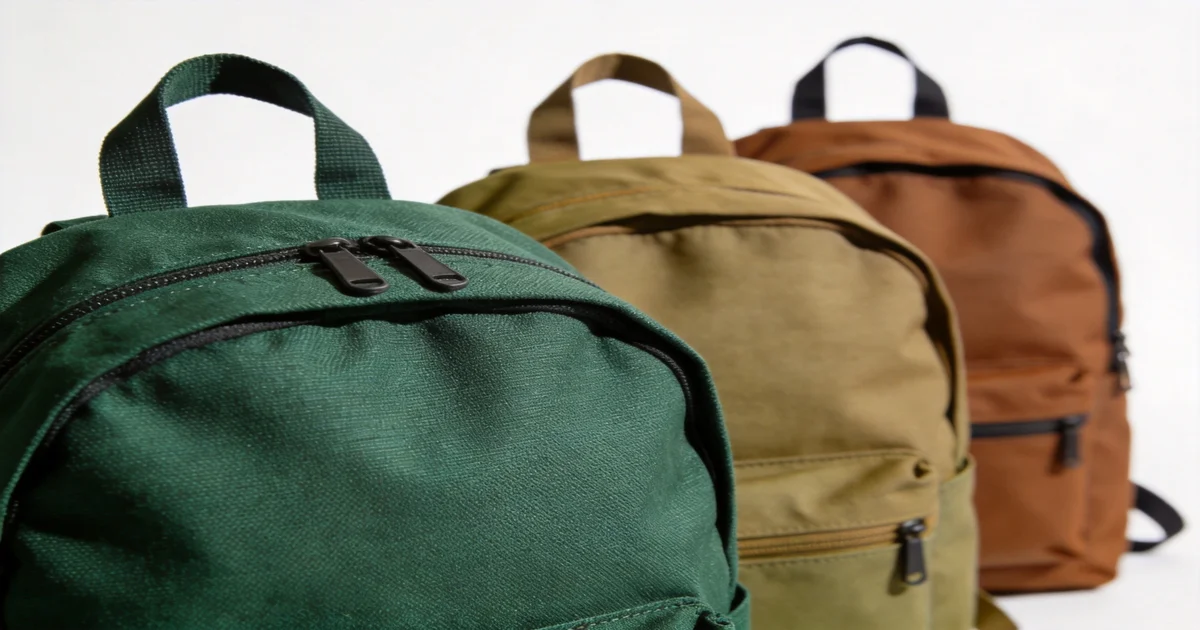
What Is RPET Fabric and Why It Matters for Backpack Brands
RPET (Recycled Polyethylene Terephthalate) fabric is produced from post-consumer plastic bottles that are collected, cleaned, shredded into flakes, melted, and extruded into recycled polyester yarn. The resulting fabric maintains the durability, water resistance, and colorfastness of virgin polyester while reducing environmental impact by up to 75% in carbon emissions.
For backpack brands, RPET fabric offers several measurable advantages:
- Environmental Compliance: Meets GRS (Global Recycled Standard) certification requirements, enabling brands to make verified sustainability claims.
- Consumer Demand: 73% of millennial consumers are willing to pay more for sustainable products (Nielsen, 2023).
- Brand Positioning: Sustainability credentials directly influence retailer selection and shelf placement.
- Regulatory Readiness: Proactively complies with EU and US extended producer responsibility (EPR) regulations coming into effect.
- Cost Parity: RPET yarn costs are now within 5–15% of virgin polyester, a gap that continues to narrow.
For product managers and procurement teams, the key consideration is not whether to adopt RPET, but how to identify a reliable RPET backpack manufacturer with the certifications, capacity, and technical expertise to deliver at scale.
RPET Backpack Manufacturing Process: From Bottle to Bag
Understanding the sustainable bag manufacturing process helps B2B buyers evaluate supplier claims and ensure traceability throughout the supply chain. Here is the step-by-step production flow at a certified RPET backpack factory:
Step 1: Raw Material Sourcing and Certification
Post-consumer PET bottles are sourced from certified recycling facilities. Each batch comes with a Transaction Certificate (TC) under the Global Recycled Standard (GRS), ensuring chain-of-custody documentation from bottle to yarn. A qualified recycled backpack factory must maintain up-to-date GRS certification and provide TC documentation for every production run.
Step 2: Yarn Extrusion and Fabric Weaving
Recycled PET flakes are melted at 260°C and extruded through spinnerets to form continuous filament yarn. The yarn is then textured, dyed (using dope-dyeing or piece-dyeing processes), and woven or knitted into fabric. Common fabric weights for backpacks range from 300D to 1680D, with 600D RPET being the most popular choice for its balance of durability and weight.
Step 3: Cutting, Sewing, and Assembly
Fabric is cut using computer-controlled cutting machines for precision, then sewn by skilled operators. This stage includes attaching zippers (recycled YKK or equivalent), buckles, foam padding, and branded hardware. Quality checkpoints are integrated at each station to catch defects early.
Step 4: Quality Control and Testing
Finished backpacks undergo rigorous testing including: seam strength testing (ASTM D1683), zipper endurance testing (minimum 5,000 cycles), colorfastness testing (ISO 105-B02), load-bearing tests (static and dynamic), and water resistance testing. A reputable manufacturer will provide full test reports with each shipment.
Step 5: Packaging and Shipping
Backpacks are packed in recycled poly bags or kraft paper bags (per buyer specification), carton-packed, and shipped FOB Xiamen or other designated ports. Full container load (FCL) and less-than-container load (LCL) options are available depending on order volume.
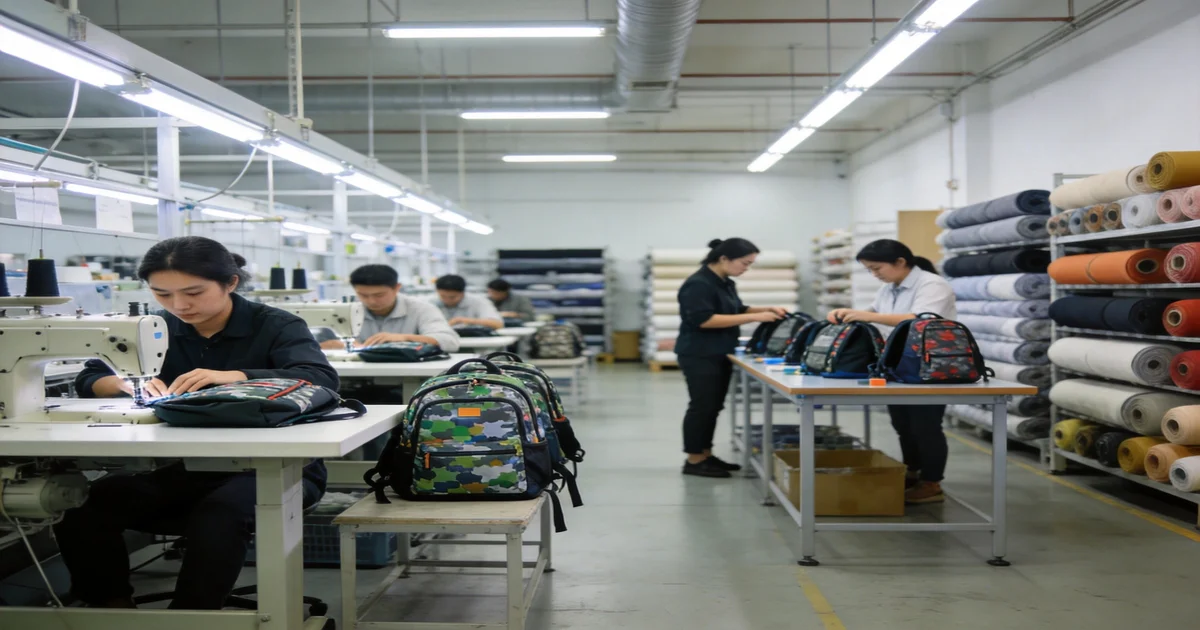
How to Choose the Right RPET Backpack Manufacturer
Not all backpack factories are equipped for RPET production. The transition from virgin polyester to recycled materials requires specific certifications, supply chain relationships, and production adjustments. Here are the critical criteria B2B buyers should evaluate:
Certifications That Matter
- GRS (Global Recycled Standard): Non-negotiable. Verifies that the claimed recycled content is accurate and traceable.
- ISO 9001: Ensures systematic quality management across all production stages.
- BSCI (Business Social Compliance Initiative): Validates ethical labor practices — increasingly required by European brand buyers.
- RoHS: Confirms the absence of restricted hazardous substances in materials and finishes.
- ASTM: Demonstrates compliance with American testing standards for material performance.
Production Capacity and Experience
A qualified manufacturer should have demonstrable experience in RPET production — not just conventional backpack manufacturing. Key indicators include: years of RPET-specific production, number of brands served, export market diversity, and in-house sampling capability. A factory that has been producing RPET backpacks for multiple production seasons will have resolved the common issues (dye absorption variation, yarn breakage rates, shrinkage control) that plague newcomers.
Supply Chain Transparency
Request documentation at every stage: GRS Transaction Certificates from yarn suppliers, fabric inspection reports, and finished goods test reports. A transparent manufacturer will provide these without hesitation. If a factory cannot trace its RPET yarn back to a certified recycler, the sustainability claim is unverifiable.
Customization Options: OEM vs ODM for RPET Backpacks
Backpack brands typically engage manufacturers through one of two models: OEM (Original Equipment Manufacturing) or ODM (Original Design Manufacturing). Both are viable for RPET products, but the choice depends on your brand’s design resources and time-to-market requirements.
OEM Recycled Backpack Manufacturing
You provide the complete design package (tech pack, patterns, bill of materials, branding assets), and the manufacturer executes production to your exact specifications. OEM is ideal for established brands with existing designs who need a recycled backpack factory to produce at scale. The manufacturer’s role focuses on material sourcing, pattern optimization, production, and quality control.
ODM Recycled Backpack Development
The manufacturer provides base designs or develops new designs based on your brief. You select, customize, and brand. ODM is ideal for brands entering the sustainable backpack market or expanding into new categories (e.g., a luggage brand launching an RPET commuter backpack line). It reduces development time by 4–8 weeks and leverages the factory’s material expertise.
Leading manufacturers offer both models and can support hybrid approaches — for example, developing a new bag shape in ODM mode while executing brand-specific hardware and packaging in OEM mode. Learn more about our OEM/ODM backpack manufacturing services.
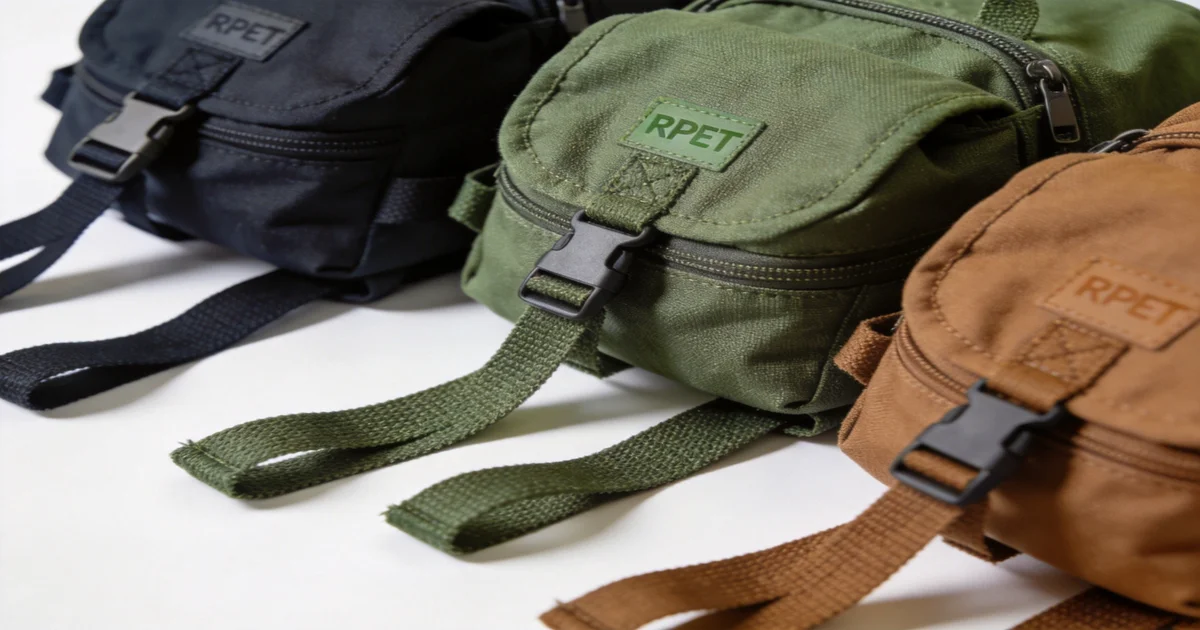
Junyuan Bags: expertise dating from 2004 in RPET Backpack Manufacturing Excellence
Established in 2014 in Quanzhou, China — one of the world’s largest bag manufacturing hubs — Junyuan Bags has spent over two decades building the expertise, certifications, and production infrastructure required for high-quality sustainable bag manufacturing.
Key facts about Junyuan Bags as your RPET manufacturing partner:
- led by a founder with bag industry experience dating from 2004 (led by a founder with bag industry experience dating from 2004): Deep expertise in pattern engineering, material optimization, and production efficiency across all bag categories.
- 200+ Brands Served: Proven track record across diverse market segments — outdoor, fashion, corporate, crowdfunding, and children’s backpacks.
- 100+ Countries Exported To: Comprehensive understanding of international compliance requirements, labeling regulations, and retailer standards across global markets.
- Full Certification Suite: GRS, ISO 9001, BSCI, RoHS, and ASTM — covering environmental, quality, social compliance, chemical safety, and performance testing.
- MOQ 500pcs: Accessible for both established brands placing volume orders and emerging brands testing market response.
- FOB Xiamen: Proximity to one of China’s busiest container ports ensures efficient logistics and competitive freight costs.
As a dedicated RPET backpack manufacturer, Junyuan Bags maintains GRS-certified sourcing for all recycled materials, provides full Transaction Certificate documentation, and operates dedicated RPET production lines to prevent cross-contamination with conventional materials.
MOQ, Lead Time, and Quality Control
Minimum Order Quantity
The standard MOQ for RPET backpack manufacturing is 500 pieces per design per color. This threshold balances production efficiency (minimizing yarn changeover and dye lot variations) with accessibility for growing brands. For trial orders or market testing, some manufacturers — including Junyuan Bags — offer reduced MOQs on a case-by-case basis.
Production Lead Time
Typical lead times for RPET backpack orders:
- Sampling: 7–15 days (including fabric sourcing if GRS-certified stock is available)
- Bulk Production: 35–50 days depending on order quantity and complexity
- Total (sample approval to shipment): 50–70 days
Lead times may extend during peak production seasons (August–November). Forward-planning brands should initiate sampling at least 3–4 months before target retail launch dates.
Quality Control Framework
A professional recycled backpack factory operates a multi-stage quality control system:
- Incoming Material Inspection (IQC): Fabric weight, color consistency, GRS certificate verification
- In-Process Quality Control (IPQC): Stitching quality, zipper alignment, print/embroidery accuracy
- Final Quality Inspection (FQC): AQL 2.5 standard inspection per ANSI/ASQ Z1.4, full dimensional and functional checks
- Pre-Shipment Audit: Packaging accuracy, shipping marks, carton drop test
Frequently Asked Questions About RPET Backpack Manufacturing
1. What is the minimum order quantity (MOQ) for RPET backpacks?
The standard MOQ is 500 pieces per design per color. This ensures production efficiency while remaining accessible for both established brands and emerging sustainable labels. Trial orders with lower quantities may be available depending on design complexity.
2. Can RPET fabric match the quality and durability of virgin polyester?
Yes. When produced by a certified manufacturer using quality recycled yarn, RPET fabric delivers equivalent tensile strength, abrasion resistance, and colorfastness to virgin polyester. The key differentiator is the quality of the recycled yarn source — GRS-certified suppliers ensure consistent filament quality.
3. What certifications should I require from an RPET backpack manufacturer?
At minimum, require GRS (Global Recycled Standard) certification with Transaction Certificates for each batch. Additional recommended certifications include ISO 9001 (quality management), BSCI (social compliance), and RoHS (chemical safety). These certifications protect your brand from greenwashing claims and ensure compliance with retailer requirements.
4. What is the typical lead time for a bulk RPET backpack order?
Bulk production typically takes 35–50 days after sample approval, depending on order quantity and design complexity. Including the sampling phase (7–15 days), plan for a total timeline of 50–70 days from initial inquiry to shipment. We recommend adding 2–4 weeks buffer for ocean freight to your destination port.
5. Can I order both OEM and ODM RPET backpacks from the same manufacturer?
Absolutely. Most experienced manufacturers support both OEM (your design, their production) and ODM (their design platform, your branding) models. You can run different product lines under each model, or combine approaches — using ODM base designs customized with your brand-specific materials, hardware, and packaging.
6. How do I verify that RPET materials are genuinely recycled?
Request GRS Transaction Certificates (TCs) for each production batch. A valid TC traces the recycled content from the recycling facility through yarn extrusion, fabric weaving, and final manufacturing. Without a TC, there is no verifiable proof of recycled content — regardless of the manufacturer’s claims. A reputable RPET backpack manufacturer will provide TCs proactively.
Start Your RPET Backpack Project with Junyuan Bags
led by a founder with bag industry experience dating from 2004, a track record of serving 200+ brands across 100+ countries, and a complete suite of sustainability certifications (GRS, ISO 9001, BSCI, RoHS, ASTM), Junyuan Bags is positioned as a trusted RPET backpack manufacturer for brands serious about sustainable production.
Whether you need OEM production of your existing designs or ODM support to develop new RPET backpack concepts, our team provides end-to-end support from sampling to shipment — FOB Xiamen.
Ready to discuss your RPET backpack project?
- Explore our OEM/ODM manufacturing services
- Visit our RPET backpack product page
- Contact us on WhatsApp: +86 177 5002 0688
Looking for a reliable manufacturing partner? Explore our complete guide to custom backpack manufacturing — covering materials, supplier vetting, quality control, cost analysis, compliance, and branding from JUNYUAN, an OEM/ODM factory led by a founder with bag industry experience dating from 2004.