
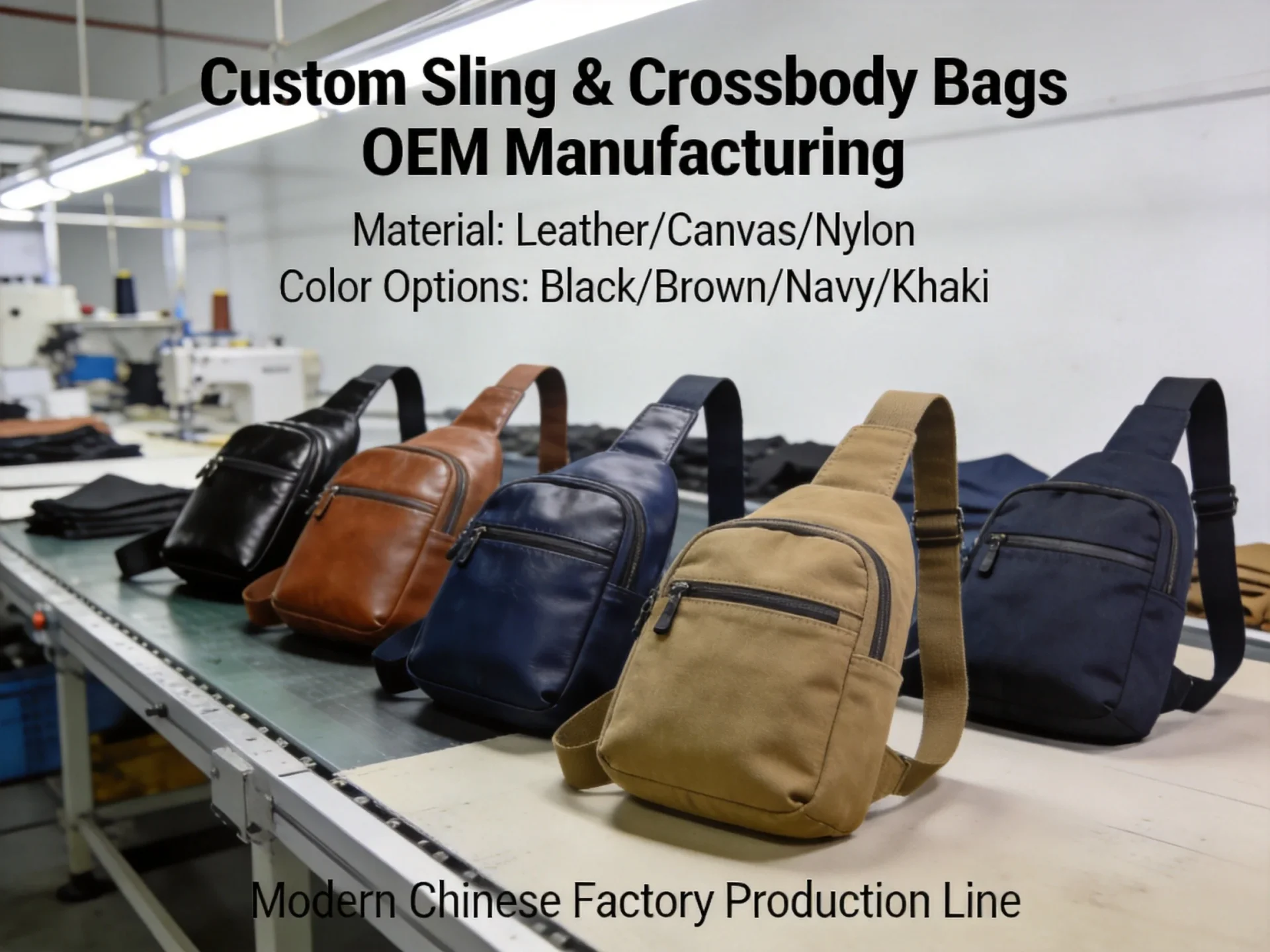
Sling Bag OEM Manufacturing Guide: Styles, Materials & Custom Options (2026)
Sling bags have evolved from niche fashion accessories into one of the most versatile and commercially successful bag categories in the global market. Their unique single-strap design, ergonomic crossbody wear, and compact yet spacious construction make them ideal for urban commuting, outdoor activities, travel, and everyday carry (EDC). As a premier OEM/ODM bag manufacturer with over two decades of bag industry experience dating from 2004, JUNYUAN Bags in Quanzhou, Fujian, China has developed comprehensive expertise in designing and manufacturing custom sling bags that meet the demanding requirements of international brands, retailers, and e-commerce sellers. This definitive manufacturing guide covers every aspect of sling bag OEM production, from style variations and fabric selection to hardware components, printing techniques, ergonomic engineering, and brand customization strategies for 2026 and beyond.
Whether you are building a new sling bag brand from scratch, expanding your existing bag lineup with crossbody styles, or sourcing a reliable factory for your established brand, this guide provides the technical depth and market intelligence needed to make informed manufacturing decisions. Our facility, strategically positioned near FOB Xiamen port, offers flexible production runs starting at 500 pieces, full design-to-delivery OEM and ODM services, and a proven track record of serving clients across North America, Europe, Japan, and Southeast Asia.
Sling Bag Style Categories: Choosing the Right Format for Your Market
The sling bag category encompasses several distinct style families, each targeting different consumer segments and use cases. Understanding these categories is essential for B2B buyers who need to align product specifications with market expectations and brand positioning. At our wholesale bag factory, we manufacture all major sling bag formats with full customization capabilities.
Classic Crossbody Sling Bags
The classic crossbody sling bag features a single adjustable strap that crosses the chest or shoulder, with the main compartment resting on the lower back or hip. This timeless design offers quick-access organization, hands-free convenience, and a sleek profile that works in both casual and semi-formal settings. Classic crossbody slings typically measure 25-35cm in length and 15-22cm in height, with a slim profile that accommodates essentials like a phone, wallet, keys, small tablet, and personal items. This format appeals to the broadest consumer demographic and represents the highest volume segment in sling bag sales globally. Browse our crossbody bag collection for manufacturing examples.
Chest Sling Bags (Chest Packs)
Chest slings position the main compartment across the upper chest area, creating a more secure and accessible carry position. This style has gained massive popularity in the streetwear and urban fashion markets, with brands leveraging the chest pack format for both functionality and aesthetic appeal. Chest slings often feature multiple zippered compartments, MOLLE attachment points for modular accessories, and reflective design elements. They are particularly popular among cyclists, festival-goers, and fashion-forward consumers who value both security and visibility.
Technical Outdoor Sling Bags
Technical sling bags are engineered for outdoor activities like hiking, trail running, cycling, and travel. These bags prioritize features such as hydration bladder compatibility, ventilation back panels, trekking pole attachments, reflective safety elements, and weatherproof construction. Technical slings often use high-denier ripstop nylon or Cordura fabrics with DWR treatments, and incorporate structural frames or stiffened panels for load stability. Our expertise in athletic bag manufacturing directly informs our technical sling bag engineering. For outdoor brands, we can incorporate features from our sports bag manufacturing capabilities.
Anti-Theft Sling Bags
Anti-theft sling bags integrate security features that address urban crime concerns, particularly pickpocketing and slash-and-grab theft. Key security features include lockable zipper pulls, slash-resistant strap cables, RFID-blocking pockets for credit cards and passports, hidden compartments accessible only from the back panel (against the body), and cut-resistant fabric panels. This segment commands premium pricing with margins 20-35 percent higher than standard sling bags, making it an attractive category for brand development. Our security-focused designs draw on the same construction principles used in our tactical bag manufacturing.
Fashion & Lifestyle Sling Bags
Fashion sling bags prioritize aesthetics, brand identity, and trend-driven design over pure utility. These bags often use premium materials like genuine leather, vegan leather, canvas with artistic prints, or woven textiles. They may feature minimalist designs, designer hardware finishes (antique brass, rose gold, gunmetal), and seasonal color updates. Fashion slings are particularly popular among female consumers and in markets where appearance is as important as function. Our capabilities in handbag manufacturing and shearling bag production provide valuable expertise for fashion-oriented sling designs.
Mini Sling Bags (Phone Bags)
Mini sling bags represent the smallest format in the category, designed primarily to carry a smartphone, cards, and keys with minimal bulk. These compact accessories have exploded in popularity as phone sizes have increased and consumers seek minimalist carry solutions. Mini slings often measure 18-22cm in length and use lightweight constructions that prioritize comfort for all-day wear. They are frequently purchased as impulse or accessory items alongside larger bag purchases, making them excellent add-on products for retail assortments.
Fabric Selection Guide: Nylon, Polyester, Canvas & Performance Materials
Fabric selection is the single most impactful decision in sling bag OEM manufacturing. The chosen material determines the product’s weight, durability, water resistance, texture, printability, cost, and sustainability profile. As a factory with deep material sourcing networks in Fujian province, we offer comprehensive fabric options and can guide brands toward the optimal choice based on their target market, price point, and performance requirements.
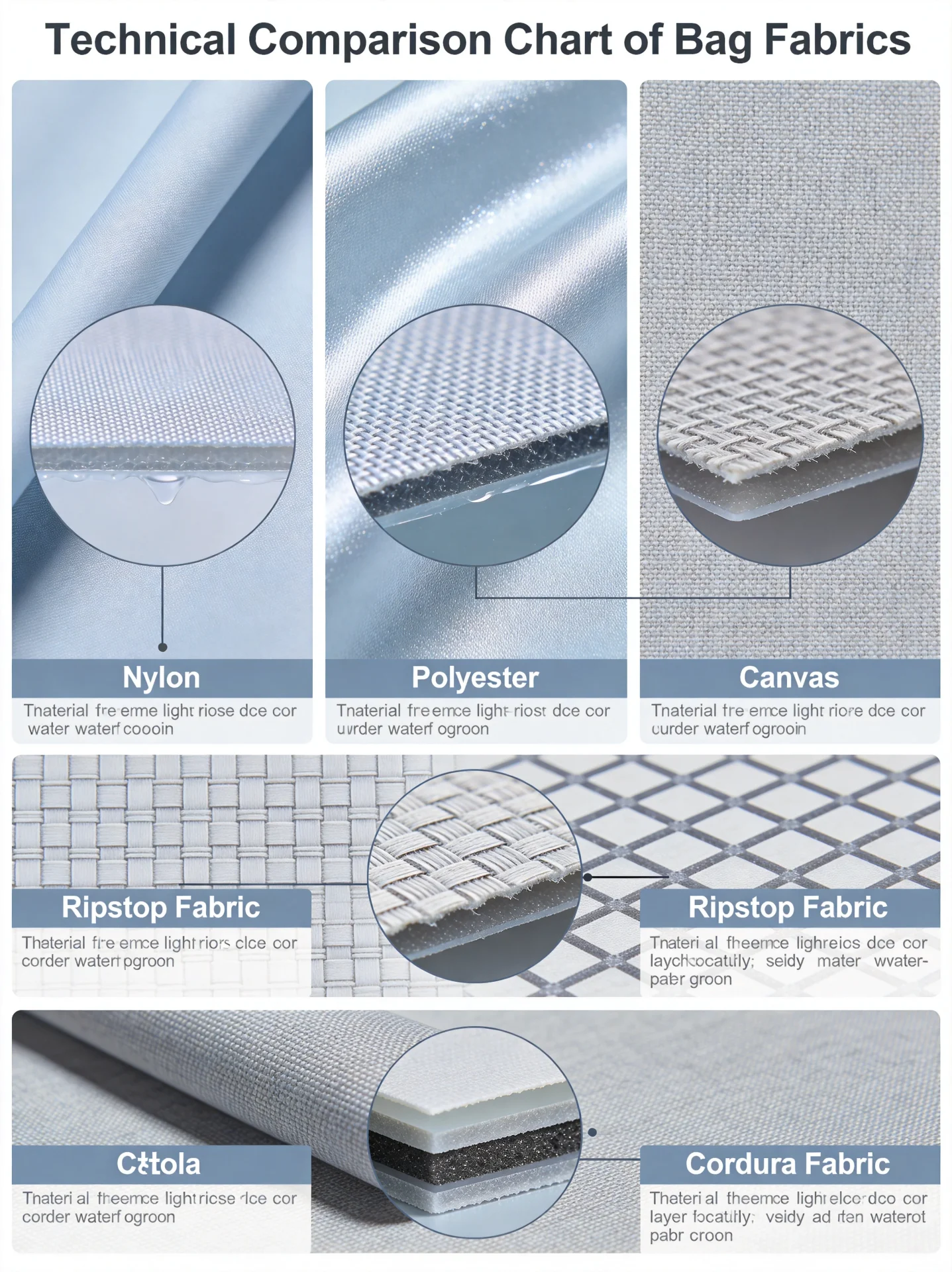
Nylon Fabrics
Nylon remains the dominant material for mid-to-premium sling bags due to its exceptional strength-to-weight ratio, smooth texture, and natural water resistance. Common nylon specifications for sling bags include 210D nylon (ultralight), 420D nylon (standard weight), and 840D nylon (heavy-duty). Nylon accepts dye beautifully, producing rich, vibrant colors with excellent colorfastness ratings above 4 on the ISO gray scale. For technical slings, we recommend ripstop nylon with a grid reinforcement pattern that prevents tear propagation, or Cordura nylon (typically 500D or 1000D) for maximum abrasion resistance. Our detailed material selection guide provides comprehensive specifications for all nylon options.
Polyester Fabrics
Polyester offers a cost-effective alternative to nylon with excellent durability, UV resistance, and moisture management. Polyester fabrics are generally 15-25 percent less expensive than equivalent nylon constructions, making them ideal for value-oriented and promotional sling bag lines. Common specifications include 150D polyester (lightweight), 300D polyester (standard), 600D polyester (heavy-duty), and polyester oxford weaves that provide additional structure. Polyester also serves as the base fabric for sublimation printing, enabling full-color photographic designs without minimum color restrictions. For brands seeking sustainable options, rPET (recycled polyester made from post-consumer plastic bottles) is increasingly popular. Explore our sustainable materials guide and rPET manufacturing capabilities.
Canvas & Cotton Blends
Canvas fabrics, whether cotton or cotton-polyester blends, deliver a classic, heritage aesthetic that resonates strongly in fashion, lifestyle, and artisan markets. Waxed canvas offers natural water resistance and develops a unique patina over time that many consumers find desirable. Canvas slings typically use 10oz to 16oz weight fabric and pair well with leather accents, brass hardware, and minimalist designs. While canvas lacks the technical performance of nylon or polyester, its visual warmth and tactile quality create strong emotional connections with consumers who value authenticity and craftsmanship. Canvas slings are also ideal for screen printing and embroidery branding techniques.
Performance & Specialty Materials
- Ripstop fabrics: Grid-reinforced weaves in nylon or polyester that prevent tear propagation, ideal for outdoor and tactical slings
- Cordura: High-tenacity nylon with exceptional abrasion resistance (3-7 times more durable than standard nylon), preferred for premium technical slings
- Tarpaulin (TPU/PVC): Fully waterproof fabrics for weatherproof urban slings, often used in messenger-style designs
- Ballistic nylon: Heavy-duty 1050D or 1680D nylon originally developed for protective gear, used in premium urban commuter slings
- Recycled materials: rPET polyester, recycled nylon (ECONYL), and organic cotton canvas for eco-conscious brands
Fabric Weight vs. Application Matrix
| Fabric | Weight | Best Application | Cost Tier |
|---|---|---|---|
| 210D Nylon | Ultralight | Mini slings, packable styles | Mid |
| 420D Nylon | Standard | Classic crossbody, everyday slings | Mid-High |
| Ripstop Nylon | Light-Medium | Technical outdoor slings | High |
| Cordura 500D | Heavy | Premium tactical/EDC slings | Premium |
| 600D Polyester | Standard-Heavy | Value crossbody slings | Economical |
| 300D Polyester | Light-Medium | Promotional/branded slings | Budget |
| Waxed Canvas | Heavy | Heritage fashion slings | Mid-High |
Our material sourcing team can provide swatch cards with physical samples for all available fabrics. We also support client-supplied materials if you have existing supplier relationships or proprietary fabric developments. For additional insights on evaluating material quality, see our guide on material quality verification.
Hardware Components: Zippers, Buckles, D-Rings & Custom Accessories
Hardware components play a disproportionately large role in sling bag quality perception and functional performance. A premium fabric paired with low-quality zippers or buckles will quickly disappoint end users, while well-chosen hardware elevates the entire product. Our factory sources hardware from trusted suppliers and offers both branded and custom options to match your brand specifications.
Zippers: The Critical Interface
Zippers are the most frequently used hardware component on sling bags and the most visible indicator of quality. We offer three tiers of zipper options to match different price points and quality expectations. YKK zippers represent the premium tier with guaranteed smooth operation, rated for over 10,000 cycle tests, and available in standard, waterproof (AquaGuard), and invisible formats. SBS and HHH zippers provide excellent mid-tier performance at 30-50 percent lower cost than YKK, with reliable quality suitable for most commercial sling bag lines. Custom branded zipper pulls can be produced in metal (zinc alloy, aluminum) or molded rubber/PVC formats, adding another branding touchpoint at minimal additional cost. Our comprehensive guide on hardware branding details all customization options.
Buckles & Adjustment Systems
The strap buckle system is critical to sling bag functionality because it enables the quick-adjust length changes that users need when switching between carrying positions. We use several buckle types depending on the product design. Side-release buckles (typically 20mm or 25mm width) provide quick detach capability and are available in standard black, custom colors, or branded with logo embossing. Tri-glide sliders enable smooth strap length adjustment without buckling, preferred for designs where continuous micro-adjustment is needed. Magnetic buckles offer premium one-hand operation with a satisfying click closure, popular in fashion and lifestyle slings. Fidlock-style magnetic mechanical buckles combine magnetic attraction with mechanical locking for secure yet easy operation. We source buckles from Duraflex, Nifco, and Woojin for premium lines, with cost-effective alternatives available for value products.
D-Rings, O-Rings & Attachment Points
Metal attachment points serve both functional and aesthetic purposes on sling bags. D-rings enable accessory attachment (carabiners, lanyards, clip-on pouches), strap routing, and bag attachment to luggage handles. We supply D-rings in iron (painted or plated), zinc alloy (cast), stainless steel (corrosion-resistant), and aluminum (lightweight). Finishes include matte black, brushed nickel, antique brass, gunmetal, and rose gold to match your brand aesthetic. For technical slings, we can integrate MOLLE webbing panels, hypalon attachment loops, and bungee cord systems for modular accessory mounting, drawing on our treated materials expertise.
Strap Webbing & Padding
The strap is the defining hardware element of any sling bag, directly affecting comfort and user experience. We offer multiple strap construction options. Basic flat webbing straps (20-38mm width) use nylon or polyester webbing with foam padding sewn into a fabric sleeve. Contour-cut EVA foam straps follow the shoulder’s natural curve for improved weight distribution. Mesh-backed breathable straps incorporate air-channel padding that reduces heat buildup during extended wear. For anti-theft designs, we can integrate slash-resistant wire cable within the strap core, maintaining flexibility while preventing cutting attacks.
Printing & Branding Techniques for Sling Bags
Brand expression on sling bags requires careful technique selection that balances visual impact, durability, cost, and material compatibility. Different fabrics, bag styles, and brand positioning strategies call for different branding approaches. Our Quanzhou factory offers the full spectrum of printing and branding methods optimized for sling bag production.
Screen Printing
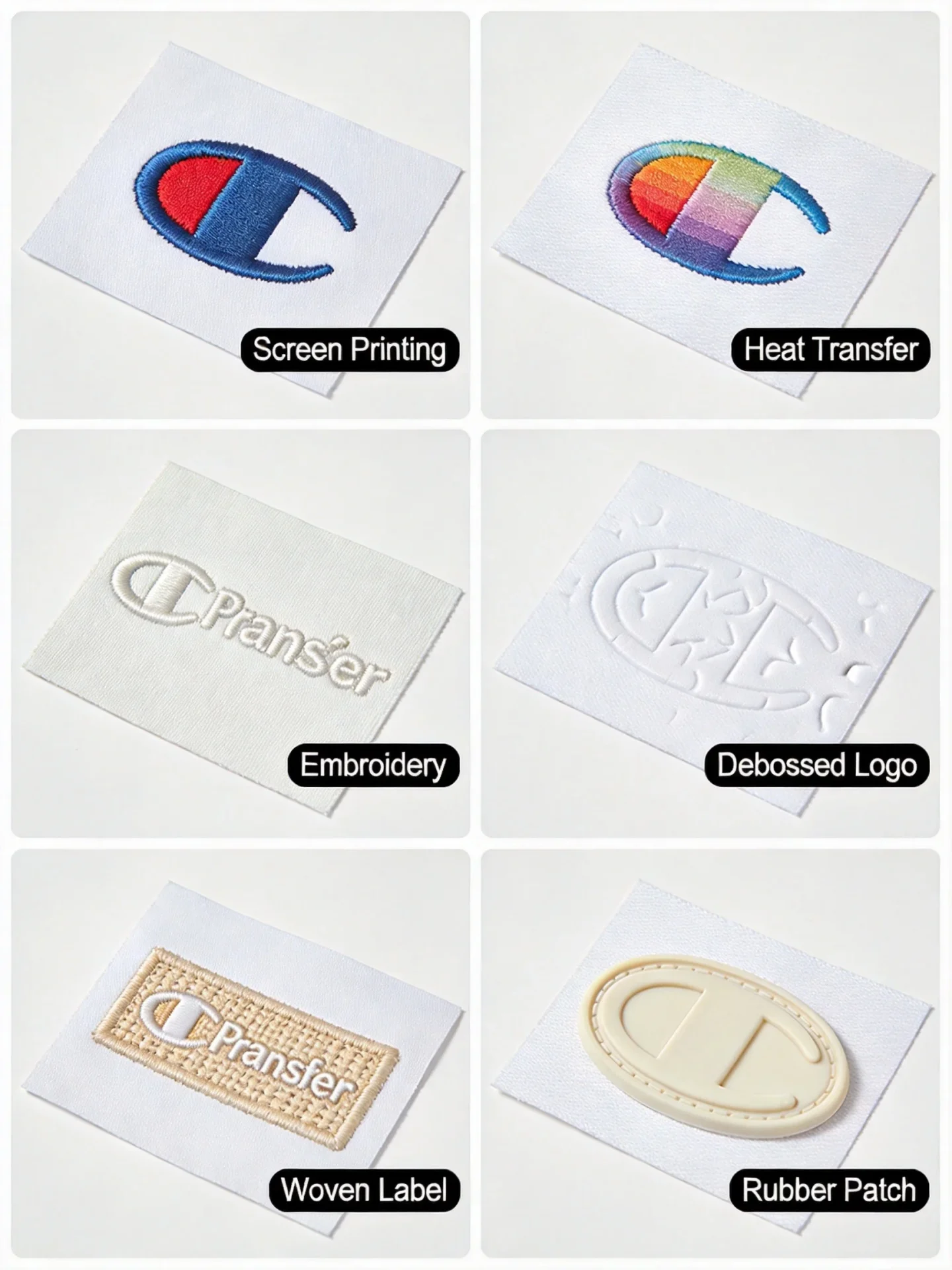
Screen printing delivers bold, opaque graphics on nylon, polyester, and canvas fabrics at high production speed. This technique is ideal for brand logos, slogans, and simple multi-color designs with up to 8 spot colors. Screen printing works best on flat panel surfaces before assembly, though we can also print on constructed bags using specialized platens. Plastisol inks provide excellent wash durability and vibrant color on dark fabrics, while water-based inks offer a softer hand-feel preferred for fashion-oriented designs. All inks used for sling bags meet CPSIA and REACH requirements for consumer products.
Sublimation Printing
Dye sublimation enables full-color, all-over printing on polyester fabrics with photographic quality and permanent durability. This technique is ideal for brands seeking complex patterns, gradient colorways, or artistic graphics that cover the entire bag surface. Sublimation prints become part of the fabric fiber rather than sitting on the surface, so they will never crack, peel, or fade under normal use. The technique requires white or light-colored polyester fabric and produces best results on 150D-600D polyester constructions. For brands exploring sublimation, we can produce color-accurate strike-offs before committing to full production runs.
Embroidery & Debossing
Embroidery adds premium three-dimensional texture to sling bags and works across all fabric types including nylon, polyester, canvas, and leather. Standard flat embroidery creates clean, professional logos, while 3D puff embroidery produces raised, dimensional effects that command attention. Debossing (heat-pressed impression) works exceptionally well on synthetic leather, waxed canvas, and smooth nylon surfaces, creating an understated luxury aesthetic preferred by minimalist brands. We offer both single-needle precision embroidery for detailed logos and multi-head production embroidery for high-volume runs.
Labels, Patches & Brand Accessories
Beyond direct printing, sling bags offer numerous touchpoints for brand expression through applied accessories. Woven labels (sewn-in or iron-on) provide permanent brand identification with a premium textile feel. Custom rubber patches (silicone or PVC) offer waterproof, flexible branding that works well on outdoor and technical slings. Leatherette or genuine leather tabs add heritage appeal to canvas and lifestyle designs. Metal brand plates in zinc alloy or stainless steel deliver maximum perceived luxury for premium product lines. Our custom branding guide provides detailed cost comparisons and specifications for all branding options. For brands launching new lines, our private label brand launch guide covers comprehensive branding strategy from concept to market.
Ergonomic Design Principles for Sling Bag Comfort
Ergonomic design is what separates a sling bag that customers love and recommend from one that collects dust after a few uses. The single-strap configuration creates unique biomechanical challenges compared to dual-strap backpacks, requiring careful engineering to distribute weight comfortably across the shoulder, chest, and back. Our design team applies evidence-based ergonomic principles to every sling bag we develop.
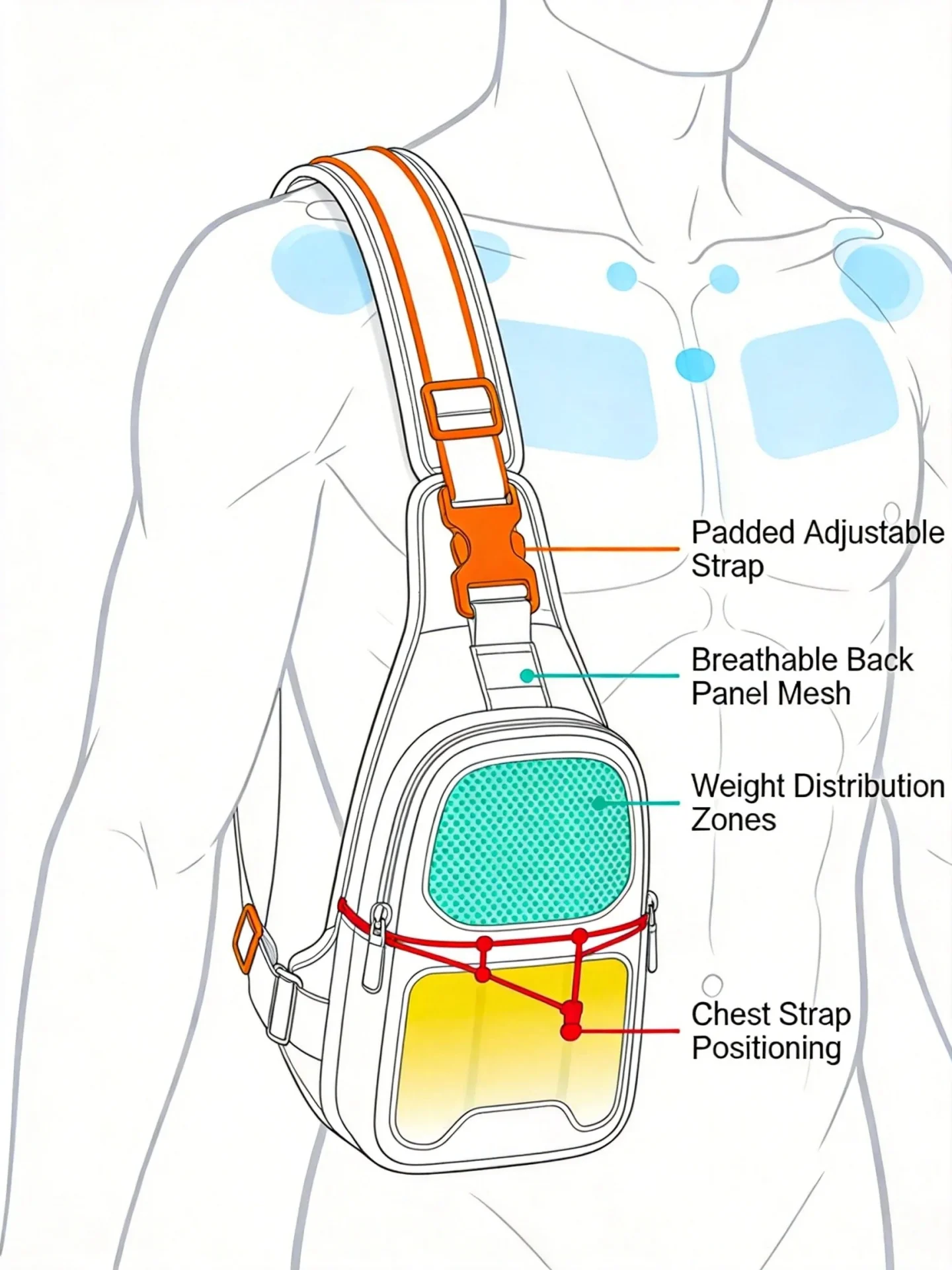
Strap Design & Weight Distribution
The shoulder strap is the primary load-bearing element of a sling bag and must be engineered to distribute weight across the maximum possible surface area. Key design considerations include strap width (wider straps distribute weight more effectively, with 50-70mm being the optimal range for loaded slings), padding density (progressive-density foam that is firm at load points and soft at edges prevents pressure concentration), and strap routing angle (the angle at which the strap crosses the chest affects how weight transfers to the shoulder and torso). We use pressure-mapping technology during prototyping to identify and eliminate hot spots before production.
Back Panel Ventilation
Extended sling bag wear creates heat and moisture buildup against the back, particularly in warm climates or during active use. Our ventilation solutions include 3D air mesh panels that create airflow channels between the bag and the body, channeled foam back panels with grooves that promote air circulation, and moisture-wicking fabric covers on contact surfaces. For athletic and outdoor slings, we can incorporate suspended mesh back panels similar to those used in hiking packs, creating an air gap that dramatically improves ventilation.
Load Positioning & Stability
How a sling bag sits on the body directly affects comfort and usability. Our designs account for the natural body contour and movement patterns to maintain stable, comfortable positioning during walking, cycling, and other activities. Features that improve load stability include contoured back panels that follow the body’s curvature, anti-slip strap surfaces with silicone grip patterns, load-lifter straps that connect the top of the bag to the shoulder strap for weight transfer adjustment, and sternum straps that prevent lateral bag movement during active use. These features are particularly important for our athletic bags and technical sling lines.
Accessible Organization
A well-designed sling bag enables one-handed access to essentials without removing the bag. This requires careful consideration of zipper placement, pocket orientation, and opening mechanics. Our design approach positions the most frequently accessed pocket (phone, wallet) at the natural hand-reach point when the bag is worn in the standard crossbody position. Zipper pulls are sized and positioned for easy single-hand operation, and pocket openings are designed to open away from the body for security while remaining accessible. Our experience designing laptop backpacks with organization systems directly informs our sling bag compartment engineering.
MOQ, Pricing & Production Logistics
Understanding the commercial framework of sling bag OEM manufacturing helps B2B buyers budget effectively and plan their product launches with confidence. Our factory in Quanzhou, Fujian, China offers transparent, competitive pricing based on material specifications, order volume, and customization complexity.
Minimum Order Quantities & Pricing Structure
Our standard MOQ for custom sling bags is 500 pieces per style per color. This threshold optimizes our production efficiency while remaining accessible for emerging brands and seasonal test runs. Pricing varies significantly based on material choice, hardware specification, and branding complexity. As a general reference point, basic polyester sling bags with standard hardware start at USD 3.50-5.50 per piece at MOQ quantities, while premium nylon or Cordura slings with branded hardware and multiple branding elements range from USD 8.00-15.00 per piece. For detailed pricing analysis, consult our bag manufacturing cost breakdown guide.
Production Timeline
| Phase | Duration | Key Activities |
|---|---|---|
| Design Development | 5-10 days | Confirm style, materials, colors, hardware, branding |
| Sampling | 7-15 days | Pre-production sample with final materials and construction |
| Sample Review | 3-5 days | Client evaluation, revision if needed, approval |
| Mass Production | 20-40 days | Based on order quantity (500-10000 pieces) |
| Quality Control | 2-5 days | AQL inspection, functional testing, documentation |
| Shipping | 3-7 days | Packing, labeling, customs documentation |
Total lead time from design confirmation to shipment readiness is typically 40-65 days. Our location near FOB Xiamen port ensures efficient global logistics, with transit times of 12-18 days to US West Coast, 20-28 days to US East Coast, and 25-35 days to Northern European ports. For detailed seasonal planning advice, refer to our production planning timeline guide. Our factory also supports Kickstarter and crowdfunding campaigns with specialized sampling and production services for emerging brands.
Quality Control Standards
Every sling bag order undergoes our comprehensive quality control process, which includes incoming material inspection, in-line production checks, and final AQL 2.5 inspection. Key quality checkpoints include zipper cycle testing (minimum 500 cycles for standard zippers), strap load testing (minimum 15kg static load), seam strength testing, color fastness verification, hardware function checks, and dimensional accuracy measurement. Our quality management system is ISO 9001 certified, and we welcome third-party inspections from SGS, Bureau Veritas, or your designated quality team. Learn more about our AQL inspection standards and how to audit bag factories in China.
Why JUNYUAN Bags Is Your Ideal Sling Bag Manufacturing Partner
With over a decade of bag manufacturing excellence in Quanzhou, Fujian, JUNYUAN Bags brings unmatched expertise, capacity, and service to every sling bag OEM project. Our comprehensive capabilities extend far beyond sling bags, encompassing baby carriers, golf bags, pickleball bags, cooler bags, pet bags, tool bags, and numerous other bag categories. This diverse manufacturing experience gives us a unique cross-category perspective that informs innovative design solutions and efficient production processes. Our commitment to sustainable manufacturing practices ensures that your products meet the growing consumer demand for environmentally responsible goods. We maintain full compliance with international standards as documented in our export compliance guide, and our certifications are detailed on our factory audit page. Whether you are comparing bag manufacturers worldwide or seeking a long-term production partner in China, we invite you to explore our FAQ section and contact us to discuss your project requirements.
Frequently Asked Questions (FAQ)
Q1: What is the minimum order quantity for custom sling bags?
Our standard MOQ is 500 pieces per style per color. For first-time clients, we can accommodate trial orders of 200-300 pieces with a small surcharge. Multi-style orders enjoy flexible blended MOQ arrangements to reduce per-style minimums.
Q2: Which fabric do you recommend for premium sling bags?
For premium sling bags, we recommend 420D nylon with TPU coating or Cordura 500D for maximum durability. For value lines, 600D polyester offers excellent performance at a lower cost point. The best choice depends on your target retail price, brand positioning, and performance requirements.
Q3: Can you produce anti-theft sling bags with RFID blocking?
Yes. We manufacture anti-theft sling bags with integrated RFID-blocking pockets, slash-resistant straps with steel cable core, lockable zipper pulls, and body-facing hidden compartments. These features can be combined or used individually based on your product requirements.
Q4: What hardware brands do you work with?
We source premium hardware from YKK (zippers), Duraflex and Nifco (buckles), and offer custom branded hardware in zinc alloy, stainless steel, and aluminum. Mid-tier alternatives from SBS and HHH zippers are available for cost-sensitive projects.
Q5: How long does sling bag production take?
Total lead time from design confirmation to shipment readiness is typically 40-65 days, including 7-15 days for sampling, 20-40 days for mass production, and 2-5 days for quality control. Shipping from FOB Xiamen adds 12-35 days depending on destination.
Q6: Do you offer ODM designs or only OEM manufacturing?
We offer both OEM and ODM services. Our ODM program includes over 150 existing sling bag designs that can be customized with your materials, colors, and branding. For OEM projects, we manufacture to your exact specifications from concept to container.
Q7: Can you produce sustainable or eco-friendly sling bags?
Absolutely. We offer rPET recycled polyester, ECONYL recycled nylon, organic cotton canvas, and PFC-free DWR treatments. Our factory maintains certifications for sustainable production practices and can provide material traceability documentation for eco-conscious brands.
Q8: What printing techniques work best for sling bags?
Screen printing is ideal for bold logos on nylon and canvas. Sublimation enables full-color all-over prints on polyester. Embroidery delivers premium 3D branding on any fabric. We also offer rubber patches, woven labels, leatherette tabs, and metal brand plates for additional brand expression.
Q9: How do you ensure consistent quality across large orders?
Our ISO 9001 certified quality management system includes incoming material inspection, in-line production checks, and final AQL 2.5 inspection. Every order undergoes zipper cycle testing, strap load testing, seam strength verification, and dimensional accuracy checks before shipment.
Q10: Where is your factory located and what are the shipping advantages?
Our factory is located in Quanzhou, Fujian Province, China, approximately 90 minutes from Xiamen port (FOB Xiamen). This location provides direct access to major global shipping routes with competitive freight rates to North America, Europe, Japan, Australia, and Southeast Asia.
Start Your Custom Sling Bag Project Today
Partner with JUNYUAN Bags, your trusted OEM/ODM sling bag manufacturer in Quanzhou, Fujian, China. From concept to container, we deliver quality, innovation, and reliability. Contact us for free consultation, material samples, and detailed quotation. FOB Xiamen shipping available worldwide.
Email Us: [email protected]
WhatsApp: +86 17750020688
Visit Contact Page