
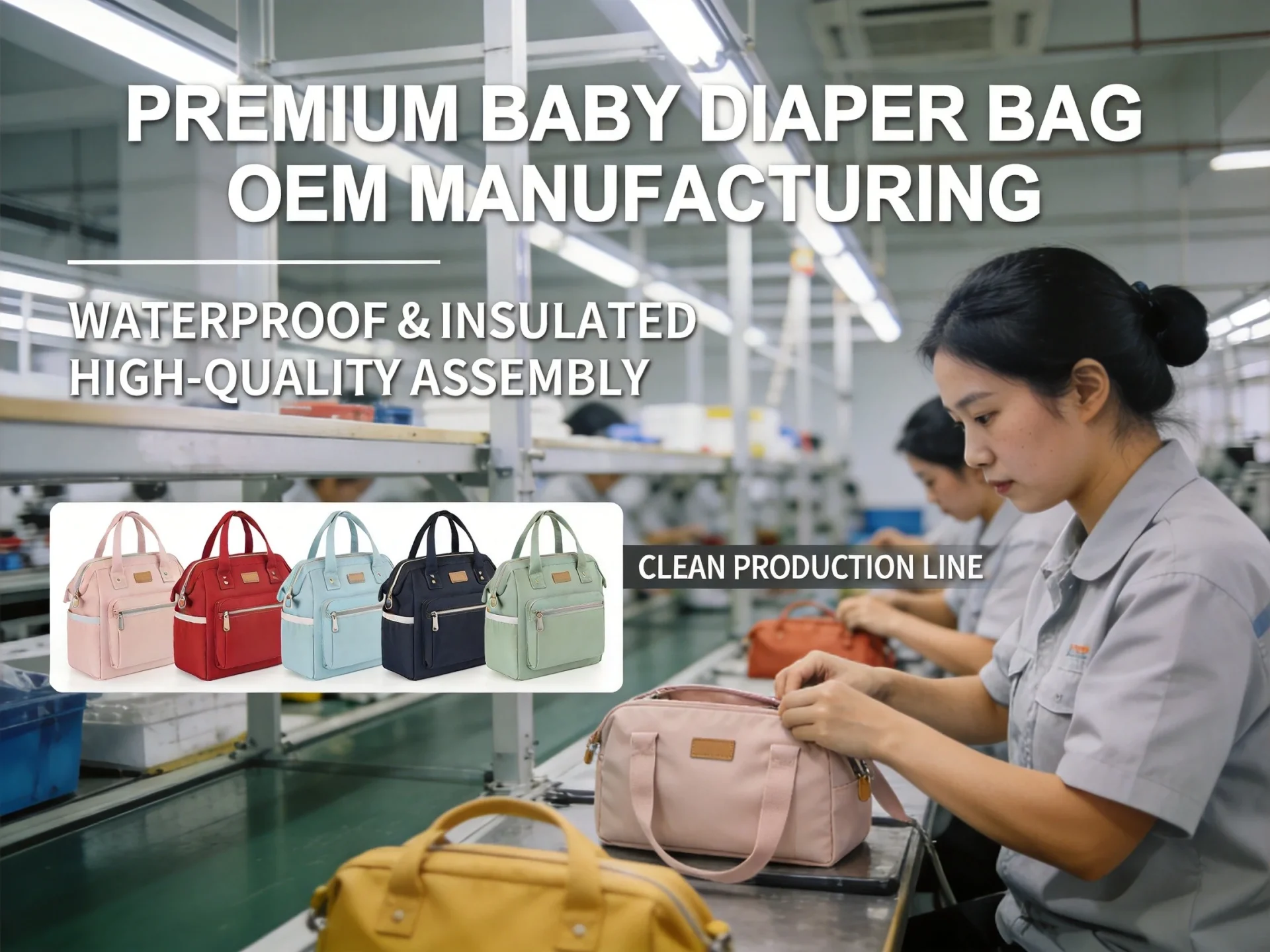
Baby Diaper Bag OEM/ODM: Insulated Compartments, Waterproof Materials & Market Trends (2026)
The global baby diaper bag market continues to expand at a remarkable pace, driven by rising parental awareness, increasing disposable incomes, and a growing demand for multifunctional baby gear. As a leading OEM/ODM bag manufacturer based in Quanzhou, Fujian, China, JUNYUAN Bags drawn on over a decade of expertise perfecting the art of manufacturing premium baby diaper bags that meet the highest international safety and quality standards. This comprehensive guide covers everything B2B buyers need to know about sourcing custom baby diaper bags from a reliable factory in China, from material selection and insulation design to safety certifications, printing techniques, and market trends shaping the industry in 2026.
Whether you are a brand owner launching a new baby product line, a retailer looking to expand your diaper bag assortment, or an e-commerce seller seeking a dependable custom bag manufacturing partner, this pillar page provides the technical knowledge and market intelligence you need to make informed sourcing decisions. Our factory, conveniently located near FOB Xiamen port, offers flexible MOQ options starting at 500 pieces, full OEM and ODM capabilities, and a proven track record of serving clients across North America, Europe, and Asia-Pacific markets.
Why Baby Diaper Bags Demand Specialized OEM Manufacturing
Baby diaper bags are far more complex than standard tote bags or backpacks. They must simultaneously address hygiene requirements, thermal insulation needs, structural durability, weight distribution comfort, and aesthetic brand appeal. Unlike generic bag manufacturing, producing baby diaper bags requires specialized knowledge in food-contact-safe materials, temperature-controlled compartment engineering, and rigorous safety testing protocols.
The Complexity of Multi-Functional Baby Bag Design
Modern parents expect diaper bags to perform multiple functions beyond simple storage. A well-designed OEM diaper bag should include dedicated insulated bottle compartments, waterproof changing pad pockets, stroller attachment straps, anti-theft zipper systems, and organized interior sections for wipes, diapers, clothing, and electronic devices. At JUNYUAN Bags, our design team works closely with clients to balance these functional requirements with manufacturing feasibility and cost optimization. Visit our diaper bag product category to see examples of our manufacturing capabilities.
The custom bag design process for baby products involves additional considerations that standard bag manufacturing does not require. Every material must be tested for chemical safety, every zipper must be smooth enough to prevent pinch hazards, and every strap must be padded adequately to distribute weight comfortably during extended carrying periods. Our factory audit page provides a transparent view of our manufacturing standards and quality control processes.
Market Trends Shaping Baby Diaper Bag Demand in 2026
Several key market trends are influencing how brands approach diaper bag product development and OEM sourcing. Understanding these trends helps buyers make strategic decisions about materials, features, and design directions that resonate with modern consumers:
- Gender-neutral designs: Brands are moving away from traditional pink-and-blue segmentation toward neutral palettes, minimalist aesthetics, and nature-inspired colorways that appeal to millennial and Gen Z parents
- Dad-focused products: Tactical diaper bags and masculine-styled designs are experiencing double-digit growth as fathers take on more active caregiving roles
- Sustainability mandates: EU and North American regulations are pushing brands toward recycled materials, BPA-free components, and biodegradable packaging
- Smart integration: Some premium brands are experimenting with built-in USB charging ports, RFID-blocking pockets, and GPS tracking capabilities
- Travel-ready formats: Airline-compliant dimensions and convertible backpack-to-tote designs are driving demand for versatile configurations
These trends directly impact the bag manufacturing cost structure, as premium features and sustainable materials come with different price points than conventional options. Our team can help you navigate these trade-offs during the product development phase.
Waterproof Material Selection: TPU, PVC, EVA & Advanced Composites
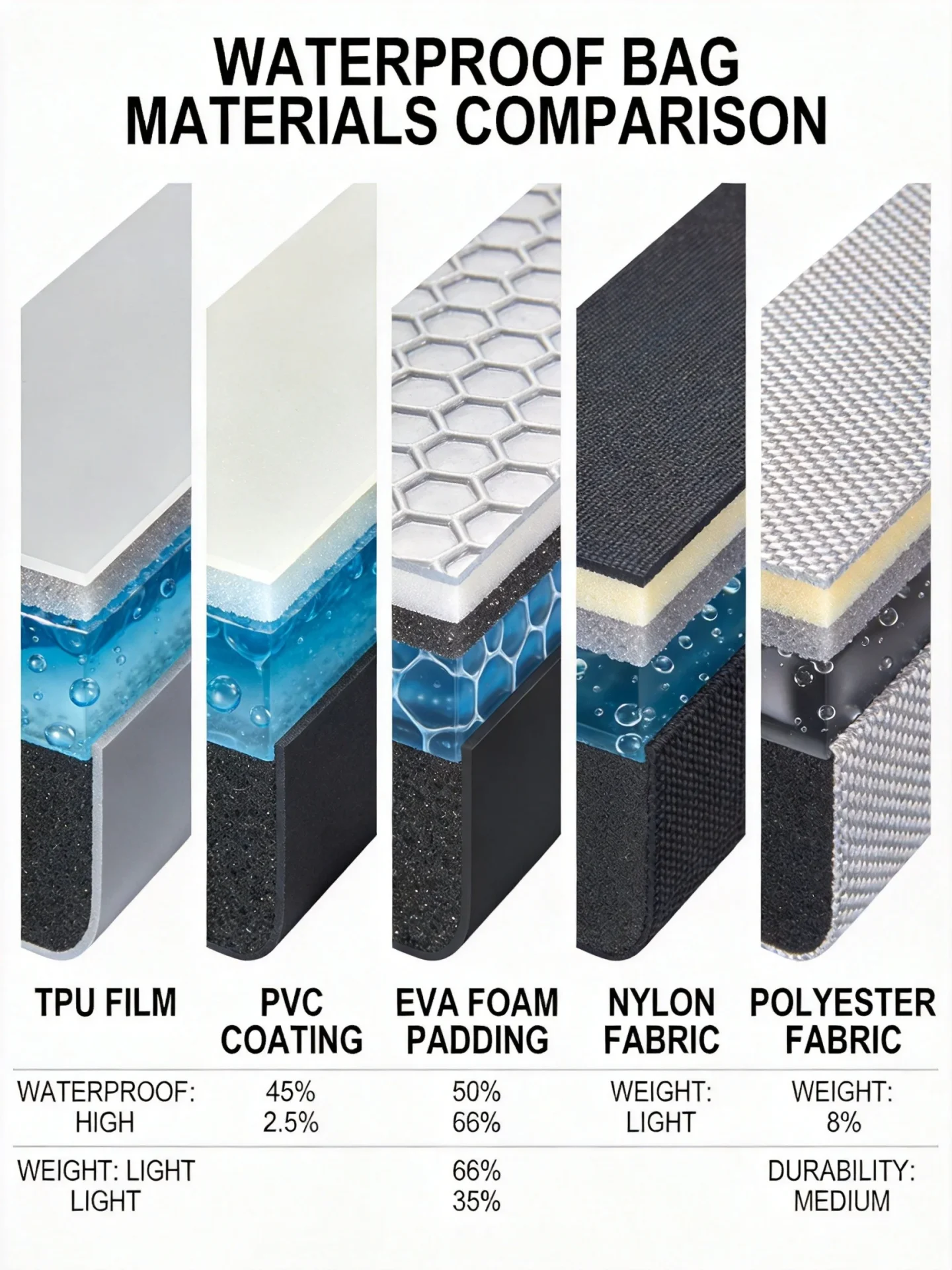
The cornerstone of any high-quality baby diaper bag is its waterproof capability. Spills, leaks, outdoor rain exposure, and messes from baby products are constant threats that demand reliable water resistance at both the fabric surface and seam levels. As an experienced wholesale bag factory, we work with multiple waterproofing technologies, each offering distinct performance characteristics and cost profiles.
TPU (Thermoplastic Polyurethane) Coating
TPU has emerged as the gold standard for premium baby diaper bag waterproofing. This material offers excellent hydrostatic resistance (typically exceeding 10,000mm water column), superior flexibility at low temperatures, and importantly, it is free from harmful plasticizers like phthalates that are restricted under CPSIA and REACH regulations. TPU-coated nylon or polyester fabrics provide a soft hand-feel while maintaining reliable waterproof protection. For brands targeting the premium segment, we recommend 420D or 600D nylon with TPU backing, which delivers the optimal balance of durability, weight, and water resistance. Our material selection guide provides detailed specifications for each option.
PVC (Polyvinyl Chloride) Coating
PVC remains a cost-effective waterproofing solution widely used in mid-range diaper bag production. While PVC offers excellent water resistance and is straightforward to apply during manufacturing, it has become less favored in premium baby product lines due to environmental and health concerns. Phthalate-free PVC formulations are available and compliant with most Western safety standards, though brands targeting eco-conscious consumers should carefully consider the material lifecycle implications. PVC-coated polyester at 210D to 420D weight remains popular for value-oriented diaper bag lines.
EVA (Ethylene Vinyl Acetate) Foam & Shell
EVA is uniquely valuable in baby diaper bag construction due to its dual role as both a waterproof barrier and a structural insulation material. EVA foam sheets can be laminated between outer and inner fabrics to create rigid, water-resistant compartments that maintain shape even when the bag is not fully loaded. This is particularly important for bottle holders and insulated food compartments where structural integrity prevents tipping and spills. EVA is also inherently free from BPA, phthalates, and heavy metals, making it an excellent choice for baby products. Learn more about our material quality verification processes.
Comparative Material Performance
| Property | TPU Coating | PVC Coating | EVA Foam |
|---|---|---|---|
| Water Resistance | Excellent (10,000mm+) | Excellent (8,000mm+) | Good (5,000mm+) |
| Flexibility | High | Moderate | Low (Rigid) |
| Weight | Light | Moderate | Moderate-Heavy |
| Phthalate-Free | Yes | Requires Special Formulation | Yes |
| Temperature Range | -30 to 80 degrees C | -15 to 60 degrees C | -40 to 80 degrees C |
| Cost (FOB Xiamen) | Premium | Economical | Mid-Range |
| Best Application | Premium Lines | Value Lines | Structural/Insulated |
Seam Sealing & Construction Techniques
Waterproof fabric is only half the equation. Seam construction determines whether a diaper bag truly keeps contents dry under real-world conditions. At our Quanzhou factory, we employ multiple seam sealing methods depending on the product tier. For premium lines, we use hot-air seam tape sealing that creates a continuous waterproof barrier along every stitched seam. For mid-range products, double-stitched seams with waterproof thread and seam sealant provide reliable protection at a lower cost point. All our diaper bags undergo water spray testing before shipment to verify performance. For more on our quality control and AQL inspection standards, visit our dedicated guide.
Thermal Insulation Layer Design & Engineering
Insulated compartments are among the most sought-after features in modern baby diaper bags. Parents need to maintain milk and formula at safe temperatures, keep food fresh during outings, and store temperature-sensitive items like breast milk during travel. Our engineering team has developed multi-layer insulation systems that deliver reliable thermal performance while keeping bag weight and bulk to a minimum.
Multi-Layer Insulation Architecture
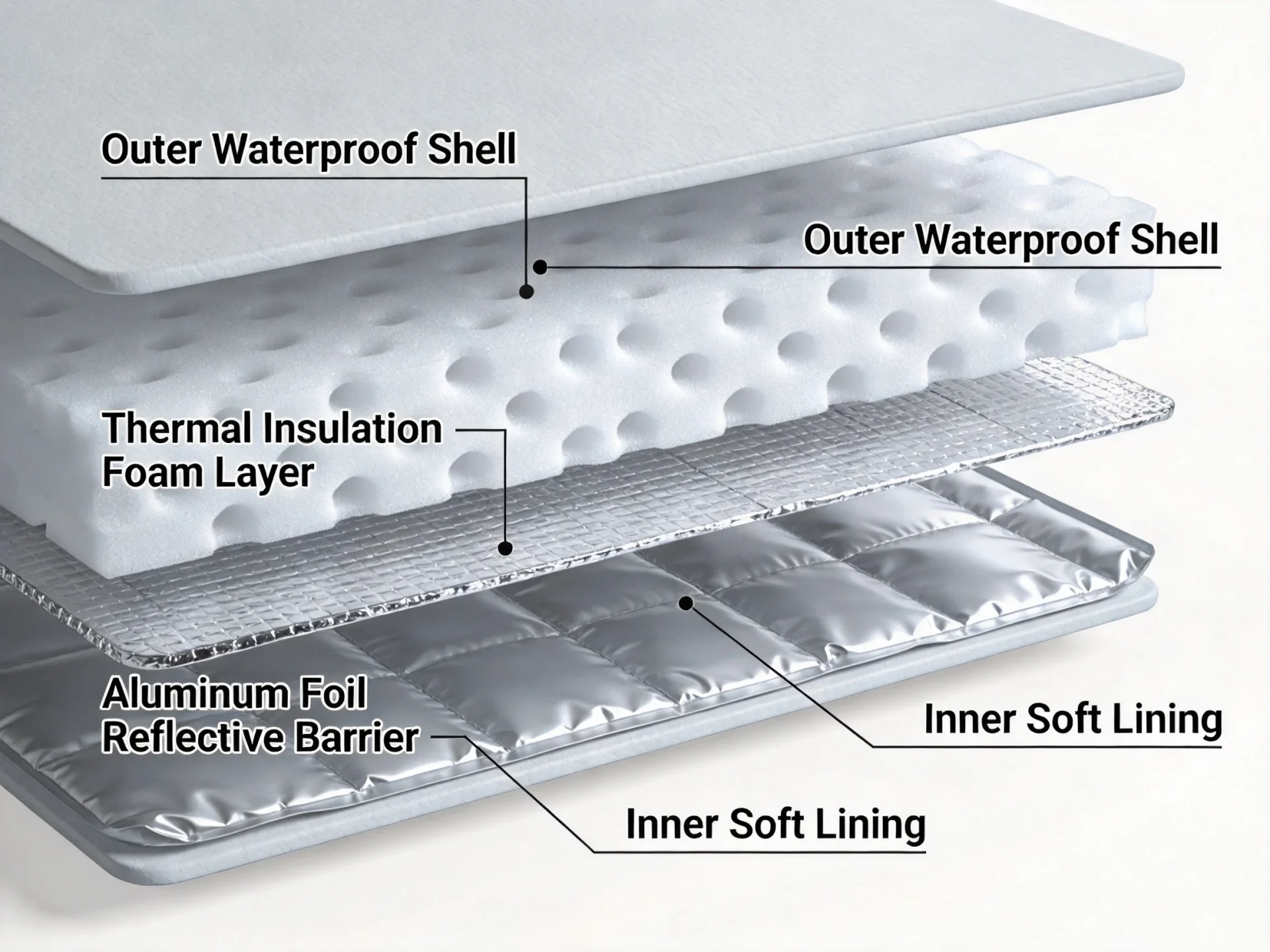
Our standard insulation system for baby diaper bags consists of four functional layers, each serving a specific thermal management purpose. This architecture can be customized based on client requirements, target price points, and intended use scenarios.
Layer 1: Outer Shell
The outer shell uses water-resistant nylon or polyester fabric treated with DWR (Durable Water Repellent) finish. This layer protects the insulation core from moisture intrusion and physical damage. We typically specify 420D ripstop nylon with TPU backing for premium lines, or 600D polyester with PVC coating for value-oriented products. The outer shell also carries the brand’s visual identity through custom colors, patterns, and printed graphics.
Layer 2: Closed-Cell Foam Core
The insulation core uses closed-cell polyethylene foam (typically 3-5mm thickness) that provides the primary thermal barrier. Closed-cell foam outperforms open-cell alternatives because it does not absorb moisture, maintaining its insulation value even when exposed to condensation or humidity inside the compartment. The foam density is calibrated to balance insulation performance with weight, typically 28-33kg per cubic meter for optimal baby bag applications.
Layer 3: Reflective Thermal Barrier
An aluminum foil or metallized PET film layer reflects radiant heat back toward the contents, significantly enhancing thermal retention for hot items and thermal blocking for cold items. This reflective layer is sandwiched between the foam core and the inner lining, protected from abrasion and puncture. For clients seeking the highest insulation performance, we can incorporate double-sided reflective barriers.
Layer 4: Food-Safe Inner Lining
The innermost layer uses PEVA (Polyethylene Vinyl Acetate) or food-grade TPU film that directly contacts bottles, food containers, and breast milk storage bags. This layer must be FDA-compliant for food contact, free from BPA and phthalates, and easy to clean with a damp cloth. We offer both smooth and textured inner linings, with textured surfaces providing better grip for bottles and containers.
Insulation Performance Metrics
We test insulation performance under standardized conditions to provide reliable data for our clients. Our testing protocol measures internal temperature retention over a 4-hour period under ambient conditions of 25 degrees Celsius. A well-constructed insulated diaper bag compartment should maintain cold contents at or below 8 degrees Celsius and hot contents at or above 55 degrees Celsius for a minimum of 4 hours. Our premium insulation systems can extend this performance to 6-8 hours, making them suitable for longer outings and travel scenarios. Our capabilities in cooler bag manufacturing directly inform our insulation engineering expertise for baby bags.
Compartment Configuration Options
Our OEM diaper bags can accommodate various insulated compartment configurations based on your product requirements. Popular options include single large insulated bottle pockets, dual bottle holders with individual dividers, full-width insulated sections spanning the bag width, and removable insulated pouches that can be separated from the main bag for convenience. We also offer OEM and ODM design services to develop entirely custom compartment layouts that differentiate your product in the market.
Multi-Compartment Structural Design for Maximum Organization
Modern baby diaper bags require sophisticated compartmentalization to handle the diverse range of items parents carry. A typical diaper bag needs to organize diapers, wipes, changing pads, bottles, food, clothing, pacifiers, toys, personal items like wallets and phones, and increasingly, electronic devices like tablets and laptops. Getting the compartment layout right is critical to both user satisfaction and brand reputation.
Essential Compartment Zones
- Main compartment: Large open space for diapers, clothing, and bulkier items with internal mesh dividers for organization
- Insulated bottle zone: Dedicated thermal section with elastic bottle holders sized for standard and wide-neck bottles
- Wipes access pocket: Side-access pocket with one-hand dispensing design for quick wipe retrieval during changes
- Changing pad sleeve: Flat sleeve holding a foldable waterproof changing pad, accessible without opening the main compartment
- Front organizer panel: Multiple small pockets for pacifiers, keys, phone, wallet, and small accessories with elastic loops and zippered security pockets
- Back panel pocket: Slim pocket against the wearer’s back for valuables, providing both security and accessibility
- Stroller strap attachment: Reinforced webbing loops or clips for stroller mounting when hands-free carrying is needed
- Dedicated wet bag: Separate waterproof-lined pocket for soiled clothing or used bibs to prevent cross-contamination
Structural Design Considerations
The structural integrity of a diaper bag depends on frame design, base reinforcement, and panel construction. Our manufacturing process incorporates semi-rigid EVA or PE board bases that prevent the bag from collapsing when set down, reinforced side panels that maintain shape under load, and gusset construction that allows the bag to expand as needed while maintaining a streamlined profile when lightly loaded. Our experience in sports bag manufacturing has taught us valuable lessons about structural engineering that directly benefit diaper bag construction.
Safety Certifications: CPSIA, EN71, REACH & Beyond
Safety certifications are non-negotiable for baby products sold in regulated markets. Unlike adult bags that face minimal regulatory scrutiny, baby diaper bags must comply with stringent chemical safety standards, physical safety requirements, and labeling regulations in every major market worldwide. As a factory that has invested heavily in compliance infrastructure, we maintain active certifications and testing relationships that streamline the path to market for our clients.
CPSIA Compliance (United States)
The Consumer Product Safety Improvement Act (CPSIA) sets the strictest baby product safety requirements globally. All materials in contact with children must meet lead content limits (below 100ppm in substrate materials), phthalate restrictions (eight specific phthalates at less than 0.1 percent), and mandatory third-party testing by CPSC-accepted laboratories. Our factory maintains CPSIA-compliant material inventories and works with accredited testing labs like SGS, Bureau Veritas, and Intertek to provide test reports for every production run. For a comprehensive overview of export compliance requirements, see our bag export compliance guide.
EN71 Compliance (European Union)
EN71 is the European standard for toy safety that also applies to baby bags with play features or items children may interact with directly. The standard covers mechanical and physical properties (EN71-1), flammability (EN71-2), and chemical migration (EN71-3). While not all diaper bags are classified as toys under EN71, many brands choose to certify their products to this standard as a mark of quality assurance, particularly when the bag includes attached toys, teething rings, or activity features. Our certifications guide covers all major safety standards our factory maintains.
REACH Compliance (European Union)
REACH (Registration, Evaluation, Authorization, and Restriction of Chemicals) regulates chemical substances used in products sold within the EU. For diaper bags, this means restricting substances of very high concern (SVHCs) including certain azo dyes, heavy metals, and flame retardants. The SVHC candidate list is updated regularly, and our compliance team monitors all updates to ensure our material suppliers remain current. We maintain REACH-compliant formulations for all materials offered to European clients, including dyes, coatings, and accessory components.
Additional Certifications & Standards
- California Prop 65: Required for products sold in California, limiting exposure to listed chemicals
- FDA Food Contact: Required for materials that contact food, bottles, or breast milk storage containers
- BSCI/Sedex: Social compliance audits that verify ethical manufacturing practices
- ISO 9001: Quality management system certification demonstrating consistent manufacturing processes
- Oeko-Tex Standard 100: Textile certification ensuring fabrics are free from harmful substances
Our factory holds ISO 9001, BSCI, and Sedex certifications, and we facilitate third-party testing for all product-specific safety standards. Visit our factory audit page for detailed certification documentation. We also provide guidance on selecting the right bag manufacturer in China with a focus on compliance capabilities.
Printing & Branding Techniques for Custom Diaper Bags
Brand differentiation in the competitive baby diaper bag market depends heavily on visual identity execution. From logos to patterns to care instructions, the printing and branding technique you choose affects both the aesthetic impact and long-term durability of your product. Our Quanzhou factory offers a full spectrum of branding methods suitable for baby diaper bags at various price points.
Screen Printing
Screen printing remains the most popular branding method for diaper bags due to its versatility, cost-effectiveness at volume, and ability to reproduce bold, opaque graphics on both light and dark fabrics. We use plastisol inks that are phthalate-free and CPSIA-compliant for all baby product runs. Screen printing works best for designs with limited color counts (up to 8 colors) and delivers excellent wash durability and color fastness.
Heat Transfer & Sublimation
For complex, full-color graphics including photographic images or gradient designs, heat transfer and sublimation printing offer superior results. Sublimation works exclusively on polyester fabrics and produces permanent, wash-resistant images that will not crack or peel. Heat transfer vinyl (HTV) is ideal for small batch runs or designs requiring metallic, glitter, or specialty finishes. Our expertise in hardware branding and logo application ensures every branding element meets premium quality expectations.
Embroidery
Embroidery delivers the most premium branding appearance for baby diaper bags. The three-dimensional texture of embroidered logos conveys quality and craftsmanship, and the technique is inherently durable since the thread is physically woven into the fabric. Embroidery works best on structured bag panels and is commonly used for brand logos on front pockets, back panels, or strap padding. We offer standard embroidery, 3D puff embroidery for raised effects, and applique embroidery for large designs.
Rubber Patches, Woven Labels & Accessories
Custom rubber patches (PVC or silicone), woven labels, leatherette tabs, and metal brand plates provide additional branding touchpoints that elevate perceived value. Rubber patches are particularly popular for diaper bags because they are waterproof, easy to clean, and child-safe when properly secured. Our custom branding guide covers all available branding options with detailed cost comparisons and minimum order requirements.
MOQ, Lead Times & Production Planning
Understanding manufacturing economics is essential for B2B buyers planning product launches or seasonal inventory builds. Our factory in Quanzhou, Fujian, China offers transparent pricing and production timelines based on order complexity and volume.
Minimum Order Quantities
Our standard MOQ for custom baby diaper bags is 500 pieces per style per color. This threshold balances our production efficiency with the flexibility needs of emerging brands and smaller retailers. For repeat orders or clients with multiple styles, we offer blended MOQ arrangements that reduce the per-style minimum while maintaining total order volume. First-time clients may request trial orders of 200-300 pieces with a modest surcharge to evaluate market response before committing to full production runs.
Production Timeline
| Phase | Duration | Details |
|---|---|---|
| Design Confirmation | 5-7 days | Finalize specs, materials, colors, branding |
| Sample Production | 7-15 days | Pre-production sample with all materials and construction |
| Sample Approval | 3-5 days | Client review, feedback, and approval |
| Mass Production | 25-45 days | Based on order quantity (500-5000 pieces) |
| Quality Inspection | 3-5 days | AQL 2.5 inspection, testing, and reporting |
| Shipping Preparation | 3-7 days | Packing, labeling, palletizing, customs documentation |
Total lead time from design confirmation to shipment readiness is typically 45-75 days depending on order size and complexity. Peak season (July-October for holiday inventory) may require additional lead time. Our production planning guide provides detailed seasonal timelines and ordering recommendations. Shipping from FOB Xiamen port provides access to major global shipping routes with transit times of 15-20 days to North American West Coast ports and 25-35 days to European destinations.
Custom Options & ODM Services
Beyond OEM production of client-designed bags, our ODM services offer ready-to-customize designs that brands can adapt with their own materials, colors, and branding. This approach accelerates time-to-market while maintaining brand differentiation. Our design library includes over 200 diaper bag styles spanning backpack, tote, crossbody, messenger, and tactical formats. Whether you need a private label backpack or a fully custom-engineered product, our team can support your vision from concept to container. Learn about how to audit bag factories in China to ensure you partner with a reliable manufacturer.
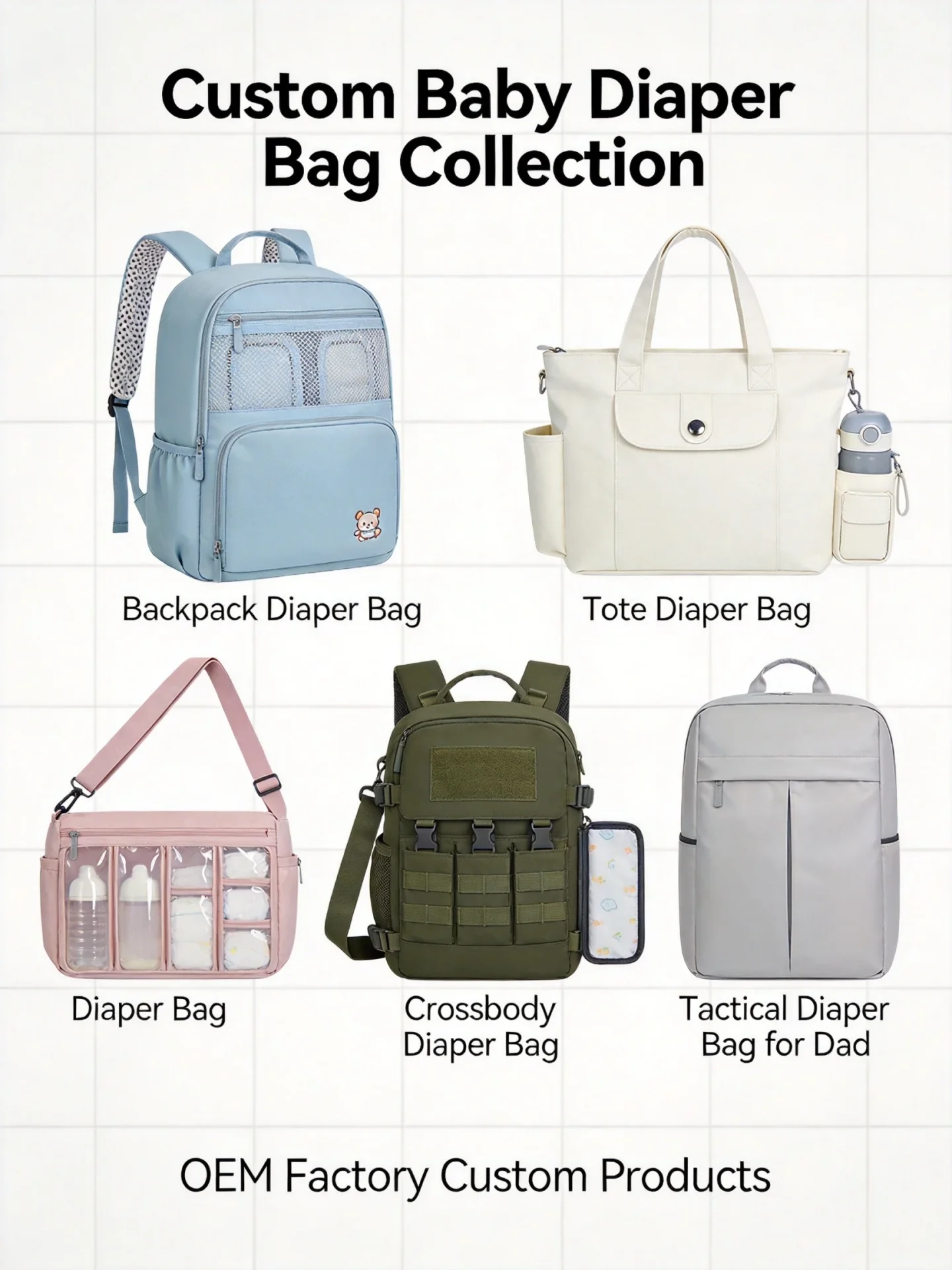
Why Choose JUNYUAN Bags as Your Diaper Bag Manufacturing Partner
With over two decades of bag industry experience dating from 2004, JUNYUAN Bags has established itself as a trusted partner for brands worldwide seeking quality, reliability, and innovation. Located in Quanzhou, Fujian, China, our factory benefits from the region’s mature supply chain ecosystem, skilled workforce, and proximity to Xiamen port for efficient global shipping. Our capabilities span beyond diaper bags to include sports bags, golf bags, laptop backpacks, pet bags, cooler bags, and many other bag categories. Our commitment to sustainable materials and responsible manufacturing ensures that your products meet the evolving expectations of conscious consumers. We also offer expertise in waterproof bag manufacturing across multiple product categories.
Frequently Asked Questions (FAQ)
Q1: What is the minimum order quantity (MOQ) for custom baby diaper bags?
Our standard MOQ is 500 pieces per style per color. For trial orders, we can accommodate 200-300 pieces with a small surcharge. Repeat orders and multi-style arrangements enjoy more flexible MOQ terms.
Q2: What waterproof materials do you recommend for baby diaper bags?
We recommend TPU-coated nylon (420D or 600D) for premium lines, PVC-coated polyester for value lines, and EVA foam for structural insulated compartments. The best choice depends on your target price point, performance requirements, and market regulations.
Q3: Can you produce CPSIA and EN71 compliant baby diaper bags?
Yes. Our factory maintains CPSIA-compliant and REACH-compliant material inventories. We work with accredited third-party testing laboratories (SGS, Bureau Veritas, Intertek) to provide test reports for every production run.
Q4: How long does production take for a custom diaper bag order?
Total lead time from design confirmation to shipment is typically 45-75 days, including 7-15 days for sampling, 25-45 days for mass production, and 3-7 days for quality inspection and shipping preparation.
Q5: What insulation technologies do you use for bottle compartments?
Our standard insulation system uses a four-layer architecture: outer shell fabric, closed-cell PE foam core (3-5mm), reflective thermal barrier (aluminum foil or metallized PET), and food-safe PEVA inner lining. This system maintains temperature for 4-8 hours depending on configuration.
Q6: Do you offer ODM services or only OEM?
We offer both OEM and ODM services. For ODM, we have over 200 existing diaper bag designs that can be customized with your materials, colors, and branding. For OEM, we manufacture to your exact specifications from concept to production.
Q7: What shipping terms do you offer?
We primarily ship FOB Xiamen port, which offers excellent connectivity to global shipping routes. We can also arrange CIF, DDP, and door-to-door delivery depending on your requirements and destination.
Q8: What branding and printing options are available for custom diaper bags?
We offer screen printing, heat transfer, sublimation, embroidery (standard and 3D puff), custom rubber patches, woven labels, leatherette tabs, metal brand plates, and custom zipper pulls. Each method has different cost, durability, and visual characteristics.
Q9: Can you produce eco-friendly or sustainable diaper bags?
Yes. We offer rPET (recycled polyester) fabrics, organic cotton linings, BPA-free and phthalate-free materials, and biodegradable packaging options. Our sustainable material guide provides detailed specifications and cost comparisons.
Q10: How do you ensure quality consistency across production runs?
We follow ISO 9001 quality management systems, conduct AQL 2.5 inspections on all orders, maintain raw material traceability, and perform standardized testing including water resistance tests, load-bearing tests, zipper cycle tests, and color fastness checks. Pre-production samples are approved before mass production begins.
Ready to Start Your Custom Baby Diaper Bag Project?
Contact our team in Quanzhou, Fujian, China today for a free consultation, material samples, and detailed quotation. As a leading OEM/ODM diaper bag factory near FOB Xiamen, we are ready to bring your vision to market.
Email Us: [email protected]
WhatsApp: +86 17750020688
Visit Contact Page