
Heavy-duty custom bags are a game-changer for outdoor crowdfunding campaigns.They address the specific needs of outdoor enthusiasts with features like durable materials, waterproofing, and tailored compartments.These bags not only improve functionality but also boost campaign success by offering backers products designed for rugged environments.For example, the Nomad Sling Pack raised $380,000 on Kickstarter by delivering waterproof zippers and outdoor-specific compartments.
Straight Answer
MOQ 500 pieces ·Sampling 6-10 days ·Production 35-50 days ·AQL 2.5 inspection ·Sample fee refunded on volume order.JUNYUAN BAGS (QUANZHOU JUNYUAN COMMERCIAL AND TRADING CO., LTD.), an SGS-verified OEM/ODM bag factory (about 200,000 pieces/month, 7 lines, 149 machines, 137 workers) serving 200+ brands in 100+ countries, supports Kickstarter bag projects end to end.
Key takeaways:
- Durability: Use of ballistic nylon, reinforced stitching, and load-tested designs ensures long-lasting performance.
- Weather Resistance: Features like TPU coatings, taped seams, and UV protection safeguard gear in harsh conditions.
- Functionality: MOLLE webbing, waterproof zippers, and compartmentalized designs cater to outdoor needs.
- Customization: Options like modular systems, eco-friendly materials, and branded designs attract diverse backers.
- Manufacturing: Working with experienced partners ensures quality prototypes and production.
OEM Bag Manufacturer for Outdoor Brands #bag
sbb-itb-1e6451b
Core Features of Heavy-Duty Custom Bags for Outdoor Environments
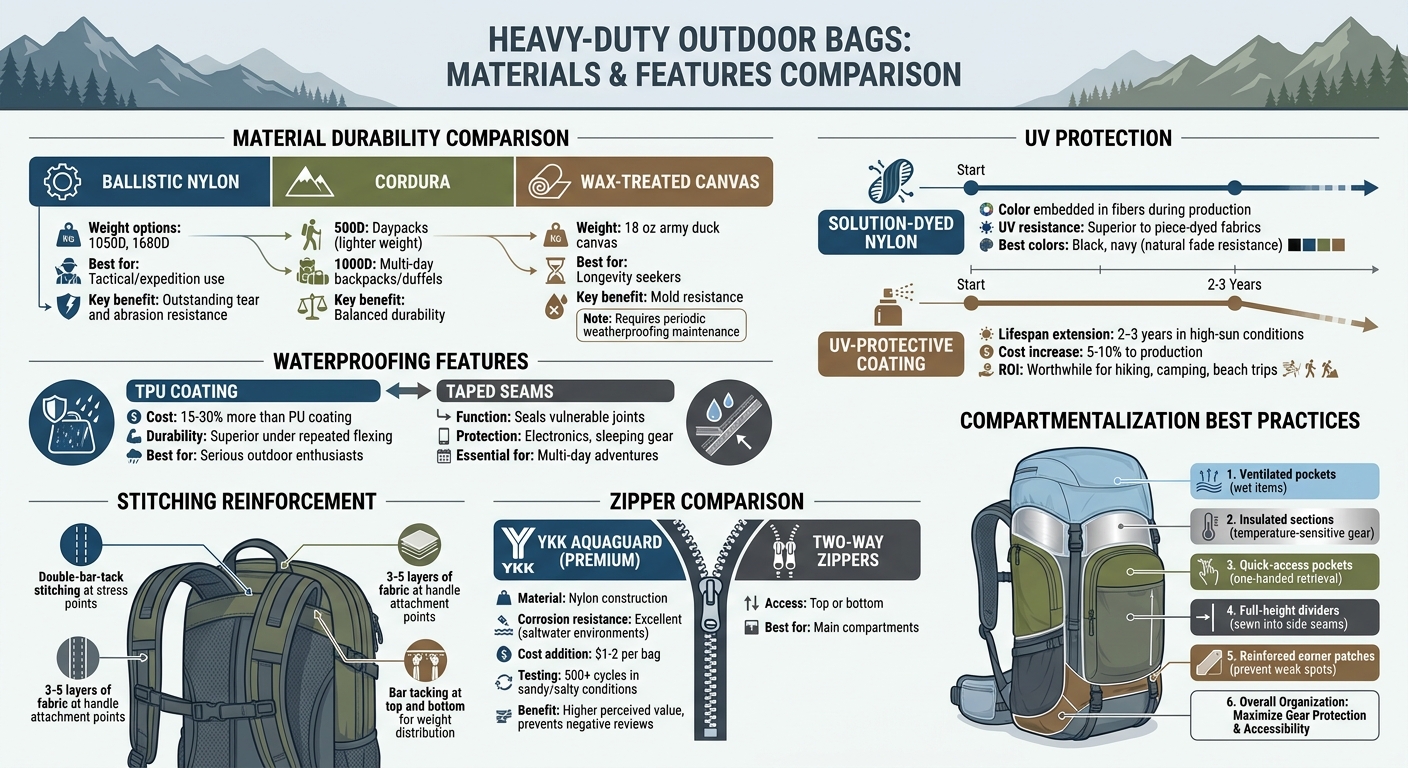
Heavy-Duty Outdoor Bag Materials and Features Comparison Guide
When it comes to designing bags for outdoor crowdfunding projects, three features stand out as non-negotiable: durability, weather resistance, and functionality.These aren’t just extras – they’re the backbone of any bag that needs to survive rugged outdoor conditions while meeting the expectations of serious users.
Durability: Materials and Construction Methods
The heart of any heavy-duty outdoor bag lies in the materials and how they’re put together.Ballistic nylon in 1050D or 1680D weights is a go-to choice for its outstanding resistance to tears and abrasions, making it ideal for tactical or expedition use.For lighter bags like daypacks, 500D Cordura strikes a good balance, while 1000D Cordura is better suited for larger, multi-day backpacks or duffels.Wax-treated canvas, such as the 18 oz army duck canvas famously used in WWII, remains a solid option for those who value mold resistance and longevity, though it does need periodic weatherproofing maintenance.
Another critical factor?Reinforced stitching.Stress points, like handles and straps, need extra attention.Double-bar-tack stitching and multi-ply fabric reinforcements are essential for long-term durability, especially for bags designed to carry heavy loads.For example, using 3-5 layers of fabric at handle attachment points, combined with bar tacking at the top and bottom, helps distribute weight evenly and prevents tearing.Real-world load testing ensures these construction methods can handle the demands of outdoor use without failure.
But strength alone isn’t enough – these bags also need to stand up to the elements.
Weather Resistance: Waterproofing and UV Protection
Outdoor bags face constant challenges from rain, humidity, and sunlight.Waterproofing is a must, and TPU (thermoplastic polyurethane) coatings are a standout choice for their durability and flexibility.Compared to basic PU coatings, TPU holds up better under repeated flexing, making it worth the extra 15-30% in cost for serious outdoor enthusiasts.Taped seams are another key feature, sealing vulnerable joints to keep water out – essential for protecting sensitive items like electronics or sleeping gear on multi-day adventures.
Then there’s the sun to contend with.UV protection is vital to prevent color fading and material breakdown over time.Solution-dyed nylon, where color is embedded into the fibers during production, offers superior resistance to UV damage compared to piece-dyed fabrics.Darker colors like black or navy naturally hold up better against fading, but adding a UV-protective coating can extend a bag’s lifespan by 2-3 years in high-sun conditions.While these coatings add 5-10% to production costs, they’re a worthwhile investment for bags aimed at activities like hiking, camping, or beach trips.
Once durability and weather protection are locked in, the next step is ensuring the bag is practical and user-friendly.
Functionality: Practical Features for Outdoor Requirements
What sets a great outdoor bag apart is its practical features – those thoughtful touches that make it useful for real-world adventures.MOLLE webbing (Modular Lightweight Load-carrying Equipment) is a popular choice for customization, but it needs to be done right.Webbing should be stitched through reinforced backing panels, not just the bag’s fabric, to prevent tearing under load.Similarly, D-rings and carabiner attachment points must have reinforced anchor patches rated for double or triple the expected weight to handle tough conditions.
Waterproof zippers are another critical element.YKK Aquaguard or similar zippers, made with nylon construction, are better suited to resist corrosion than plastic options, especially in saltwater environments.Two-way zippers on main compartments add versatility, allowing users to access gear from the top or bottom.Rigorous testing – like running zippers through over 500 cycles in sandy or salty conditions – ensures they can stand up to the elements.While premium zippers may add $1-2 to production costs, they significantly boost the bag’s perceived value and protect against negative reviews.
Finally, strategic compartmentalization is key for organization without sacrificing durability.Main compartments should include full-height dividers sewn into the side seams, as floating dividers can create stress points that lead to tears.Successful outdoor bags usually feature 4-6 organizational zones, including ventilated pockets for wet items, insulated sections for temperature-sensitive gear, and quick-access pockets for one-handed retrieval.Reinforced corner patches where compartments meet ensure these features don’t become weak spots when the bag is fully loaded.
Customization Options for Outdoor Crowdfunding Projects
When it comes to outdoor crowdfunding projects, customization is where functionality meets personal flair.A well-customized heavy-duty bag doesn’t just serve a purpose – it tells a story.It shows backers they’re getting more than just a product;they’re getting something tailored to their needs while maintaining the durability outdoor enthusiasts expect.
Branding: Custom Logos, Colors, and Patterns
A bag’s visual appeal has to do double duty: it needs to grab attention online and stand up to rugged outdoor use.With OEM and ODM services, you can design every detail – logos, colors, patterns – to create a look that resonates with your audience.For example, JUNYUAN BAGS has been offering these services.Led by a founder with bag industry experience dating from 2004, specializing in durable options like athletic backpacks and custom golf bags.
How you apply your branding is just as important as the design itself.Embroidery is a great choice for heavy-duty bags, offering a premium and long-lasting finish.On the other hand, screen printing works well for simpler designs, especially on tote-style bags.Once the visual identity is locked in, you can shift focus to structural features that cater to specific backer needs.
Personalized Features: Custom Sizes and Compartments
Standard designs rarely meet the diverse needs of outdoor adventurers.That’s why modular systems work so well in crowdfunding.A standout example is Peak Design’s "Travel Backpack 2-in-1"campaign, which raised $2,428,572 on Kickstarter in April 2026.This bag featured a clever design allowing users to combine a "Base Pack"and "Day Pack"for longer trips or use them separately for shorter outings.It included dual 16"laptop pockets and was made from 100% recycled, weatherproof 339D nylon canvas, available in three colors: Black, Sage, and Stone.
Other useful features include expandable gusseted bottoms for extra gear, dual entry points for easy access, and reinforced compartments for laptops and tablets up to 16".For outdoor creators and digital nomads, ventilated sections for wet gear or shoes are a game-changer, keeping moisture under control during multi-day adventures.
Eco-Friendly Materials for Environmentally Conscious Backers
Sustainability is becoming a top priority for many backers.Materials like rPET, made from recycled plastic bottles, combine environmental responsibility with the durability needed for outdoor use.Recycled nylon offers excellent abrasion resistance while reducing environmental impact.One notable campaign featured a modular backpack made from recycled materials, complete with custom laptop sleeves, which struck a chord with eco-conscious supporters.
Look for materials certified by OEKO-TEX to ensure they’re free from harmful chemicals.For campaigns aimed at professional travelers, Bluesign-approved and PFAS-free options are appealing for their combination of rugged functionality and polished aesthetics.While organic cotton is ideal for lifestyle totes, recycled nylon and rPET provide the weather resistance and strength needed for serious outdoor use.Before committing, request physical samples to confirm that these eco-friendly materials meet your durability standards.
Manufacturing Heavy-Duty Custom Bags: What to Consider
Once you’ve nailed down the customization details, the next step is bringing your concept to life.This involves careful planning – everything from picking the right manufacturing partner to testing prototypes.Each decision impacts the final product’s durability, functionality, and cost.Here’s what you need to know to make it all come together.
Selecting the Right Manufacturing Partner
Finding the right manufacturer is critical, especially for heavy-duty outdoor gear.You’ll want a partner with expertise in creating products like athletic backpacks, custom golf bags, or laptop bags – items that require reinforced construction and durable materials.Take JUNYUAN BAGS, for instance.They’ve been in the game.Led by a founder with bag industry experience dating from 2004, offering OEM and ODM solutions with over two decades of experience in handling complex bag designs.
An experienced manufacturer brings more to the table than just production.They’ve likely fine-tuned their processes and tackled supply chain challenges over the years.They’ll also know how to work with specialized materials like RPET fabrics and can help you navigate design hurdles unique to outdoor gear.Make sure they offer direct communication channels – like WhatsApp, WeChat, or email – for smooth collaboration during prototyping.Manufacturers based in industrial hubs such as Quanzhou, Fujian, China often have access to reliable supply chains for components like heavy-duty zippers, reinforced webbing, and weatherproof coatings.
Prototyping and Testing for Outdoor Performance
Prototyping isn’t just a step – it’s a necessity.A physical prototype lets you spot potential problems before production begins.It’s your chance to test how materials, stitching, and hardware come together.Plus, testing the prototype in real outdoor conditions can uncover issues you might miss in digital designs, like seams splitting under heavy loads or zippers jamming in wet weather.
Plan for multiple prototypes to refine both durability and comfort.A good manufacturing partner will provide technical insights to help you choose fabrics that strike the right balance between weight, abrasion resistance, and weather protection.Testing these prototypes in actual conditions ensures your final product meets performance expectations.
Budgeting for Custom Bag Production
Balancing quality and cost is all about knowing where your money is going.Heavy-duty synthetic or cotton bags tend to cost more upfront than standard options, but they’re washable, reusable, and built to last – qualities that outdoor enthusiasts value.If you’re catering to eco-conscious buyers, expect higher costs for recycled materials, especially as regulations around sustainability tighten.For example, some regions are moving toward requiring at least 50% postconsumer recycled content by 2028.
Don’t overlook regulatory compliance costs either.In places like California, bags must include printed details like the manufacturer’s name, origin, and recycled content.If you’re marketing your bags as “recyclable,” make sure the materials align with local curbside recycling program standards.Requesting physical samples before committing to a full production run is a smart way to avoid costly mistakes.It’s a small upfront cost that can save you significant headaches later.
Conclusion: Delivering Value with Heavy-Duty Custom Bags
Key Points to Remember
Heavy-duty custom bags are all about durability, functionality, and personalization.Using top-notch materials and well-thought-out designs, like smart compartmentalization, builds trust and encourages conversions.Features such as 2-in-1 modular systems or specialized compartments for tech and photography gear can turn casual interest into firm support.
Customization is where your campaign can truly shine.By offering options like multiple color choices and branding, you can create reward tiers – from basic totes to premium bundles – that boost pledge amounts.Additionally, fast prototyping and small-batch production allow you to test and refine designs without significant upfront costs.
"Our rigorous design, testing, and iteration process allows us to guarantee, ‘If something breaks, we’ll repair or replace it for free.’"- Peak Design
During prototyping, finalize the bag’s structure, materials, and logo so you’re ready for production when the campaign launches.Plan for fulfillment in key markets like the US, UK, Canada, Australia, and the EU, while ensuring packaging costs are part of your initial budget.Using eco-friendly materials is another way to attract environmentally conscious backers.
These strategies help set the stage for a successful campaign, especially when paired with a reliable manufacturing partner.
Why Partner with JUNYUAN BAGS
JUNYUAN BAGS brings years of experience to the table, making them a trusted partner for your campaign.Led by a founder with bag industry experience dating from 2004, they’ve specialized in OEM and ODM solutions, offering a wide range of customization options.From athletic backpacks and golf bags to laptop backpacks, their products are designed with outdoor and active lifestyles in mind.They also prioritize sustainability, offering Custom RPET (recycled plastic) backpacks that appeal to eco-conscious backers in outdoor crowdfunding projects.
With access to a variety of materials and expertise in construction, JUNYUAN BAGS understands the unique needs of crowdfunding campaigns.They provide the resources to help you create bags that stand out and connect with your audience.To get started, reach out via WhatsApp (+86 17750020688) or email ([email protected]) and begin prototyping for your campaign today.
FAQs
What fabric weight should I choose for my bag?
When choosing fabric weight, think about what the bag will be used for and how much durability it requires.For rugged, outdoor use, materials such as TPU and nylon are excellent options because they’re tough and water-resistant.Nylon in the range of 500D to 1000D is often suggested for heavy-duty outdoor bags.This weight provides the strength and weather resistance needed to handle outdoor adventures while satisfying the expectations of crowdfunding supporters.
How waterproof does an outdoor bag need to be?
When it comes to outdoor bags, the level of waterproofing needed depends on how and where you plan to use them.For light rain or the occasional splash, a bag made from water-resistant materials should do the trick.However, if you’re expecting heavy downpours or situations where the bag might get submerged, you’ll need something more robust.
Fully waterproof bags are designed for those tougher conditions.They typically feature sealed seams, waterproof fabrics, and secure closures to keep your gear dry.Materials like TPU, welded seams, and waterproof zippers add an extra layer of durability and protection, making these bags perfect for intense outdoor adventures.
What should I test on prototypes before launch?
Before releasing your outdoor-focused crowdfunding bag, it’s crucial to put prototypes through rigorous testing for durability, functionality, and resistance to the elements.Focus on these key aspects:
- Waterproofing: Test the bag’s zippers, seams, and materials to confirm they effectively keep water out.
- Structural integrity: Evaluate the strength of seams, straps, and hardware to ensure they can handle heavy use.
- Functionality: Assess the usability of compartments, ease of access, and ergonomic design for comfort and practicality.
- Material performance: Examine how well the materials hold up against temperature changes, moisture, and wear from abrasion.
Comprehensive testing like this guarantees the bag’s reliability and helps you deliver on backers’ expectations.
Frequently Asked Questions
Can it be waterproof too?
Yes.TPU-coated or welded-seam construction adds weather resistance while keeping the heavy-duty frame, a strong combo for outdoor campaigns.
How long does a heavy-duty bag sample take?
6-10 days after the tech pack and materials confirm, covering structure, reinforced seams and hardware.
What makes heavy-duty bags perform on Kickstarter?
Backers fund real durability: high-denier ballistic nylon or canvas, reinforced stress points, heavy zippers, and stated load capacity.Proof of toughness beats generic ‘tough’ claims.
How do I prove durability to backers?
Share drop, abrasion and load tests from the sample stage.Real test footage builds trust better than adjectives.
What materials are best for outdoor bags?
1680D ballistic nylon, heavy canvas, and TPU-coated fabrics withstand abrasion and weather.We source these at MOQ 500 with reinforced stitching.
How long does production take?
35-50 days after sample approval, with AQL 2.5 inspection on seams, hardware and strap attachment.
What hardware suits heavy-duty use?
Metal buckles, YKK-style heavy zippers and reinforced straps with bar tacks hold up best.We specify hardware to pass AQL 2.5 inspection.
Do heavy materials raise cost?
High-denier outer and heavy hardware cost more than standard, but they justify a premium pledge.We quote the delta in the itemized BOM.
How do I protect my heavy-duty design?
We sign NDAs and keep patterns and tooling private so your spec stays proprietary.
How durable is ballistic nylon?
1680D or 1000D nylon is highly abrasion- and tear-resistant, ideal for outdoor and heavy-use bags, and it photographs with a rugged premium finish.
Related Blog Posts