A bag manufacturer established in 2014, with our founder working in the industry since 2004. We build private-label yoga mat bags, drawstring mat sleeves, side-zip carriers, mesh ventilated bags, mat duffles and studio totes for yoga apparel brands, studio chains, gym equipment distributors, corporate wellness programs and promotional buyers — in 12oz cotton canvas, 600D recycled polyester, ripstop nylon, mesh and PVC-free TPU.
Short answer for buyers: a yoga mat bag is a fit-tolerance product before it is a fashion product. A standard 183 × 61 cm mat rolled at 6 mm needs an internal length of about 64 cm and an internal diameter of 14–15 cm, and a bag cut 3 cm short or 2 cm tight will be returned by the customer who owns a thicker mat. We build mat bags at 500 pieces per style, sample them in 6–10 working days, ship mass production 35–50 days after sample approval, and inspect to AQL 2.5 major / 4.0 minor. Sizing is confirmed against a rolled sample of the buyer’s own mat, not against a specification sheet.
What a Yoga Mat Bag Has to Solve That a Tote Bag Does Not
On a shelf a mat bag looks like a simple tube with a strap. In use it is a product with four hard constraints, and almost every complaint in this category traces back to one of them being treated as a detail.
Constraint one: the mat has to fit, with tolerance. Mats are not one size. A studio mat is usually 183 × 61 cm at 4–6 mm; a long mat is 200 × 66 cm; a travel mat is 1–2 mm and folds rather than rolls; a comfort mat is 8–10 mm and rolls into something closer to a small duffle than a sleeve. Two mats of the same nominal size from two brands roll to different diameters because of foam density and surface texture. This is why we ask for a rolled sample, or for the mat’s compressed diameter measured with a tape, before we cut a pattern.
Constraint two: the mat is carried wet and dirty. People leave a studio with a mat that has absorbed sweat on one side and floor grit on the other. A mat bag is therefore a containment product: it has to keep the wet face away from clothing, let the mat breathe enough not to turn sour overnight, and survive being wiped out. A sealed waterproof tube sounds like the answer and is not — a mat sealed in an impermeable bag for eight hours grows mildew. Ventilation beats waterproofing in this category, and the bags that sell best in warm climates have a mesh panel or a breathable bottom.
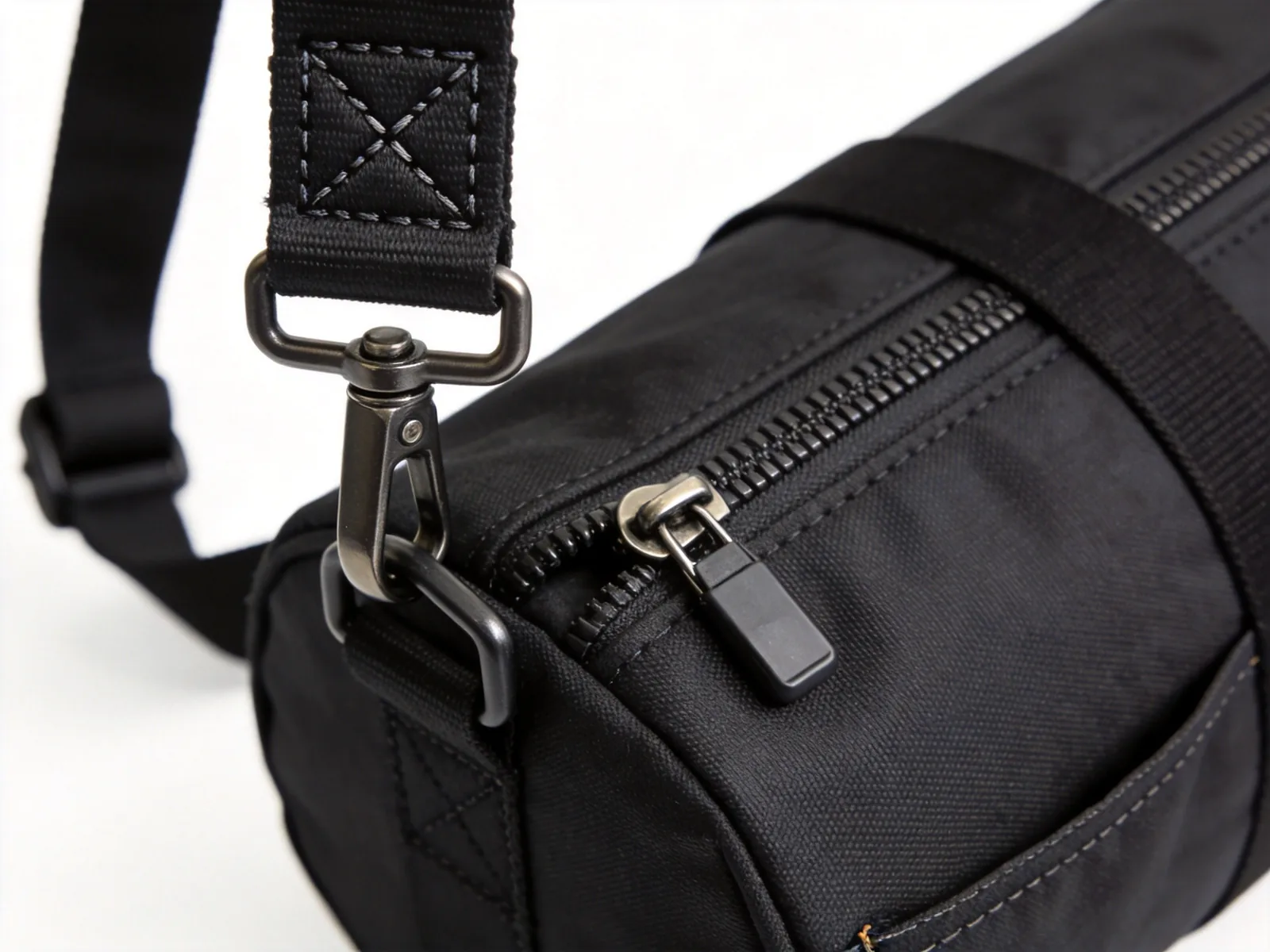
Constraint three: it is carried at an awkward angle. A loaded mat bag is 65–70 cm long and weighs 1.5–3 kg with a thick mat and a bottle. It is carried over the shoulder, across the body, hooked on a bike handlebar or strapped to a backpack, and it swings into doors, seats and other people. The strap anchor and the bag’s ends take loads that a tote of the same weight never sees, which is why our patterns put a bar-tack or box-X at every anchor rather than a single stitch line.
Constraint four: it is a branding surface bought by a community that reads detail. Yoga buyers notice stitching, hardware and print quality, and they post photographs of failures. The bag is often the first physical object a customer receives from a new apparel brand, so print registration, colour match against the apparel line and label placement carry more commercial weight than they would on an industrial product.
The Buying Landscape: Who Orders Yoga Mat Bags and What Each Channel Needs
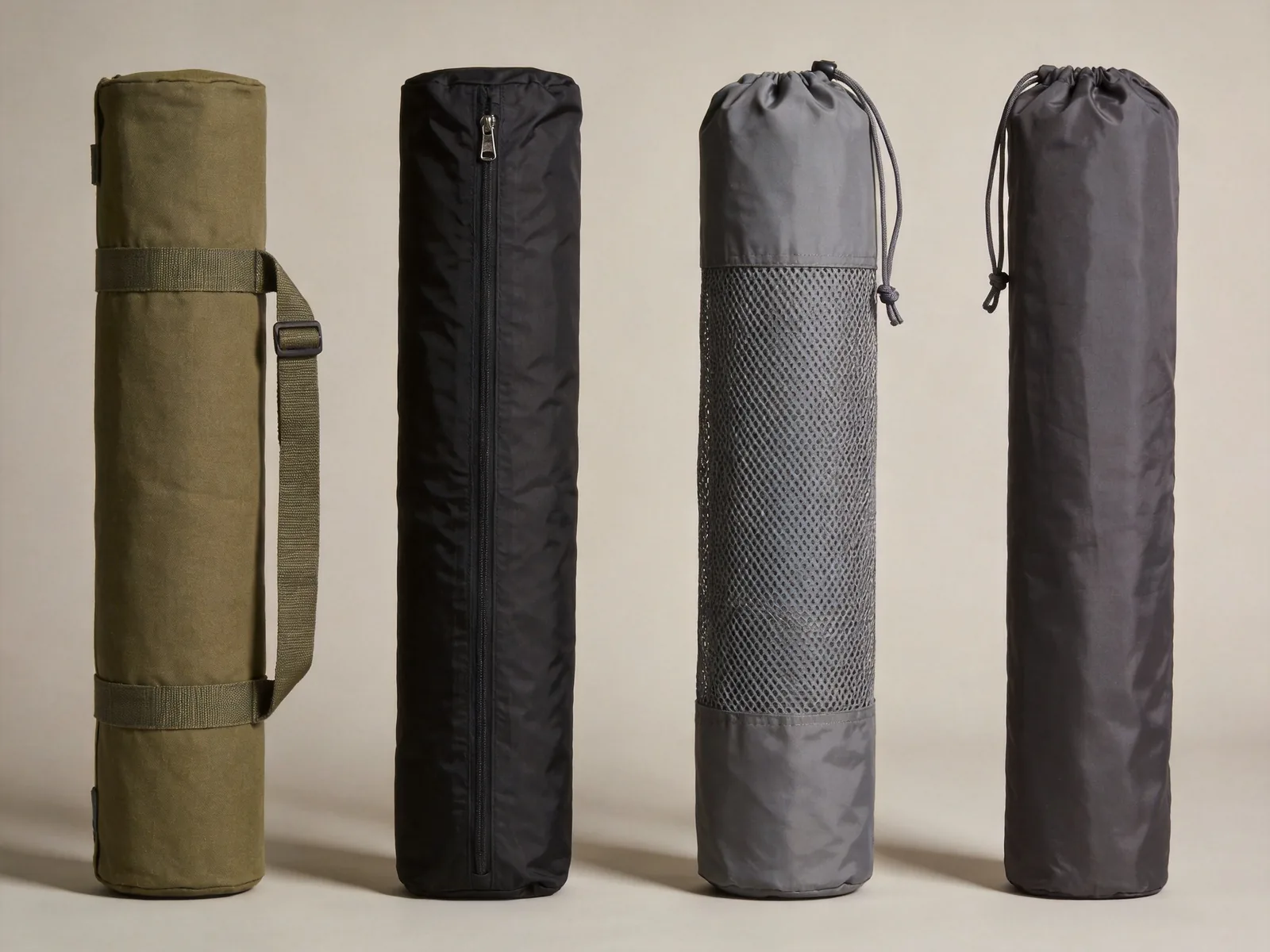
Mat bags arrive from six different kinds of buyer, and the brief changes completely between them. A studio chain reordering 2,000 branded sleeves for a teacher-training intake and a promotional distributor ordering 30,000 printed bags for a wellness campaign are not buying the same product, even when both call it a yoga mat bag.
| Channel | Typical order | Construction that wins | Non-negotiable requirement |
|---|---|---|---|
| Yoga apparel and lifestyle brands | 1,000–10,000 pcs per colourway, 2–4 drops a year | 12oz cotton canvas cylinder or side-zip carrier with woven label and metal hardware | Colour match against the apparel line; print and label quality close enough to retail at 3× cost of goods |
| Studio chains and teacher-training programs | 500–5,000 pcs, repeat per intake | Drawstring sleeve or mesh ventilated bag, one-colour print | Fits every mat the studio sells; low unit cost; short replenishment cycle |
| Gym and fitness equipment distributors | 2,000–20,000 pcs, catalogue SKUs | Mat duffle with mat compartment, or carrier with bottle pocket | Carton-ready packaging, barcode and carton marks, consistent size across reorders |
| Corporate wellness and HR programs | 500–5,000 pcs, campaign windows | RPET printed sleeve with logo, gift box option | Delivery inside a fixed campaign date; recycled-content story that can be printed on the hangtag |
| Promotional and gifting distributors | 5,000–50,000 pcs | 210D polyester drawstring sleeve, full-wrap print | Unit cost at volume, print area, and a bag that survives compression packing |
| Hotel, spa and retreat operators | 300–3,000 pcs | Natural canvas carrier, subtle embroidery, no large print | Understated branding; washable; stackable in housekeeping stores |
The order ranges above are what we see in practice rather than a policy. The commercial threshold is 500 pieces per style, and inside that 500 a buyer can mix up to three colourways and two print layouts, which is usually enough for a brand to test a new colour direction without committing to a full run of one variant.
Sizing: The Numbers That Decide Whether the Bag Comes Back
Sizing is where imported mat bags fail most often, and it fails silently — the bag looks right in a photo and is 2 cm too short in a customer’s hands. The dimensions that matter are the rolled mat’s length, its rolled diameter and the wall thickness of the bag’s own construction, because a padded bag loses 1–1.5 cm of internal space to its lining and foam.
| Mat specification | Rolled length | Rolled diameter (measured, typical) | Bag internal size we cut | External bag size |
|---|---|---|---|---|
| 183 × 61 cm, 4 mm (standard studio) | 61 cm | 12–13 cm | 64 × 15 cm | 68 × 16 cm |
| 183 × 61 cm, 6 mm (most common) | 61 cm | 14–15 cm | 64 × 17 cm | 68 × 18 cm |
| 183 × 66 cm, 6 mm (wide mat) | 66 cm | 15–16 cm | 69 × 18 cm | 73 × 19 cm |
| 200 × 66 cm, 6 mm (long mat) | 66 cm | 16–17 cm | 70 × 19 cm | 74 × 20 cm |
| 183 × 61 cm, 8–10 mm (comfort mat) | 61 cm | 17–20 cm | 65 × 22 cm | 69 × 23 cm |
| Travel mat 1–2 mm, folds flat | folds to 30–35 cm | flat, 4–6 cm packed | 62 × 22 cm flat sleeve | 64 × 24 cm |
Three practical rules come out of that table. First, internal length should be the mat’s rolled length plus 2–3 cm, never less, because a bag that requires the user to compress the mat to close it will split at the zip end within a season. Second, internal diameter should be the measured rolled diameter plus 1.5–2 cm, which is enough clearance for a slightly thicker mat without letting a thin one slide around. Third, decide early whether the bag is a single-mat bag or a two-mat bag — a surprising number of studio buyers want a carrier that holds a personal mat plus a folding travel mat, and that changes the diameter by 4–5 cm.
For drawstring sleeves the tolerance is more forgiving in diameter and less forgiving in length, because the gathered top consumes 3–4 cm of usable length when closed. We cut sleeve patterns 5 cm longer than the zip equivalent for the same mat.
Construction Types: Ten Ways to Build a Yoga Mat Bag
These are the ten constructions in current production. Most buyers start from one of them and change two or three details — the strap, the pocket layout, the closure — rather than developing a new pattern, which keeps sampling to one round and tooling to zero.
| Code | Construction | Best for | Typical FOB positioning |
|---|---|---|---|
| YM-01 | Drawstring mat sleeve, single layer, 210D–420D polyester | Promotional, studio giveaways, corporate wellness | Lowest cost; lightest; no padding |
| YM-02 | Drawstring sleeve with mesh panel and cord lock | Hot climates, studios, gym retail | Entry-level with ventilation benefit |
| YM-03 | Full-length side-zip cylinder with adjustable shoulder strap | Apparel brands, retail, everyday carry | Mid; the volume workhorse |
| YM-04 | End-load cylinder with round zip lid and grab handle | Thick mats, travel, premium retail | Mid to high; more panels, more labour |
| YM-05 | Half-moon / flat-bottom carrier with external pocket | Studio retail, premium canvas programs | High; shaped panels, higher fabric yield loss |
| YM-06 | Mat carrier with front zip pocket for phone, keys, card | Commuters, bike users | Mid; pocket adds a panel and a zip |
| YM-07 | Mat duffle: mat compartment plus main compartment for clothing | Gym distributors, studio-to-office use | High; largest fabric consumption |
| YM-08 | Backpack-style carrier with two mat straps | Commuter and bike channels | High; harness and padding |
| YM-09 | Neoprene sleeve, 3 mm, glued and stitched | Premium lifestyle brands, short-run colour stories | High material cost, low labour |
| YM-10 | Adjustable mat strap / carrier sling (no body) | Add-on SKU, gift-with-purchase, bundle filler | Lowest cost; sold as an accessory |
The single most consequential choice in that table is zip versus drawstring. A zip gives a clean retail look, protects the mat from rain and holds a padded shape, but it adds a zip, two zip ends, a puller and a binding operation, and it is the component most likely to fail. A drawstring is cheap, tolerant of size variation and impossible to break, but it offers no weather protection and no structure. Brands that sell through studios usually run both: a drawstring sleeve as the entry price point and a zip carrier as the margin product.
Material Selection: Six Fabrics and What Each One Is Actually For
Fabric choice in this category is decided by three things at once — the hand feel the brand wants, the weight the customer will accept, and whether the fabric can carry the print method the brand has already designed. A 12oz canvas that prints beautifully by screen cannot take a photographic sublimation print, and a 210D polyester that takes a full-colour wrap print feels thin in a premium context.
| Fabric | Weight | Strengths | Limitations | Use it for |
|---|---|---|---|---|
| 12oz cotton canvas | ≈ 400 g/m² | Structure, natural hand, excellent screen print and embroidery base, ages well | Heavy; absorbs water; needs pre-shrinking; slower to dry | Premium studio carriers, spa and hotel programs, embroidered logos |
| 10oz cotton canvas | ≈ 340 g/m² | Lighter canvas hand, still holds shape, lower cost than 12oz | Less abrasion resistance at the base | Mid-tier retail carriers, tote-style mat bags |
| 600D recycled polyester (RPET) | ≈ 230 g/m² | Durable, colour-fast, takes PU backing, prints by screen or heat transfer, GRS story | Synthetic hand; needs a backing for structure | Volume retail, gym distribution, corporate wellness |
| 420D ripstop nylon | ≈ 160 g/m² | Light, strong for its weight, packable, good for travel | Thin hand; less structure; print area limited to simple marks | Travel mats, packable carriers, bike commuters |
| Polyester mesh (3 mm hex or diamond) | ≈ 120 g/m² | Ventilation, visible contents, very light, low cost | No weather protection; snags; not for premium print | Vent panels, full mesh sleeves, hot-climate programs |
| Neoprene 3 mm, laminated | ≈ 2.7 kg/m² | Shock absorption, soft touch, waterproof face, premium feel | Highest material cost; heavier; requires lamination and edge binding | Premium lifestyle sleeves, limited colour stories |
Two material notes that come up in almost every development conversation. First, recycled polyester is now the default for volume programs in Europe and North America, and buyers increasingly ask for GRS-certified rPET with a transaction certificate rather than a generic “eco” claim; we source GRS-certified 600D RPET and supply the certificate chain on request. Second, PVC is being designed out of this category by retail buyers — a PVC-coated bag can be refused by a European retailer’s restricted substances list, and PVC-free TPU laminate does the same job at a modest cost premium.
Printing and Branding: What Actually Works on a Cylinder
A mat bag is a curved, narrow print surface, and print methods that work on a flat tote behave differently on a tube. The usable print area on a 68 × 18 cm carrier is roughly 40 cm of wrap by 20 cm of height, because the seam, the zip and the curvature each take space away from the artwork.
| Method | Best fabric | Colours | Durability | Notes |
|---|---|---|---|---|
| Water-based screen print | Cotton canvas, 600D polyester | 1–6 spot colours | Excellent on canvas; good on coated polyester | Soft hand, lowest cost at volume; each colour is a screen and a pass |
| Plastisol screen print | Cotton canvas | 1–4 colours | Excellent | Opaque on dark grounds; heavier hand; not for fine detail |
| Sublimation / all-over print | White or light 600D RPET, polyester mesh | Full colour, photographic | Good; colour sits in the fibre | Requires polyester substrate; cannot print on cotton or dark grounds |
| Heat transfer / digital transfer | Polyester, canvas with coating | Full colour, small areas | Good if tested for abrasion | Suits small multi-colour logos; verify adhesion after rub cycles |
| Embroidery | Canvas, heavy polyester | Up to 8 threads | Excellent | Premium signal; needs a low-density backing on thin fabric; avoid on mesh |
| Woven label / seam label | Any | Up to 6 colours | Excellent | Most durable brand mark; also carries care and content text |
| Rubber / silicone patch | Canvas, neoprene, coated polyester | 1–3 colours, debossed | Excellent | Premium hardware-adjacent look; adds 2–4 g and a stitch operation |
| Heat-transfer neck label (tagless) | Polyester, RPET | 1–2 colours | Good | Removes the sewn care label; common on gym-channel SKUs |
Registration is the detail that separates a good mat bag from a cheap one. On a curved panel, a two-colour screen print with 1 mm of misregistration is invisible on a flat tote and obvious on a cylinder, because the eye follows the seam. We print cylinder panels flat before closing, which improves registration and reduces the reject rate, and we hold ±1 mm registration on multi-colour work.
Six Failure Points We Design Out
1. The strap anchor tears out of the shell
The strap is attached to a single layer of fabric on most cheap mat bags, and the load of a 3 kg bag swinging from a shoulder concentrates on two stitch lines. We put a reinforcement patch behind every anchor, stitch with a box-X pattern in bonded polyester thread, and where the fabric is light we add a 2 mm PE board inside the seam so the load spreads across the panel rather than the stitch holes.
2. The zip end splits
On a full-length zip carrier the zip terminates at the bag’s end, exactly where the fabric is under the most tension and where the mat pushes hardest. Zip-end bar-tacks, a 1 cm seam allowance and a slightly domed end panel solve it. We also specify nylon coil zips with a #5 or #8 gauge rather than the #3 gauge that appears on low-cost imports, because the larger tooth resists the sideways load a mat applies.
3. The drawstring channel collapses
A drawstring sleeve fails when the channel is too narrow for the cord or the cord is too thin for the channel. We cut the channel to 12–14 mm for a 4 mm braided cord, run a double row of stitching so the cord cannot escape into the body, and specify a metal or moulded cord lock that will not crack at −10 °C.
4. The base abrades through
The end of a mat bag is dragged across studio floors, gym car parks and bike racks. A single-layer base wears through in months. We add a 1680D ballistic nylon or a 600D PVC-free panel on the base of every carrier above the entry price point, and we test it on a 10,000-cycle Martindale abrasion run.
5. The wet mat turns the bag sour
This is a design failure, not a cleaning failure. A bag with no ventilation and a non-wicking lining traps moisture against the fabric and grows mildew within a week of daily practice. Our answer is a mesh panel or a mesh-lined base, a lining that does not hold water, and a note in the care label that the bag should be left open after use. Where a brand wants a fully closed bag, we specify an anti-microbial finish on the lining and state it on the label rather than leaving the customer to discover the problem.
6. The print cracks on the fold
Coated fabric printed with a thick plastisol layer cracks along the crease where the bag folds flat in a carton or a gym locker. We test print adhesion with a cross-hatch tape test plus 20 rub cycles, and on coated substrates we recommend a thinner ink deposit or a transfer print rather than a heavy direct print.
Moisture, Hygiene and the Care Label
Hygiene is the most under-specified part of this product and the one that generates the most one-star reviews. Three decisions control it. The first is the lining: a 210D polyester taffeta lining wipes clean and does not hold water, while an unlined canvas bag absorbs sweat into the shell and stains permanently. The second is ventilation: a mesh panel of at least 15% of the bag’s surface area, or a mesh base, is enough to let a damp mat dry overnight in a normal room. The third is the care instruction: a mat bag should be wiped inside with a dilute detergent solution, aired open, and never machine washed if it has a laminated or coated shell.
Where a brand sells into studios, we print a short care block on the inside of the bag or on a sewn-in label: wipe clean, air dry open, do not bleach, do not tumble dry. It costs almost nothing and it removes a whole category of returns. For buyers who need an anti-microbial claim, we can specify a silver-ion or zinc-based finish on the lining and supply the supplier’s test data — but the claim wording has to be checked against the market’s biocidal product rules before it goes on a hangtag, and we will flag that rather than print a claim the buyer cannot defend.
Customization: What We Change on a 500-Piece Order
The list below is what buyers actually change, in the order they usually change it. None of it requires new tooling; the pattern is redrawn once at sampling and the changes carry through to production.
| Element | Options | Effect on cost | Effect on lead time |
|---|---|---|---|
| Dimensions | Any internal size from 55 × 12 cm to 80 × 24 cm; flat sleeve or cylinder | Neutral within the fabric yield band | None after pattern approval |
| Closure | Drawstring with cord lock, full-length zip, end zip, fold-over flap, magnetic flap | Zip adds the most; drawstring the least | Zip adds 2–3 days to sampling |
| Strap | 25 mm or 38 mm webbing; fixed or adjustable; shoulder pad; crossbody length 100–130 cm; detachable swivel hook | Adjustable slider and pad add cost | None |
| Pockets | Front zip pocket, slip pocket, bottle pocket, phone sleeve, key clip, card slot | Each pocket adds a panel and an operation | 1–2 days per pocket in sampling |
| Lining | Unlined, 210D taffeta, mesh, laminated TPU for wet mats | Lining adds material and labour | None |
| Padding | None, 3 mm EVA on the base, 5 mm foam body | Foam is the largest single add | None |
| Branding | Screen print, sublimation, embroidery, woven label, rubber patch, metal badge | Method-dependent; sublimation is cheapest at full coverage | Print-ready artwork needed at sampling |
| Hardware | Metal D-rings and swivel hooks, moulded acetal, antique brass, matte black | Metal adds 8–15% to trim cost | Metal finish adds 3–5 days if not in stock |
| Labels | Woven main label, care label, hangtag, barcode sticker, QR code | Low | Artwork deadline, not production |
| Packaging | Polybag, printed header card, kraft sleeve, colour box, recycled mailer | Box is the largest packaging add | Box tooling adds 7–10 days |
Two constraints worth knowing before the brief is written. A padded carrier cannot also be the cheapest SKU — foam, lining and the extra panel add roughly 20–30% to factory cost, and buyers who ask for both usually end up with two SKUs. And a full-wrap sublimation print requires a white or light polyester substrate, so a brand that wants a black bag with a photographic print is choosing between a dark bag with a spot print and a light bag with a full print.
Quality Control: The Inspection Plan and the Tests Behind It
Every order is inspected to AQL 2.5 for major defects and AQL 4.0 for minor defects, using a sampling plan agreed with the buyer before production starts. Major defects make the bag unusable or unsaleable — a zip that separates, a strap that pulls out, a bag outside the size tolerance, a print in the wrong position. Minor defects are cosmetic — a skipped stitch, a thread end, 1 mm of print registration shift, a label 3 mm off centre.
| Test | Method | Acceptance |
|---|---|---|
| Internal dimensions | Measured against the approved spec sheet on a flat table, three pieces per lot | Within ±5 mm on soft construction; ±2 mm on shaped or padded panels |
| Mat fit | Actual rolled mat inserted and withdrawn 10 times | Mat enters without compression; bag closes without strain; no zip-end distortion |
| Zip function | Full-length open and close, 50 cycles by hand, both directions | No skip, no separation, no slider binding, no tooth damage at the ends |
| Strap static load | Bag loaded to 2× intended working weight and suspended from the strap for 30 minutes | No stitch failure, no webbing pull-out, no more than 3 mm seam extension |
| Strap anchor pull | Pull test at each anchor to 3× working load | No rupture of shell, patch or stitch line before the specified load |
| Drawstring and cord lock | 50 open/close cycles, then a 5 kg static pull on the cord | No channel tear-out, no cord fray, lock holds without slipping |
| Seam strength | Pull test at the base seam, side seam and zip end | No rupture of the seam or fabric before the stitch line |
| Abrasion resistance | Martindale, 10,000 cycles on the base panel | No hole; surface wear acceptable if the base fabric is not breached |
| Print adhesion | Cross-hatch tape test plus 20 rub cycles | No lifting or flaking at the edges |
| Colourfastness to crocking | Dry and wet rub | Grade 4 minimum on the shell; grade 3–4 acceptable on dark binding |
| Water repellency (where specified) | Spray test on the finished bag, seams included | No wet-out on the interior within the test duration |
| Cold crack | Shell and coating flexed at −20 °C | No cracking of coating or print |
| Hardware corrosion | Salt spray on metal components | No red rust within 24 hours on decorative hardware; none on functional hardware |
| Weight | Individual piece weight against the approved target | Within ±5% |
| Labelling and packing | Visual check against approved artwork and packing list | Correct label, position and content; carton count and marks correct |
Inspection runs twice: inline at the sewing line, where the first piece of each operation is checked against the sample, and at final random inspection before packing. The buyer receives a written report with defect classification and photographs, and where a buyer’s own quality team wants to attend the final inspection we schedule production so the inspection date falls inside the shipping window rather than after it.
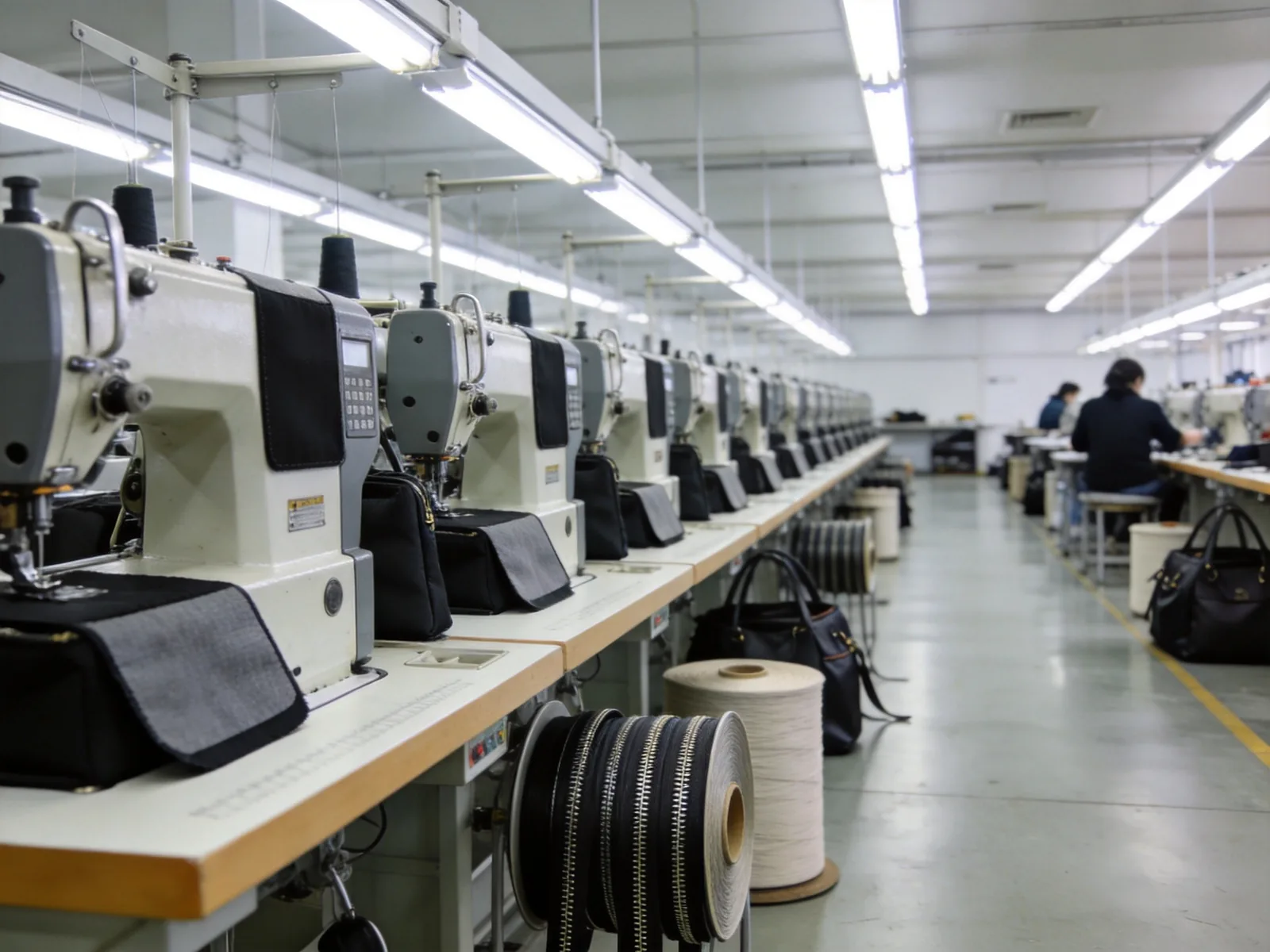
MOQ, Sampling and Production Timeline
The commercial terms are deliberately simple, because most mat bag buyers are working to a season launch, a studio intake date or a campaign gate, and they need the timeline to be predictable more than they need it to be short.
- MOQ: 500 pieces per style. Up to three colourways can be mixed inside that 500, with print applied per colourway. Below 500 we will quote, but the unit cost reflects setup rather than material.
- Sampling: 6–10 working days from a confirmed spec sheet and print-ready artwork. Pre-production samples are charged, and the sample fee is credited back against the first mass-production order at full quantity.
- Mass production: 35–50 days after sample approval and receipt of the deposit, depending on fabric lead time, print method and packaging. A new moulded box or a custom metal hardware finish adds its own lead time on top.
- Payment: 30% deposit with the order, balance against the pre-shipment inspection report and a copy of the shipping document. Longer-standing accounts are discussed case by case.
- Shipping: FOB Xiamen or Shenzhen by default; EXW, CIF and DDP on request. Mat bags are bulky relative to their weight, so carton optimisation matters more than gross weight — a 500-piece order of drawstring sleeves typically loads into 2–3 master cartons, while the same quantity of padded carriers needs 8–12.
For a first order we recommend a two-step approach: a paid sample in the final construction with the buyer’s own mat inside it, then a 500-piece run in one colourway with the print the brand is most confident about. Once the pattern and the strap geometry are proven, colour extensions and pocket variants are fast, because only the cut file, the trim order and the print screen change.
Cost Drivers: Where the Money Actually Goes
Buyers comparing quotes on this product are usually comparing different products. The four variables that move factory cost most are fabric weight, closure type, padding and print method — in that order.
| Driver | Low position | High position | Typical effect on unit cost |
|---|---|---|---|
| Shell fabric | 210D polyester, unlined | 12oz cotton canvas or 3 mm neoprene | 2.5–3× between the extremes |
| Closure | Drawstring with cord lock | Full-length #8 zip with metal pull and end bar-tacks | +15–25% |
| Structure | Single layer, no padding | 5 mm foam body plus 2 mm base board | +20–30% |
| Pockets | None | Front zip pocket plus bottle pocket plus key clip | +10–20% |
| One-colour screen | Full-wrap sublimation or multi-colour embroidery | +10–35% | |
| Packaging | Polybag | Printed colour box with insert card | +8–20% |
The practical consequence is that two quotes for “a custom yoga mat bag at 2,000 pieces” can differ by a factor of three and both be honest. The way to compare them is to fix the specification first: fabric and weight, closure, padding, pocket count, print method and packaging. We quote against a written spec sheet for exactly this reason, and we will tell a buyer when a requested combination is not achievable at their target price rather than quote it and substitute materials later.
Sustainability: What Can Be Documented and What Cannot
Recycled content is now a standard request in this category, and the difference between a defensible claim and a marketing line is paperwork. We work with GRS-certified recycled polyester for 600D and 420D shells, which means the material is certified through the supply chain and the buyer can be issued a transaction certificate for the specific order. We also supply Oeko-Tex Standard 100 certificates for the fabrics we nominate, REACH SVHC declarations, and Proposition 65 statements based on supplier declarations.
What we do not do is invent a recycled percentage. A bag described as “made from recycled bottles” without a certificate is a claim the buyer cannot defend in an audit, and in several markets it is now an enforcement risk rather than a marketing nicety. Where a brand wants the story on a hangtag, we give them the actual certified content and the certificate reference so the wording can be accurate.
The other sustainability lever that costs nothing is packaging. Replacing a printed colour box with a kraft sleeve and a paper belly band typically removes 40–60 g of packaging per unit and shortens the packing line, and for e-commerce channels a recycled mailer replaces both the box and the outer carton.
Why Brands Consolidate Mat Bags With Us
Most mat bag programs sit inside a wider bag range, and the practical advantage of consolidating is that a brand places one purchase order instead of four. The mat carrier ships alongside the tote bag line, the beach bag, the weekender bag and the running bag in the same container, on the same inspection plan, at the same AQL standard, with the same labelling format and the same carton marking. Trim and colour consolidation also reduces the material minimums a brand has to carry, which matters most on canvas bought by the roll.
On the technical side, the shared capability that matters here is our cut-and-sew work on long, narrow panels — the same operations we run for packing cubes and EVA cases, where dimensional tolerance is the whole product. A mat bag is a simpler version of that engineering, which is why we can usually go from a rolled sample to a working prototype in one round.
Where a buyer’s range extends into wet or outdoor use, the same factory builds waterproof bags, dry bags and tactical bags; where it extends into studio accessories, it builds first aid bags and makeup bags on the same cells. Brands adding a commuter or gym line usually pair the mat carrier with our crossbody bag and laptop bag patterns, which share the same webbing, hardware and print setup.
Frequently Asked Questions
Start a Yoga Mat Bag Program
Send us the mat specification (length, width, thickness, or the brand and model), the target packed size, the market the bag will be sold in and the print-ready artwork, and we will come back with a construction recommendation, a size sheet and a quotation inside two working days. If the construction is not settled, we can start from one of the ten builds above and adapt it — most mat bag programs begin with an existing pattern and one meaningful change, not a new design from zero.
What we need to quote accurately: mat dimensions or a rolled sample, target bag size, shell material preference or a reference sample, closure type, strap and pocket requirements, branding method and artwork, packaging format, order quantity and required delivery window. What we will tell you honestly: where a requested construction will fail in use, where a compliance or recycled-content claim cannot be documented, and where a cheaper material will cost more over the life of the bag.
Request a Yoga Mat Bag Quote
500 pcs MOQ · 6–10 day sampling · 35–50 day production · AQL 2.5 major / 4.0 minor · OEM/ODM since 2014
Related Manufacturing Pages
- Custom Bag Manufacturer — OEM/ODM Hub
- Custom Packing Cubes Manufacturer
- Custom Weekender Bag Manufacturer
- Custom Beach Bag Manufacturer
- Custom Running Bag Manufacturer
- Custom Crossbody Bag Manufacturer
- Custom Laptop Bag Manufacturer
- Custom Waterproof Bag Manufacturer
- Custom Dry Bag Manufacturer
- Custom EVA Case Manufacturer
- Custom Makeup Bag Manufacturer
- Custom First Aid Bag Manufacturer