Want to make your Kickstarter bag campaign stand out? Branding is the key.Campaigns with strong branding – logos, videos, and compelling stories – can raise 3.5x more funding than those without.Backers trust professional visuals and clear messaging, making them 3x more likely to pledge.
Straight Answer
MOQ 500 pieces ·Sampling 6-10 days ·Production 35-50 days ·AQL 2.5 inspection ·Sample fee refunded on volume order.JUNYUAN BAGS (QUANZHOU JUNYUAN COMMERCIAL AND TRADING CO., LTD.), an SGS-verified OEM/ODM bag factory (about 200,000 pieces/month, 7 lines, 149 machines, 137 workers) serving 200+ brands in 100+ countries, supports Kickstarter bag projects end to end.
Here’s what you need to focus on:
- Define your audience and story: Target a niche and tell a story that connects.
- Choose standout materials and features: PU leather for style, nylon for durability, or recycled fabrics for eco-conscious appeal.
- Create polished visuals: High-quality photos, 4K videos, and a strong logo.
- Offer tiered rewards: Include customization options to engage backers.
Peak Design raised $6.5M with these strategies.Follow this guide to craft a campaign that builds trust and boosts pledges.
Define Your Bag’s Identity and Story
Identify Your Target Audience
To succeed in crowdfunding, you need to focus on a specific niche.Instead of trying to appeal to everyone, concentrate on the people who are most likely to support your campaign financially.
Start by creating an ideal backer profile.Go beyond basic demographics like age and location.Dive deeper into their hobbies, social media activity, and how they engage with similar projects.As PledgeBox puts it, "Understanding your target audience and their specific needs is a fundamental step when preparing for your crowdfunding journey".
Take the Nomad Sling Pack campaign as an example.In 2023, it raised $380,000 from over 1,200 backers by focusing on outdoor enthusiasts who needed waterproof, multi-functional gear.Instead of targeting office workers or students, they zeroed in on a specific audience – people who spend time outdoors and need dependable protection from the elements.By incorporating features like waterproof zippers and using rapid prototyping to meet these niche demands, they achieved a 450% funding rate.
Another standout example is the Urban Flex Backpack, which surpassed its funding goal by 428%, attracting over 1,000 backers in 2023.Its creators aimed at tech startup professionals, offering modular designs with custom laptop sleeves and recycled materials.This precise targeting even earned the campaign a Kickstarter "Project We Love"badge.
So, how do you find your audience?Start by conducting surveys to uncover challenges potential backers face with bags.Use social media analytics to understand your followers’ demographics, and study successful campaigns in your niche to identify who supported them.Look for gaps in the market – features or solutions your bag can offer that others don’t.As PledgeBox notes, "By truly knowing your audience, you can unlock the potential for a resonating campaign and cultivate a devoted community of supporters".
Once you’ve nailed down your audience, craft a narrative that speaks directly to their needs.
Create Your Brand Story
After identifying your target audience, it’s time to explain why your bag exists.A crowdfunding platform like Kickstarter is perfect for storytelling, giving you the space to share your journey and connect with backers on a deeper level.Remember, backers aren’t just buying a bag – they’re buying into your vision and the excitement of bringing something new to life.
Dylan Kim, co-founder of Brevité, highlighted this during the launch of the Jumper Max Pro in 2024:
"Kickstarter gives you a bigger platform to tell the full story…Kickstarter is the venue we want to use for our biggest product launches to bring our community along for the full journey".
Kim’s team used this opportunity to align their minimalist design with a compelling story: "a camera bag that doesn’t look like a camera bag."This narrative showcased how simplicity could still deliver professional-grade functionality.
Your story should tie your bag’s features directly to the problems you uncovered during audience research.For example, if you’re targeting outdoor enthusiasts, explain how waterproof zippers solve the issue of wet gear.If your audience is tech professionals, show how modular compartments simplify organizing cables and devices.And don’t overlook the materials – whether it’s recycled nylon or organic cotton, these details aren’t just specs.They’re part of a larger story that appeals to eco-conscious backers.
Bring your concept to life with professional prototypes and detailed 3D drawings.Christian Reed, founder of REEKON Tools, emphasized the power of transparency in crowdfunding:
"Customers appreciate the behind-the-scenes look and the chance to be part of the process of making something new, from prototype to production, and we often hear them brag to their friends that ‘they supported it on Kickstarter first’".
This kind of openness builds trust and creates a sense of urgency that static product pages simply can’t match.
sbb-itb-1e6451b
Choose Materials and Features That Set Your Bag Apart
Select the Right Materials
The materials you choose for your bag do more than just define its look – they tell a story about your brand and connect with your audience’s needs.Material selection sets the tone for your product and can help you stand out in a crowded market.
If you’re aiming for an affordable luxury vibe, PU leather is a great pick.It offers a sleek, premium appearance at a cost of $3–8 per square foot.Plus, it’s water-resistant and easy to clean, making it ideal for urban professionals who want style without breaking the bank.
For outdoor enthusiasts or adventure seekers, nylon is a solid choice.Ballistic nylon (1000D or higher) costs $4–10 per yard and is known for its toughness and weather resistance.For example, the Peak Design Everyday Backpack used weatherproof nylon to cater to photographers needing reliable gear protection, helping the campaign raise $6.5 million.If your audience faces unpredictable weather or rugged environments, this material shows you’ve considered their needs.
If sustainability is a priority, eco-friendly materials like recycled polyester or nylon are worth exploring.These options resonate with 67% of Kickstarter backers who value sustainable products, and campaigns featuring them tend to raise 40% more funding.A standout example is the Matt &Nat vegan bag campaign, which earned over $300,000 by using recycled nylon.Recycled polyester, priced at $4–9 per yard, often comes with certifications like the Global Recycled Standard, adding credibility to your eco-conscious claims.
Add Practical Features
The right features can turn a good bag into a must-have.Features solve real problems, and backers are drawn to solutions that make their lives easier.
Waterproof compartments are a game-changer for commuters and travelers, keeping electronics and documents safe from unexpected spills or rain.These features are particularly appealing to outdoor enthusiasts, as seen in a campaign that successfully addressed this need.
For added comfort and usability, ergonomically padded adjustable straps are a smart addition.They accommodate a variety of body types and have been shown to reduce product returns by 25%.
If your campaign is tech-focused, consider modular designs with detachable pouches.These allow users to customize their bag for different activities, such as work, gym, or travel.Including features like custom laptop sleeves and modular compartments can boost average pledges by 18%, as backers appreciate the versatility and adaptability of a multi-functional product.
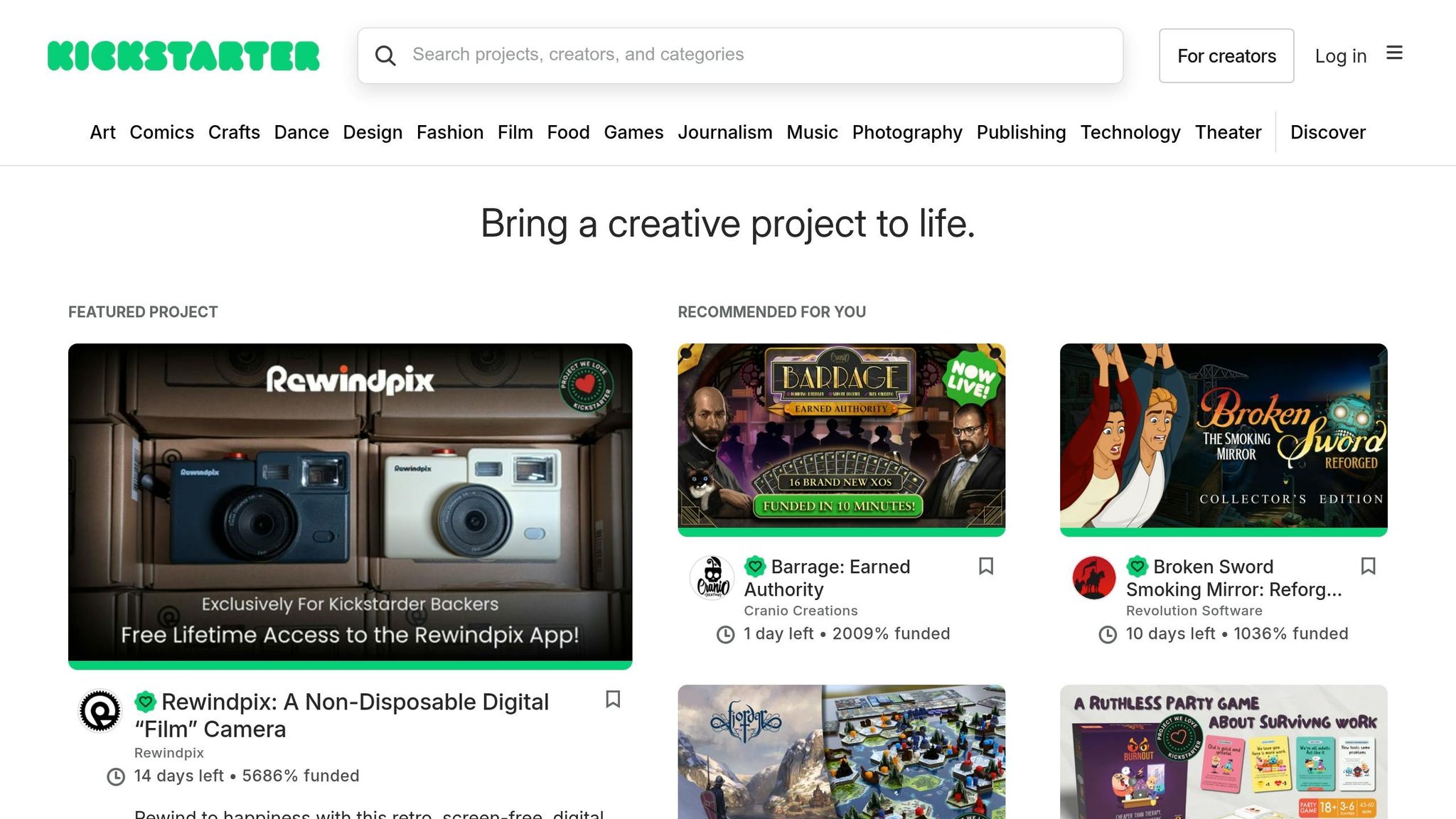
From Kickstarter to Cult Brand with Brandon Kim of Brevitē
Design Your Visual Branding Elements
Your visual elements are key to reinforcing the identity and purpose outlined in your brand story.
Design a Logo and Tagline
Your logo should immediately communicate your bag’s purpose, especially on Kickstarter.A clean, professional design that clearly reflects what your bag does will often outperform an intricate logo that needs explanation.
One effective approach is purpose branding, which involves naming your product based on its primary function.As Kickstarter design expert Luke Morris explains:
"Purpose Branding…is merely naming a product after what it does.This naming strategy is the fastest, least gimmicky way to communicate the function of your product".
Instead of abstract symbols, consider incorporating elements that visually hint at your bag’s main features, like waterproofing, modularity, or urban commuting.
Work closely with your design team to finalize 3D drawings and determine the best placement for your logo on pockets, zippers, or straps.This ensures your branding looks polished and stands out in campaign photos and videos.
Once you’ve nailed down a logo and tagline that clearly encapsulate your brand, ensure this clarity extends to your color strategy.
Choose Colors and Patterns
Your color palette should reflect your brand’s identity while making your bag easily recognizable.For a sleek, high-end look, opt for muted, sophisticated colors rather than loud or overly complex patterns.For example, Peak Design’s travel bag campaign, which ran from March 3 to April 3, 2026, raised $2,428,572 from 7,148 backers.They offered three distinct colorways – Black, Sage, and a new "Stone"finish – creating an upscale aesthetic supported by bright, high-visibility interior fabrics.This approach helped them exceed their $100,000 goal by more than 2,400%.
Offering a mix of classic and distinctive color options gives backers variety without overwhelming them.Include timeless choices like Black alongside unique shades that reflect your brand’s personality.For added practicality, consider bright or contrasting interior linings to help users locate items easily in dim lighting.To streamline your campaign, let backers choose their preferred colors through a pledge manager after the campaign ends.
Keep in mind that colors can appear differently depending on the material.For instance, a matte finish on recycled weatherproof nylon will look different than the same color on PU leather.Always test your chosen colors on actual material samples to ensure they match your vision and resonate with your audience’s preferences.
Build Your Kickstarter Campaign Page
Your campaign page is where all the groundwork you’ve laid – your branding, product features, and visual identity – comes together to convince visitors to become backers.It’s not just about looking good;it’s about creating trust and excitement around your bag.
Write a Clear Headline
The headline is your first chance to grab attention and communicate why your bag stands out.It should be specific and solution-oriented.Skip generic phrases like "The Ultimate Bag"and instead focus on what makes your product special or solves a specific problem.For instance, the Urban Flex Backpack nailed this by emphasizing its modular design for tech professionals, helping it surpass its funding goal by 428%.A strong, clear headline sets the tone for your entire campaign.
Once your headline hooks them, your visuals should seal the deal.
Use High-Quality Photos and Videos
Visuals are your chance to make a lasting impression.Backers want proof that your bag is not just an idea but a tangible, well-thought-out product.High-quality photos can do wonders, as noted by Art of the Kickstart.Showcase your bag in action – highlight its materials, features, and how it fits into everyday life.For example:
- Use close-ups to show off details like waterproof zippers, recycled materials, or padded laptop compartments.
- Include lifestyle shots of the bag being used in real-world scenarios.
- Create videos that demonstrate key features, like modular compartments or adjustable straps, in a way that words can’t fully capture.
Having physical samples ready 7 to 12 days before launch gives you enough time to capture these visuals and refine them for maximum impact.
But visuals alone aren’t enough – backers need to trust you too.
Add Testimonials and Social Proof
Skepticism is common among backers, especially with so many campaigns failing to deliver on promises.To ease these concerns, testimonials and social proof are crucial.Send prototypes to journalists and influencers ahead of time to gather honest reviews.Adam Saraceno, Chief Marketing Officer at Peak Design, puts it plainly:
"There’s been so many high profile disappointments that…I think a big struggle that people now have with running Kickstarter is kind of avoiding that stigma."
If your campaign earns recognition, like Kickstarter’s "Projects We Love"badge, highlight it prominently.Campaigns like the Nomad Sling Pack and Urban Flex Backpack used these accolades to build trust and credibility.
Additionally, be transparent about your manufacturing process and partnerships.If you’ve worked with reliable manufacturers or have detailed fulfillment plans – like DDP shipping – make sure to emphasize these points.Transparency about timelines and logistics can go a long way in reassuring backers that you’re prepared to deliver.
Set Up Rewards and Customization Options with JUNYUAN BAGS
Once your campaign page is ready, it’s time to design rewards that give your backers real value and choices.Customization plays a big role here – it lets backers feel involved in the product’s creation, which can increase conversions by 20-30%.Your rewards should be structured to provide clear, incremental benefits at every support level.
Create Tiered Rewards with Customization
A well-planned reward system should offer something valuable at every tier.Start with an Early Bird tier priced at approximately $45.This could include a standard bag in basic colors, appealing to backers looking for a budget-friendly option.For the next level, introduce a Personalized tier at $75.This tier could feature custom logo embroidery and size options, catering to those who want a more tailored product.Finally, offer a Premium Custom tier at $130.This top-tier option could include full design control, such as custom patterns, engraved nameplates, and exclusive materials.
A great example of this strategy in action is WaterField Designs‘ Shield Backpack campaign in October 2024.Led by designer David Miller, the campaign offered custom embroidery tiers and achieved 250% of its $50,000 goal, raising $125,000 from 3,500 backers.Impressively, they managed to avoid any fulfillment delays.Nearly half of their pledges came from the tiered customization options, proving how effective this approach can be.
To make these reward tiers a reality, you can rely on JUNYUAN BAGS’ specialized custom design services.
Use JUNYUAN BAGS’ Custom Design Services
JUNYUAN BAGS makes production straightforward with their OEM/ODM services.Their low minimum order quantities – ranging from 50 to 500 units for OEM and 20 to 100 units for ODM – allow you to offer limited-edition rewards without committing to large upfront costs.You can customize every detail, including materials like waterproof fabrics, PU leather, and recycled nylon, as well as colors, logos, zippers, straps, and internal features like padded laptop compartments.
Speed is another key advantage.JUNYUAN provides physical prototypes in just 7 to 12 days, giving you plenty of time to finalize and showcase each reward tier.With experience supporting over 20 successful crowdfunding campaigns, they have a proven track record of delivering custom designs that align with backers’ expectations.Additionally, JUNYUAN offers DDP shipping and fulfillment services, ensuring that rewards are delivered directly to backers worldwide.This allows you to focus on managing your campaign while they handle the logistics.
Conclusion
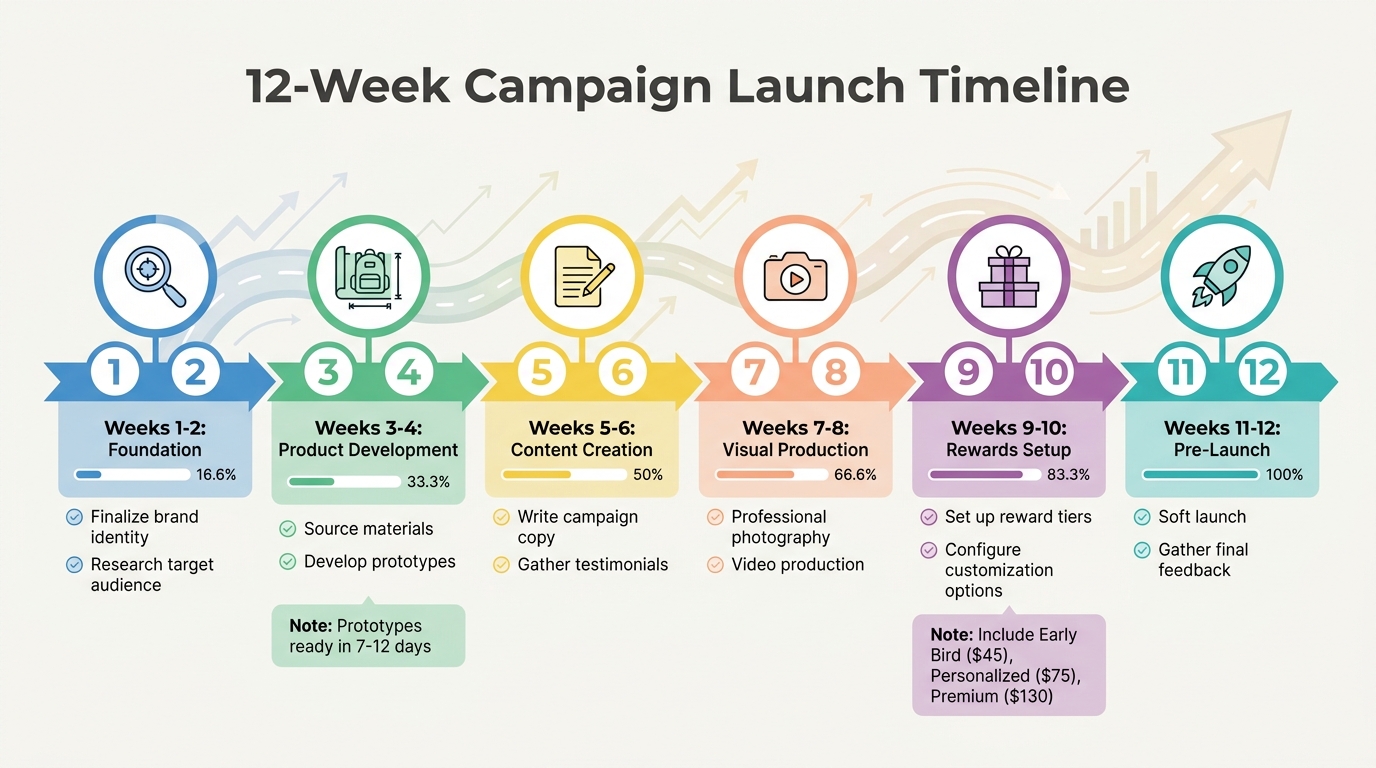
12-Week Kickstarter Bag Campaign Launch Timeline
Key Points for Bag Branding
To make your bag branding stand out, focus on consistency.Start by defining your target audience and creating a narrative that resonates with their needs and preferences.Choose materials that not only look great but also align with the quality your brand promises.
Your campaign page is where all your efforts come together.Use sharp visuals, clear headlines, and authentic testimonials to tell your story.Offer rewards that cater to different budgets, from affordable early-bird deals to high-end customization options.Campaigns with a strong brand identity and cohesive visuals can see conversion rates that are 2-3 times higher than those with minimal effort in branding.
Next Steps to Launch Your Campaign
Turn your strategy into a step-by-step plan to keep your campaign on track.A 12-week timeline works well:
- Weeks 1-2: Finalize your brand identity and research your target audience.
- Weeks 3-4: Focus on sourcing materials and developing prototypes.
- Weeks 5-6: Write your campaign copy and gather testimonials.
- Weeks 7-8: Invest in professional photography and video production.
- Weeks 9-10: Set up your reward tiers, including customization options.
- Weeks 11-12: Conduct a soft launch and gather final feedback.
If production logistics feel overwhelming, consider working with a specialized manufacturer.For example, JUNYUAN BAGS offers a streamlined solution with flexible minimum order quantities starting at just 50 units for OEM projects.Their prototyping takes only 7-12 days, giving you physical samples to showcase in your campaign.Plus, their DDP shipping and fulfillment services ensure rewards are delivered directly to backers, freeing you up to focus on marketing and engaging with your audience.
Analyzing successful bag campaigns is another great way to find inspiration and identify branding tactics you can apply to your own project.
FAQs
How do I validate my bag idea before launching?
To ensure your bag idea has potential, start by confirming there’s a market for it and gathering early feedback.Research successful crowdfunding campaigns to see what appeals to backers.Build a prototype and share it with your target audience through polls or online communities to gather insights.You might also try launching a small batch or pre-order campaign to measure interest and fine-tune your design.These steps can help reduce risks and align your product with what backers are looking for.
What visuals should I create if I only have one prototype?
If you’ve got just one prototype to work with, make sure the visuals do the talking.Use high-quality photos to spotlight the bag’s design, key features, and materials.Capture it from different angles, include close-up shots of standout details, and add lifestyle images that show how it fits into everyday use.
Consider creating a short video (1.5–4 minutes) to really bring the bag to life.Focus on showcasing its quality, functionality, and how it solves problems or meets the needs of your audience.This combination of visuals can make your prototype shine and leave a lasting impression.
How do I price reward tiers without losing money?
To set the right price for reward tiers, you need to account for all costs – production, shipping, platform fees, and even a contingency buffer for unexpected expenses.Your pricing should not only cover these costs but also include a profit margin to ensure financial viability.
One effective strategy is to offer early bird tiers with discounts, such as 20%–55% off MSRP.These limited-time deals can encourage early support and create momentum for your campaign.By planning carefully and using discounts strategically, you can attract backers while ensuring you stay on track financially.
Frequently Asked Questions
How long does branding add to sampling?
Logo verification runs inside the 6-10 day sample window for standard methods;custom embroidery may need a short stash check.
How does branding affect cost?
Each logo technique has a per-piece cost.We quote the delta in the itemized BOM so you can pick a premium option where it counts.
What packaging is best?
Recyclable or minimalist packaging aligns with modern backer values and avoids adding unnecessary cost.
What logo methods look premium?
Embroidery reads high-end on structured panels;woven labels suit canvas;screen print is cost-effective.We match the method to your material at MOQ 500.
How do I protect my brand assets?
Keep your logo files and tools proprietary via NDA with the factory, and avoid sharing pattern-level details publicly.
Should I include packaging in the brand?
Yes.Custom hang tags, tissue and a retail box reinforce the premium story and are cheap to add relative to their perception value.
How do I brand a bag for Kickstarter?
Lead with one clear story and a memorable logo application: embroidery, screen print, heat transfer or woven label.Consistent color and typography across photos build recognition.
How do I make the brand story credible?
Show the material sourcing and factory process.A transparent manufacturing story strengthens brand trust for backers.
How do I avoid over-branding?
Focus on one strong logo point per panel.Too much branding looks cheap versus a clean, considered application.
How do I keep branding consistent?
Lock a brand color palette, one logo treatment and repeated hero shots.Consistency across the campaign builds memory.
Related Blog Posts