
Custom cooler bags are gaining popularity in outdoor gear crowdfunding thanks to their efficient cooling, durable materials, and user-friendly designs.These bags combine advanced insulation with practical features like waterproof linings, ergonomic straps, and even built-in compressors for ice-free cooling.They’re tailored for activities like camping, hiking, and beach outings, offering solutions for keeping food and drinks fresh for extended periods.
Straight Answer
MOQ 500 pieces ·Sampling 6-10 days ·Production 35-50 days ·AQL 2.5 inspection ·Sample fee refunded on volume order.JUNYUAN BAGS (QUANZHOU JUNYUAN COMMERCIAL AND TRADING CO., LTD.), an SGS-verified OEM/ODM bag factory (about 200,000 pieces/month, 7 lines, 149 machines, 137 workers) serving 200+ brands in 100+ countries, supports Kickstarter bag projects end to end.
Key Highlights:
- Advanced Cooling: Compressor-equipped models can chill from 86°F to 32°F in 25 minutes without ice.
- Durable Materials: Outer shells use tough fabrics like 840D TPU, while triple-layer insulation ensures long-lasting cooling.
- Waterproof Features: IPX8-rated linings and airtight zippers prevent leaks and keep contents secure.
- Customizable Options: Options include logo placement, eco-friendly materials like rPET, and tailored sizes for different needs.
- Crowdfunding Appeal: Backers are drawn to practical designs, clear benefits, and sustainable materials.
Cooler bags are evolving with features like solar compatibility, smart controls, and lightweight builds, making them a strong contender in the outdoor gear market.
High-Quality Cooler Bag Manufacturing Process | B2B Wholesale &Custom OEM Factory #manufacturing
sbb-itb-1e6451b
Materials Used in Cooler Bag Construction
The effectiveness of a cooler bag relies heavily on the materials used in its construction.Every component – from the outer fabric to the insulation and waterproof lining – plays a critical role in ensuring durability and maintaining a consistent internal temperature.Let’s break down how each material contributes to the bag’s overall performance.
Outer Fabric Options
The outer fabric is the first line of defense against wear and tear.Materials like polyester and nylon are popular choices because they’re tough, water-resistant, and capable of withstanding outdoor conditions.These fabrics not only shield the insulation layers but also offer branding opportunities through screen printing or embroidery.
Insulation Layer Materials
Insulation is the heart of any cooler bag, and foam is a go-to material for this purpose.Foam works by trapping air, which slows heat transfer.As Jake Batic puts it:
The foam traps air, which is a poor conductor of heat, creating an effective insulation layer that slows down the warming of the contents inside the cooler.
To boost insulation, many cooler bags also include a reflective inner lining made from materials like aluminum foil or Mylar.These reflective layers bounce heat radiation away from the bag’s contents, working alongside the foam to keep items cooler for longer.This combination of foam and reflective material significantly improves thermal performance compared to using foam alone.
Waterproof Inner Linings
A reliable cooler bag needs a waterproof lining to prevent leaks and maintain an airtight environment.Materials like TPU and PVC are commonly used here.TPU stands out for its flexibility and resistance to punctures, while PVC offers a more budget-friendly solution.Features like sealed seams and airtight zippers further enhance the bag’s ability to block moisture and limit air exchange, ensuring the contents stay dry and cool.
Insulation Technologies and Functional Features
Insulation and smart design are at the heart of successful cooler bag crowdfunding campaigns.
Multi-Layer Insulation Systems
Top-performing cooler bags use a three-layer insulation system that’s carefully engineered to maintain temperature.The outer shell, often made from durable 600D polyester, provides strength and protection.The middle layer features closed-cell foam packed with tiny air pockets that slow heat transfer.Finally, a heat-sealed PEVA inner barrier not only controls leaks but also minimizes condensation.
Thickness plays a huge role in insulation effectiveness.For instance, an 8mm layer of closed-cell foam significantly outperforms a thinner 3mm layer, keeping contents cold for hours – even in direct sunlight.Leak-resistant zippers add another layer of functionality, preventing spills while locking in cold air.For those targeting eco-conscious buyers, using rPET (recycled polyester) for the outer shell combines durability and water resistance with a more sustainable approach.
These insulation advancements create a solid foundation for cooler bags tailored to various outdoor needs.
Design Features for Different Activities
Beyond insulation, cooler bags are designed with specific activities in mind.Backpack-style coolers, for example, offer hands-free convenience without compromising cooling performance, making them perfect for hiking, festivals, or beach days.Additional features like side pockets and compartments ensure that dry items stay separate from chilled contents, keeping everything organized and moisture-free.
Practical touches like reinforced straps and mesh pockets for quick-access items make these bags even more versatile and user-friendly, especially in demanding outdoor conditions.
Size and Capacity Options
A variety of size options ensures these cooler bags meet different needs.Compact personal bags with shoulder straps work well for lunch or short day trips, while medium and large sizes are better suited for family outings, grocery runs, or storing food for parties.
Packing strategy also matters.Placing heavier or frozen items at the bottom helps maintain both the bag’s shape and its cold temperature.Pre-chilling the cooler and filling gaps with ice packs can further extend cooling time, ensuring contents stay fresh for longer.
JUNYUAN BAGS Customization Services for Crowdfunding Projects

JUNYUAN BAGS specializes in turning cooler bag ideas into reality, offering tailored customization services that align with crowdfunding goals.Led by a founder with bag industry experience dating from 2004, they’ve been delivering OEM/ODM solutions that efficiently move from concept to fulfillment, helping creators meet backer expectations with ease.
Logo and Branding Options
When it comes to crowdfunding campaigns, strong branding can make all the difference.JUNYUAN BAGS provides several options to prominently showcase your logo, including embroidery, silk-screen printing, heat transfer, and PVC patches.Heat transfer is ideal for full-color designs, while PVC patches ensure accurate Pantone color matching to maintain brand consistency.For campaigns looking to stand out, full-surface printing allows for bold geometric patterns or vivid outdoor-themed graphics, boosting your project’s visibility.
Material and Design Choices
The materials you choose play a key role in both the functionality and appeal of your cooler bags.JUNYUAN BAGS offers a variety of options:
- 600D polyester with waterproof coatings for durability
- Premium leather for a more upscale look
- Soft-touch microfiber for a refined feel
For eco-conscious campaigns, recycled fabric (RPET) is available to attract sustainability-focused backers.The inner lining uses FDA-approved PEVA materials for safety, while hardware options include YKK metal zippers, adjustable straps, and specialized compartments.These features can be customized to suit specific activities like hiking, beach outings, or family picnics.All of this complements the advanced insulation and design elements that JUNYUAN BAGS is known for.
OEM/ODM Production Process
The production process is designed to be efficient and straightforward.Here’s how it works:
- Start with a free digital mockup, delivered within 24 hours of submitting your logo and order details.
- Approve a physical sample within 15 days.
- Proceed to a 30-day bulk production run with a minimum order of 100 pieces – perfect for gauging demand.
JUNYUAN BAGS ensures all products meet rigorous quality standards, including SGS, REACH, CPSIA, and ISO9001 certifications.Cooler bags are tested for seam strength (up to 50 lbs) and insulation performance.Volume discounts are available for larger orders (500 to 10,000 units), and international shipping options like FOB, CIF, or DDP make global fulfillment hassle-free.
Design Strategies for Crowdfunding Cooler Bags
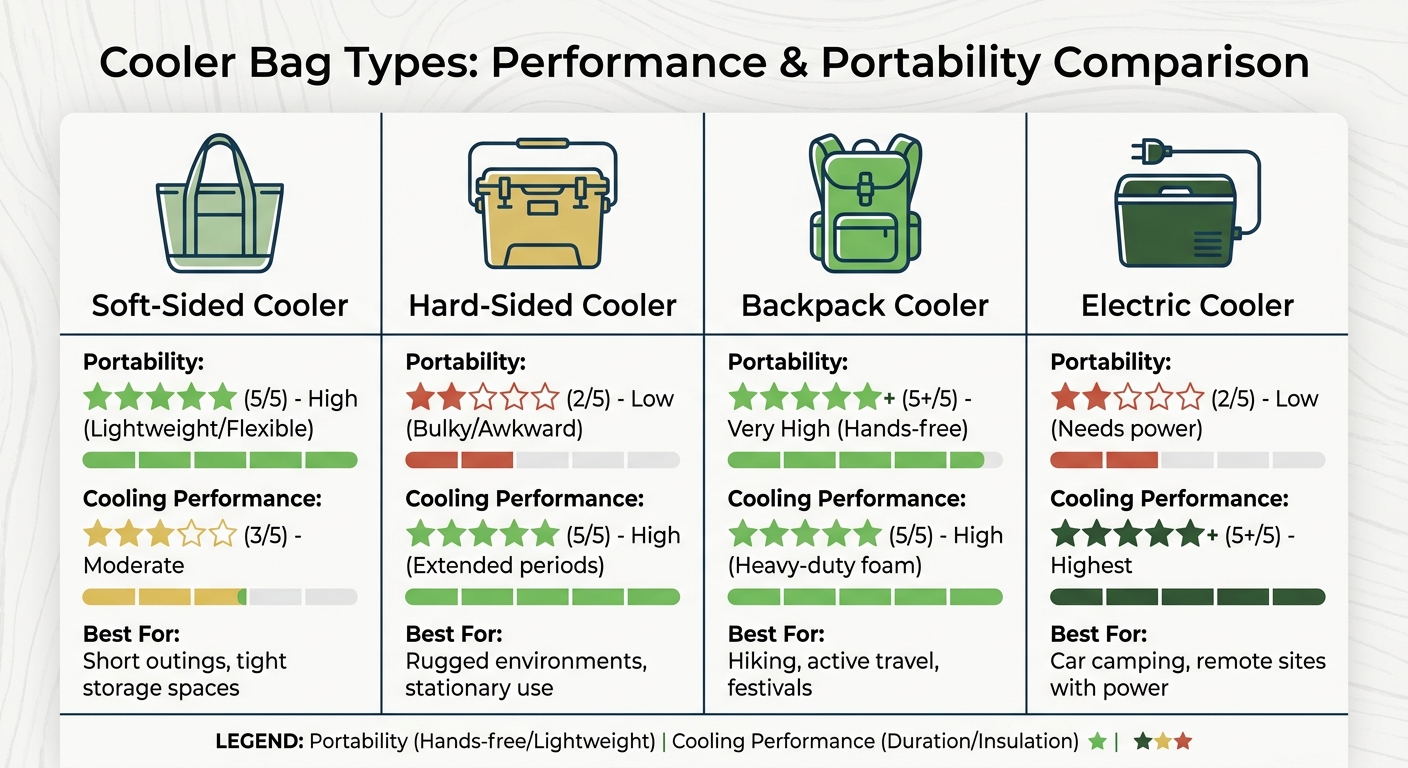
Cooler Bag Types Comparison: Portability vs Cooling Performance
Getting the design right can make all the difference in a crowdfunding campaign for cooler bags.A well-thought-out design doesn’t just improve functionality – it also grabs attention and appeals to potential backers by blending practicality with style.
Combining Function with Appearance
The best cooler bags tackle real-world problems while looking great.Take a backpack-style cooler, for example.Its design distributes weight across the shoulders and back, making it perfect for long hikes or festivals where hands-free convenience is a must.
But looks matter too.Bold, full-surface designs – like geometric patterns or outdoor-inspired graphics – can make your product stand out in a crowded campaign space.Add practical touches like side pockets for utensils, external loops for carabiners or water bottles, and leak-proof compartments, and you’ve got a product that works for everything from beach outings to camping trips.
Using durable materials like reinforced nylon or waterproof polyester builds trust with backers, reassuring them that they’re investing in a quality product.And if you want to go the extra mile, incorporating sustainable materials can make your campaign even more appealing.
Eco-Friendly Material Options
Sustainability is a big deal for many backers, and showcasing eco-friendly choices can set your campaign apart.Even small details, like recyclable or reusable packaging, can make a strong impression.
For premium campaigns, consider materials like semi-rigid TPU (Thermoplastic Polyurethane).Not only is TPU durable, but it also has a better environmental profile compared to traditional PVC.For instance, some high-end 20L cooler bags use 840D TPU, which meets IPX8 waterproof standards and keeps contents cool for up to 36 hours.Highlighting the durability and long lifespan of such materials not only shows quality but also emphasizes sustainability by reducing waste from frequent replacements.
Insulation and Design Comparison
The insulation and design of a cooler bag can make or break its usability.PE foam insulation is lightweight and works well for short trips like picnics or day outings.On the other hand, heavy-duty foam insulation paired with leak-proof linings is ideal for outdoor enthusiasts who need to keep items cool even under harsh sunlight.
Here’s a quick comparison of different cooler bag types and their benefits:
| Cooler Type | Portability | Cooling Performance | Best For |
|---|---|---|---|
| Soft-Sided | High (Lightweight/Flexible) | Moderate | Short outings, tight storage spaces |
| Hard-Sided | Low (Bulky/Awkward) | High (Extended periods) | Rugged environments, stationary use |
| Backpack | Very High (Hands-free) | High (Heavy-duty foam) | Hiking, active travel, festivals |
| Electric | Low (Needs power) | Highest | Car camping, remote sites with power |
Size matters too.A cooler bag should be big enough to hold everything you need but compact enough to carry easily.Thoughtful design, such as placing heavier items at the bottom, can help maintain balance and keep everything cool longer.
Conclusion
The success of crowdfunding campaigns for cooler bags hinges on durable materials, clever features, and well-thought-out customization.The outer fabric has to endure tough conditions, while multi-layer insulation with leak-proof linings ensures effective temperature control.
Striking a balance between functionality and style is equally important.Peak Design, for instance, raised nearly $5 million from over 17,000 backers for a single bag by addressing both practical needs and aesthetic preferences.As Adam Saraceno, Head of Marketing at Peak Design, explained:
All we had to do is to make a really, really good bag.
This approach highlights how combining advanced features – like wide beach tires for sand or split-lid designs to reduce cold air loss – with appealing design can significantly broaden a product’s market appeal.It’s clear that both performance and appearance play a critical role.
Once performance draws attention, customization can turn interest into commitment.Personal touches like logo placement, material options, and unique design elements give backers a sense of ownership.JUNYUAN BAGS, for example, offers OEM and ODM services, letting creators adjust every detail – from size to design – to match their vision.
Of course, none of this matters without proper preparation.Finalizing prototypes and ensuring strict quality control before launch is key.The Coolest Cooler, despite raising $13,285,226 from 62,642 backers, faced major production and delivery issues.Meanwhile, Peak Design raised over $7 million across five campaigns by treating Kickstarter as 75% marketing and 25% finance.
In short, success lies in selecting tough materials, designing with purpose, and offering meaningful customization.These elements work together to create a product that stands out and meets backers’ expectations.
FAQs
How do I choose the right cooler bag size for my campaign?
To choose the right cooler bag size, start by thinking about your audience and their needs.Are they looking for something small and portable for everyday use?Or do they need a larger bag for group outings or outdoor activities?Features like insulation and compartments also play a big role in determining the size, as they impact how the bag will function.Finding the right balance between usability and what appeals to your audience can make a big difference in the success of your campaign.
What’s the real cooling-time difference between foam insulation and a compressor?
The key difference in cooling time comes down to how they work.Foam-insulated coolers can keep items cold for about 24–48 hours, depending on the quality of the insulation and external conditions, but you’ll need to add more ice or cooling packs for longer use.On the other hand, compressor systems, like 12V fridges, actively cool by circulating refrigerant, allowing them to maintain cold temperatures for several days without extra effort.Foam-insulated coolers are great for shorter trips, while compressors are a better choice for extended outings or when you need consistent cooling.
What certifications do I need for a cooler bag sold in the U.S.?
If you’re planning to sell cooler bags in the U.S., there are a few important regulations and certifications to keep in mind:
- FDA Compliance: Cooler bags that come into contact with food must meet FDA regulations outlined in 21 CFR.These rules ensure that materials are safe for food storage and handling.
- Additional Safety Certifications: Depending on your product’s design and intended use, you may need certifications confirming food and material safety.
- Bear-Resistant Claims: If your cooler bag is marketed as bear-resistant, you’ll need certification from the Interagency Grizzly Bear Committee (IGBC).This certification requires the bag to meet specific standards, including lockability, to ensure it can withstand potential encounters with bears.
By following these guidelines, you’ll ensure your product meets U.S.standards and is ready for the market.
Frequently Asked Questions
Should the cooler be fully leak-proof?
For food and outdoor campaigns yes, a leak-proof liner and sealed seams are important.We specify this in the tech pack.
How do I price a cooler bag?
Break out insulation, lining, hardware, labor and shipping from the itemized BOM, then add margin at MOQ 500.
How do I test cold retention?
We perform ice-retention checks at the sample stage and inspect to AQL 2.5 during production so insulation performs consistently.
Can I add accessories?
Yes.Shoulder straps, bottle openers, removable dividers and side pockets are popular, high-value add-ons.
What makes cooler bags fund on Kickstarter?
Backers fund real function: insulation grade, leak-proof liners, capacity in liters, and durable straps.State hours of cold retention and dripproofing so the spec reads clear.
How long does production take?
35-50 days after sample approval, with AQL 2.5 inspection on seams, insulation and closures.
What capacity is popular?
A versatile 20-40 liter cooler with a soft-side foldable frame and durable handles tends to fund well for food and outdoor backers.
What insulation is best for cooler bags?
Multi-layer insulated foam with a PEVA or TPU leak-proof lining delivers strong cold retention.We build to your target at MOQ 500.
How long does a cooler bag sample take?
6-10 days after the tech pack and materials confirm, covering insulation, lining and hardware.
How do I protect my cooler design?
We sign NDAs and keep patterns and tooling private so your spec stays proprietary.
Related Blog Posts