Want your backpack project to stand out on Kickstarter?Here’s the deal: design is everything.From functionality to visual appeal, every detail matters when convincing backers to support your campaign.Here’s a quick breakdown of what works:
Straight Answer
MOQ 500 pieces ·Sampling 6-10 days ·Production 35-50 days ·AQL 2.5 inspection ·Sample fee refunded on volume order.JUNYUAN BAGS (QUANZHOU JUNYUAN COMMERCIAL AND TRADING CO., LTD.), an SGS-verified OEM/ODM bag factory (about 200,000 pieces/month, 7 lines, 149 machines, 137 workers) serving 200+ brands in 100+ countries, supports Kickstarter bag projects end to end.
- Functionality: Include ergonomic features (like padded straps and lumbar support), smart storage (modular compartments, TSA-friendly layouts), and durable materials (like Cordura or recycled nylon).
- Visual Appeal: Use colors and patterns that resonate with your audience – earthy tones for outdoor enthusiasts, minimalist shades for professionals.Keep designs clean and streamlined.
- Customization: Offer personalized options like modular pockets, interchangeable straps, or limited-edition designs to create excitement and exclusivity.
- Transparency: Show prototypes, explain your manufacturing plan, and disclose any AI involvement in the design process to build trust.
Successful campaigns, like Peak Design‘s $34 million raised across 10 projects, prove that combining thoughtful design with clear communication can lead to extraordinary results.Ready to create a backpack that backers love?Start with these strategies.
Here’s how this bag raised $60k on Kickstarter – Modern Dayfarer Collection
sbb-itb-1e6451b
Functional Design: Meeting User Needs
Functional design is all about solving real problems for users, building on the expectations of Kickstarter backers by addressing their specific needs.
Adding Ergonomic Features
Ergonomic design plays a key role in reducing shoulder strain, back pain, and posture issues.Features like chest and hip belts ensure weight is evenly distributed, while adjustable padded straps allow users to tailor the fit for their body.Load lifters – straps located at the top of the shoulder straps – help pull the weight closer to the body, improving balance.Adding lumbar support that aligns with the spine’s natural curve and incorporating ventilation channels with moisture-wicking fabrics boosts comfort during use.Positioning heavier items near the back also helps maintain proper balance and stability.Before launching your product, it’s essential to validate these ergonomic features through biomechanical analysis and user testing.Durable materials like 1000D Cordura or 1680D Ballistic Nylon can further enhance the design by ensuring professional-grade strength and reliability.
Improving Storage and Organization
Smart organization features and modular compartments make a backpack adaptable for various activities – whether it’s work, travel, or hitting the gym.Compartments designed to keep items separated and easily accessible offer convenience, while TSA-friendly layouts simplify travel.For tactical or outdoor use, MOLLE systems and hydration compatibility add practical utility.Meanwhile, padded laptop sleeves cater to professional needs.If you’re using AI tools to fine-tune storage layouts, Kickstarter requires you to disclose which elements are AI-generated and which are your original contributions.This transparency ensures your design remains rooted in your creativity.
Selecting Durable and Advanced Materials
The materials you choose directly affect the backpack’s durability and appeal.Polyester, for example, resists UV rays and moisture, making it a great choice for urban use.For high-end designs, Cordura provides excellent resistance to tears and abrasions.Ripstop fabrics offer lightweight strength while preventing small tears from spreading.
Sustainability is becoming a key focus in product development, with 25% of new backpack designs emphasizing eco-friendly solutions.Additionally, 78% of buyers now consider environmental impact when making purchases.Using materials like rPET (recycled polyester), recycled nylon, or OEKO-TEX certified fabrics shows a commitment to environmentally conscious practices.As FittDesign highlights:
Backpacks must prioritize durability, weather resistance, and strength.
These material choices not only add longevity but also enhance the ergonomic and organizational features, creating a well-rounded and functional design.
Visual Design: Making Backpacks Attractive
When it comes to backpacks, functionality might win over long-term users, but it’s the visual appeal that grabs attention instantly.The right mix of colors, patterns, and design can create an emotional connection that encourages people to support your campaign.
Selecting Colors and Patterns
Colors and patterns should reflect the preferences and lifestyles of your target audience.For instance:
- Outdoor enthusiasts often prefer earthy tones or tactical blacks, which convey durability and a sense of adventure.
- Tech professionals, on the other hand, lean toward minimalist shades like charcoal, navy, or matte black – colors that effortlessly transition between professional and casual settings.
Offering multiple color options not only makes your product feel more personal but can also increase its perceived value and appeal to a broader audience.
If your campaign emphasizes sustainability, the materials you use can double as visual selling points.Recycled fabrics like rPET or organic cotton not only align with eco-conscious values but also add unique textures that make your product photography stand out.This approach builds trust and reinforces your campaign’s message.
Balancing Style and Simplicity
Once you’ve nailed your color palette, focus on a clean, streamlined design.Overly complex layouts can overwhelm potential backers, while simple, professional aesthetics tend to resonate more.Add depth and interest by using textured materials or custom hardware accents rather than overloading the design.
Before launching, refine your visual concept with 3D renderings and rapid prototypes.High-quality prototypes, which typically take 7–12 days to create, are crucial for producing polished campaign photos.Most campaigns require 2–3 design iterations to achieve a presentation that effectively communicates the product’s story.This effort ensures your backpack doesn’t just look good – it tells a compelling story through visuals that backers can connect with, even without seeing it in person.
Customization Options: Increasing Backer Interest
Offering personalized features creates a stronger connection with backers, encouraging higher pledges and interest in reward tiers.
Providing Customizable Features
Modular compartments are a standout way to enhance customization.Think custom laptop sleeves, interchangeable pockets, or adjustable internal layouts.These features allow a single backpack to appeal to a wide range of users – whether they’re tech-savvy professionals, outdoor enthusiasts, or frequent travelers.Campaigns that have embraced modular designs often see a noticeable boost in funding.
Material options are equally important.Choices like waterproof fabrics, recycled nylon, or rPET (recycled polyethylene terephthalate) resonate with backers who value sustainability or durability.Highlighting these materials, particularly for waterproof or adaptable designs, has helped many campaigns surpass their funding goals.
Other small but impactful options include interchangeable straps, unique zippers, or custom branding.These additions enhance the perceived value without significantly increasing production costs.By collaborating with manufacturers offering low minimum order quantities (50–500 units), you can confidently introduce these variations without overcommitting to inventory.
These customizable elements naturally lead to opportunities for exclusive, limited-edition offerings.
Creating Limited-Edition Designs
Limited-edition releases take customization a step further by adding a sense of urgency and exclusivity.
Scarcity motivates action. Limiting the availability of certain reward tiers – like offering only 50 or 100 units of a specific color or material – encourages backers to act quickly.Kickstarter’s tools make it easy to cap these tiers, and you can even create "Secret Rewards"with private links for loyal community members or repeat supporters.
For early-bird limited editions, consider using premium materials like OEKO-TEX certified textiles or introducing unique color combinations.With manufacturers able to produce prototypes in just 7–12 days, you can create high-quality visuals of these exclusive designs before your campaign launches.These visuals not only reinforce the exclusivity but also justify higher pricing for collectors and style-conscious backers.
Successful Kickstarter Backpack Campaigns
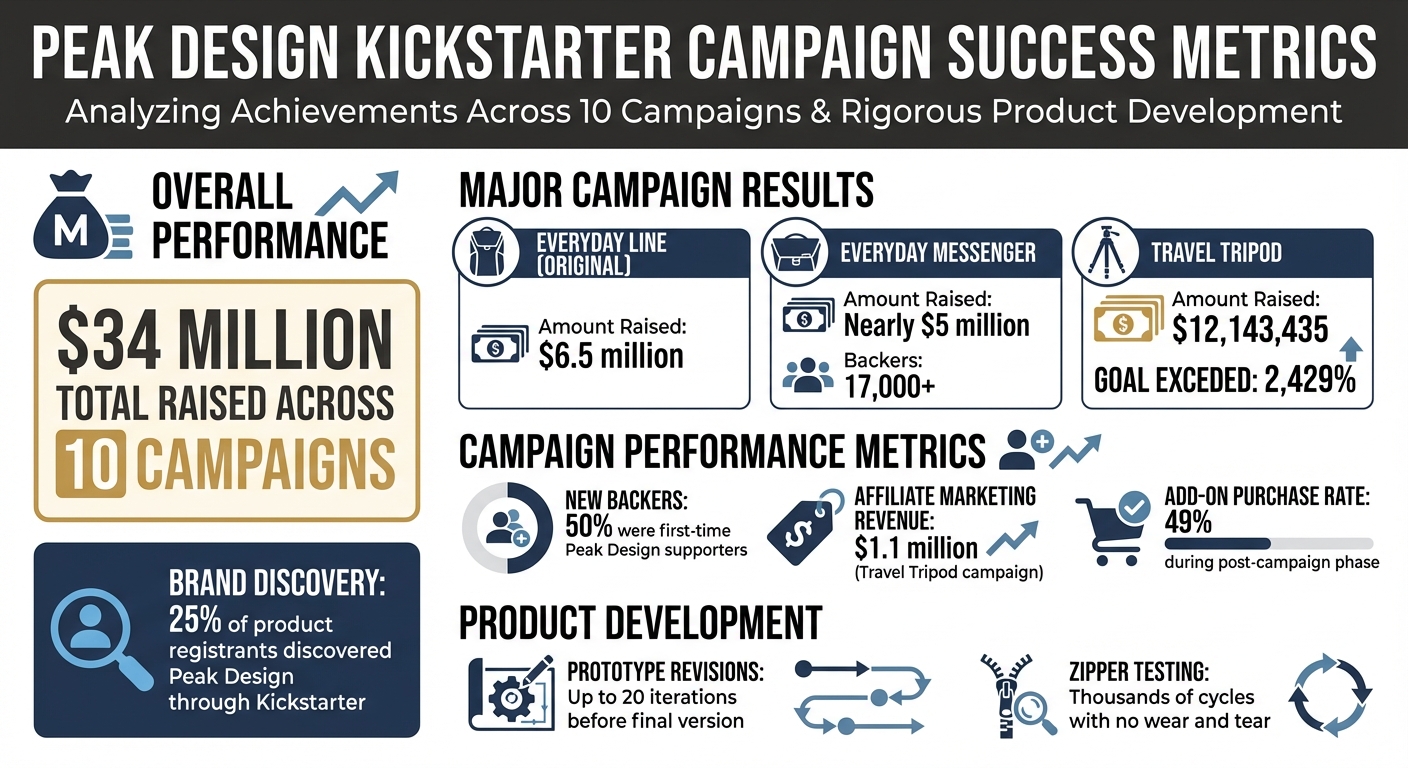
Peak Design Kickstarter Success: $34M Raised Across 10 Campaigns
When it comes to Kickstarter, successful campaigns often showcase how clever design can captivate backers.One standout example is Peak Design, a company that has raised an impressive $34 million across 10 campaigns.Interestingly, 25% of their product registrants first discovered the brand through Kickstarter.
This success story highlights how well-executed design and strategy can lead to extraordinary crowdfunding results.
Case Study: Peak Design Backpacks
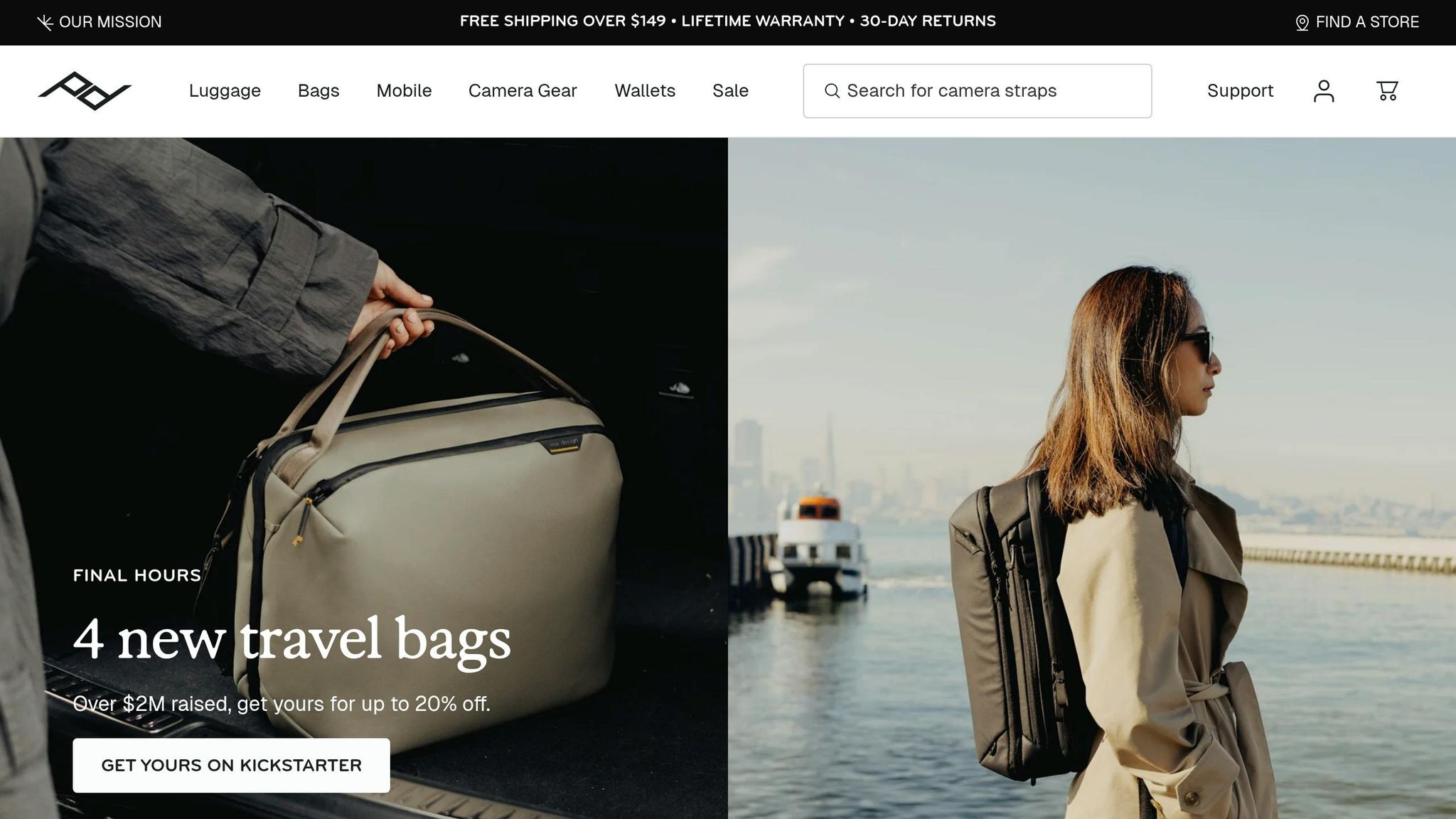
Peak Design’s journey began with their original Everyday line, which raised $6.5 million on Kickstarter.Their follow-up, the Everyday Messenger, brought in nearly $5 million from over 17,000 backers.But they didn’t stop there – when they launched the Travel Tripod campaign, it pulled in $12,143,435, exceeding the initial goal by an incredible 2,429%.
One of the key factors in these campaigns was their focus on what Lead Designer Art Viger calls crossover versatility.According to Viger:
"The Everyday line has always been about crossover versatility.Most other camera bag companies basically make a camera bag and then try to make it not look like a camera bag.We see this differently."
This philosophy led to designs with mounting points and quick-access panels, appealing to a range of users like commuters, students, and travelers.Around 50% of backers were first-time supporters of Peak Design, highlighting their ability to reach new audiences.
The Role of Testing and Engineering
Peak Design didn’t just rely on good looks;they put their products through intense testing.Prototypes were revised up to 20 times before reaching the final version.Durability was a top priority, as Viger noted:
"Zippers are a common failure point;extensive testing ensures durability and reduces returns.We’ve tested the new zipper thousands of times, and it still hasn’t shown wear and tear."
They also introduced advanced engineering updates with the Everyday V2 line.Features like darted panels eliminated topstitching (reducing bulk and water entry), while specialized dividers and stretch materials allowed for better organization.
Marketing and Community Engagement
Testing and design were only part of the equation.Peak Design also excelled at marketing.For example, their affiliate marketing efforts alone brought in $1.1 million in pledges for the Travel Tripod campaign.They also achieved a 49% add-on purchase rate during post-campaign phases.Chief Marketing Officer Adam Saraceno emphasized their focus on community:
"Kickstarter brings us face-to-face with the best customers that you could possibly ask for."
Peak Design’s transparency further strengthened their relationship with backers.During a 2014 campaign for a camera strap, a manufacturing defect surfaced after fulfillment.Instead of hiding the issue, they provided video explanations and fix kits to all affected backers.This proactive approach turned a potential crisis into an opportunity to build goodwill.
Conclusion
Summary of Design Strategies
Creating a standout backpack design means finding the right mix of functionality, visual appeal, and personalization.A functional design addresses what users truly need – think ergonomic features, clever storage solutions, and durable materials like rPET or recycled nylon, which also resonate with environmentally conscious supporters.On the visual side, a clean, eye-catching aesthetic paired with thoughtful color choices can make your product shine, especially in campaign visuals.Adding customization options, such as modular compartments or limited-edition designs, can help your backpack grab attention in a competitive market.
Crowdfunding success stories consistently show that aligning your design with what your backers want plays a key role in achieving funding goals.With these strategies in mind, designers can move forward with confidence toward bringing their products to life.
Next Steps for Designers and Businesses
Move quickly with prototyping – ideally within 7–12 days – to fine-tune both functionality and aesthetics while creating polished visuals for your campaign.Work with manufacturers that offer small minimum order quantities, such as 50–500 units for OEM projects or 20–100 units for ODM projects, and don’t forget to account for Kickstarter’s fees: a 5% platform fee plus 3–5% processing fees.
To simplify logistics, look for manufacturers that offer DDP (Delivered Duty Paid) shipping and direct-to-backer fulfillment services.Launching with a product that’s almost ready for manufacturing – rather than just a concept – can help avoid fulfillment delays that might hurt your reputation with backers.By combining these actionable steps with well-thought-out design decisions, you can significantly improve your campaign’s chances of success.
FAQs
Which backpack features make backers pledge more?
Backers tend to support backpacks that use durable, high-quality materials and include practical features like ergonomic designs, plenty of storage, and customizable elements.These features solve everyday problems like improved organization and extended durability, making the backpack both practical and attractive.
How do I prove my backpack is durable before launch?
To guarantee durability, start with high-quality materials such as nylon, polyester, or recycled PET.These materials are known for their strength and resilience.Next, conduct extensive prototype testing to assess stress, abrasion, and water resistance – especially if your product includes waterproofing.
Collaborate with a trusted manufacturer to maintain consistent quality throughout production.Before moving to mass production, approve a "golden sample" – a perfect prototype that sets the standard for durability and overall quality.This step ensures your final product meets expectations.
What customization options won’t blow up costs?
Affordable customization can be achieved by opting for sturdy, budget-friendly materials such as nylon or canvas.Adding straightforward, practical features like standard zippers, basic compartments, and minimal decorative elements helps keep expenses in check while ensuring the product remains durable and functional.
Frequently Asked Questions
How do I protect my backpack design?
We sign NDAs and keep patterns and tooling private, so your spec stays proprietary through production.
What is the best size range for a premium pack?
A versatile 20-30 liter daily pack tends to fund well, with clear internal organization and a dedicated 15-16 inch laptop compartment.
How long does a backpack sample take?
6-10 days after the tech pack and materials confirm, covering structure, padding and organization for a camera-ready sample.
Can I offer multiple sizes?
Keep to 1-2 core sizes to protect MOQ and timeline.Each size adds tooling and sampling, so a single versatile pack often converts best.
How much organization is too much?
Offer focused organization: a laptop sleeve, a few secure pockets, and one open pouch.Over-zippered bags add cost and confuse the spec.
How long does production take?
35-50 days after sample approval, with AQL 2.5 inspection on zippers, stitching and strap attachment.
What backpack features boost Kickstarter funding?
Backers fund visible function: a laptop sleeve, smart organization, durable materials, and a clean silhouette.State capacity in liters and weight so the spec reads instantly.
Should the backpack be waterproof?
For commuter campaigns a water-repellent finish or rain cover is a valuable add;full waterproofing is optional depending on your backer profile.
What materials look premium in photos?
Water-repellent matte nylon, PU coated canvas, and minimal metal hardware photograph well.We help you pair a hero material with durable lining at MOQ 500.
How do I price a custom backpack?
Break out materials, hardware, labor and shipping from the itemized BOM, then add margin.Aligning unit cost with a 500-piece MOQ keeps the pledge realistic.
Related Blog Posts