Launching a Kickstarter campaign without a physical prototype is risky. Backers want proof of a product, not just an idea. Fast sampling – creating prototypes in 7–12 days – can make or break your campaign. Here’s why it matters:
- Build Trust: High-quality photos and videos of real prototypes boost backer confidence.
- Save Time: Delays in prototyping can hurt momentum and lead to incomplete visuals.
- Increase Success Rates: Campaigns with prototypes see 40% higher conversion rates and attract 35% more backers.
- Hit Goals Faster: Projects with fast sampling reach 100% funding in 18 days on average, compared to 28 days for slower ones.
Fast sampling also helps refine designs, avoid production issues, and create polished campaign assets. Working with services like JUNYUAN BAGS can streamline this process, offering prototypes in under two weeks and enabling you to focus on engaging backers.
Bottom line: Fast sampling isn’t optional – it’s a key driver of Kickstarter success.
EP #494 Guide to Blowing Up Your Kickstarter With a Rock-Solid Prototype
sbb-itb-1e6451b
Problems Caused by Slow Sampling in Custom Bag Campaigns
In custom bag campaigns, slow sampling can derail both product verification and campaign momentum, putting your Kickstarter launch at risk.
How Delayed Prototypes Lead to Incomplete Visuals
When sampling takes too long, you’re left without a real prototype to showcase in your campaign. This forces you to rely on generic visuals, which can weaken backer trust. Without seeing an actual product, backers may question your manufacturing skills and the quality of the final product.
On top of that, delayed samples can throw off your cost estimates for production and shipping. Even if you hit your funding goals, financial errors could still arise. As Brandon Rollins, Director of Marketing at Fulfillrite, explains:
"Photos and visuals reassure backers that work is happening. You can show the production floor and the loaded container… Visual evidence builds confidence."
Without these visuals, backers are left to rely solely on your promises, which isn’t nearly as reassuring. And while the lack of visuals is a big issue, the real damage comes from the way delays can sap your campaign’s early momentum.
Campaign Failures from Lost Momentum
Early momentum is critical for campaign success – especially in the first 48 hours. Slow sampling eats into your pre-launch timeline, cutting down your chances to engage your audience and build the buzz you need before going live. Without physical samples, you’re not just missing out on visuals; you’re also losing opportunities to connect with early backers.
These delays can also create anxiety among backers. If updates or sample approvals are missing, people may start to suspect deeper manufacturing problems. And the numbers don’t lie: campaigns that attract at least 25 backers have an 84% success rate. But slow sampling makes it much harder to hit that key milestone, putting your campaign in jeopardy.
How Fast Sampling Improves Kickstarter Results
Fast sampling addresses the challenges of slow prototyping, but it does more than just save time. By quickly producing physical samples, you build the credibility and momentum your Kickstarter campaign needs to thrive. This approach reassures backers of your product’s feasibility while setting the stage for faster campaign growth.
Building Backer Confidence with Physical Prototypes
A physical prototype is more than just a sample – it’s proof that you can deliver. When backers see an actual product, rather than a concept sketch or 3D render, it demonstrates real manufacturing capability. The impact is clear: campaigns featuring prototypes experience 40% higher conversion rates compared to those relying solely on digital mockups.
Take the Tortuga Outbreaker Backpack campaign as an example. By showcasing machined prototypes with detailed photos and demonstrations, the campaign raised $1.2 million, which was 5x more than campaigns relying only on concepts. Backers specifically mentioned that seeing the real product was a major factor in their decision to pledge.
Quick iteration cycles – completing 2–3 iterations in just 2–4 weeks – can reduce post-launch revisions by 60%, which helps avoid fulfillment delays that could harm your reputation. This rapid refinement process not only lowers risks but also strengthens your campaign’s story. Sharing updates like stress tests (e.g., dropping a sports bag prototype) or showcasing detailed stitching close-ups boosts trust by 45% and reduces refund requests after funding.
Creating Early Momentum with Quality Campaign Assets
Fast sampling isn’t just about prototypes – it’s about creating high-quality campaign assets that drive early engagement. With Kickstarter’s tight 30-day window, having professional photos, 360-degree videos, and detailed renders ready is critical. These polished visuals matter because 70% of pledges typically come in during the first week. High-quality assets from fast sampling can triple your pledge velocity and create a sense of urgency.
Speed is a game-changer. By leveraging rapid ODM tools like 3D printing and laser cutting, you can produce samples in 7–14 days and launch with polished materials on day one. This strategy helps bag projects hit their funding goals 80% faster. Campaigns with physical prototypes see 2.5x higher funding rates and attract 35% more backers overall. Research across 500+ Kickstarter projects revealed that campaigns using fast sampling reached 100% funding in just 18 days, compared to 28 days for those with slower sampling processes.
How to Speed Up Your Sampling Process
Getting from concept to physical prototype in just 7–12 days can make all the difference when it comes to creating campaign assets and refining your designs. By following a streamlined approach, you can keep up the momentum and establish credibility early on.
Using JUNYUAN BAGS OEM/ODM Services for Fast Samples
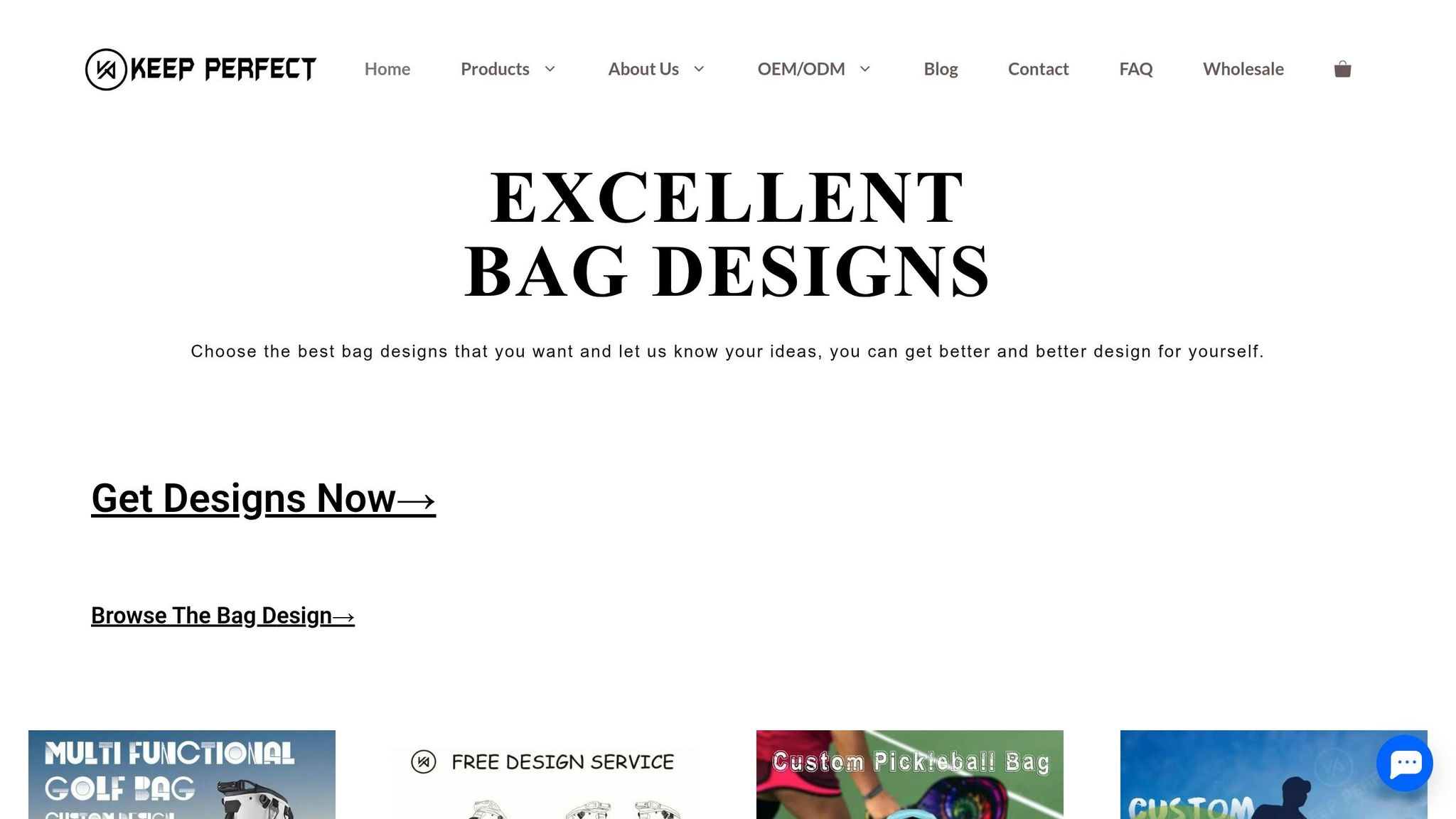
JUNYUAN BAGS offers a fast-track sampling process that can cut traditional lead times of 4–6 weeks down to less than two. Their system kicks off with a design consultation and the creation of 3D drawings, turning your sketches into manufacturable blueprints. Plus, they provide free digital mockups within 24 hours. You can fully customize your product, from logo application (via embroidery or printing) to material selection, including options like durable nylon or waterproof polyester.
Their flexible minimum order quantities make it easier to transition from sampling to production. For ODM projects, you can start with as few as 20–100 units, while OEM orders begin at 50–500 units. This approach is ideal for small-batch production, especially for early-bird rewards. For instance, the Nomad Sling Pack campaign used JUNYUAN’s rapid prototyping to create a waterproof sling pack prototype in under 10 days. The result? Over $380,000 raised from 1,200 backers, achieving 450% of their funding goal. Similarly, the Urban Flex Backpack project hit 428% of its goal with the help of JUNYUAN’s ODM services, earning the "Projects We Love" badge and attracting 1,000+ backers by incorporating custom laptop sleeves and recycled materials.
Setting Up an Iterative Prototyping Workflow
To refine your design, plan for 2–3 iterations over a span of 2–4 weeks. Start with digital mockups using tools like Adobe Illustrator or Figma, which typically take 1–2 days. From there, order your first physical prototype, which JUNYUAN can deliver in 7–10 days. Test key aspects like strap durability, zipper quality, and waterproofing, then make adjustments based on feedback – this might mean reinforced stitching, repositioned pockets, or material upgrades.
Take this example from a 2023 duffel bag campaign: the creators completed three iterations in under three weeks. They started with a digital render on Day 1, followed by a nylon prototype on Day 10, and a revised version with reinforced zippers by Day 18. This efficient workflow allowed them to produce high-quality photos ahead of their launch, leading to a 22% conversion rate from video viewers to backers – compared to just 8% for campaigns relying only on digital renders. Keeping iterations to three rounds helps prevent delays, and JUNYUAN’s streamlined feedback process can reduce revision time by 40%, ensuring your prototypes are production-ready.
Once you’ve fine-tuned your prototypes, they can be used to craft campaign materials that truly resonate with potential backers.
Using Prototypes in Your Campaign Materials
Prototypes offer a major advantage over digital renders when it comes to creating campaign assets. Use natural lighting and white backgrounds for clean product photography, and consider 360-degree videos or in-use demonstrations – like packing gym gear into a sports bag. Campaigns that feature prototype visuals see a 28% higher pledge rate compared to those relying on digital renders.
For email campaigns, try a staged prototype reveal. Start with teaser digital mockups and follow up with a full prototype reveal. One campaign saw a 15% open-to-pledge conversion rate using prototype-focused emails, compared to just 5% with concept art. Platforms like Instagram Reels are great for unboxing videos, while GIFs can highlight standout features, such as zippers, handles, or unique compartments. These types of visuals not only grab attention but also reinforce the conversion gains seen in earlier campaign data.
Measuring How Fast Sampling Affects Campaign Performance
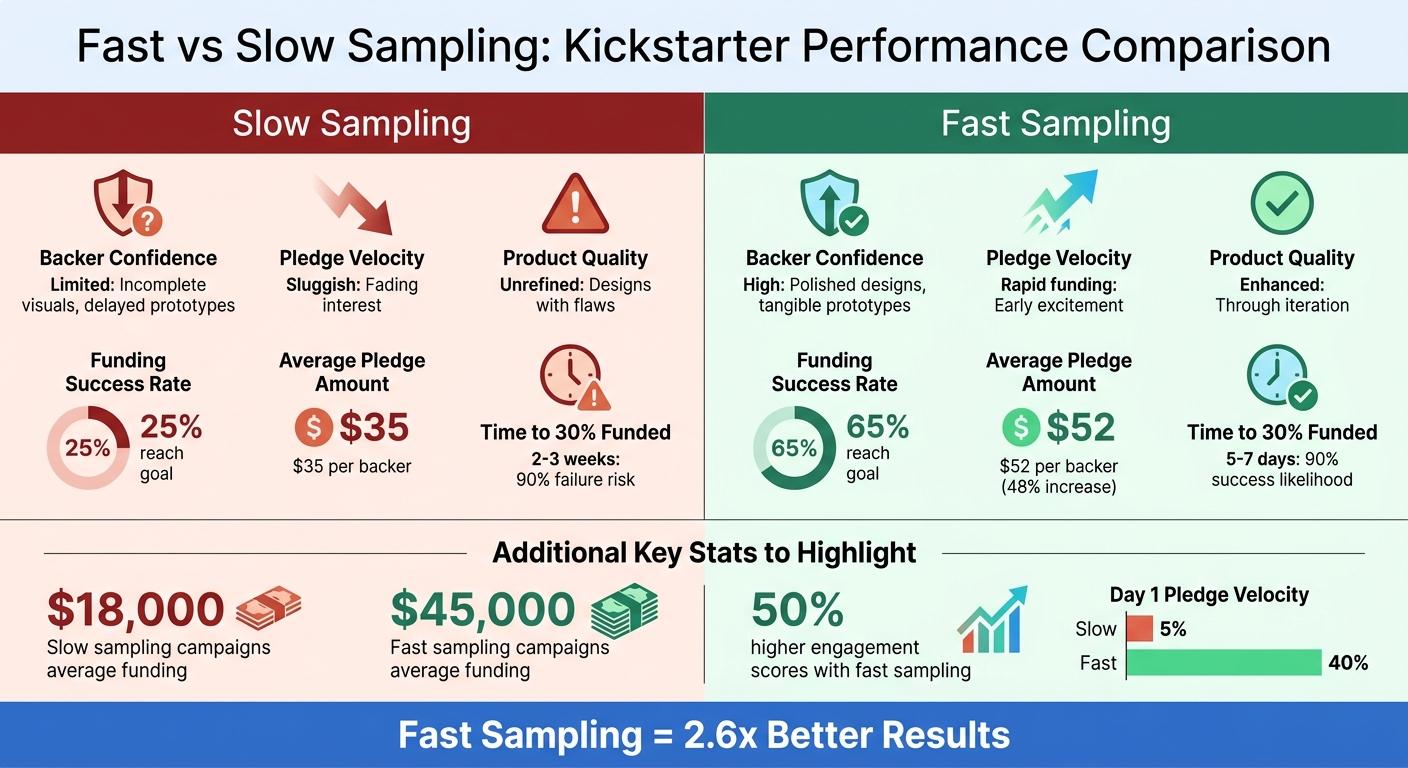
Fast vs Slow Sampling Impact on Kickstarter Campaign Performance
Monitoring Pledge Rates and Backer Engagement
Tracking the right metrics reveals how fast sampling can significantly impact your campaign’s success. One key area to watch is your pledge conversion rate. Campaigns that showcase physical prototypes often see a 20-30% boost in engagement. This shows up as more backer comments, questions about product features, and increased social sharing of campaign visuals.
Another critical metric is pledge velocity during the first 48 hours. Early momentum is vital – campaigns that achieve 30% of their funding goal in the first week have a 90% chance of success. Use Kickstarter’s analytics dashboard to track views and clicks, and supplement it with Google Analytics and UTM tags to measure how teaser content on social media drives traffic to your campaign. Longer dwell times on your page can further enhance pledge rates.
Pay attention to your query-to-pledge ratio as well. Quickly addressing backer questions about the prototype in the comments section can increase conversions by 10-15%. Running simple polls in your campaign updates – like asking, "Does this prototype meet your expectations?" – can provide valuable feedback for final adjustments before production.
Slow vs. Fast Sampling: Performance Comparison
The table below highlights the measurable advantages of fast sampling compared to slower approaches:
| Metric | Slow Sampling Impact | Fast Sampling Benefit |
|---|---|---|
| Backer Confidence | Limited due to incomplete visuals and delayed prototypes | High with polished designs and tangible prototypes |
| Pledge Velocity | Sluggish as backer interest fades | Rapid funding driven by early excitement |
| Product Quality | Unrefined designs with potential flaws | Enhanced through iterative prototyping |
| Funding Success Rate | 25% of campaigns reach their goal | 65% of campaigns hit their goal |
| Average Pledge Amount | $35 per backer | $52 per backer |
| Time to 30% Funded | 2-3 weeks or not at all (90% failure risk) | Within 5-7 days (90% success likelihood) |
The data speaks for itself. For example, a 2023 duffel bag campaign that used fast prototypes completed in just seven days achieved 40% pledge velocity on Day 1, far outpacing the industry average of 15%. On the other hand, campaigns relying on slower sampling timelines of 30+ days barely reached 5% Day 1 velocity. A study of over 500 campaigns also found that fast samplers averaged $45,000 in funding, compared to $18,000 for slower ones, with engagement scores 50% higher due to more compelling visuals.
Conclusion
In the fast-paced world of 30-day Kickstarter campaigns, quick sampling can make all the difference. It’s the key to turning your custom sports bag ideas into fully funded projects. Getting prototypes ready within 7–12 days keeps you on schedule and ensures backers stay engaged. Delay even a single day, and you risk losing crucial momentum.
Here’s how to make it happen: Work with JUNYUAN BAGS for fast OEM/ODM sampling and a smoother launch process. They offer a 7–12 day turnaround for initial samples, with minimum orders starting at just 50 to 500 units. This allows you to create eye-catching campaign visuals while perfecting your design through 2–3 iterations before going live. Reach out to them at [email protected] or via WhatsApp at +86 17750020688 to speed up your timeline from months to just weeks. Start with early samples, gather feedback from backers, and refine your design in 1–2 week cycles. This approach not only keeps you on track but also gives you a competitive edge. Remember, campaigns that hit 30% of their funding goal in the first week have a 90% chance of success – making rapid sampling essential for building early momentum.
Fast sampling isn’t just a strategy; it’s your ticket to Kickstarter success.
FAQs
What should I test on a bag prototype before launching?
Check essential features like compartments, straps, closures, and storage to make sure they work as they should. Test the durability of the materials and hardware to verify the bag meets your expectations for quality and design. This step helps ensure your prototype is ready for launch.
How many prototype iterations do I really need?
Typically, going through 2–3 prototype iterations is sufficient to fine-tune your design, identify any potential problems early, and keep your crowdfunding schedule on track. This process helps ensure your product aligns with both quality standards and timing goals, which is especially critical for Kickstarter campaigns.
What campaign content should I create from my sample?
When crafting campaign content, make sure to spotlight your physical prototype to demonstrate its quality and functionality. Use high-quality visuals and videos to highlight its key features, materials, and the craftsmanship behind it. Showcasing detailed images and real-life demonstrations of the prototype in action not only builds trust but also provides clear proof of concept. This kind of tangible content answers potential questions and makes your project more appealing to potential backers.