
Why Lululemon Bags Are So Expensive
A factory-backed answer to the exact question every busy commuter and fitness buyer asks before they check out – why Lululemon bags and duffels command a premium, and how much of that price is genuine performance fabric, function and finish versus just the label. With an honest cost ledger and the budget alternatives that match the spec.
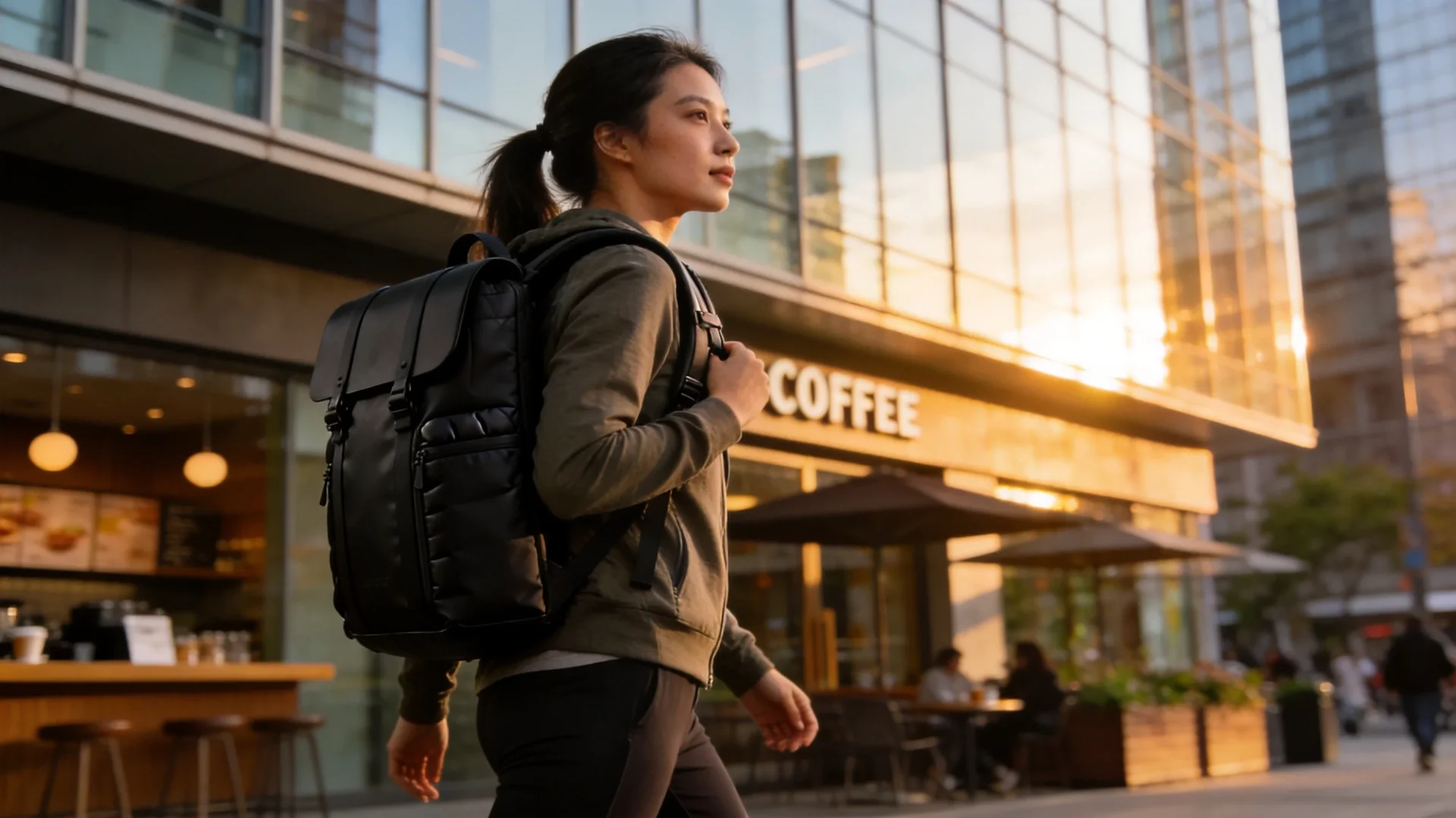
Lululemon bags are expensive because they sell a genuinely well-engineered, performance-fabric carry plus a premium athleisure brand – and both are real, but the label still absorbs a large, avoidable share of the ticket. A Lululemon Everywhere Belt Bag typically retails around $38 (approx.), a City Adventurer-style structured backpack runs $98–$148 (approx.), and a More Miles-style large duffel lands $118–$168 (approx.). On the factory bench the honest build gap is far smaller: a clean performance-nylon belt bag costs about $6–$10 (typical) to make, a structured performance backpack about $15–$28 (typical), and a large performance duffel about $18–$32 (typical). In other words, Lululemon spends genuinely more on technical woven fabrics, water-resistance, clean seams and functional organization – but the brand, the retail footprint and the marketing still carry a big part of the premium, and the same spec is buyable through OEM at a fraction of the ticket.
TL;DR / Quick Answer
Lululemon bags are not just a logo – the performance fabrics, clean construction and functional organization are genuinely above a value athleisure bag – but the brand still carries a large share of the premium. A $38 (approx.) Everywhere Belt Bag builds for roughly $6–$10 (typical), a $98–$148 (approx.) performance backpack builds for about $15–$28 (typical), and a $118–$168 (approx.) duffel builds for about $18–$32 (typical). The factory-grade upgrade – technical water-resistant woven fabric, clean taped seams, premium zips, light padding and functional organization – is worth roughly $5–$15 per bag. The rest is design, brand, direct-to-consumer retail, marketing and margin. Buy the performance and function you need, not the badge – for most commutes, gym runs and travel, a clean performance build or a private-label OEM delivery matches the experience for a fraction of the price. For the alternatives side of the question, our 10 Best Backpacks Like Lululemon guide compares budget-matched specs in detail.
1. Where the Price Gap Actually Comes From
The fastest way to answer “why do Lululemon bags cost so much?” is to split the retail dollar of a Lululemon-style carry. From the factory bench, Lululemon and the value tier are often built through the same global athleisure and bag supply chains – the difference is the grade they buy, the function they engineer and the premium they attach. Here is an honest picture of where each retail ticket goes:
| Part of the Ticket | Lululemon-Style (approx.) | Value Athleisure (approx.) | Why It Differs |
|---|---|---|---|
| Factory build cost | ~$6–$32 | ~$4–$18 | Technical woven, water-resistant performance fabric and clean finish grading vs a simpler lightweight build. |
| Design, R&D & fit/function system | High | Low–Moderate | Lululemon’s signature minimalist function and disciplined color/fabric system carry a heavier product-development spend. |
| Brand, retail & marketing | Higher | Lower | Premium direct-to-consumer retail, global marketing and lifestyle positioning load on the premium brand. |
| Service, returns & experience | Structured | Standard | A polished retail, fitting and returns experience is a real, priced cost of doing business. |
So the retail gap on a Lululemon bag is often 2–3× versus a value equivalent, but the built gap is only around 1.3–1.8×. That arithmetic is the whole story: Lululemon genuinely puts more into performance fabric and clean function, but a meaningful part of the premium is absorbed by brand, retail, marketing and margin – not by making a better bag. For the honest side of spec and function, our Lululemon Easy Access Crossbody deep-dive prices a popular build line by line.
2. A Factory-Level Cost Ledger for Each Spec
Strip away the badge and each Lululemon bag is a set of discrete, priced choices. Here is how a premium performance carry and a value athleisure bag actually split their build cost in an affiliated factory:
| Cost Line | Lululemon-Style (performance) | Value Athleisure (lightweight) | Real Difference |
|---|---|---|---|
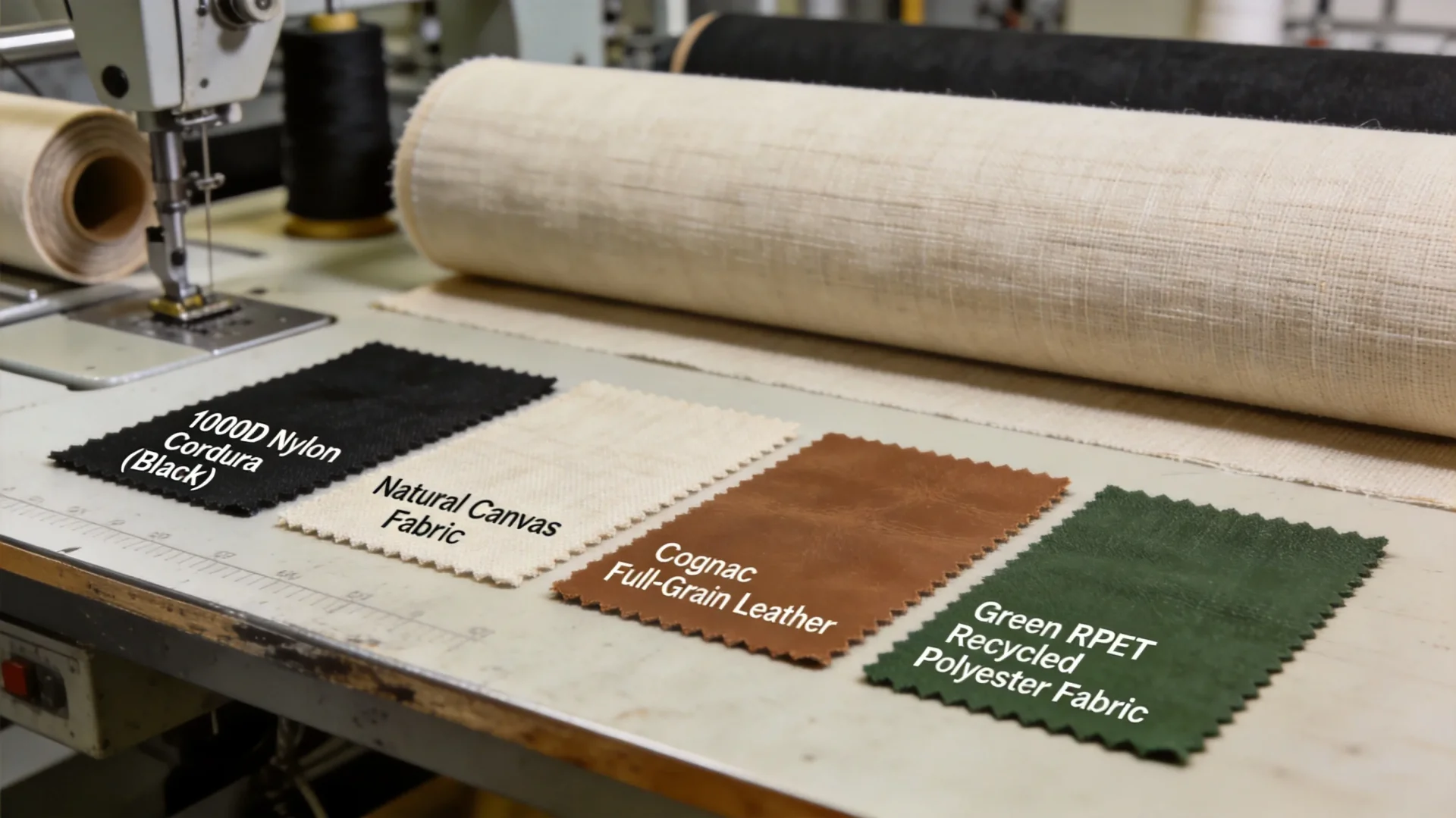
| Shell & lining fabrics | ~30–38% | ~34–42% | Value build leans more on raw fabric share; premium adds a technical woven, water-resistant shell at a higher fabric grade. |
| Function / organization | ~14–20% | ~5–9% | Zip-closed pockets, interior sleeves, key loops and dedicated compartments – a genuinely larger built share on a functional carry. |
| Hardware, zips & closures | ~10–15% | ~6–9% | Premium coated zips and clean pulls vs standard zips. |
| Padding / structure (where present) | ~8–13% | ~4–7% | Laptops/duffel builds add light padding and a firmer base that value tiers often skip. |
| Labor & assembly | ~20–26% | ~18–22% | Higher operation count from pockets, clean bindings, reinforcing and finish-grading standards. |
| Tooling & amortization | ~4–8% | ~2–5% | Pattern, print and small-mold tooling on premium lines. |
| QC, packaging & margin | ~8–12% | ~7–11% | Load/seam and water-resistance spot checks plus premium boxing. |
The decisive insight: the biggest real differences are the fabric grade and the function/organization line – the technical water-resistant woven shell and the clean, thoughtful pocket-and-compartment layout. Everything else moves the gap less than the retail price would suggest.
3. What Lululemon-Style Builds Put Into a Bag That Value Bags Skip
Buyers often assume the whole gap is the brand. It is not – the fabric and function engineering is real. But it is also not as large as the retail gap. Here is a component-level comparison:
| Component | Lululemon-Style premium build | Value athleisure build | Real Cost Effect at Build |
|---|---|---|---|
| Shell fabric | Technical water-resistant woven (performance grade) with a clean, soft-touch hand | Lightweight coated or standard nylon/polyester | The performance woven grade costs a few US-dollars more per yard – real but bounded. |
| Water-resistance & seams | Water-resistant finish with clean, reinforced/taped seams | Basic coated shell, standard seaming | A genuine, small line – finish and weather fit, not heavier construction. |
| Organization | Zip-closed pockets, interior sleeves, key loops, clean compartments | One or two simple open/zip pockets | Function is a bigger genuine line on a premium carry. |
| Hardware & zips | Premium coated zips, clean pulls | Standard zips | Durability and repeated-use feel. |
| Padding / structure | Light padding and a firmer base on laptop/duffel builds | Often minimal | Adds a modest real cost where present. |
| Finish & bindings | Reinforced bindings, bar-tacked stress points, clean grading | Standard construction | Finish and durability – a real but small-to-moderate line. |
The takeaway: the fabric and function gap is real but bounded. The technical woven shell, water-resistance, clean organization and finish grading are what move the built price more – and all of them are the same spec a private-label buyer can source through an OEM.
4. The Molds and Tooling That Add Cost
Behind a premium Lululemon-style carry sits a set of one-time tooling and pattern costs that are real, but amortized across a big run. From the pattern, print and light-mold tooling, here is what typically shows up on the invoice when a brand first sources a performance bag family:
| Tooling / Setup Line | Typical Setup Cost | Amortized Over | Cost Per Unit |
|---|---|---|---|
| Pattern & grading (each style) | $600–$1,500 | Full run | $0.6–$1.8 |
| Print / logo & silicone brand plate tools | $400–$1,000 | Full run | $0.4–$1 |
| Zipper & pull hardware molds | $800–$2,500 | 5,000–20,000 pcs | $0.3–$0.8 |
| Padding / firm-base & small-mold setup | $500–$2,000 | Full run | $0.4–$1.2 |
| Coated/water-resistant layer setup | $800–$1,800 | Full run | $0.5–$1 |
Notice what the list contains: fabric grade and function – not exotic hardware. The tools that turn a plain carry into a “Lululemon-style bag worth $100+” are tools for a clean technical shell, coated zips, small molds and a disciplined pocket layout. This is also the strongest argument for OEM/ODM: the same tooling a premium brand amortizes across a big run is the same tooling a private-label buyer gets to amortize. Our custom duffel bag sourcing guide walks through which performance fabrics and function features cost most to source.
5. How Each Bag Is Actually Built
A Lululemon-style carry, at either grade, travels through roughly 35–70 separate operations depending on pockets, padding, structure and finish. In our affiliated factory that runs across 7 production lines with 149 machines (126 sewing) and 137 staff, with a monthly line capacity of 200,000 pieces, the difference between an $8 build and a $28 build shows up in the steps themselves:
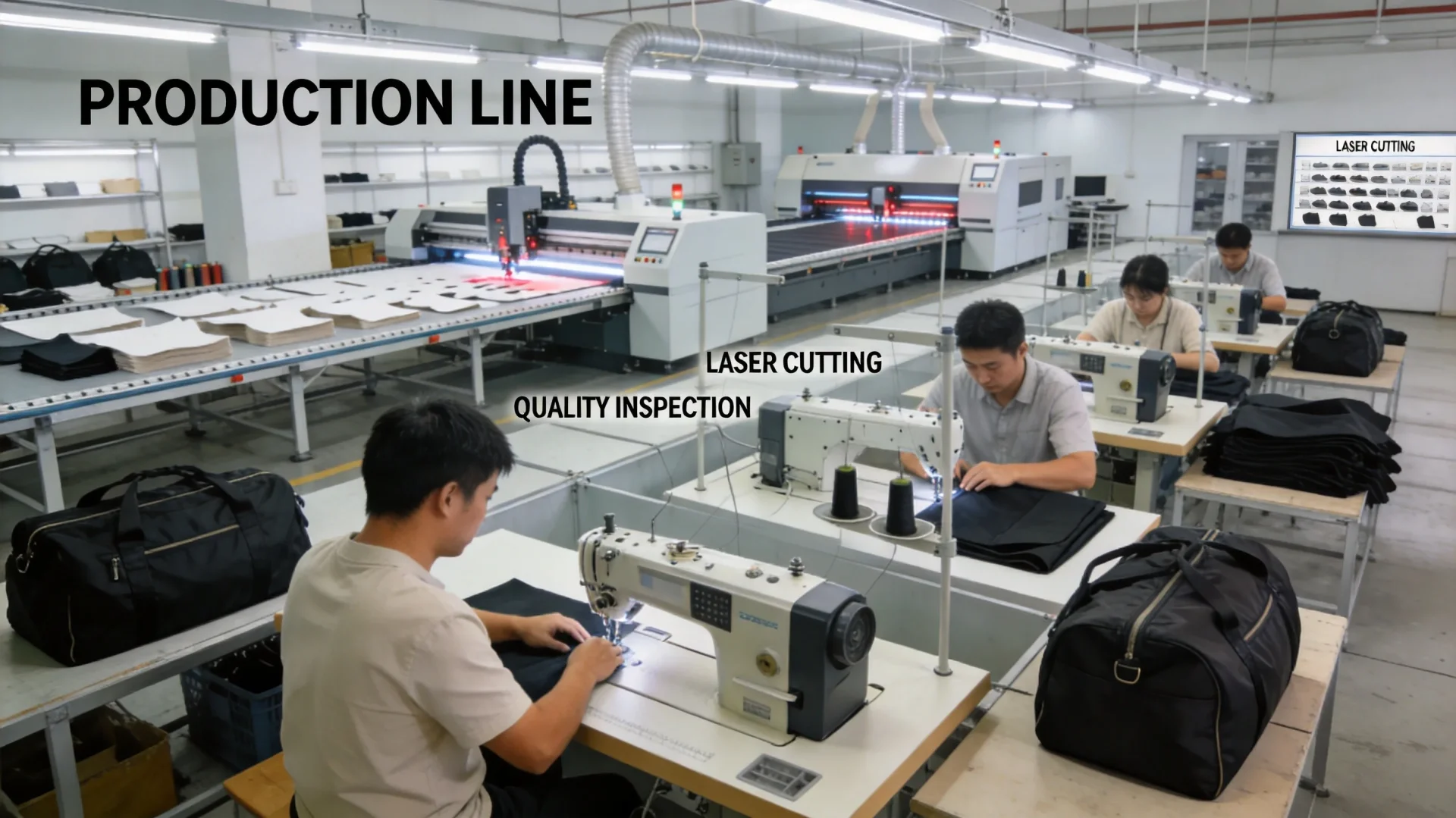
- Cutting & layup — panels are cut from technical woven or lightweight roll stock; the premium performance shell and its lining are laid up and reinforced.
- Function build — zip-closed pockets, interior sleeves, key loops and any padding/firm base are constructed and set into the body.
- Sewing & assembly — body, pockets, straps, zips and bindings are joined in sequence, with stress points bar-tacked; premium tiers add a higher stitch-consistency and finish-grading standard.
- Hardware & closures — coated zips, pulls and clips/strap hardware are fitted; water-resistant finish and clean taped or reinforced seams are applied.
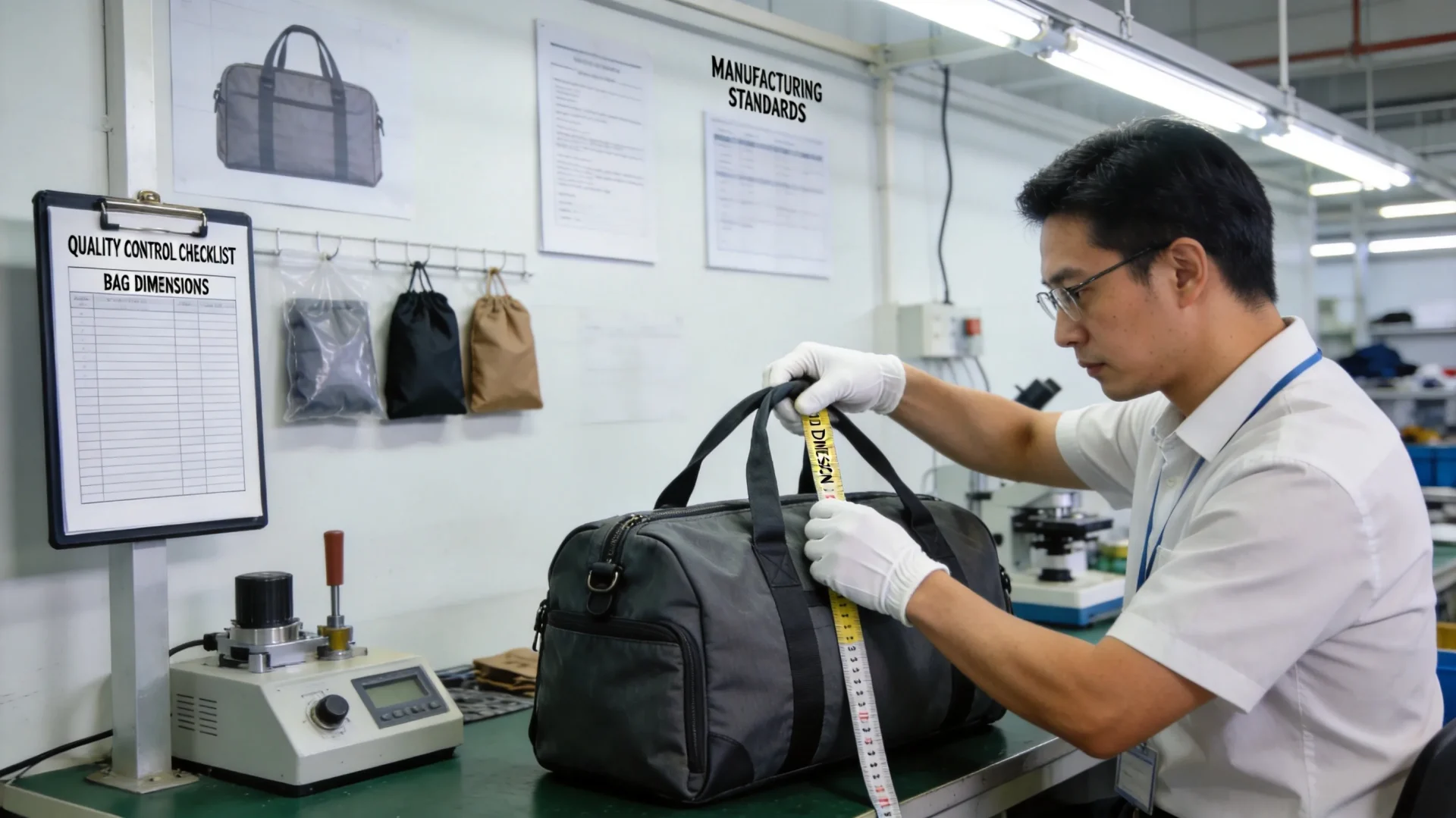
- QC & packing — seam and zipper review, load checks on padded/duffel builds, and premium boxing.
The measurable difference is operations per bag. A technical, functionally organized performance build absorbs more operations and a clean finish standard, pushing it toward a build cost of roughly $6–$32 (typical) depending on style versus $4–$18 (typical) for a clean lightweight value build.
6. So Why the Premium? The Verdict
Here is the straight, factory-backed call:
- Lululemon genuinely builds a cleaner, better-finished, more functional bag. The technical water-resistant woven shell, clean organization and finish grading add roughly $5–$15 per bag (approx.) in true build content – real value for a daily commute, gym routine or travel weekender.
- Value athleisure bags are not junk – they are a real, cheaper grade. A clean performance-nylon or lightweight carry with basic pockets covers most everyday needs for a fraction of the retail ticket.
- The rest of the gap is the name. Beyond the true $5–$15 (approx.) of extra build content, the premium is absorbed by design, brand, direct-to-consumer retail, marketing and margin. That is a real cost of doing business – but it is not a cost of making the bag.
- Match the bag to your routine, not your ego. If you need a compact waist carry for phone, keys and a card on a workout or commute, a clean value belt bag is sufficient. If you want technical water-resistance, a disciplined organizer layout and premium finish, the upgrade is worth it – and the best way to get it at a fair price is a clean-spec OEM delivery under your own label (see our work & gym bag picks and gym bag vs duffel guide).
The honest bottom line: Lululemon bags are reasonably priced for what they engineer, but the premium is real yet over-stated by the label – and the same performance-and-function spec is buyable without the premium badge.
Bottom line: Lululemon bags are expensive because they mix genuine performance engineering with a premium athleisure brand. The true upgrade (technical water-resistant woven shell, clean organization and finish grading) is worth roughly $5–$15 (approx.) per bag; the rest is the name, direct-to-consumer retail, marketing and margin. Buy the performance and function you actually need, and source the engineering you want at a fair price – both are separate decisions, and both grades are buildable under your own label.
Build a Performance Bag at Either Grade Under Your Brand
JUNYUAN BAGS is a bag trading company backed by an affiliated factory in Quanzhou, Fujian – SGS-verified at 4,950 sqm, 7 production lines, 149 machines (126 sewing) and 137 staff, with a monthly line capacity of 200,000 pieces and a vetted partner-factory network. We have supplied 200+ brands across 100+ countries as of 2026. Whether you want a clean compact belt bag, a technical water-resistant commuter carry or a spacious performance duffel, we can spec it, sample it and ship it for your brand, shop or wholesale account.
Request a custom performance bag OEM/ODM quote
See how custom backpacks & commuter bags are sourced end-to-end
FAQ: Why Lululemon Bags Are Expensive
Why are Lululemon bags so much more expensive than value athleisure bags?
Because Lululemon sells a genuinely well-engineered, performance-fabric carry plus a premium athleisure brand. A performance build spends extra on a technical water-resistant woven shell, clean organization and finish grading – worth roughly $5–$15 (approx.) in real build content. The rest of the often 2–3× retail gap is absorbed by brand, direct-to-consumer retail, marketing and margin.
Is Lululemon actually better built than cheaper athleisure bags?
Genuinely, yes, in fabric grade and function. Lululemon-style builds add a technical water-resistant woven shell, clean organization (zip-closed pockets, interior sleeves, key loops), premium coated zips and disciplined finish grading – a real $5–$15 (approx.) upgrade in build content. But both use durable materials, and for a simple everyday carry a clean value build covers most real needs at a fraction of the price.
What is the real price gap between Lululemon and value bags?
At retail Lululemon bags often run about 2–3× a value equivalent – a $38 (approx.) Everywhere Belt Bag, a $98–$148 (approx.) structured performance backpack, or a $118–$168 (approx.) large duffel. But the built gap is far smaller: a clean performance build costs roughly $6–$32 (typical) depending on style versus $4–$18 (typical) for a lightweight value build – only about 1.3–1.8× in build cost.
Is the Lululemon premium worth it for a bag?
Yes, but only if you need that grade of performance and function. If you want technical water-resistance, a disciplined organizer layout, premium finish and the brand experience, the additional roughly $5–$15 (approx.) of true build content plus the service can be worth it. If you need a simple belt or weekend carry, a clean value build is sufficient – know you would otherwise be paying the label.
What are good budget alternatives to Lululemon that match?
Several clean-spec performance and athleisure brands deliver similar functional, water-resistant carries at moderate prices, and value belt bags and backpacks with basic pockets cover a simple routine well. The technical, organized spec anyone wants is also buildable as a private-label OEM delivery that trims most of the brand margin. See our 10 Best Backpacks Like Lululemon guide for closely matched specs.
What makes Lululemon bags more functional than value bags?
Lululemon-style builds add a technical water-resistant woven shell, clean organization (zip-closed pockets, interior sleeves, key loops, clean compartments), premium coated zips, light padding where appropriate and disciplined finish grading. Value athleisure bags use a simpler lightweight shell with one or two pockets and standard zips – still fine for light use, but with less function, water-resistance and finish.
Can I get a bag built under my brand at either price point?
Yes. Both the lightweight value grade and the technical, water-resistant, functionally organized performance grade are manufactured through global partners in the same specialized factories. Our affiliated factory works within a vetted partner-factory network and can spec a clean budget carry or a technical performance bag to order for your brand.
How much does a performance bag cost to make?
A clean compact belt bag carries a factory build cost of roughly $6–$10 (typical); a structured performance backpack runs about $15–$28 (typical); and a large performance duffel about $18–$32 (typical), depending on size, fabric grade, function, padding and volume. Retail then adds a 2–3× or larger design-brand-retail-margin load.
Disclaimer: Retail and factory figures in this article are industry-typical approximations used to explain cost structure – not precise quotes or guaranteed prices. Actual pricing depends on your specification, volumes and prevailing conditions. Approx./typical labels apply to every figure above.
OEM perspective note: JUNYUAN BAGS operates as a bag trading and sourcing organization backed by an affiliated factory and partner factories in Quanzhou, Fujian. We do not claim to manufacture for any named brand, nor do we represent any brand’s proprietary design. Figures describe the open, buyable spec that any brand can source.