
Crowdfunding has become a go-to platform for launching custom travel bags, with successful campaigns often exceeding funding goals by 200–500%.Backers, typically urban professionals aged 25–44, are drawn to bags that solve real travel challenges, such as modular compartments, anti-theft designs, and lightweight materials.Features like built-in scales, self-healing zippers, and GPS tracking further boost interest.Sustainability also plays a big role, with 60% of top campaigns using recycled materials, increasing pledge shares by 40%.Personalization options, like material selection and modular components, add to the appeal, while tech integrations like biometric locks and removable batteries enhance functionality.Success hinges on clear, standout features and early momentum, with campaigns needing to hit 30% of their goal within the first 48 hours to avoid a 70% failure rate.
Straight Answer
MOQ 500 pieces ·Sampling 6-10 days ·Production 35-50 days ·AQL 2.5 inspection ·Sample fee refunded on volume order.JUNYUAN BAGS (QUANZHOU JUNYUAN COMMERCIAL AND TRADING CO., LTD.), an SGS-verified OEM/ODM bag factory (about 200,000 pieces/month, 7 lines, 149 machines, 137 workers) serving 200+ brands in 100+ countries, supports Kickstarter bag projects end to end.
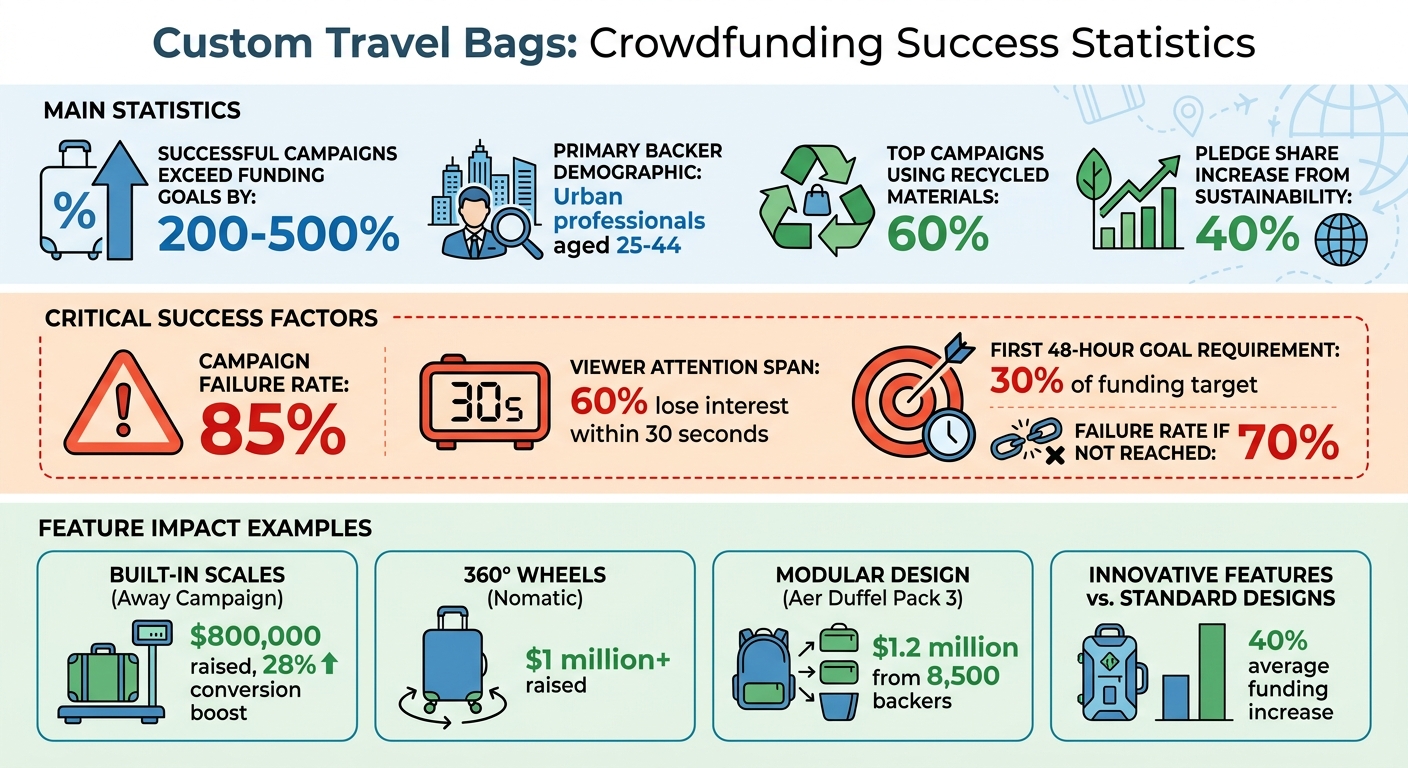
Crowdfunding Success Statistics for Custom Travel Bags
?4 NEW Travel Bags by Peak Design on Kickstarter – Initial (In-Depth) Reveal
sbb-itb-1e6451b
1.Innovative Functionality
Travelers are always on the lookout for smart solutions to everyday travel hassles.Crowdfunding campaigns that highlight clever, problem-solving features tend to grab attention and funding.By tackling common travel challenges, these features not only make life easier but also showcase the creativity behind the designs.Here are five standout features that have won over backers:
- Modular Internal Dividers
Customizable compartments allow travelers to organize their belongings – whether it’s a laptop, clothing, or gear – exactly how they want.For instance, Peak Design’s panel system offered flexible storage options, playing a big role in the campaign’s success. - Built-In Digital Scales
Forget those surprise airline fees!USB-powered scales built directly into luggage make it easy to check weight before heading to the airport.Away’s campaign, which featured this tech, pulled in $800,000 and boosted conversions by 28%. - Self-Healing Zippers
Using advanced polymers, these zippers can withstand over 10,000 uses, solving a major durability issue.This feature has helped rugged travel gear campaigns hit – and often surpass – their funding goals. - 360-Degree Shock-Absorbing Wheels
These spinner wheels glide smoothly and quietly over all kinds of terrain.Nomatic‘s design, which incorporated this feature, brought in over $1 million from backers looking for dependable, city-friendly luggage. - Auto-Compression Straps
With a single pull, these straps reduce bag volume by up to 30%, making packing faster and more efficient.This time-saving feature has been a highlight in many successful Kickstarter campaigns throughout 2024.
Take Aer‘s Duffel Pack 3 as an example.This bag combined a convertible backpack-duffel design with thoughtful touches like ventilated shoe compartments and magnetic pockets.The result?$1.2 million raised from 8,500 backers.Campaigns like this show that addressing specific travel needs can increase funding by an average of 40% compared to standard designs.These kinds of innovations are paving the way for even more exciting features that blend technology, customization, and forward-thinking design.
2.Sustainability and Eco-Friendliness
Eco-conscious consumers are reshaping the crowdfunding landscape by championing travel bags that minimize environmental harm while sharing a meaningful story.Bags made from recycled or repurposed materials resonate with today’s buyers, who prioritize responsible production and clear sourcing.Here’s a closer look at sustainable practices that make these products stand out.
Recycled Polyester (rPET) from Plastic Bottles
Recycled polyester, or rPET, is a smart choice for reducing waste while maintaining durability.By transforming post-consumer plastic bottles into fabric, brands cut down on new petroleum-based plastics.This material is lightweight, water-resistant, and cost-effective, making it a popular option for custom travel bags.Typically priced between $50 and $130, these bags strike a balance between affordability and long-lasting quality.
Upcycled Industrial Materials
Turning industrial waste into functional products highlights a commitment to eco-friendly innovation.Materials like rice bags, billboard banners, or bicycle inner tubes are repurposed to create one-of-a-kind travel bags.For instance, Rice Love produces upcycled bags that are not only unique but also tied to a social mission – each purchase provides 2.2 pounds (1 kilogram) of rice to a family in need.This combination of sustainability and social impact resonates strongly with crowdfunding supporters.
Third-Party Certifications
Certifications such as the Global Recycled Standard and bluesign® offer a layer of trust by verifying environmentally responsible practices.Using certified fabrics helps brands avoid greenwashing while providing concrete proof of their eco-friendly efforts.Many eco-conscious consumers have reported using the same recycled bags for over a decade, showcasing the durability of these materials.As The Good Trade aptly puts it:
"The most sustainable luggage is the one you don’t have to replace anytime soon".
Circular Design Features
Incorporating circular design principles enhances both sustainability and consumer confidence.Features like lifetime warranties or trade-in programs promote product longevity, ensuring backers feel their investment is worthwhile.These elements not only extend the life cycle of the bags but also build trust and loyalty among eco-minded supporters.
3.Technology Integration
Advanced technologies are transforming travel bags into smart, connected companions.Crowdfunding backers are drawn to these tech-enabled designs, which solve common travel challenges – like avoiding baggage fees or keeping devices charged – while adding convenience.Here are five standout technology integrations that consistently win support.
Built-In Digital Scales
Smart weight sensors provide instant weight readings and sync with mobile apps.For example, the Heys SmartLuggage 26-inch Hardside not only tracks weight but also alerts users to potential overweight issues.Frequent flyers appreciate the convenience and peace of mind these scales offer.
Biometric Security Systems
Fingerprint locks bring a new level of security and ease.The Kabuto Flex Cabin Gallivanter, launched in early 2026, features a biometric lock that can store up to 10 fingerprints.This allows family members or travel groups to share access without the hassle of codes.It’s a practical upgrade for those who value both safety and simplicity.
Removable Battery Packs
USB charging ports paired with detachable lithium-ion batteries keep devices powered while complying with airline regulations.The Solgaard Lifepack Backpack, updated in April 2026, includes a solar-powered, removable battery pack that can be taken out during gate-checking for TSA approval.Budget-friendly options start at $126, while solar-powered premium models range from $200 to $400.
GPS Tracking and Proximity Alerts
Real-time location tracking and Bluetooth proximity alerts reduce the risk of theft or loss.If a bag moves beyond a set range, users are notified instantly.As Anne Taylor from Travel + Leisure explains:
"Smart luggage, which can include features like built-in chargers, removable batteries, and GPS tracking, makes a huge difference on the road".
Expandable Storage Systems
Expandable compartments provide extra space without increasing the bag’s base size.The Kabuto Flex Cabin Gallivanter, for instance, boosts its main compartment volume by 30%, making it ideal for return trips with souvenirs.This feature blends practicality with forward-thinking design, appealing to travelers who need versatility.
These tech integrations not only solve everyday travel problems but also open the door to more personalized and adaptable designs for the future.
4.Customization and Personalization
Customization takes things a step further by letting backers make personal design choices, creating a stronger connection to the product.This approach can turn a standard item into something tailored to individual needs, boosting both engagement and funding success.Below are six customization features that consistently attract strong support in crowdfunding campaigns.
Material Selection for Values and Performance
Giving backers the option to choose sustainable materials connects their purchase to their values.Popular choices include rPET (recycled polyethylene terephthalate), recycled nylon, organic cotton, and OEKO-TEX certified fabrics.A great example is the Urban Flex Backpack, which exceeded its funding goal by 428%, thanks in part to its focus on recycled materials and modular design.
Modular Component Systems
Interchangeable parts, like custom laptop sleeves, removable internal structures, and specialized pockets, allow backers to tailor the bag for specific uses – whether for work, travel, or daily life.The Nomad Sling Pack is a standout example, raising $380,000 from over 1,200 backers.Its waterproof zippers and adaptable design helped it succeed by seamlessly meeting diverse needs.
Custom Branding and Aesthetics
Offering unique color options, custom logos, or distinctive hardware not only builds brand identity but also lets backers express their personal style.Early-bird reward tiers with exclusive colors or limited-edition materials can create urgency.Additionally, small minimum order quantities (as low as 50 to 500 units for OEM projects) make it feasible to offer these special editions.
Functional Hardware Choices
Practical features like waterproof zippers, reinforced straps, and specialized buckles make a big difference, especially for outdoor and adventure-focused campaigns.These options let backers choose hardware that fits their specific needs, whether they’re dealing with rainy weather or rugged terrain.
Niche-Specific Designs
Designing bags for specific activities – such as golfing, athletics, or professional use – can make them more appealing to targeted groups.Custom pocket layouts and structural tweaks can turn a general-purpose bag into a specialized tool for unique requirements.
Rapid Prototyping for Backer Confidence
Quick sampling services, delivering high-quality prototypes in 7 to 12 days, help creators showcase polished products in campaign videos and photos.Adding 2-3 design revisions into the process builds trust by clearly showing backers what they’ll receive.
These personalization features enable creators to deliver products that feel tailor-made for backers, making them more likely to support the campaign enthusiastically.
Conclusion
A great travel bag isn’t just about carrying your belongings – it’s about solving real problems with thoughtful features, eco-conscious materials, and a touch of personalization.These elements, as outlined earlier, highlight the importance of combining smart design with sustainable practices and tailored options.
With statistics showing that 85% of campaigns fail and 60% of viewers lose interest within 30 seconds, every feature needs to make an impact right away.Successful creators understand that backers aren’t just buying a product – they’re supporting a solution that resonates with their values and meets specific needs.Whether it’s using eco-friendly materials like rPET, integrating smart technology for everyday convenience, or offering configurations for different lifestyles, each detail should serve a purpose.
Hitting 30% of your funding goal within the first 48 hours is critical to avoid the 70% failure rate many campaigns face.That’s why your product’s value must shine immediately through high-quality visuals, engaging videos, and polished design.
The strategies shared earlier demonstrate how purposeful design builds trust and drives success.Crowdfunding also serves as a litmus test for future demand.As Felix Pinkow from Technische Universität Berlin puts it:
"The funding period can ultimately be seen as a possible indicator of future demand".
FAQs
What 3 features make backers pledge fastest?
The first 48 hours of your campaign are crucial.Why?Because gaining early traction during this window can significantly boost your chances of success.Combine this with a clear explanation of how your bag solves a real problem, and you’re already ahead of the game.
But that’s not all – high-quality visuals and prototypes can make a world of difference.These elements aren’t just about aesthetics;they help build trust and generate excitement among potential backers.Together, these three features can make your campaign truly stand out.
How can a bag be eco-friendly without feeling cheap?
A bag can be both environmentally conscious and feel luxurious by incorporating strong, sustainable materials like recycled polyester, organic cotton, or jute.Showcasing certifications and being upfront about the quality of materials helps build trust while increasing its perceived worth, making it an ideal blend of sustainability and sophistication.
Which smart features are actually airline-friendly?
Airline-friendly smart luggage comes packed with features that make travel both safer and more convenient.These include removable power banks that adhere to airline regulations, ensuring you can keep your devices charged without any hassle.Additionally, real-time GPS tracking provides location updates, so you always know where your luggage is.To top it off, remote biometric locking systems add an extra layer of security, letting you lock and unlock your bag with ease while keeping your belongings protected.These features strike the perfect balance between meeting airline standards and enhancing the travel experience.
Frequently Asked Questions
How long does production take?
35-50 days after sample approval, with AQL 2.5 inspection on zippers, seams, wheels and strap attachment.
How long does a travel bag sample take?
6-10 days after the tech pack and materials confirm, covering structure, wheels or straps and organization.
What materials work best?
Water-repellent ballistic polyester, hard-shell or structured panels, and durable zippers photograph well and signal quality.We source these at MOQ 500.
How do I handle global shipping?
Set clear regional shipping tiers and state whether duties are included;predictable delivery avoids post-campaign friction.
What is the best size for a travel bag?
A versatile carry-on-compliant size (typically under 22x14x9 inches) with expandability tends to fund well for Kickstarter travel campaigns.
What travel bags attract crowdfunding backers?
Backers fund function you can see: a carry-on that fits airline limits, smart packing organization, durable wheels or straps, and clean premium visuals.
Should the bag be expandable?
An expandable compartment is a high-value add that gives backers more function without adding a second product.
How do I protect my travel bag design?
We sign NDAs and keep patterns and tooling private so your spec stays proprietary.
How do I price a travel bag?
Break out materials, hardware, wheels or straps, labor and shipping from the itemized BOM, then add margin at a 500-piece MOQ.
How much capacity should I offer?
A 30-45 liter expandable carry-on or a smart 18-25 liter daypack are proven ranges, each with clear organization for easy spec reading.
Related Blog Posts