Looking to launch a bag on Kickstarter in 2026? Here’s what works:
- Athletic Duffel Bags with Custom Compartments: Gym-friendly designs with modular storage and durable materials. Popular for fitness enthusiasts.
- Convertible Travel Backpacks: Multi-use bags with detachable straps, USB-C ports, and lightweight builds. Perfect for travelers.
- Anti-Theft Waist Packs: Compact, secure packs with RFID-blocking pockets and slash-resistant straps. Great for urban use.
- Eco-Friendly Sports Totes: Modular totes made from recycled materials, offering weatherproofing and long-term durability.
Key Trends:
- Bags with customization options raised 40% more funding in 2025.
- Eco-conscious designs saw 2.5x higher success rates.
- Features like anti-theft tech and modular compartments are in high demand.
Why It Matters: Kickstarter backers now prioritize functionality, sustainability, and storytelling. To succeed, focus on designs that cater to these preferences while keeping production costs low.
Quick Comparison:
| Bag Style | Key Features | Target Audience | Price Range |
|---|---|---|---|
| Athletic Duffel Bags | Modular compartments, ventilated pockets | Gym-goers, commuters | $115–$295 |
| Convertible Travel Backpacks | Detachable straps, USB-C ports | Travelers, digital nomads | $150–$295 |
| Anti-Theft Waist Packs | RFID-blocking, slash-resistant | Urban commuters, festival-goers | $30–$169 |
| Eco-Friendly Sports Totes | Modular inserts, waterproof | Eco-conscious buyers | $100–$200 |
Start with a prototype, highlight functionality, and engage backers with clear storytelling. These strategies can help you achieve funding success in 2026.
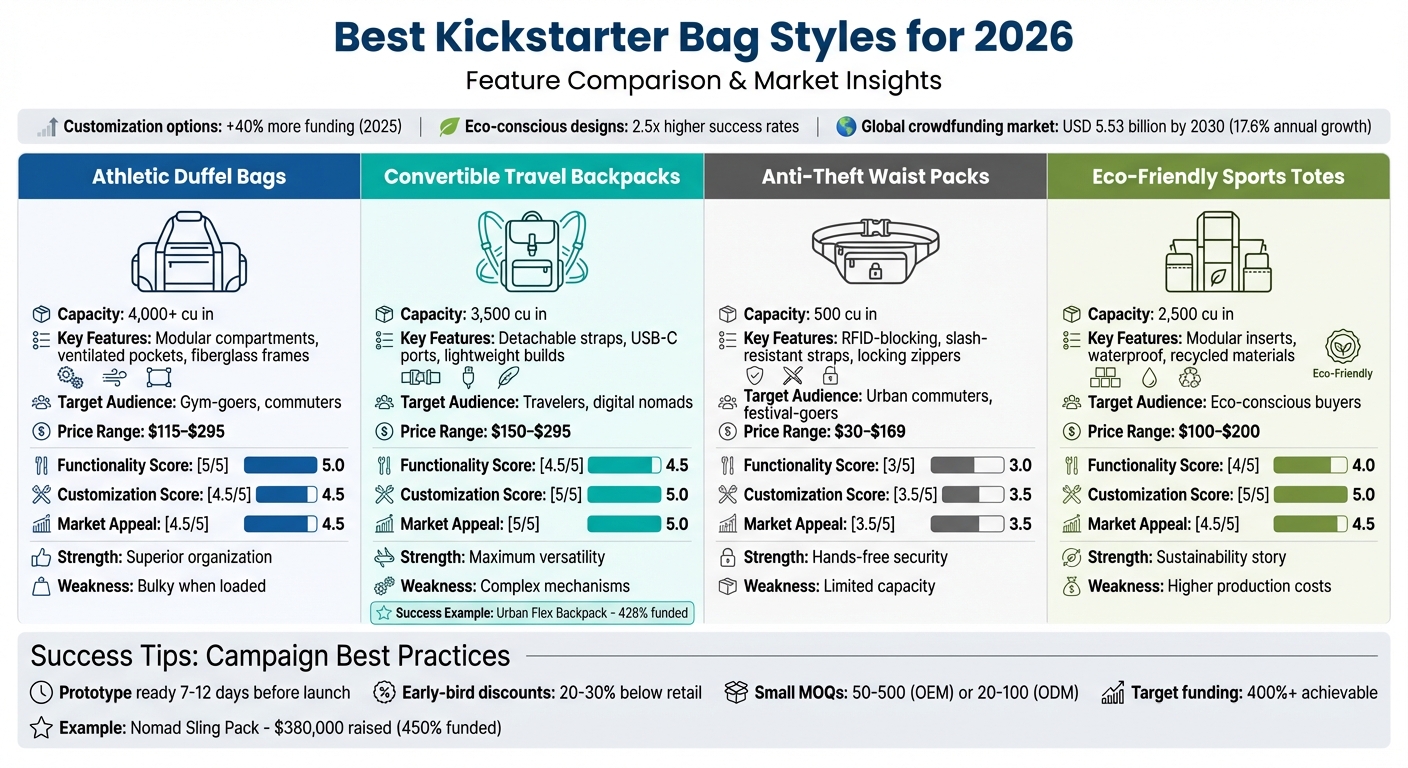
Best Kickstarter Bag Styles 2026: Features, Pricing & Success Metrics Comparison
1. Athletic Duffel Bags with Custom Compartments
Functionality
By 2026, athletic duffel bags have addressed a common frustration among gym-goers: traditional bags that collapse into an unmanageable heap, making it hard to access gear. Modern designs now include features like fiberglass frames and internal stiffeners to keep the bag upright and open, even when empty. A great example is the RUX Duffel Box, which launched successfully in March 2026 after its Kickstarter campaign. Its segmented roll-top closure avoids the zipper issues of older models and ensures the bag stays open "like a cupboard", providing clear visibility inside.
These bags also come with practical compartments: ventilated pockets to separate sweaty shoes, waterproof sections for wet swimwear or dirty clothes, and tech-friendly additions like built-in USB-A ports for power banks. Many also include laptop sleeves and luggage pass-throughs, making them versatile enough for gym sessions, work commutes, or weekend trips.
Customization Options
One of the standout features of these bags is their modular organization systems, which allow users to tailor storage to their specific needs. Many models now include internal soft rails and 360-degree lash points, making it easy to add packing cubes, organizer panels, or detachable pockets. Some even feature expansion zippers to adjust the bag’s volume, accommodating everything from light daily use to heavy-duty packing. Certain designs also offer tiered versions, such as a Standard model for everyday use and a Plus version with detachable padded shoulder straps for extended carrying.
These customizable options make the bags not only functional but also highly adaptable, catering to a wide range of activities and preferences.
Market Appeal
Athletes and active individuals are increasingly willing to spend more on bags that offer real functional benefits. Pricing typically falls into three categories: budget bags at $20–$40, mid-range options at $115–$165, and premium modular designs priced between $225 and $295. For example, the Patagonia Black Hole Duffel, priced at $165, is celebrated for its durability. Similarly, the Eastpak Duffel Pack, which comes with a 30-year warranty, highlights the long-term value these bags offer.
This combination of durability, customization, and functionality has made these bags a hit with consumers, perfectly aligning with the forward-thinking designs that have driven Kickstarter successes in 2026.
sbb-itb-1e6451b
2. Convertible Travel Backpacks
Functionality
Convertible travel backpacks are designed for ultimate convenience, allowing users to switch effortlessly between carrying styles. With detachable straps, these bags can be used as a hand-carry, a crossbody, or a traditional backpack. To address modern needs, some Kickstarter campaigns have started incorporating features like USB-C ports and solar panels – an answer to the 20.5% of users who report frustrations with slow device recharging. Another common issue is weight, with 18.4% of complaints about travel accessories focusing on heaviness. To combat this, manufacturers are prioritizing lightweight yet durable materials.
This combination of functionality and adaptability makes these backpacks a practical choice for a wide range of travelers.
Customization Options
The best convertible backpacks go beyond functionality by offering modular compartments that suit both daily commutes and extended trips. Buyers can further personalize their bags with finish options like silver, gold, or matte black. Additionally, these backpacks come in multiple sizes – mini, small, and medium – ensuring they meet varying capacity needs.
Market Appeal
The versatility of these backpacks aligns perfectly with current market trends. The global crowdfunding market is expected to hit USD 5.53 billion by 2030, growing at a rate of 17.6% annually starting in 2025. North America alone accounts for 30.92% of this market. Sustainability is also a major factor, with eco-friendly campaigns increasing by 32%. Many environmentally conscious consumers now look for bags made from recycled or organic materials.
With the growing demand for travel gear that combines versatility and sustainability, these backpacks are well-positioned to thrive on platforms like Kickstarter. Frequent travelers are often willing to pay premium prices for products that meet their needs. For example, wholesale prices for eco-friendly weekend bags range from USD 21.20 to USD 24.38 per unit, while the cost of adding smart features like charging hubs falls between USD 4.90 and USD 11.00 per unit. This pricing allows for competitive retail strategies while maintaining solid profit margins, paving the way for a successful crowdfunding campaign.
3. Anti-Theft Waist Packs for Daily Use
Functionality
Anti-theft waist packs are becoming a staple for urban life, striking a balance between security and practicality. These packs are specifically designed to protect your belongings in crowded environments. Features like RFID-blocking pockets shield credit cards and passports from digital skimming – a growing concern in 2026. Additional security measures include locking zippers, slash-resistant materials, and reinforced straps that deter pickpockets and theft by cutting. Many models even come with chair-loop locks, allowing you to secure the pack to a fixed object, like a café chair.
As Sherpani describes:
RFID-blocking technology acts like a force field around your essentials – no one gets in, and no information gets out.
On top of security, these waist packs offer practical features like magnetic quick-access pockets for phones and well-organized compartments perfect for wallets, keys, and earbuds.
Customization Options
Anti-theft waist packs are designed with adjustable, ergonomic straps to ensure comfort while keeping valuables secure throughout the day. Some models even include USB 3.0 charging ports, making it easier to stay powered on the go. High-end designs can feature over 25 pockets, offering specialized compartments for passports, electronics, and cash.
Currently, many products are limited to neutral colors, but introducing bold options like cobalt blue – a key color trend for 2026 – alongside classic black and gray could broaden their appeal. Offering size variations, from compact hidden pouches to larger 3.5-liter packs capable of holding a 7-inch tablet, ensures there’s something for every lifestyle and need. These thoughtful additions enhance both security and everyday usability, catering to a wide range of users.
Market Appeal
The Spring 2026 trend toward small, functional bags makes anti-theft waist packs a perfect fit for a successful Kickstarter campaign. Fashion is leaning into "petite pouches" that blend practicality with style. This shift reflects a broader movement toward compact, secure, and stylish bags that meet the demands of modern life. Consumers are increasingly drawn to designs that are "effortlessly cool, pulled together without a hint of preciousness", ensuring these packs remain functional without looking overly tactical.
These designs are ideal for commuters, festival-goers, and café enthusiasts who want hands-free convenience without compromising on safety. For instance, the Pacsafe ECO anti-theft waist pack holds a 4.7-star rating from 84 reviews, while the Pacsafe V Anti-Theft Hip Pack has a 4.7-star rating from 196 reviews. Users frequently highlight the "peace of mind" provided by the secure locking mechanisms.
Price and Value
Pricing for these waist packs spans a broad range. Entry-level models are priced between $29.95 and $39.95, standard options retail for around $89.95, and premium versions with advanced features can cost up to $169.00. This range supports early-bird discounts and effective Kickstarter campaigns. Highlighting essential security features – like hidden zippers, anti-slip buckles, and reinforced stitching – helps build trust among backers who prioritize both functionality and safety.
4. Eco-Friendly Sports Totes with Modular Features
Functionality
Eco-friendly sports totes are redefining what sustainable gear can accomplish. By using zipperless waterproofing and RF welded seams, these totes provide a leak-proof design that stands up to tough conditions far better than traditional sports bags. What’s more, they can shift from an open-top design – ideal for quick access during city commutes – to a fully secure, weatherproof dry bag for outdoor adventures. This adaptability makes them equally at home in urban settings and rugged wilderness environments.
What really sets these totes apart is their modular design. Users can attach specialized components like packing cubes or cooler cubes, tailoring the bag to their specific needs. As RUX explains:
An ecosystem of components makes this container one of the most modular systems we’ve seen yet.
This modular approach ensures the totes are not just versatile but also highly customizable to fit a wide range of activities.
Customization Options
These modular totes are designed for easy personalization, allowing users to swap out internal components to create a bag that meets their unique needs. Whether it’s a roll-top or fold-over closure, the design ensures a watertight seal without sacrificing a clean, minimalist look.
For brands launching on Kickstarter, offering tiered incentives – like early-bird discounts of up to 27% off the MSRP – can help drive early interest and reward backers. Kickstarter also serves as a testing ground, letting brands gauge price points and customer preferences before moving into full-scale production.
Market Appeal
The combination of customization and sustainability makes these totes especially appealing. Kickstarter backers are drawn to products that not only perform well but also have a meaningful story behind their creation. By focusing on durability and offering lifetime guarantees, these totes embrace a "buy less, but better" philosophy. This approach reduces waste and ensures the bags deliver long-term value. They are perfect for consumers who need gear that transitions seamlessly between professional urban settings and outdoor adventures. As RUX puts it:
The waterproof bag that fits your whole life. Sleek enough for the city, rugged enough for the wild.
Kickstarter also allows independent brands to maintain their creative freedom while using community feedback to refine their products and accelerate development.
Price and Value
Premium modular totes offer exceptional value to Kickstarter backers, who can enjoy exclusive discounts of up to 27% off the retail price. This pricing, combined with the bag’s durability and versatility, offers a practical solution that eliminates the need for multiple specialized bags. The modular design simplifies life by combining the best features of various types of bags into one. As RUX describes:
It’s all the good parts of a box combined with all the good parts of a bag.
With features like weatherproof construction, a modular system, and lifetime guarantees, these totes justify their premium price point. They’re ideal for customers who prioritize functionality, long-term performance, and environmental responsibility – meeting the growing demand for sustainable, high-performing bags in 2026.
How To Get Backers On Kickstarter (17 Realistic Tips)
Pros and Cons
Let’s dive into the strengths and weaknesses of each bag style, building on the features discussed earlier. Every option has its perks and trade-offs, which can significantly affect its success on Kickstarter.
Athletic Duffel Bags with Custom Compartments are all about organization. With dedicated spaces for shoes and wet gear, they’re a dream for gym-goers and commuters. But their bulkier design can lead to higher shipping costs and a narrower audience.
Convertible Travel Backpacks win over the one-bag travel crowd with their ability to switch between professional and carry-on modes. However, the hidden mechanisms that make this possible add weight and sometimes compromise ergonomics.
Anti-Theft Waist Packs for Daily Use stand out for their security features, like RFID blocking and slash-proof materials. They’re perfect for urban commuters and festival enthusiasts who value hands-free convenience. The downside? Their small storage capacity (about 500 cu in) limits their usefulness and appeal.
Eco-Friendly Sports Totes with Modular Features attract eco-conscious buyers with their sustainable materials and customizable inserts. But these benefits come at a cost – higher production expenses lead to higher retail prices, which might deter budget-conscious backers.
Here’s a quick comparison of these styles across key aspects:
| Bag Style | Functionality | Customization | Market Appeal | Price/Value | Key Strength | Main Weakness |
|---|---|---|---|---|---|---|
| Athletic Duffel | 5/5 (4,000+ cu in capacity) | 4.5/5 (compartment add-ons) | 4.5/5 (fitness boom) | 4/5 ($120 retail) | Superior organization | Bulky when loaded |
| Convertible Backpack | 4.5/5 (3,500 cu in, multi-use) | 5/5 (versatile attachments) | 5/5 (travel recovery) | 5/5 ($150 retail) | Maximum versatility | Complex mechanisms |
| Anti-Theft Waist Pack | 3/5 (500 cu in, security-focused) | 3.5/5 (strap designs) | 3.5/5 (urban security demand) | 3.5/5 ($60 retail) | Hands-free security | Very limited capacity |
| Eco-Friendly Tote | 4/5 (2,500 cu in, modular) | 5/5 (interchangeable pouches) | 4.5/5 (eco-trend leader) | 4/5 ($100 retail) | Sustainability story | Higher production costs |
Kickstarter campaigns often thrive by offering early-bird tiers priced 20-30% below retail, which can lead to funding returns up to 4x. Matching the bag’s strengths to the right audience is key to hitting those funding goals.
Conclusion
Looking ahead to Kickstarter campaigns in 2026, Convertible Travel Backpacks and Eco-Friendly Sports Totes stand out as top picks for success. The Urban Flex Backpack’s impressive 428% funding and its "Projects We Love" badge highlight the strong demand for versatile designs aimed at tech-savvy professionals and digital nomads. On the other hand, eco-friendly totes align perfectly with the growing focus on sustainability, which has become a baseline expectation for crowdfunding supporters.
If you’re gearing up to launch a bag campaign, having a functional prototype ready 7–12 days before your campaign goes live is critical. Backers want to see a real, tangible product – not just concept renders. A great example is the Nomad Sling Pack, which raised $380,000 from over 1,200 backers (a 450% funding rate) by showcasing key features like waterproofing and custom zippers upfront. This underscores the importance of prioritizing customization, functionality, and eco-conscious design.
Production readiness is just as important as the design itself. Work with manufacturers who offer small MOQs (minimum order quantities), such as 50–500 for OEM or 20–100 for ODM, and ensure smooth fulfillment through direct DDP shipping. This approach helps manage early-bird rewards effectively and builds trust with backers.
To win over supporters, show real prototypes and share your product’s testing process directly on your campaign page. Be transparent about design decisions, testing outcomes, and any areas still under development. Treat your backers like collaborators by telling your product’s story clearly within the first 10–15 seconds of their visit. Pre-launch pages can also help you gather followers who are likely to convert into first-day backers, giving your campaign the early boost it needs.
Success comes down to combining modular functionality, sustainable materials like rPET or recycled nylon, and honest communication about your production timeline. Focus on targeting the right audience – whether outdoor adventurers or urban commuters – and you could achieve funding levels well above 400%. These strategies align with the modern expectations of bag design and provide a clear roadmap for Kickstarter success in 2026.
FAQs
Which bag style fits my target backers best?
When choosing the perfect bag style, it’s all about understanding what your backers value most. Versatile designs like convertible duffel bags and ergonomic backpacks tend to stand out. Why? Because they cater to a variety of needs and preferences. Features like multiple carry modes, expandable storage, and modular compartments make these bags practical for everyday use. Plus, using eco-friendly materials can attract those who prioritize sustainability.
To make your bag even more appealing, think about how it fits into your backers’ lives. Are they frequent travelers? Daily commuters? Or perhaps they’re focused on reducing their environmental impact? Highlighting durability, functionality, and an ethical approach to design can resonate deeply with these groups.
What features are worth adding without raising costs too much?
When designing a product, incorporating features like ergonomic straps, modular compartments, water-resistant fabrics, and eco-friendly materials can make a big difference. These upgrades not only improve functionality but also make the product more attractive to consumers – all while staying cost-efficient.
How do I prove my prototype is real before launch?
To show that your prototype is the real deal, create a physical sample that highlights both its design and functionality. Producing a golden sample is key to ensuring consistent quality when you move to mass production. Plus, it helps build trust with your backers.
Partner with a dependable manufacturer to craft your prototype within 7–14 days. Using stock materials can help streamline the process and save time. Once your sample is ready, feature it prominently in your visuals and marketing materials. This not only validates your concept but also boosts confidence among potential backers.