
Which laptop backpack styles actually sell, and why? Five styles account for most of the volume in this category: the anti-theft commuter, the USB charging backpack, the slim business briefpack, the expandable travel laptop backpack, and the roll-top tech backpack. Each one sells because it solves a specific, visible problem for a specific buyer — and each one has a different cost structure, target market and channel fit. JUNYUAN BAGS builds all five to standard MOQ of 500 pcs per style and colour, sampling in 6–10 business days, bulk production in 35–50 days, AQL 2.5 / 4.0 inspection, FOB Xiamen with DDP available by arrangement.
Style selection is a commercial decision, not a design one. A style that sells well on a marketplace at US$39 and a style that sells well in a corporate channel at US$89 are different products with different cost structures, and building the wrong one for your channel is the most expensive mistake in this category.
Why Do These Five Laptop Backpack Styles Keep Selling?
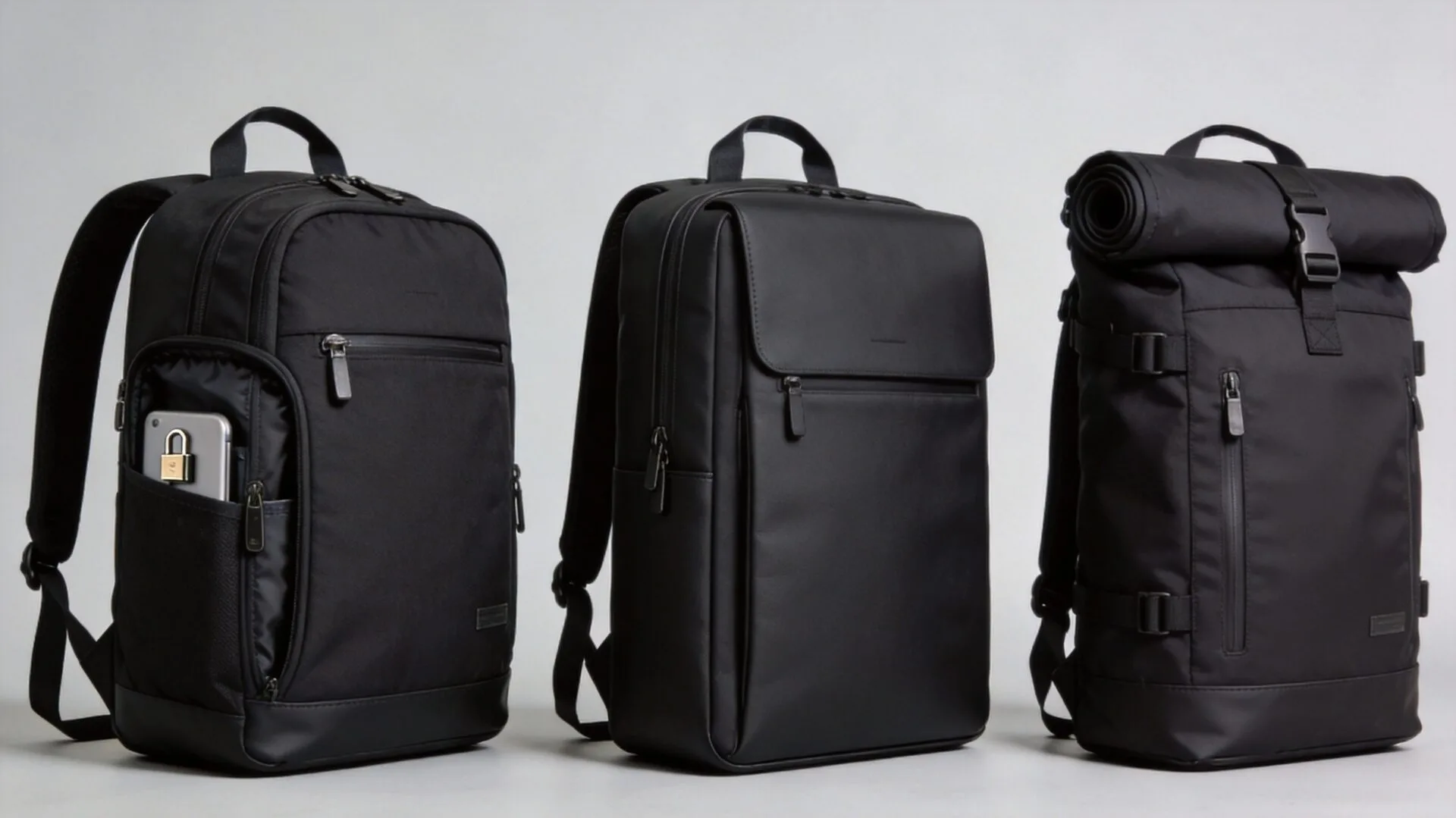
Each of the five styles answers a question the buyer was already asking. That is the common thread, and it explains why styles come and go while these five persist.
- The problem is visible. The buyer can see the anti-theft feature, the USB port, the slim profile. A benefit that requires explanation does not sell at this price point.
- The use case is nameable. Commuting, travelling, working. A style that serves one nameable use case outsells a style that serves several vaguely.
- The price band is established. Buyers arrive with an expectation of what this product costs. A style that lands inside an existing band needs less marketing than one that creates a new one.
- The specification is repeatable. A style that can be produced consistently across reorders builds a business. A style that depends on a single hardware item that goes out of production does not.
Style 1: The Anti-Theft Commuter
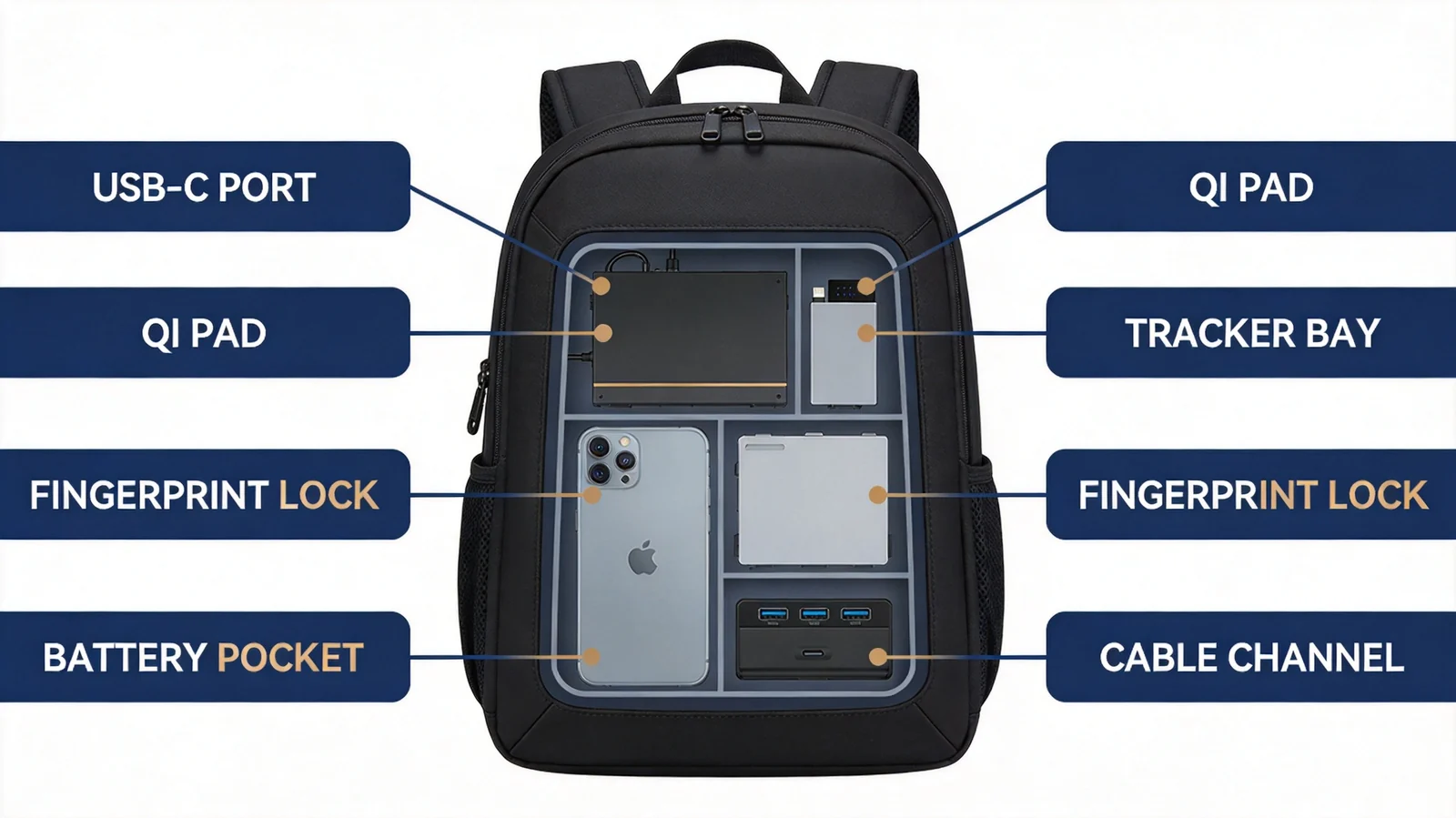
The highest-volume style in the category and the one with the clearest proposition. The buyer’s concern is theft in transit, and the product answers it visibly: hidden zippers, a cut-resistant panel, a lockable main compartment and a rear pocket worn against the back.
Specification centre of gravity: the lockable zipper system and the rear security pocket. A lockable zipper requires a double slider with a loop that accepts a small padlock or a built-in combination lock — specify the slider brand, since a YKK or Duraflex double slider is what holds the lock loop under load — and the loop position has to be reachable without removing the pack.
The specification that fails most often is the cut-resistant panel. A panel described as cut-resistant without a stated construction — high-tenacity weave, wire mesh, or laminated layer — cannot be verified and cannot be defended if challenged. Specify the construction, not the claim.
Target buyer: urban commuter, transit user, student. Channel fit: marketplace and e-commerce strongest; corporate gifting works if the security feature is de-emphasised in favour of the organisation feature.
Style 2: The USB Charging Backpack
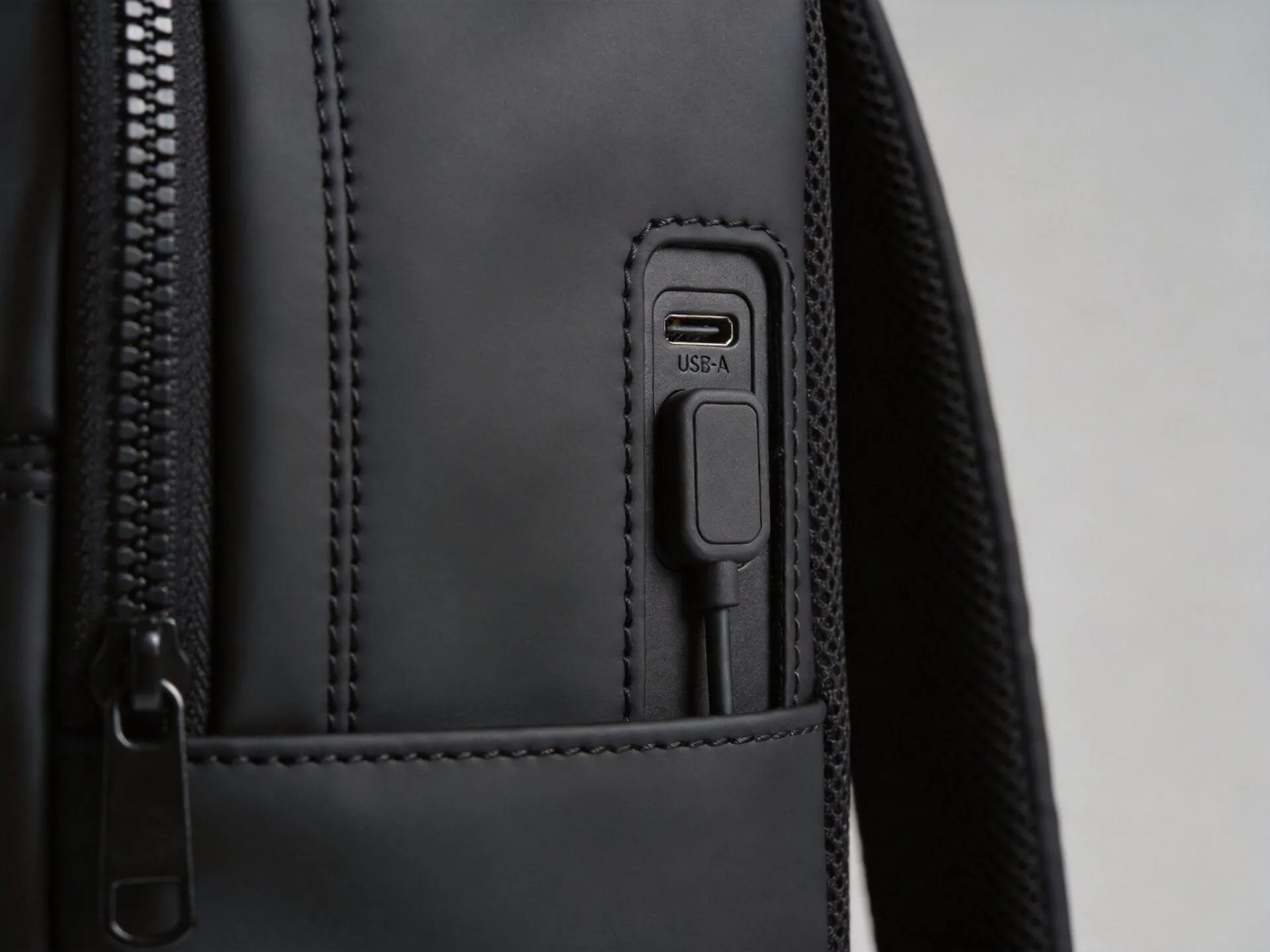
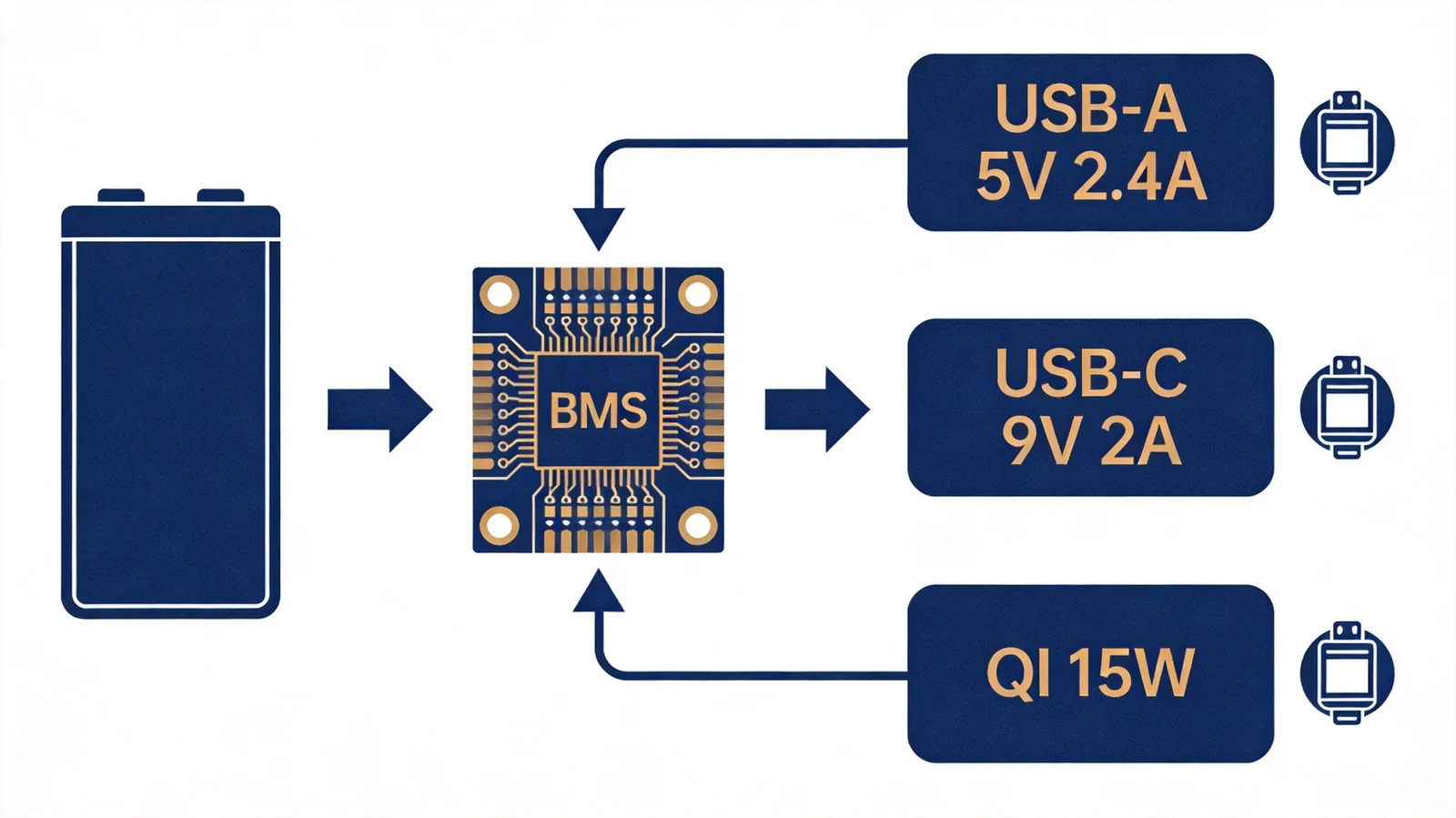
A style built around a single visible feature. The external USB port connects to an internal cable that reaches a power bank in a dedicated pocket; the power bank itself is not included, which is a fact worth stating clearly because buyers assume otherwise.
Specification centre of gravity: the port, the internal cable and the power bank pocket. The recurring failure is a port that is not sealed to the shell, which creates a water path directly into the main compartment. The second failure is a cable that is too short for common power bank sizes, which produces a review complaint that no amount of marketing fixes.
This is a style with a shelf life, and buyers should treat it as such. The feature is easy to copy, the differentiation is thin, and it dates quickly. It works best as one SKU in a range rather than as the range’s flagship.
Target buyer: commuter, traveller, younger demographic. Channel fit: marketplace and social commerce strongest; weak in corporate channels where the feature reads as a gimmick.
Style 3: The Slim Business Briefpack
The highest-margin style in the category. It sells on appearance and materials rather than on features, which means the specification shifts from hardware to fabric, lining and structure.
Specification centre of gravity: fabric hand-feel, lining quality and edge construction. A briefpack is judged in the first three seconds by how it looks under a jacket, and that judgement is made of PU or split leather quality, stitching consistency and edge paint or binding.
This is also the style where the gap between quote and production is widest. A sample made with premium PU and a production run made with a visually similar lower-grade PU look identical in photographs and different in the hand. Specify the PU grade, the backing fabric and the lining material by article reference, and keep the approved sample as the contractual reference.
Target buyer: professional, corporate buyer, executive gifting. Channel fit: corporate and B2B strongest; premium e-commerce viable; marketplace weakest because the price band sits above impulse territory.
Style 4: The Expandable Travel Laptop Backpack
A hybrid that sells to buyers who want one bag for both commuting and short travel. The expandable zip adds 5–10 L of depth, which is enough to change the bag from a daily carry into a two-night bag.
Specification centre of gravity: the expansion zipper and the carry-on dimension envelope. The expansion zipper is a structural element and should be a #8 or #10 coil with a lockable double slider — a #5 zipper in this position is the failure mode described in buyer-side supplier screening guides as an under-specified component — because it carries the full load of the expanded volume. Cheap expansion zippers are the most common failure in this style.
The second specification is the dimension envelope. If the pack is intended for cabin use, the expanded dimensions have to stay inside the carry-on limits of the target airlines, which means roughly 55 × 40 × 20 cm as a working reference. Exceeding it by two centimetres turns a travel feature into an airport problem.
Target buyer: frequent traveller, business traveller, one-bag traveller. Channel fit: e-commerce and marketplace strong; travel retail strong; corporate moderate.
Style 5: The Roll-Top Tech Backpack
The style with the strongest design identity and the narrowest buyer. A roll-top closure is water-resistant by construction, adjusts in volume, and reads as technical rather than corporate.
Specification centre of gravity: the closure system and the weatherproofing. A roll-top requires a stiffened top edge to roll cleanly, side-release buckles positioned so the roll compresses rather than gaps, and a shell fabric that tolerates repeated folding at the same crease line — coated fabrics from CORDURA® and comparable mills carry flex-fatigue data you can request.
The recurring failure is a shell fabric that is water-resistant but not fold-tolerant — the coating cracks at the roll crease within a season. Specify a fabric that has been tested for flex fatigue at the crease, or accept a shorter product life.
Target buyer: design-conscious urban buyer, cyclist, tech worker. Channel fit: premium e-commerce and specialist retail strongest; corporate and marketplace weakest.
Cost Structure Comparison Across the Five Styles
The five styles do not differ much in material volume. They differ in where the cost concentrates, and that determines which style your factory relationships and quality systems are set up to build profitably.
| Style | FOB at 500 pcs | Where cost concentrates | Margin profile | Hardest spec to hold |
|---|---|---|---|---|
| Anti-theft commuter | US$9–16 | Locking zipper system, security panel | Volume, mid margin | Security panel construction |
| USB charging | US$10–18 | Port assembly, internal cable, power bank pocket | Volume, thin margin | Port sealing to shell |
| Slim business briefpack | US$16–32 | PU or leather, lining, edge finishing | Lower volume, high margin | PU grade consistency |
| Expandable travel | US$14–26 | Expansion zipper, dimension envelope | Mid volume, mid margin | Expansion zipper grade |
| Roll-top tech | US$13–24 | Closure hardware, coated shell fabric | Lower volume, mid-high margin | Fold fatigue at crease |
Which Style Fits Which Sales Channel
| Channel | Best-fitting style | Why | Style to avoid |
|---|---|---|---|
| B2B marketplace | Anti-theft commuter, USB charging | Visible features sell in a listing thumbnail | Slim briefpack |
| Own-brand e-commerce | Expandable travel, roll-top tech | Story and photography support higher price | USB charging |
| Corporate gifting | Slim business briefpack, anti-theft commuter | Appearance and organisation read as professional | USB charging, roll-top |
| Specialist retail | Roll-top tech, expandable travel | Buyers browse for design and function | Slim briefpack |
| Promotional and bulk | Anti-theft commuter (simplified) | Low unit cost with a clear feature story | All premium tiers |
| Travel retail | Expandable travel | Category adjacency drives discovery | Slim briefpack |
Feature-to-Cost Map
| Feature | Added unit cost | Selling impact | Recommendation |
|---|---|---|---|
| Lockable double-slider main zip | US$0.60–1.20 | High | Specify on anti-theft style |
| External USB port plus internal cable | US$0.80–1.50 | High at low price, low above US$50 | One SKU, not the flagship |
| Cut-resistant panel | US$1.00–2.50 | High if verifiable | Specify construction, not claim |
| Expandable zip section | US$1.20–2.20 | High in travel | Use #8 or #10, never #5 |
| Luggage pass-through | US$0.40–0.80 | Mid | Always on travel styles |
| Water-resistant zipper | US$0.50–1.10 | Mid | Seal the tape seam too |
| Premium PU or split leather | US$4.00–12.00 | High in premium | Only with article reference |
| Metal logo badge | US$0.80–3.00 plus tooling | Low to mid | After volume, not before |
| Custom lining print | US$0.60–1.40 | Low to mid | Cheap brand signal |
Market Fit by Region
| Region | Strongest style | Specification note |
|---|---|---|
| North America | Expandable travel, anti-theft commuter | Material compliance documentation required; DDP increasingly expected |
| European Union | Slim business briefpack, roll-top tech | Chemical compliance documentation; recycled content is a real selling point |
| United Kingdom | Anti-theft commuter | Transit-oriented demand; compact dimensions preferred |
| Australia and New Zealand | Expandable travel | Biosecurity and customs documentation matters on arrival |
| Japan and Korea | Slim business briefpack | Finish quality and packaging standards are higher than the price band suggests |
| Middle East | Slim business briefpack, expandable travel | Premium materials and gifting packaging drive value |
What Makes a Style Fail After Launch
| Failure | Root cause | Prevention |
|---|---|---|
| Reviews mention broken zippers | Under-graded zipper on a load-bearing seam | #8 or #10 on any expanding or main compartment |
| Water gets into the main compartment | Port or zipper not sealed to the shell | Specify sealing method, test on the sample |
| Second order looks different | PU or fabric grade substituted after approval | Article reference in the PO plus retained approved sample |
| Complaints about laptop fit | Compartment tolerance not specified | Dimension with ±3 mm tolerance per laptop size |
| Style dates within a season | Single-feature proposition with no depth | Feature plus structure, not feature alone |
| Returns spike at the price ceiling | Finish quality does not match the price story | Upgrade lining and edge finishing before raising price |
How to Test a Style Before Committing to Volume
- Build one sample per style, not one sample total. Style preference is the variable you are testing, so hold specification constant and vary the style.
- Photograph against your own channel’s background. A style that reads well on a marketplace thumbnail and a style that reads well in a brand editorial are often different styles.
- Run a small paid test on the channel you intend to sell through. Click-through and add-to-cart tell you more in a week than a focus group tells you in a month.
- Check the specification you cannot photograph. Zipper grade, panel construction and lining quality are invisible online and decisive in returns.
- Confirm the reorder path before scaling. Ask how the second order will be produced and against which approved sample. A style that cannot be reordered consistently is not a business, however well the first test performs.
This is the same verification discipline set out in this B2B customisation FAQ and applied to any bulk sourcing channel decision, and the specification detail behind each style is set out in the wholesale laptop backpack specification guide. Buyer-side frameworks such as this manufacturer versus supplier comparison make the same point about specification ownership.
Laptop Backpack Style and Cost Questions
Q1: Which laptop backpack style sells the most?
The anti-theft commuter sells the highest unit volume in most markets, because the proposition is visible and the price band is broad. The slim business briefpack produces the highest margin per unit at lower volume. Which one is right for you depends on your channel: marketplaces favour the commuter, corporate channels favour the briefpack.
Q2: What is the MOQ for custom laptop backpacks?
JUNYUAN BAGS standard MOQ is 500 pcs per style and colour, with volume pricing from 5,000 pieces. Building five styles at once means five separate minimums unless the styles share a shell, which is worth designing for if you plan a range.
Q3: How much does a custom laptop backpack cost?
FOB Xiamen at 500 pcs: anti-theft commuter US$9–16, USB charging US$10–18, slim business briefpack US$16–32, expandable travel US$14–26, roll-top tech US$13–24. Fabric grade, zipper grade and lining quality move the number more than any other variable.
Q4: Is the USB charging backpack still worth making?
As one SKU in a range, yes — it still converts on marketplaces. As a flagship, no. The feature is easy to copy, the differentiation is thin, and buyer expectations have moved. The one specification that must be right is the port sealing, because an unsealed port creates a water path into the main compartment.
Q5: How do I keep a briefpack looking premium at a mid price?
Spend on the three things a buyer touches: PU or leather grade, lining material and edge finishing. Save on the things a buyer does not see: internal organisation, branding method and packaging. A briefpack with premium surface materials and simple internals outsells the reverse at the same cost.
Q6: What zipper grade should an expandable travel backpack use?
#8 or #10 coil with a lockable double slider on the expansion section. The expansion zipper carries the full load of the expanded volume, so a #5 zipper will fail at the curve under a full pack. This is the single most common construction failure in this style.
Q7: How do I make sure the second order matches the first?
Three controls: name the fabric and PU by article reference in the purchase order, retain a signed approved sample as the contractual reference, and require written notice of any material substitution. Without all three, a visually similar lower-grade material can enter production and no inspection will catch it.
Q8: Which style works best for corporate gifting?
The slim business briefpack and the anti-theft commuter. Corporate buyers select on appearance, organisation and perceived professionalism, and they usually need the product to carry a logo discreetly. USB charging reads as a gimmick in this channel and roll-top reads as too casual.
Q9: What is the right laptop compartment size?
Size for the largest laptop in your target market and state the tolerance. A 15.6-inch compartment is commonly 385 × 275 × 30 mm with ±3 mm tolerance; a 16-inch laptop needs roughly 356 × 248 mm of internal width and depth, and a 17.3-inch machine needs about 415 × 285 mm. Undersizing to save material produces the most damaging review in the category.
Q10: How long does sampling and production take?
Timing is 6–10 business days of sampling, followed by 35–50 days of bulk production from approval and deposit. A new metal badge mould or dyed-to-Pantone fabric adds time at the front of the schedule.
Q11: Can I build several styles on one order?
Yes, but plan for the minimum. Each style and colour carries its own MOQ unless the styles share a shell and pattern. Designing a range around one shared shell is the most effective way to get five styles into production without five minimums.
Q12: What makes a laptop backpack fail after launch?
Almost always one of three things: an under-graded zipper on a load-bearing seam, an unsealed port or zipper creating a water path, or material substitution between orders. All three are specification failures rather than manufacturing failures, and all three are preventable in the tech pack.
Q13: Is a cut-resistant panel worth including?
Only if you specify the construction — high-tenacity weave, wire mesh or a laminated layer — and can verify it. A panel described as cut-resistant with no stated construction cannot be defended if challenged, and cannot be inspected at final QC. Specify the construction and the claim follows.
Q14: What quality standard applies to laptop backpacks?
Workmanship is typically inspected to AQL 2.5 under ISO 2859-1, across a staged system from incoming material through to pre-loading audit. AQL covers appearance and function; it does not verify that a security panel or a water-resistant zipper performs as claimed, so those need separate testing on the sample.
Start a Laptop Backpack Style Program
Tell JUNYUAN BAGS which channel you sell through and which style you are weighing. Within 12 hours you will have a specification recommendation, a costed BOM for that style and a firm FOB Xiamen price. JUNYUAN BAGS has built custom bags since 2014, with founder Marvin Zhang in the trade since 2004 — sampling runs 6–10 business days, bulk production 35–50 days, and AQL 2.5 final inspection is open to you or your third-party inspector.
Companion guides: the wholesale laptop backpack specification guide, what top-rated hiking backpacks specify, choosing a mountaineering backpack manufacturer, classifying travel backpacks, choosing a bulk sourcing channel, and first-time buyer tips. Capability information is on the custom backpack manufacturing page, the company profile and QC process, or contact the OEM/ODM team.