What do top-rated hiking backpacks have in common? Across the highest-rated packs in every price band, six specifications recur: a ventilated or contoured back panel that matches the intended load, a hip belt that transfers weight at 10 kg and above, a hydration-compatible internal sleeve, a lid or front pocket sized for a shell layer, a fabric combination that puts abrasion resistance where the pack touches rock, and a hardware set from a named supplier. The ratings are not driven by features — they are driven by whether those six specifications match the load the pack is sold to carry. JUNYUAN BAGS builds hiking packs to standard MOQ of 500 pcs per style and colour, sampling in 6–10 business days, bulk production in 35–50 days, AQL 2.5 / 4.0 inspection, FOB Xiamen with DDP available by arrangement.
The useful question for a buyer is not which packs are rated highly. It is which specifications cause the rating, because those are the ones you have to put into a tech pack. Review data is unusually reliable in this category: hiking buyers describe use conditions in detail, and the same complaints repeat across brands and price bands.
What Do Top-Rated Hiking Backpacks Have in Common?
Read the highest-rated packs in a category and the praise clusters into a small number of themes. Read the lowest-rated packs in the same category and the complaints cluster into the mirror image of the same themes.
- Load and volume agree. The pack is honest about what it carries. Ratings collapse when a 30 L pack is bought for a 15 kg load and the suspension cannot take it.
- The belt does the work. Above 10 kg, reviewers describe the hips carrying the weight. Below that, they describe the shoulders — and that is the design intent, not a fault.
- Ventilation is a specification, not a feature. A trampoline or channelled back panel is a measurable airflow decision. Packs without one are criticised for sweat, not for quality.
- Access matches use. A top-loader suits a multi-day carry; a panel loader suits a daypack. Mixing them produces complaints about access rather than about construction.
- Hardware survives the second season. Most negative reviews in this category appear after 6–18 months, and they describe buckles, zippers and seams rather than fabric.
Six Hiking Backpack Categories Buyers Actually Order
These are the six order profiles that account for most of the volume in this category. Each has a distinct specification centre of gravity, and building one does not teach you the next.
1. Daypack, 18–25 L
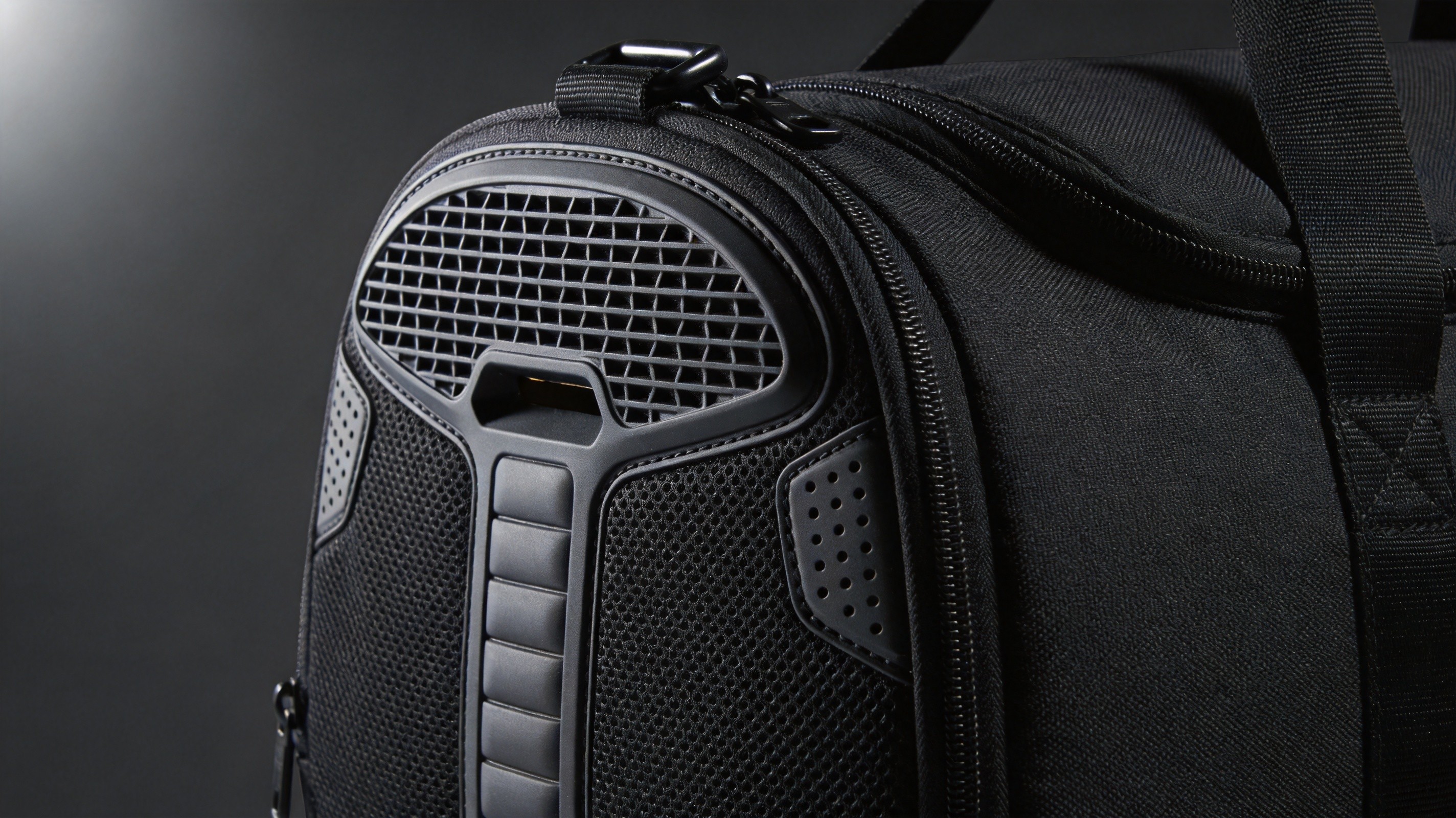
The highest-volume, lowest-cost category. Design load is 5–8 kg, so foam padding and a light stiffener are sufficient and a load-bearing hip belt is not required. Specification focus: panel access, a hydration sleeve, a ventilated back panel, and a fabric that survives being put down on rock.
Where daypacks fail in review: thin shoulder straps that dig in above 7 kg, and a back panel with no airflow channel. Both are cheap to fix at design stage and impossible to fix after production.
2. Day-and-a-half, 28–35 L
The awkward middle category and the one most often mis-specified. Design load is 8–12 kg. A minimal hip belt becomes necessary here because the shoulder straps cannot carry 12 kg comfortably for a full day.
Specification focus: a webbing or lightly padded belt, a framesheet stiffener, dual access (top plus side or front), and compression straps that actually take up volume when the pack is partly loaded.
3. Multi-day, 40–50 L
Design load 12–18 kg. This category requires a proper framesheet and a padded, load-bearing hip belt. It is also where the specification becomes technical — see our guide to mountaineering backpack manufacturers for the frame and load-path detail that applies from this volume upward.
Specification focus: framesheet with stay, load-bearing belt, load-lifter straps, sleeping bag compartment with a dividing zip, and a lid that converts to a summit pack if the design calls for it.
4. Ultralight frameless, 30–45 L
A specialist category with a different engineering premise: the pack has no frame, and the sleeping pad becomes the structure. Design load is deliberately low, 6–10 kg.
Specification focus: 70–100D ripstop fabric at 60–110 g/m², roll-top closure, minimal hardware, and stitch schedules that do not add weight without adding strength. Cost per unit is lower on material and higher on labour, because lightweight fabric requires slower sewing.
5. Hydration-compatible
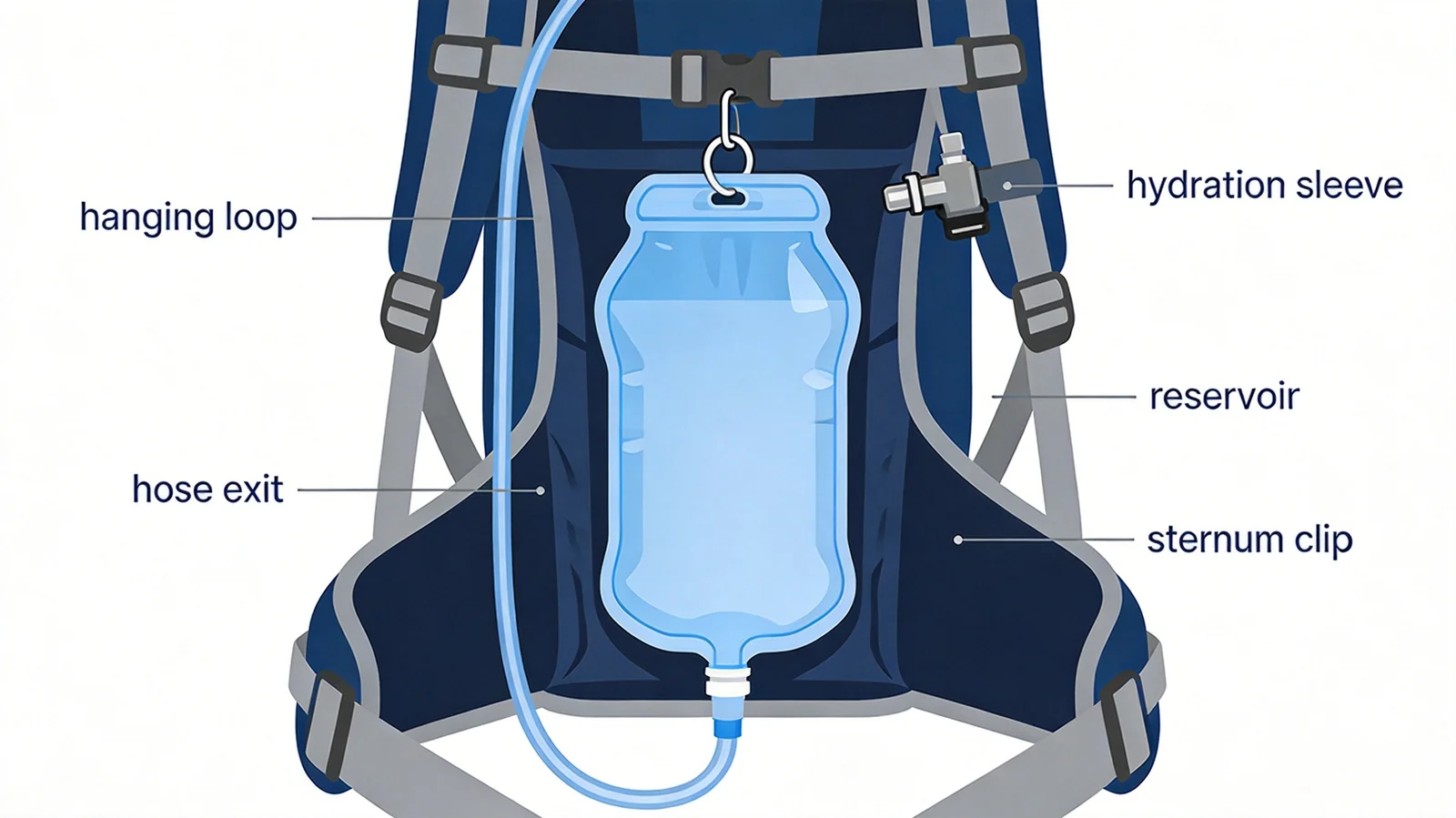
Not a category so much as a specification that cuts across all of them. The requirement is an internal sleeve, a hanger that holds the reservoir upright, and ports on both shoulders so the hose can route either side.
The recurring failure is a port positioned where the hose kinks at the shoulder strap. It is a two-minute pattern fix and a permanent review complaint if missed.
6. Women’s specific fit
A genuinely different pattern, not a colour variant. The differences are structural: shorter torso length, shoulder straps curved and narrower to clear the chest, and a hip belt with a different flare angle.
This category is where a factory’s pattern capability shows. A factory that treats women’s fit as a colourway will produce a pack that reviews badly on the exact dimension the buyer chose it for.
The Specifications Behind High Ratings
| Specification | Daypack 18–25 L | Day-and-a-half 28–35 L | Multi-day 40–50 L | Ultralight 30–45 L |
|---|---|---|---|---|
| Design load | 5–8 kg | 8–12 kg | 12–18 kg | 6–10 kg |
| Back panel | Ventilated foam or channelled | Contoured foam with channel | Contoured, framesheet-backed | Minimal, often pad sleeve |
| Frame | Foam stiffener | Light framesheet | Framesheet with stay | None by design |
| Hip belt | Webbing, removable | Light padded, 10–15 mm foam | Load-bearing, 20–25 mm foam | Minimal webbing |
| Shoulder strap foam | 8–10 mm | 10–12 mm | 12–15 mm, contoured | 6–8 mm, wide |
| Access | Panel | Top plus side or front | Top, with base compartment | Roll-top |
| Hydration | Sleeve plus dual ports | Sleeve plus dual ports | Sleeve plus dual ports | Sleeve, often external |
| Shell fabric | 210–420D | 210–420D with 500D base | 420–500D with 500D–1,000D base | 70–100D ripstop |
Feature Cost Ladder
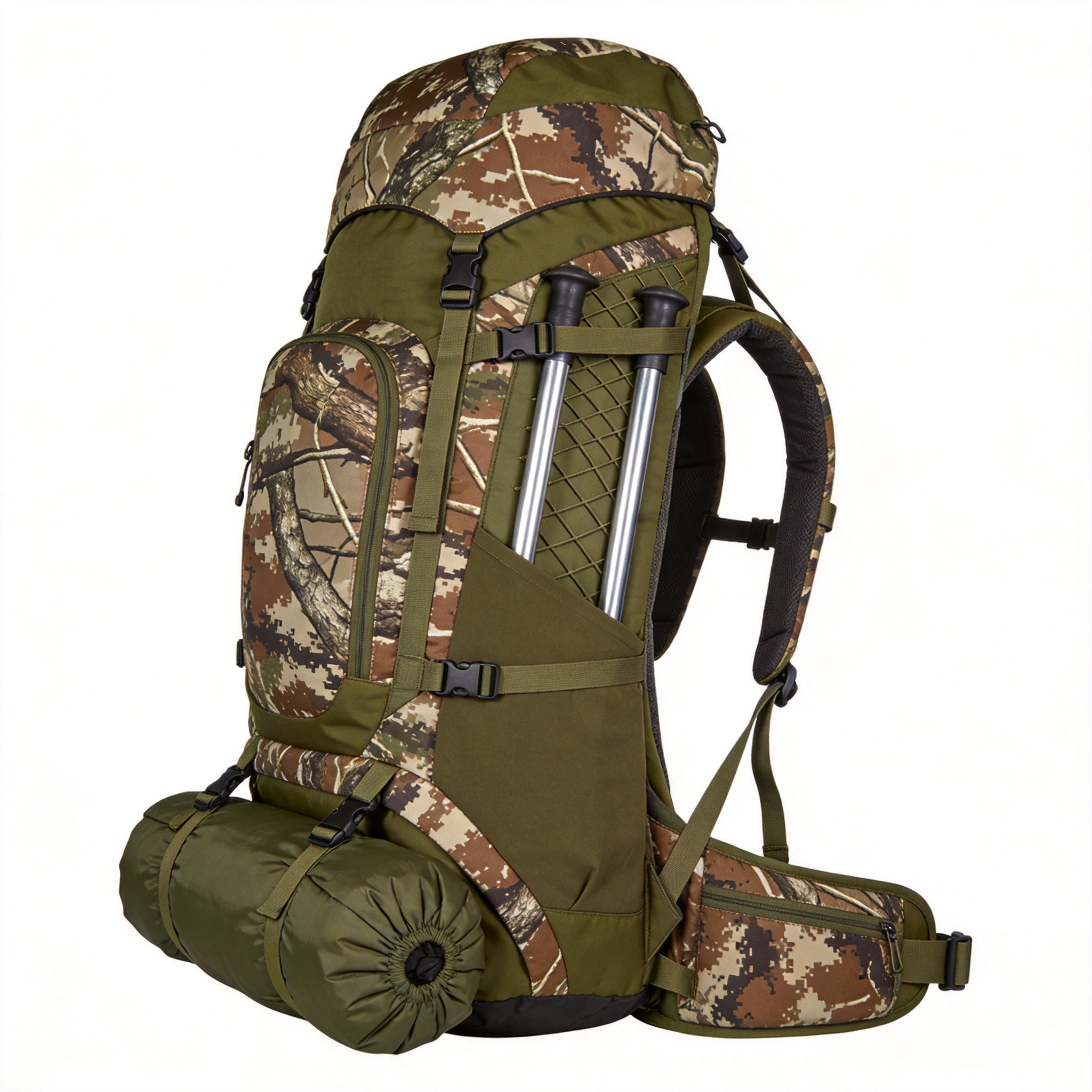
Every feature in a hiking pack has a cost, and the cost is not proportional to how much reviewers value it. This is the ladder buyers should use when a target price forces choices.
| Feature | Relative cost impact | Review impact | Verdict |
|---|---|---|---|
| Contoured back panel with airflow channel | Low | High | Always specify |
| Hydration sleeve with dual shoulder ports | Very low | High | Always specify |
| Load-bearing hip belt (40 L+) | Mid | Very high | Non-negotiable above 12 kg |
| Framesheet with stay | Mid | Very high | Non-negotiable above 12 kg |
| Named-brand hardware | Low to mid | Mid | Specify on zippers and buckles |
| Seam-sealed critical seams | Mid | Mid | Specify where a water claim is made |
| Convertible lid-to-summit pack | High | Low to mid | Only for premium tier |
| Rain cover included | Low | Mid | Cheap differentiator |
| Custom moulded hardware | Very high | Low | Brand-tier only, after volume |
| Dyed-to-Pantone shell fabric | Mid to high | None | Brand decision, not a review driver |
The pattern in this table is consistent: the features reviewers reward most are among the cheapest to specify. The expensive features are mostly brand-tier decisions that do not move ratings. Buyers who invert the ladder — spending on custom hardware and skipping the framesheet — produce a pack that photographs well and reviews badly.
Fabric and Hardware by Category
| Component | Entry tier | Mid tier | Premium tier |
|---|---|---|---|
| Shell fabric | 210D polyester, PU coated | 210D–420D nylon ripstop | 420D–500D high-tenacity nylon |
| Base panel | Same as shell | 500D polyester | 500D–1,000D CORDURA® |
| Main zipper | #5 coil, generic slider | #8 coil, branded slider | #10 coil, YKK or Duraflex |
| Buckles | Generic acetal | Branded acetal | Branded acetal or aluminium |
| Thread | Polyester, unbonded | Bonded polyester | Bonded high-tenacity polyester |
| Webbing | Polypropylene | Polyester | High-tenacity nylon |
| Back panel foam | Open-cell, 5 mm | Closed-cell, 8 mm | Moulded closed-cell with channel |
What Reviewers Reward and What They Punish
| Theme | What reviewers reward | What reviewers punish | Specification lever |
|---|---|---|---|
| Comfort under load | “The hips carried the weight” | “Shoulders were sore after an hour” | Belt foam thickness and frame continuity |
| Sweat | “Back stayed dry” | “Soaked through the back panel” | Channelled or trampoline back panel |
| Durability | “Three seasons, no wear” | “Base wore through on rock” | 500D–1,000D base panel |
| Access | “Easy to get to the bottom” | “Had to empty the whole pack” | Panel or base access vs top-only |
| Hardware | “Zips still smooth” | “Buckle snapped in the cold” | Branded acetal hardware |
| Water | “Stayed dry in a downpour” | “Water came through the seams” | Coating plus sealed critical seams |
| Weight | “Light enough to forget” | “Heavier than stated” | Fabric g/m² discipline and trim |
| Fit | “Finally a pack that fits” | “Straps cut across the chest” | Genuine women’s pattern, not colourway |
How to Translate Reviews Into a Tech Pack
| Review signal | Tech pack line to write | Verification at inspection |
|---|---|---|
| “Shoulders hurt” | Belt foam 20–25 mm, bar-tacked through framesheet | Loaded wear test on the sample |
| “Back gets sweaty” | Channelled back panel, stated channel depth | Visual and cross-section check |
| “Base wore through” | Base panel 500D–1,000D, double-stitched | Fabric weight per BOM plus seam check |
| “Zip broke” | #8–#10 coil, named slider brand | Hardware audit against the approved sample |
| “Not waterproof” | Coating mm rating plus sealed critical seams | Seam seal presence at every critical seam |
| “Heavier than listed” | Target weight per size, tolerance ±3% | Weigh 5 units per size at final inspection |
| “Straps cut across chest” | Women’s specific pattern with stated strap curve | Fit check on a fitting form, not flat |
Quality Control for Hiking Backpacks
| Stage | Timing | What is checked | Failure action |
|---|---|---|---|
| Incoming material | Before cutting | Fabric g/m², coating, colour, hardware against BOM | Reject lot before cutting |
| In-line | During assembly | Stitch density, seam alignment, frame and belt attachment | Rework at station |
| Pre-shipment | After packing | Function, dimensions, weight per size, labelling | Sort and rework |
| Final AQL | Before loading | Workmanship to ISO 2859-1 AQL 2.5 | Lot held pending decision |
| Pre-loading audit | At container | Carton count, labelling, moisture protection | Correct before sealing |
The stage that decides whether a hiking pack reviews well is in-line, not final. Final inspection catches appearance defects; it does not catch a stitch schedule that was set too loose on the whole run. This is the same five-stage logic documented in our specification guide for volume programs, applied to a technical category.
Common Mistakes When Copying a Top-Rated Design
- Copying features instead of specifications. A convertible lid is visible in a photograph; belt foam thickness is not, and the belt is what reviewers are actually rating.
- Downgrading the base panel to hit a price. The base is where abrasion happens. Saving US$0.60 per unit on the base produces the most common durability complaint in the category.
- Treating a women’s fit as a colourway. Torso length and strap curve are structural. A colour variant reviews badly on exactly the dimension the buyer selected it for.
- Skipping the loaded wear test. Unloaded samples hide belt roll and shoulder slip, which are the two failures reviewers describe most precisely.
- Specifying a water claim without sealing seams. The coating is not the leak path; the seam is.
- Ignoring weight tolerance. If the tech pack has no weight target with a tolerance, the production run will drift upward and the first review will be about the listed weight.
Buyer-side screening guidance reaches the same conclusion from the sourcing side: specification match and QC responsibility matter more than headline price, as set out in this supplier screening guide and in this B2B customisation FAQ.
Hiking Backpack Specification Questions
Q1: What is the MOQ for custom hiking backpacks?
JUNYUAN BAGS standard MOQ is 500 pcs per style and colour, with volume pricing from 5,000 pieces and flexibility on proven repeat designs. Hiking packs sit mid-range in effective minimum: lower setup than a technical mountaineering pack, higher than a stock daypack.
Q2: How long does sampling and bulk production take?
Expect 6–10 business days to sample and 35–50 days to bulk-produce, counted from sample approval and deposit. Dyed-to-Pantone fabric or a new hardware mould extends the front end of the schedule.
Q3: What size hiking backpack should I manufacture first?
Start with a 20–28 L daypack if you are testing a market, because volume is highest and the specification is least technical. Move to 30–40 L once you have a customer base, and to 40 L and above only when you can support the framesheet and load-bearing belt that category requires.
Q4: Which fabric is best for hiking backpacks?
Match fabric to load and terrain. Entry daypacks use 210D polyester with PU coating; mid-tier uses 210D–420D nylon ripstop; premium uses 420D–500D high-tenacity nylon with 500D–1,000D CORDURA® on the base. Always specify g/m² and coating type, because denier alone does not determine performance.
Q5: Do hiking backpacks need a hip belt?
Above roughly 10 kg design load, yes — and it must be load-bearing, meaning bar-tacked through the framesheet rather than sewn to the back panel. Below 8 kg a removable webbing belt is sufficient and keeps cost down. Specifying design load rather than volume is what makes this decision correct.
Q6: How do I make a backpack back panel more breathable?
Two options: a channelled foam back panel with defined channel depth, or a trampoline suspension that holds the pack body off the back. Channelling is much cheaper and addresses most of the complaint; trampoline adds cost and weight but performs better in hot climates. Specify channel depth in the tech pack or the factory will use flat foam.
Q7: What makes a hiking backpack rate well on durability?
Almost entirely three specifications: a high-denier base panel, a proper stitch schedule on load-bearing seams, and named-brand hardware. Fabric on the main body matters less than reviewers assume. Most durability complaints trace to the base panel or a seam rather than to the shell fabric.
Q8: Is AQL 2.5 enough for hiking backpacks?
AQL 2.5 under ISO 2859-1 is a reasonable baseline for workmanship. It does not verify structural performance, so pair it with a loaded wear test on the approved sample and a seam strength check. Final inspection catches appearance; in-line inspection catches a loose stitch schedule.
Q9: How much does a custom hiking backpack cost to produce?
FOB Xiamen at 500 pcs runs roughly US$6–11 for a 22–28 L mid-tier daypack, US$11–19 for a 30–40 L pack with a framesheet and load-bearing belt, and US$19–32 for a 40–50 L multi-day pack in premium fabric. Fabric tier, frame type and hardware brand move the number more than any other variable.
Q10: What is the difference between a hiking backpack and a mountaineering backpack?
Design load and failure consequence. A hiking pack carries 5–18 kg on maintained trails; a mountaineering pack carries 15–25 kg on technical terrain, which requires a heavier frame, a structurally connected belt and a stricter stitch schedule. Our mountaineering manufacturer guide covers the technical tier in detail.
Q11: Should I include a rain cover?
Yes, as a low-cost differentiator. A rain cover costs little per unit and reviewers mention it positively, whereas claiming water resistance from the shell fabric alone invites a complaint when the seams leak. Offer the cover rather than over-claiming the coating.
Q12: How do I verify weight claims during production?
Put a target weight per size in the tech pack with a tolerance of about ±3%, and weigh five units per size at final inspection. Without a stated tolerance, production weight drifts upward through fabric substitution and trim additions, and the first review will compare the delivered pack to the listed weight.
Q13: Can I produce both men’s and women’s versions on one order?
Yes, but treat them as two styles for MOQ purposes unless the factory agrees otherwise. A genuine women’s fit requires a different torso length, a different strap pattern and a different belt flare, which means separate patterns and separate cutting. Confirm how the MOQ counts before you commit.
Q14: What is the biggest mistake buyers make with hiking backpacks?
Specifying volume and features while leaving load and structure unspecified. The factory then builds the cheapest construction that satisfies the visible description, and the pack is judged on the invisible specification — which is precisely what reviewers are rating.
Start a Hiking Backpack Program
Give JUNYUAN BAGS a target volume class, a design load and a price band. The reply within 12 hours covers specification recommendation, fabric and hardware BOM, and a firm FOB Xiamen price. Sampling is 6–10 business days, bulk is 35–50 days, and you or your own inspector are welcome at the AQL 2.5 final inspection.
Where to go next: the most popular laptop backpack styles, classifying travel backpacks, choosing a bulk sourcing channel, first-time buyer tips, and the wholesale specification guide. Manufacturing detail is on the custom backpack manufacturing page, the company profile and QC process, or contact the OEM/ODM team.