
How should travel backpacks be classified for sourcing purposes? Five dimensions determine every specification decision: volume and carry-on compliance, opening system, carry system, material and construction, and channel and use case. Classify a travel backpack on all five and the tech pack writes itself; classify it on volume alone and you will build the wrong opening system, the wrong carry system and the wrong fabric for the channel you intend to sell through. JUNYUAN BAGS builds travel backpacks to standard MOQ of 500 pcs per style and colour, sampling in 6–10 business days, bulk production in 35–50 days, AQL 2.5 / 4.0 inspection, FOB Xiamen with DDP available by arrangement.
Most sourcing errors in this category come from classifying by volume. Volume tells you how much the pack holds. It does not tell you how the buyer opens it, how they carry it, whether it fits a cabin, or which fabric suits the channel. Those four questions each have their own answer, and the answers do not always align.
Why Does Travel Backpack Classification Matter for Buyers?
Classification is the step that converts a product idea into a specification. Skipping it produces three predictable failures.
- Wrong opening system for the use case. A top-loader sold to city travellers produces access complaints that no amount of construction quality can offset.
- Wrong carry system for the load. A travel pack that carries 15 kg with daypack-grade straps is returned for comfort, not for durability.
- Wrong dimension envelope for the channel. A pack that misses cabin limits by two centimetres loses the exact feature it was sold on.
Classifying on five dimensions fixes all three before a pattern is cut, and it gives the factory a specification it can quote against rather than a description it has to interpret.
Dimension 1: Volume and Carry-On Compliance
Volume in litres and physical dimensions are related but not interchangeable. Two 40 L packs can differ by 6 cm in depth, and depth is the dimension that decides whether a pack fits a cabin.
The working reference for mainline international carry-on is roughly 55 × 40 × 20 cm, which corresponds to about 40–45 L of usable volume at typical packing density. The common US domestic reference is 22 × 14 × 9 inches, which is approximately 55.9 × 35.6 × 22.9 cm. Budget carriers in Europe frequently enforce smaller personal-item limits, often in the 40 × 20 × 25 cm range.
The sourcing implication is that a travel backpack sold on a cabin-friendly claim needs its expanded and packed dimensions stated against a specific airline reference, not a generic one. If the pack is expandable, the expanded depth is the number that matters, because that is the state it will be in when it reaches the gate.
Dimension 2: Opening System
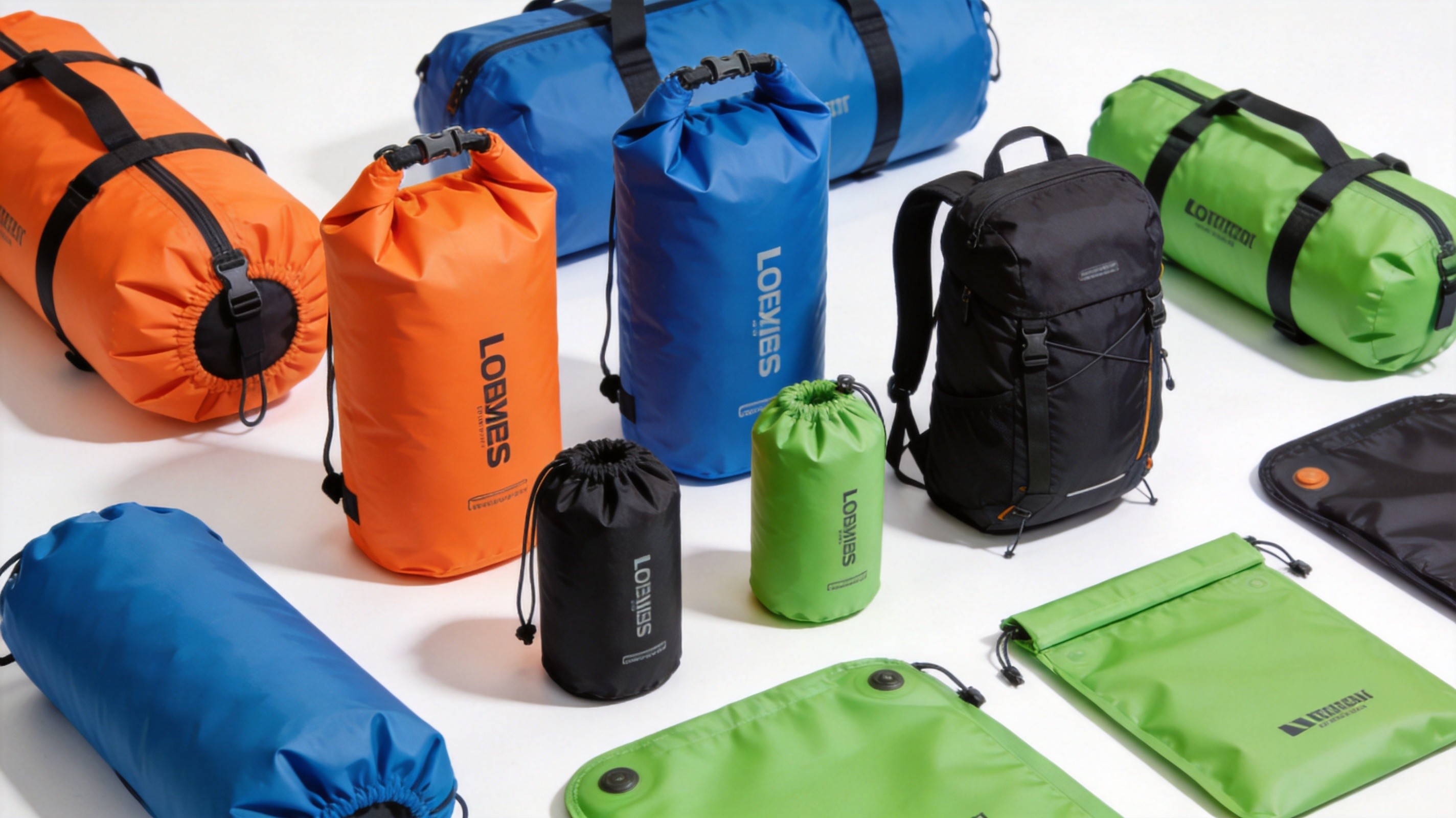
The opening system determines how the buyer interacts with the pack every time they use it, and it is the classification dimension buyers most often get wrong.
Top-loading. A single main compartment accessed from the top, usually with a drawstring or roll-top closure. Best for multi-day travel where the pack is unpacked at a destination. Worst for city travel where the buyer needs one item from the bottom.
Panel-loading (clamshell). A full front panel that opens flat. Best for city and business travel, and the format most travellers actually want. It costs more to construct because the panel zip is long, load-bearing and needs a backing structure.
Hybrid. A top opening plus a side or front access zip. The most flexible and the most expensive, because it requires both a top closure and a structural side zip. Common in the 40–55 L band.
Roll-top. A roll closure that adjusts in volume and is water-resistant by construction. Best for outdoor and wet-climate travel, weakest for quick access.
Dimension 3: Carry System
Travel packs are carried three ways, and the classification should state which one the design prioritises.
Shoulder carry only. Straps that stow or detach, with no frame. Suitable for 8–12 kg and short transits. Cheapest to build.
Convertible (straps plus handle). Stowable harness plus a side or top handle, sometimes a shoulder strap for briefcase-style carry. The dominant format for business and city travel. Specification focus is the stowage mechanism, which is the component that fails first.
Load-bearing harness. A framesheet, contoured straps and a padded hip belt for 15 kg and above. This is the format where travel and hiking overlap, and the frame and belt detail is covered in our guide to technical backpack manufacturers.
One specification that recurs across all three: a luggage pass-through sleeve. It costs little, it is a visible feature in listing photography, and its absence is a repeated review complaint on any pack sold as travel-oriented.
Dimension 4: Material and Construction
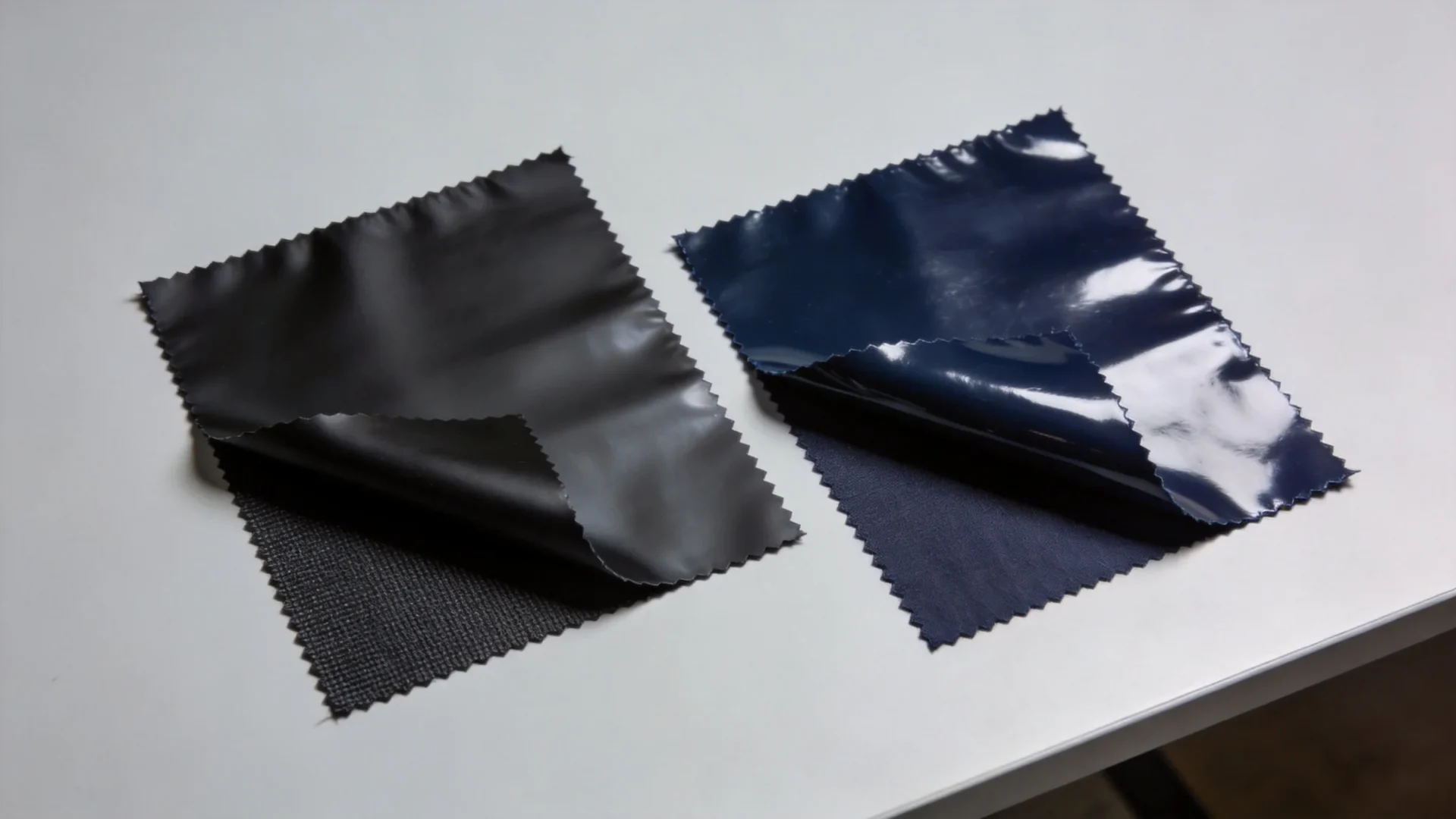
Material classification follows from the other three dimensions rather than leading them. A city travel pack prioritises appearance and abrasion resistance; an outdoor travel pack prioritises weather resistance and weight.
Three material families cover most travel production: 420D–600D polyester or RPET with PU coating for entry and mid tiers; 420D–500D high-tenacity nylon for premium city and travel; and 500D–1,000D CORDURA® or coated laminates for the base panel and outdoor-oriented styles. Specify grams per square metre alongside denier, because two fabrics at the same denier and different g/m² behave differently and cost differently.
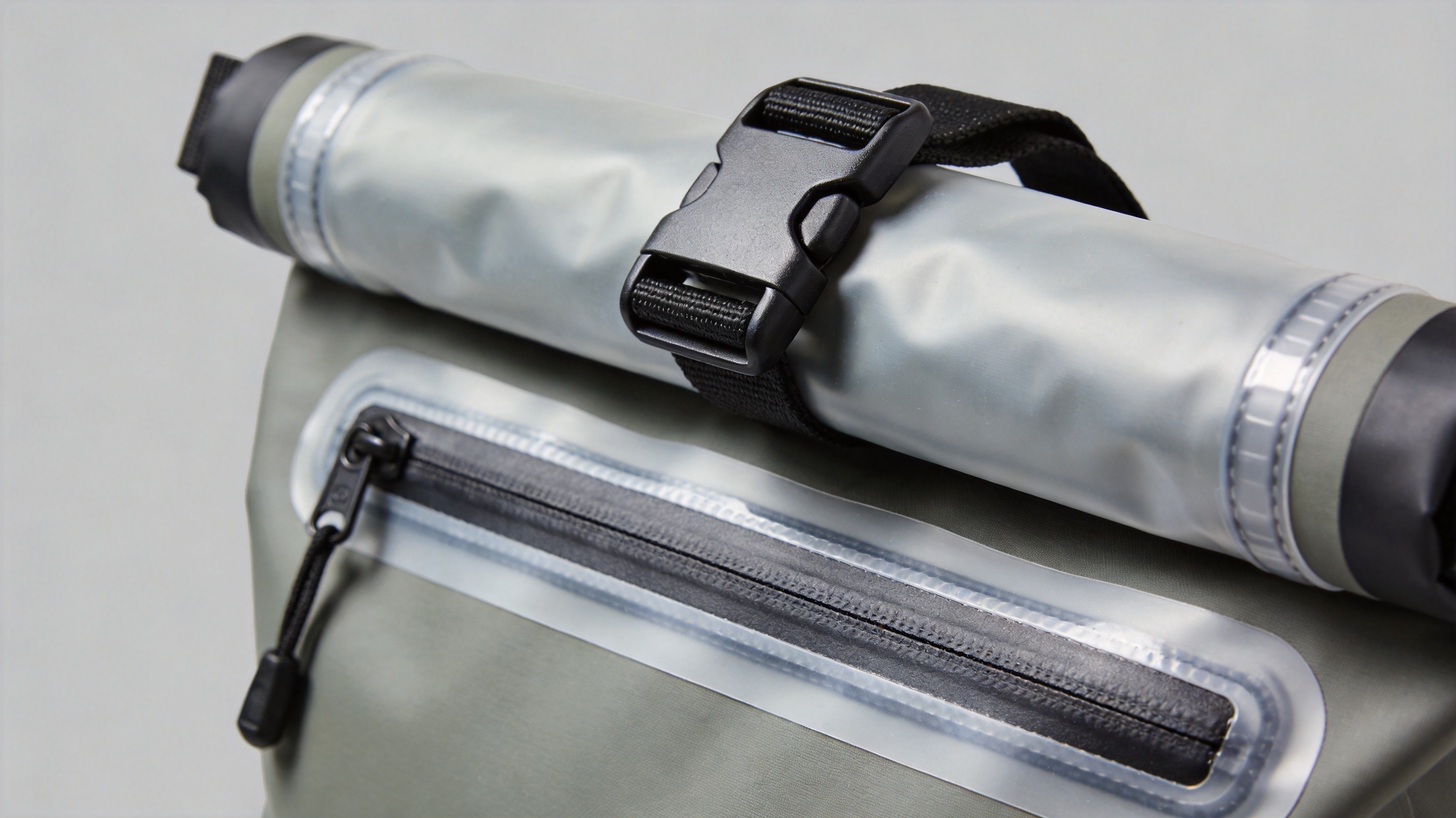
Construction follows the opening system. A clamshell needs a long load-bearing zip with a backing structure — a YKK #10 coil is the common specification — a roll-top needs a stiffened top edge and fold-tolerant shell fabric; a convertible needs a stowage pocket engineered so the straps do not sit on the wearer’s back when stowed.
Dimension 5: Channel and Use Case
The final dimension is commercial. The same 40 L travel backpack sold through three channels is three different products.
Own-brand e-commerce. Appearance, photography and a clear feature story drive the sale. Premium fabric and a distinctive opening system justify the price.
B2B marketplace. Visible features and price band drive the sale. A luggage pass-through and an expandable section convert; premium fabric does not, because it cannot be seen.
Corporate and promotional. Organisation and professionalism drive the sale, with discreet branding. A clean clamshell in a neutral colour outsells a technical roll-top at the same cost.
The Full Classification Matrix
| Class | Volume | Opening | Carry system | Material focus | Primary channel |
|---|---|---|---|---|---|
| A — City commuter | 20–28 L | Clamshell or half-panel | Shoulder, padded | 420–500D, appearance-led | E-commerce, corporate |
| B — Business daypack | 25–32 L | Clamshell, laptop sleeve | Convertible with pass-through | PU or 500D, premium lining | Corporate, e-commerce |
| C — Cabin travel pack | 35–45 L | Clamshell or hybrid | Convertible, stowable harness | 420–500D nylon | E-commerce, travel retail |
| D — Multi-day travel | 45–60 L | Hybrid, top plus side access | Load-bearing harness with belt | 500D, CORDURA® base | Specialist retail |
| E — Outdoor travel | 40–55 L | Roll-top or top-loading | Load-bearing, ventilated back | Coated nylon, laminate | Specialist retail, e-commerce |
| F — Promotional travel | 18–25 L | Top or single panel | Shoulder, basic | 210–300D polyester | Promotional, marketplace |
Carry-On Dimension Reference
These are working references for specification, not guarantees. Airline enforcement varies by route, fare class and aircraft, and the numbers below should be verified against the specific carrier before a dimension claim goes on a product page.
| Reference | Dimensions | Approx. volume | Specification note |
|---|---|---|---|
| IATA cabin guidance | 55 × 40 × 20 cm | 40–45 L | Widely used baseline for mainline international |
| US domestic standard | 22 × 14 × 9 in (55.9 × 35.6 × 22.9 cm) | 40–45 L | Depth tolerance is the binding constraint |
| European budget personal item | 40 × 20 × 25 cm | 18–22 L | Underseat only; separate SKU from cabin pack |
| Checked baggage typical | Up to 158 cm linear | 60–80 L | Linear = length + width + height |
Volume-to-Use Case Mapping
| Volume | Nights | Typical load | Carry system requirement |
|---|---|---|---|
| 18–25 L | Day use | 4–7 kg | Padded shoulder straps, no belt |
| 25–32 L | 1–2 nights | 7–10 kg | Padded straps, light sternum strap |
| 35–45 L | 2–5 nights | 10–14 kg | Convertible harness, optional light belt |
| 45–60 L | 5–10 nights | 14–18 kg | Load-bearing harness with padded belt |
| 60–80 L | 10+ nights | 18–25 kg | Framesheet, load-bearing belt, load lifters |
Opening System Cost and Function
| Opening system | Added construction cost | Best use case | Main failure mode |
|---|---|---|---|
| Top-loading | Baseline | Multi-day, unpacked at destination | Access complaints in city use |
| Clamshell panel | +US$1.20–2.50 | City and business travel | Long zip needs backing structure or it sags |
| Hybrid (top + side) | +US$2.00–3.50 | 45–60 L flexible travel | Side zip under-specified for the load |
| Roll-top | +US$0.80–1.80 | Outdoor, wet climates | Coating cracks at the fold crease |
| Single panel zip | +US$0.60–1.20 | Promotional and entry tier | Zip curve distorts when overfilled |
Specification Checklist by Class
| Class | Non-negotiable specifications | Commonly skipped |
|---|---|---|
| A — City commuter | Panel access, laptop sleeve with tolerance, padded straps | Lining quality, edge finishing |
| B — Business daypack | Clamshell, stowable harness, luggage pass-through | Stowage pocket engineering |
| C — Cabin travel | Stated packed dimensions, clamshell or hybrid, pass-through | Expanded depth vs cabin limit |
| D — Multi-day travel | Framesheet, load-bearing belt, #10 main zip | Belt-to-frame attachment method |
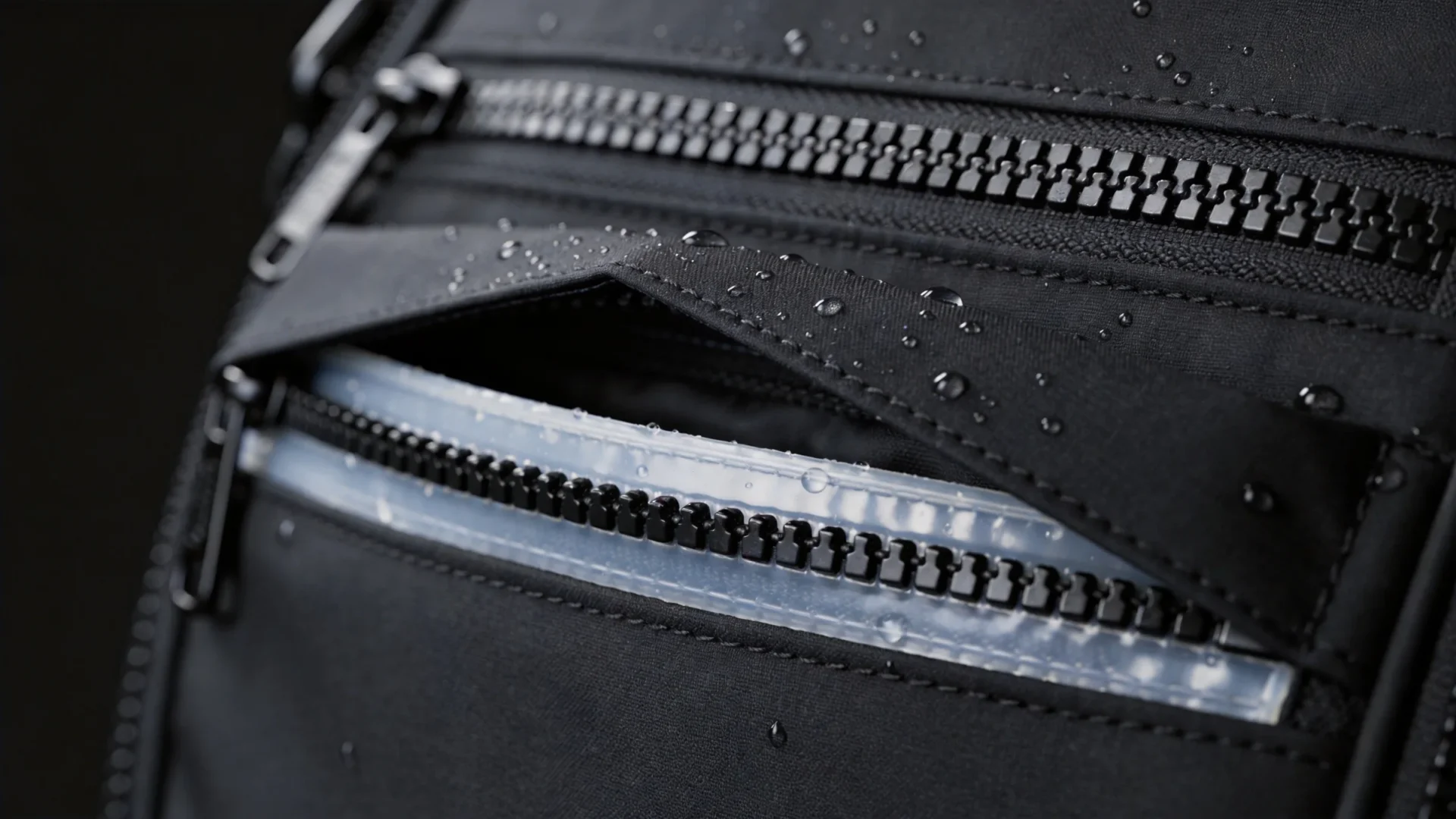
| E — Outdoor travel | Coated shell with mm rating, sealed critical seams, drainage | Seam sealing at the zip tape |
| F — Promotional travel | 210–300D shell, #5 zip, basic padded straps | Stitch density on load points |
Common Classification Mistakes in Sourcing
- Classifying by volume only. Volume does not determine opening system, carry system or fabric. All three have to be classified separately.
- Claiming cabin-friendly without stating dimensions. A cabin claim needs a packed and expanded dimension against a named airline reference, or it invites returns.
- Building a top-loader for city buyers. The most common mismatch in the category, and the one that produces the most predictable access complaints.
- Under-specifying the clamshell zip. A long panel zip carries load along its whole length and needs a backing structure. Without one the panel sags and the zip curves.
- Skipping the luggage pass-through. Cheap to add, visible in photography, and repeatedly cited in reviews when absent on a travel-oriented pack.
- Treating outdoor and city travel as one product. The material and sealing requirements are different, and building a compromise produces a pack that satisfies neither buyer.
The verification logic behind each class is the same discipline described in bulk sourcing channel selection, and the hidden-cost and defect-dispute detail is covered in this B2B customisation FAQ. The specification ownership point is set out in this manufacturer versus supplier comparison and in this supplier screening guide.
Travel Backpack Classification Questions
Q1: How are travel backpacks classified?
Classify on five dimensions: volume and carry-on compliance, opening system, carry system, material and construction, and channel and use case. Volume alone is insufficient because it does not determine how the buyer opens or carries the pack, or which fabric suits the channel. JUNYUAN BAGS works from a six-class matrix covering city commuter through to promotional travel.
Q2: What size travel backpack fits in a cabin?
The working international reference is roughly 55 × 40 × 20 cm, corresponding to about 40–45 L at typical packing density. The US domestic reference is 22 × 14 × 9 inches. European budget carriers often enforce smaller personal-item limits in the 40 × 20 × 25 cm range. Always verify against the specific airline before making a cabin claim.
Q3: What is the MOQ for custom travel backpacks?
The matrix does not change the factory minimum: 500 pcs per style and colour, with volume pricing from 5,000 pieces. What the matrix changes is how many minimums you trigger — unless two classes share a shell and pattern, which is worth designing for if you plan a range.
Q4: How long does sampling and production take?
From brief to shipment: 6–10 business days of sampling, then 35–50 days of bulk production after approval and deposit. A clamshell or hybrid opening system adds pattern complexity but not schedule; dyed-to-Pantone fabric or a new hardware mould does add schedule.
Q5: Clamshell or top-loading — which sells better?
Clamshell sells better in city and business travel because access is the dominant daily need. Top-loading sells better in multi-day and outdoor travel where the pack is unpacked at a destination. Selling a top-loader to a city buyer is the most common classification error in the category.
Q6: Do travel backpacks need a hip belt?
Above about 14 kg design load, yes, and it should be load-bearing with a padded belt connected to a framesheet. Between 10 and 14 kg, a light padded belt is sufficient. Below 10 kg, padded shoulder straps with a sternum strap are enough and a belt adds cost without adding function.
Q7: What fabric should a travel backpack use?
Entry and mid tiers use 420D–600D polyester or RPET with PU coating. Premium city and travel use 420D–500D high-tenacity nylon. Base panels and outdoor-oriented styles use 500D–1,000D CORDURA® or coated laminates. Specify g/m² and coating type alongside denier.
Q8: Is a luggage pass-through worth adding?
Yes, on any pack sold as travel-oriented. It adds little to unit cost, it is visible in listing photography, and its absence is a repeated review complaint. It is one of the highest-return specifications in the category.
Q9: How much does a custom travel backpack cost?
FOB Xiamen at 500 pcs runs roughly US$8–14 for a 20–28 L city commuter, US$12–20 for a 35–45 L cabin travel pack, US$16–28 for a 45–60 L multi-day pack with a load-bearing harness, and US$5–9 for a promotional travel pack. Opening system and carry system move the number more than fabric tier.
Q10: What is the difference between a travel backpack and a hiking backpack?
Opening system and appearance priority. A travel backpack prioritises access and looks acceptable in a city; a hiking backpack prioritises carry efficiency and ventilation on a trail. The overlap is in the 45–60 L band with a load-bearing harness. Our hiking backpack specification guide covers the trail-oriented side.
Q11: Should I build one travel backpack or a range?
Build a range around a shared shell if you can. Three classes built on one shell and pattern can share an MOQ, which makes a range viable at 500 pcs rather than 1,500. The classes that share most naturally are A, B and C in the matrix.
Q12: How do I verify a travel backpack supplier?
The same way as any bag supplier: business licence scope showing production, a production walkthrough, a sample room separate from mass production, inspection access, and two references in the same class. For travel specifically, ask for the packed and expanded dimensions in writing, because a dimension claim is the specification most often left unverified.
Q13: What quality standard applies to travel backpacks?
Workmanship is typically inspected to AQL 2.5 under ISO 2859-1 across a staged system from incoming material to pre-loading audit. AQL covers appearance and function; it does not verify a water-resistance claim or a cabin dimension, so both need separate testing on the sample.
Q14: What is the most common mistake in travel backpack sourcing?
Classifying by volume alone and letting the factory choose the opening system, carry system and fabric. The result is a pack that satisfies the volume brief and misses the use case, which shows up as access complaints and comfort returns rather than as a manufacturing defect.
Start a Travel Backpack Program
Name the class in the matrix you are targeting and the channel you sell through. JUNYUAN BAGS returns a specification recommendation, a costed BOM and a firm FOB Xiamen price within 12 hours. Allow 6–10 business days for sampling and 35–50 days for bulk; final inspection at AQL 2.5 is open to you or a third party you appoint.
Other guides in this series: the wholesale laptop backpack specification guide, the five most popular laptop backpack styles, what top-rated hiking backpacks specify, choosing a mountaineering backpack manufacturer, choosing a bulk sourcing channel, and first-time buyer tips. Production detail lives on the custom backpack manufacturing page, the company profile and QC process, or contact the OEM/ODM team.