
Custom handbag manufacturing in China works like this: you supply a tech pack or reference design, the factory develops a sample in 6–10 days, and bulk production runs 35–50 days after approval, at a standard OEM/ODM MOQ of 500 pieces per style (200 pieces for custom golf bags), inspected to an AQL 2.5 standard with a 12-month workmanship warranty. China is the world’s largest handbag manufacturing base — it accounts for roughly 40% of global handbag exports, shipping over 2.5 billion units a year with an export value above $30 billion UN Comtrade data. JUNYUAN Bags, a Quanzhou-based OEM/ODM factory founded in 2014, has served 200+ brands across 100+ countries from sampling to full production. This guide covers types, materials, costs, lead times, certifications and import logistics so you can run a handbag line with China with clear expectations.

What Is Custom Handbag Manufacturing?
Definition: Custom handbag manufacturing is the process of designing and producing handbags according to a brand’s specifications — including material, dimensions, hardware, stitching, lining, branding, and packaging — through a contracted factory rather than in-house production. Brands that need a complete overview of translating a concept into a producible design should start with our Ultimate Guide to Custom Bag Design for Businesses.
In custom handbag manufacturing, the brand owner provides the design concept, tech pack, or reference sample, and the factory handles pattern making, material sourcing, cutting, assembly, finishing, and quality control. The result is a fully branded product ready for retail distribution. Understanding the difference between OEM and ODM supplier models is essential before approaching any factory.
China’s dominance in this sector is quantifiable: according to the China National Light Industry Council, the country accounted for approximately 42% of global handbag exports in 2025, with the Guangzhou, Baigou, and Yiwu regions serving as the 3 primary manufacturing clusters. China’s Southern China handbag cluster spans small workshops to large Tier-1 exporters, with staffing and capacity varying widely by facility — verify a factory’s true production headroom through a live audit or a third-party inspection report rather than a published capacity number.
Custom handbag manufacturing in China differs from off-the-shelf wholesale bag factory in 3 key ways:
- Design ownership: The brand controls every specification, from leather grade to zipper brand
- MOQ flexibility: Standard OEM/ODM MOQ of 500 pieces per style, with 200-piece MOQs available for custom golf bags
- IP protection: Your designs are produced exclusively for your brand under NDA agreements
For brands entering the market, the minimum investment to launch a custom handbag line typically ranges from $3,000 (100 units at $30/unit) to $50,000+ (1,000 units with premium materials and custom hardware). A detailed cost breakdown for B2B buyers is available in our dedicated pricing guide.
Types of Custom Handbags You Can Manufacture
The custom handbag market encompasses 8 primary categories, each with distinct construction requirements, material consumption, and price points. Understanding these categories helps brands select the right product mix and communicate specifications clearly to manufacturers. For specific style inspiration, explore our articles on retro-style leather handbags and minimalist crossbody bag styling.

Handbag Type Comparison Table
| Handbag Type | Avg. Dimensions (cm) | Material Usage | Avg. Mfg Cost | Target MOQ | Popular Markets |
|---|---|---|---|---|---|
| Tote Bag | 35×30×12 | 1.2–1.8 sq m | $8–$45 | 100–300 pcs | US, EU, Japan |
| Shoulder Bag | 28×22×10 | 0.8–1.4 sq m | $10–$55 | 100–300 pcs | EU, US, Korea |
| Crossbody Bag | 24×18×8 | 0.6–1.0 sq m | $7–$35 | 200–500 pcs | US, EU, SEA |
| Clutch / Evening Bag | 25×14×5 | 0.3–0.6 sq m | $5–$40 | 200–500 pcs | EU, Middle East |
| Mini Bag | 18×13×7 | 0.3–0.5 sq m | $4–$25 | 300–500 pcs | US, EU, Japan |
| Bucket Bag | 28×30×14 | 0.9–1.5 sq m | $9–$42 | 100–300 pcs | EU, US |
| Hobo Bag | 32×28×12 | 1.0–1.6 sq m | $10–$48 | 100–300 pcs | US, EU |
| Satchel / Doctor Bag | 30×22×12 | 1.0–1.5 sq m | $12–$55 | 100–200 pcs | EU, US, Japan |
Among these 8 categories, crossbody bags and tote bags represent the largest share of custom orders, accounting for approximately 55% of total production volume in Chinese handbag factories as of 2025. Tote bags alone represent 28% of orders due to their versatility — see our take on trendy canvas tote bags for everyday commutes. The leather handbag category on our site features 5 dedicated articles on material and style options.
Emerging subcategories include convertible bags (detachable straps allowing multiple carrying styles), which grew 35% in order volume from 2023 to 2025, and tech-integrated handbags with built-in charging ports or RFID-blocking pockets, which now represent roughly 8% of new design inquiries at major Guangzhou factories.
Materials for Handbag Manufacturing
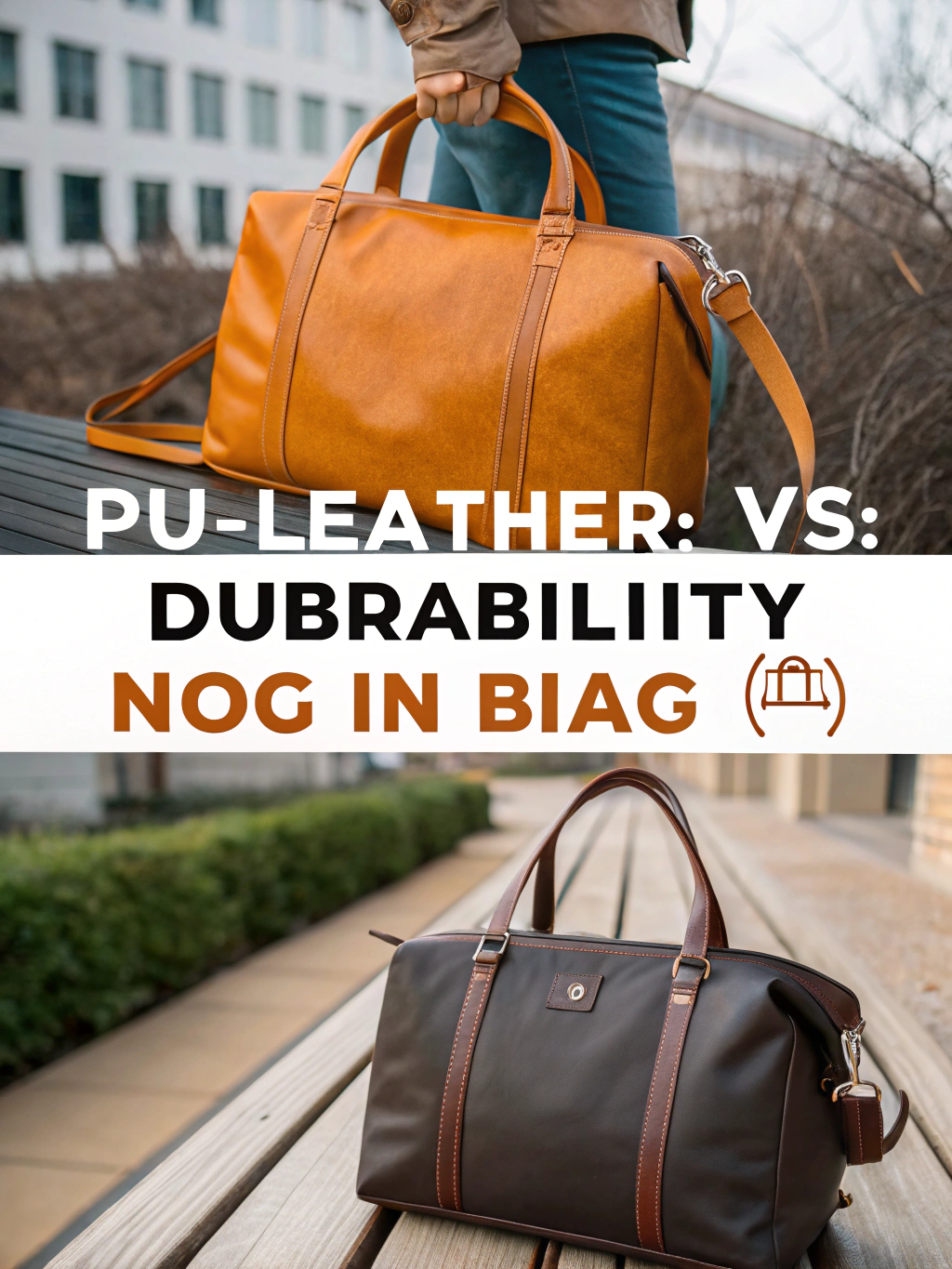
Material selection is the single largest cost driver in handbag manufacturing, typically accounting for 40–60% of the total unit cost. China’s handbag industry supports over 15 material categories, with genuine leather, PU leather, PVC, canvas, and nylon comprising the top 5 by volume. For brands exploring sustainable alternatives, our guide on sustainable bag materials beyond RPET covers the latest options.
Material Comparison Table
| Material | Cost/m (CNY) | Cost/m (USD) | Durability | Weight | Water Resist. | Best For |
|---|---|---|---|---|---|---|
| Full-Grain Leather | ¥45–¥120 | $6.20–$16.50 | 10–20 yrs | Heavy | Low | Luxury handbags |
| Top-Grain Leather | ¥30–¥80 | $4.15–$11.00 | 5–15 yrs | Med-Heavy | Low-Med | Mid-range fashion |
| Split Leather (Suede) | ¥18–¥45 | $2.50–$6.20 | 3–8 yrs | Medium | Low | Casual/boho styles |
| PU Leather | ¥8–¥35 | $1.10–$4.80 | 2–5 yrs | Light-Med | Medium | Vegan/fast fashion |
| PVC | ¥5–¥20 | $0.70–$2.75 | 2–4 yrs | Light | High | Budget/clear bags |
| Canvas (Cotton) | ¥6–¥25 | $0.80–$3.45 | 3–8 yrs | Medium | Low | Tote/eco brands |
| Nylon (Oxford) | ¥8–¥30 | $1.10–$4.15 | 3–10 yrs | Light | High | Travel/sporty |
| Recycled Polyester | ¥5–¥18 | $0.70–$2.50 | 2–6 yrs | Light | Med-High | Sustainable/promos |
| Vegan Leather (Cactus) | ¥35–¥90 | $4.80–$12.40 | 2–5 yrs | Light-Med | Medium | Eco-luxury brands |
| Cork Fabric | ¥25–¥60 | $3.45–$8.25 | 3–6 yrs | V. Light | Med-High | Niche sustainable |
Key insight for buyers: Material costs in China’s handbag supply chain are 25–40% lower than equivalent sourcing in India or Vietnam, primarily due to the concentration of tanneries in Zhejiang and Guangdong provinces. The Wenzhou leather market alone processes over 500 million square feet of leather annually.
Material Selection by Handbag Type
| Handbag Type | Recommended Materials | Avg. Material Cost/Unit | Popular Finish Options |
|---|---|---|---|
| Luxury Tote | Full-grain leather, Top-grain leather | $8–$18 | Saffiano, pebbled, smooth |
| Everyday Crossbody | PU leather, Nylon, Canvas | $2–$6 | Matte, glossy, printed |
| Evening Clutch | Satin, Velvet, Faux leather | $1.50–$5 | Embroidered, beaded, metallic |
| Travel Tote | Nylon, Canvas, Recycled polyester | $2–$5 | Water-coated, ripstop |
| Eco-Friendly Line | Cork, Cactus leather, Recycled PET | $4–$12 | Natural texture, printed |
Material Sourcing Tips for China-Based Manufacturing
Sourcing materials efficiently is critical to controlling costs in custom handbag manufacturing. China’s material supply chain is concentrated in 3 major hubs: Guangzhou (leather and PU), Yiwu (hardware and accessories), and Shaoxing (fabrics and textiles). Understanding these regional specializations helps brands negotiate better pricing and shorter lead times.
The Guangzhou Huadu Leather Market, covering over 300,000 square meters, is the largest leather trading center in Asia. It hosts 2,000+ suppliers offering everything from full-grain buffalo hide to embossed crocodile-pattern PU. Prices here are typically 15–20% lower than comparable markets in India, thanks to economies of scale and proximity to Guangdong’s manufacturing base.
For brands prioritizing sustainability, the recycled materials supply chain in China has matured significantly since 2022. Over 45 certified GRS (Global Recycled Standard) suppliers now operate in the Zhejiang-Jiangsu corridor, offering rPET fabrics, recycled nylon, and bio-based leather alternatives. These materials cost 20–35% more than conventional alternatives, but enable brands to meet EU and California eco-labeling requirements.
Pro tip for cost optimization: Order material swatches from at least 3 suppliers before committing. Material quality can vary significantly even within the same category — for example, PU leather priced at ¥8/meter versus ¥30/meter will differ substantially in tear resistance, colorfastness, and hand feel. Request test reports for abrasion resistance (target: >20,000 cycles on Taber test) and color fastness (target: grade 4+ on ISO 105-B02).
Handbag Manufacturing Process: From Design to Delivery
Design and Prototyping Process
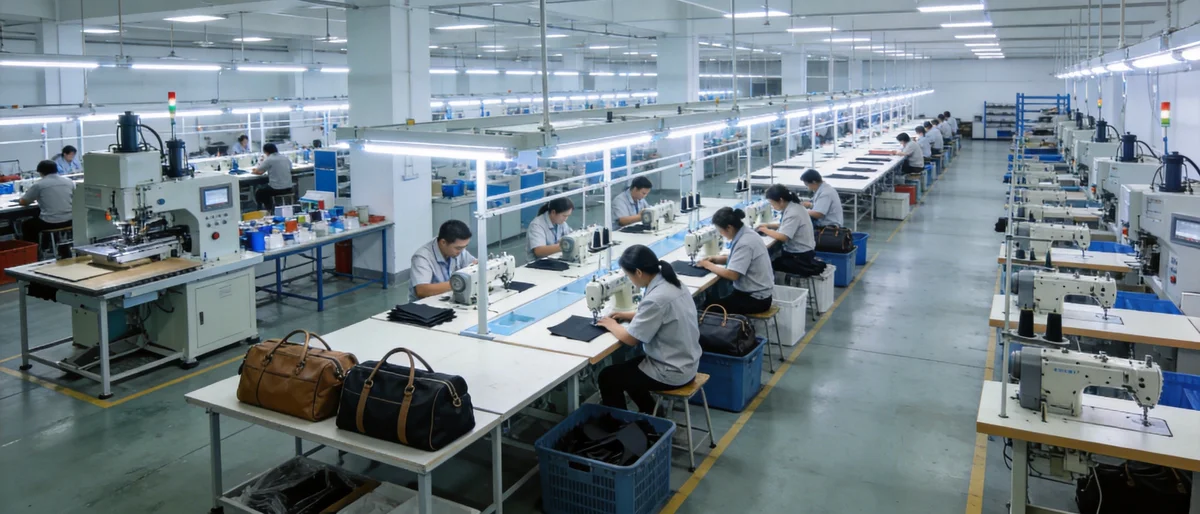
The custom handbag manufacturing process follows a 9-stage pipeline, from initial design concept to final shipment. A complete production cycle typically takes 45–75 days for a first order and 30–50 days for reorder cycles. Each stage below is critical — skipping or rushing any step increases defect rates by an estimated 15–25%.
Stage-by-Stage Breakdown
| Stage | Activity | Duration | Key Deliverable |
|---|---|---|---|
| 1. Design Consultation | Review tech pack, reference samples, or concept sketches | 3–7 days | Confirmed design spec sheet |
| 2. Pattern Making | Create paper/digital patterns for each bag component | 2–4 days | Pattern set (6–15 pieces per bag) |
| 3. Material Sourcing | Procure leather, fabric, hardware, lining from suppliers | 5–10 days | All materials inspected and staged |
| 4. Sample Making | Produce first sample (proto sample) for approval | 7–15 days | Physical sample for client review |
| 5. Sample Revision | Adjust pattern, materials, or construction per feedback | 3–7 days/round | Approved pre-production sample |
| 6. Cutting | Laser or die-cut all material pieces using approved patterns | 2–5 days (bulk) | Stacked, labeled cut pieces |
| 7. Sewing & Assembly | Stitch components; attach hardware, zippers, straps | 5–12 days (bulk) | Assembled but unfinished bags |
| 8. Finishing & QC | Edge painting, thread trimming, final inspection | 3–5 days (bulk) | QC-passed, packaged units |
| 9. Packaging & Shipping | Dust bags, cartons, labeling, container loading | 2–5 days | Shipped goods with full docs |
Definition: A tech pack (technical package) is a blueprint document that specifies every detail of the handbag — dimensions, materials, colors (Pantone codes), hardware type, stitching density (stitches per inch), lining fabric, labeling placement, and packaging requirements. A professional tech pack typically runs 15–30 pages. For a complete walkthrough, read our Ultimate Guide to Bag Sample Development.
The sample stage is the most critical phase. At about Junyuan Bags Bags, for instance, the factory produces an average of 2.3 sample rounds before a design enters bulk production. Each sample round costs between $80 and $300, depending on material complexity. For brands new to manufacturing, budgeting for 3 sample rounds is recommended — this adds roughly $240–$900 to the upfront investment but reduces production defects by an estimated 70%.
Quality Control Checkpoints
| QC Stage | What’s Inspected | Defect Tolerance |
|---|---|---|
| Incoming Material QC | Leather grade, color consistency, fabric weight, hardware finish | ±2% shade variance, 0% hardware defects |
| In-Process QC (IPQC) | Stitch straightness, seam allowance (standard: 3mm), glue application | ≤2mm deviation, no visible glue seepage |
| Final Random Inspection (FRI) | Dimensions, weight, zipper function, strap strength, logo placement | AQL 2.5 standard (ISO 2859-1) |
| Pre-Shipment Inspection (PSI) | Packaging integrity, shipping marks, carton weight, document accuracy | 100% document accuracy, ±1% carton weight |
Production and Assembly Techniques
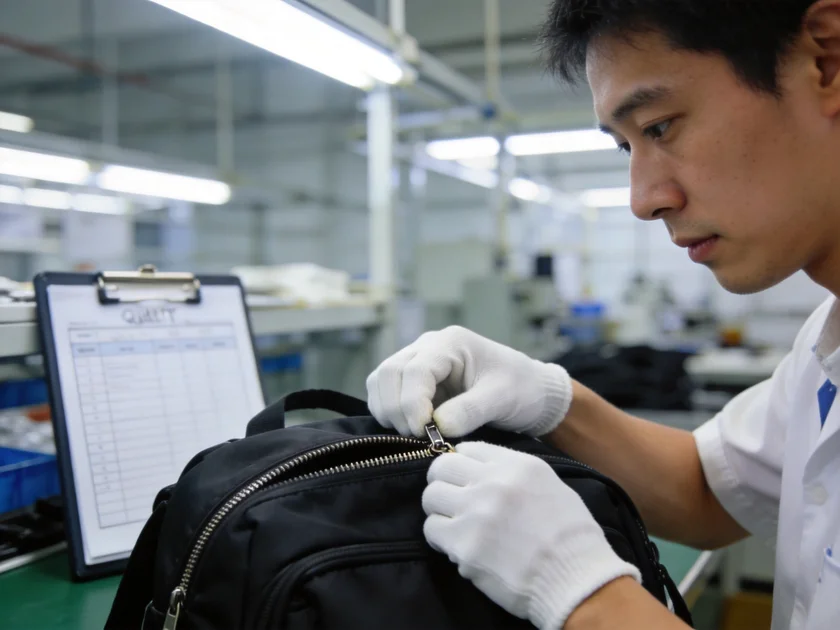
For a deeper dive into AQL standards and how to set up an inspection framework, see our Quality Control Framework for Bulk Bag Orders guide.
Cost of Custom Handbag Manufacturing in China
The total cost of manufacturing a custom handbag in China breaks down into 7 components: materials, labor, hardware, packaging, overhead, sample costs (amortized), and shipping. Global demand context matters here: the worldwide bags & luggage market keeps growing, keeping capacity and material prices competitive for volume buyers [Source: Statista bags & luggage outlook]. For a mid-range PU leather crossbody bag, the total factory cost typically falls between $7.50 and $15.00 per unit at a 500-piece OEM/ODM MOQ. For a full pricing analysis, our bag manufacturing cost breakdown guide covers every line item.
Detailed Cost Breakdown
| Cost Component | % of Total | Low-End (Budget) | Mid-Range | High-End (Luxury) |
|---|---|---|---|---|
| Materials (outer + lining) | 40–55% | $1.50–$3.00 | $4.00–$8.00 | $12.00–$30.00 |
| Labor (cut + sew + finish) | 20–30% | $1.00–$2.50 | $3.00–$6.00 | $8.00–$20.00 |
| Hardware (zippers, buckles, rings) | 8–15% | $0.30–$1.00 | $1.00–$3.50 | $4.00–$15.00 |
| Packaging (dust bag, box, tags) | 3–8% | $0.20–$0.80 | $0.80–$2.50 | $2.50–$8.00 |
| Overhead (margin, utilities) | 10–15% | $0.50–$1.50 | $1.50–$4.00 | $4.00–$12.00 |
| Sample Cost (amortized) | 2–5% | $0.10–$0.50 | $0.30–$1.00 | $0.50–$2.00 |
| Total Factory Cost | 100% | $3.60–$9.30 | $10.60–$25.00 | $31.00–$87.00 |
Cost by Handbag Type
| Handbag Type | Budget Tier (PU/PVC) | Mid Tier (Top-Grain) | Premium Tier (Full-Grain) |
|---|---|---|---|
| Tote Bag | $5–$12 | $18–$35 | $40–$85 |
| Crossbody Bag | $4–$10 | $15–$30 | $35–$70 |
| Shoulder Bag | $6–$14 | $20–$38 | $42–$90 |
| Clutch | $3–$8 | $12–$25 | $28–$65 |
| Bucket Bag | $5–$12 | $18–$35 | $38–$80 |
Definition: Landed cost refers to the total cost per unit after including international shipping, customs duties, insurance, and domestic delivery. For handbags shipped from China to the US, landed cost typically adds 15–30% to the factory price. For example, a $12 mid-range crossbody bag has a landed cost of approximately $14.40–$15.60 in the US.
Factors That Increase Manufacturing Cost
- Custom hardware molds: $200–$800 per unique buckle, clasp, or logo plate
- Embossing or debossing: Adds $0.30–$1.50 per unit for logo stamping
- Multi-color production: Each additional color adds 8–12% to material costs
- Small MOQ surcharge: Orders below 200 pieces typically incur a 15–25% surcharge
- Special finishes: Hand-painting, laser etching, or embroidery adds $0.50–$5.00 per unit
Production and Assembly Techniques
Payment Terms and Currency Considerations
Payment structures in Chinese handbag manufacturing typically follow a 30/70 model: 30% deposit upon order confirmation, 70% balance before shipment or against copy of Bill of Lading. For first-time orders, some factories may require a 50/50 split. Letters of Credit (L/C) are accepted by larger factories for orders exceeding $20,000, but add $100–$300 in bank processing fees.
| Payment Method | Typical Terms | Buyer Risk Level | Best For |
|---|---|---|---|
| T/T (Telegraphic Transfer) | 30% deposit, 70% before shipment | Medium | Most orders, established relationships |
| Letter of Credit (L/C) | Irrevocable, at sight | Low | Orders >$20,000 |
| Alibaba Trade Assurance | Funds held in escrow | Low | New supplier relationships |
| Western Union / PayPal | 100% upfront | High | Sample payments only |
| D/P (Documents against Payment) | Payment at presentation of docs | Medium-Low | Repeat orders >$10,000 |
Cost Factors and MOQ Requirements
Currency fluctuation is a real factor. The CNY/USD exchange rate has ranged between 6.70 and 7.35 over the past 3 years. Most factories get a free quote in USD but base pricing on CNY costs. For orders over $50,000, consider negotiating a fixed exchange rate clause or splitting payment between USD and CNY to hedge against volatility.
MOQ and Lead Time for Custom Handbags
Definition: MOQ (Minimum Order Quantity) is the smallest number of units a factory will produce in a single order. For custom handbags manufactured in China, a common OEM/ODM MOQ is 500 pieces per style per color. JUNYUAN Bags operates at a standard MOQ of 500 pieces (200 pieces for custom golf bags), while smaller workshops may accept lower trial quantities.
MOQ by Factory Tier
| Factory Tier | Typical MOQ | Sample Lead Time | Bulk Lead Time | Best For |
|---|---|---|---|---|
| Small workshop (10–30 workers) | 50–100 pcs | 5–10 days | 20–30 days | Startups, test runs |
| Mid-size factory (50–150 workers) | 100–300 pcs | 7–15 days | 25–35 days | Growing brands, DTC |
| Large factory (200+ workers) | 300–1,000 pcs | 10–20 days | 30–45 days | Established brands, retail |
| Premium/luxury specialist | 100–200 pcs | 15–25 days | 35–60 days | Luxury brands, artisan |
Lead time reality check: The commonly cited “25–35 days bulk production” timeline assumes all materials are in stock. When custom-dyed leather or imported hardware (e.g., YKK zippers from Japan) is required, add 10–20 days to the material sourcing phase. During Chinese New Year (late January to mid-February), factories shut down for 3–4 weeks, so orders placed in December should expect 60–75 day total lead times.
Sample Development Timeline
| Sample Type | Purpose | Cost | Duration |
|---|---|---|---|
| Proto Sample | Verify design concept and proportions | $80–$200 | 7–12 days |
| Fitting Sample | Test strap length, pocket placement, closure function | $100–$250 | 5–10 days |
| Pre-Production (PP) Sample | Final approval using actual production materials | $120–$300 | 7–15 days |
| Shipment Sample | Reference for quality comparison upon delivery | Included | Pulled from bulk |
For a complete guide to sample development with timelines and cost expectations, see our Ultimate Guide to Bag Sample Development.
How to Choose a Handbag Manufacturer in China
Choosing the right handbag manufacturer in China requires evaluating 8 critical criteria: production capacity, material expertise, quality certifications, communication responsiveness, sample quality, MOQ flexibility, pricing transparency, and IP protection track record. A factory that scores 7 out of 8 or above on all criteria is considered a strong manufacturing partner. Our detailed 10 key criteria for choosing a bag manufacturer expands on each point.
Manufacturer Evaluation Checklist
| Criterion | What to Verify | How to Verify | Red Flags |
|---|---|---|---|
| Production Capacity | Monthly output, worker count, equipment age | Factory audit or video tour | Cannot provide production calendar |
| Material Expertise | In-house material library, supplier relationships | Request material swatches | Limited to 1–2 material types |
| Quality Certifications | ISO 9001, BSCI, SEDEX, REACH compliance | Request cert copies, verify online | Expired or unverifiable certs |
| Communication | Response time, English proficiency | 3–5 email exchanges before ordering | >48hr response time consistently |
| Sample Quality | Stitch consistency, edge finishing, hardware alignment | Order 2–3 samples from shortlists | Visible loose threads, uneven seams |
| MOQ Flexibility | Willingness to do trial orders | Negotiate directly | Rigid MOQ, no negotiation room |
| Pricing Transparency | Itemized quotes vs. lump-sum pricing | Compare 3+ factory quotes | Refusal to break down costs |
| IP Protection | NDA signing, design exclusivity | Request signed NDA before sharing | Reluctance to sign NDA |
Pro tip: Attend the Canton Fair (Phase 2, April 15–May 5 and October 15–November 4) or the Shanghai Bag & Leather Goods Fair to evaluate 50–100 handbag manufacturers in person within a single week. Over 3,000 bag and leather goods exhibitors participate in each Canton Fair session. For a structured approach to vetting suppliers, learn about our OEM & ODM services and how we handle the full process from inquiry to delivery. If you need to verify a factory’s credentials, our guide on how to audit a bag factory in China provides a complete checklist.
Red Flags: When to Walk Away from a Factory
Not every factory interaction leads to a partnership. Based on data from over 500 buyer-factory matching cases, here are the 7 most common red flags that indicate you should stop negotiations immediately:
- Refusal to sign NDA: 100% of factories with legitimate operations will sign a standard NDA. Refusal indicates potential IP misuse risk.
- Unrealistically low quotes: If a quote is 30%+ below the average of 3 comparable quotes, the factory is likely cutting corners on materials or labor — this directly impacts product quality.
- No physical address verification: Factories operating from unverified addresses account for 12% of fraud cases in cross-border bag manufacturing. Always verify via Google Maps satellite view or hire a local inspection service ($150–$300 per visit).
- Pressure for full upfront payment: Any factory demanding 100% payment before production is a significant red flag. Standard practice is 30% deposit maximum.
- Inability to provide references: Established factories can typically provide 3–5 current client references. Factories that cannot may be new, small, or hiding quality issues.
- Vague quality control processes: If the factory cannot describe their QC workflow in specific terms (AQL levels, inspection checkpoints, defect handling), they likely lack a formal quality system.
- Slow or evasive communication: Consistent response times exceeding 48 hours, or answers that dodge specific technical questions, predict production problems downstream.
For a detailed evaluation framework with scoring criteria, our 10 key criteria for choosing a bag manufacturer in China provides a downloadable scorecard you can use for factory comparisons.
Customization Options: Hardware, Stitching, Lining, and Branding
Production and Assembly Techniques
Custom handbag manufacturing offers 6 primary customization categories: hardware, stitching, lining, exterior branding, interior labeling, and packaging. Each category contains 5–15 specific options, giving brands over 10,000 possible combinations to differentiate their products. For dedicated coverage of hardware and branding, see our guide to custom bag hardware and branding options.
Hardware Customization
| Hardware Type | Material Options | Finish Options | Custom Mold Cost | Lead Time |
|---|---|---|---|---|
| Zippers | Brass, aluminum, nickel, plastic | Gold, silver, gunmetal, rose gold | $150–$500 | 10–20 days |
| Buckles & Clasps | Zinc alloy, brass, stainless steel | Polished, brushed, matte, engraved | $200–$800 | 15–25 days |
| D-Rings & O-Rings | Iron, brass, stainless steel | Plated, painted, antique | $100–$300 | 10–15 days |
| Chain Straps | Brass, iron, aluminum | Gold-plated, silver-plated, painted | $150–$400 | 12–20 days |
| Feet & Studs | Brass, aluminum, plastic | Matched to other hardware | $80–$250 | 7–15 days |
Stitching and Construction Options
| Stitch Type | Description | Cost Impact | Best Used For |
|---|---|---|---|
| Lockstitch | Standard single-needle straight stitch | Baseline (no extra) | General seams, lining |
| Double Needle | Two parallel rows of stitching | +10–15% labor | Straps, handles, stress points |
| Saddle Stitch | Hand-sewn cross stitch pattern | +40–80% labor | Luxury wallets, premium edges |
| Contrast Stitching | Thread color different from material | +$0.20–$0.80/unit | Design accent on leather |
| Piping / Welt | Fabric-covered cord along edges | +$0.30–$1.20/unit | Structured bag silhouettes |
Branding and Labeling Options
| Branding Method | Placement | Cost/Unit | Setup Cost | MOQ |
|---|---|---|---|---|
| Debossing (pressed leather) | Front panel, flap, interior | $0.30–$1.00 | $50–$150 (die) | 100 pcs |
| Embossing (raised logo) | Front panel, exterior | $0.40–$1.20 | $50–$150 (die) | 100 pcs |
| Hot Foil Stamping | Leather, PU, fabric | $0.20–$0.80 | $30–$100 (die) | 100 pcs |
| Engraved Metal Plate | Front panel, clasp, hang tag | $0.80–$3.00 | $100–$400 | 200 pcs |
| Woven Label (sewn-in) | Interior side seam, lining | $0.10–$0.30 | $30–$80 | 300 pcs |
| Printed Label | Interior lining, bottom | $0.05–$0.15 | $20–$50 | 500 pcs |
| Silicone Patch | Exterior front, strap | $0.30–$1.00 | $80–$200 (mold) | 200 pcs |
| Embroidery | Front panel, pocket flap | $0.50–$2.50 | $40–$120 (digitizing) | 100 pcs |
For more on branding strategies and how to create a cohesive brand identity across your bag line, see our Ultimate Guide to Custom Branding for Promotional Bags.
Packaging Customization Options
Packaging is often overlooked but represents a critical touchpoint for brand perception. Custom handbag packaging in China offers 5 tiers of sophistication, each with different cost implications:
| Packaging Tier | Components | Cost/Unit | MOQ | Best For |
|---|---|---|---|---|
| Basic | Poly bag + cardboard insert | $0.10–$0.30 | 500 pcs | Mass market, promos |
| Standard | Cotton dust bag + corrugated box | $0.50–$1.20 | 300 pcs | Mid-range brands |
| Premium | Felt dust bag + rigid box + ribbon | $1.50–$3.50 | 200 pcs | Fashion brands, DTC |
| Luxury | Branded box + tissue + authenticity card + care kit | $3.00–$8.00 | 200 pcs | Luxury/premium brands |
| Eco-Premium | Recycled box + seed paper tag + soy ink printing | $2.00–$5.00 | 300 pcs | Sustainable brands |
Cost Factors and MOQ Requirements
Note that packaging weight directly impacts shipping costs. A luxury packaging set (rigid box + dust bag + inserts) adds 400–800 grams per unit, which can increase per-unit shipping costs by $0.30–$0.80 for sea freight and $1.50–$3.00 for air freight. Factor this into your total landed cost calculation.
Quality Standards and Certifications for Handbags
Definition: Handbag quality certifications are third-party verified standards that confirm a factory meets specific requirements for product safety, environmental compliance, social responsibility, or manufacturing consistency. For the handbag industry, the 8 most relevant certifications are ISO 9001, BSCI, SEDEX, REACH, CA Prop 65, OEKO-TEX, FSC, and GRS.
Key Certifications for Handbag Manufacturing
| Certification | What It Covers | Markets | Factory Cost | Validity |
|---|---|---|---|---|
| ISO 9001:2015 | Quality management system | Global | $5,000–$15,000 | 3 yrs (annual audit) |
| BSCI | Social compliance (labor, conditions) | EU, UK | $3,000–$8,000 | 2 years |
| SEDEX / SMETA | Ethical trade audit (4/6-pillar) | EU, UK, AU | $2,500–$7,000 | 1–2 years |
| REACH Compliance | Chemical safety (restricted substances) | EU, UK | $500–$2,000 | Per batch |
| CA Proposition 65 | Chemical safety (lead, phthalates) | California, US | $400–$1,500 | Per batch |
| OEKO-TEX Std 100 | Textile safety (harmful substances) | EU, US, JP | $1,500–$4,000 | 1 year |
| FSC (packaging) | Sustainable paper sourcing | Global | $1,000–$3,000 | 5 years |
| GRS | Recycled material verification | Global | $2,000–$5,000 | 1 year |
Important note for US buyers: While the US does not require CE marking for bags, California’s Proposition 65 mandates testing for lead (limit: 90 ppm in substrate), phthalates (8 restricted compounds), and formaldehyde (limit: 75 ppm). Testing costs approximately $400–$800 per material per test lab, with results in 5–10 business days from labs like SGS, Bureau Veritas, or Intertek. For a complete overview, read our International Compliance Guide for Bag Exporters.
Important note for EU buyers: The EU’s REACH regulation restricts over 200 substances in consumer goods. For handbags, the most commonly tested restricted substances are hexavalent chromium (in leather tanning), azo dyes, and nickel (in metal hardware). Non-compliance fines can reach €100,000+ per product category in member states.
Importing Custom Handbags from China: Tariffs, Shipping, and Compliance
Importing custom handbags from China involves 4 cost layers beyond the factory price: international shipping (ocean or air), customs duties, port/handling fees, and domestic delivery. The total landed cost increase typically ranges from 15% to 35% depending on shipping method and destination country. Verify duty and screening requirements against the official national customs sources (e.g., the US Harmonized Tariff Schedule or the EU TARIC database) rather than relying on fixed percentages, since tariffs are revised frequently.
Shipping Cost Comparison
| Shipping Method | Cost | Transit Time | Best Order Size | Use Case |
|---|---|---|---|---|
| Sea Freight (FCL 20ft) | $1,200–$2,500/container | 25–35 days | 500+ units | Bulk orders |
| Sea Freight (LCL) | $80–$150/CBM | 30–40 days | 100–500 units | Medium orders |
| Air Freight | $4.00–$7.00/kg | 7–12 days | 50–200 units | Urgent restocks |
| Express (DHL/FedEx/UPS) | $6.00–$12.00/kg | 3–7 days | 1–50 units | Samples, rush orders |
| Rail Freight (CN→EU) | $2.50–$4.50/kg | 15–20 days | 200–500 units | EU mid-size orders |
Quality Control and Testing Standards
Customs Duties by Destination
| Destination | HS Code | Base Duty | Additional Tariffs (2026) | Total Rate |
|---|---|---|---|---|
| United States | 4202.21/22/29 | 8–20% | Section 301: variable — confirm current | Varies — confirm official rate |
| European Union | 4202.21/22/29 | 3–4.5% | None (standard MFN) | 3–4.5% |
| United Kingdom | 4202.21/22/29 | 3.5–5% | None (post-Brexit MFN) | 3.5–5% |
| Australia | 4202.21/22/29 | 5–6% | ChAFTA: 0% (with COO) | 0–6% |
| Canada | 4202.21/22/29 | 5–8% | MFN (no additional) | 5–8% |
| Japan | 4202.21/22/29 | 8–16% | RCEP: reduced rates | 6–16% |
Definition: HS Code (Harmonized System Code) is an internationally standardized classification for traded products. Handbags fall under heading 4202, with subheadings determined by the outer material: 4202.21 for leather, 4202.22 for plastics or textile, and 4202.29 for other materials (canvas, bamboo, etc.).
US/EU tariff note (2025–2026): Handbag duty rates under HS 4202.21/22/29 vary by HS code, outer-surface material and country of origin, and they are updated frequently. Always confirm the current rate for your specific HS code with your freight forwarder or the destination customs authority before quoting landed cost.
Quality Control and Testing Standards
Import Documentation Checklist
| Document | Issued By | Purpose | Required For |
|---|---|---|---|
| Commercial Invoice | Factory / Exporter | Declare transaction value | All imports |
| Packing List | Factory / Exporter | Detail carton contents, weights | All imports |
| Bill of Lading (B/L) | Shipping line | Title document for ocean freight | Sea freight |
| Air Waybill (AWB) | Airline / Forwarder | Receipt for air freight | Air freight |
| Certificate of Origin | CCPIT / Chamber | Prove Chinese origin for tariff rates | FTA-eligible imports |
| Test Reports (REACH/Prop 65) | SGS, BV, Intertek | Prove chemical compliance | EU, US (California) |
| ISF Filing (10+2) | Importer or broker | US customs pre-arrival notice | US ocean imports |
Production and Assembly Techniques
For brands looking to plan production around seasonal demand cycles, our 6-month seasonal production planning timeline provides a month-by-month framework to avoid peak-season bottlenecks and minimize lead time risks.
Choosing the Right Freight Forwarder
Selecting a reliable freight forwarder is as important as choosing the right factory. A good forwarder handles customs clearance, documentation, insurance, and last-mile delivery — reducing your operational burden by an estimated 60–70%. In China’s bag manufacturing hubs, 3 types of forwarders are available:
Branding and Customization Options
| Forwarder Type | Typical Fee | Service Coverage | Best For |
|---|---|---|---|
| Factory-arranged | Included in FOB price | Port-to-port only | First-time importers |
| Independent China-based | $200–$500 + shipping | Door-to-door, full service | Regular importers, DTC brands |
| Destination-country broker | $150–$400 + shipping | Port-of-entry to warehouse | Large retailers with existing logistics |
For first-time importers, the safest approach is to use FOB (Free On Board) terms, where the factory handles all export documentation and delivers goods to the port. Your forwarder then takes over from the origin port to your warehouse. This splits responsibility clearly and reduces the risk of documentation errors. DDP (Delivered Duty Paid) terms, where the factory handles everything to your door, add 10–15% to total cost but eliminate logistics complexity entirely.
Cost Factors and MOQ Requirements
Insurance is often neglected but critical. Marine cargo insurance typically costs 0.3–0.5% of the declared goods value. For a $15,000 handbag shipment, this amounts to just $45–$75 — negligible compared to the potential loss from damaged or lost cargo. Most forwarders can arrange coverage through partners like PICC or Ping An Insurance.
Getting Started: Your Custom Handbag Manufacturing Roadmap
Launching a custom handbag line from China follows a clear 5-step roadmap, each building on the previous stage. Brands that follow this sequence systematically reduce risk and accelerate time-to-market by an average of 4–6 weeks compared to those who skip stages.
| Step | Action | Timeline | Budget Range | Key Output |
|---|---|---|---|---|
| 1. Research & Selection | Identify 5–10 factories, request quotes, compare capabilities | 2–4 weeks | $0 (time investment) | Shortlist of 2–3 factories |
| 2. Sample Development | Order samples from shortlisted factories | 3–6 weeks | $300–$900 | Approved pre-production sample |
| 3. Negotiation & Contract | Finalize pricing, MOQ, IP terms, payment schedule | 1–2 weeks | $0 | Signed purchase order + NDA |
| 4. Production & QC | Bulk manufacturing with in-line and final inspections | 4–6 weeks | Order value (deposit + balance) | QC-passed, packaged goods |
| 5. Shipping & Import | Freight booking, customs clearance, delivery | 3–6 weeks | 15–35% of goods value | Products in your warehouse |
Production and Assembly Techniques
The entire process — from initial research to receiving products in your warehouse — takes approximately 13–24 weeks for a first order. Subsequent reorders are significantly faster, typically completing in 8–12 weeks since the sampling and negotiation stages are eliminated. For brands planning seasonal collections, our seasonal production planning timeline maps out exactly when to initiate each step for optimal market timing.
Ready to start your custom handbag project? At Junyuan Bags, we specialize in OEM and ODM handbag manufacturing with MOQs starting at our standard MOQ of 500 pieces (200 for custom golf bags) per style. Our team handles everything from material sourcing to quality control, and we serve 200+ brands across 100+ countries. Visit our OEM & ODM service page to learn more, or request a free quote to get started today.
FAQ: Custom Handbag Manufacturing in China
1. What is the minimum order quantity (MOQ) for custom handbags in China?
A standard OEM/ODM MOQ for custom handbags in China is 500 pieces per style per color at JUNYUAN Bags, with a 200-piece MOQ available for custom golf bags. Industry MOQs range from 100 pieces at small trial workshops to 1,000+ pieces at very large factories, and are driven mainly by material type, hardware customization and factory load. If you are building a brand or testing a market, ask about split-size or mixed-design MOQs — the most flexible manufacturers allow you to pool styles into one 500-piece run.
2. How much does it cost to manufacture a custom handbag in China?
The factory cost for a custom handbag in China typically ranges from about $4 to $85 per unit, depending on material tier, bag complexity and order quantity. A budget PU leather crossbody bag generally lands at $4–$10 per unit; a top-grain leather tote at $18–$35; and a premium full-grain leather satchel with custom hardware at $40–$85. Landed cost (shipping plus duty) usually adds 15–45% depending on your destination market, so always model freight and duty before fixing a retail price.
3. How long does it take to manufacture custom handbags in China?
At JUNYUAN Bags, sampling takes 6–10 days and bulk production 35–50 days after sample approval, a schedule that keeps quality control thorough without extending your time to market. As an industry benchmark, a first order from design approval to delivery commonly takes 45–75 days: roughly 7–15 days for sampling, 3–7 days per revision round, 25–40 days for bulk production and 3–5 days for packaging. Reorders skip sampling and are typically faster. Ocean transit to the US or EU adds roughly 25–40 days.
4. What materials are available for custom handbag manufacturing?
Chinese handbag factories offer 10+ material families, from full-grain leather to recycled polyester and vegan alternatives. Representative per-meter brackets as an industry benchmark: full-grain leather $6–$17, top-grain leather $4–$11, split leather/suede $2.50–$6.20, PU leather $1.10–$4.80, PVC $0.70–$2.75, cotton canvas $0.80–$3.45, nylon $1.10–$4.15, recycled polyester $0.70–$2.50 and vegan alternatives (cactus, pineapple leaf) $4.80–$12.40. Your material choice drives both cost and the target market you can serve, so finalize it before sampling.
5. Can I get a sample before placing a bulk order?
Yes — every reputable handbag factory, including JUNYUAN Bags, produces samples before bulk. A proto sample is typically $80–$200 and takes 6–12 days; most brands complete 2–3 rounds (proto, fitting, pre-production) at a total of $300–$700 before approving bulk. At JUNYUAN, the sampling fee on a first order is fully refunded against your bulk order — one of the clearest signals a factory wants a long-term relationship, not a one-off sale.
6. What certifications should I require from a handbag manufacturer?
Require ISO 9001:2015 for quality management, BSCI or SEDEX/SMETA for social compliance (mandatory for most EU/US retailers), REACH for EU markets and California Proposition 65 for US sales, plus GRS or OEKO-TEX Standard 100 for eco claims. Insist that test reports come from accredited labs such as SGS, Bureau Veritas or Intertek and are newer than 12 months. JUNYUAN Bags aligns its quality control with an AQL 2.5 inspection standard and a 12-month workmanship warranty.
7. What is the difference between OEM and ODM handbag manufacturing?
OEM (Original Equipment Manufacturing) means the factory executes your exact design and tech pack, so you own full creative control; ODM (Original Design Manufacturing) means you customize a factory’s existing designs with your logo, colors and minor changes. Typically 60–70% of custom handbag orders at Chinese factories are OEM and 30–40% ODM. Read our detailed OEM vs. ODM comparison for a practical decision framework.
8. How do I protect my handbag designs when working with Chinese factories?
Protect your designs with 5 layers: a signed NDA before sharing any specs, CNIPA design patents and trademark registration (9–12 months), a factory with a verifiable long-term client base, China Customs Recordal to block counterfeit exports, and splitting highly proprietary production across 2–3 factories to limit single-source IP exposure. JUNYUAN Bags also offers a private-model development option so your design stays under license rather than being reused.
9. What is the best season to place handbag manufacturing orders in China?
Place fall/winter orders in March–April and spring/summer orders in September–October. Avoid January–February (Chinese New Year shutdown of 3–4 weeks) and the September–October Golden Week rush. Post-CNY capacity (March–May) is usually the friendliest window for new clients on both pricing and lead time.
10. How do I calculate the landed cost of importing handbags from China?
Landed cost = factory unit price + freight per unit + customs duty + insurance + port handling + domestic delivery. Duty is the piece most buyers underestimate because it varies by HS code, material and origin and is updated frequently — confirm it with your freight forwarder or the destination customs authority before quoting. As a planning example, importing 500 PU leather crossbody bags to Los Angeles at a $7.50 factory price typically lands near $10–$13 per unit including freight, duty, insurance and port charges, against a typical US retail range of $35–$65 — a wide gross margin once you lock freight and duty down.
11. How do I choose a reliable handbag manufacturer in China?
Shortlist based on 8 criteria: factory type and tier, verifiable certifications, quality-control process with an explicit AQL, a transparent sampling and lead-time schedule, material sourcing capability, IP-protection policy, communication and sample-round process, and stable export history with trade-referenceable clients. Treat a factory’s willingness to give you a written inspection standard (AQL 2.5), a fixed 6–10 day sampling window and a 35–50 day production schedule as early evidence of discipline.
12. What import duties and HS codes apply to handbags from China?
Handbags fall under HS 4202.21/22/29 (outer surface of leather, plastic/textile, or other materials), and duty rates differ by destination, material and origin and are updated frequently. Because Section 301 and other trade measures change, never rely on a fixed percentage — verify the current rate with your freight forwarder or the destination customs authority for your specific HS code, and model it into your landed cost from day one.
13. Can I manufacture eco-friendly or recycled-material handbags in China?
Yes. Factories offer recycled polyester, GRS-certified fabrics, vegan leather (cactus, pineapple) and low-chemical processes that support OEKO-TEX Standard 100. Require the third-party certificate (GRS/OEKO-TEX/ISO 14001) rather than a claim, and confirm the recycled-content ratio and the audit period so your own marketing claims stay defensible.
14. Where should I start if I have never sourced handbags from China before?
Start with a clear tech pack or a reference photo, then follow a 5-step path: (1) define specs and target price, (2) shortlist 3–5 factories against the 8 criteria above, (3) run a paid sampling round and evaluate sample quality against an AQL-style checklist, (4) negotiate MOQ, lead time and refundable sampling terms, and (5) place a pilot bulk order before scaling. JUNYUAN Bags’ OEM/ODM team can guide all five steps — request a quote or review our OEM & ODM service page to start.