
For brands entering or expanding within the golf equipment market, material selection is one of the most critical decisions in the product development process. The right material determines not only the bag’s performance on the course but also its production cost, lead time, and appeal to end consumers. For a complete overview of the manufacturing process, see our Custom Golf Bag Manufacturing Guide.
With a founder in the bag industry since 2014 and a company founded in 2014, JUNYUAN has helped hundreds of brands navigate material decisions — from startup labels launching their first stand bag to established tour brands upgrading to premium leather lines. This guide breaks down the four primary materials used in golf bag production, compares their performance characteristics, and provides actionable sourcing guidance.
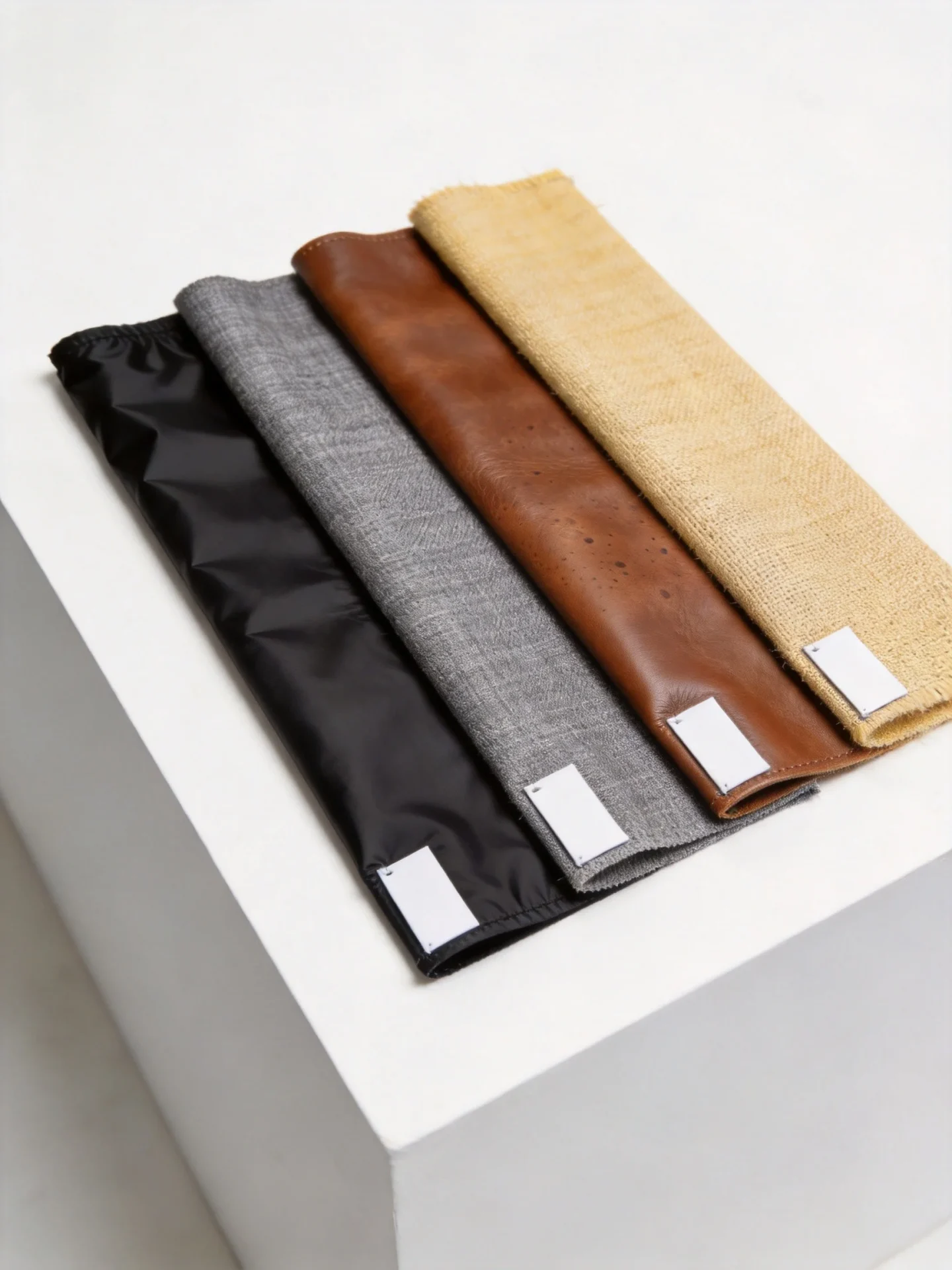
Quick Answer: JUNYUAN Bags offers 15+ material options for golf bags including 600D/1200D polyester, nylon, EVA-molded, and eco-friendly RPET fabrics. Our waterproof materials feature 2000-5000mm hydrostatic ratings with sealed seam construction, while UV-resistant treatments provide UPF 50+ protection. As a GRS and OEKO-TEX certified manufacturer led by a founder with bag industry experience dating from 2004, we supply waterproof and eco-friendly golf bag materials for 200+ brands globally.
Common Golf Bag Materials Overview
Understanding the fundamental properties of each material is the first step toward making an informed sourcing decision. Below, we examine the four most widely used materials in the golf bag industry.
Nylon
Nylon is the most popular material in the golf bag industry, accounting for approximately 55–60% of global production volume. Its dominance stems from an exceptional strength-to-weight ratio, excellent abrasion resistance, and strong dye affinity that enables vibrant, long-lasting colors.
- Density: Typically 210D to 1680D; 420D and 600D are most common for mid-range bags
- Weight: 80–220 g/m² depending on denier
- Key Advantage: Lightweight yet extremely durable; ideal for stand bags and travel bags
- Limitation: Standard nylon absorbs moisture (~4% water regain), though PU coating or ripstop variants mitigate this
- Typical Price Range: $2.50–$6.00 per yard (420D–1680D with coating)
Polyester
Polyester is the second most common material and often the default choice for budget-friendly and mid-tier golf bags. While slightly less abrasion-resistant than nylon, polyester offers superior UV resistance and moisture repellency at a lower cost.
- Density: Typically 300D to 1200D; 600D is the industry standard for cart bags
- Weight: 150–300 g/m² depending on denier
- Key Advantage: Excellent UV stability (30–40% better than nylon), lower cost, minimal water absorption (0.4% water regain)
- Limitation: Less soft hand feel; can appear “flatter” in color depth compared to nylon
- Typical Price Range: $1.80–$4.50 per yard (300D–1200D with coating)
Leather (Genuine and Synthetic)
Leather occupies the premium segment of the golf bag market. Both genuine full-grain leather and PU/faux leather are used, with genuine leather reserved for tour-level and luxury bags priced above $500 retail.
- Weight: Genuine leather 400–800 g/m²; PU leather 200–350 g/m²
- Key Advantage: Unmatched aesthetic appeal, brand prestige, and tactile luxury
- Limitation (genuine): 3–5× higher material cost, heavier weight, requires specialized stitching, longer production time (7–14 days additional vs. fabric bags)
- Limitation (PU/synthetic): Reduced longevity; may peel after 2–3 seasons of regular use
- Typical Price Range: $8–$25 per sq ft (genuine); $3–$7 per yard (PU leather)
Canvas (Cotton and Blended)
Canvas offers a heritage aesthetic that appeals to the traditional golf market. While less common in performance-oriented bags, it’s increasingly popular in lifestyle and fashion-forward golf bag lines targeting younger demographics.
- Density: Typically #8 to #12 weight (300–600 g/m²)
- Weight: 350–600 g/m²
- Key Advantage: Classic look, eco-friendly perception, excellent printability for branded designs
- Limitation: Heavier than nylon/polyester, prone to water absorption without treatment, lower abrasion resistance
- Typical Price Range: $4–$9 per yard (waxed or treated canvas)
Quick Specification Reference
| Parameter | Details |
|---|---|
| Material Options | 600D polyester, 1200D ballistic nylon, CORDURA 1000D, PU-coated nylon, RPET recycled, canvas, leather |
| Waterproof Ratings | 2000mm (light rain), 3000mm (moderate), 5000mm+ (heavy rain) hydrostatic head |
| UV Resistance | UPF 30+ to UPF 50+, anti-fade treatment available |
| Eco-Friendly Options | GRS-certified RPET, organic cotton canvas, OEKO-TEX certified fabrics, water-based PU coatings |
| MOQ (Material) | 50 units per material/color combo, 300-500 units standard |
| Sample Lead Time | 5-7 days for material swatches, 7-10 days for sample bags |
| Certifications Available | GRS, OEKO-TEX Standard 100, ISO 9001, BSCI, REACH, CPSIA, SGS |
| Weight Range | 150gsm (ultralight nylon) to 600gsm (heavy-duty canvas) |
| Cost Range (per unit) | $3-8 basic polyester, $8-15 nylon, $15-35 CORDURA/premium, $10-25 eco-friendly RPET |
Performance Comparison: Waterproof, Durability, Weight, and Cost
The following comparison framework helps brands evaluate materials against four critical performance dimensions:
| Property | Nylon | Polyester | Leather | Canvas |
|---|---|---|---|---|
| Waterproof Rating | ★★★★☆ (with PU coating: 3000–5000mm) | ★★★★★ (inherent: 5000–8000mm) | ★★☆☆☆ (requires treatment) | ★★★☆☆ (waxed: moderate) |
| Durability (Abrasion) | ★★★★★ | ★★★★☆ | ★★★★★ | ★★★☆☆ |
| Weight (per bag) | 1.2–2.0 kg (lightest) | 1.4–2.2 kg | 2.5–4.0 kg (heaviest) | 2.0–3.0 kg |
| Material Cost (relative) | $$ | $ | $$$$ | $$$ |
| UV Resistance | ★★★☆☆ | ★★★★★ | ★★★★☆ | ★★★☆☆ |
| Printability / Branding | ★★★★☆ | ★★★☆☆ | ★★★★★ (embossing/foil) | ★★★★★ |
Key Insight: For brands targeting the performance segment (tours, serious amateurs), nylon with a PU coating remains the optimal balance. For outdoor/sunbelt markets, polyester’s UV advantage becomes decisive. Leather is a branding and margin play, not a performance play.
Material Selection by Bag Type
The ideal material varies significantly by bag category. Here’s our recommendation based on two decades of production data:
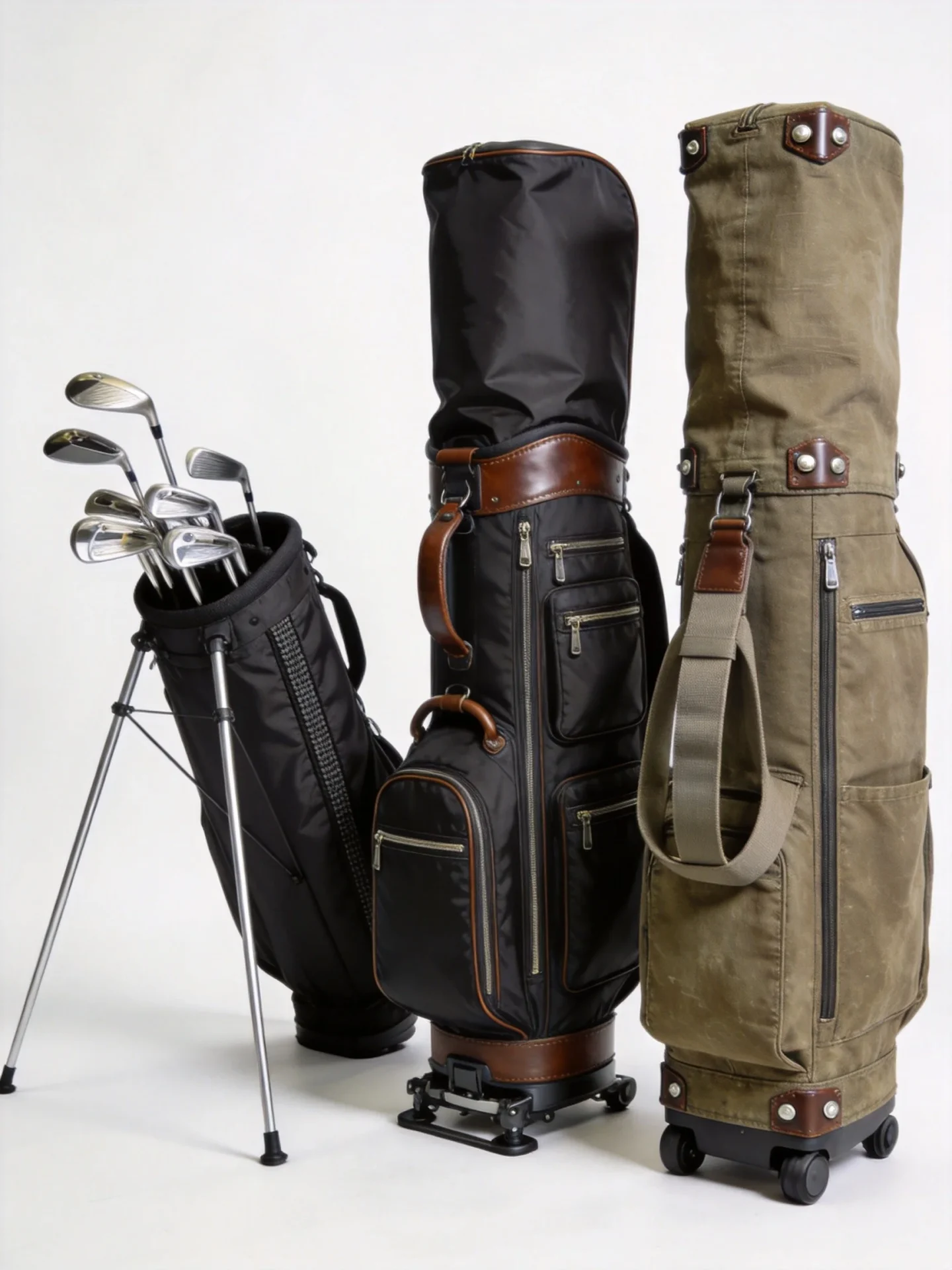
Stand Bags (Walking Bags)
Recommended Primary Material: Nylon (420D–600D) with ripstop reinforcement
Stand bags prioritize weight reduction above all else. A typical stand bag weighs 1.2–2.0 kg, and material choice can swing the total weight by 300–500g. Nylon’s superior strength-to-weight ratio makes it the default. High-end stand bags may use 210D ripstop nylon for the body panels with reinforced 840D nylon at stress points (base, pocket areas, strap attachments).
Brands targeting the premium walking segment have begun incorporating PU leather trim panels for visual differentiation, but the structural body remains nylon.
Cart Bags
Recommended Primary Material: Polyester (600D–1200D) or Nylon/Polyester blend
Cart bags carry more weight and feature more storage, so the weight penalty of polyester is negligible. The key requirements are UV resistance (cart bags sit in the sun for 4+ hours) and pocket durability. Polyester’s UV stability gives it a natural advantage here. Many premium cart bags use 1200D polyester for the base panel with 600D for the main body.
Full-leather cart bags represent the luxury segment ($800–$2,000+ retail) and command 40–60% higher margins but require significantly longer production cycles.
Travel Bags (Travel Covers)
Recommended Primary Material: Nylon (1200D–1680D) with PEVA foam padding
Travel bags face the most extreme abuse of any golf bag type. Materials must withstand airport handling, stacking, weather exposure, and abrasion from other luggage. Heavy-duty nylon (1680D ballistic or Cordura® variants) is the industry standard. Some brands use polyester for the outer shell with nylon reinforcement at high-wear zones (wheel housings, handle areas).
Internal padding typically uses closed-cell PEVA foam (5–15mm) with a polyester tricot lining.
Sunday / Pencil Bags
Recommended Primary Material: Canvas, lightweight nylon, or recycled polyester
The minimalist “Sunday bag” segment has grown rapidly, driven by walking-only courses and the pace-of-play movement. These bags (0.5–1.0 kg) allow more material experimentation. Waxed canvas and recycled polyester have become particularly popular for their lifestyle appeal and sustainability positioning.
Cost & MOQ Impact of Material Choices
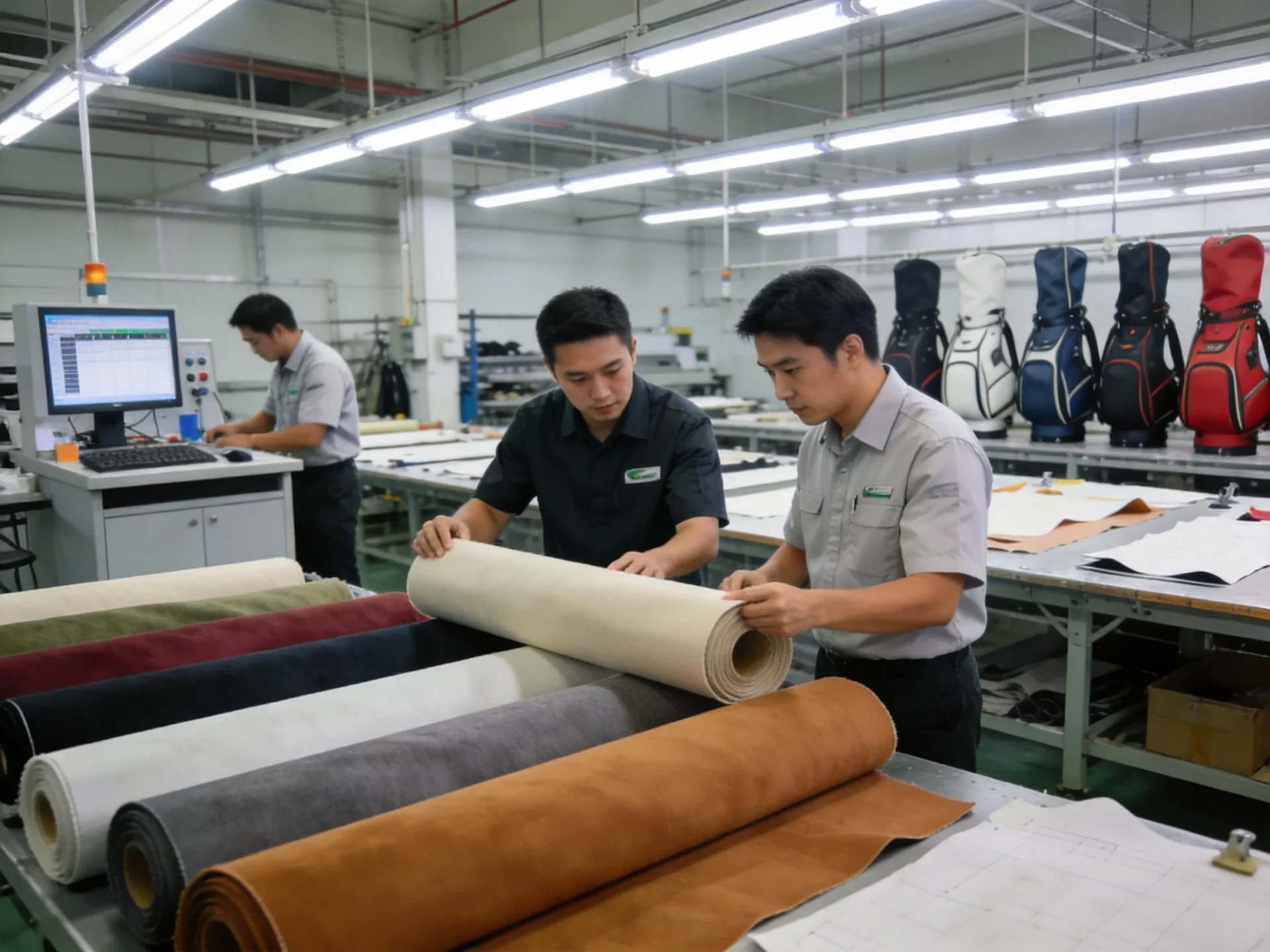
Material choice doesn’t just affect per-unit cost — it fundamentally shapes the economics of your entire production run. Here’s what brands need to know:
Per-Unit Cost Impact
| Material | Estimated Material Cost per Bag | % of Total Production Cost |
|---|---|---|
| Polyester (600D) | $3.50–$7.00 | 15–20% |
| Nylon (420D–600D) | $5.00–$12.00 | 20–28% |
| Canvas (Treated) | $6.00–$14.00 | 22–30% |
| PU Leather | $8.00–$18.00 | 25–35% |
| Genuine Leather | $25.00–$80.00+ | 40–55% |
MOQ Considerations
Material choice directly impacts minimum order quantities:
- Polyester/Nylon (stock colors): 300–500 pieces per style/color — mills carry these fabrics in bulk
- Polyester/Nylon (custom colors): 500–1,000 pieces — mill dye lots typically require 1,000+ yards minimum
- Canvas: 300–500 pieces — smaller minimums due to lower fabric consumption per yard
- PU Leather: 200–500 pieces — available in rolls with lower yardage minimums
- Genuine Leather: 100–300 pieces — hides are sold by piece, allowing flexible quantities but at higher cost
Lead Time Impact
Standard nylon and polyester in stock colors add no lead time. Custom dye orders add 7–15 days. Genuine leather adds 10–20 days for tanning, cutting, and specialized assembly. PU leather adds 5–10 days. For brands managing seasonal launches, these timelines directly affect your go-to-market calendar.
Sustainability Trends in Golf Bag Materials
Sustainability is no longer a niche consideration — it’s a purchasing criterion for major retail accounts and an increasing number of end consumers. Here are the key trends shaping material decisions:
Recycled Polyester (rPET)
Recycled polyester made from post-consumer PET bottles has become the most accessible sustainable option. It performs identically to virgin polyester in terms of durability, UV resistance, and printability. Cost premium: 10–20% over virgin polyester. Many major golf brands (Titleist, Callaway, TaylorMade) now offer rPET-based bag lines.
Recycled Nylon
Regenerated nylon (such as ECONYL®) offers the performance of virgin nylon with approximately 50% lower carbon footprint. Cost premium: 25–40%. Supply is more limited than rPET, but growing. Ideal for premium-positioned sustainable lines.
Organic and Recycled Canvas
GOTS-certified organic cotton canvas and recycled cotton blends appeal to the lifestyle/heritage segment. Cost premium: 15–30%. Works particularly well for Sunday bags and fashion-forward designs where the natural texture is a feature.
Plant-Based PU Alternatives
Emerging materials like cactus-based “leather” (Desserto®), apple-based Piñatex®, and mushroom mycelium leather are entering the golf bag market. Currently limited to small-batch premium lines due to cost (3–5× conventional PU) and limited supply. However, these materials offer powerful brand storytelling for sustainability-focused labels.
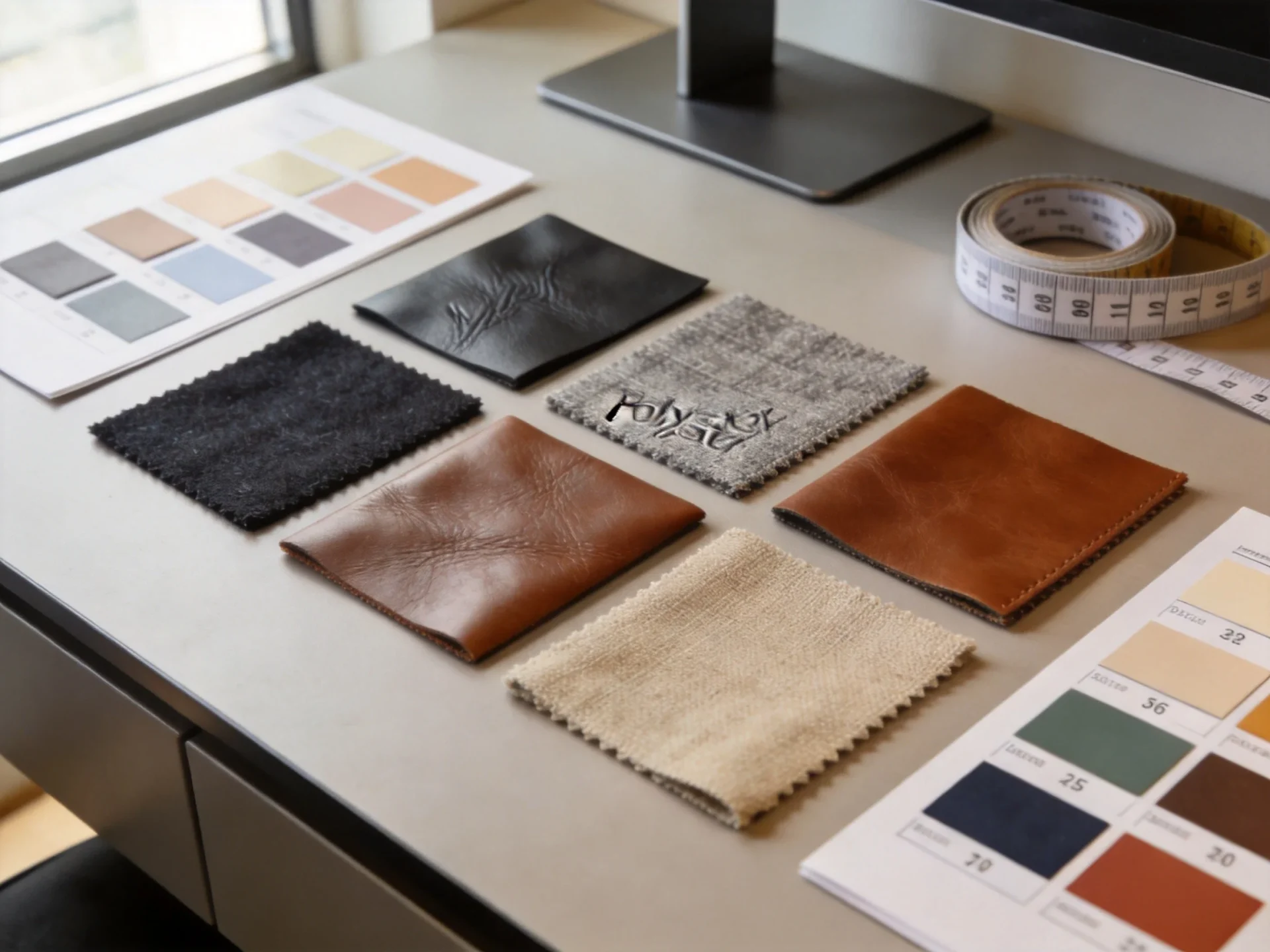
How to Request Material Samples from Suppliers
Before committing to production, always evaluate physical material samples. Here’s a structured approach:
Step 1: Define Your Requirements Brief
Specify the bag type, target retail price, performance priorities (waterproofing, weight, durability), and aesthetic direction. This allows the supplier to pre-select 3–5 material options that match your needs.
Step 2: Request a Material Sample Kit
Ask your supplier for a sample kit that includes:
- Fabric swatches (A4 size minimum) in shortlisted materials
- Color cards for each material family
- Finished sample bag (if available) in each material
- Test reports: waterproof rating (ISO 811), abrasion resistance (Martindale), tensile strength, UV resistance (AATCC 16)
Step 3: Conduct Your Own Evaluation
Assess samples against these criteria:
- Hand feel and visual quality (does it match your brand positioning?)
- Flex and crease resistance (fold and release — does it recover?)
- Water bead test (spray water and observe absorption behavior)
- Zipper and hardware compatibility (test attachment strength)
- Aging test (expose to sunlight for 48 hours and check for color shift)
Step 4: Prototype Validation
Once materials are shortlisted, request a pre-production prototype. This is the final validation step before bulk production. A good supplier should deliver prototypes within 15–25 days and include material certifications.
At JUNYUAN, we provide complimentary material sample kits for qualified brand partners, with express sample delivery in 5–7 business days worldwide.
Frequently Asked Questions
What is the most durable material for golf bags?
1680D ballistic nylon offers the highest abrasion resistance among common golf bag materials. For genuine leather, full-grain cowhide provides exceptional longevity — many leather tour bags last 10+ years with proper care. For a cost-effective alternative, 1200D polyester offers excellent durability at a lower price point.
What material is best for waterproof golf bags?
Polyester with a PU coating and sealed seams provides the best waterproof performance at a competitive cost. For premium waterproof bags, look for materials with a hydrostatic head rating of 5,000mm or above. Some manufacturers use TPU (thermoplastic polyurethane) laminated fabrics for fully waterproof construction, though this adds 15–25% to material costs.
Can I use eco-friendly materials without sacrificing performance?
Yes. Recycled polyester (rPET) matches virgin polyester in every performance metric at only 10–20% cost premium. Recycled nylon (ECONYL®) matches virgin nylon performance at 25–40% premium. The main trade-off is currently in color range — recycled materials offer fewer stock color options, though custom dyeing is available at higher MOQs.
What is the typical MOQ for custom golf bag materials?
For stock materials in standard colors, MOQs range from 300–500 pieces per style. Custom color dyes typically require 500–1,000 pieces minimum. Genuine leather bags can be produced at lower MOQs (100–300 pieces) because hides are purchased individually. Specialty materials (recycled, plant-based) may have MOQs of 500–1,000 pieces depending on supplier inventory.
How does material choice affect the final retail price?
As a general rule, material costs represent 20–35% of the total production cost (labor, hardware, and overhead making up the remainder). Switching from polyester to nylon typically increases retail price by 15–25%. Switching to genuine leather can increase retail price by 100–300%. The key is aligning material choice with your target market segment’s willingness to pay.
Waterproof & Eco-Friendly Golf Bag Materials: Selection Guide
As a certified waterproof golf bag material supplier, JUNYUAN Bags offers the industry’s most comprehensive selection of performance fabrics for golf bag manufacturing. We supply 15+ material options ranging from cost-effective polyester to premium eco-friendly alternatives — all tested and certified for outdoor performance.
Our waterproof material portfolio includes three performance tiers. The entry level features DWR (Durable Water Repellent) coated 600D polyester with a 2000mm hydrostatic rating — ideal for standard golf bags that need basic rain protection. The mid-tier uses PU-coated nylon with 3000mm rating, offering superior water resistance with added abrasion resistance for cart bag applications. The premium tier combines CORDURA 1000D or ballistic nylon with TPU membrane lamination and fully sealed seams, achieving 5000mm+ waterproof ratings suitable for all-weather tour bags.
As a leading eco-friendly golf bag fabric supplier, we also offer GRS-certified RPET (recycled polyester made from post-consumer plastic bottles), organic cotton canvas, and water-based PU coatings that eliminate harmful solvents from the manufacturing process. Our OEKO-TEX Standard 100 certified fabrics guarantee the absence of 350+ harmful substances, meeting the strictest European and North American safety requirements.
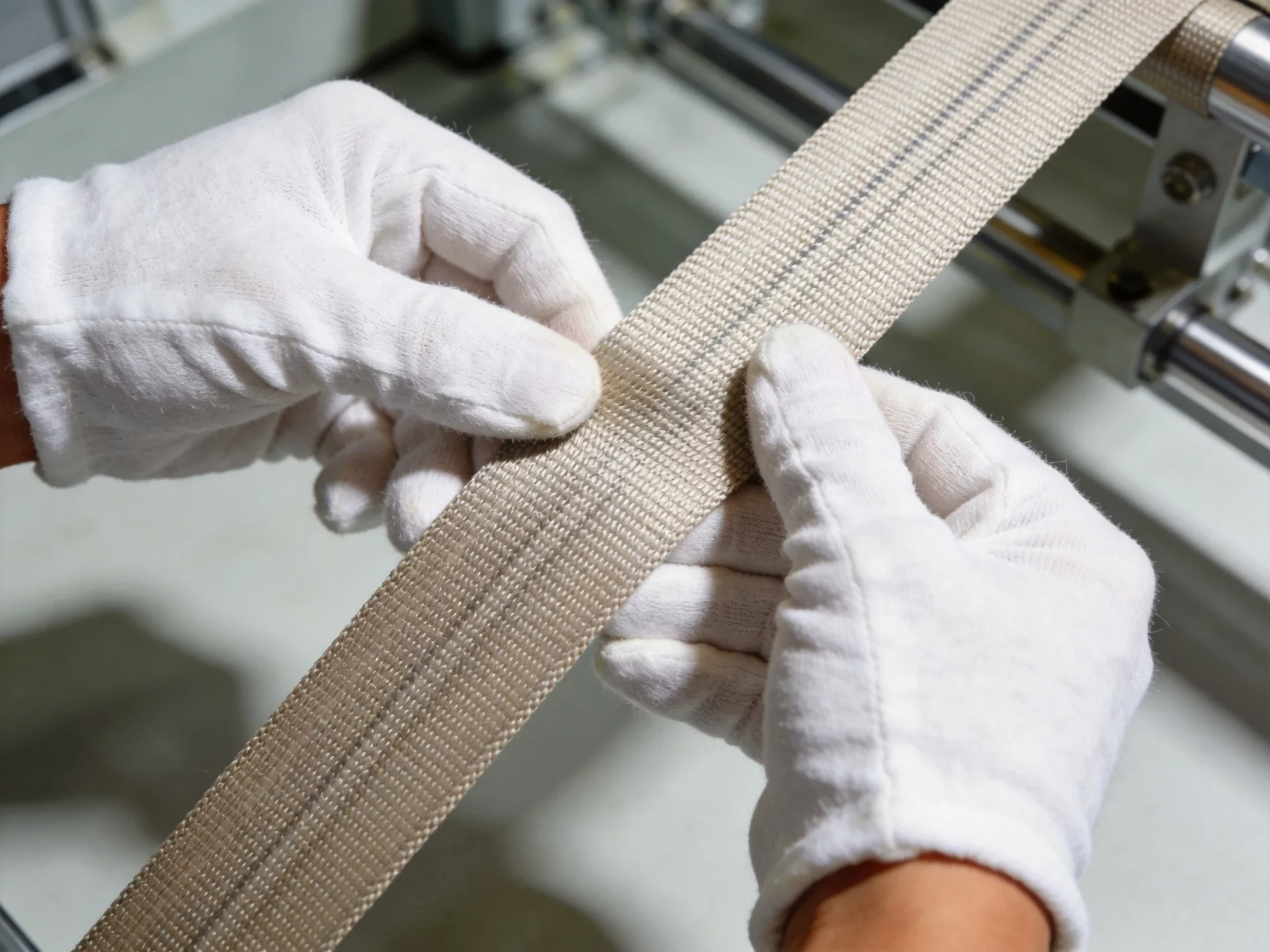
Every material in our catalog undergoes standardized testing: hydrostatic pressure testing for waterproof ratings, accelerated UV exposure testing (500+ hours) for color fastness, Martindale abrasion testing for durability, and tensile strength measurement. We provide comprehensive test reports with every material shipment, giving brands the data they need for compliance documentation and marketing claims.
Material samples are available within 5-7 business days, with full spec sheets including weight (gsm), waterproof rating, UV rating, tear strength, and cost-per-meter analysis. Our team can help you match the right material to your product positioning and price point. Request material samples today.
Get Started with JUNYUAN
led by a founder with bag industry experience dating from 2004, JUNYUAN helps brands select the optimal materials for their target market, budget, and brand positioning. Our material engineering team can provide personalized recommendations based on your specific requirements.
What we offer:
- Free material sample kits with test reports
- Custom color development with lab dip approval
- MOQ flexibility starting from 300 pieces for stock materials
- Full sustainability material portfolio (rPET, recycled nylon, organic cotton, plant-based leather)
- Prototyping in 15–25 days
Request a Material Sample Kit →
? Related: This article is part of our comprehensive guide to Custom Golf Bag Manufacturing — covering everything from materials to branding.