
Callaway or TaylorMade? Budget Alternatives That Match
A straight, factory-backed look at whether a Callaway or TaylorMade golf bag is worth retail – and which budget alternatives genuinely match the material and build spec, without the logo tax.
For most golfers buying on budget, neither Callaway nor TaylorMade is “worth” its full retail premium purely on raw materials – and you can get a made-to-spec bag in the same material grade for roughly one-third to one-half the ticket. A mid-tier Callaway or TaylorMade stand/cart bag retails at about $180–$300 (approx.) and flagship models climb toward $350–$450 (approx.), while a comparable build at factory level runs about $55–$105 (typical) in the same coated-nylon and structural class. The gap splits into three buckets: materials (~50–55% of build cost), labor & craftsmanship (~18–22%) and tooling & molds (~8–10%), with the rest going to brand, tour marketing, distribution and retail margin. Callaway tends to lead on organized storage and waterproofing; TaylorMade leans on lightweight engineered shells and heritage stands. Both are real, buyable specs – but if you play a few times a season, the cheaper branded tier or an OEM build delivers most of the benefit for a fraction of the cost.
TL;DR / Quick Answer
Between the two, Callaway usually wins on organized, water-resistant stand bags at a slightly lower entry price; TaylorMade wins on lightweight, clean-engineered shells and a heritage stand. On pure value, both are marked up roughly 200%–300% above a factory build cost of about $55–$105 (typical). A budget alternative that “matches” does not mean a cheap knockoff – it means a bag in the same coated-fabric, structure and hardware grade, sold without tour branding. From an OEM perspective, the spec on both brands is everyday private-label engineering: high-denier coated nylon, a molded base, full-length dividers and a functional stand. Verdict: pick Callaway for waterproof storage at a fairer price, TaylorMade for a lightweight shell – and know that the same spec is built under your own brand for wholesale cost.
1. Callaway vs TaylorMade: What Each Brand Actually Sells
Before the cost talk, it helps to know what each name is really known for on the bag shelf. From a factory that builds this exact class of bag, the two brands are not identical products priced differently – they are two slightly different design philosophies on the same material palette.
| Axis | Callaway Golf Bags | TaylorMade Golf Bags |
|---|---|---|
| Signature strength | Organized storage + water-resistant top builds | Lightweight engineered shells, clean modern look |
| Typical shell fabric | 420D–600D coated, premium isopropyl/water-resistant layers up the line | 420D–600D with a focus on weight reduction on mid lines |
| Stand system | Functional auto-stand, robust on cart/stand hybrids | Proven stand, flagship heritage of the tech-driven line |
| Entry retail (approx.) | $140–$220 | $150–$240 |
| Flagship retail (approx.) | $300–$380 | $300–$420 |
| Best value posture | Higher waterproofing per dollar | Lighter shell per dollar |
None of this is proprietary magic – it is the same coated nylon, molded base and zipper hardware any OEM/ODM golf bag supplier quotes every week. The brands differentiate on finish, marketing and packaging, not on unobtainable technology.
2. The Money: A Factory Cost Breakdown
The fastest way to decide Callaway vs TaylorMade (or either against a budget line) is to see where the money actually goes. A made-to-spec stand or cart bag in this class carries a factory build cost of roughly $55–$105 (typical) depending on fabric grade, features and volume. Here is the split:
| Cost Line | Share of Build Cost | Why It Costs What It Does |
|---|---|---|
| Materials (nylon, PU/DWR, zippers, base, straps) | ~50–55% | Fabric grade and hardware dominate; coated-weave step-ups and waterproof layers add real money. |
| Labor & craftsmanship | ~18–22% | A mid-tier stand bag runs through 50–100 machine-and-hand operations. |
| Tooling & molds | ~8–10% | Base, top cuff and hardware molds must be amortized over the run. |
| Packaging, QC & margin | ~12–18% | Stand-cycle testing, inspection, boxing and the factory margin. |
Retail then stacks brand, tour marketing, distribution and retail margin on top – the layer a factory buyer avoids entirely when sourcing the same spec.
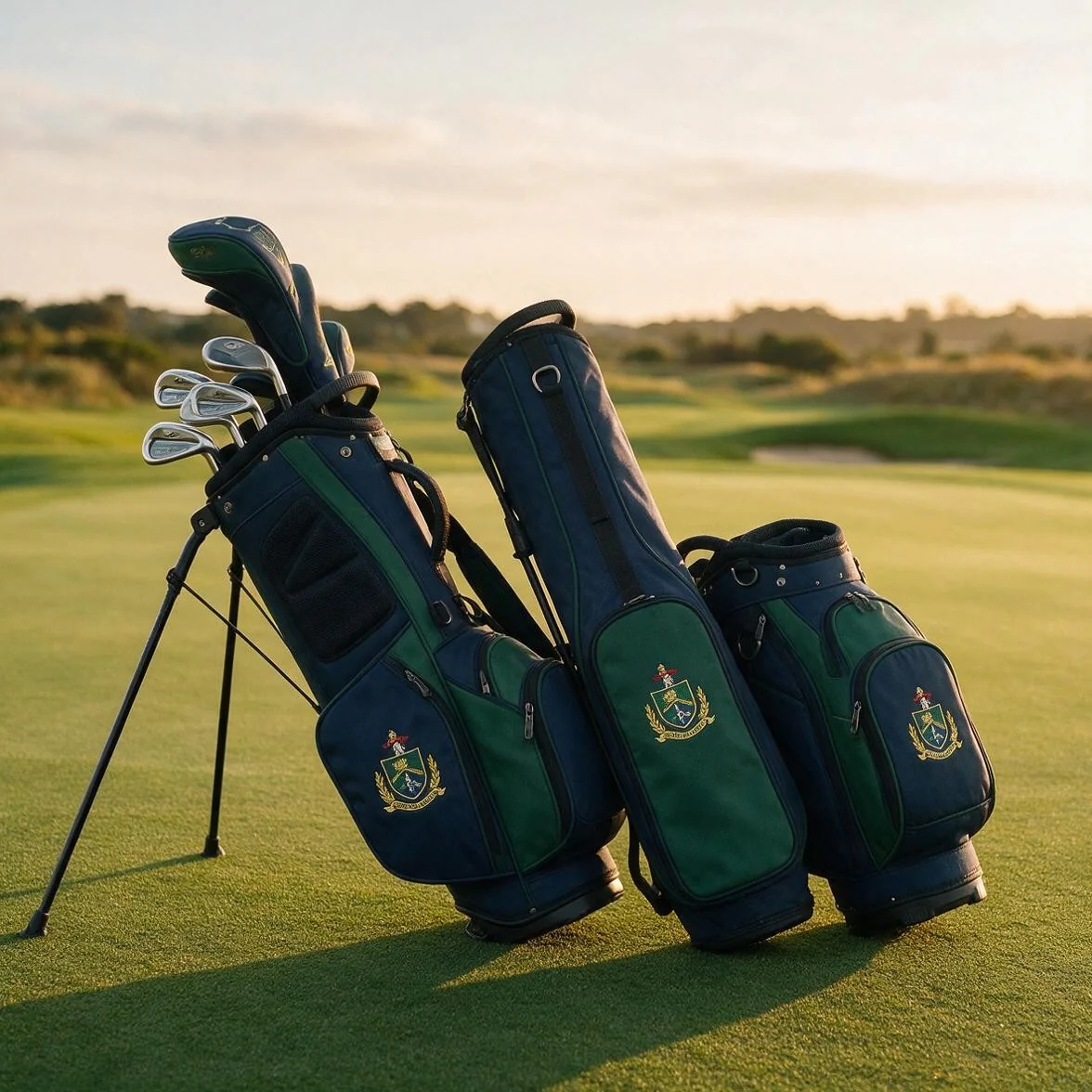
3. Materials: What the “Brand” Grade Really Costs
Callaway and TaylorMade marketing emphasize fabric and waterproofing, but from a factory these are discrete, priced line items. Below is a realistic material comparison for a bag in this class (typical ballpark figures – final numbers depend on your spec and volume):
| Component | Typical Grade in This Class | Budget Alternative | Factory Cost Signal |
|---|---|---|---|
| Main body nylon | 420D–600D coated (higher on flagships) | 210D–300D, thinner coating | Coated high-denier weaves add a real durability step-up. |
| Water protection | DWR standard; membrane on top Callaway builds | Minimal DWR | Waterproof membrane + taped seams raise cost and labor. |
| Stand mechanism | Auto-retracting modular stand | Simplex fixed-style legs | The largest single engineering line on any stand bag. |
| Base | Molded, reinforced structure | Soft, flexible PE | Mold tooling dominates early-run cost. |
| Zippers & hardware | Quality zippers, reinforced sliders | Standard generic zips | Repeated-failure point; premium builds spend more here. |
| Dividers & pocketing | Full-length, organized top, water-resistant pockets | Basic segmented top | Callaway’s storage edge is more operations, not exotic fabric. |
The takeaway is the same every review misses: every line a brand sources here is the same line a private-label buyer sources through an OEM/ODM golf bag manufacturer. The grade is real; the exclusivity is a logo.
4. Tooling: The Hidden Cost Most Reviews Never Mention
Reviewers talk fabric and zippers; they rarely mention tooling because they don’t build bags. A molded base, top cuff, leg cups and custom hardware all need injection or thermoforming molds paid off over a production run. Typical factory-level investments look like this:
| Tooling / Mold Item | Typical Investment (USD) | Amortized Over | Approx. Cost Per Bag |
|---|---|---|---|
| Molded base mold (injection) | $8,000–$15,000 | 3,000–5,000 pcs | $2–$4 |
| Top cuff / divider ring mold | $5,000–$10,000 | 3,000–5,000 pcs | $1.5–$3 |
| Leg-cup & stand mounts | $4,000–$9,000 | Full run | $1–$3 |
| Brand plate / logo tools | $1,000–$3,000 | Full run | $0.5–$1.5 |
| Patterns, samples & pre-production | $1,500–$4,000 | Full run | $1–$2 |
Tooling lands near 10% of factory cost on a moderate run and scales down per bag as volume grows. This is the strongest argument for OEM/ODM: the very tooling a heritage brand amortizes across thousands of units is the same tooling a private-label buyer gets to amortize.
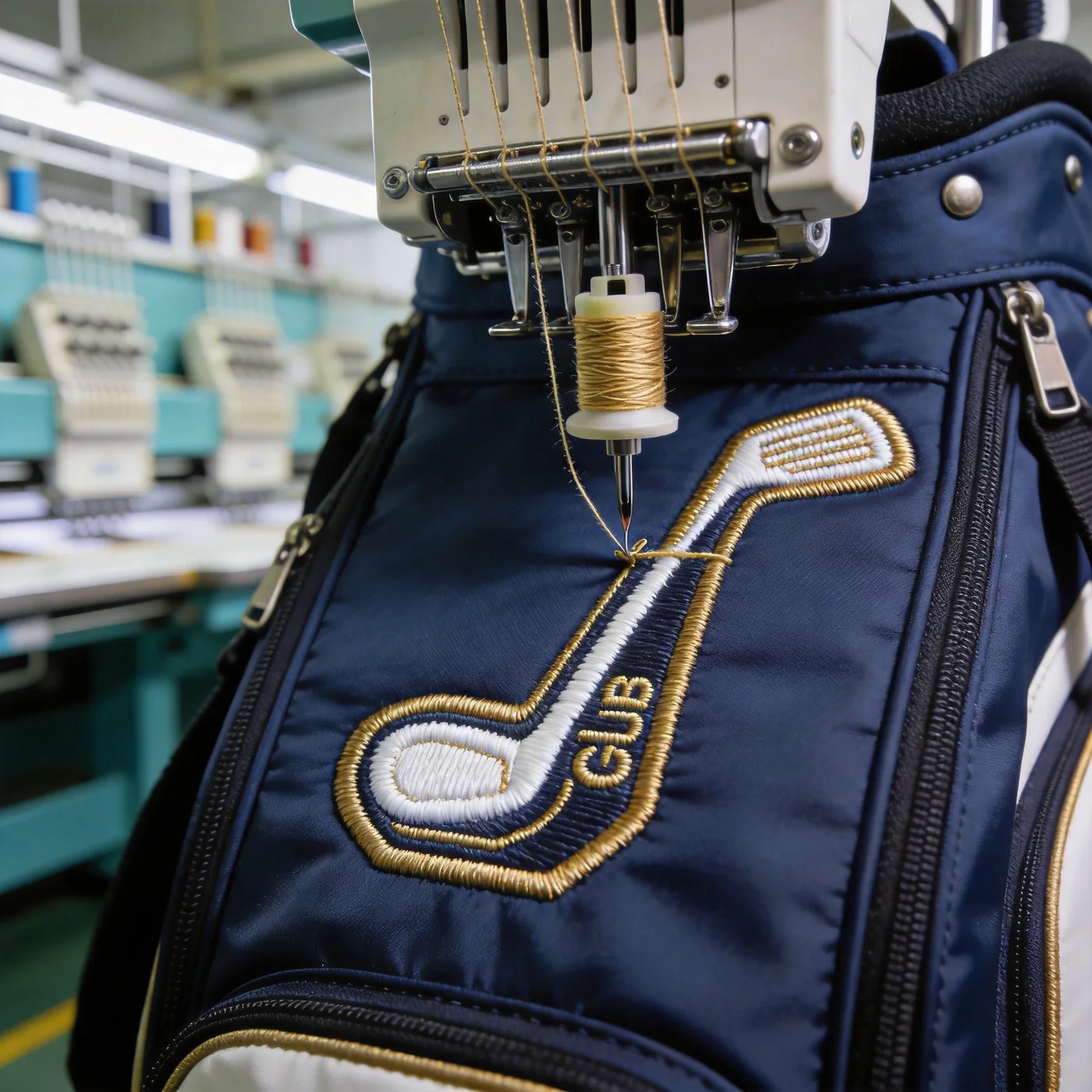
5. How a Golf Bag in This Class Is Actually Built
A stand or cart bag travels through roughly 50–100 separate operations depending on features. In our affiliated factory, that runs across 7 production lines with 149 machines (126 sewing) and 137 staff, with a trained operator still handling every panel transition and stand-fitting step by eye.
- Cutting & fusing — panels are cut from roll stock and heat-fused to lining; membrane layers are added on waterproof builds.
- Seam preparation & taping — critical seams are taped and sealed; premium tiers add full tape coverage.
- Sewing & assembly — body, dividers, top cuff and base are joined in sequence.
- Stand-system build & fitting — the leg mechanism is assembled, mounted and function-tested.
- Hardware & strap mounting — zippers, buckles, harness and handle are fitted and reinforced.
- Final QC & packing — stand-cycle test, stitch check, zipper check and boxing.
The measurable difference between “premium” and “budget” shows up in hours per bag. A well-finished build with a tested stand absorbs more operations, pushing labor to roughly 20% of cost – a genuine line, not decoration.
6. Callaway vs TaylorMade: The Honest Value Verdict
After a factory-level look, here is the straight call on which is “worth it,” all else equal:
- Choose Callaway for value if you want water-resistant storage and a slightly lower entry price. Callaway tends to concentrate spend on the weather layer and organization, which most players feel every round.
- Choose TaylorMade for weight and looks if you carry and want a lighter engineered shell with a clean silhouette. You pay a modest premium for that lightness at the same material grade.
- Buy on spec, not brand if you play a handful of rounds a season – the cheaper branded tier or an OEM build delivers most of the benefit.
For a factory-side read on how another premium name stacks against this tier, our Vessel vs Titleist comparison is the closest axis. And to judge any “premium” bag with factory eyes, see how to choose golf bag materials – a checklist built from the material bill, not marketing.
Bottom line
Neither brand is overpriced in absolute terms – both are real, higher-grade golf bags with genuine engineering. They are overpriced relative to build cost if you don’t need the durability or don’t play enough to amortize the logo premium. Buy the spec, not the name on the shell.
7. Budget Alternatives That Match the Spec
“Budget alternative that matches” does not mean a cheap knockoff – it means the same material and structural grade at a lower retail mark. Here are the honest routes:
- Second-tier branded stand/cart bags. Brands that build to a similar spec with less tour heritage often land at $90–$160, keeping coated fabrics, functional stands and decent dividers while cutting the brand margin.
- OEM/ODM factory build. The identical specification – coated high-denier nylon, molded base, functional stand, full-length dividers – is manufactured for private labels worldwide. A factory partner builds it at wholesale cost, and you decide the branding.
- Buy the previous-season flagship. Clearance of last line-ups holds the same fabric grade and structure at a fraction of the current ticket.
For deep context on the sourcing side, our custom golf bag cost & pricing guide, custom stand & Sunday golf bags page and the complete custom golf bag manufacturing guide walk through the spec and cost decisions a factory quotes against every day.
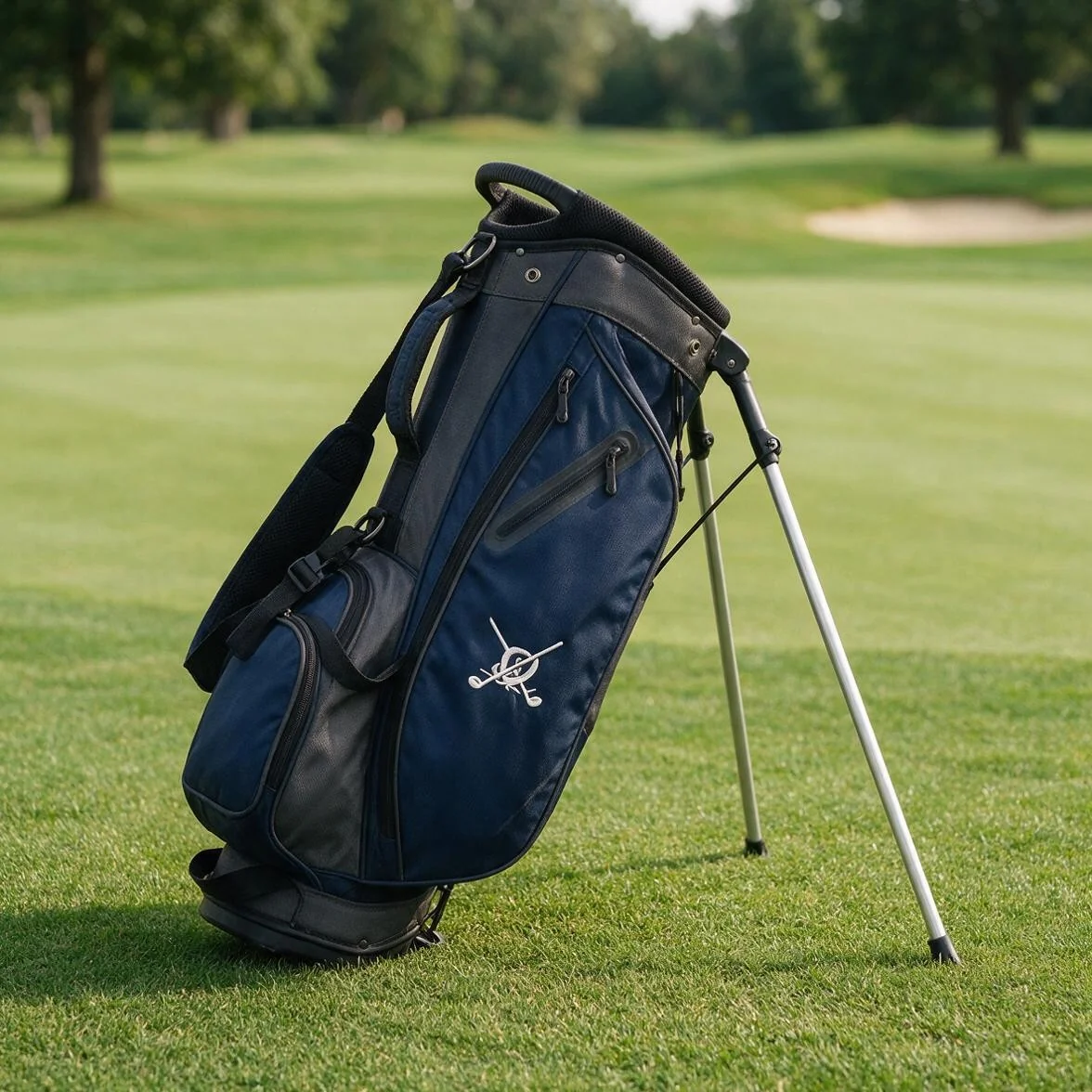
Build the Same Spec Under Your Brand
JUNYUAN BAGS is a golf bag trading company backed by an affiliated factory in Quanzhou, Fujian – SGS-verified at 4,950 sqm, 7 production lines, 149 machines (126 sewing) and 137 staff, with a monthly line capacity of 200,000 pieces and a vetted network of partner factories. We have supplied 200+ brands across 100+ countries as of 2026. Let our team spec, sample and ship a made-to-order stand or cart bag for your brand, shop or wholesale account.
Request a golf bag OEM/ODM quote
See how the top factories compare
FAQ: Callaway or TaylorMade
Which is better value: Callaway or TaylorMade golf bags?
On pure value, Callaway usually edges ahead because it concentrates spend on water-resistant storage at a slightly lower entry price. TaylorMade charges a modest premium for a lighter engineered shell. Both are marked up roughly 200%–300% above a factory build cost of about $55–$105 (typical).
Are Callaway golf bags worth the money?
For regular players who want water-resistant storage and a functional stand, yes – the spec is genuinely a higher grade. For occasional golfers, a cheaper branded tier or an OEM factory build delivers most of the benefit for a fraction of the cost.
Are TaylorMade golf bags worth the price?
TaylorMade bags are worth it if you specifically value a lightweight engineered shell and clean looks you carry often. On raw materials alone you pay a name premium, but the durability is real. Occasional players can match the spec for less.
How much does it cost to make a Callaway or TaylorMade-class golf bag?
A made-to-spec stand or cart bag in this tier typically costs roughly $55–$105 at factory build cost, before tooling amortization, branding and distribution. Retail then stacks brand and distribution margin on top.
What are budget alternatives that match Callaway or TaylorMade?
Second-tier branded stand/cart bags at $90–$160, previous-season clearance of the same lines, and OEM/ODM builds all keep the same coated-nylon, molded-base and functional-stand spec while cutting the brand margin.
What makes a higher-priced golf bag actually better?
The measurable differences are fabric grade, a functional auto-stand, a molded base and full-length dividers – not exotic materials. Those are exactly the lines that cost real money, and they are the same lines an OEM build sources for private labels.
Are Callaway and TaylorMade bags made in factories I could use?
Both brands source through global manufacturing partners, in the same specialized factories that build private-label golf bags worldwide – which is exactly why the construction is replicable via OEM/ODM. Our affiliated factory works within a vetted partner-factory network rather than a single captive shop.
Disclaimer: Retail and factory figures in this article are industry-typical approximations used to explain cost structure – not precise quotes or guaranteed prices. Actual pricing depends on your specification, volumes and prevailing conditions. Approx./typical labels apply to every figure above.
OEM perspective note: JUNYUAN BAGS operates as a golf bag trading and sourcing organization backed by an affiliated factory and partner factories in Quanzhou, Fujian. We do not claim to manufacture for Callaway or TaylorMade, nor do we represent any brand’s proprietary engineering. Figures describe the open, buyable spec that any brand can source.