
Retro-style leather handbags are more than just accessories – they’re enduring investments that blend style, practicality, and quality. These bags stand out for their longevity, thanks to full-grain leather that develops a rich patina over time, and their timeless designs that remain relevant across generations. Unlike trendy pieces, they hold their value and often appreciate over time.
Key Points:
- Durability: Genuine leather bags last 15–30+ years, far outliving PU leather alternatives (1–5 years).
- Timeless Design: Features like structured shapes, vintage hardware, and earthy tones make them versatile for casual and professional outfits.
- Craftsmanship: Handcrafted details, like saddle stitching and vegetable tanning, ensure quality and character.
- Investment Value: High-quality leather bags retain or increase in value, especially in the growing second-hand luxury market ($71.3B in 2024).
When styled thoughtfully, these bags elevate everyday looks and professional attire, while proper care ensures they become cherished pieces for decades.
How To Style A Vintage Designer Handbag | 3 Tips On How To Make An Old Bag Look Chic
sbb-itb-1e6451b
Craftsmanship and Materials: What Makes Quality Handbags
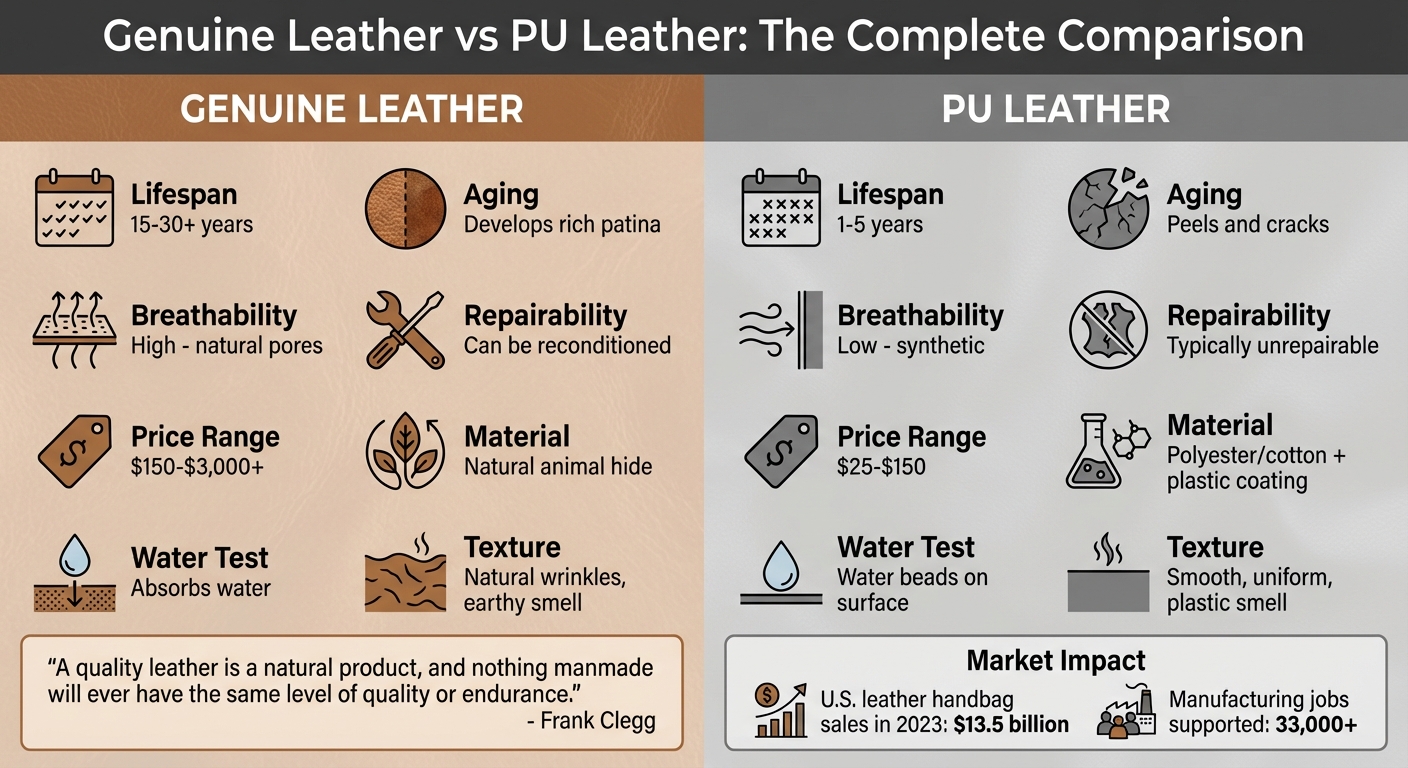
Genuine Leather vs PU Leather Handbags: Durability and Value Comparison
Genuine Leather vs. PU Leather: Making the Right Choice
The material of a handbag plays a huge role in its durability and how well it ages. Genuine leather, made from animal hides (often cowhide), can last anywhere from 15 to 30 years or more with proper care. On the other hand, PU leather – created by coating a fabric base like polyester or cotton with a plastic layer – has a much shorter lifespan, typically showing signs of wear like peeling or cracking within 1 to 5 years.
One of the standout features of genuine leather is its natural pores, which allow it to breathe and adapt to temperature changes. PU leather lacks these pores, making it prone to trapping heat and feeling sticky in humid conditions. Plus, minor scratches on real leather can be buffed out or reconditioned, while damage to PU leather is often permanent.
You can often tell these materials apart by their scent and texture. Genuine leather has a natural, earthy smell and shows wrinkles or texture when pressed. In contrast, PU leather feels smoother, has a uniform appearance, and emits a plastic-like odor. A simple water absorption test can also help – genuine leather absorbs water due to its porous nature, while water beads on the surface of PU leather.
"A quality leather is a natural product, and nothing manmade will ever have the same level of quality or endurance."
– Frank Clegg, Founder, Frank Clegg Leatherworks
The price differences between the two materials are also noticeable. Genuine leather bags typically range from $150 to over $3,000, depending on craftsmanship and quality. PU leather bags, however, are more affordable, priced between $25 and $150. In 2023 alone, leather handbag sales in the U.S. exceeded $13.5 billion, supporting over 33,000 manufacturing jobs.
| Feature | Genuine Leather | PU Leather |
|---|---|---|
| Lifespan | 15–30+ years | 1–5 years |
| Aging | Develops rich patina | Peels and cracks |
| Breathability | High (natural pores) | Low (synthetic) |
| Repairability | Can be reconditioned | Typically unrepairable |
| Price Range | $150–$3,000+ | $25–$150 |
These differences in materials set the stage for the enduring appeal and quality of retro-style handbags.
Classic Design Features of Retro-Style Handbags
Retro handbags are known for their timeless charm, thanks to design details that never go out of style. Elements like antique brass buckles, turnlocks, and frame closures not only add a vintage vibe but also ensure practicality. Structured shapes – such as boxy top-handle bags, satchels, and elongated rectangular designs – provide a formal, polished look that retains its shape for years.
Stitching plays a big role in the overall look and durability of these bags. Techniques like saddle stitching, contrast thread work, and quilted patterns highlight their handcrafted nature. Many retro handbags use full-grain leather, which preserves the outermost layer of the hide. Over time, this leather develops a patina, turning scratches and creases into marks of character.
How Handcrafted Quality Adds Value
Craftsmanship is just as important as material quality when it comes to the longevity and appeal of handbags. Hand-cutting and stitching techniques give these bags a level of flexibility and durability that machines simply can’t match. High-end bags often include reinforcements at stress points, like handle attachments and closures, to prevent wear and tear over time.
"I’ve seen bags I made fifteen years ago come back for minor repairs, and I swear to you – they look better now than the day they left my studio."
– Nerina Leatherworks
The tanning process is another crucial factor. Vegetable tanning, which uses natural plant tannins, creates leather that not only breathes but also improves with age. This process can take weeks or months, resulting in a material that develops a rich patina over time. Even the interior lining reflects this attention to quality, with premium options like pig suede, goat leather, or high-grade cotton twill replacing cheaper synthetics.
Handmade leather bags typically fall in the $250–$650 range and can last 10 to 30 years with proper care. A bag crafted from full-grain leather with quality hardware can serve beautifully for decades. This hands-on approach to crafting not only boosts durability but also enhances the retro aesthetic that defines these timeless pieces.
"The artistry lies in the details – the curve of a flap, the polish of a brass buckle, or the smooth glide of a YKK zipper."
– Aaron Leather Goods
How to Style Retro-Style Leather Handbags
Styling Retro Handbags with Everyday Outfits
Retro-style leather handbags are a perfect way to elevate casual looks. For a timeless, laid-back outfit, pair a compact leather crossbody in tan, black, or brown with high-waisted jeans and a tucked-in white tee. Heading out for weekend errands? A large leather tote works wonders with leggings, an oversized sweater, and combat boots, blending practicality with a touch of flair.
Playing with textures can bring a modern twist to retro pieces. For example, a smooth leather hobo bag pairs beautifully with a fuzzy jacket, while a woven leather bag adds depth to a sleek black leather jacket. Slouchy bags with suede accents are a natural fit for maxi dresses or linen jumpsuits. Want to make a bold statement? Opt for a vibrant retro satchel in colors like red or mustard yellow to stand out against an all-black or monochrome outfit.
When choosing a bag, consider finishes like pebbled or grained leather to minimize visible scratches. Coordinating the bag’s hardware with your outfit adds polish: gold accents pair well with warm tones, while silver complements cool, minimalist palettes. For proportions, petite frames might lean toward smaller crossbodies, while taller individuals can balance their look with larger totes or satchels.
These everyday styling ideas are a great foundation for creating more polished, professional looks.
Adding Vintage Accessories to Professional Attire
Retro handbags are a sophisticated addition to professional wardrobes, especially when chosen in neutral tones and structured designs. Bags with understated hardware fit the "quiet luxury" trend, making them ideal for office settings.
For a polished, professional outfit, pair a statement retro bag with a crisp shirt and wide-leg trousers. As Jordanna Sharp, Private Stylist and Personal Shopper, notes:
"The silhouette is what makes a handbag classic. Timeless shapes such as classic handle bags, totes, and shoulder bags will stay in style for years".
In corporate or legal environments, retro briefcases or satchels with steel frames or clamshell openings add a refined touch. For a versatile day-to-night option, try pairing a retro shoulder bag with a midi sweater dress and an oversized blazer. Materials like Saffiano leather or bags with scratch-resistant finishes are practical for daily use. If you’re looking to brighten up a neutral office wardrobe, consider a vintage bag in cherry red, butter yellow, or cobalt blue – small pops of color can make a big impact.
Adjusting your handbag choices with the seasons can further enhance your style.
Choosing Retro Handbags for Different Seasons
Seasonal styling lets you keep the retro vibe while adapting to weather and wardrobe changes. Choosing the right colors and materials ensures your bag feels both stylish and practical year-round.
In spring, structured bags in pastel tones and East-West silhouettes bring a fresh, airy feel. For summer, woven materials like raffia or straw in bucket bag designs create a relaxed, breezy look, while bright colors can add contrast to neutral summer outfits.
Fall is all about warm textures. Suede hobo bags pair effortlessly with layered, bohemian-inspired outfits. Interestingly, sales for heavily worn luxury items jumped 32% in 2025, with distressed bags seeing a 45% increase – proof that scuffs and scratches are now seen as signs of fashion pedigree.
Winter calls for small, structured bags that peek out from oversized coats. Following the "Red Bag Rule", a bold red bag can add a cheerful pop of color to dark winter ensembles. To carry bucket bags into colder months, look for versions with mixed materials, prominent hardware, or leather straps. Don’t forget to use a leather conditioner to keep your retro bag supple and protected from harsh winter weather.
How to Choose High-Quality Retro-Style Handbags
What to Look for in Quality Leather Handbags
Start with full-grain leather – the top-tier choice for leather handbags. This type of leather uses the outermost layer of the hide, which preserves its natural texture, durability, and strength. Over time, full-grain leather develops a stunning patina – a soft sheen and deep color variation that gives each bag its own unique charm. As Becky from CARV London explains:
"Full-grain leather is the highest-quality leather you can find… ideal for those who love timeless pieces."
Pay close attention to the seams and edges. High-quality bags typically have hand-polished, painted, or sealed edges, which prevent fraying and add a polished finish. The stitching should be tight, even, and reinforced at stress points, such as where the handles attach or at the corners. Also, check the zipper – it should glide effortlessly without snagging. Frank Clegg, a leather craftsman, points out:
"Once a zipper fails, a bag might become useless."
Examine the hardware carefully. Look for solid brass, stainless steel, or nickel-plated metals rather than lightweight materials like plated zinc or plastic. Handles should feel sturdy and substantial, often crafted from layered leather, rather than feeling hollow or flimsy. Finally, inspect the lining – a durable interior made from materials like micro-suede or heavy fabric is a hallmark of a well-made bag. These details are what set apart retro-style handbags as both stylish and durable investments.
Evaluating Price and Long-Term Value
When considering price, think beyond the initial cost and focus on longevity. Retro leather handbags made in the U.S. generally range from $150 to $600, depending on the leather type, size, and craftsmanship. While this might seem pricey upfront, a well-made bag with proper care can last for decades, making it a worthwhile investment.
The growing preference for slow fashion highlights the importance of durability and mindful consumption. If sustainability is a priority, look for vegetable-tanned leather. This eco-friendly option uses plant-based tannins to create a natural finish that ages beautifully, unlike chrome-tanned leather, which relies on harsh chemicals.
When assessing value, pay attention to the details that justify the price: the type of tanning process, edge finishing, quality of hardware, and the benefits of handcrafted workmanship. A bag made from premium leather that ages gracefully – where scratches and wear add character – offers far greater long-term value compared to synthetic alternatives. However, to truly maximize your investment, proper care is essential.
Maintaining Your Retro-Style Leather Handbag
Taking care of your leather handbag can significantly extend its lifespan. Condition the leather every 3–6 months to keep it supple and prevent cracking. If your bag gets wet, let it air dry naturally – avoid using heat, which can cause permanent damage.
Storage is just as crucial. Place your bag in a breathable cotton dust bag or even an old pillowcase. Avoid plastic bags, as they trap moisture and can lead to mold or mildew. This simple practice helps the leather maintain its ability to breathe, preserving its quality over time.
One of the most beautiful aspects of full-grain leather is how it improves with age. The patina that forms from exposure to light and the oils from handling is a signature feature of high-grade leather. With regular conditioning and careful storage, your retro-style handbag can become a lifelong companion, embodying the timeless appeal and enduring value of a truly classic fashion piece.
Conclusion: The Lasting Value of Retro-Style Leather Handbags
Retro-style leather handbags are more than just accessories – they’re investments that hold their appeal despite changing trends. Unlike fleeting fashion pieces, classic designs like structured handle bags and totes remain stylish year after year. As Rachel Glicksberg from The RealReal puts it:
"A good investment is what you love and will wear for years to come."
The numbers back this up. Between February and March 2023, demand for vintage designs climbed 10% month-over-month, while searches for "vintage" on resale platforms skyrocketed nearly 300%. This shift signals a growing preference for fewer, higher-quality pieces.
One of the standout features of these bags is their full-grain leather, which develops a rich patina over time, adding character and uniqueness. With proper care – like regular conditioning and mindful storage – your retro-style handbag can age gracefully and even become a cherished heirloom.
But it’s not just about durability. The versatility of these designs is a major draw. Retro-style bags effortlessly pair with everything from casual outfits to professional attire, making them a smart choice for maximizing cost-per-wear. Whether you prefer the polished look of a structured satchel or the understated charm of a vintage shoulder bag, investing in quality leather craftsmanship ensures you’ll have a timeless accessory that never goes out of style.
FAQs
How can I quickly tell real leather from PU leather?
To tell real leather apart from PU leather, start by checking the label. Words like "genuine leather" typically mean it’s the real deal, while terms such as "PU" or "bonded" point to synthetic materials. Another quick test? Drop a bit of water on the surface – real leather absorbs it slowly, leaving a temporary dark spot, while PU leather repels water entirely.
You can also rely on touch and smell. Real leather often has a natural grain with slight imperfections and a rich, earthy scent. In contrast, PU leather feels smoother, has a more uniform appearance, and might carry a plastic-like odor.
What retro handbag shape works best for everyday use?
A medium-sized handbag, such as a leather tote or a classic flap bag, strikes the perfect balance for daily use. These designs combine a polished, timeless appearance with the practicality of ample space for your everyday essentials.
How do I protect a leather bag from rain and winter weather?
To keep your leather bag safe from rain and harsh winter conditions, try to minimize its exposure to moisture. If it does get wet, gently blot it with a soft cloth and allow it to air dry in a cool, well-ventilated spot. Avoid placing it near heat sources or in direct sunlight, as these can damage the leather. Applying a high-quality leather protector or waterproof spray can add an extra layer of defense. When not in use, store your bag in a dust bag and use paper stuffing to help it retain its shape.
Related Blog Posts
- 7 Steps to Design Your Dream Bespoke Leather Tote Bag
- Timeless Investment: Why Bespoke Leather Ages Better
- Flyknit vs. Leather Bags: Which Material Should You Choose?
? Related: Looking for a comprehensive guide to custom leather bag manufacturing? Check out our Complete Guide to Custom Leather Bag Manufacturing — covering leather types, tanning methods, OEM/ODM process, QC standards, and branding.
? Related: Looking for a comprehensive guide to custom leather bag manufacturing? Check out our Complete Guide to Custom Leather Bag Manufacturing — covering leather types, tanning methods, OEM/ODM process, QC standards, and branding.