
Top 7 Golf Bag Manufacturers & Suppliers in Australia 2026
Australia stands as one of the world’s most passionate golfing nations, with over 1,600 golf courses scattered across a continent that spans tropical rainforests, sun-baked outback, and temperate coastal strips. Australian golfers are among the most active per capita globally, and their demands on golf equipment — particularly golf bags — are shaped by the country’s extreme climate, outdoor lifestyle, and love of travel. From the sand-scratched surfaces of Queensland courses to the windswept layouts of Victoria’s Sandbelt, Australian golfers need bags that can endure punishing UV exposure, sudden tropical downpours, and the rigours of frequent air travel to domestic and international destinations.
This comprehensive guide explores the top golf bag manufacturers and suppliers serving the Australian market in 2026, the unique factors that make the Aussie market distinct, how to source custom golf bags from China through experienced partners like Junyuan Bags, and the import regulations every Australian buyer should understand. Whether you’re an Australian brand owner, retailer, or golf enthusiast, this guide delivers actionable insights for navigating the market.
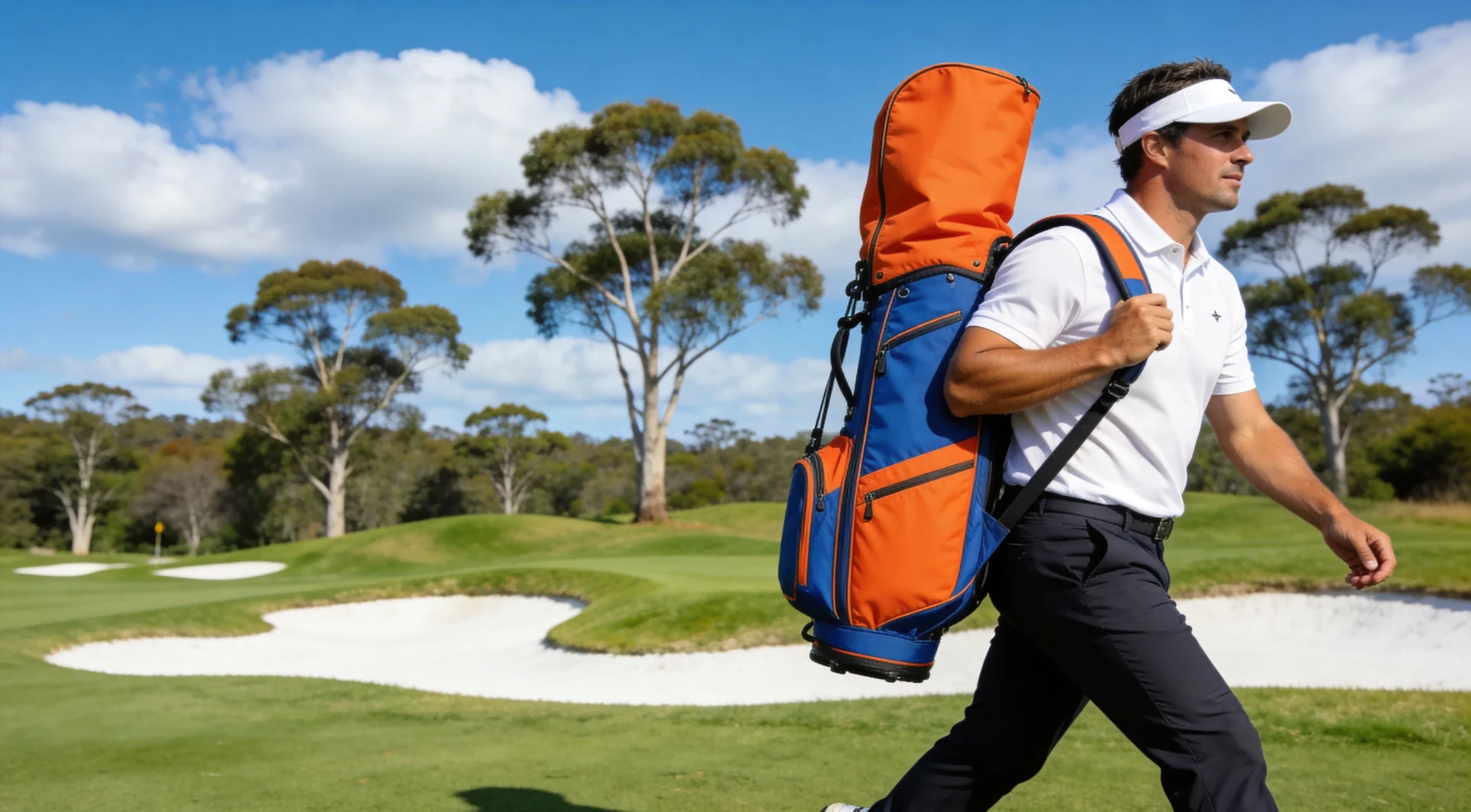
Why Australia’s Golf Bag Market is Booming
Australia’s golf market punches well above its weight relative to population size. With approximately 1.5 million active golfers and a golf course density that rivals any nation, Australia consistently ranks among the top five golf markets globally on a per-capita basis. The sport’s accessibility — with public courses available in virtually every town and suburb — ensures a broad participation base that drives steady demand for golf equipment, including bags.
Several factors are driving growth in the Australian golf bag market. The country’s outdoor culture means golf is played year-round, with no extended off-season unlike northern hemisphere markets. This creates consistent demand rather than the seasonal spikes seen in other regions. Additionally, Australia’s geographic isolation makes golf travel an essential part of the golfing experience — domestic flights to destinations like the Gold Coast, Melbourne, and Rottnest Island, plus international trips to Asia-Pacific hotspots, drive strong demand for premium travel bags.
The Australian market is also experiencing a surge in junior and women’s participation. Golf Australia’s membership data shows women’s participation has grown by over 25 percent since 2019, and junior golf programs are expanding rapidly. These new demographics are bringing fresh aesthetic preferences and performance expectations to the market, particularly regarding bag colour, weight, and style. The trend towards fitness-oriented golf — walking the course rather than riding — has boosted demand for lightweight stand bags with ergonomic carry systems.
UV exposure is a uniquely Australian concern. With some of the highest skin cancer rates in the world, Australian consumers are increasingly aware of the importance of UV protection in their equipment. Golf bag manufacturers serving this market must use UV-stabilised fabrics and materials that resist fading, cracking, and degradation under intense Australian sunlight. This requirement is far more stringent than in most other global markets and represents a key differentiator for bags designed specifically for Australian conditions.
Top Golf Bag Brands Dominating Australia
The Australian golf bag market features a mix of international heavyweights and homegrown brands that understand local conditions. Here are the leading brands in 2026:
1. Orostan
Orostan has established itself as a distinctly Australian golf bag brand, designing products specifically for the country’s demanding conditions. Their bags feature UV-resistant fabrics, reinforced stitching rated for extreme temperatures, and integrated rain hoods designed for tropical downpours. The Orostan Pro Cart Bag and Travel Guard series are top sellers through Australian pro shops and online retailers. Price range: AUD $180–$400.
2. Cobra Golf
Cobra’s Australian presence is substantial, with their bags popular among younger, style-conscious golfers. Their Ultralight stand bag series is particularly well-suited to Australian walking golfers, featuring advanced lightweight construction and bold colourways that reflect the country’s vibrant outdoor culture. Price range: AUD $200–$450. For insights into how bags like these are manufactured, our comprehensive golf bag manufacturing guide covers the full production process.
3. TaylorMade Australia
TaylorMade’s Australian division tailors its product range to local preferences, emphasising weather resistance and UV protection. Their cart bags feature moisture-wicking valuables pockets and reinforced bases designed for the rougher conditions often found on Australian courses. The Qi10 cart bag and Stealth stand bag are bestsellers. Price range: AUD $200–$500.
4. Burkley
Burkley represents the premium segment of the Australian market, offering leather and premium synthetic bags that combine classic styling with Australian-specific functionality. Their bags appeal to the discerning golfer who values heritage aesthetics alongside modern performance features. Price range: AUD $350–$700.
5. Sun Mountain Australia
Sun Mountain’s Australian range emphasises lightweight stand bags and weather-resistant cart bags suited to the country’s diverse climate. Their 4.5LS and 3.5LS models are perennial bestsellers, prized for their combination of lightweight design and robust construction. Price range: AUD $180–$380.
6. Club Car Accessories
While primarily known for golf carts, Club Car’s accessories division offers a range of golf bags and bag accessories popular in the Australian market. Their products are designed for compatibility with motorized carts, which are widely used on Australian courses. Price range: AUD $120–$300.
7. Titleist Australia
Titleist maintains its premium positioning in Australia with tour-grade bags popular among competitive golfers and club professionals. Their cart bags feature extensive organisation systems and premium materials designed for the Australian climate. Price range: AUD $350–$650.
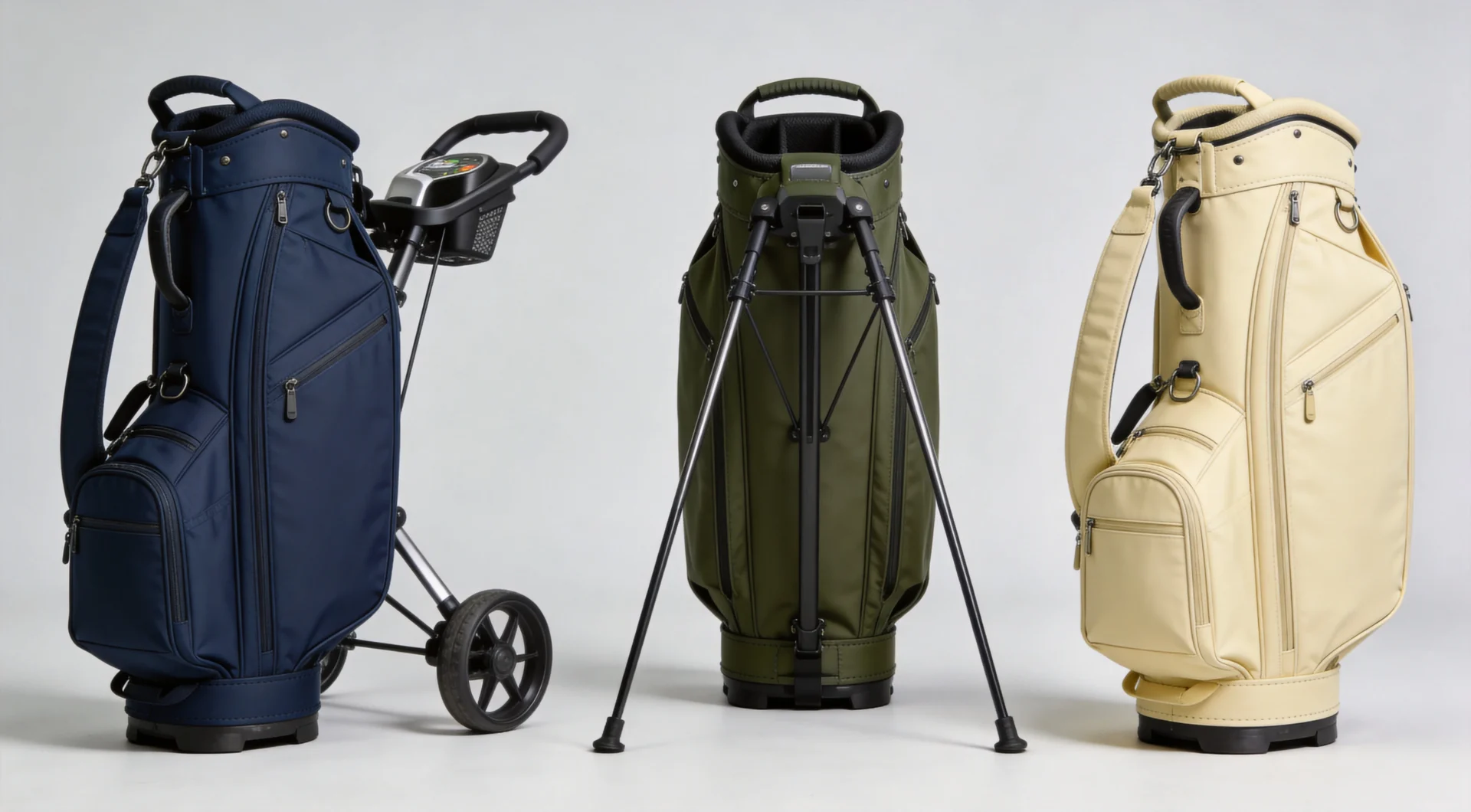
Key Factors When Choosing a Golf Bag Manufacturer
For Australian brands and retailers sourcing golf bags, several factors deserve particular attention given the country’s unique conditions:
Material Quality: Australian conditions demand exceptional material performance. UV-stabilised polyester and nylon are essential — fabrics must resist fading and degradation under intense sunlight. Look for materials rated at 600D or higher with UV-inhibitor additives. Waterproof construction is equally important, particularly for Queensland and northern Australian courses that experience tropical wet seasons. The materials guide covers these options in detail. Eco-friendly materials like recycled polyester (rPET) are increasingly important to environmentally conscious Australian consumers.
Weight and Portability: With many Australian golfers preferring to walk the course, particularly on the country’s magnificent sandbelt courses, lightweight construction is highly valued. Stand bags should ideally weigh under 4.5 pounds, with ergonomic dual-strap systems that distribute weight comfortably in warm conditions. Even cart bags benefit from thoughtful weight engineering to make handling easier.
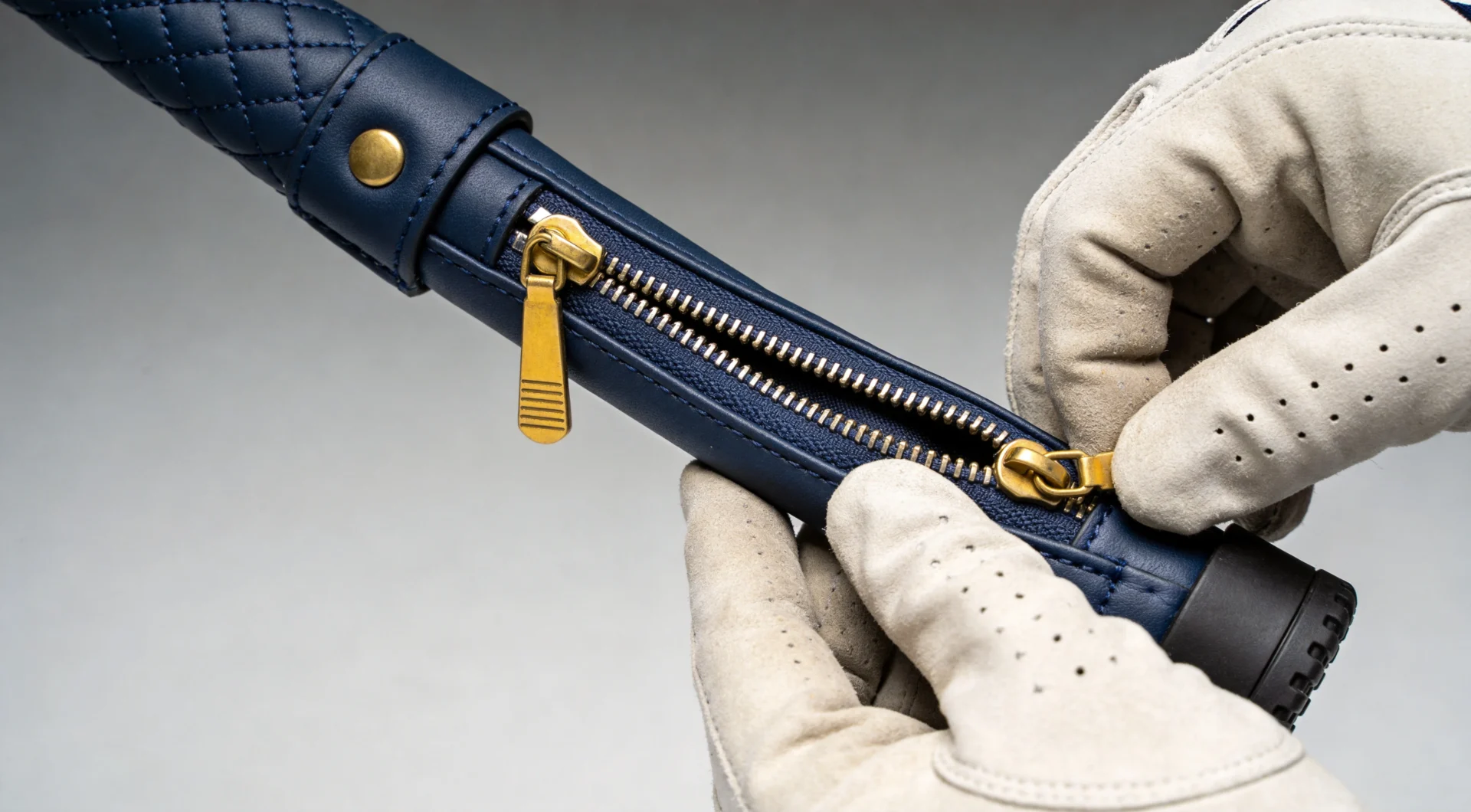
Waterproof and Weather Resistance: Australian weather is notoriously variable — from tropical storms in the north to cold, wet winters in the south-east. Golf bags must offer genuine waterproof protection, not just water resistance. Sealed zippers (like YKK Aquaguard), fully sealed seams, integrated rain hoods, and waterproof base plates are all critical. Australian buyers are sophisticated enough to test these claims and will quickly reject products that don’t deliver.
Customisation Capabilities: Australian brands need differentiation in a competitive market. Leading manufacturers offer custom logo options including embroidery, sublimation printing, and custom hardware. Junyuan Bags provides 48-hour 3D Tech Pack rendering, allowing Australian brands to visualise products before production. Custom colourways that reflect Australian landscapes and culture are particularly effective.
MOQ and Lead Time: The Australian market is relatively small compared to the US or Europe, making flexible MOQs essential. Junyuan Bags offers MOQ of 300 pieces per design, accommodating Australian brands at various stages of growth. The sample development process takes 7-15 days, with express shipping to Australia available in 3-5 days.
Quality Certifications: Australian buyers increasingly demand transparent supply chain credentials. BSCI, ISO 9001, and Sedex certifications are valued. Junyuan Bags holds BSCI and ISO 9001 certifications, operating a 4,950 sqm affiliated factory facility producing 200,000 bags monthly. Their commitment to quality is reflected in their production processes and certifications.
Australia-Specific Market Insights & Buyer Preferences
The Australian golf bag market has several unique characteristics shaped by geography, climate, and culture. The most significant factor is the extreme UV environment. Australia receives some of the highest levels of ultraviolet radiation of any inhabited continent, which means golf bags must be constructed from materials specifically designed to resist UV degradation. Standard fabrics that perform well in European or American conditions may crack, fade, or weaken within a single Australian summer. UV-stabilised polymers, solution-dyed fabrics, and reinforced stitching are essential for bags sold in this market.
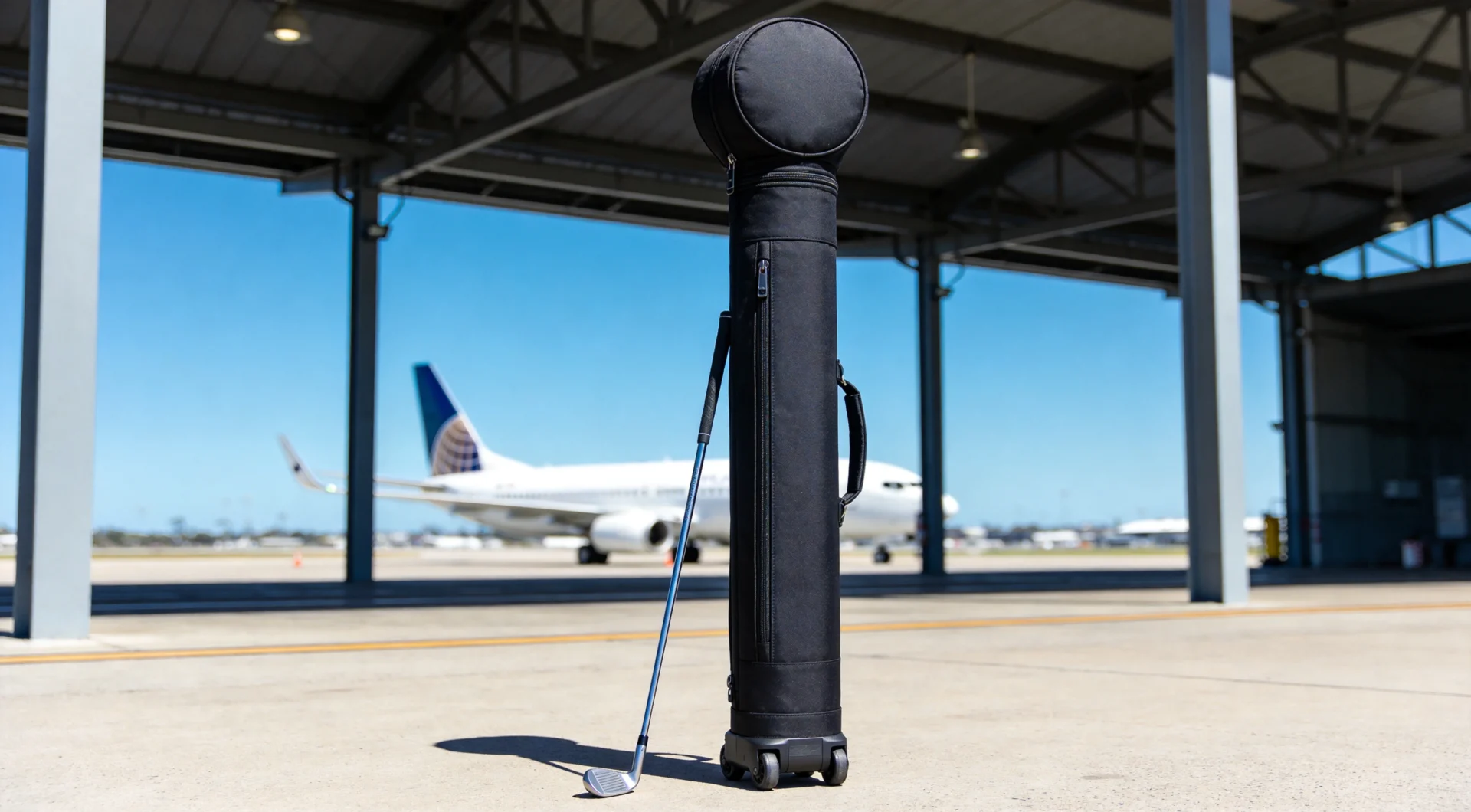
Travel bags are disproportionately popular in Australia compared to other markets. The country’s vast distances and isolation mean Australian golfers fly more frequently to access courses — both domestically and internationally. Premium travel bags with reinforced club head protectors, integrated wheels, and TSA-approved locks are a high-growth category. Australian golfers also frequently travel to Asia-Pacific golf destinations like Thailand, Vietnam, Fiji, and New Zealand, creating consistent year-round demand for travel protection products.
Colour preferences in Australia lean towards bold, outdoor-inspired palettes — think ocean blues, bushland greens, and sandy neutrals. There’s also strong demand for bags with reflective elements, given that many Australian golfers play during early morning or late afternoon rounds when light levels are lower. Safety-conscious features like reflective piping and high-visibility accents are appreciated by this market.
Price sensitivity in Australia varies significantly. The premium segment (AUD $300+) performs strongly, reflecting Australian consumers’ willingness to invest in quality equipment. However, the mid-market (AUD $150-$300) represents the largest volume segment. Australian consumers are value-conscious but not necessarily price-driven — they’re willing to pay for genuine quality and durability, but expect products to deliver long-term value. The direct-to-consumer channel is growing rapidly in Australia, with brands leveraging social media and e-commerce platforms to reach consumers directly.
How to Source Custom Golf Bags from China for the Australian Market
China remains the primary manufacturing source for golf bags sold in Australia, and the sourcing process follows well-established pathways for Australian importers:
OEM/ODM Process: Australian brands benefit from China’s mature golf bag manufacturing ecosystem. Junyuan Bags offers comprehensive OEM services for established Australian brands with existing designs, and full ODM capabilities for brands developing new product lines. Their in-house design team understands Australian market requirements, including UV resistance specifications and weather-proofing demands. The 48-hour 3D Tech Pack service accelerates the design process, allowing Australian clients to review and approve designs rapidly despite the time zone difference.
Sample Development: The prototyping process at Junyuan Bags typically takes 7-15 business days. For Australian clients, sample delivery via DHL Express takes just 3-5 days, minimising turnaround time. Iterative revisions are supported until the sample meets all specifications. Sample costs are refundable against the first production order, reducing financial risk for Australian brands testing new product concepts.
Quality Control: Australian brands require the same rigorous quality standards as their European and American counterparts. Junyuan Bags implements a comprehensive QC inspection process including material testing (including UV resistance and colourfastness testing), in-line production monitoring, and pre-shipment inspection to AQL 2.5 standards. Their BSCI and ISO 9001 certifications provide additional confidence for Australian importers.
Logistics and Shipping: Shipping golf bags from China to Australia takes approximately 15-20 days by sea (FCL) from major Chinese ports to Sydney, Melbourne, or Brisbane. Air freight takes 5-7 days. Shipping logistics are managed by Junyuan Bags’ experienced export team, who handle all documentation required for Australian customs clearance. The relatively short shipping time from China gives Australian brands a supply chain advantage compared to sourcing from Europe or the Americas.
Junyuan Bags’ Advantages for Australian Brands: Since 2014, Junyuan Bags has built a reputation for manufacturing excellence that resonates with quality-conscious Australian brands. Their 4,950 sqm affiliated factory facility incorporates advanced FlyKnit technology that produces seamless, lightweight bags ideally suited to Australian walking golfers. With production capacity of 200,000 bags monthly and a track record serving 200+ brands across 100+ countries, they bring both scale and flexibility to Australian partnerships. Their FlyKnit technology is particularly valued for its ability to create bags that are both lightweight and exceptionally durable — a combination that Australian conditions demand.
Australian Import Regulations & Compliance
Importing golf bags into Australia requires compliance with regulations administered by the Department of Home Affairs and the Australian Border Force. Golf bags are classified under Australian tariff classification 4202.92 (textile outer surface) or 4202.91 (leather outer surface). The standard customs duty rate for golf bags from China is 5 percent under the general rate, though Australia’s free trade agreement with China (ChAFTA) may provide preferential rates for qualifying products.
The Australia-China Free Trade Agreement (ChAFTA), which entered into force in 2015, has progressively reduced tariffs on many goods traded between the two countries. Australian importers should verify whether their golf bag imports qualify for ChAFTA preferential rates, which could reduce the duty to zero over the agreement’s implementation period. A Certificate of Origin issued by the Chinese manufacturer is required to claim ChAFTA benefits.
While Australia does not have REACH-equivalent chemical regulations, the Australian Competition and Consumer Commission (ACCC) enforces mandatory safety standards for consumer products. Golf bags must not contain prohibited levels of certain chemicals, and all products must comply with the Australian Consumer Law regarding product safety and quality. Textile labelling requirements under the Textile Labelling Information Standard mandate accurate fibre content disclosure on textile products. Additionally, all imported products must meet Australian biosecurity requirements — wooden packing materials must be fumigated and certified under ISPM-15 standards.
The Future of Golf Bags in Australia
Looking ahead, the Australian golf bag market is poised for continued innovation. Smart bags with integrated technology — including GPS tracking, Bluetooth connectivity, and built-in charging capabilities — represent the next frontier. Sustainability is also becoming a significant purchasing driver, with Australian consumers increasingly favouring brands that demonstrate genuine environmental responsibility. Manufacturers who invest in recycled materials, water-based coatings, and carbon-neutral production processes will gain competitive advantage in this discerning market.
The growth of indoor golf simulators and social golf venues in Australia’s major cities is also creating new demand patterns. Younger golfers who discover the sport through simulation often transition to on-course play, bringing different expectations about bag aesthetics, weight, and technology integration. Australian brands that can bridge the gap between tradition and innovation — honouring the sport’s heritage while embracing new technology and sustainable practices — will be best positioned for long-term success in this dynamic market.
Frequently Asked Questions
What type of golf bag is most popular in Australia?
Stand bags are the most popular type of golf bag in Australia, reflecting the strong culture of walking the course, particularly on the country’s renowned sandbelt and links courses. Cart bags are also widely used on courses where motorised carts are standard. Travel bags are disproportionately popular due to Australia’s geographic isolation and the need to fly to many golf destinations. Sunday bags are growing in popularity among casual and social golfers.
How important is UV resistance for golf bags in Australia?
UV resistance is absolutely critical for golf bags sold in Australia. The country experiences some of the highest UV radiation levels in the world, which can rapidly degrade standard fabrics. Bags made without UV-stabilised materials may fade, crack, or weaken within a single Australian summer. Reputable manufacturers use solution-dyed fabrics and UV-inhibitor additives to ensure bags maintain their appearance and structural integrity over extended periods of sun exposure.
What is the MOQ for custom golf bag manufacturing for Australian brands?
Leading manufacturers like Junyuan Bags offer MOQs of 300 pieces per design, which is accessible for Australian brands of all sizes. This is particularly important given Australia’s smaller market size compared to the US or Europe. For brands developing multiple SKUs across different models, the 300-piece MOQ per design allows for manageable inventory investment while still achieving custom branding and design specifications.
How long does shipping from China to Australia take?
Ocean freight from major Chinese ports to Australian ports (Sydney, Melbourne, Brisbane) takes approximately 15-20 days, which is significantly faster than shipping to Europe or the US East Coast. Air freight takes 5-7 days for urgent orders. The relatively short shipping distance gives Australian brands a supply chain advantage, allowing for more responsive inventory management. See our shipping logistics guide for details.
Are there free trade agreement benefits for importing golf bags from China to Australia?
Yes, the Australia-China Free Trade Agreement (ChAFTA) may provide preferential tariff rates for qualifying golf bag imports. The standard duty rate is 5 percent, but ChAFTA-qualifying goods may attract reduced or zero duty rates. Importers need a valid Certificate of Origin from the Chinese manufacturer to claim these benefits. Consult with a licensed customs broker to determine eligibility and ensure proper documentation.
Can I get custom designs with UV-resistant materials for the Australian market?
Absolutely. Manufacturers experienced with the Australian market, like Junyuan Bags, offer UV-resistant material options including solution-dyed polyester, UV-stabilised nylon, and fabrics with built-in UV inhibitors. These materials resist fading and degradation under intense Australian sunlight. The materials guide covers the technical specifications of UV-resistant options in detail.
What should I look for in a quality control process for Australian golf bags?
A rigorous QC process should include incoming material inspection (including UV resistance and colourfastness testing), in-line production monitoring, functional testing of zippers, straps, and stands, and pre-shipment inspection to AQL 2.5 or better standards. Junyuan Bags implements comprehensive QC inspection at every stage, with BSCI and ISO 9001 certifications providing additional assurance of consistent quality.
Conclusion
Australia’s golf bag market in 2026 offers distinctive opportunities for brands that understand the country’s unique conditions — from extreme UV exposure to the demand for premium travel protection. Australian golfers are discerning, active, and willing to invest in quality equipment that performs under challenging conditions. Brands that deliver genuine weather resistance, UV protection, and thoughtful design will find loyal customers in this market.
For Australian brands seeking a manufacturing partner who understands these specific requirements, Junyuan Bags brings over a decade of expertise, BSCI and ISO 9001 certifications, FlyKnit technology for lightweight durable construction, and a flexible MOQ of 300 pieces. Their experience serving 200+ brands across 100+ countries includes deep knowledge of Australian market requirements, from UV-resistant materials to compliance with local import regulations. Their OEM/ODM capabilities and comprehensive logistics support make them an ideal partner for brands looking to excel in the Australian market.
Ready to develop your custom golf bag range for Australia? Request a quote from Junyuan Bags today and discover how over a decade of manufacturing excellence can help you create bags that Australian golfers will love.