
Why Coach Bags Cost What They Do: Leather Grades Explained
Coach prices sit where they do mostly because of one word: leather. This is a straight-from-the-factory read on the actual leather grades behind Coach bags – full-grain, top-grain, genuine/corrected and bonded, plus PU – the real bill of materials, the stitching and hardware that push cost, and how to judge value or reproduce the look under your own brand.
Coach bags cost what they do because a large share of the price goes into graded genuine leather, careful finishing and brand – not into exotic or rare material. Here is the density you asked for. The vast majority of Coach’s leather bags are built on top-grain and genuine/corrected leather, with some full-grain and structured styles on the higher end, priced roughly from $200 to $700+ retail. At factory level, an average mid-tier Coach-style leather handbag builds for about $30-70 (approx.) in materials, labour and finishing – the leather itself is usually 40-60% of that cost, hardware 10-15%, lining and interlining 10%, and sewing labour 15-25%. That is a large brand-and-design premium over the physical build, which is normal for a global leather label and is exactly why the “leather grade” on the bag matters more than the logo when you compare value. For a private-label run of the same construction, the working parameters are MOQ 500 pcs, sampling 6-10 days, mass production 35-50 days, AQL 2.5 inspection, 12-month warranty, more than a decade of experience-08-22, T/T 30/70 payment, FOB Xiamen / CIF / DDP shipping.
TL;DR / Quick Answer
- Why are Coach bags expensive? Not because of rare materials – because of graded genuine leather, careful tanning and finishing, heavy brand investment, and a full retail and design stack on top of a modest factory build.
- What leather grade does Coach use? Mostly top-grain and genuine/corrected leather with a smooth, coated finish, some full-grain and pebbled options, and structured styles that hold their shape on higher-end pieces.
- Are Coach bags worth the price? Yes when you value the durable leather, consistent finishing and resale and brand experience; the same “leather grade story” can be reproduced by an OEM/ODM partner at a fraction of retail.
- Factory verdict: a Coach-style leather handbag is an ordinary, high-volume construction using buyable leather grades – the premium is real but mostly brand, distribution and design, not hidden material.
1. What “Leather Grade” Actually Means
When a flag says “leather bag,” the price is really about which layer of the hide the brand used and how much it was sanded, coated and corrected. The hide is an animal skin that gets split into layers, and the upper layer – the grain – is the strongest and most expensive. “Full-grain” keeps the top surface intact and un-sanded, showing natural marks; it ages better but is costlier to cut because only the best hides make the grade. “Top-grain” sanded the very top and re-finished it, giving a cleaner, more uniform look at a lower cost while staying durable. “Genuine” or “corrected-grain” leather is a lower, buffed and heavily coated layer that is soft, consistent and cheap – it is real leather, just a more processed cut. “Bonded” leather is leather fibre and particles glued together with a coating, and PU/”vegan” leather is polyurethane over a fabric or split backing – not hide at all.
Coach, like nearly all mainstream leather-lifestyle brands, spends most of its range in the top-grain and genuine/corrected tiers, with signature coated finishes, pebbled textures and structured construction. That is a sensible, high-quality-for-the-price choice: it looks uniform, resists stains, and keeps a fashion brand’s margins workable. It is not “cheap leather” – it is simply the grade that matches a $200-700 fashion price point rather than a $2,000+ artisanal one.
2. Why Coach Bags Cost What They Do
Strip a Coach-class leather bag down and the price is built from four honest buckets. First, leather quality – the single biggest cost. A good top-grain or genuine hide cut for handbags is graded, checked for defects, and only the usable area is cut, which raises the effective cost per usable square even when the raw hide price is modest. Second, tanning and finishing – chrome or vegetable tanning, dyeing, buffing, coating and pressing add labour and chemistry. Third, construction – stitching, piping, hardware, linings, the structured internal frame many Coach bags use, and edge painting. Fourth, brand, design and distribution – the mark on the bag, the stores, the marketing and the retail margin, which is usually the largest single share of a fashion bag’s shelf price.
So the honest answer to “why do Coach bags cost what they do” is: a competent graded-leather build, plus a lot of brand and design. That is not a criticism – it is how every leather lifestyle label sets price – but it means the physical material premium is smaller than most buyers assume, and the design-and-brand premium is larger. On a typical $350 (approx.) retail Coach-class handbag, the factory build is a modest slice and the rest is the retail stack.
3. Leather Grade Comparison
Here is a realistic, typical-side-by-side of the grades you actually see in Coach and Coach-class bags (typical, not a specific SKU):
| Leather Grade (typical) | Surface & Process | Durability & Ageing | Typical Factory Cost & Use Tier |
|---|---|---|---|
| Full-grain | Top surface intact, un-sanded; natural grain and marks; minimal coating | Strongest, develops a rich patina; can scratch and show marks | Highest hide cost; premium/artisanal and some structured Coach-tier styles |
| Top-grain | Top sanded smooth then re-finished/coated; uniform, clean look | Good durability, stain-resistant because of the finish; less patina | Mid-to-upper fashion tier; the workhorse of many Coach-class lines |
| Genuine / corrected-grain | Lower split, heavily buffed and coated; soft and consistent | Durable for daily use but less long-term character | Entry and mid fashion tier; soft, affordable mainstay |
| Bonded leather | Leather fibre and particles bonded and coated over a backing | Less durable; can peel with hard wear | Budget/accessory line; low factory cost |
| PU / “vegan” leather | Polyurethane coating over fabric or split backing; not hide | Consistent, easy-care, but zero natural patina | Lowest cost; entry and vegan/eco lines |
The column that decides Coach’s price bracket is the top two rows: top-grain and genuine/corrected. That is the material sweet spot for a fashion handbag – durable enough for daily use, uniform enough to look premium at every angle, and cost-controlled enough to keep a $300-500 (approx.) retail price workable.
4. Factory View: What a Coach-Style Leather Handbag Actually Costs
From a leather-goods factory’s costing sheet, a Coach-class handbag is a standard, high-volume construction. Here is a realistic bill-of-materials for a mid-tier leather handbag in this style (typical, not a specific SKU):
| Component (typical) | Cost per Bag (approx.) | Factory Note |
|---|---|---|
| Genuine leather (top-grain/ corrected cut) | $14-30 | The biggest single item; graded hide, usable-area cutting, tanning and finishing all land here |
| Lining, interlining & structured frame | $4-9 | Interior liner, padding/quilting, and the internal frame that keeps structured Coach-style bags rigid |
| Hardware (zippers, buckles, feet, logo plate) | $3-7 | Solid-base metal and branded logo hardware; heavier structured pieces push this up |
| Stitching, edge painting & seams | $4-10 | Hand-and-machine stitching, edge finishing and piping are what make the bag look premium |
| Trims, labels, thread, packaging | $1-3 | Branded dust bag, hang tag and carton add identity at low cost |
| Assembly & finishing labour | $4-11 | More operations than a simple tote because of structure, quilting and hardware |
Add those up and a mainstream Coach-style leather handbag lands around $30-70 (approx.) at factory level before brand, distribution, retail markup and import. On a $300-600 (approx.) retail bag, the build is a modest share of the price and the rest is the brand and retail stack – normal for a consumer leather label, and worth knowing before you spend.
5. Coach vs What You Pay vs What You Get
Weigh it against these when: you care mainly about the leather grade and construction rather than the logo – at that point a well-made top-grain private-label bag from a capable OEM/ODM partner gives you similar material, equal or better stitching, and far lower price.
In plain terms: you are paying for leather, construction and brand. If the brand experience, warranty and resale matter to you, Coach’s price is defensible. If what you really want is a durable top-grain leather bag, the grade and build are reproducible at near factory cost under your own name. Both are legitimate – just know which one you are buying.
6. Factory Process: From Raw Hide to Finished Bag
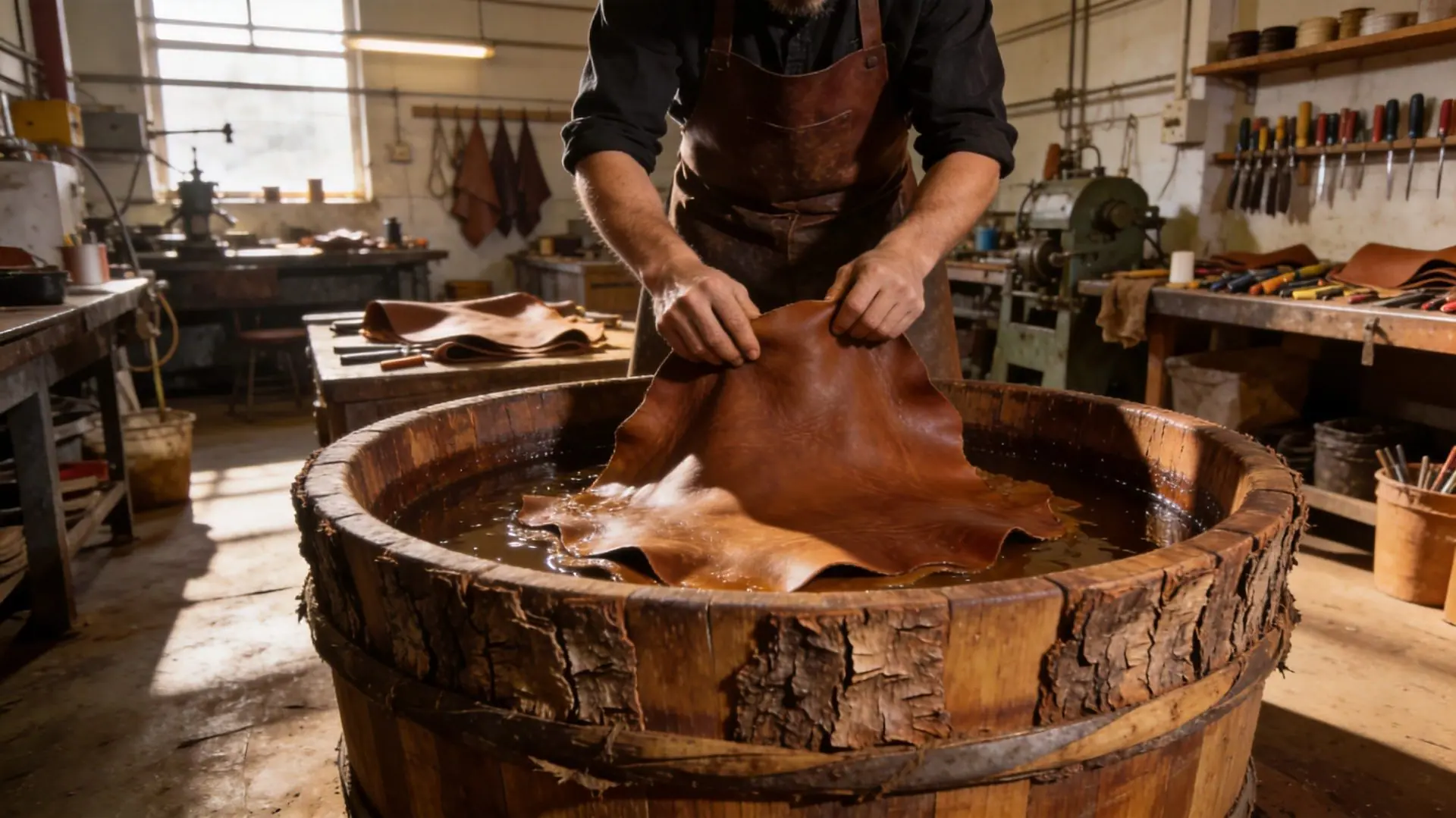
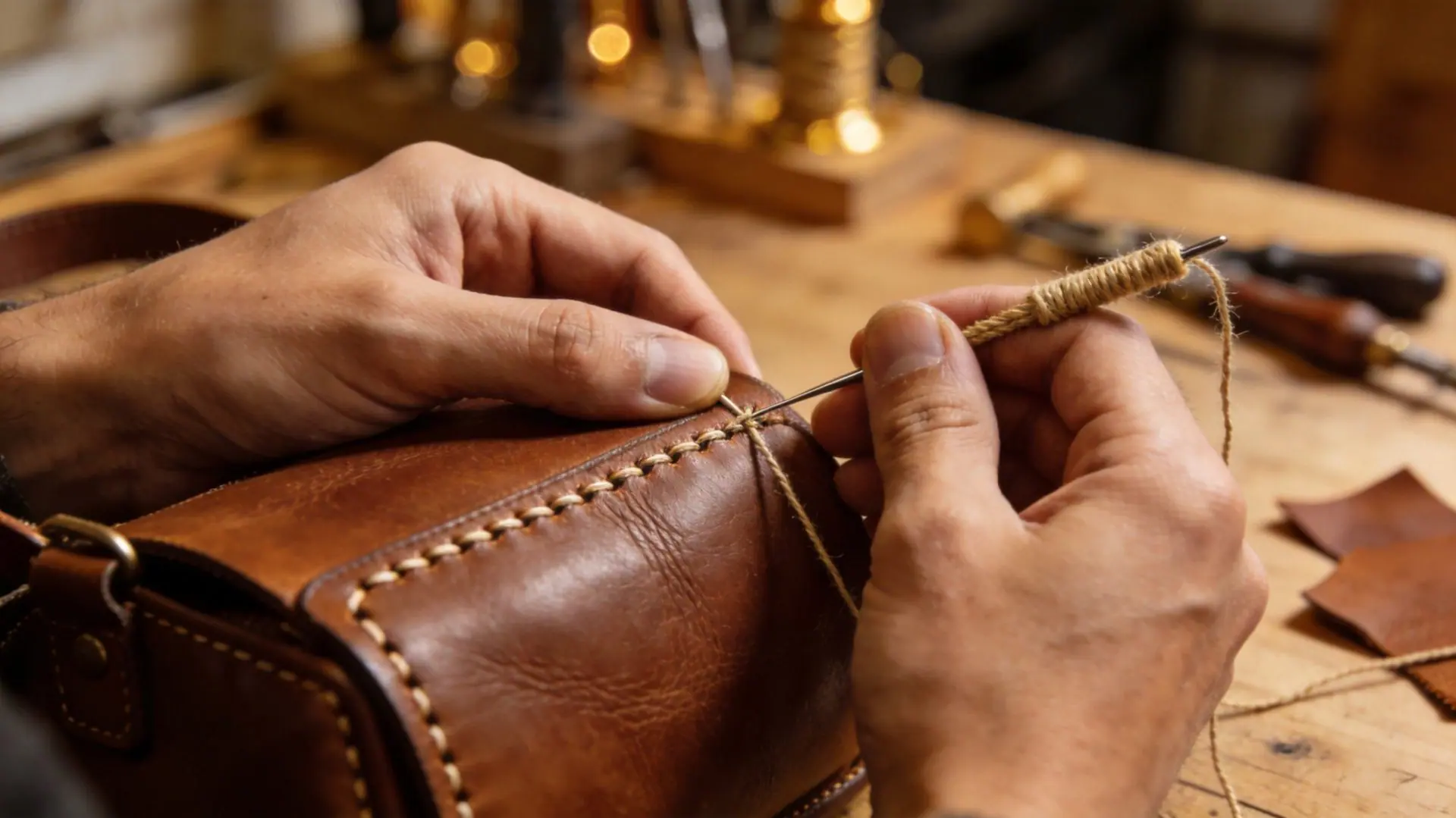
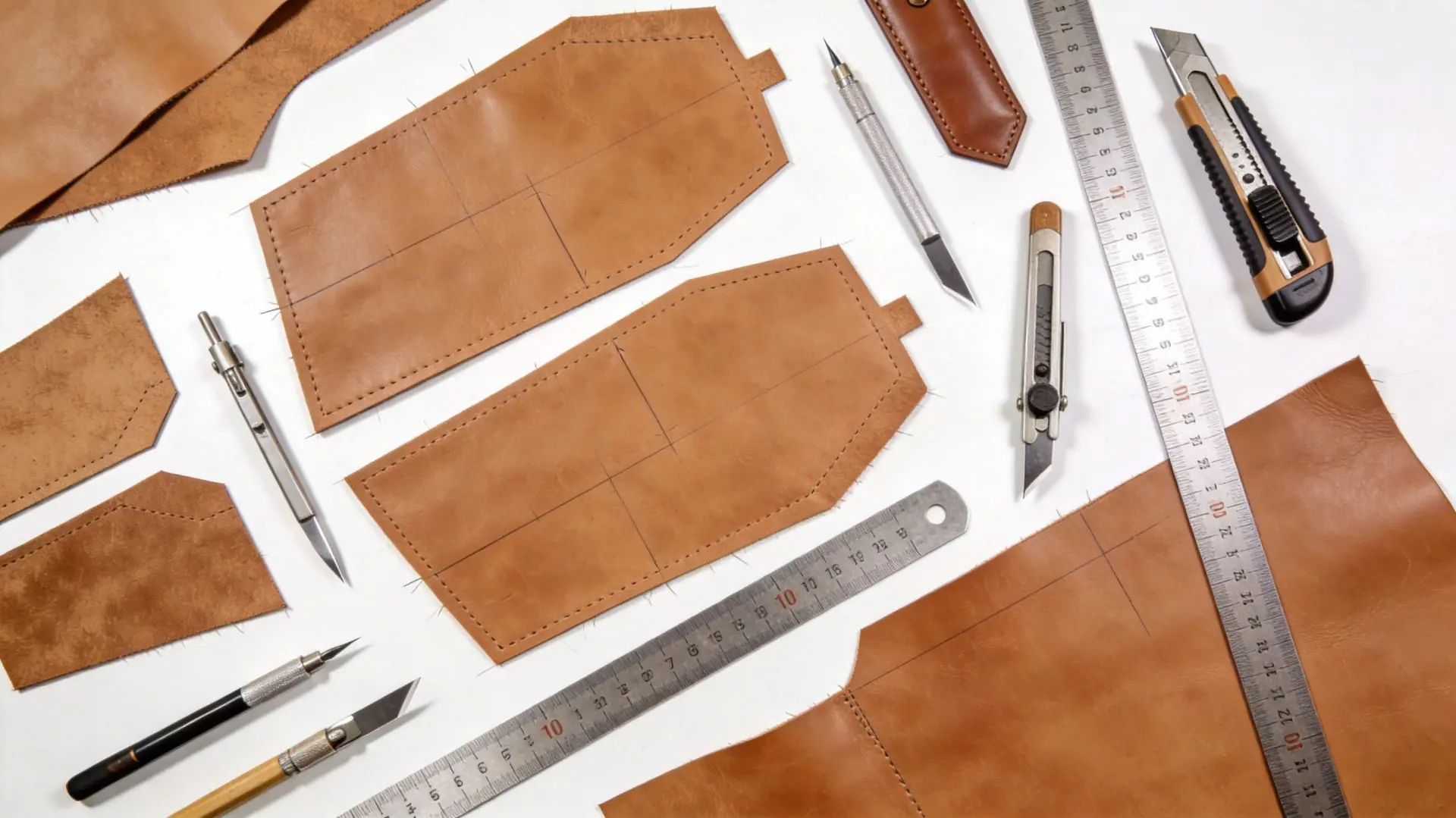
The leather-goods factory view turns “why is it expensive” into a step sequence. First the hide is selected and graded – defects, thickness and usable area decide which grade it can sell as. Then it is tanned (chrome or vegetable) and finished – dyed, buffed, coated and pressed for the smooth, uniform Coach-style surface. Next the hide is pattern-cut, with a skilled cutter layering the panels to waste as little usable leather as possible. Then each panel is stitched – outer seams, then lining and the structured frame – and edged with edge paint for a clean, polished rim. Hardware and logo are attached, and finally the bag gets a quality inspection for stitching tension, leather defects, hardware fit and finish before it is bagged with its dust cover.
Every one of those steps costs labour and time, which is why the “simple” answer – a bag is a bag – is wrong. A top-grain Coach-style bag carries real material and finishing cost. But it is a standard, high-volume process, which is exactly why it can be reproduced by a partner factory at a fair price.
7. Fair-Price Alternatives and Private-Label Leather Bags
If you want a Coach as a consumer, the smartest rule mirrors any brand-heavy leather buy: pick a classic silhouette, buy the grade you genuinely need, and buy on sale or via an outlet. The brand premium is the largest share of the price, so a classic that ages on you is worth more than a trend you will replace. If you are a brand or business sourcing leather goods, the calculation is even clearer – the same top-grain and genuine leather, the same construction steps, are buyable near factory cost.
Start with an OEM/ODM leather bag partner to spec a Coach-class build under your own label. Read the custom leather bag manufacturing guide to move from grade choice to production, and the inside look at Coach’s OEM supply chain to understand what a global leather brand actually sources. For handbag-specific production routes, the custom handbag manufacturing guide is the map, and if hardware is your deciding factor, the bag hardware and branding guide pins the zips and logo plates. For timeless leather silhouettes that hold value, the timeless leather handbag styling guide is a good read.
8. Frequently Asked Questions
What leather grade does Coach actually use?
Coach uses mostly top-grain and genuine/corrected leather with smooth, coated finishes, plus pebbled and structured styles, and some full-grain options on higher-end pieces. It is a competent, uniform, durable grade matched to a fashion price point rather than rare or exotic leather.
Why are Coach bags so expensive if the leather is not rare?
Because a large share of the price is brand, design and distribution on top of a modest factory build. The graded leather, tanning, finishing, stitching and hardware are real, but a mid-tier Coach-style bag builds for roughly $30-70 (approx.), so most of the retail price is the brand and retail stack.
Is “genuine leather” at Coach good quality?
“Genuine” is a specific grade – a buffed, corrected and coated layer of real hide – not a quality badge. Coach finishes it well and it is durable for everyday use. It is good quality for its price tier, just not the top layer of the hide.
What is the difference between full-grain and top-grain leather?
Full-grain keeps the top surface intact and un-sanded, showing natural marks and ageing into a patina; it is costlier. Top-grain sands and re-finishes the top for a cleaner, more uniform look at lower cost while staying durable – this is the workhorse of most Coach-class lines.
Are Coach bags worth the price for the leather?
It depends on what you value. If brand, durable leather, consistent finishing and resale matter, yes. If you mainly want a durable top-grain leather bag, the same grade and construction are reproducible by an OEM/ODM partner at a fraction of retail.
How much does a Coach-style leather handbag cost to make?
Approximately $30-70 (approx.) at factory level, where leather is 40-60% of cost, hardware 10-15%, lining and interlining 10%, and sewing and finishing 15-25%. The rest of a $300-600 (approx.) retail price is brand, distribution and retail margin.
Can I source a Coach-style leather handbag under my own brand?
Yes. The construction is standard – graded genuine leather, structured frame, stitching, edge paint and hardware – produced through the same partner-factory network as mainstream leather labels. Our affiliated factory can spec a made-to-order top-grain or genuine leather handbag at MOQ 500, sampling 6-10 days, production 35-50 days, AQL 2.5, FOB Xiamen.
Is PU or vegan leather a fair lower-cost alternative to Coach leather?
For an entry or vegan/eco budget, yes – PU is consistent and easy-care but has no natural patina and less longevity. It is not the same thing as graded hide, so compare them on your own priorities: durability and character versus cost and animal-free materials.
9. Final Word
Coach bags cost what they do because a competent graded-leather build carries a large brand and design premium – not because the material is rare. The leather is real and well finished, mostly top-grain and genuine/corrected, and the construction is standard, high-volume work any capable partner can reproduce. Buy a classic silhouette if you value the brand and the durable leather, buy the grade you genuinely need, and remember that the same leather-grade story can be made under your own label at near factory cost. That is the honest factory view, and it is the whole reason value shoppers look past the logo.
Want That Leather Grade Under Your Own Brand?
We are the affiliated factory behind graded-leather handbags and private-label leather goods, working within a vetted partner-factory network that has served brands across 200+ markets and many export markets as of 2026 – MOQ 500, sampling 6-10 days, production 35-50 days, AQL 2.5, 12-month warranty, T/T 30/70, FOB Xiamen / CIF / DDP. Spec a Coach-class top-grain or genuine leather handbag at factory cost.
Why Coach Bags Cost What They Do: Leather Grades Explained A factory-backed breakdown of why Coach bags cost what they do – the leather grades (full-grain, top-grain, genuine/corrected, bonded, PU), the real bill of materials, stitching and hardware, who each grade suits, and private-label alternatives for every tier. publish why-coach-bags-cost-leather-grades-explained 2026-10-05 11:45:56 2026-10-05 03:45:56 0 https://junyuanbags.com/why-coach-bags-cost-leather-grades-explained.html 0 post 0