
The global leather goods market continues to expand year after year, and brands across every segment — from luxury fashion houses to DTC startups — are seeking reliable manufacturing partners to bring their custom leather bag designs to life. If you are a B2B buyer evaluating production options, sourcing a factory, or planning to launch your own leather bag label, this is the most comprehensive guide you will find.
At JUNYUAN, we have spent years manufacturing custom leather bags for brands worldwide. This guide distills everything we have learned about materials, processes, quality standards, branding, compliance, and cost — so you can make informed decisions and build a successful leather bag product line.

Quick Answer: JUNYUAN Bags is a BSCI & ISO 9001 certified leather bag manufacturer led by a founder with bag industry experience dating from 2004, producing 200,000 per month (SGS-verified)+ bags annually across 8 product categories. We specialize in full-grain, top-grain, and bonded leather with both vegetable and chrome tanning methods. Our OEM/ODM services start from MOQ 100 units with 7-day sample turnaround, REACH and CPSIA compliance, and private label manufacturing for 200+ brands in 100+ countries.
Why Custom Leather Bags Are a High-Value B2B Product
The global leather goods market was valued at approximately $395 billion in 2025 and is projected to grow at a CAGR of 5–7% through 2030. Within this broader market, the handbag and bag segment alone accounts for over $120 billion in annual revenue. These numbers tell a clear story: leather bags are not a niche product — they are a cornerstone of the global accessories industry.
Several factors make custom leather bags an exceptionally attractive B2B product category. First, premium pricing power. Unlike synthetic alternatives, genuine leather products command significant price premiums. A well-crafted leather tote can retail for $200–$2,000+ depending on leather grade, hardware quality, and brand positioning. This means healthy margins for brands and their manufacturing partners.
Second, brand loyalty and longevity. Leather products age gracefully — developing patina, character, and emotional attachment over years of use. Customers who invest in a quality leather bag often become repeat buyers and brand advocates. Studies consistently show that leather goods have higher customer retention rates compared to fast-fashion accessories.
Third, customization versatility. Leather can be embossed, debossed, dyed, painted, printed, and finished in countless ways. This makes it ideal for brands that want distinctive, differentiated products — whether they are a luxury fashion house, a corporate gifting company, or a lifestyle brand launching their first accessories line.
For B2B buyers, the opportunity is clear: partner with an experienced leather bag manufacturer to create products that your end customers will value, cherish, and recommend. The manufacturing principles that apply to technical bags also apply here — precision, quality control, and attention to detail separate good manufacturers from great ones.
Types of Leather Bags: A Complete Category Overview
Understanding the full range of leather bag categories helps B2B buyers identify which products align with their target market and brand positioning. Each category has distinct design requirements, material specifications, and manufacturing considerations.
Tote Bags
Leather tote bags are the workhorses of the accessories world — spacious, versatile, and universally appealing. They range from structured, lined designs with interior pockets to soft, unstructured silhouettes. For B2B production, totes are relatively straightforward to manufacture but require careful attention to handle attachment points and base reinforcement. Popular in both women’s and men’s markets.
Briefcases and Laptop Bags
The business briefcase category demands premium materials and precise construction. These bags require padded compartments, structured frames, and professional hardware. Full grain and top grain leathers are the preferred choices for their durability and professional appearance. Manufacturing complexity is higher, requiring reinforced stitching at stress points and precise panel alignment.
Messenger Bags
Leather messenger bags bridge casual and professional aesthetics. They typically feature flap closures, adjustable shoulder straps, and multiple compartments. The manufacturing process requires careful pattern engineering for the flap, precise buckle or magnetic closure placement, and reinforced strap attachment hardware.
Handbags
The leather handbag category encompasses the widest design range — from structured satchels to soft hobo bags, clutches, and crossbody styles. Each subcategory requires different pattern blocks, construction methods, and finishing techniques. Handbags often feature the most customization options in terms of hardware, lining, and decorative elements.
Travel Bags and Duffels
Leather travel bags and weekender duffels represent the premium end of luggage. These require heavy-duty leather (often 1.2mm–1.6mm thick), reinforced stress points, robust zippers rated for heavy loads, and comfortable shoulder straps. The sports bag manufacturing expertise in structural engineering translates directly to leather travel bag production.
Wallets and Small Leather Goods
Wallets, cardholders, key cases, and passport covers represent high-volume, lower-unit-cost products that are ideal for brand entry points or gift programs. Despite their small size, they require the same level of precision in edge finishing, stitching, and leather selection as larger bags.

Leather Types & Grades: Choosing the Right Material
The leather grade you select fundamentally determines your product’s quality perception, durability, price point, and customer satisfaction. Here is a comprehensive breakdown of the leather types most relevant to bag manufacturing.
Full Grain Leather
Full grain leather is the highest quality available. It includes the entire thickness of the hide, with the natural grain intact. No sanding or buffing removes the surface. This means natural markings — pores, scars, and wrinkles — remain visible, giving each piece a unique character. Full grain leather develops a rich patina over time, becoming more beautiful with age. It is the preferred choice for luxury brands and commands the highest raw material cost ($8–$15+ per sq ft).
Top Grain Leather
Top grain leather has the outermost layer sanded or buffed to remove imperfections, then embossed with an artificial grain pattern. This creates a more uniform appearance and makes the leather easier to work with in production. It is softer and more pliable than full grain but less durable over the long term. Top grain is the sweet spot for many premium brands — offering excellent quality at a more accessible price point ($5–$10 per sq ft).
Genuine Leather
“Genuine leather” is a specific grade — not a marketing term. It refers to the layers remaining after the top grain is separated. While it is real leather, it lacks the structural integrity and aesthetic quality of higher grades. It is typically used for budget products, lining, or non-visible components. Cost ranges from $2–$5 per sq ft.
Suede
Suede is created by splitting the hide and buffing the flesh side to create a soft, napped surface. It offers a luxurious tactile experience but requires careful treatment for stain resistance and water protection. Suede is popular for linings, accent panels, and casual-style bags.
Vegan Leather (Plant-Based)
Modern vegan leathers include materials derived from cactus (Desserto), pineapple (Piñatex), apple, mushroom (Mylo), and cork. These appeal to environmentally conscious consumers and cruelty-free brand positioning. Quality and durability vary significantly between suppliers — thorough testing is essential before committing to production.
PU Leather (Polyurethane)
PU leather is a synthetic material that mimics the appearance of genuine leather at a fraction of the cost. It is widely used in fast-fashion and budget product lines. While PU leather has improved significantly in quality, it lacks the longevity, breathability, and aging characteristics of real leather. It is an appropriate choice for specific market segments and price points.
Tanning Methods: Vegetable vs Chrome Tanning
The tanning process transforms raw animal hides into stable, usable leather. The two primary methods — vegetable tanning and chrome tanning — produce fundamentally different materials with distinct characteristics.
Vegetable Tanning
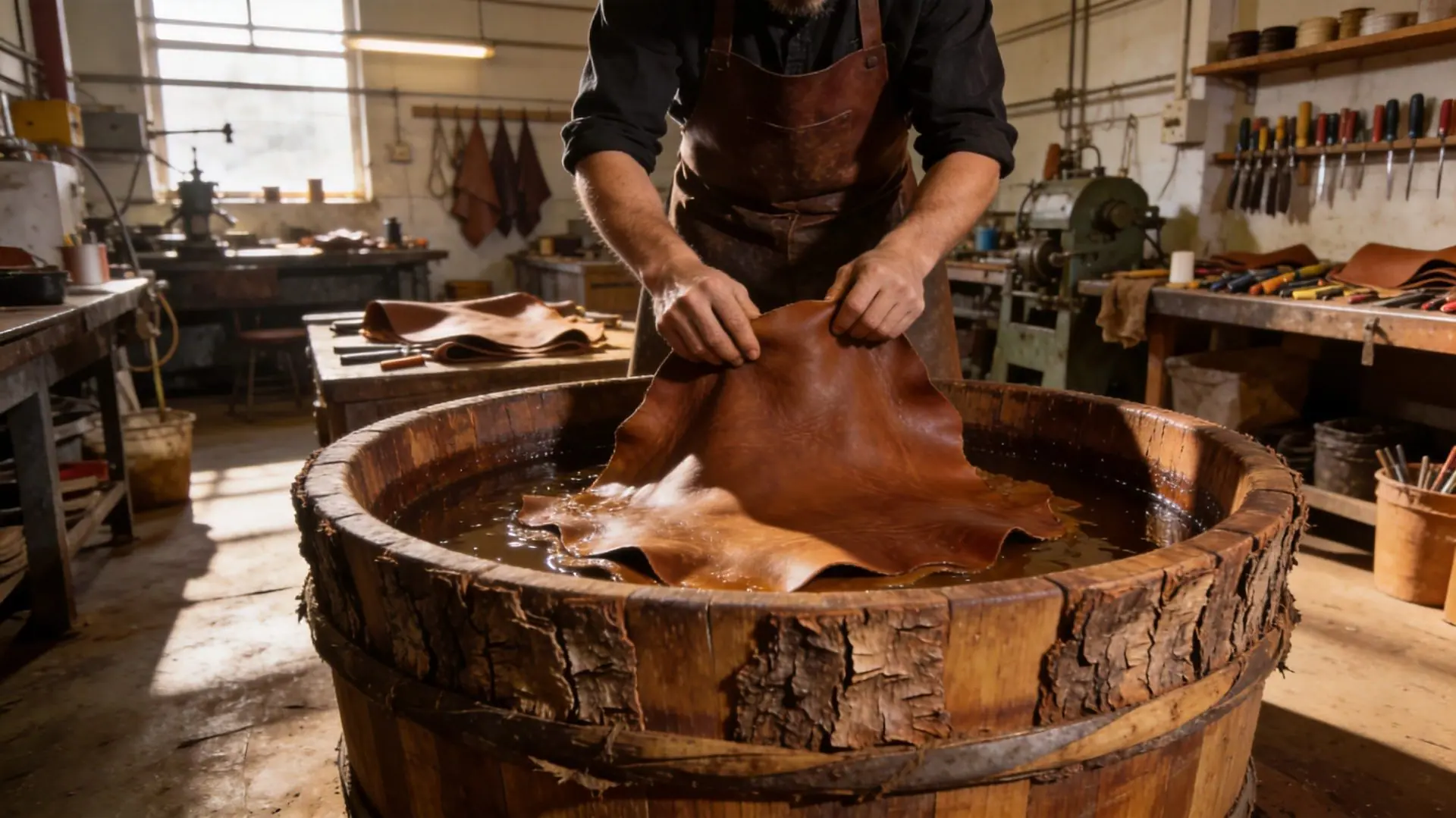
Vegetable tanning uses natural tannins extracted from tree bark, leaves, and fruits — primarily chestnut, oak, and mimosa. The process takes 30–60 days, as hides are slowly immersed in increasingly concentrated tannin baths.
Advantages: Produces firm, structured leather ideal for bags that need to hold shape. Develops beautiful patina over time. Environmentally friendly — no heavy metals. Biodegradable. Preferred by luxury and heritage brands. Compatible with laser engraving and hot stamping.
Disadvantages: Higher cost (20–40% more than chrome-tanned). Longer lead time. Limited color range (naturally produces tan, brown, and earth tones). Less water-resistant initially.
B2B Implications: If your brand positions around craftsmanship, sustainability, or heritage, vegetable-tanned leather is the logical choice. The premium cost is justified by the superior aging characteristics and the story it tells. Material selection decisions like this directly impact your brand narrative and customer perception.
Chrome Tanning
Chrome tanning uses chromium sulfate and other chromium salts. The process takes 1–2 days, making it dramatically faster than vegetable tanning.
Advantages: Lower cost. Faster turnaround. Wider color range — chrome-tanned leather accepts dyes more readily. More water-resistant. Softer and more flexible from the start.
Disadvantages: Contains heavy metals (chromium VI concerns). Does not develop patina. Less environmentally friendly. Not biodegradable. Can cause allergic reactions in sensitive individuals.
B2B Implications: Chrome tanning is appropriate for high-volume production, fashion-forward colors, and products where cost is the primary driver. However, brands targeting European markets must ensure chromium VI levels comply with REACH regulations. Many manufacturers now offer “chrome-free” or “metal-free” alternatives that bridge the gap.
OEM vs ODM for Leather Bag Manufacturing
Choosing between OEM (Original Equipment Manufacturing) and ODM (Original Design Manufacturing) is one of the most important decisions a B2B buyer makes. The OEM vs ODM framework applies across bag categories, but leather bags have specific considerations.
OEM Manufacturing (Your Design, Their Production)
In OEM production, you provide complete designs — tech packs, patterns, material specifications, and hardware requirements — and the manufacturer produces to your exact specifications. This is the right choice when you have a clear design vision, proprietary patterns, or established brand DNA that must be preserved precisely.
OEM advantages for leather bags: Complete control over every detail. Your intellectual property stays protected. You can specify exact leather grades, hardware sources, and finishing techniques. Ideal for luxury brands with established design teams.
ODM Manufacturing (Their Design, Your Brand)
In ODM production, the manufacturer provides existing designs that you customize with your branding, color choices, and minor modifications. This is ideal for brands launching their first leather bag line, companies expanding into accessories, or businesses that want quality products without the investment in original design.
ODM advantages for leather bags: Lower development costs and faster time to market. The manufacturer’s existing patterns are proven and production-tested. You benefit from their expertise in what sells. MOQ requirements are often lower.
At JUNYUAN, we offer both OEM and ODM services for leather bags, with flexible arrangements that can combine elements of both — for example, adapting our existing silhouettes with your custom hardware, leather selection, and branding.
The Complete Leather Bag Manufacturing Process
Understanding the step-by-step manufacturing process helps B2B buyers set realistic timelines, identify quality checkpoints, and communicate effectively with their manufacturing partners.
Step 1: Design and Pattern Development
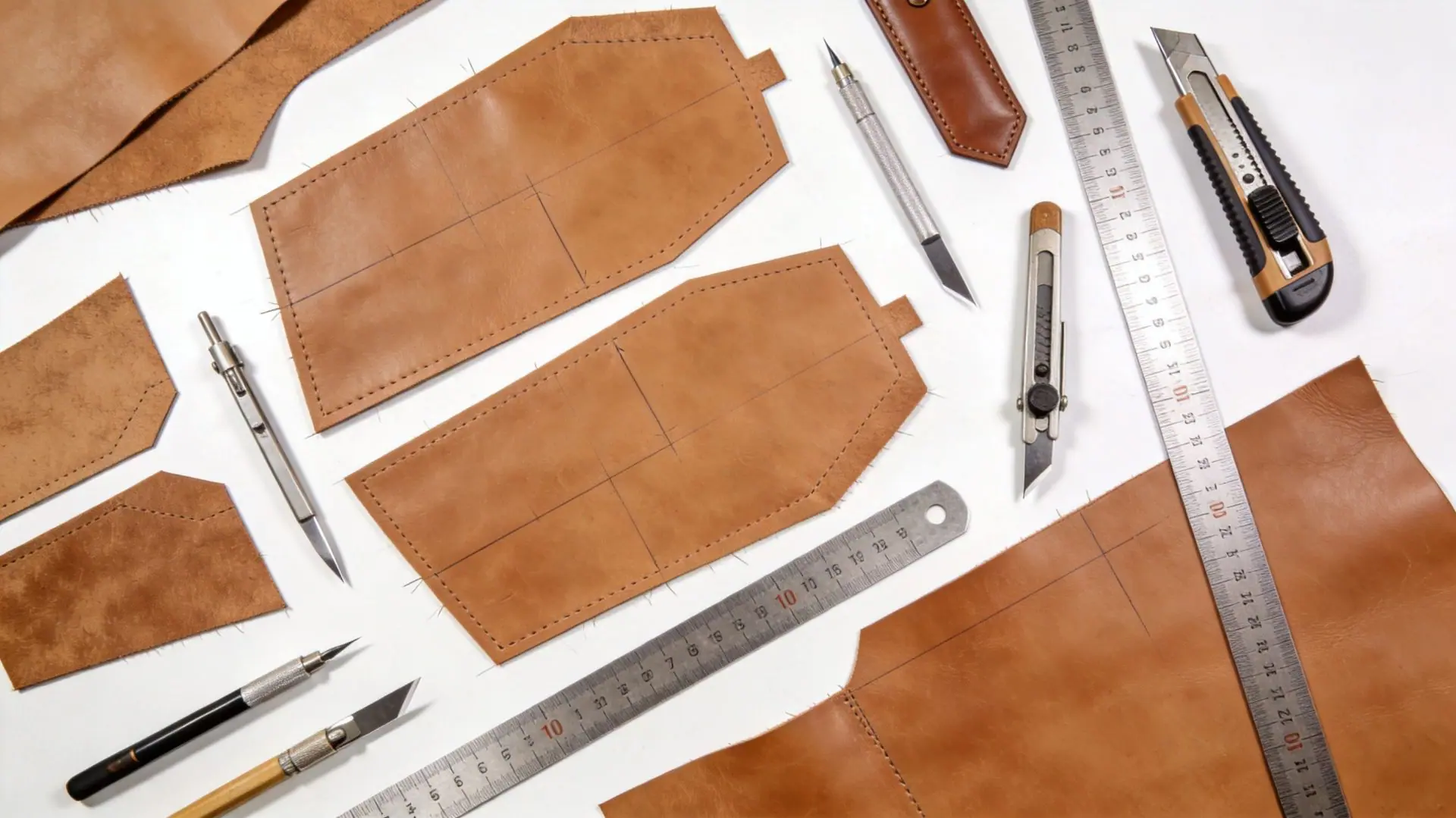
Every leather bag begins with a design — either from the brand’s creative team or adapted from the manufacturer’s library. Technical drawings are created, specifying dimensions, panel count, pocket placement, hardware positions, and stitching details. From these drawings, precision patterns are cut — traditionally from cardboard, increasingly using CAD/CAM systems. Pattern accuracy is critical; even 1mm deviations compound across multiple panels and can result in misaligned seams or distorted proportions.
Step 2: Leather Selection and Cutting
Once patterns are finalized, the appropriate leather is selected and inspected for defects. Leather is a natural material with inherent variation — scars, stretch marks, and color variations must be evaluated and worked around. Skilled cutters position patterns on the hide to maximize yield while avoiding natural flaws. This is where experienced craftsmen add tremendous value — a skilled cutter can extract 15–20% more usable pieces from the same hide compared to an untrained operator.
Step 3: Skiving
Skiving thins the leather at seam allowances, fold lines, and edge positions. This reduces bulk at joints and creates clean, professional finishes. Skiving requires precise depth control — too deep weakens the leather, too shallow creates visible bulk. Different areas of the bag require different skiving depths: strap attachment points may remain full thickness for strength, while flap edges are skived thin for a clean fold.
Step 4: Stitching and Assembly
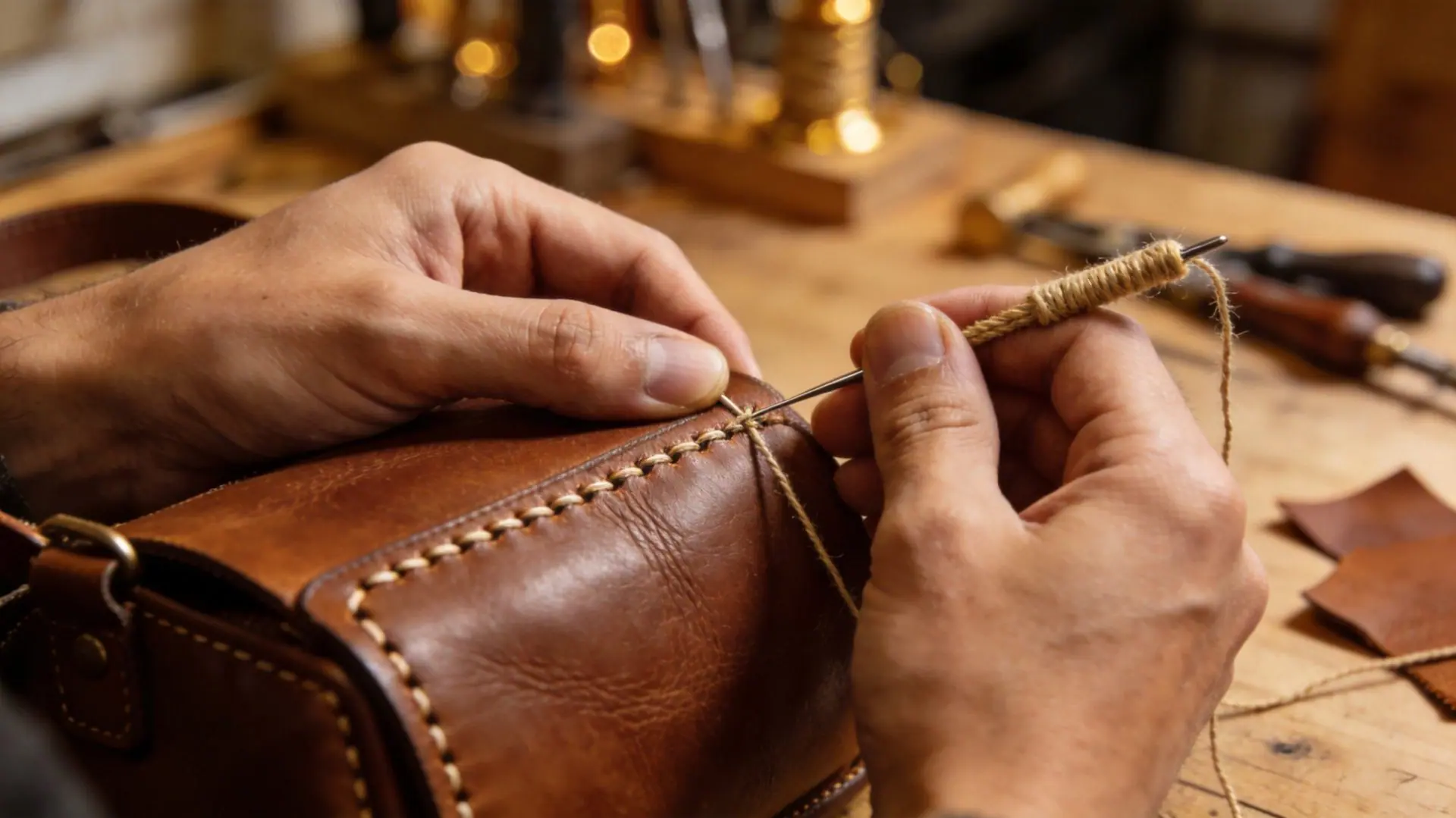
Leather bag assembly follows a precise sequence: smaller components (pockets, interior organizers, card slots) are assembled first, then sub-assemblies are joined into major panels, and finally the bag is constructed around its structural elements. Stitching methods include machine stitching (for speed and consistency), hand stitching (for luxury products and visible decorative stitching), and saddle stitching (for wallets and small goods).
Step 5: Edge Finishing
Edge finishing is one of the most visible quality indicators in a leather bag. Premium bags feature burnished edges (rubbed smooth with water and gum tragacanth), painted edges (multiple coats of edge paint in matching or contrasting colors), or folded edges (where leather is skived, folded over, and glued). Each method requires skill and patience. Cheap edge finishing is the single most common indicator of low-quality leather goods.
Step 6: Hardware Attachment and Final Assembly
Zippers, buckles, D-rings, magnetic closures, and feet are attached in the final assembly stage. Hardware must be aligned perfectly, riveted or screwed securely, and tested for function. Straps are sized, attached, and adjusted. The bag is given its final shape, stuffed for form, and prepared for quality inspection.
Step 7: Finishing and Packaging
The finished bag undergoes a thorough cleaning — removing any adhesive residue, marking lines, or dust. Conditioner or protector may be applied to the leather surface. The bag is then stuffed with tissue paper or foam for shape retention, placed in a dust bag, and packaged according to the brand’s specifications.
Design & Customization Options for Leather Bags
One of the greatest advantages of leather as a material is its extraordinary customization potential. Here are the key design and customization options available to B2B buyers.
Hardware Selection
Hardware is the jewelry of a leather bag. Options include zipper finishes (brass, antique brass, gunmetal, nickel, rose gold), buckle styles (roller, side-release, magnetic, turn-lock), ring types (D-rings, O-rings, snap hooks), and feet/caps. Custom hardware with your brand logo can be produced via die-casting, stamping, or CNC machining — typically requiring MOQs of 500–1,000 pieces per design.

Stitching Patterns
Stitching is both structural and decorative. Options include straight stitch, diagonal stitch, cross-hatch patterns, contrast-color stitching, and varying stitch densities (stitches per inch). Decorative topstitching along edges and seams adds visual depth and perceived quality. Double-needle stitching provides both decorative appeal and structural reinforcement.
Edge Painting
Edge paint can match the leather color exactly for a seamless look, or contrast for visual interest. Multiple coats build up a smooth, durable finish. Some premium brands use hand-painted edges as a signature element. Edge paint colors can be custom-matched to any Pantone reference.
Embossing and Debossing
Hot stamping can apply brand logos, monograms, or decorative patterns into the leather surface. Debossing (pressing into the surface) creates subtle, tonal branding — the hallmark of quiet luxury. Embossing with foil (gold, silver, colored) creates more visible branding. Custom embossing dies can reproduce intricate patterns, textures, and brand motifs across entire panels.
Lining Options
Interior linings range from polyester (budget-friendly), cotton twill (mid-range), microsuede (premium feel), to full leather lining (luxury). Lining color, pattern, and material are all customizable. Branded lining fabric with custom prints or woven labels is available for established brands.
Quality Control & Testing for Leather Bags
Quality control in leather bag manufacturing encompasses both in-process checks and finished product testing. B2B buyers should require their manufacturing partner to maintain documented QC protocols and provide test reports for each production run.

In-Process Quality Checks
Quality control begins at material inspection — checking leather for thickness consistency, color uniformity, and surface defects. During production, key checkpoints include: cutting accuracy (panel dimensions within ±0.5mm), skiving depth consistency, stitch quality (straight, even tension, no skipped stitches), hardware alignment and function, edge finishing smoothness, and overall symmetry.
Standard Test Methods
Professional leather bag manufacturing includes standardized testing for:
- Colorfastness (ISO 11641): Tests resistance to light, rubbing (wet and dry), and perspiration. Premium bags should achieve grade 4+ on the grey scale for all tests.
- Abrasion resistance (ISO 17076): Tests the leather surface’s resistance to wear. Critical for areas that contact surfaces frequently — bag bases, handles, and strap contact points.
- Tear strength (ISO 3377): Measures the force required to tear the leather. Full grain leather typically achieves 30–60 N/mm; top grain 20–40 N/mm.
- Zipper endurance (ASTM D2061): Tests zipper cycle life — premium bags should target 1,000+ cycles without failure. Metal zippers outperform nylon for longevity.
- Strap pull test: Verifies that strap attachment points withstand specified loads (typically 20–40 kg sustained load for bags).
- Hardware corrosion test (ISO 9227): Salt spray testing for metal hardware finish durability, targeting 48+ hours without visible corrosion.
AQL Standards
Most professional manufacturers operate to AQL (Acceptable Quality Limit) standards. For leather bags, AQL 2.5 for major defects and AQL 4.0 for minor defects is standard. Critical defects (safety issues, wrong materials, counterfeit leather sold as genuine) should be AQL 0.
Branding & Private Label Options for Leather Bags
Branding transforms a generic leather bag into a branded product that commands premium pricing and customer loyalty. Here are the primary branding methods available for custom leather bags.

Debossing (Blind Stamp)
A metal die is heated and pressed into the leather surface, creating a depressed logo impression. No ink or foil is used — the branding is visible only through the shadow and texture change. This is the most sophisticated branding method, favored by luxury brands. It works best on vegetable-tanned leather and smooth full grain surfaces.
Hot Stamping with Foil
Similar to debossing but with a colored foil (gold, silver, black, custom colors) applied between the heated die and leather. This creates a more visible, higher-contrast brand mark. Hot stamping works on most leather types and is the most common premium branding method.
Custom Hardware
Logo-embossed zipper pulls, engraved buckles, custom-shaped D-rings, and branded rivets provide subtle but constant brand visibility. Custom hardware requires upfront tooling investment ($200–$800 per design) but delivers premium perceived value.
Dust Bags and Packaging
Custom dust bags (cotton, flannel, or non-woven) with printed logos, branded tissue paper, care cards, and custom boxes complete the brand experience. These elements are relatively low-cost but significantly impact unboxing experience and perceived value.
Interior Labels
Woven labels, leather patches, heat-transfer marks, or printed linings inside the bag provide brand identification without affecting exterior aesthetics. “Made in” labels and care instruction labels are required by law in most markets.
Compliance & Certifications for Leather Bags
Leather products sold in major markets must comply with various chemical safety regulations and may benefit from voluntary certifications that signal quality and responsibility to B2B buyers and end consumers.
REACH Compliance (European Union)
The EU REACH regulation restricts substances of very high concern (SVHC) in consumer products. For leather bags, key restrictions include chromium VI (limit: 3 mg/kg or 0.0003% by weight), certain azo dyes, formaldehyde, and alkylphenol ethoxylates. All leather bags exported to the EU must be REACH compliant. Testing should be conducted by accredited laboratories (SGS, Intertek, Bureau Veritas, TÜV).
California Proposition 65
Products sold in California must not expose consumers to chemicals known to cause cancer or reproductive harm above “safe harbor” levels. For leather bags, this primarily concerns lead (in hardware and dyes), chromium VI, formaldehyde, and certain phthalates. Non-compliance can result in significant penalties and mandatory product recalls.
Leather Working Group (LWG) Certification
The LWG is the gold standard for environmental responsibility in leather manufacturing. LWG audits assess tanneries on environmental compliance, energy usage, water consumption, waste management, and chemical management. LWG-rated leather (Gold, Silver, Bronze) signals to B2B buyers and end consumers that the leather was produced responsibly. Major brands including Nike, Adidas, and LVMH require LWG certification from their leather suppliers.
OEKO-TEX Standard
While OEKO-TEX is more commonly associated with textiles, the Leather Standard (OEKO-TEX Leather Standard) specifically tests leather products for harmful substances. Certification provides an additional layer of consumer confidence and may be required by certain retailers.
Sustainability & Ethical Sourcing in Leather Manufacturing
Sustainability in leather manufacturing encompasses environmental responsibility throughout the supply chain — from raw hide sourcing through tanning, production, and end-of-life considerations.

Responsible Hide Sourcing
Leather is, by definition, a byproduct of the meat industry — no hides are produced solely for leather. However, sourcing matters. Hides from regions with documented animal welfare concerns should be avoided. Traceability programs — where the supply chain from farm to finished leather can be documented — are increasingly demanded by conscious brands and consumers.
Cleaner Tanning Processes
Modern tanneries are investing in closed-loop water systems, chromium recovery and recycling, vegetable-tanning process optimization, and renewable energy adoption. When evaluating a leather bag manufacturer, ask about their tannery partners’ environmental practices. LWG-certified tanneries have been audited on these exact criteria.
Waste Reduction
Efficient pattern layout, leather scrap recycling (into bonded leather, filler materials, or craft products), and minimized packaging all reduce the environmental footprint of leather bag production. Leading manufacturers target leather utilization rates above 80%.
Vegan and Alternative Materials
For brands that want to avoid animal leather entirely, plant-based alternatives (cactus leather, pineapple leather, mushroom leather) and high-quality synthetics offer cruelty-free options. These materials are evolving rapidly, but B2B buyers should conduct thorough durability testing — many alternatives still lag behind genuine leather in long-term wear performance.
Quick Specification Reference
| Parameter | Details |
|---|---|
| Material Options | Full-grain leather, top-grain leather, split leather, bonded leather, PU leather, vegan leather |
| Tanning Methods | Vegetable tanning, chrome tanning, combination tanning |
| MOQ | 100 units (test order), 300-500 units (mass production) |
| Sample Lead Time | 7 days |
| Mass Production Lead Time | 25-35 days |
| Certifications Available | ISO 9001, BSCI, REACH, CPSIA, OEKO-TEX, SGS |
| Customization Options | Embossing, debossing, laser engraving, custom hardware, custom lining, private label tags |
| Packaging Options | Dust bags, branded boxes, hang tags, care cards, gift-ready packaging |
| Quality Standards | Color fastness grade 4+, tensile strength 150N+, stitch density 8-10 SPI, AQL 2.5 inspection |
Cost Structure & Pricing for Custom Leather Bags
Understanding the cost drivers in leather bag manufacturing helps B2B buyers make informed decisions about specifications, materials, and order quantities.
Leather Cost Impact
Leather is typically the single largest cost component, representing 30–50% of total production cost. The grade differential is dramatic: full grain leather can cost 3–5x more than genuine leather for the same bag design. A single full grain leather tote may require 15–25 sq ft of leather at $8–$12/sq ft, resulting in $120–$300 in raw leather cost alone.
Hardware and Components
Quality hardware (YKK zippers, solid brass fittings, custom-cast components) typically represents 10–20% of production cost. Custom hardware with logo tooling increases upfront investment but can be amortized over larger orders.
Labor and Manufacturing
Skilled leather craftsmanship commands premium labor rates. Complex designs with many panels, intricate stitching, and hand-finishing require more labor hours. A simple tote may take 2–3 hours to produce; a complex briefcase with multiple compartments can require 8–12 hours of skilled labor.
MOQ and Pricing Tiers
Typical MOQs for custom leather bags range from 100–500 pieces per style/color. Higher volumes (1,000+) unlock significant per-unit cost reductions through material bulk pricing, amortized setup costs, and production efficiency. Sample development costs typically range from $200–$500 per style, often credited against first production order.
Lead Times
Standard lead times for leather bag production are 30–60 days after sample approval, depending on order complexity, material availability, and season. Vegetable-tanned leather may require additional lead time for sourcing. Rush production is possible but typically incurs 10–20% surcharges.
How to Find & Vet a Leather Bag Manufacturer
Selecting the right manufacturing partner is the single most important decision in launching a successful leather bag product line. Here is a systematic approach to finding and evaluating potential partners.
Where to Search
Key channels include: trade shows (Canton Fair, LINEAPELLE, Mipel), B2B platforms (Alibaba, Global Sources), industry directories, manufacturer websites, and referrals from industry contacts. Visiting manufacturers in person remains the gold standard for evaluation.
Verification Checklist
- Business license and export qualifications
- Factory audit reports (BSCI, SMETA, or proprietary)
- Leather sourcing documentation and tannery partnerships
- Quality management system (ISO 9001 or equivalent)
- Sample quality — request 3–5 samples across different price points
- Production capacity and current utilization
- Client references and portfolio of similar products
- Communication responsiveness and English proficiency
- Intellectual property protection measures
- Compliance certifications (REACH, Prop 65, LWG)
Red Flags to Watch For
Be cautious of: prices significantly below market average (often indicates corner-cutting on materials or labor), refusal to allow factory visits, vague answers about leather sourcing, lack of documented QC processes, and unwillingness to sign NDAs or quality agreements.
Launching a Leather Bag Brand: Key Considerations
For entrepreneurs and businesses planning to launch a leather bag brand, the following strategic considerations will help set you up for success.
Start with a Clear Product Vision
Before approaching a manufacturer, define your target customer, price positioning, design aesthetic, and product range. A focused collection of 3–5 styles is more effective than a scattered range of 20+ designs. Each product should serve a clear purpose in your collection strategy.
Budget for Development
Realistic development budgets for a leather bag brand include: sample development ($1,000–$3,000), initial tooling and custom hardware ($500–$2,000), material sourcing trips or samples ($500–$1,500), compliance testing ($500–$2,000), and photography/marketing assets ($2,000–$5,000). Total pre-production investment typically ranges from $5,000–$15,000 before first production order.
Plan for Compliance from Day One
Build compliance requirements into your product specifications from the beginning — not as an afterthought. Specify REACH-compliant leather, Prop 65-safe hardware, and appropriate labeling from your first sample. Retrofitting compliance later is far more expensive than building it in initially.
Build the Relationship
The best manufacturer relationships are partnerships, not transactions. Visit your factory, understand their capabilities and constraints, pay fairly and on time, and communicate clearly. Manufacturers who value their relationship with your brand will go further to protect your interests, prioritize your orders, and invest in your success.
Frequently Asked Questions
What is the minimum order quantity (MOQ) for custom leather bags?
Most manufacturers require 100–500 pieces per style/color for custom leather bags. Some specialize in small-batch production with MOQs as low as 50 pieces for emerging brands. MOQs may be higher for custom hardware or exotic leather types.
How long does it take to produce custom leather bags?
Sample development takes 7–15 days. Mass production takes 30–60 days after sample approval. Total timeline from initial inquiry to delivery is typically 60–90 days. Rush orders can compress production to 20–30 days with surcharges.
What is the difference between full grain and top grain leather for bags?
Full grain leather retains the complete natural grain layer, making it the strongest and most durable grade. It develops a rich patina over time. Top grain leather has the surface sanded and refinished, creating a more uniform appearance at a lower cost. Both are suitable for quality bags — the choice depends on your brand positioning and price point.
Can I use my own leather for manufacturing?
Yes, most manufacturers accept customer-supplied leather (CMT — Cut, Make, Trim model). However, this requires careful coordination on leather quality, quantity (include 10–15% waste allowance), and shipping logistics. Many brands prefer to source leather through their manufacturer for simplicity and accountability.
What certifications should I require from my leather bag manufacturer?
At minimum, require REACH compliance (for EU markets) or Prop 65 compliance (for California). LWG certification for the tannery is strongly recommended. ISO 9001 for quality management and BSCI or SMETA for social compliance are additional differentiators.
How do I ensure consistent leather color across production batches?
Request lab dips (color sample swatches) before production. Approve a physical color standard that both you and the manufacturer reference. Order all leather for a production run from a single tannery batch when possible. Allow ±5% color variation as industry standard tolerance.
What is the best leather for luxury bags?
Full grain vegetable-tanned leather from established tanneries (e.g., Italian tanneries in Santa Croce sull’Arno or French tanneries in the Annonay region) is the gold standard for luxury bags. Box calf, bridles leather, and pull-up leather are popular luxury choices.
How much does it cost to make a custom leather bag?
Production costs range from $25–$200+ per unit depending on leather grade, bag complexity, hardware quality, and order volume. A simple genuine leather pouch may cost $25–$40; a full grain leather briefcase with custom hardware may cost $120–$200+ to produce.
Is vegan leather as durable as genuine leather for bags?
Currently, most vegan leather alternatives do not match the long-term durability of high-quality genuine leather. However, premium PU leathers and newer plant-based materials (particularly cactus leather and mushroom leather) are closing the gap. For products where longevity is a key selling point, genuine leather remains the superior choice.
Can leather bags be made waterproof?
Leather can be treated with water-resistant sprays, waxes, or specialized finishes to improve water resistance, but no leather is truly waterproof. For bags that must withstand heavy rain, consider water-resistant synthetic materials or designs that incorporate waterproof liners with sealed seams.
What lining materials work best for leather bags?
Cotton twill is the most popular mid-range choice — durable, breathable, and cost-effective. Microsuede offers a premium feel. Full leather lining provides the ultimate luxury experience but significantly increases cost. For budget products, polyester or nylon linings are functional and economical.
? Related: Looking for a comprehensive guide to custom bag manufacturing? Check out our Complete Guide to Custom Backpack Manufacturing — covering materials, construction, QC standards, and branding for B2B brands.
Private Label Leather Bag Manufacturing: From Design to Delivery
As a trusted private label leather bag supplier, JUNYUAN Bags provides end-to-end OEM manufacturing services for brands looking to launch or expand their leather bag collections. Our led by a founder with bag industry experience dating from 2004 covers every stage — from initial sketch to final shipment.
Our private label leather bag program begins with a detailed consultation where we review your brand positioning, target market, and price architecture. Whether you need luxury full-grain leather handbags for the premium segment or affordable bonded leather tote bags for mass-market distribution, we have material options and construction methods to match. Each project is assigned a dedicated product manager who oversees the entire development cycle.
We support comprehensive branding customization including embossed or debossed logos, custom hardware in your brand’s finish (antique brass, brushed nickel, matte black), branded interior lining, and private label hang tags and care cards. Our design team can work from your tech pack, reference photos, or even a rough concept — we develop a complete specification sheet and 3D rendering within 48 hours for your approval.
Quality consistency is critical for private label programs. We maintain AQL 2.5 inspection standards with inline checks at every production stage: cutting, skiving, stitching, edge painting, and final assembly. Each batch undergoes color fastness testing, tensile strength verification, and hardware corrosion testing to ensure your brand’s reputation is protected.
With MOQ starting at 100 units per style and 7-day sample turnaround, launching a private label leather bag line has never been more accessible. We currently manufacture private label leather products for 200+ brands across Europe, North America, and Asia. Learn more about our factory capabilities and request your sample today.
Contact JUNYUAN for Your Custom Leather Bag Project
Whether you are launching a new leather bag brand, expanding your existing product line, or sourcing a reliable manufacturing partner for your established label, JUNYUAN has the expertise, capabilities, and commitment to quality that your brand deserves.
With years of experience in leather bag manufacturing for B2B clients worldwide, we offer:
- OEM and ODM manufacturing with flexible MOQs
- Full range of leather grades — from genuine to premium full grain
- Comprehensive QC and testing protocols
- LWG-compliant leather sourcing options
- Custom branding, hardware, and finishing
- Dedicated project management from sample to delivery
Ready to start your leather bag project? Contact JUNYUAN today for a detailed quote, sample request, or factory tour arrangement.