
? Related: Looking for a comprehensive guide to custom backpack manufacturing? Check out our Custom Backpack Manufacturing Complete Guide — covering materials, production processes, quality control, and sourcing strategies.
Vietnam has firmly established itself as one of the world’s top three backpack manufacturing destinations, alongside China and Bangladesh. In 2024, the country’s bags and accessories export sector reached approximately $3.8 billion, with year-over-year growth of 9.7%. The broader leather goods and footwear industry hit $27 billion in total exports. This growth isn’t accidental — it’s driven by a powerful combination of free trade agreements, competitive labor costs, and a rapidly maturing supply chain that now produces over 150 million backpacks and bags annually for global brands including Nike, Adidas, Deuter, The North Face, and IKEA.
For B2B buyers evaluating sourcing options in 2026, Vietnam offers tangible advantages: import duties to the US from Vietnam sit at approximately 17%, compared to 42.5% from China. The EU-Vietnam Free Trade Agreement (EVFTA) provides duty-free access for qualifying products entering European markets. And the CPTPP opens preferential tariff treatment across 11 member nations including Japan, Canada, and Australia.
This guide provides a comprehensive, verified directory of the top 10 backpack manufacturers operating in Vietnam — complete with production capacities, certifications, MOQ requirements, and key client information — so you can make an informed sourcing decision.
Why Vietnam for Backpack Manufacturing?
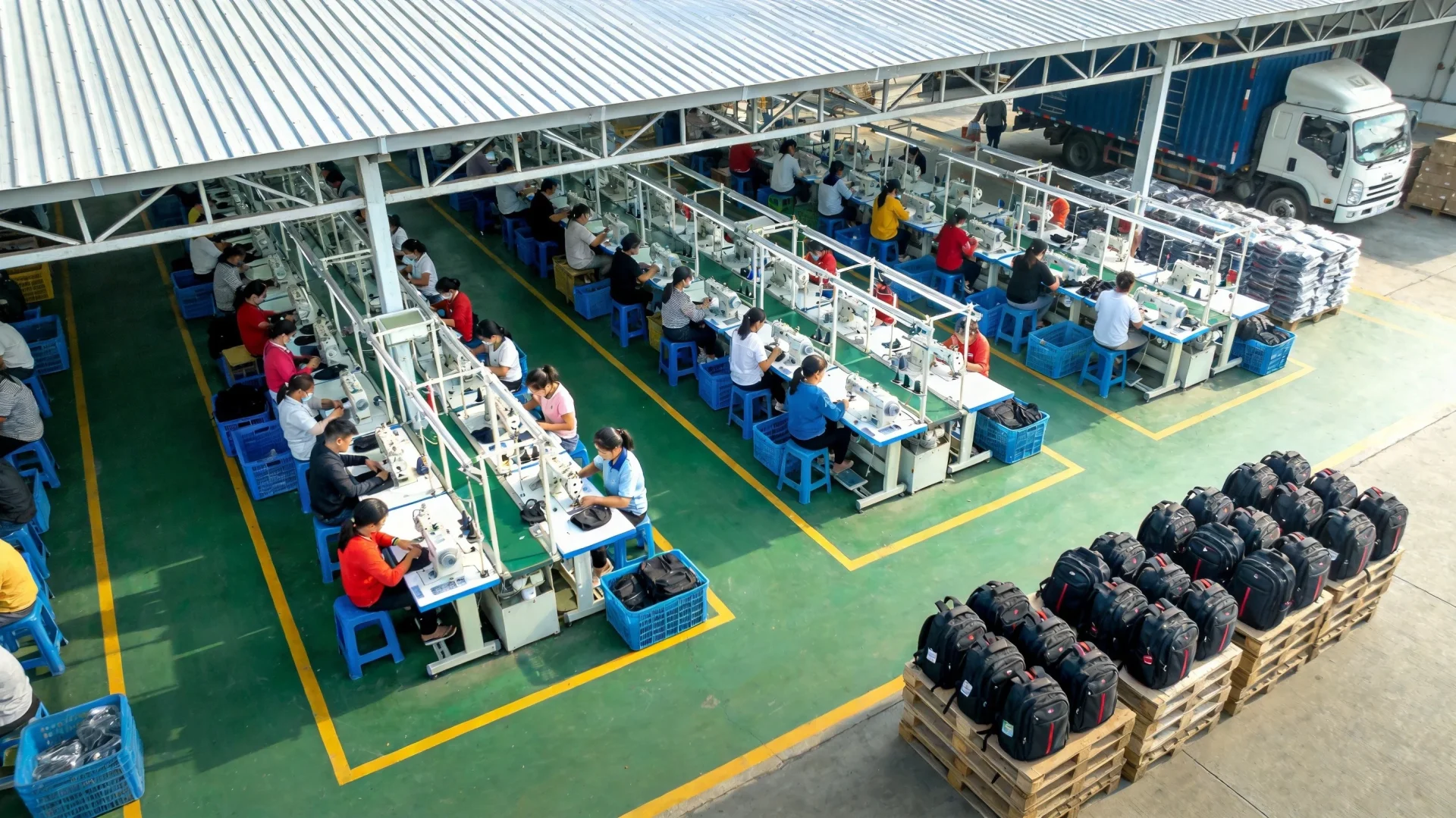
Vietnam’s ascent as a backpack manufacturing powerhouse is backed by concrete structural advantages that go beyond marketing claims.
Trade Agreement Benefits
Vietnam has signed 15+ free trade agreements, creating unmatched tariff advantages for exporters:
- EVFTA (EU-Vietnam Free Trade Agreement): Tariffs on bags and backpacks are being progressively eliminated, with most categories reaching 0% by 2025-2026. This provides an 8-12 percentage point advantage over competitors without equivalent agreements.
- CPTPP: Favorable tariff treatment in 11 member countries including Japan, Canada, Australia, and Mexico. Vietnamese-made backpacks entering these markets enjoy reduced or zero duties.
- RCEP: Enables near-zero tariff imports of raw materials (PU, nylon, hardware) from China, keeping production costs competitive while maintaining Vietnam’s origin status for export purposes.
- US Import Duties: Backpacks imported from Vietnam face approximately 17% customs tax, compared to 42.5% from China — a 25.5 percentage point savings that directly impacts FOB pricing.
Labor Cost Comparison
Factory floor wages in Vietnam average $200-350/month, which is 30-40% lower than China’s coastal manufacturing hubs and 20-30% below India’s major production centers. For labor-intensive products like backpacks — where a single unit requires assembly from 220+ individual parts — this cost differential translates directly to lower FOB unit prices without sacrificing stitch quality or production precision.
Supply Chain Maturity
Vietnam’s bag manufacturing industry has developed substantial infrastructure over the past two decades. Major production hubs have emerged around Ho Chi Minh City (the largest), Hanoi, Binh Duong Province, and Dong Nai Province. The supply chain now includes local sourcing of fabrics, foams, and basic hardware, supplemented by efficient imports of specialized components from China, South Korea, and Japan.
2024-2025 Export Data
According to Vietnam’s General Department of Customs, bags and accessories exports reached $3.73 billion in the first ten months of 2025, with the USA ($1.64 billion), Japan ($333 million), and the Netherlands ($241 million) as the top three destination markets. Vietnam recorded over 6,382 daypack export shipments between May 2024 and April 2025, making it the world’s leading exporter in this category — ahead of both China and Indonesia.
Top 10 Backpack Manufacturers in Vietnam (2026 Verified)
The following manufacturers have been verified through cross-referencing trade data, certification databases, export records, and industry sources. Each entry includes the most current available data on their operations.
1. Senrong Bag (Senda Vietnam Co., Ltd)
Founded: 2004 | HQ: Nam Dinh Province (also Guangzhou, China) | Website: senrongbag.com
Senrong Bag operates two Vietnam facilities — Senda Vietnam in Ninh Binh (1,000+ employees, 18 production lines, 10,000 sqm) and Sen Bang Vietnam (5 production lines, opened 2024). The company specializes in mid-to-large volume OEM backpack production with a monthly capacity of 4.3 million units across all product lines. Annual production includes 7 million fabric bags and 1.2 million backpacks.
Certifications: BSCI, Sedex, ISO 9001, Disney, Coca-Cola, Target, Walmart, H&M factory audits
Key Products: Backpacks, cooler bags, travel bags, tote bags, promotional bags
MOQ: 1,000+ pieces per style (500-999 possible with 20-40% price premium)
Key Clients: Nike, Adidas, IKEA, Coca-Cola, Disney, H&M, Walmart, Nestle
2. Mikkor Vietnam
Founded: 2012 | HQ: Ho Chi Minh City & Dong Nai Province | Website: mikkorvietnam.com
Mikkor Vietnam has built a reputation for quality-focused backpack manufacturing with over 15 years of industry experience. Their dual-factory setup in HCMC and Dong Nai features semi-automatic machinery and a daily production capacity exceeding 1,000 pieces of complex bags and backpacks. The company operates both OEM/ODM manufacturing and proprietary brands (Mikkor and Kmore).
Certifications: ISO 9001-level quality systems, European-standard production processes
Key Products: Laptop backpacks, school bags, hockey bags, medical gear bags, luggage, duffle bags, camera bags
MOQ: 500 pieces per style
Key Clients: Ritual Hockey, Fox Racing, Medsource, Milano Series, Idea Mountain
3. Vibama Co., Ltd
Founded: 2013 | HQ: Ho Chi Minh City | Website: vibama.com
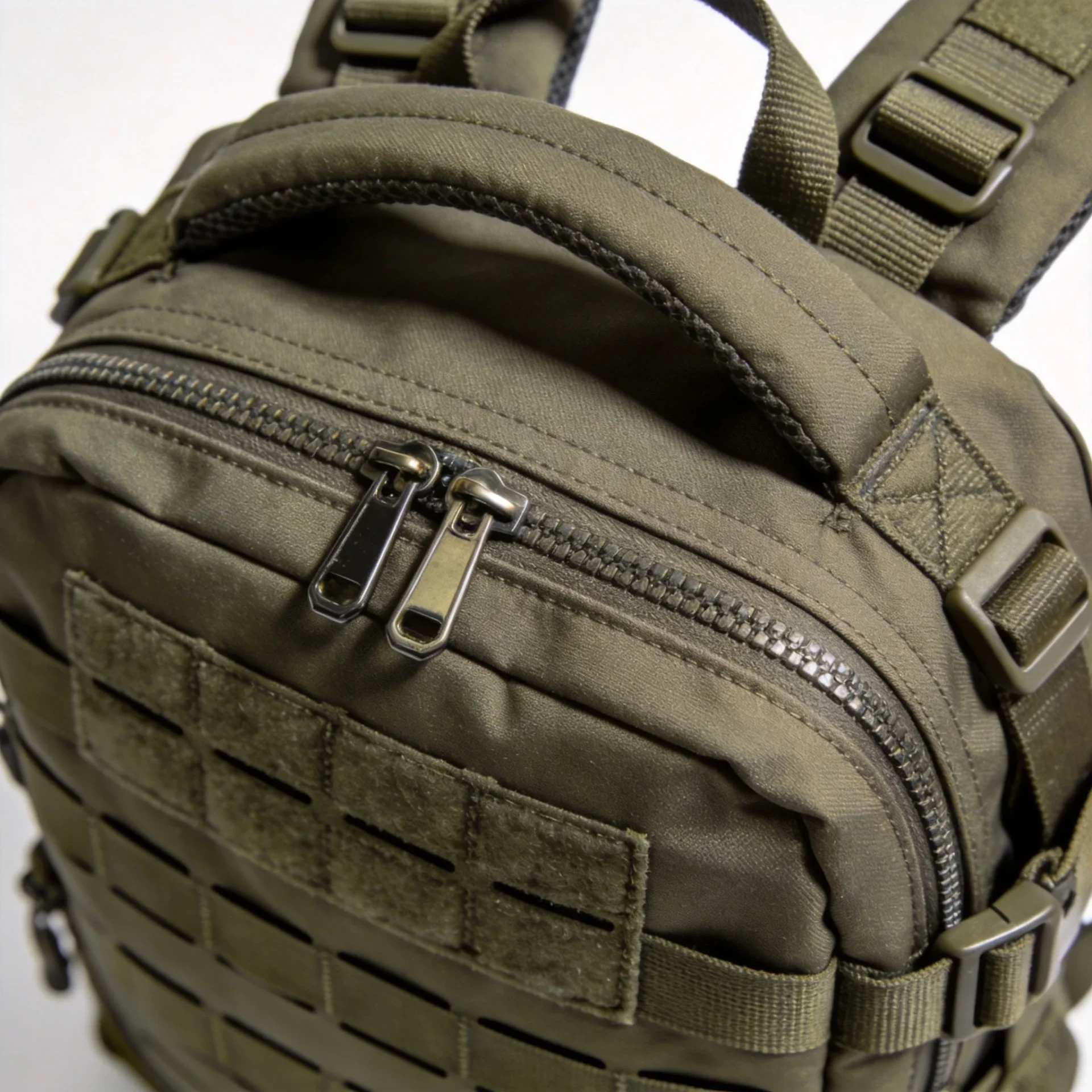
Vibama specializes in tactical and technical bags, operating a 5,000+ sqm facility with monthly capacity of 80,000-100,000 units. They are known for using premium materials including Cordura fabrics, YKK zippers, and Duraflex buckles. Their products feature innovative elements like RFID-blocking pockets, solar charging panels, and hidden compartments. All products undergo 100% inspection before shipment, with an in-house testing lab.
Certifications: ISO 9001:2015, BSCI
Key Products: Tactical backpacks, duffle bags, wheeled travel bags, ski bags, surfboard bags
MOQ: 500 pieces per style
Lead Time: 30-45 days for bulk orders
Key Markets: USA, Europe, Japan
4. Kowide Outdoors
Founded: 1986 | HQ: Dong Nai Province
Kowide Outdoors is one of Vietnam’s veteran backpack manufacturers, with nearly four decades of experience in outdoor gear production. They specialize in full engineering and custom development for global brands, covering everything from high-performance hiking backpacks to automotive tool bags. The company is committed to sustainable production practices, including the use of recycled materials.
Certifications: ISO quality systems, export compliance certifications
Key Products: Hiking backpacks, fashion backpacks, tool bags, vehicle bags, outdoor gear
MOQ: 500-1,000 pieces per style
Key Strengths: Full custom development capability, R&D for new materials, sustainable production focus
5. Domingo Co., Ltd
Founded: 2014 | HQ: Ho Chi Minh City (District 12) | Website: domingobag.com
Domingo specializes in fashionable backpacks and bags with a strong focus on private label services. They produce approximately 20,000-30,000 bags per month (approximately 300,000-400,000 per year) and export to multiple quality-conscious markets including Japan, South Korea, Australia, the Netherlands, Sweden, USA, Canada, and Singapore. Their strength lies in small-to-mid MOQ orders with full customization of colors, prints, and fabrics.
Certifications: ISO 9001:2015
Key Products: Fashion backpacks, kid backpacks, tote bags, canvas bags, travel bags, wallets, promotional bags
MOQ: 500 pieces per style
Services: Full OEM and CMPH (Customer’s Material Processing and Handling)
6. Dan Group Asia (Viet Dan Trading Service Co., Ltd)
Founded: 2001 | HQ: Ho Chi Minh City (Hoc Mon District) | Website: dangroupasia.com
Dan Group Asia, led by Danish owner Henrik Andersen, operates a large manufacturing facility on the outskirts of Ho Chi Minh City. The company produces a diverse range of bags including backpacks, sports bags, and promotional items. Trade data shows active import/export operations between Denmark and Vietnam, with products exported under HSN codes covering bags (4202), tarpaulin products (6307), and related accessories. Their factory produces backpacks, tool bags, cooler bags, shopping bags, camping products, sport bags, and ski bags.
Certifications: ISO quality management systems
Key Products: Backpacks, sports bags, tool bags, cooler bags, camping products, ski bags, promotional bags
MOQ: 500-1,000 pieces per style
Key Markets: Europe (Denmark headquarters), USA, Asia
7. Hop Phat Bag & Backpack Garment Co.
Founded: 2003 | HQ: Ho Chi Minh City (Tan Phu District) & Binh Duong | Website: mayhopphat.com
Hop Phat is recognized as Vietnam’s leading export backpack manufacturer, operating 3 production plants with monthly capacity ranging from 30,000 to 200,000 units. Featured in Dan Viet Newspaper as the “Number 1 Brand for Export Backpacks,” the company specializes in eco-friendly laptop bags, school bags, and promotional bags using recycled fabrics. They export to 15+ countries including the USA, Japan, Italy, South Korea, and Malaysia.
Certifications: ISO quality systems, export compliance for 15+ countries
Key Products: Laptop backpacks, school bags, promotional bags, travel backpacks (eco-friendly focus)
MOQ: 500-1,000 pieces per style
Key Clients: Canon, Nikon, Lock&Lock, Heineken, Vietcombank, Viettel, Vinaphone
8. Hoang Ha Textile Garment Co., Ltd
Founded: Early 2000s | HQ: Ho Chi Minh City
Hoang Ha Textile brings over two decades of manufacturing experience to the backpack industry. They specialize in fashion backpacks and cosmetic/small handbags, working with leather, coated fabrics, and synthetics. The company is one of the few Vietnamese manufacturers holding both ISO 9001 and OEKO-TEX Standard 100 certifications, making them particularly attractive to brands targeting the European market with strict chemical safety requirements.
Certifications: ISO 9001, OEKO-TEX Standard 100
Key Products: Fashion backpacks, cosmetic bags, small handbags, coated fabric bags
MOQ: 500-1,000 pieces per style
Key Markets: Europe, USA, global exports
Materials: Leather, coated fabrics, synthetics, OEKO-TEX certified materials
9. Everwin Bag
Founded: 2015 | HQ: Ho Chi Minh City
Everwin Bag is a newer but rapidly growing manufacturer specializing in sports bags and backpacks. Despite being established in 2015, they’ve built dual certification in both quality management (ISO 9001) and environmental management (ISO 14001), reflecting a strong commitment to sustainable manufacturing. They focus on sports-oriented products and serve both OEM and ODM clients.
Certifications: ISO 9001, ISO 14001
Key Products: Sports backpacks, athletic bags, drawstring bags, gym bags, promotional bags
MOQ: 500-1,000 pieces per style
Key Strengths: Environmental management certification, sustainable production, dual ISO systems
10. Duke Vietnam (Vina Duke Company Limited)
Founded: 1991 (partnership with Deuter since 1994) | HQ: Near Ho Chi Minh City (Cu Chi and Count Vina sites)
Duke Vietnam represents a unique case in Vietnam’s backpack manufacturing landscape: an exclusive, single-client manufacturing partnership that has operated for over 30 years. Since 1994, Duke has exclusively produced all of Deuter’s backpacks and accessories, growing from 35 sewing machines to approximately 5,400 employees across multiple production sites. Duke holds ISO 14001 and ISO 9001 certifications and was the first backpack manufacturer in Asia to achieve bluesign® system partnership status. The facility is regularly audited by the Fair Wear Foundation (FWF), with deuter achieving FWF Leader Status since 2013.
Certifications: ISO 9001, ISO 14001, bluesign® system partner, Fair Wear Foundation member
Key Products: Technical hiking backpacks, bike backpacks, children’s carriers, travel packs, accessories
Employees: ~5,400
Key Client: Deuter (exclusive manufacturing partner since 1994)
Note: Duke primarily serves Deuter exclusively. New clients should understand this exclusive arrangement.
Comparison Table: Vietnam Backpack Manufacturers at a Glance
| Company | Founded | Capacity | Certifications | MOQ | Specialization |
|---|---|---|---|---|---|
| Senrong Bag | 2004 | 4.3M units/month | BSCI, Sedex, ISO 9001 | 1,000 pcs | Large-volume OEM, brand compliance |
| Mikkor Vietnam | 2012 | 1,000+ pcs/day | ISO 9001-level | 500 pcs | Laptop, sports, medical bags |
| Vibama | 2013 | 80K-100K units/month | ISO 9001:2015, BSCI | 500 pcs | Tactical, travel, outdoor |
| Kowide Outdoors | 1986 | Large-scale OEM | ISO systems | 500-1,000 pcs | Outdoor, automotive, hiking |
| Domingo | 2014 | 20K-30K units/month | ISO 9001:2015 | 500 pcs | Fashion, kids, promotional |
| Dan Group Asia | 2001 | Large-scale | ISO systems | 500-1,000 pcs | Sports, promotional, camping |
| Hop Phat | 2003 | 30K-200K units/month | ISO, export compliance | 500-1,000 pcs | Eco-friendly laptop, school bags |
| Hoang Ha Textile | Early 2000s | Mid-scale OEM | ISO 9001, OEKO-TEX | 500-1,000 pcs | Fashion backpacks, cosmetic bags |
| Everwin Bag | 2015 | Mid-scale OEM | ISO 9001, ISO 14001 | 500-1,000 pcs | Sports bags, athletic backpacks |
| Duke Vietnam | 1991 | 5,400 employees | ISO 9001/14001, bluesign®, FWF | Exclusive partner | Technical outdoor (Deuter exclusive) |
How to Evaluate a Vietnam Backpack Manufacturer
Selecting the right manufacturing partner requires systematic evaluation. Here’s a comprehensive framework:
Factory Audit Checklist
- Production capacity verification: Confirm actual output vs. claimed capacity through production records and floor observation
- Equipment condition: Assess sewing machines (computerized vs. manual), cutting equipment (laser vs. die-cut), and quality testing tools
- Workforce stability: High turnover rates indicate potential quality consistency issues. Ask about average employee tenure
- Social compliance: BSCI, Sedex, or SA8000 certifications verify fair labor practices, which increasingly matter for EU and US retail compliance
- Environmental management: ISO 14001 or bluesign® certification demonstrates commitment to sustainable production
- Export track record: Request customs declaration records to verify actual export volumes and destination markets
Sample Testing Protocol
Before committing to bulk production, implement a rigorous sample testing process:
- Pre-production sample (2-4 weeks): Verify materials, stitching quality, zipper function, strap padding, and overall construction
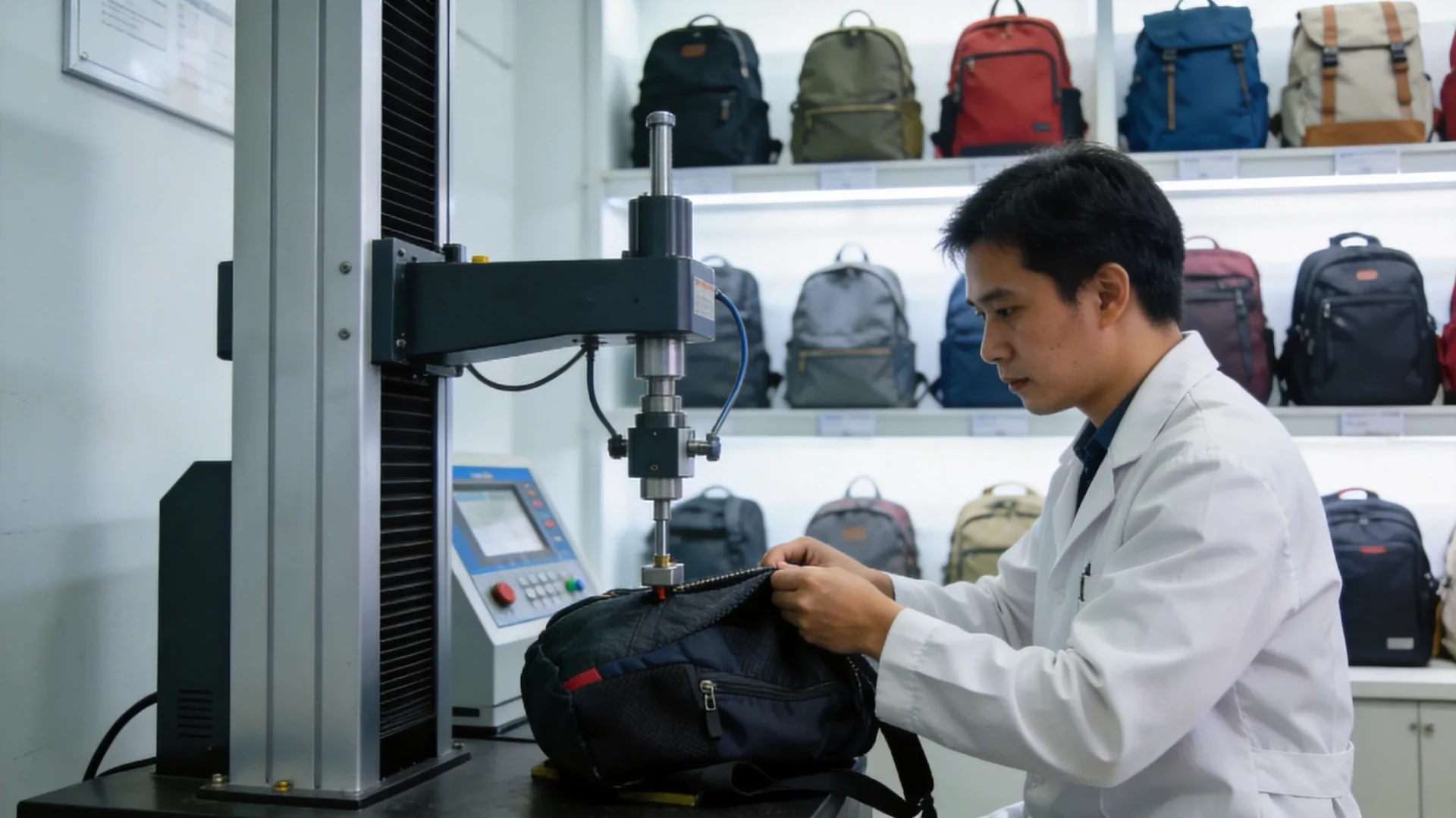
- Stress testing: Load testing (fill to 120% rated capacity), zipper cycle testing (1,000+ open/close cycles), strap pull testing
- Material verification: Confirm fabric composition, waterproofing (hydrostatic head test), color fastness (AATCC standards), and chemical compliance (REACH, CA Prop 65, OEKO-TEX)
- Dimensional accuracy: Compare all measurements against tech pack specifications, allowing ±5mm tolerance
Quality Certifications Explained
- ISO 9001: Quality management system standard. Ensures consistent production processes and continuous improvement
- ISO 14001: Environmental management system. Demonstrates responsible waste management, emissions control, and resource efficiency
- BSCI (Business Social Compliance Initiative): Social audit standard focused on labor rights, working conditions, and ethical business practices
- Sedex/SMETA: Supply chain ethical trading audit covering labor, health & safety, environment, and business ethics
- OEKO-TEX Standard 100: Certifies that textiles are free from harmful substances. Essential for EU market access
- bluesign®: Comprehensive textile sustainability certification covering chemical management, environmental emissions, and consumer safety
- Fair Wear Foundation (FWF): Independent verification of fair working conditions in garment and textile factories
MOQ Negotiation Tips
- First orders typically command a 20-40% unit price premium for quantities below standard MOQ
- Offer a framework agreement with annual volume commitments to negotiate lower per-order MOQs
- Consider consolidating multiple SKUs to meet aggregate MOQ thresholds
- Some manufacturers accept lower MOQs (300-500 pcs) for repeat customers with established payment history
- Promotional/corporate orders often have different MOQ structures than retail product lines
OEM vs ODM: Which Model Works for Your Brand?
Understanding the distinction between OEM and ODM is critical when sourcing from Vietnam:
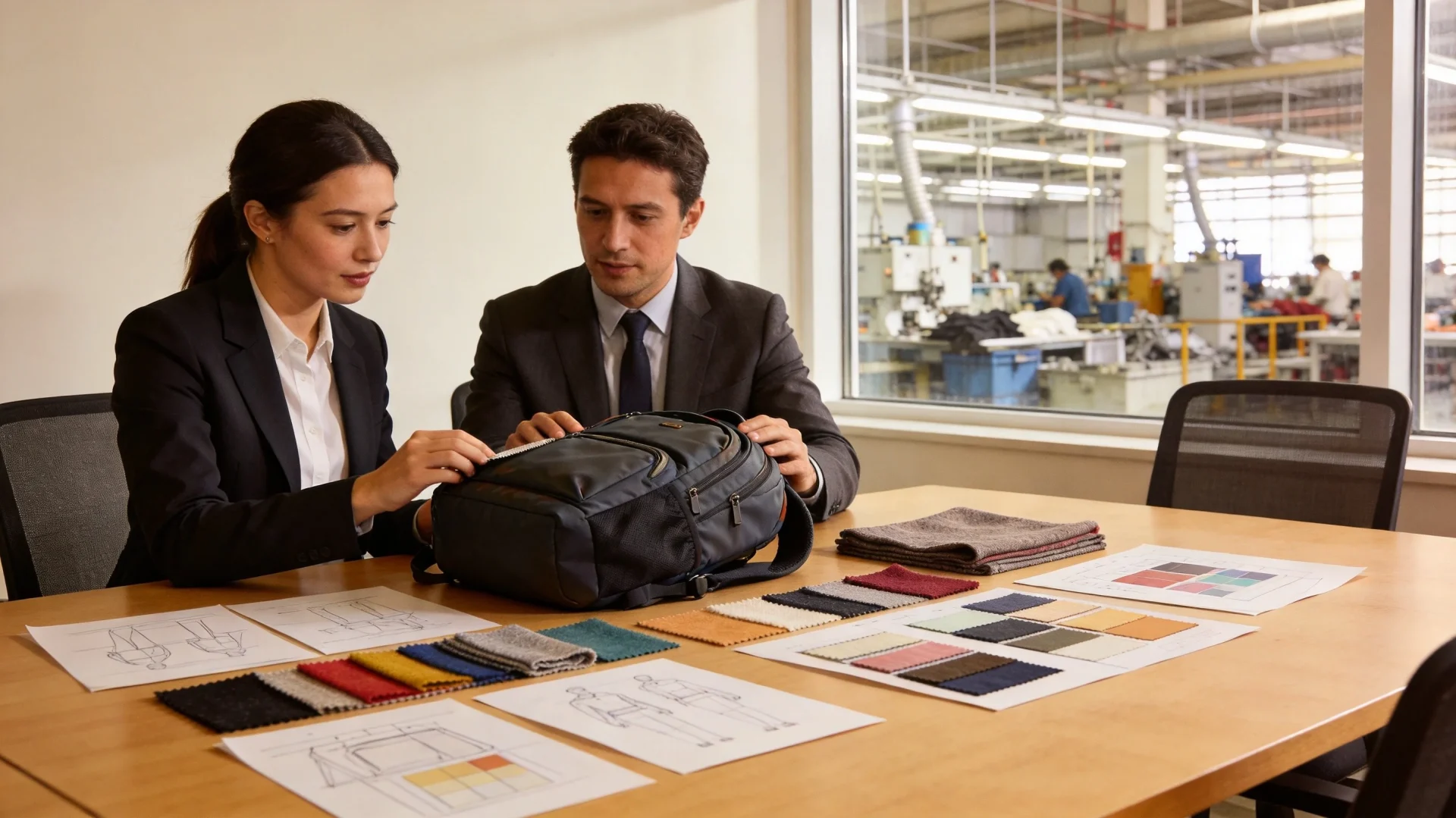
OEM (Original Equipment Manufacturing): You provide complete designs, tech packs, and specifications. The factory produces exactly to your requirements. Best for established brands with proprietary designs and existing product lines.
ODM (Original Design Manufacturing): The factory provides design capabilities and may offer existing designs that can be customized with your branding. Best for startups, DTC brands, or companies expanding their product lines without in-house design teams.
Most Vietnamese manufacturers listed above offer both models. For instance, Mikkor Vietnam and Vibama provide full design-to-production ODM services, while Senrong Bag focuses primarily on OEM production for brands with established specifications.
? Deep Dive: Need help with sample development before committing to production? Our Bag Sample Development & Prototyping Complete Guide covers everything from tech pack creation to material sourcing and prototype testing.
Vietnam vs China vs Bangladesh: Manufacturing Cost Comparison
| Factor | Vietnam | China | Bangladesh |
|---|---|---|---|
| Avg. Labor Cost (monthly) | $200-350 | $500-800 | $95-150 |
| US Import Duty (Backpacks) | ~17% | ~42.5% | ~17.6% |
| EU Market Access | Duty-free (EVFTA) | Standard MFN tariffs | GSP/EBA benefits |
| Supply Chain Maturity | High (Top 3 globally) | Very High (World #1) | Medium-High |
| MOQ Flexibility | Medium (500-1,000 pcs) | High (100-500 pcs) | Low (3,000-5,000 pcs) |
| Quality Consistency | High | Very High | Medium |
| Best For | EU/US brands, mid-high quality | All markets, full range | High volume, cost-driven |
Vietnam’s sweet spot is clear: it offers the best combination of tariff advantages, quality consistency, and supply chain maturity for brands targeting EU and US markets. Bangladesh wins on pure labor cost for high-volume orders, while China remains unmatched in supply chain depth and MOQ flexibility.
Complete OEM/ODM Process: From Inquiry to Delivery
Here’s a step-by-step breakdown of the typical backpack manufacturing process in Vietnam:
- Inquiry & Consultation (Week 1): Submit your requirements — product specs, target quantity, timeline, and budget. Receive initial quotation and feasibility assessment.
- Tech Pack Review (Week 1-2): Factory reviews your technical package including materials, dimensions, construction details, hardware specifications, and branding requirements.
- Sample Development (Week 3-6): Pre-production sample creation. First sample takes 2-4 weeks; revisions typically require 1-2 additional weeks. Sample costs range from $50-200 per style, often refundable against bulk order.
- Sample Approval & Contract (Week 6-7): Final sample sign-off. Purchase order issuance with agreed pricing, payment terms (typically 30% deposit, 70% before shipment), and delivery timeline.
- Material Procurement (Week 7-9): Factory sources and receives all raw materials — fabrics, zippers, buckles, foam, thread, and packaging materials. Incoming material inspection conducted.
- Production (Week 9-14): Bulk manufacturing. Typical timeline is 4-6 weeks depending on order complexity and volume. In-line quality checks conducted at cutting, sewing, and finishing stages.
- Final QC & Inspection (Week 14-15): 100% inspection or AQL sampling (typically AQL 2.5 for major defects, AQL 4.0 for minor defects). Third-party inspection available via SGS, Intertek, or Bureau Veritas.
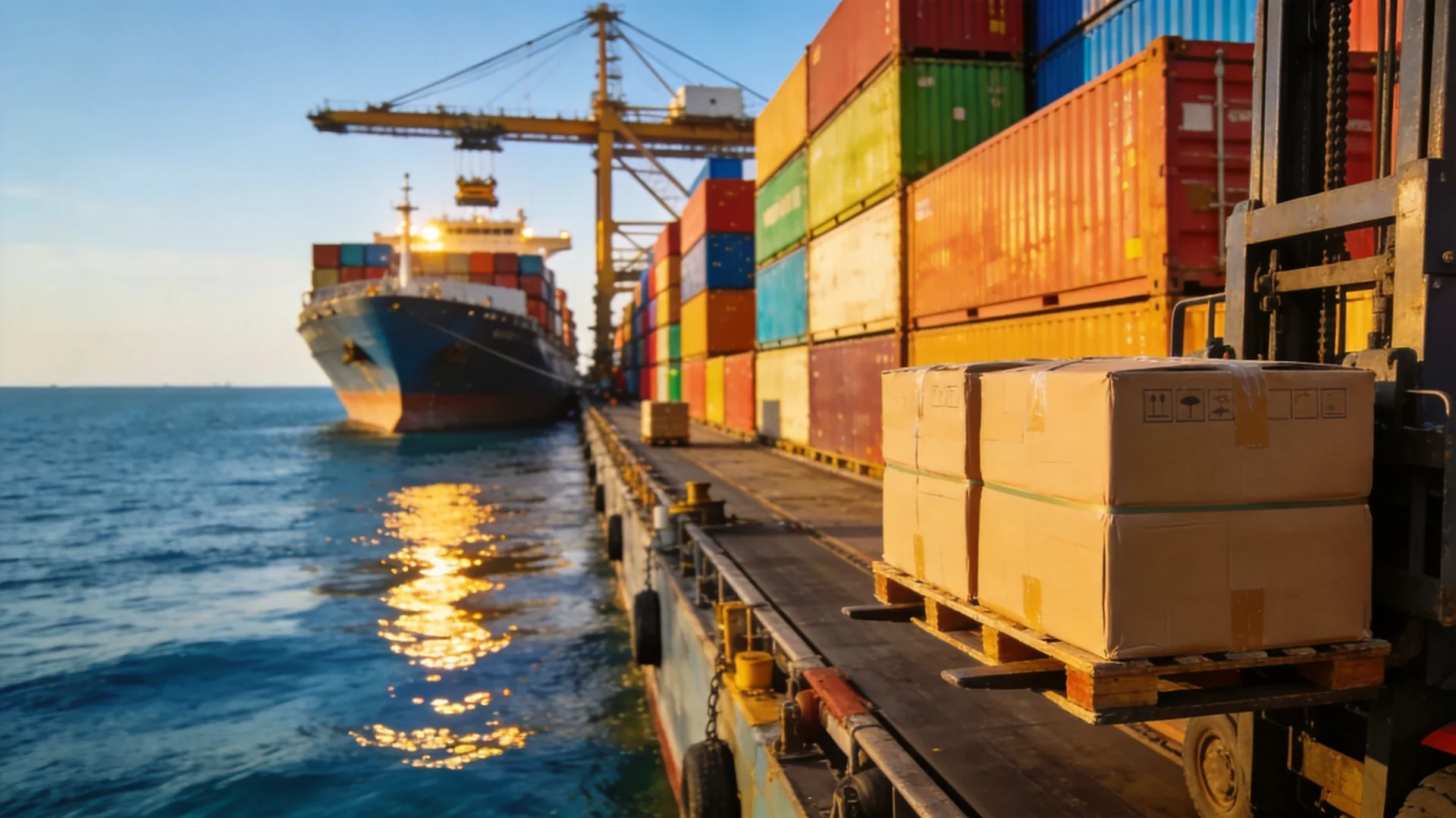
- Shipping (Week 15-18): FOB Haiphong or FOB Ho Chi Minh City. Sea freight to US West Coast takes approximately 18-25 days; to EU ports takes 20-30 days. Air freight available for urgent orders at 5-7 day transit.
How JUNYUAN BAGS Can Help You Source from Vietnam
At JUNYUAN BAGS, we understand that sourcing backpacks from Vietnam involves complexities — from factory selection and audit coordination to quality control and logistics management. With years of experience in the global bag manufacturing industry, we bridge the gap between international brands and Vietnam’s best manufacturers.
Our services include:
- Factory matching: We connect you with the right manufacturer based on your product type, volume, certification requirements, and budget
- Quality assurance: On-site inspection at every production stage, from material incoming check through final pre-shipment inspection
- Sample management: Complete sample development coordination with fast turnaround times
- Compliance support: Help navigate certification requirements (BSCI, OEKO-TEX, REACH, CA Prop 65) for your target markets
- Logistics coordination: End-to-end shipping management from factory floor to your warehouse, including customs documentation
Whether you’re launching a new backpack line, diversifying your supply chain away from China, or scaling production to meet growing demand, JUNYUAN BAGS provides the expertise and on-the-ground presence to ensure your Vietnam sourcing project succeeds.
Our team has established relationships with the manufacturers listed above and can facilitate introductions, arrange factory tours, coordinate sample development, and manage production oversight on your behalf. We work with brands of all sizes — from first-time importers launching their initial backpack collection to established retailers managing multi-million-dollar sourcing programs across multiple Vietnamese factories.
Key advantages of working with JUNYUAN BAGS for your Vietnam sourcing include bilingual project management (English and Mandarin), dedicated quality control teams stationed near major manufacturing hubs, and established logistics partnerships with freight forwarders specializing in the Vietnam-to-global trade lanes. We handle the operational complexity so you can focus on product development and market growth.
Frequently Asked Questions
What is the average cost to manufacture a backpack in Vietnam?
The cost varies significantly based on materials, complexity, and order volume. Simple polyester school backpacks start at $3-6 per unit at MOQ quantities (500-1,000 pcs). Mid-range laptop backpacks with padded compartments range from $8-15 per unit. Technical outdoor backpacks with specialized features (waterproof zippers, frame systems, Cordura fabric) can range from $15-35 per unit. Large volume orders (5,000+ pcs) typically reduce unit costs by 15-25%.
How long does it take to produce backpacks in Vietnam?
The complete timeline from initial inquiry to delivery is typically 12-18 weeks. Sample development takes 3-6 weeks. Bulk production requires 4-6 weeks depending on order complexity and factory capacity. Shipping adds 3-4 weeks by sea to the US or EU. For rush orders, some manufacturers can compress the production phase to 3-4 weeks with expedite fees.
What certifications should I look for in a Vietnam backpack manufacturer?
Essential certifications include ISO 9001 (quality management), BSCI or Sedex (social compliance), and OEKO-TEX Standard 100 (chemical safety) for EU market access. For US market compliance, ensure the factory can meet CA Proposition 65 and CPSIA requirements. Premium certifications include bluesign® (environmental), ISO 14001 (environmental management), and Fair Wear Foundation membership (labor standards).
What is the minimum order quantity for backpack manufacturing in Vietnam?
Most Vietnamese backpack manufacturers require a minimum order of 500-1,000 pieces per style/color. Some factories like Senrong Bag prefer orders of 1,000+ pieces for competitive pricing. First-time orders below standard MOQ typically incur a 20-40% unit price premium. MOQs can often be negotiated lower for repeat customers or through framework agreements.
Can I visit backpack factories in Vietnam?
Yes, factory visits are encouraged and most manufacturers welcome international buyers. The main manufacturing hubs are Ho Chi Minh City (largest concentration), Hanoi/Nam Dinh area, Binh Duong Province, and Dong Nai Province. Best practice is to schedule visits 4-6 weeks in advance, particularly during peak production seasons (August-November for holiday season orders).
What are the import duties on backpacks from Vietnam to the US and EU?
To the United States: backpacks from Vietnam face approximately 17% customs duty, compared to 42.5% from China — a significant 25.5 percentage point advantage. To the European Union: under the EVFTA, tariffs on backpacks are being progressively eliminated, with most categories reaching 0% duty by 2025-2026. To CPTPP countries (Japan, Canada, Australia): preferential tariff rates apply, typically reducing duties to 0-5%.
How do I ensure quality when manufacturing backpacks in Vietnam?
Implement a three-tier quality assurance approach: (1) Pre-production — require and approve pre-production samples before bulk manufacturing begins; (2) In-production — conduct inline inspections at key stages (cutting, sewing, finishing) either through your own QC team or third-party inspectors like SGS or Intertek; (3) Pre-shipment — perform final random inspection using AQL sampling standards (AQL 2.5 for major defects, AQL 4.0 for minor defects). Working with ISO 9001-certified factories provides an additional layer of process-based quality assurance.