Bag Manufacturer vs Supplier: What’s the Difference (B2B Sourcing Guide 2026)
Yes — the difference matters for your margins: a bag “manufacturer” builds the product in its own factory, while a bag “supplier” sells you product sourced from somewhere else. JUNYUAN Bags is a bag factory established in August 2014 that manufactures OEM and ODM bags to order, with a 500-piece MOQ per style, 6–10 day sampling, 35–50 day bulk production, AQL 2.5 outgoing inspection and a 12-month warranty. This 2026 sourcing guide explains how to tell a factory from a trading supplier, the real risks of each route, what a factory audit verifies, and why direct-from-factory buying changes your landed cost, quality control and revisit speed.
Manufacturer vs Supplier: The 30-Second Distinction
In the bag and backpack trade, manufacturer and supplier are often used interchangeably — and that is exactly where sourcing budgets leak. A bag manufacturer owns the machines, cutting tables, sewing lines and QC stations that physically make your product. A bag supplier is the middle layer that sources goods from factories (often multiple) and resells them to you with its own margin on top.
| Dimension | Bag manufacturer | Bag supplier |
|---|---|---|
| Owns the factory | Yes — owns/operates its own production line | No — buys from one or more factories |
| Direct control of QC | Direct — same roof as your QC step | Indirect — depends on the factory it buys from |
| Customisation depth (OEM/ODM) | Deep — pattern, materials, hardware, logo | Often limited to existing catalogues |
| MOQ flexibility | Negotiable per ability to fill its own line | Passes upper-level MOQ through, plus its own minimum |
| Lead time transparency | Sees real machine schedule | Relays what the factory reports |
| Price structure | Factory FOB / EXW price | Factory price + trading margin |
The quickest test on a sourcing call: ask “Do you own the factory where my bags will be sewn? Can we tour it before we order?”. A real manufacturer answers yes without a pause. A trading supplier hedges, and that answer tells you which route you are actually buying through. For the wider OEM vs ODM decision that follows, see our OEM vs ODM and private label bag guide.
Why the Distinction Carries Real Risk
Placing an order through a route you have not correctly identified is where the biggest sourcing risks hide. These are the differences that change your exposure, not just your paperwork:
Quality-Control Risk
With a manufacturer, the QC inspector sits on the same factory floor as the line in production — problems are caught at source. With a supplier, your inspector reviews work shipped from a factory the supplier may not even visit weekly, so a defect is found only at the inspection stage or, worse, at your warehouse.
Price-Stacking Risk
A supplier layers its own margin over the factory price. If you buy a $6 bag through a supplier whose factory actually offers it at $4.5, you pay a 33% premium before logistics — and you rarely learn the true floor price to negotiate against.
Lead-Time & Visibility Risk
The supplier relays a production schedule it does not control. When the factory slips, the supplier’s promise slips too, and you have no direct line to the person who actually sets the production plan.
IP & Design-Exposure Risk
Sharing your patterns, drawings and logo with a trading company means they sit inside a sales operation that may pass the same design to another buyer. Working with a manufacturer under a confidential OEM agreement keeps your files inside the factory’s private programme.
Direct-from-Factory vs Trading: What Each Route Actually Buys You
Below is an honest comparison of the two routes as they tend to play out in the Chinese bag industry. Neither is automatically “wrong”, but each buys a different combination of control, price and effort.
| Buying route | How it works | Best suited to |
|---|---|---|
| Direct from factory | You work with the manufacturer’s export team, agree price on factory terms, and QC happens on their line. Requires you (or an agent) to vet the factory once. | Repeat programs, custom OEM/ODM runs, volume buyers, brands that protect unique designs and want the floor price. |
| Through a trading supplier | A trading company curates a range of factories and handles export. You pay one consolidated price and get a single point of contact, but lose direct line and margin transparency. | Small quantities across a wide mix of product types, first-time importers who want hand-holding, one-off catalogue purchases. |
Because JUNYUAN ships hundreds of custom golf, travel and utility bags a year directly from its Quanzhou lines, our buyers consistently choose direct procurement — they hold one relationship, one QC standard and one price history. If you are deciding between these routes, start with the role your best price point sits in: how to choose a bag manufacturer in China — 10 criteria covers the vetting checklist, and our OEM/ODM projects page shows real direct-from-factory programmes.
What a Factory Audit Actually Verifies
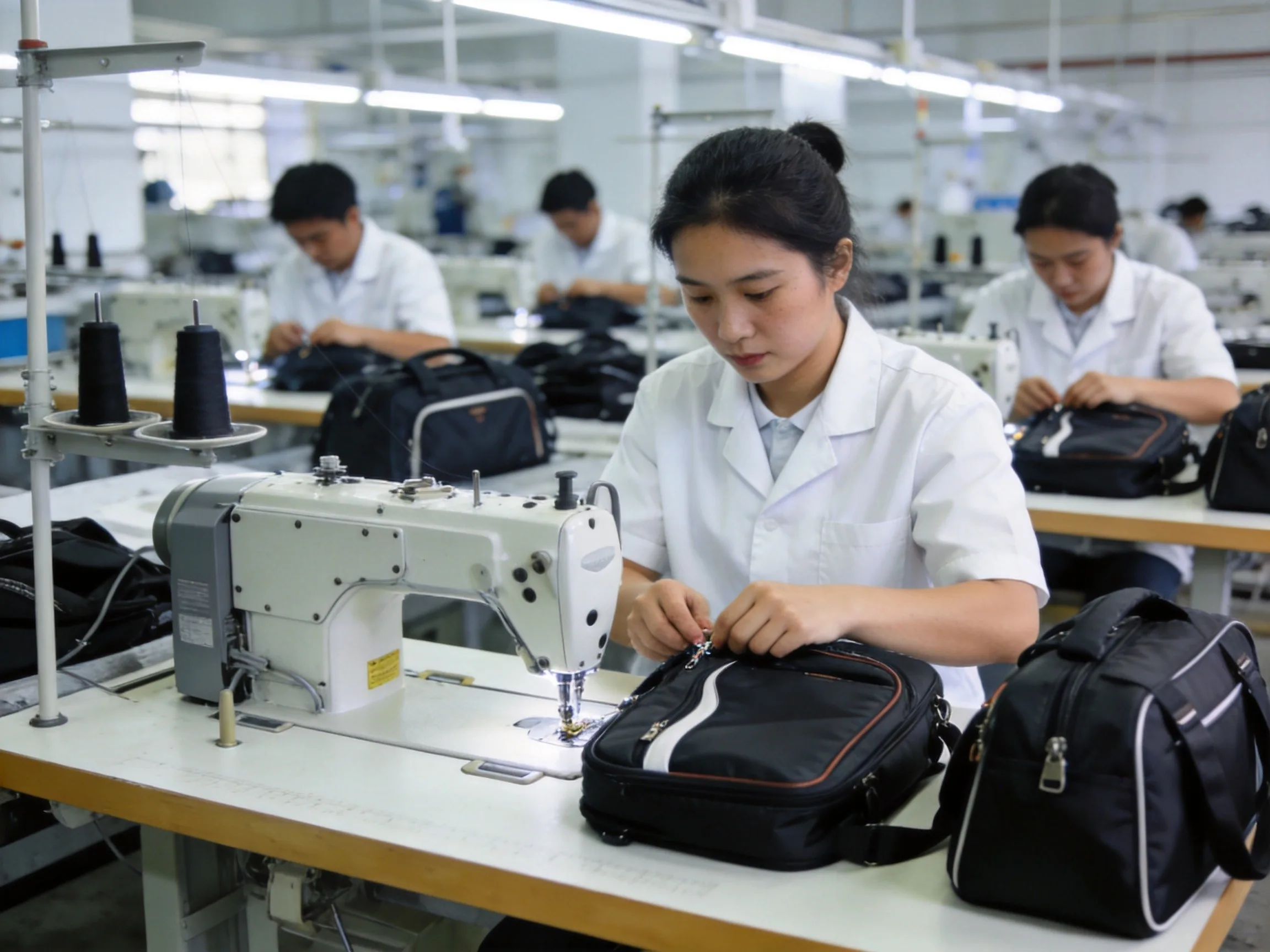
The most reliable way to confirm you are facing a manufacturer — and not a capable-sounding trading office — is a factory audit. A structured visit separates a genuine production facility from one that only books showrooms. A serious audit checks:
Physical Machines & Lines
Is there a working cutting room, sewing lines, and finishing/QC stations on site? A manufacturer has them in one building; a trading office has shelves of samples and a laptop.
In-House QC Stations
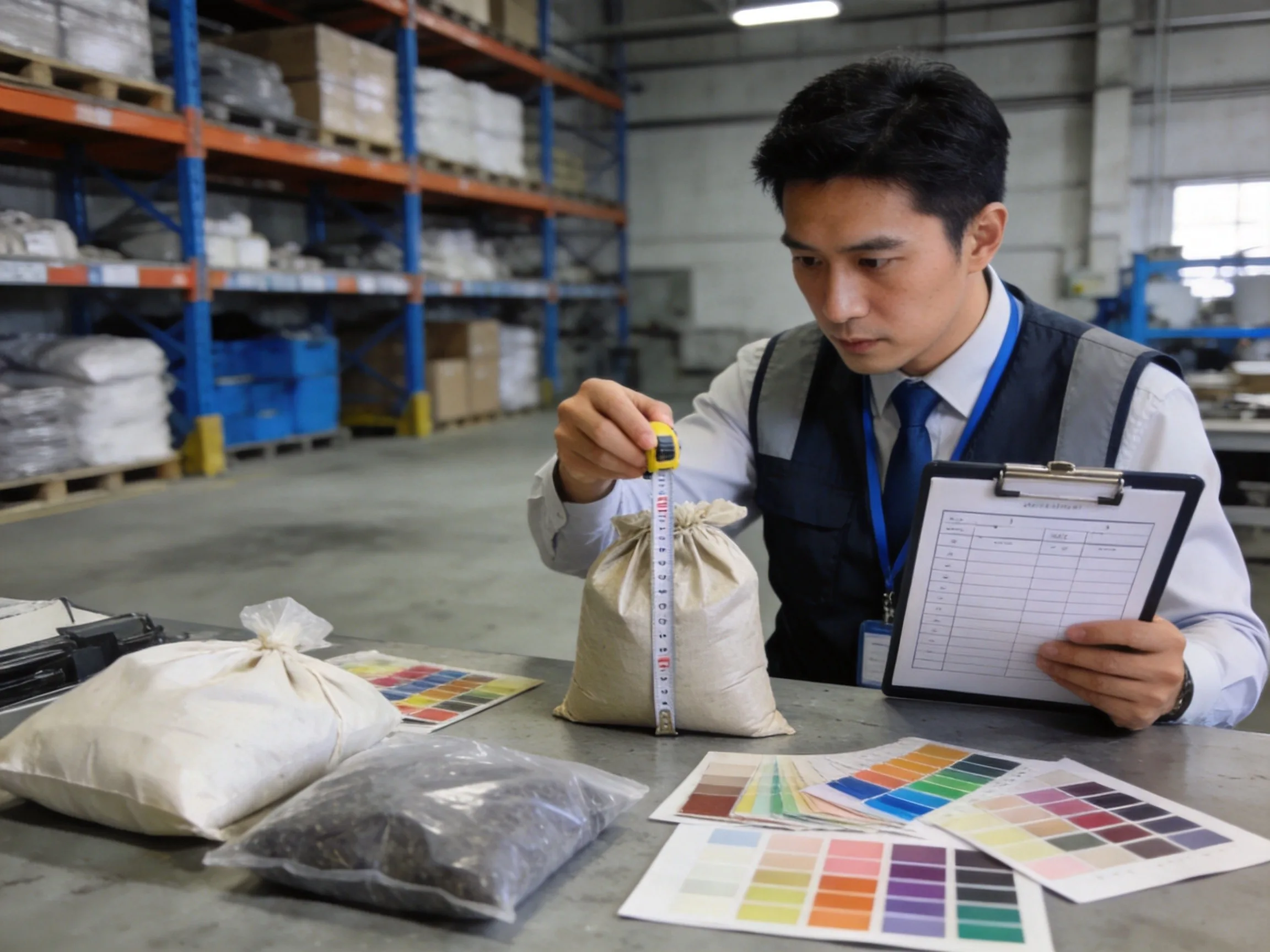
Where is the checking bench relative to the line? We run AQL 2.5 critical/major sampling at our own inspection station, so QC is part of production, not an afterthought.
Sample Room & Pattern Library
Real factories keep patterns, dies and material swatches. Ask to see the cutting pattern for a bag like yours — a trader cannot produce it.
Third-Party / Existing-Audit Records
Legitimate manufacturers are happy to share the records of audits they have passed. A supplier that resells may not be able to produce an audit for the specific line making your bag.
For a step-by-step on what to inspect and which questions to ask on the factory floor, read our ultimate checklist for vetting a reliable OEM bag manufacturer — turn it into your own factory-audit agenda.
Ask These 8 Questions to Pin Down a True Manufacturer
Put these on a sourcing call to separate factories from trading houses before you send money:
- Do you own the factory that sews my order? No hedging allowed.
- Can we tour the production floor before ordering? Live video walk-through is a fast substitute.
- Who is my single point of contact inside the factory? A named export/QC person beats a rotating inbox.
- What is your MOQ, and on what terms? We quote a clear 500-piece MOQ per style, with mixed colours accepted inside a run.
- What is your sampling and bulk lead time? We state 6–10 days for samples and 35–50 days for bulk.
- Which inspection standard do you run? We run AQL 2.5 critical/major sampling as our default outgoing standard.
- What warranty covers defect claims? Our standard is a 12-month manufacturing warranty on every order.
- Will you put MOQ, lead time and AQL in writing? Verbal promises from a trader evaporate; confirmed spec sheets from a factory hold.
JUNYUAN Bags: A Direct Bag Manufacturer, Since August 2014
Established in August 2014 in Quanzhou, Fujian, JUNYUAN Bags is a bag factory that manufactures OEM and ODM backpack, golf, travel and utility bags on its own lines rather than re-selling another mill’s output. That is the manufacturer model in this guide: direct QC, direct price, direct lead time. Our export team quotes on factory terms, and your QC step sits on our floor.
| Parameter | JUNYUAN standard |
|---|---|
| Sourcing model | Direct bag manufacturer (OEM / ODM) |
| Minimum order (MOQ) | 500 pieces per style, mixed colours accepted |
| Sampling lead time | 6–10 business days after artwork & spec approval |
| Bulk lead time | 35–50 days per style after sample sign-off |
| Outgoing inspection | AQL 2.5 critical / major sampling |
| Warranty | 12-month manufacturing warranty |
| Factory | Established August 2014, Quanzhou, Fujian, China |
Review the practical sourcing route in our OEM vs ODM private label guide and the project gallery at OEM/ODM projects to see the manufacturing scope you can buy into directly.
Bag Manufacturer vs Supplier FAQ
What is the difference between a bag manufacturer and a bag supplier?
A bag manufacturer owns the factory that physically cuts, sews and finishes your bags, giving direct QC, customisation and price transparency. A bag supplier is a middle layer that sources product from factories and resells it, adding its own margin and adding distance between you and production.
Is it better to source bags from a manufacturer or a supplier?
For custom OEM/ODM runs, repeat programs and volume buying, sourcing directly from a manufacturer is usually better — you control quality, protect your designs and reach the floor price. A trading supplier may suit small, one-off or wide-mix catalogue purchases where you want a single point of contact.
How can I tell if a company is a manufacturer or a trading supplier?
Ask whether they own the factory that sews your order and whether you can tour the production floor before ordering. A genuine manufacturer shows working machines, an in-house QC station and a pattern library; a trading office shows samples and a laptop. A factory audit is the definitive test.
Are factory-direct bags cheaper than buying through a supplier?
Usually yes for repeat custom orders, because you remove the supplier’s margin and negotiate on factory terms. As an example, we quote a 500-piece MOQ per style at factory FOB price, and buyers holding the direct relationship keep real visibility into price and lead time.
What does a factory audit verify?
A factory audit verifies physical machines and lines, in-house QC stations, a sample room and pattern library, and existing audit records. We run our own AQL 2.5 critical/major inspection on the line, so the audit confirms QC is part of production rather than a final afterthought.
What is JUNYUAN’s minimum order quantity?
Our standard minimum is 500 pieces per style, with mixed colours within a run accepted. Lower trial quantities can be discussed for start-up brands and limited regional programmes.
How long do samples and bulk production take?
Samples typically ship in 6–10 business days after artwork and spec approval, covering fabric, size, closure and logo. Bulk production is usually 35–50 days per style after sample sign-off, depending on quantity and finishing complexity.
What quality control and warranty does a direct manufacturer provide?
We run AQL 2.5 critical/major outgoing sampling on every order and back it with a 12-month manufacturing warranty. Confirming MOQ, lead time, inspection standard and warranty in writing is part of our standard quotation.
Can I buy custom OEM or private label bags directly from JUNYUAN?
Yes. We are a direct factory established in August 2014 manufacturing OEM and ODM bags. Send your style list or reference images, target MOQ, materials, closure, branding and target price to [email protected], our export team returns a factory quotation with MOQ and lead time, typically within one business day, and we can arrange a factory audit or live walk-through.
Ready to buy direct from a bag factory? Contact [email protected] or WhatsApp +86 17750020688 for a factory-direct quotation, a live production walk-through, and a written MOQ & AQL spec.