Choosing the right material for your Kickstarter bag is about balancing durability, cost, and functionality. Here’s a quick breakdown:
Straight Answer
MOQ 200 pieces · Sampling 6-10 days · Production 35-50 days · AQL 2.5 inspection · Sample fee refunded on volume order. JUNYUAN BAGS (QUANZHOU JUNYUAN COMMERCIAL AND TRADING CO., LTD.), an SGS-verified OEM/ODM bag factory (about 200,000 pieces/month, 7 lines, 149 machines, 137 workers) serving 200+ brands in 100+ countries, supports Kickstarter bag projects end to end.
- PU Leather: Affordable, stylish, and water-resistant but less durable than genuine leather. Costs $8–$30/yard, depending on quality.
- Nylon: Lightweight, durable, and weather-resistant, ideal for technical and outdoor bags. Costs $2–$8/yard for most grades.
- Canvas: Strong, eco-friendly aesthetic but heavier and less water-resistant unless treated. Costs $4–$40/yard based on weight and treatment.
Key Takeaway:
- Use nylon for performance-focused bags like travel or gym gear.
- Opt for canvas if targeting a classic, rugged look.
- Choose PU leather for fashion-forward designs on a budget.
Each material affects production costs (30-40% of total expenses) and impacts durability, appearance, and customer perception. Select based on your campaign goals and audience needs.
Best Material For Backpacks? Your Guide To Bag Fabrics
sbb-itb-1e6451b
1. PU Leather
PU (polyurethane) leather is a fully synthetic, vegan-friendly alternative to genuine leather that comes at a much lower price. Typically, it costs 50–70% less than real leather, making it a popular choice for budget-conscious projects. But, as with most cost-effective options, there are some compromises involved.
Durability
One of PU leather’s main drawbacks is its reduced durability compared to genuine leather. Since it lacks the natural elasticity of cowhide, it’s more prone to punctures and tears when subjected to heavy use. Additionally, friction can wear it down over time. Standard PU leather generally lasts around 5–8 years, while genuine leather can endure for 10–20 years. Its non-breathable nature can also lead to moisture buildup and stickiness, which is a concern for items in prolonged contact with the body.
For applications that demand greater durability, marine-grade or silicone-based PU offers a longer lifespan of 8–10 years. These premium types include features like UV resistance and anti-fungal properties but come at a higher cost. Thicker grades (1.2mm–1.5mm) with reinforced backings are another way to boost structural integrity, especially for items that need to bear weight.
Cost (USD per yard)
Standard PU leather is significantly cheaper than genuine leather, with prices ranging from $8 to $15 per yard. Bulk orders of over 5,000 yards can often secure discounts of 10–30%. On the other hand, smaller quantities (500–1,000 yards) typically cost more, falling between $12 and $15 per yard due to setup fees. For specialty options, recycled or bio-based PU costs $18–$28 per yard, while high-performance silicone PU is priced between $20 and $30 per yard. Additional surface treatments, such as anti-microbial or UV-resistant coatings, can increase costs by 10–25%.
Water Resistance
PU leather offers decent water resistance, making it relatively easy to clean and maintain for everyday use. However, if your product requires full waterproofing – like gym bags or outdoor gear – marine-grade PU is a better choice, as it provides enhanced moisture protection and anti-fungal properties. Standard PU can handle light moisture but isn’t suitable for prolonged exposure or submersion.
Next, we’ll see how nylon measures up in terms of durability and cost.
2. Nylon
Nylon is a synthetic material known for its durability and versatility, often used in technical and athletic bags. First introduced in the 1930s as the world’s first synthetic fiber, it has since become a go-to choice for everything from gym bags to tactical gear. For instance, a 600D nylon backpack can weigh 30–40% less than a similar canvas bag while delivering equal – or even better – durability.
Durability
The strength of nylon is measured by its "denier" (D) rating, which indicates fiber thickness. Lighter grades like 210D to 420D are ideal for casual backpacks and totes, while heavier grades (600D to 1680D) are built for more demanding uses like luggage and professional gear. Thanks to its tight weave, nylon offers excellent abrasion resistance. Premium ballistic nylon, typically in 840D or 1050D with a 2×2 basketweave, takes durability up a notch with superior puncture protection. However, prolonged exposure to sunlight can weaken nylon fibers unless UV inhibitors are added. While polyester handles UV exposure better, nylon still outshines it in tear strength and overall toughness.
Cost (USD per yard)
Nylon fabrics generally range from $2 to $8 per yard. Lighter options (210D–420D) are priced at $2–$4 per yard, while heavier, more durable grades (600D–1680D) fall between $4 and $8 per yard. Premium varieties like ballistic nylon or Nylon 6,6 with TPU laminates can cost more than $8 per yard. Compared to polyester, nylon is typically 10–30% pricier for similar fabric types. However, its higher strength-to-weight ratio allows designers to use lighter materials, which can help offset the cost difference.
Water Resistance
Nylon naturally repels water better than canvas, but it isn’t inherently waterproof. To achieve waterproofing, additional coatings are required. TPU-coated nylon offers excellent water resistance, with Hydrostatic Head ratings of 10,000–20,000+ mm, and resists mildew when properly dried. For athletic bags designed to carry wet or damp gear, a TPU laminate or a heavy PU coating is a better choice than relying solely on a durable water-repellent finish. Cleaning nylon is simple – just wipe it down with a damp cloth.
Weight Capacity
One of nylon’s standout features is its high tensile strength, making it perfect for heavy-duty hiking packs and travel bags. Its flexible molecular structure helps distribute stress evenly, reducing the risk of straps snapping under heavy loads. For projects targeting athletes or frequent travelers, nylon’s lightweight yet strong build makes it an excellent choice for creating bags that can handle heavy contents without unnecessary bulk.
Next, we’ll take a closer look at canvas as another material option for Kickstarter bags.
3. Canvas
Canvas stands out as a more traditional material option, offering a blend of timeless style and sturdy construction. Made from cotton or cotton-polyester blends, this woven fabric develops a distinctive patina over time, adding character as it ages. Its durability and aesthetic appeal make it a popular choice for various types of bags.
Durability
Canvas is known for its impressive strength, particularly for static uses. A 12oz canvas can endure 25,000–40,000 cycles in Martindale abrasion tests, with a tear strength ranging from 45–65 N in warp and weft directions. Heavier canvas (16oz–20oz) is even more resistant to tears and maintains its shape under heavy loads. However, it comes with a tradeoff: canvas is much heavier than nylon. For instance, a typical canvas backpack weighs around 800–1,200g (1.8–2.6 lbs), compared to 500–800g (1.1–1.8 lbs) for a nylon equivalent. While canvas excels in static durability, nylon is often the better choice for mobile uses where lighter weight and abrasion resistance are key.
Cost (USD per yard)
The price of canvas depends on its weight and any treatments it has undergone. Basic cotton canvas typically costs $8–$15 per yard, while higher-quality duck canvas is priced between $15 and $25 per yard. Specialty treatments like waterproofing can push the cost to $25–$40+ per yard. Poly-cotton blends, which combine natural aesthetics with easier maintenance, are more affordable, ranging from $4–$7 per yard. Waxed canvas, prized for its water resistance and vintage look, is usually priced at $8–$12 per yard. For budget-conscious projects, 10–12oz canvas offers a good balance between cost and structural integrity.
Water Resistance
Untreated canvas is naturally absorbent, soaking up about 7–8% of its weight in moisture. This makes it less ideal for bags exposed to wet conditions or used for athletic gear. However, treatments can address this issue. Waxed canvas provides moderate-to-high water repellency and can be re-waxed to maintain its effectiveness. PU coatings offer even better waterproofing with a smooth finish, making them suitable for outdoor gear. Without proper treatment, though, canvas is vulnerable to mold and mildew in humid environments, so protective coatings are essential for long-term use in wet conditions.
Weight Capacity
Canvas shines when it comes to carrying heavy loads. Its tight weave minimizes sagging and helps maintain a bag’s shape, making it ideal for messenger bags, laptop carriers, and duffel bags. The material’s natural stiffness supports structural integrity, even when fully packed. Additionally, canvas is easy to repair – small tears can be fixed with basic sewing skills, extending the life of the bag. This repairability, combined with its durability, makes canvas a solid choice for applications where strength and longevity are priorities.
Pros and Cons Summary
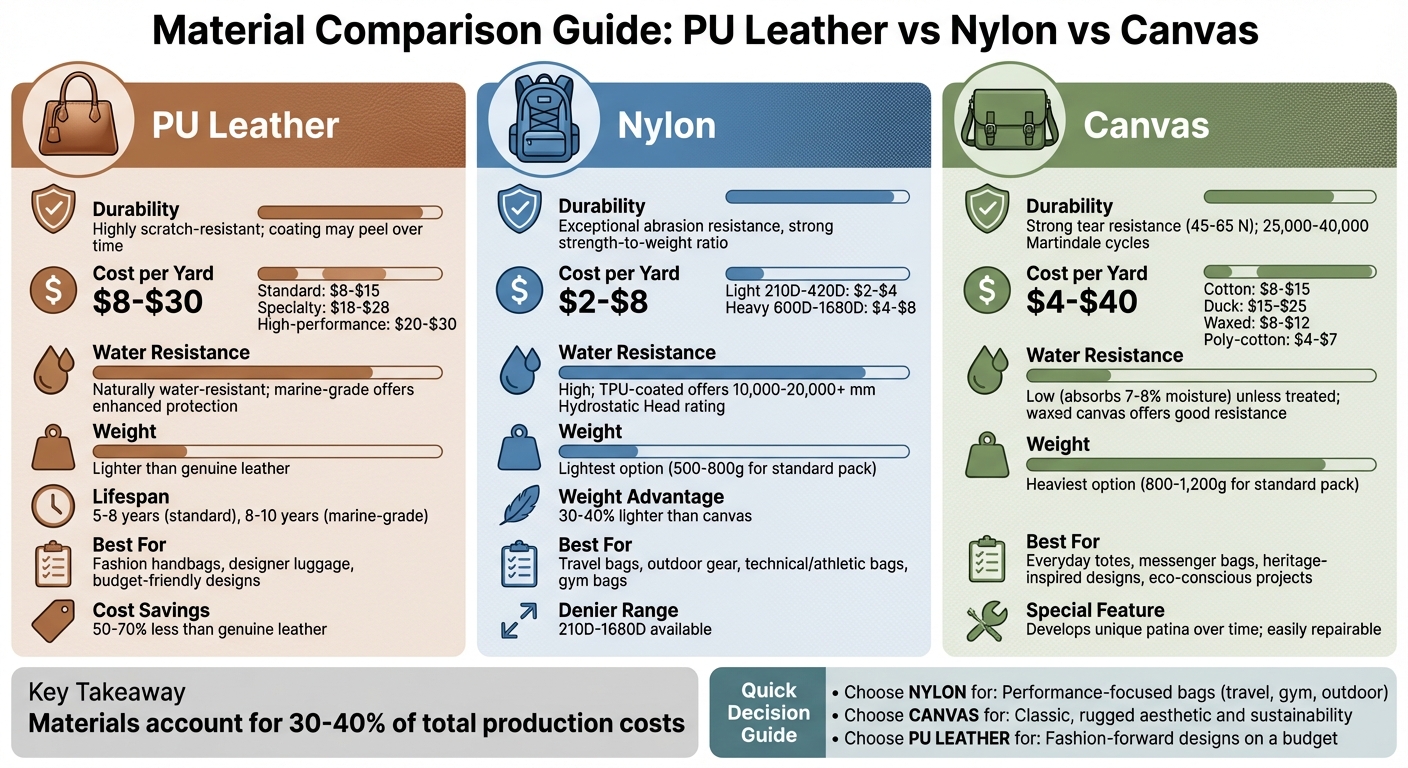
PU Leather vs Nylon vs Canvas: Material Comparison for Kickstarter Bags
When choosing the right material for your Kickstarter bag, balancing durability, cost, and functionality is key. Here’s how PU leather (coated canvas), nylon, and canvas compare across the most important factors: durability, cost, water resistance, and weight capacity.
| Feature | PU Leather / Coated Canvas | Nylon | Canvas |
|---|---|---|---|
| Durability | Highly resistant to scratches; coating may peel over time | Exceptional abrasion resistance with a strong strength-to-weight ratio | Strong tear resistance but can weaken at stress points |
| Cost per Yard | Typically cheaper than genuine leather; varies by backing material | Entry-level (210D–420D): $2–$4; Heavy-duty (600D–1680D): $4–$8 | Cotton: $3–$6; Poly-cotton: $4–$7; Waxed: $8–$12 |
| Water Resistance | Naturally water-resistant due to synthetic coating | High resistance, which can be improved with PU/PVC coatings | Low unless treated; waxed canvas offers good resistance |
| Weight Capacity | Lighter than genuine leather | Lightest option (500–800 g / ~1.1–1.8 lbs for a standard pack) | Heaviest option (800–1,200 g / ~1.8–2.6 lbs for a standard pack) |
| Best Use Case | Ideal for fashion handbags and designer luggage | Perfect for travel, outdoor, and technical bags | Great for everyday totes and heritage-inspired designs |
Nylon stands out for its lightweight build and excellent weather resistance, making it perfect for anyone prioritizing mobility and durability. Canvas, on the other hand, offers a natural, rugged aesthetic that appeals to those looking for eco-friendly or heritage-style designs, though its heavier weight and moisture absorption need to be considered. Meanwhile, PU leather provides a sleek, stylish appearance and is a practical alternative to genuine leather for more fashion-focused designs.
Zoey Lee, Sales Director at Osgoodway Bag, highlights nylon’s advantages:
"High-performance nylon is the only choice… for those who see their backpack as a piece of high-performance equipment, nylon delivers unmatched peace of mind".
Your material decision should reflect your campaign’s focus. For technical projects like hiking or gym bags, nylon’s lightweight and weatherproof qualities make it a top pick. If you’re aiming for a "slow fashion" or artisanal vibe, canvas offers a natural look and repairability. For sleek, modern designs, PU leather gives that polished, leather-like finish without the hefty price tag of genuine leather. Each material brings unique strengths, so choose the one that best aligns with your project’s goals.
Conclusion
Picking the right material for your Kickstarter bag is all about aligning with your backers’ values and your campaign’s goals. If your project focuses on technical performance – think travel gear, outdoor equipment, or commuter bags – nylon is a solid choice. It offers a great balance of strength and weight, along with natural water resistance. For example, a 600D nylon backpack can be up to 40% lighter than a canvas one while maintaining similar durability.
On the other hand, canvas is perfect for campaigns that emphasize craftsmanship, sustainability, and a classic aesthetic. Its organic appearance and the unique character it develops over time make it especially appealing to eco-conscious backers.
For designs where style and affordability are key, PU leather delivers a sleek, leather-like look with added water resistance. It’s a cost-effective alternative to genuine leather, making it ideal for fashion-forward projects.
Your choice of material doesn’t just affect the look and feel of your bag – it also impacts production costs. Materials typically make up 30–40% of total production expenses, so the decision directly ties into your funding goals and profit margins. Whether you go with nylon for performance, canvas for timeless appeal, or PU leather for stylish versatility, weigh durability against cost to ensure your material aligns with your campaign’s purpose and objectives.
FAQs
What material is best for a truly waterproof bag?
PVC stands out as the top material for a truly waterproof bag. It’s tough, completely waterproof, and offers outstanding water resistance when welded or heat-sealed. If keeping your bag dry in all conditions is a priority, PVC is a dependable option.
Which fabric choice will most affect my Kickstarter manufacturing budget?
Nylon plays a major role in shaping your Kickstarter manufacturing budget. It stands out as a more affordable option upfront, offering high durability and a lightweight structure, which makes it ideal for cost-effective mass production. On the other hand, while PU leather comes with a higher price tag and demands greater care, nylon’s lower material cost and easy upkeep typically help cut down overall manufacturing expenses. Its long-lasting nature and minimal maintenance needs make it a practical choice for many projects.
How do I pick the right nylon denier for my bag design?
When selecting the appropriate nylon denier for your bag, think about the bag’s intended use, how durable it needs to be, and your budget. Higher deniers, such as 500D to 1000D, are tougher and better suited for heavy-duty or outdoor gear. On the other hand, lower deniers, like 210D to 300D, are lighter and often more affordable, making them a good fit for fashion-forward bags.
It’s also important to consider the type of nylon being used. Options like ripstop or Cordura bring different levels of strength and resistance to wear and tear. Additionally, pay attention to any coatings or treatments on the nylon, as these can enhance durability while impacting the overall cost. Balancing these factors will help you find the best material for your design needs.
Frequently Asked Questions
When should I finalize materials?
Before your sample round. Locking materials early prevents sample-to-production changes that add cost and delay your 6-10 day sampling and 35-50 day production window.
What hardware is most durable?
Metal buckles and YKK-style zippers with reinforced stitching hold up best. We specify hardware that matches your budget while passing AQL 2.5 inspection.
How do I order material swatches?
We send physical material swatches before sampling so you can approve color and handfeel, avoiding a sample round. Request them with your tech pack.
How does material affect my MOQ?
Most standard roll goods have no extra MOQ beyond the 200-piece bag base. Custom dyed or imported fabrics, however, carry their own minimum, so confirm fabric sourcing early.
Which material looks most premium to backers?
Leather-look PU, waxed canvas, and matte coated nylon read as premium in photos. Because backers judge on visuals, we help you pair a material that photographs well with one that stays durable.
What is the cost difference between materials?
Material cost varies with weight, weave and finish. Standard 600D polyester is the budget-friendly baseline; 1680D ballistic and waterproof coated options cost more but justify a higher pledge. We quote an itemized BOM at MOQ 200.
Is waterproof worth the cost?
Yes for outdoor and commuter bags. A TPU or PU coated interior or a dedicated rain cover adds real function and justifies a strong pledge tier for many campaigns.
What materials last longest for Kickstarter bags?
For durability plus cost control, 600D or 1680D polyester, ballistic nylon, and canvas with PU or TPU coating hold up best for crowdfunded bags. We source water-repellent nylon and polyester that keep structure while staying on budget.
Do you offer eco-friendly fabrics?
We support recycled polyester (rPET), organic cotton canvas and certified linings. These suit sustainability-focused campaigns and are sourced on request at MOQ 200.
Can I mix materials to control cost?
Yes. A common strategy is a durable exterior with a less expensive lining and simple hardware to protect the margin while keeping the hero material visible.
Related Blog Posts