Looking for a custom backpack cooler manufacturer for your brand, wholesale or retail program? JUNYUAN BAGS is a China OEM/ODM insulated backpack cooler factory that has produced custom cooler backpacks, insulated lunch bags and thermal bags for many years, backed by an SGS-audited affiliated plant with 7 production lines and a monthly line capacity of 200,000 pieces. Our standard MOQ is 500 pcs per model, sampling takes 6–10 days, bulk production 35–50 days, and every shipment is inspected to AQL 2.5 — the same transparent quality standard we publish on every custom bag page. This page gives you the exact ordering parameters, available insulation technologies and OEM workflow, so you can plan your program without back-and-forth.
If you are evaluating whether a custom backpack cooler is right for your lineup, the short answer is direct: an insulated cooler backpack lets buyers carry cold food, drinks and hydration hands-free, and it is one of the fastest-growing segments in outdoor and sporting-goods accessories. A specialist manufacturer gives you the exact capacity, insulation, branding and quality control a generic bag supplier cannot. Below we walk through the ordering parameters, the technology options, the quality process and the questions every wholesale buyer should ask.
Fast Facts: Custom Backpack Cooler Manufacturing Parameters
| Parameter | Value |
|---|---|
| MOQ (minimum order quantity) | 500 pcs per model (up to 3 mixed colors accepted within one 500-pc order) |
| Custom design / full ODM | Yes — logo, fabrics, colors, insulation layer, capacity, pockets, straps, compartments |
| Sample time | 6–10 days |
| Bulk production time | 35–50 days (after sample approval & 30% deposit) |
| Quality standard | AQL 2.5 inspection on final shipment + optional third-party pre-shipment inspection |
| Factory / plant | SGS-verified affiliated plant: 4,950 ㎡, 7 production lines, the production team (Mar 2026) |
| Monthly line capacity | 200,000 pcs (SGS-verified), current output ~150,000 pcs |
| Insulation options | EPE / XPE closed-cell foam, NBR rubber, reflective (mylar) lining, advanced composites (aerogel, vacuum panels) |
| Fabrics | 600D / 1680D polyester, 420D nylon, TPU-coated, PEVA lining, RPET recycled canvas (optional) |
| Capacity range | 6L / 12L / 20L / 24-can / 30L (custom sizes available) |
| Export markets | North America, Europe, Australia & New Zealand, Middle East |
| Certifications / compliance | ISO 9001, BSCI, FDA food-contact materials (on request) |
Why the Custom Backpack Cooler Market Is Growing
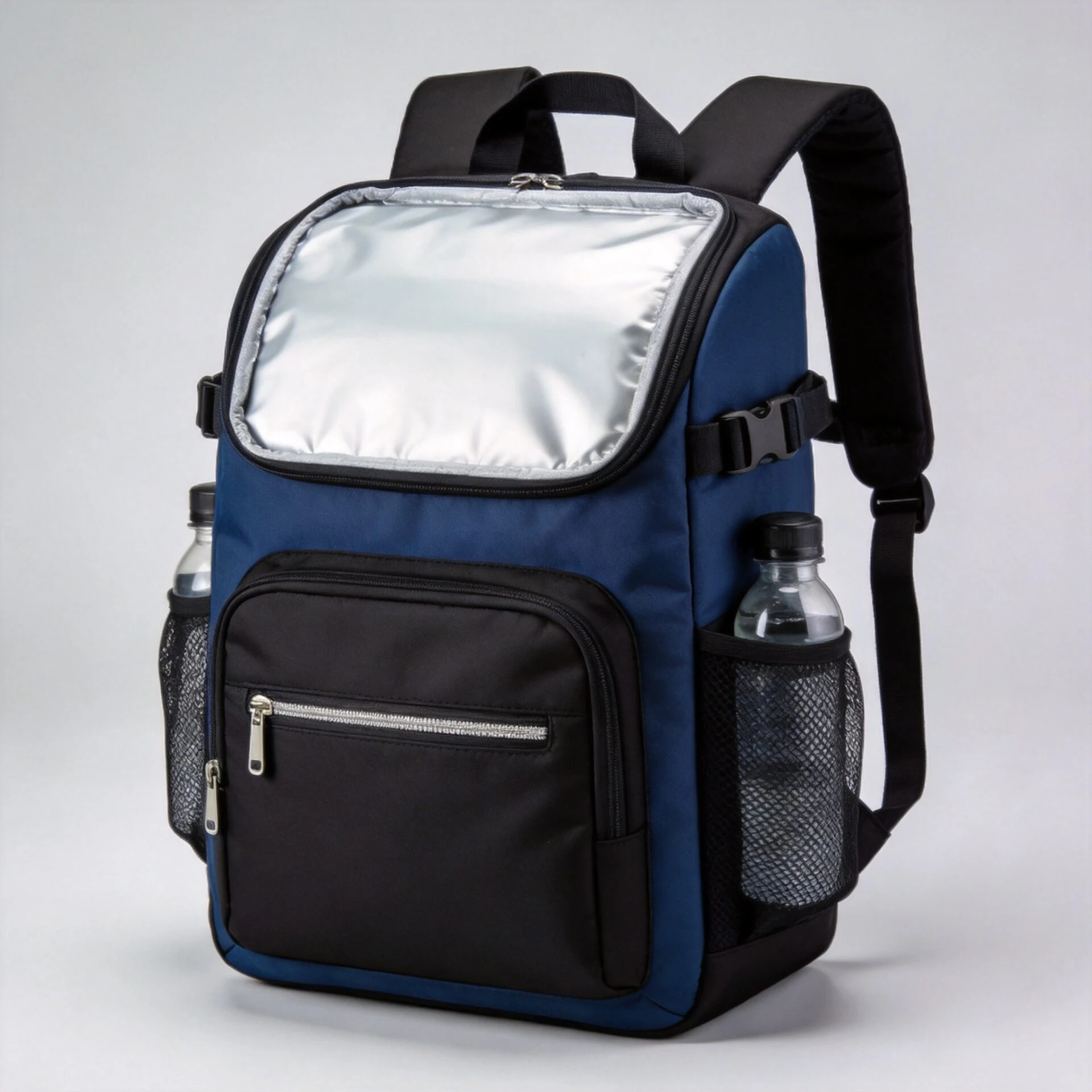
Several converging trends explain why a custom backpack cooler has moved from a niche camping item to a recurring category for outdoor brands, promotional distributors and retail chains. Hands-free cold carrying fits how people actually spend time outdoors — hiking, beach days, festivals, sports, picnics and short delivery runs. Unlike a hard cooler, a soft thermal backpack compresses when empty, weighs far less, and carries cold food, canned drinks, hydration and even chilled groceries on the back rather than in the hand.
For a brand or distributor, the appeal is equally practical. A backpack cooler is a high-ticket accessory that buyers reorder seasonally, and it carries conspicuous branding on a large, flat front panel. That combination — repeat demand plus visible logo space — makes it one of the more attractive SKUs to add to an outdoor or promotional line. It is also a natural cross-sell to an existing golf, picnic or delivery program. If you already source from a multi-category bag factory, adding a cooler backpack to the same supplier keeps quality and logistics under one roof.
Why Buy Backpack Coolers from a Specialist Manufacturer
An insulated backpack cooler is not a standard bag: it needs a thermal core that holds temperature, a leak-resistant structure, and closures that seal properly under load and movement. As a multi-category bag manufacturer with a dedicated insulated-line capability, we control every step — cutting, sewing, foam lamination, aggressive sealing and final QC — so your cooler performs on delivery, not just on paper.
We have supplied insulated and thermal bags to sporting-goods brands, outdoor labels, promotional distributors and retailers across North America, Europe and Australia. Because we also manufacture golf bags and backpacks, an outdoor or sporting brand can consolidate its cooler backpack, backpack and accessory programs under one factory — fewer audits, one quality standard, simpler logistics. This multi-category OEM model is the reason outdoor brands choose a single controllable manufacturing partner over juggling several smaller suppliers.
Insulation Technology: Which Thermal Core Is Right for Your Program?
Choosing the right insulation is the single biggest decision in a backpack cooler program, because it drives both cold-holding performance and cost. Below is the insulation matrix we offer, matched to the holding time and budget each buyer targets.
| Insulation core | Typical cold-holding | Weight | Cost tier | Best for |
|---|---|---|---|---|
| EPE closed-cell foam | 6–10 hours | Light | Economy | Lunch, commuting, promotional |
| XPE closed-cell foam | 8–14 hours | Light | Mid | Beach, picnic, daily use |
| NBR thermal rubber | 10–16 hours | Moderate | Mid-high | Food delivery, weekend outings |
| Reflective mylar + EPE | 12–20 hours | Light | Mid | Camping, hiking, hydration |
| Advanced composites (aerogel) | 24–48 hours | Very light | Premium | Medical transport, premium outdoor brands |
| Vacuum-insulated panels | 48+ hours | Slightly heavier | Premium | High-end coolers, performance lines |
For most custom backpack cooler wholesale programs, an XPE or EPE core with reflective lining is the sweet spot between performance and unit cost. If your brand targets extreme cold retention or premium positioning, aerogel and vacuum-panel options give you a clear differentiator that most mass-market suppliers do not offer. We recommend the core based on your target price and selling story, and we can share test data on request.
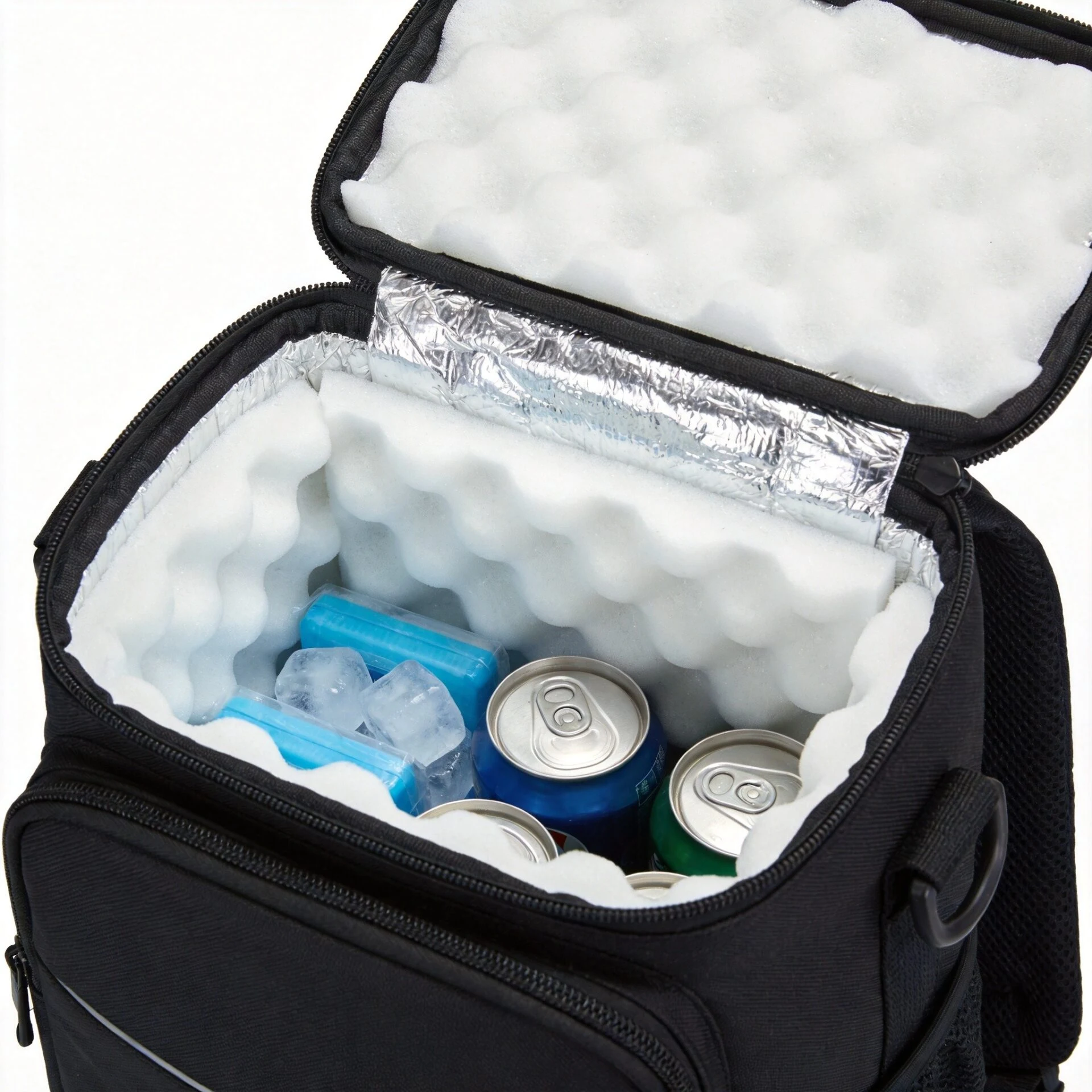
Two practical notes on insulation matter at the ordering stage. First, insulation thickness is what drives most of the cold-holding time, so a 20L cooler with a thicker thermal core will outperform a thinner 30L unit even though it is smaller — specify the holding time you need, not just the litre size. Second, the outer fabric and the insulation work together: a TPU-coated outer shell reduces heat gain at the surface, which lets a mid-tier foam core hold temperature noticeably longer. We factor both variables into a recommendation.
Leak-Proofing and Structure: Sewn vs. Sealed Seams
A backpack cooler only works if it keeps condensation and spills inside. There are two sealing approaches, and which one fits depends on your product tier:
- Sewn + taped seams: standard construction for daily and promotional coolers; durable and cost-efficient, with seam taping added on the inside where condensation is highest.
- Fully welded / sealed construction: higher barrier and better leak protection, used for premium and food-grade programs; costs more and needs dedicated tooling.
We help you choose the right construction for your target price point rather than defaulting to the most expensive option. Every leakproof backpack cooler manufacturer program we run puts a leak test and zipper-cycle test into the QC gate so the structure you ship is the structure you specified.
For buyers comparing a soft cooler backpack against a hard cooler, the trade-off is simple to state: a hard cooler gives the longest hold and the most rigid structure, while a soft backpack cooler wins on weight, portability, collapsibility and logo visibility. Which one is better depends entirely on whether your customer carries it hands-free for most of the day (soft backpack) or parks it in place for long periods (hard cooler). A hybrid approach — a soft cooler backpack with a tall insulated core — is often the best fit for outdoor and promotional SKUs.
Quality Assurance: The AQL 2.5 Difference
Most manufacturers talk about quality; very few publish the standard they actually inspect to. At JUNYUAN, every cooler backpack bulk shipment is inspected to AQL 2.5 — the widely accepted accepting quality limit that caps the number of defects allowed in a random sample.
- Incoming QC (IQC): fabric, foam, zippers and hardware verified against the approved sample.
- In-process QC (IPQC): stitching, lamination and seam alignment checked on the line.
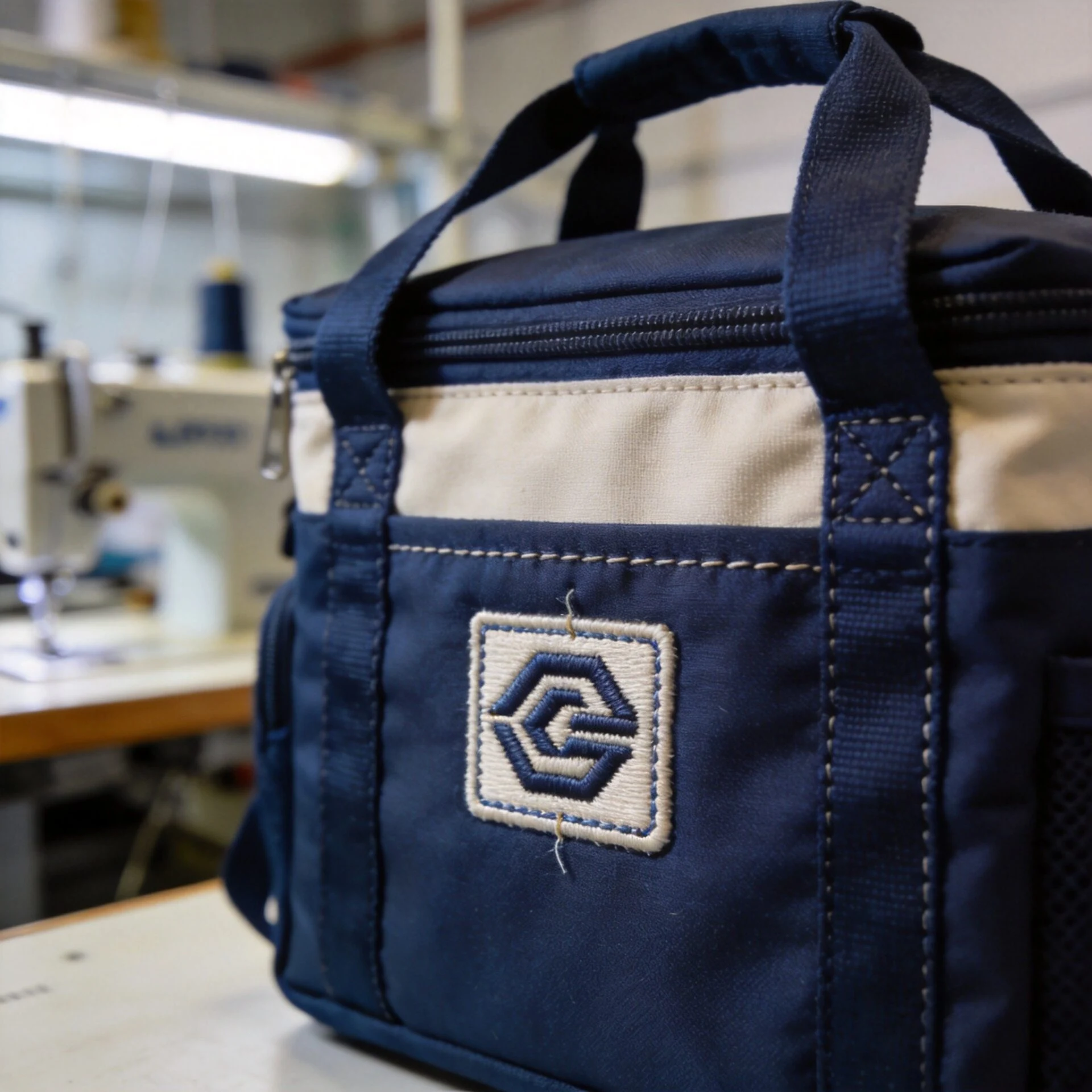
- Final QC (OQC): AQL 2.5 random inspection, leak test, zipper-cycle test, dimension and logo check before packing.
AQL 2.5 works like this: on a random sample drawn from a batch, the number of defective units must stay at or below the level that AQL 2.5 permits; if it exceeds that level, the batch is held and re-checked rather than shipped. This is why publishing your AQL level matters — it tells a buyer precisely how many defects they can statistically expect, which is a far more honest signal than a vague “quality guaranteed” claim.
We can issue a pre-shipment inspection report, or work with your own third-party inspector (for example SGS or Bureau Veritas) for independent verification. A published AQL standard, inspectable reports and third-party access are what separate a backpack cooler factory with verifiable quality from a low-cost one — and it is the core reason brands return for repeat programs.
Standards, Compliance and Third-Party References
Buyers in regulated markets — the EU, the USA and Australia especially — increasingly ask how a cooler backpack program addresses materials compliance and verifiable quality. Rather than treating compliance as a sales phrase, we reference the institutions and standards that govern it, and we can support each one with documentation on request.
- Quality management (ISO 9001) — a quality management standard used to keep processes consistent and auditable; we support it for buyers whose orders require a formal QMS reference (ISO 9001 overview).
- EU chemical compliance (REACH) — the European regulation restricting hazardous substances in manufactured goods, including textiles and foam components; we can provide REACH material documentation where required (Understanding REACH).
- California Proposition 65 — for US distribution into California, we can support the compliance documentation needed for applicable materials (Prop 65 resources).
- Food-contact safety (FDA) — for coolers and insulated food bags, applicable food-contact materials can be documented to FDA expectations on request.
- Independent inspection (SGS, Bureau Veritas) — third-party pre-shipment inspection is welcome on every program; third-party verification is also how we proved our affiliated plant data (SGS).
Quality acceptance sampling, the method behind the AQL 2.5 gate we publish, is a recognised statistical tool described in industry references such as acceptance sampling. We are not claiming to invent it — we are saying we apply it consistently to every cooler backpack shipment. A standard you can look up, a named third-party inspector you can contact, and documentation we can release to your buyer are the practical translation of “compliant sourcing”.
For exporters serving the US market, aligning on product-safety expectations early protects the most expensive part of your program — the selling channel. Confirm which compliance documents your retail or marketplace channel wants (REACH vs. Prop 65 vs. FDA) before production, and we build the paperwork into the order rather than retrofitting it.
How to Choose a Custom Backpack Cooler Supplier
Because the category is crowded with platforms and resellers, a structured vetting process protects your program. Use this checklist when comparing custom backpack cooler OEM suppliers:
- Confirm it is a maker, not a trader — ask for the factory entity, plant address, and whether it holds third-party verification (for example SGS or a Bureau Veritas audit) rather than only a reseller page.
- Ask for the AQL / inspection standard in writing — a real factory can name one (we use AQL 2.5); a reseller usually cannot.
- Check insulation options and ask for test data — do they offer more than one thermal core, and can they share cold-holding results?
- Request a physical sample and inspect the seam, zipper and logo — the sample is the single best proof of construction quality.
- Verify MOQ, lead time and payment terms in writing — quoted sample 6–10 days, bulk 35–50 days, 30% deposit are the kind of concrete numbers to pin down.
- Confirm export credentials — an exporter with its own customs registration (JUNYUAN: Customs No. 35059619KU) can handle compliant shipping and Incoterms.
Many buyers want to source from multiple categories at once. Because JUNYUAN also makes golf bags and backpacks, you can evaluate one factory across several product lines instead of running separate supplier audits for each. Our custom golf bag and custom backpack manufacturing services follow the same AQL 2.5 and published-parameter model, so the supplier you vet for a cooler backpack is the same audited partner for the rest of your line.
Custom Design & Branding Options in Detail
A backpack cooler is an unusually good branding canvas because its front panel is large, flat and frontal. The customization options we offer cover both looks and function:
- Logo methods — screen print, embroidery, heat transfer, woven labels, or a combination; each suited to a different fabric and budget.
- Color matching — we match Pantone colors for fabrics and trims so the product lands on your brand palette.
- Fabric & finish — 600D / 1680D polyester, 420D nylon, TPU-coated shells, plus PEVA lining and RPET recycled canvas for eco lines.
- Capacity & layout — from 6L lunch coolers to 30L expedition sizes; you choose pockets, straps, compartments and whether there is a separate dry section.
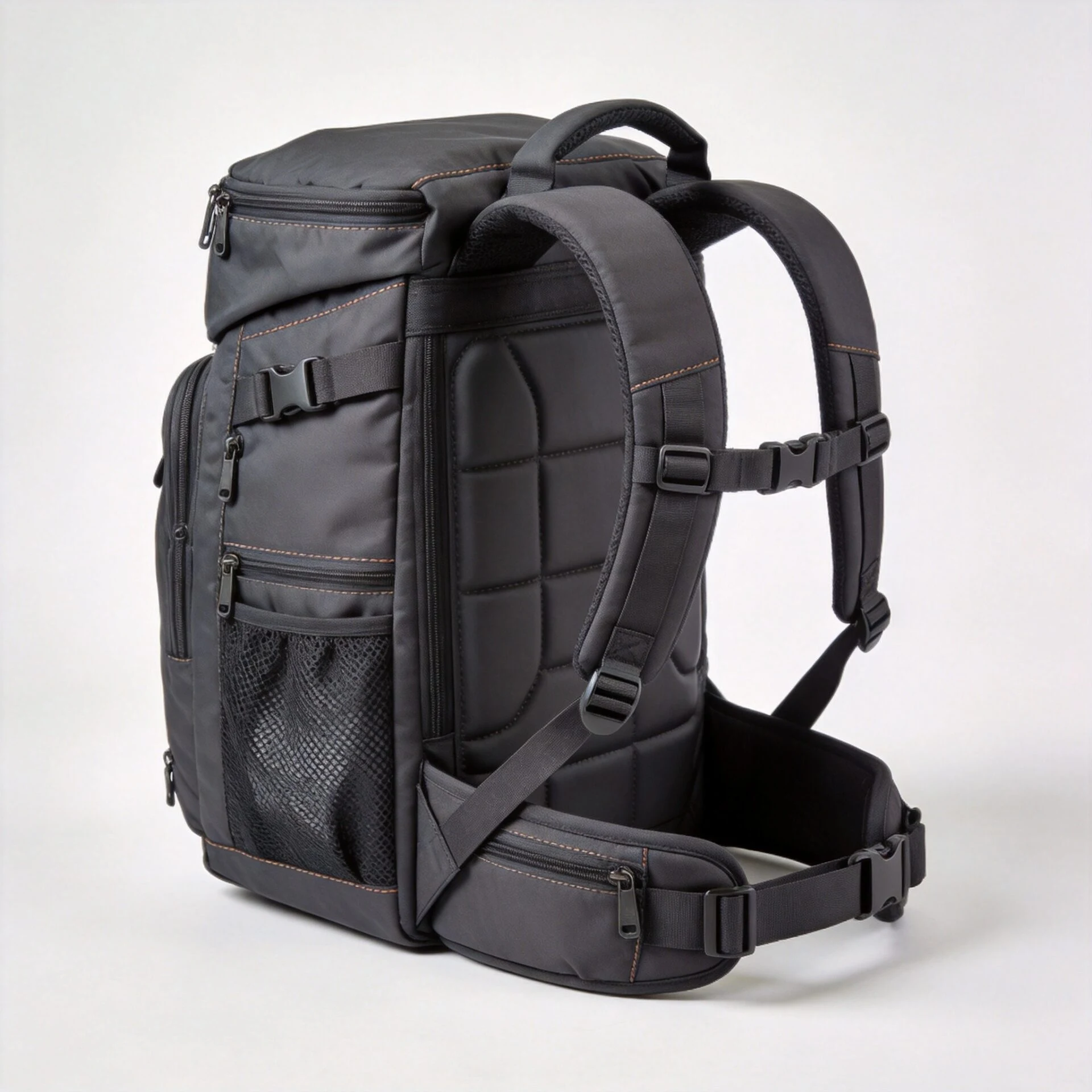
- Strap & ergonomics — padded shoulder straps, sternum strap, and a padded back panel so the pack is comfortable when full.
- Packaging — plain or custom polybags, hang tags, carton marking and drop-ship-ready retail packaging.
For a typical brand program, the most common build is a 20L backpack cooler in 600D polyester with an XPE or reflective-lining core, a large embroidered or printed logo, and a padded-strap layout. That configuration gives a strong balance of durability, cold performance and brand visibility at a price point that works for seasonal reorders.
Cost, Lead Time & Payment Terms Explained
Three numbers govern most cooler backpack quotes: MOQ, sample time and bulk lead time. Our standard position is a clear and publishable one — 500 pc MOQ per model, 6–10 days for a sample, and 35–50 days for bulk after approval and deposit. Keeping these on the page lets a buyer shortlist us without waiting for a sales reply.
Unit cost in this category is driven mainly by three things: fabric grade (TPU-coated shells cost more than plain 600D), insulation tier (aerogel and vacuum panels cost multiples of a foam core), and construction (welded seams cost more than sewn with taping). We price each program transparently and recommend the specification that meets your selling price rather than upselling a premium build you do not need. Payment is typically a 30% deposit to start production, with the balance on inspection before shipment — terms we confirm on your order.
If your program depends on hitting a specific retail date, tell us the deadline up front. Because sample (6–10 days) and bulk (35–50 days) are realistic and directional, we can usually protect a launch window when the calendar is shared early. The earlier a buyer pins down capacity, insulation and logo, the more of the lead-time budget is spent on production rather than on decisions.
Sustainable & Recycled Cooler Backpack Options
Sustainability is no longer a nice-to-have for outdoor and promotional brands; it is increasingly part of the sourcing requirement. We can build cooler backpacks with RPET recycled canvas and other eco-friendly materials, apply recycled trims and hardware, and provide material documentation to support your claims on request. Recycled fabrics pair well with a foam or reflective core, so an eco line does not have to compromise on cold performance.
If your brand is building an earth-friendly story, tell us the badge or certification you want to support (for example recycled-content documentation) and we will spec the materials and paperwork around it. This keeps your sustainability messaging audit-ready rather than marketing-led.
Application Guide: Which Backpack Cooler for Which Use
Matching the build to the end use prevents both over-specifying (paying for performance your customers do not need) and under-specifying (shipments that disappoint). Use this guide to align your cooler backpack program with the use case you are selling into.
- Daily lunch & commuter coolers (6–12L) — EPE or XPE core, simple padded straps, one main compartment plus a small front pocket for cutlery; ideal promotional and gifting tier.
- Beach, picnic & family outings (12–20L) — XPE or reflective core for 8–14 hours, a wide opening, an insulated front pocket, and comfy straps for weight.
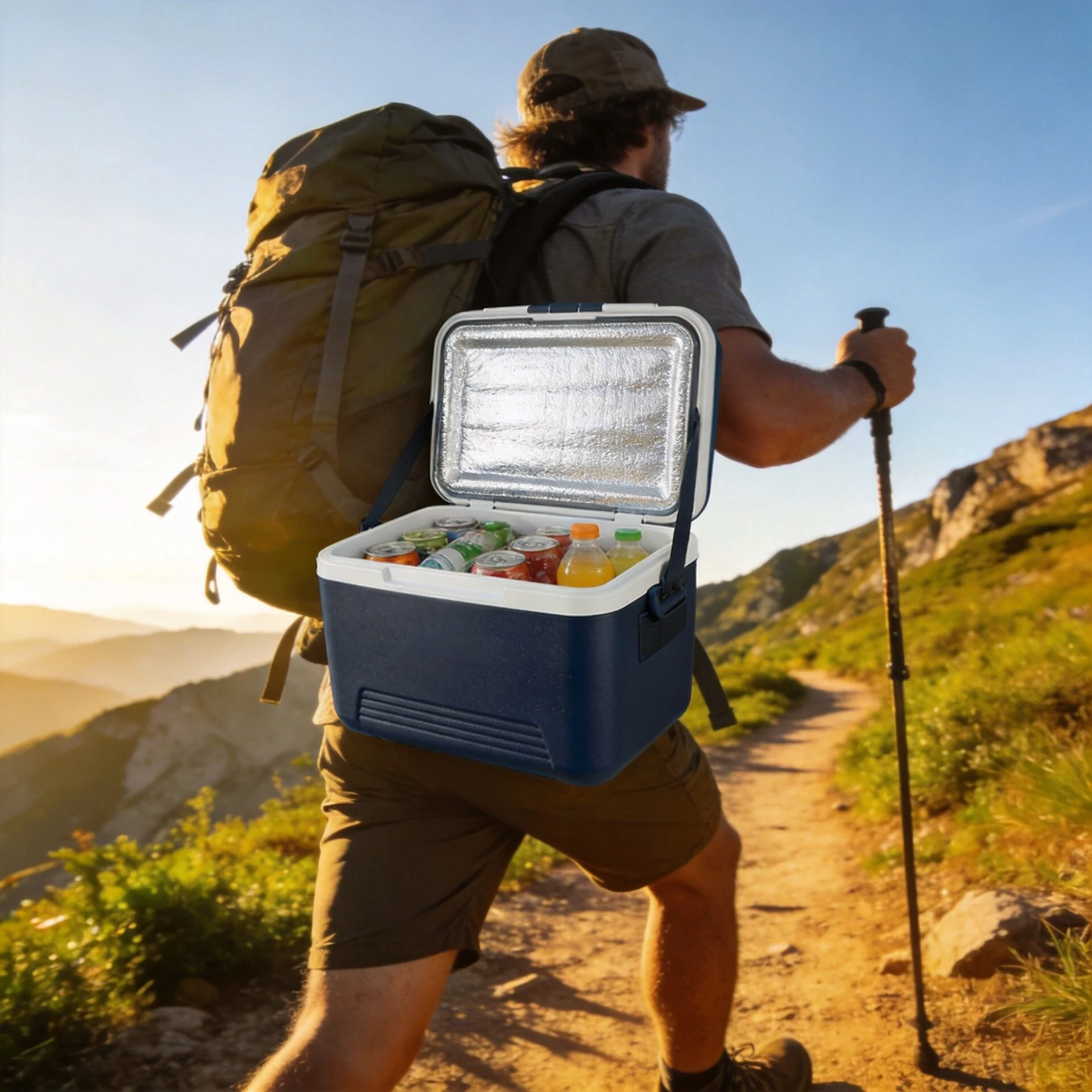
- Camping & hydration (20–30L) — reflective or advanced core for 12–48 hours, side bottle pockets or a hydration sleeve, compression straps to stabilise the load.
- Food delivery & e-bike couriers (20–30L) — NBR or reflective core for 10–16 hours, a top-loading wide mouth, and a rugged 1680D / TPU shell against the elements.
- Premium & outdoor-brand performance lines (15–30L) — aerogel or vacuum-panel core for 24–48+ hours, welded seams, and premium trims to support a higher price point.
Because we can produce several of these build levels in one factory, a distributor can run a value lunch cooler and a premium expedition line as separate SKUs under a single program. That lets you test the category across price bands without sourcing from multiple factories.
Technical Specifications at a Glance
| Feature | Available options (customisable) |
|---|---|
| Capacity | 6L, 12L, 20L, 24-can, 30L; custom litre sizes on request |
| Outer fabric | 600D / 1680D polyester, 420D nylon, TPU-coated shell, RPET recycled canvas |
| Lining | PEVA / 210D coated lining, reflective mylar layer |
| Insulation core | EPE, XPE closed-cell foam, NBR rubber, mylar+EPE, aerogel, vacuum panels |
| Zipper | YKK or equal, water-resistant coil / waterproof option |
| Straps | Padded shoulder straps, sternum strap, padded back panel |
| Closure | Sewn + taped seams (standard), fully welded (premium) |
| Branding | Screen print, embroidery, heat transfer, woven / printed labels, Pantone colour matching |
| Packaging | Plain / custom polybag, hang tag, carton marking, drop-ship-ready |
| Compliance | ISO 9001, BSCI, FDA food-contact (on request) |
This specification sheet is the same set of choices we confirm with you at the sample stage. If a technical detail is not listed here — collapse straps, a removable wet bag, a tablet or laptop sleeve, an add-on cooler pouch — it is still feasible for many programs, so list it in your brief rather than assuming it is off the table.
Why Buy OEM Factory-Direct from China
China remains the practical source for custom backpack cooler manufacturing because the supply base for fabrics, foams, zippers and hardware is complete — most backpack cooler components are produced within the same industrial clusters, which shortens procurement, keeps materials consistent, and lets a factory hold stock for faster reorders. When combined with a factory that publishes its parameters and inspection standard, buying from China becomes not a price gamble but a controlled sourcing decision.
The classic concerns about overseas sourcing — communication, quality consistency, and distance — are addressed structurally rather than by reassurance. Communication is handled by a bilingual export team that manages samples, approvals and shipping milestones. Quality is handled by a published AQL 2.5 gate plus optional third-party inspection, so there is a written standard to hold the factory to. Distance is handled by agreeing Incoterms and a shipping calendar up front, with export logistics arranged to your port. For a buyer, the result is a supplier that behaves like a domestic partner while pricing like a China OEM.
Best Supplier for Wholesale Buyers: JUNYUAN at a Glance
If you are comparing OEM partners for a best custom backpack cooler manufacturer decision, the practical shortlist comes down to whether the supplier publishes its MOQ, lead time, quality standard and factory credentials, and can back them with samples and inspection. JUNYUAN checks each box in writing: a 500-pc MOQ with colour mixing, a 6–10 day sample, a 35–50 day bulk run, AQL 2.5 inspection, a verified plant and an export entity. That combination — listed parameters plus a published QC standard plus auditable factory data — is the profile buyers can quote and hold a supplier to, which is why wholesale and brand programs repeat with us.
Working with a Multi-Category Factory
The single most underused advantage in the outdoor and sporting-goods space is consolidating a product line with one audited factory. Because JUNYUAN manufactures golf bags, backpacks, duffels, coolers and insulated bags in one factory network, a brand can buy a cooler backpack, a matching backpack, and even a golf or travel line from the same production, QC and export system. The benefits compound over time: fewer supplier audits, one quality standard across the range, simpler purchase orders, and consistent delivery discipline.
This is especially valuable for brands expanding SKU count, crowdfunding launches that need several SKUs to hit a campaign, and distributors building a coherent catalogue. The same custom golf bag and custom backpack partners run the QC process this page describes, so your cooler backpack lands under the same audited umbrella.
OEM vs. Trading Company: Why Buy Factory-Direct
When you buy a custom backpack cooler factory-direct, you deal with the people who actually cut, sew and inspect the product — which means faster decisions, direct control over quality, and no middleman markup. JUNYUAN exports through its own trading entity (Customs No. 35059619KU) and produces through an SGS-verified affiliated plant, so you get the price and control of factory-direct with the compliance and export capability of an established exporter.
Before selecting a supplier, buyers commonly verify that a cooler backpack factory is the real maker (not just a trader), can show inspection reports, and holds auditable credentials. We publish our plant data and can arrange third-party audits, because a verifiable factory is a safer long-term partner than an impressive website with no production proof.
Who We Are: JUNYUAN BAGS & Keep Perfect
A credible OEM partner gives a buyer three things to verify: a named company with a track record, specific factory capability, and a clear product specialty. JUNYUAN BAGS is a Quanzhou-based export team operating for many years, built around the Keep Perfect brand and a multi-category bag manufacturing program. We specialise in OEM/ODM for golf bags, backpacks, coolers, duffels and insulated bags, and we export under our own customs registration (No. 35059619KU).
Our affiliated production base is independently verified rather than self-reported: an SGS-verified plant of 4,950 ㎡ with 7 production lines and the production team, verified in March 2026. It holds a monthly line capacity of 200,000 pieces with a current output around 150,000. Publishing this level of detail — floor area, lines, machines, headcount, capacity, verification date — is deliberate. It is the difference between asking a buyer to trust a photo and giving them auditable facts they can check.
Because many resellers sell very similar cooler backpacks, we differentiate on verification and transparency: a published quality standard (AQL 2.5), a verified plant, a designated headcount and capacity, and an export entity you can reference. When you buy a custom backpack cooler from JUNYUAN, the company behind the product is named, quantified and audit-ready.
Best Practice: Building a Backpack Cooler Line
If you are adding a cooler backpack to a catalogue for the first time, a small amount of up-front planning saves the most rework. The sequence that works for most of our buyers is: decide the target price and retail story first; pick the capacity and insulation that match the story; confirm a fabric and construction that stay inside the price; then lock the logo and packaging. Deciding price and story before spec prevents the common mistake of over-building a premium cooler for a value tier, or under-specifying performance for a premium launch.
Stock colourways simplify things further. Offering two or three curated fabric colours instead of full Pantone customisation lowers cost and lead time while still looking intentional, and it lets a first order validate demand. As sales data comes in, you can add custom colours or capacities on the next reorder. This staged approach keeps cash outlay modest while the line proves itself. We can walk you through the exact cost weights of each spec choice so your first cooler backpack program is as lean as it is on-brand.
What to Expect During Your Program
From first contact to the shipped container, a typical custom backpack cooler program follows a predictable rhythm. Inquiry and quote usually close within a day. A sample build takes 6–10 days, after which you approve construction, logo and colours. Following a 30% deposit, bulk production runs 35–50 days with in-process QC, then a final AQL 2.5 inspection (plus optional third-party) before export to your port. Throughout, your dedicated export contact reports on sampling, production and inspection milestones, so you are never chasing status.
For reorders, the process is faster: the approved sample, colour specs and QC standard are already on file, so a repeat program skips the design loop and moves straight to production. This is why seasonal brands see the installation cost of the first order pay back as smoother reorders follow.
Partnering with Us: Multi-Category OEM for Outdoor & Sporting Brands
Because we manufacture golf bags, backpacks, duffels, coolers and insulated bags in one factory network, an outdoor, sporting or hydration brand can consolidate multiple SKUs with a single quality standard and a single point of contact. This is a practical way to reduce supplier-management overhead and keep QC consistent across your whole product line.
If your program is about custom cooler bags for food & outdoor crowdfunding, or you want to understand the insulation technology inside backpack coolers, those guides are built for you. For a cooler-with-shoe print program, see our custom cooler & shoe bags page. To check OEM supplier selection logic before you commit, our guide on custom cooler bag manufacturing in China walks through factory vetting and ordering end to end.
Frequently Asked Questions
What is the MOQ for custom backpack coolers?
Our standard MOQ is 500 pieces per model, and you can mix up to 3 colors within that order. For a first order we are flexible on a case-by-case basis — contact us with your program and target quantity.
How long does it take to get a sample and then bulk production?
Sampling takes 6–10 days. Once the sample is approved and a 30% deposit is placed, bulk production takes 35–50 days depending on order size and complexity.
Are you a manufacturer or a trading company?
JUNYUAN exports through its own trading entity and produces through an SGS-verified affiliated plant (4,950 ㎡, 7 production lines, the production team). This combines factory-direct control with the compliance and export capability of an established exporter.
Can you develop a cooler backpack from our own design?
Yes. We build custom designs from your drawings, technical specs or reference products (ODM), and we also offer customizable stock forms for faster programs.
What insulation options are available?
We offer EPE and XPE closed-cell foam, NBR thermal rubber, reflective mylar lining, and advanced composites such as aerogel and vacuum-insulated panels. We recommend the core that best matches your target price and cold-holding requirement.
Can you match our brand colors and logo exactly?
Yes. We match Pantone colors for fabrics and offer screen print, embroidery, heat transfer and woven labels. We send a physical sample for approval before bulk so the branding is confirmed.
What is the quality inspection standard?
Every bulk shipment is inspected to AQL 2.5, and we can issue a pre-shipment inspection report or work with your third-party inspector (such as SGS or Bureau Veritas) for independent verification.
How do you prevent leaks in a sewn cooler backpack?
We add seam taping on interior seams where condensation is highest, run a leak test and zipper-cycle test in final QC, and offer fully welded construction for programs that need a higher moisture barrier.
What certifications and compliance do you support?
We support ISO 9001, BSCI and FDA food-contact materials on request, based on the market and materials in your program.
Can we visit the factory or arrange an audit?
Yes. The main affiliated plant has been third-party verified by SGS for Alibaba in March 2026, and we can arrange factory visits or independent audits for qualified buyers.
What markets do you export to?
We export to North America, Europe, Australia & New Zealand and the Middle East, and we manage export logistics to your port under Incoterms agreed with you.
What capacities are available?
Standard ranges are 6L, 12L, 20L, 24-can and 30L, and we can build custom capacities and internal layouts to your spec.
Is recycled or eco-friendly material available?
Yes. We can produce cooler backpacks with RPET recycled canvas and other eco-friendly materials, and support your sustainability story with material documentation on request.
How do I get a quote?
Send us your target capacity, fabric, insulation, quantity and deadline, and we will reply with a quote and MOQ confirmation within 24 hours.
Is there a sample charge?
Sampling is charged at cost and the sample fee is returned or credited once your first bulk order is placed, so the sample investment converts to program value rather than a write-off.
Can you mix multiple models or SKUs in one order?
Yes. We can structure multi-SKU programs so related cooler backpacks share a production calendar; MOQ is confirmed per model, and we help you plan mixed orders for the most efficient shipping.
Can you help with design, artwork and technical specifications?
Yes. Our design and development team turns a rough idea, sketch or reference product into production-ready technical specifications, and confirms fabric, insulation and construction choices that fit your budget and performance target — so you do not need a full technical drawing to start a program.
Do you offer custom internal layouts, pockets or a dry compartment?
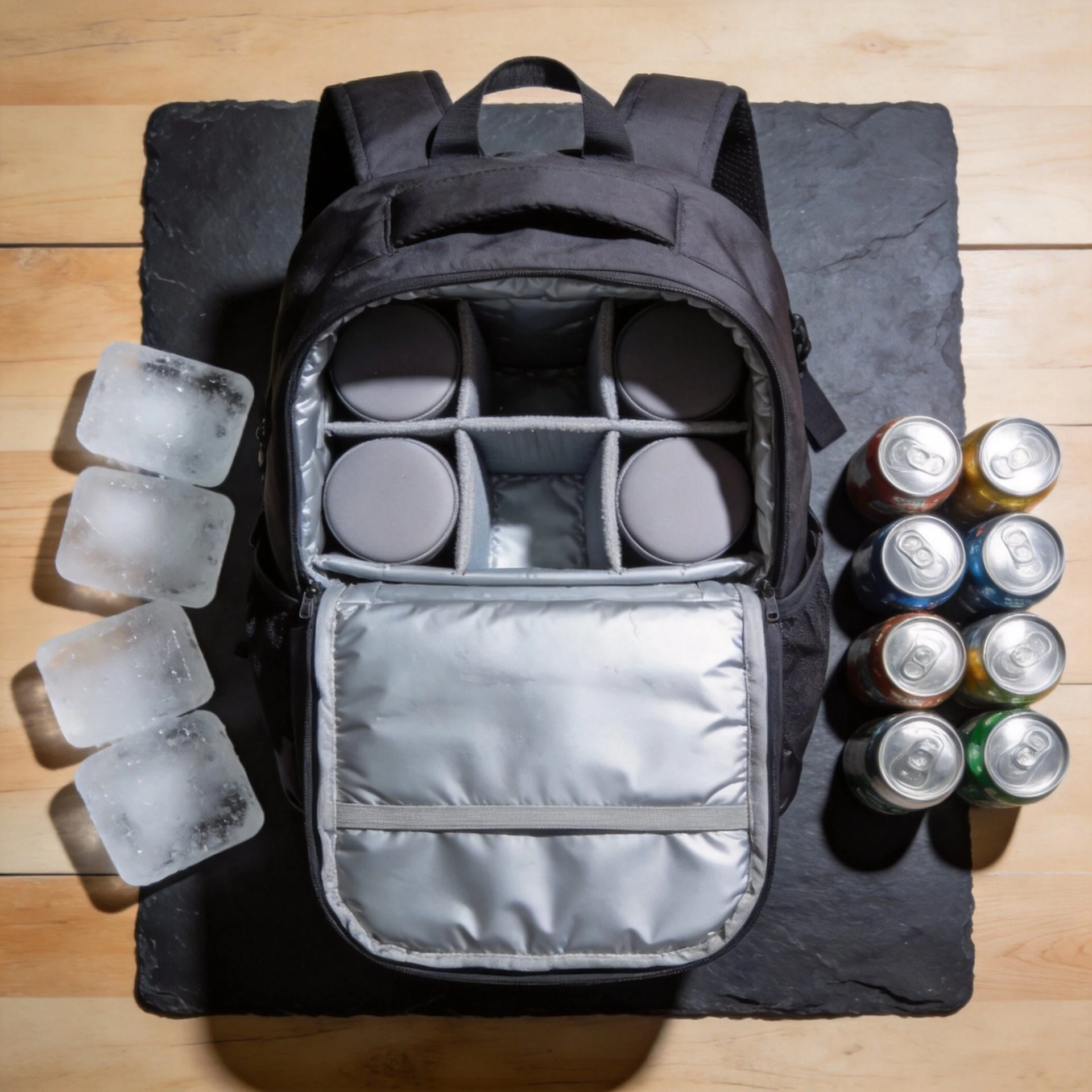
Yes. We can add pockets, dividers, a cool-dry separation, bottle sleeves, a hydration sleeve or a removable wet bag to the layout. List the functional features you want and we will confirm which fit your capacity and price point.
Start Your Custom Backpack Cooler Program
Whether you need a single value-tier cooler for promotional distribution, a premium expedition line for an outdoor brand, or a multi-SKU range across several categories, JUNYUAN BAGS offers a single audited partner with a published quality standard. Send us your target capacity, fabric, insulation, quantity and deadline, and we will reply with a quote and MOQ confirmation within 24 hours. From a 6–10 day sample to a 35–50 day bulk run at AQL 2.5 quality, every step of your custom backpack cooler program is transparent, quantifiable and verifiable.
Email: [email protected] · WhatsApp: +86 177 5002 0688 · Contact us