
{“@context”:”https://schema.org”,”@type”:”FAQPage”,”mainEntity”:[{“@type”:”Question”,”name”:”What is the difference between FOB and EXW?”,”acceptedAnswer”:{“@type”:”Answer”,”text”:”Under EXW the seller just makes the goods available at their premises and you handle all inland China transport, export formalities, freight, and import. Under FOB the seller loads the goods on board the vessel at the named shipment port, and you take over for the international freight and import, which removes a large coordination burden compared with EXW.”}},{“@type”:”Question”,”name”:”Is DDP a good choice for a first-time bag importer?”,”acceptedAnswer”:{“@type”:”Answer”,”text”:”Often yes. DDP bundles delivery, freight, duty, taxes, and import clearance so you receive the goods at your door with minimal logistics work. The trade-offs are a higher bundled price and less control over freight routing. Confirm the DDP quote names a licensed broker in your country, since import obligations in some markets cannot pass to a foreign seller.”}},{“@type”:”Question”,”name”:”Does CIF mean the seller is responsible for my goods until they arrive?”,”acceptedAnswer”:{“@type”:”Answer”,”text”:”No. Under CIF the seller pays the cost, insurance, and freight to the destination port, but the risk transfers to you once the goods are loaded on board the vessel. The seller only buys the freight and minimum insurance. Consider top-up insurance if you are holding the risk for most of the voyage.”}},{“@type”:”Question”,”name”:”Which Incoterm is cheapest for importing bags from China?”,”acceptedAnswer”:{“@type”:”Answer”,”text”:”The base price is often lowest under EXW because it excludes freight and formalities, but total landed cost depends on who you use for the shipping legs. For most buyers, FOB plus your own forwarder gives the best balance of delivered cost and control. DDP bundles the same costs with a markup for the seller coordination.”}},{“@type”:”Question”,”name”:”What does FOB Xiamen actually mean for who pays freight?”,”acceptedAnswer”:{“@type”:”Answer”,”text”:”FOB Xiamen means the seller loads the bags on board the vessel at Xiamen. You (the buyer) pay the international freight from Xiamen onward, insure if you wish, and clear import in your country. It is the most widely used term for bag imports from Chinese ports.”}},{“@type”:”Question”,”name”:”Can I change Incoterms later in the process?”,”acceptedAnswer”:{“@type”:”Answer”,”text”:”You can, but every change shifts who books, insures, and clears, and it is far easier and safer to agree it before booking. State the Incoterm and its edition on the purchase order and quote, and revisit it whenever the shipment mode, volume, or destination changes.”}},{“@type”:”Question”,”name”:”Do you offer FOB and DDP on bag orders?”,”acceptedAnswer”:{“@type”:”Answer”,”text”:”Yes. Through our export entity we run FOB and DDP programs routinely and will map the term that fits your forwarder relationships and experience level.”}}]}
You have agreed on a price for your custom bags with a Chinese manufacturer. Then the question comes: “FOB Xiamen, CIF Hamburg, or maybe DDP?” If those four letters do not feel like an answer, you are not alone — Incoterms are the most misunderstood part of an import deal, and the wrong choice can shift risk, responsibility, and hidden cost onto you in ways you only discover after something goes wrong in transit or at customs.
Here is the practical truth for a B2B buyer sourcing bags from China: your choice of Incoterm is not about vocabulary — it is about who books the freight, who insures the goods, who clears customs on each side, and who eats the surprise costs. This guide compares the four terms you will actually be offered — FOB, EXW, CIF and DDP — in plain terms, tailored to bag importing, so you can pick the term that lowers your risk without inflating your cost.
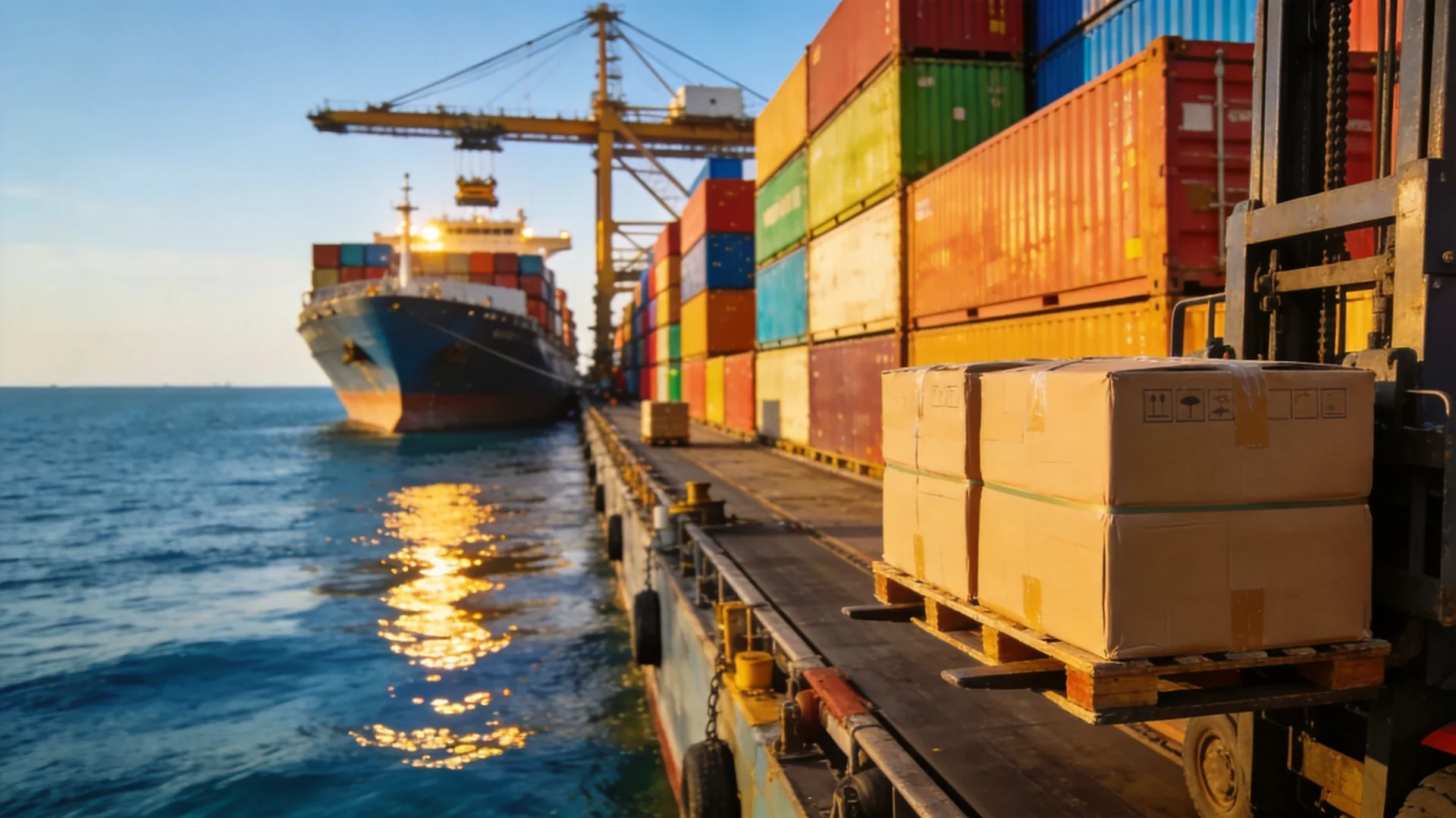
The Four Incoterms at a Glance — What Each One Actually Assigns
Before the deep dive, the one-sentence version of each term, from the buyer’s point of view:
- EXW (Ex Works): the seller makes the goods available at their premises. Everything after that — inland trucking, export formalities, international freight, insurance, import clearance, delivery — is on you.
- FOB (Free On Board): the seller delivers the goods on board the vessel at the named port of shipment. You take over risk and responsibility from the moment the goods are loaded. This is the most common term offered to importers buying from China.
- CIF (Cost, Insurance and Freight): the seller pays the cost, insurance, and freight to the named destination port. Despite the name, risk passes to you while the goods are still on the vessel — the seller only pays for the freight and minimum insurance, they do not carry the risk.
- DDP (Delivered Duty Paid): the seller bears the full cost and risk of delivering the goods to your named destination, including paying import duty and clearing customs in your country. The most “hands-off” for you — and the one with the most bundled cost.
A note on Incoterms revision: the currently referenced edition is Incoterms 2020. Always state the edition in your contract and quote (for example, “FOB Xiamen, Incoterms 2020”) so there is no ambiguity — the trade body that owns the terms updates them periodically.
The responsibility split in a single table
| Who carries this | EXW | FOB | CIF | DDP |
|---|---|---|---|---|
| Inland export transport (factory to port) | Buyer | Seller | Seller | Seller |
| Export / China customs formalities | Buyer | Seller | Seller | Seller |
| Main international freight | Buyer | Buyer | Seller | Seller |
| Cargo insurance | Buyer | Buyer | Seller (minimum) | Seller |
| Import / destination customs | Buyer | Buyer | Buyer | Seller |
| Import duty & taxes | Buyer | Buyer | Buyer | Seller |
| Final delivery to your warehouse | Buyer | Buyer | Buyer | Seller |
| Risk transfers to buyer | At factory | Loaded on vessel | On board the vessel | At your door (handover) |

FOB — the Configurable Industry Default for Bag Imports
FOB is where most realistic bag-import deals land, and for good reason: it is a clean, well-understood division that both Chinese exporters and forwarders handle daily.
What FOB really hands you
Under FOB (named port of shipment, e.g. FOB Xiamen, FOB Shenzhen), the seller loads the goods on board the carrier you (or your forwarder) nominate at that port. You then take on the freight, insurance, import clearance in your country, and inland delivery. Because you control the shipping leg, you can shop your own forwarders and compare freight quotes directly — which is usually where the real savings on any goods, including bags, live.
Why it suits a bag buyer
- Freight visibility and control — you see and negotiate the ocean/air rate, so you can plan landed cost precisely.
- Flexibility on volume — you choose LCL vs FCL, air vs sea once you control the booking.
- Predictable risk — the moment the bags are on board, you hold the risk, but with good QC and a reliable forwarder that risk is manageable.
The hidden work you take on
FOB puts inland China export on the seller and international freight on you — but the practical catch is coordination. You must nominate a carrier that the seller’s logistics can reach, and there can be a “gap” around the export-warehouse-to-port handoff if the two parties do not coordinate well. Choose a supplier used to FOB shipments (we run FOB and CIF programs routinely through our export entity) and align the vessel cut-off dates with the factory’s readiness.
EXW and CIF — the Two Terms to Read Carefully
Neither EXW nor CIF is wrong, but both hide traps for a bag buyer who does not read them closely.
EXW — maximum control, maximum responsibility
EXW (named place, e.g. EXW Quanzhou) means you arrange everything: picking up the goods at the factory door, the Chinese export declaration, the domestic haulage, the international freight, and all import formalities. It is often quoted at the lowest price — but that price is misleading because it excludes export formalities and inland China moves that a seller handling FOB would otherwise manage for you inside their quote.
Who EXW is for: experienced importers with their own freight forwarder presence in China who want maximum control over every leg and can coordinate a factory pickup cleanly. For a first-time importer, EXW is usually the least advisable: it drops a pile of coordination and responsibility onto a buyer who may not yet have the logistics muscle to carry it.
CIF — a seductive term with a risk paradox
CIF (named destination port) looks the friendliest after DDP: the seller pays the cost, insurance, and freight to the destination port. But the trap is that risk transfers to you when the goods are loaded on board the vessel — not when they arrive. The seller simply names the port and purchases the freight and minimum insurance; they are not taking responsibility for delivering the goods safely, and the minimum marine insurance may not fully cover a bag shipment’s true value.
Who CIF is for: buyers who want a single, pre-packaged freight price on the seller’s quote and are comfortable that they bear the transit risk from load to port — often because they trust the seller and forwarder, or they add their own top-up insurance. It is less common for US-bound bag imports than for some European and Middle Eastern trades, but you will still be offered it.

DDP — the “Stop Worrying” Term, and What It Really Costs
DDP is the term most appealing to a first-time importer who wants the supplier to handle everything, including clearing customs and paying duty and taxes in the destination country.
What DDP genuinely removes from your plate
Under DDP, the seller bears the cost and risk of delivering to your named place — including the import duty, taxes, and import clearance in your country. For a first-time bag importer this dramatically simplifies things: you receive the goods at your door and the seller has handled the customs entry (directly or through a broker).
The three things DDP does not mean
- It is not free money. The seller is going to price the freight, insurance, duty, taxes, and brokerage into the unit price or a bundled “all-in” quote. You are still paying for all of it — just bundled, and often with a markup for the seller’s risk and coordination.
- It does not transfer the legal importer obligation in every market. In the US and several countries, the importer of record concept means a foreign seller cannot always legally be the importer. A true DDP may require a licensed broker arrangement on your side of the border, and the duty/VAT exposure has to be structured lawfully. Make sure your DDP quote names a real, licensed broker in your country — otherwise “DDP” may really be a repackaged CIF.
- It can reduce your control. When the seller books freight, you have less say over the carrier, routing, and timing.
Who DDP is for
DDP suits a first-time or low-volume buyer who prioritises simplicity and certainty over unit cost, and who wants to avoid the logistics learning curve on their first order. As your program scales and the volumes justify your own freight and broker relationships, most importers migrate to FOB to recapture freight control and cost.
Which Incoterm Should You Choose? A Decision Framework for Bag Buyers
Stop memorising definitions and answer four questions instead:
- Am I doing this once, or building a repeat program? One-off or small first order → DDP (simplicity). Repeat program → FOB (control and cost).
- Do I have my own forwarder and broker? Yes → FOB, and take the freight negotiation into your own hands. No → DDP, or ask us to help you line up a forwarder.
- How much risk am I comfortable holding during transit? If the answer is “little” → DDP, and confirm insurance is real. If you are fine holding risk once loaded → FOB or CIF.
- Is my priority price transparency or one-line simplicity? Want to see the freight as a line item and shop it → FOB. Want one all-in number → DDP.
| Your situation | Recommended term | Why |
|---|---|---|
| First import, no forwarder/broker, want it simple | DDP | Supplier handles freight + duty + delivery |
| Repeat program, bulk MOQ, want cost control | FOB | You control freight and can shop rates |
| Seller quotes a bundled price, EU/Middle East trade | CIF | One pre-packaged freight price, but check risk handover |
| Experienced, own logistics presence in China | EXW | Maximum control, lowest base price |
Whatever you choose, confirm: the named place/port, the Incoterms 2020 edition, who arranges insurance and for how much, and who clears customs on the import side — in writing, before booking.
FAQ
Q: What is the difference between FOB and EXW?
A: Under EXW the seller just makes the goods available at their premises and you handle all inland China transport, export formalities, freight, and import. Under FOB the seller loads the goods on board the vessel at the named shipment port, and you take over for the international freight and import — which removes a large coordination burden from you compared with EXW.
Q: Is DDP a good choice for a first-time bag importer?
A: Often yes. DDP bundles delivery, freight, duty, taxes, and import clearance so you receive the goods at your door with minimal logistics work. The trade-offs are a higher bundled price and less control over freight routing. Confirm the DDP quote names a licensed broker in your country, since import obligations in some markets cannot pass to a foreign seller.
Q: Does CIF mean the seller is responsible for my goods until they arrive?
A: No. Under CIF the seller pays the cost, insurance, and freight to the destination port, but the risk transfers to you once the goods are loaded on board the vessel. The seller only buys the freight and minimum insurance. Consider top-up insurance if you are the one holding the risk for most of the voyage.
Q: Which Incoterm is cheapest for importing bags from China?
A: The base price is often lowest under EXW because it excludes freight and formalities — but total landed cost depends on who you use for the shipping legs. For most buyers, FOB plus your own forwarder gives the best balance of delivered cost and control. DDP bundles the same costs with a markup for the seller’s coordination.
Q: What does “FOB Xiamen” actually mean for who pays freight?
A: “FOB Xiamen” means the seller loads the bags on board the vessel at Xiamen. You (the buyer) pay the international freight from Xiamen onward, insure if you wish, and clear import in your country. It is the most widely used term for bag imports from Chinese ports.
Q: Can I change Incoterms later in the process?
A: You can, but every change shifts who books, insures, and clears — and it is far easier (and safer) to agree it before booking. State the Incoterm and its edition on the purchase order and quote, and revisit it whenever the shipment mode, volume, or destination changes.
Q: Do you offer FOB and DDP on bag orders?
A: Yes. Through our export entity we run FOB and DDP programs routinely and will map the term that fits your forwarder relationships and experience level. See our OEM/ODM service page for how we structure export programs.
Next Step: Lock Down the Right Term for Your Order
The best Incoterm is the one that matches your experience, volume, and risk appetite — and it is decided in a conversation, not a dictionary. Tell us your target market, your quantity, whether you have a forwarder, and your comfort with holding transit risk, and we’ll recommend a term — FOB, CIF, DDP, or EXW — and price the order around it cleanly.
Start at our quote-request page with your design and quantity. We’ll come back with production timing, freight guidance, and a clear Incoterm recommendation for your program — practical, no hard sell. For a full OEM/ODM structure including export paperwork, see our high-quality bag wholesale factory OEM/ODM overview.
— Written by Marvin Zhang, JUNYUAN Bags