
Why Choosing the Right Golf Bag Manufacturer Matters
The global golf equipment market continues to grow, and golf bags represent one of the highest-margin accessory categories in the sport. For brands, retailers, and private-label operators, selecting the right golf bag manufacturer is one of the most consequential sourcing decisions you will make. A reliable factory partnership determines your product quality, supply chain stability, and ultimately your brand reputation on the course.
Unlike generic bag manufacturing, golf bag production requires specialized expertise in club-head protection systems, weighted structural frames, waterproof fabric bonding, and ergonomic strap engineering. Not every bag factory can deliver these specifications consistently. That is why due diligence matters. For a broader understanding of the production process itself, we recommend reading our comprehensive guide to custom golf bag manufacturing before evaluating potential partners.
The cost of a wrong manufacturing decision is significant: delayed shipments, inconsistent stitching, zipper failures on the course, or materials that degrade after one season. In B2B relationships, these problems cascade into chargebacks, lost retail accounts, and damaged brand equity. This guide walks you through every factor you need to evaluate when choosing a golf bag supplier, so you can make a confident, data-driven decision.
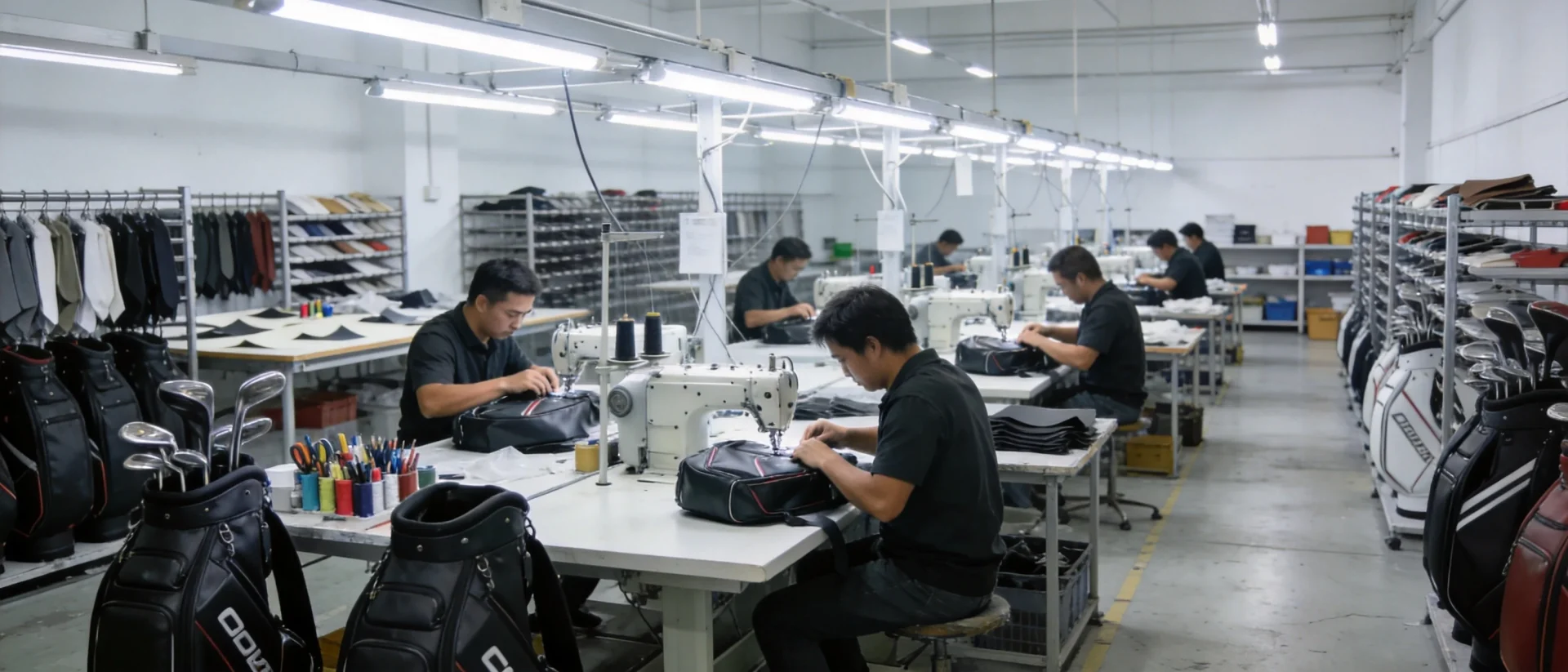
Key Factors to Evaluate When Selecting a Golf Bag Manufacturer
Not all factories are created equal. When evaluating a potential custom golf bag manufacturer, focus your assessment on these core dimensions:
Industry Experience and Product Range
Look for a factory with a proven track record in golf-specific products. A manufacturer that has been producing golf bags for 10+ years will understand nuances like divot resistance on base panels, reinforced club-top organizers with individual full-length dividers, and integrated putter wells. Ask for their product catalog and evaluate the sophistication of their existing designs.
Certifications and Compliance
Relevant certifications signal a factory’s commitment to quality management and environmental standards. Key certifications to look for include ISO 9001 (quality management), BSCI (Business Social Compliance Initiative), SGS or TUV test reports for materials or Prop 65 compliance for chemical safety. These certifications reduce your risk when importing into regulated markets like the EU and North America.
MOQ and Production Flexibility
Minimum order quantity is often the first friction point in B2B negotiations. Established factories may require 500-1,000 units per SKU, while more flexible partners can accommodate 200-300 units for new brands. Consider your inventory strategy: a higher MOQ reduces per-unit cost but increases working capital risk. The best golf bag factory China partners offer tiered MOQs that scale with your business growth.
Lead Time and Capacity
Standard lead times for golf bag orders range from 35-60 days after sample approval, depending on complexity and order volume. Evaluate whether the factory has sufficient production lines to handle your peak season orders without sacrificing quality. Ask about their current capacity utilization and whether they outsource any production steps.
Pricing Structure
Request detailed quotations that break down material costs, labor, tooling, and packaging. Transparent pricing helps you understand where costs can be optimized without compromising quality. Be cautious of quotes that seem significantly below market rate — they often indicate shortcuts in material quality or labor standards.
Questions to Ask Before Partnering with a Golf Bag Factory
Before committing to a production order, prepare a structured list of questions for your prospective golf bag supplier. Here are the questions that experienced procurement managers always ask:
- How many golf bag models do you currently produce, and can you provide references from existing clients? This reveals their specialization depth and willingness to provide social proof.
- What is your sample development process and timeline? A professional factory should deliver first samples within 7-15 days and iterate quickly based on feedback.
- Do you own your tooling, molds, and custom hardware? Factories that invest in proprietary tooling demonstrate long-term commitment to the category.
- What is your defect rate, and how do you handle quality claims? Top-tier factories target a defect rate below 2% and have clear procedures for addressing quality issues.
- Can you accommodate custom materials, colors, and branding? Your custom golf bag manufacturer should offer full customization including embossed logos, custom zipper pulls, branded lining fabric, and personalized rain hoods.
- What shipping and export documentation do you provide? Ensure they handle commercial invoices, packing lists, certificates of origin, and can work with your freight forwarder.
- Do you offer exclusive design protection? If you are developing proprietary designs, confirm that the factory respects IP and does not sell your designs to competitors.
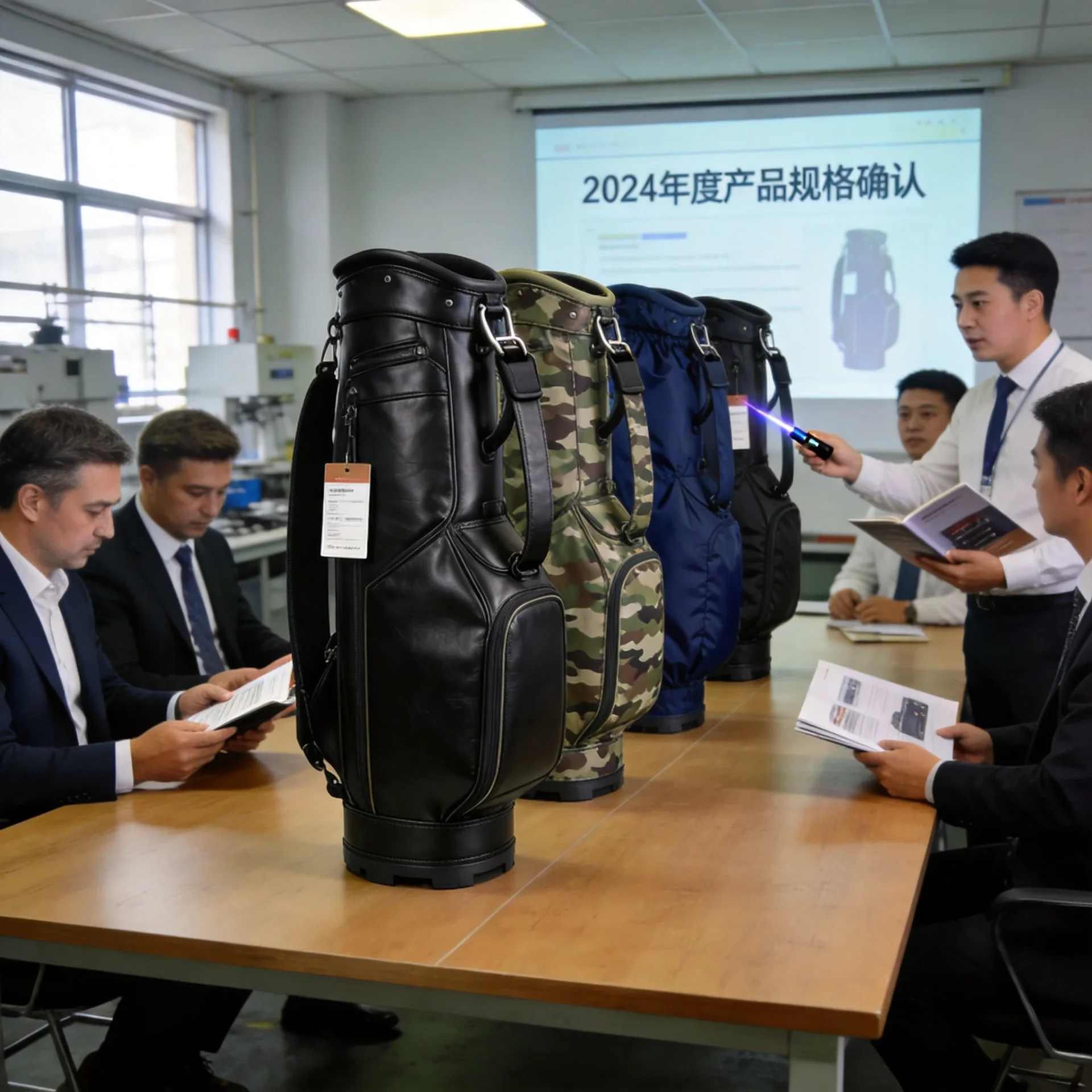
Red Flags to Watch Out For
Experience in B2B sourcing teaches you to recognize warning signs early. Here are the red flags that should raise concern when evaluating a golf bag manufacturer:
- Unwillingness to provide factory audits or virtual tours. Legitimate manufacturers are proud of their facilities. If a factory avoids transparency about their production environment, it often indicates disorganized operations or substandard working conditions.
- No physical sample before bulk production. Never place a bulk order without approving a pre-production sample. Any factory that pressures you to skip this step is prioritizing speed over quality.
- Vague or evasive answers about material sourcing. A reliable golf bag supplier knows exactly where their nylon, polyester, zippers (YKK or equivalent), and buckle hardware come from. Vague answers suggest inconsistent supply chain management.
- Prices that undercut the market by more than 20%. While competitive pricing is expected, dramatic underpricing almost always means inferior materials, underpaid labor, or both. These costs eventually surface as quality failures.
- No dedicated quality control department. If the factory cannot explain their QC process — including inline inspections, AQL sampling, and final random inspection — they likely do not have a formal quality system.
- Extremely slow communication response times. A factory that takes days to respond to simple questions during the sales phase will be even less responsive when problems arise during production.
How to Vet a Golf Bag Manufacturer’s Capabilities
Thorough vetting separates successful sourcing relationships from costly mistakes. Here is a systematic approach to evaluating a golf bag factory in China or any other manufacturing region:
Conduct a Factory Audit
Either visit the factory in person or hire a third-party inspection company (such as SGS, Bureau Veritas, or Intertek) to conduct a structured audit. Evaluate production floor organization, equipment condition, worker skill levels, storage conditions for raw materials, and the factory’s quality control documentation. A well-organized factory floor is a strong indicator of consistent output quality.
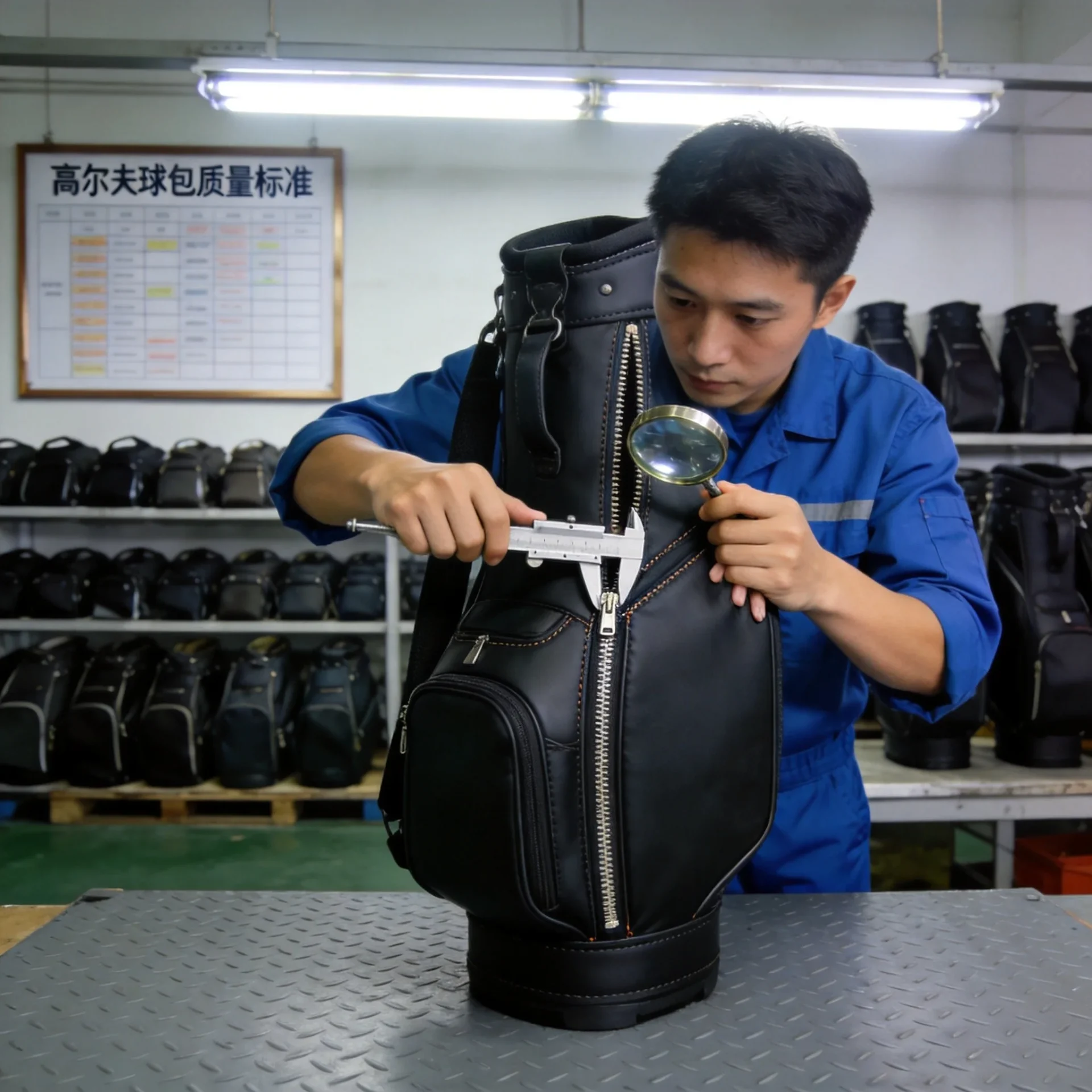
Request and Test Samples Rigorously
Order multiple sample rounds before committing to production. Test samples for:
- Zipper durability (open/close cycles under load)
- Stitching strength and seam integrity
- Waterproof coating effectiveness (hydrostatic pressure test)
- Structural rigidity with clubs loaded
- Strap padding comfort and adjustability mechanism
- Stand mechanism stability (for carry bags)
- Material colorfastness and UV resistance
Check Their Client Portfolio
Ask for references or case studies from brands they currently serve (with NDA permissions). A factory that produces for recognized golf brands has been vetted by those brands’ quality teams — which significantly reduces your risk.
Verify Export Experience
Confirm that the factory has a working knowledge of export regulations, customs documentation, and packaging requirements for your target markets. Experienced exporters will know how to pack golf bags to minimize dimensional weight and prevent damage during ocean freight.
China vs. Other Manufacturing Regions for Golf Bags
China remains the dominant manufacturing hub for golf bags globally, but sourcing decisions should be based on data rather than assumptions. Here is how China compares with other production regions:
| Factor | China | Vietnam | India |
|---|---|---|---|
| Maturity of golf bag supply chain | ★★★★★ | ★★★☆☆ | ★★☆☆☆ |
| Unit cost competitiveness | ★★★★☆ | ★★★★★ | ★★★★☆ |
| Customization capability | ★★★★★ | ★★★☆☆ | ★★☆☆☆ |
| Lead time reliability | ★★★★☆ | ★★★☆☆ | ★★★☆☆ |
| Quality consistency | ★★★★☆ | ★★★☆☆ | ★★☆☆☆ |
China’s advantages include a deeply integrated supply chain (zippers, buckles, EVA molding, waterproof fabrics all sourced domestically), mature export infrastructure, and factories with decades of golf-specific production experience. Guangdong and Fujian provinces host the highest concentration of qualified golf bag factories.
Vietnam offers marginally lower labor costs but lacks the same depth of accessory supply chains. Many Vietnamese factories still import zippers, hardware, and specialty fabrics from China — adding complexity and potential delays.
India is emerging as a sourcing destination for textile products but has limited golf bag expertise. It may be suitable for simple, low-cost bags but is not yet a viable option for premium or technically complex golf bag designs.
For most B2B buyers — especially those launching new brands or scaling product lines — China offers the optimal balance of cost, quality, customization capability, and supply chain reliability.
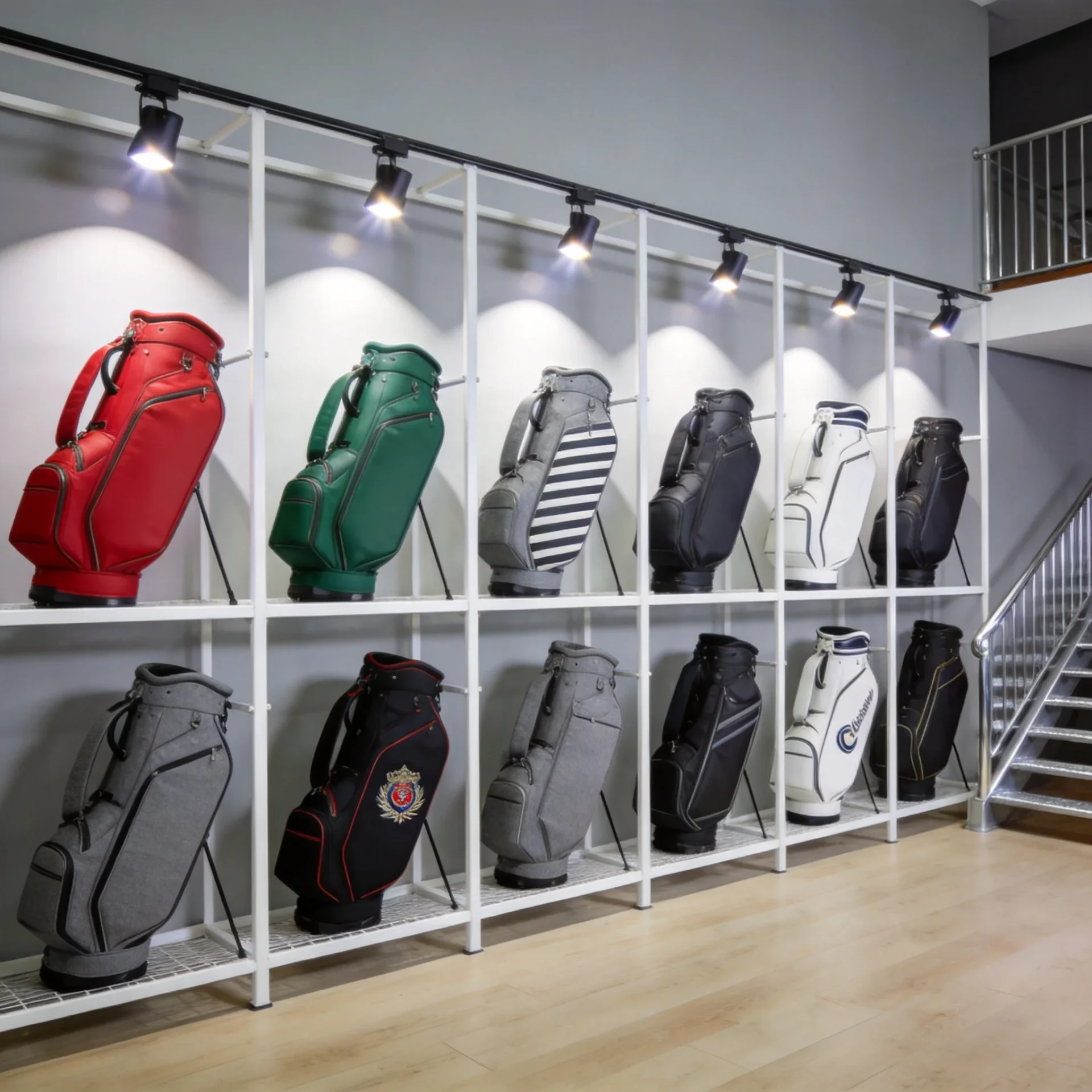
Building a Long-Term Partnership with Your Golf Bag Supplier
The most successful B2B relationships in the golf industry go far beyond transactional purchasing. Here is how to build a manufacturing partnership that delivers compounding value over time:
Invest in the Relationship
Visit your factory at least once a year. Face-to-face meetings build trust, align expectations, and give you visibility into operational improvements. Factories prioritize clients who demonstrate long-term commitment over one-off buyers.
Establish Clear Communication Protocols
Define communication channels, response time expectations, and escalation procedures from day one. Use tools like shared project management boards, weekly production updates, and scheduled video calls to maintain alignment across time zones.
Collaborate on Product Development
The best golf bag manufacturers become extensions of your product team. Share market insights, consumer feedback, and trend data so the factory can proactively suggest material upgrades, construction improvements, or cost-saving alternatives.
Implement Joint Quality Improvement
Instead of treating quality claims adversarially, work collaboratively with your factory to conduct root-cause analysis. Develop shared quality scorecards and set continuous improvement targets. Factories that feel like partners — not just vendors — will go further to protect your brand.
Plan for Growth Together
Share your sales forecasts and expansion plans with your golf bag supplier. This enables them to reserve production capacity, pre-order raw materials, and prepare tooling for your upcoming launches. A factory that plans ahead for your business is a strategic asset.
Frequently Asked Questions
1. What is the typical MOQ for custom golf bags from a Chinese factory?
Most established golf bag factories in China set MOQs between 300 and 500 pieces per color per style. Some factories offer lower MOQs of 200 pieces for new clients as a trial order. MOQs can be negotiated based on your projected annual volume and the complexity of customization required.
2. How long does it take to develop a custom golf bag sample?
The first prototype sample typically takes 10-15 business days. If custom hardware (buckles, zipper pulls, stand mechanisms) or specialized materials are required, expect 15-20 days. Revised samples after feedback usually take 7-10 days. Factor in shipping time of 3-7 days depending on the courier.
3. What certifications should a reliable golf bag manufacturer have?
At minimum, look for ISO 9001 (quality management) and compliance with REACH (EU) or CPSIA (US) for chemical safety. Social compliance certifications like BSCI or Sedex are increasingly important for brands selling in Western markets. Material test reports from SGS, TUV, or Intertek add credibility.
4. Can I visit the factory before placing an order?
Absolutely — and you should. Most reputable golf bag manufacturers in China welcome factory visits. Plan to spend a full day inspecting production lines, reviewing quality control processes, meeting the management team, and examining their material library. If travel is not feasible, request a live video tour as an alternative.
5. What payment terms are standard when working with a golf bag factory?
The most common payment structure is 30% deposit upon order confirmation and 70% balance before shipment or against a copy of the bill of lading. For established relationships, some factories offer 60-day open account terms. Letter of Credit (L/C) is used for very large orders or new buyers seeking additional security. Always use secure payment methods and avoid wiring full amounts before production begins.
Start Your Search for the Right Golf Bag Manufacturing Partner
Choosing the right golf bag manufacturer is a strategic decision that impacts every aspect of your business — from product quality and delivery reliability to brand reputation and profit margins. By following the evaluation framework outlined in this guide, you can identify a golf bag supplier who meets your current needs and grows with your brand over time.
If you are looking for a manufacturing partner with deep expertise in golf bag production, flexible MOQ options, rigorous quality control, and a commitment to long-term collaboration, we would welcome the opportunity to earn your business.
JUNYUAN BAGS has been manufacturing premium golf bags for global brands for over a decade. Our facility features dedicated golf bag production lines, an in-house quality control team, and a product development department that turns your concepts into market-ready products. From staff bags to cart bags, Sunday bags to travel cases, we deliver consistent quality at competitive pricing.
Ready to discuss your next golf bag project?
Contact our team today for a factory tour, sample request, or custom quotation.
? Related: Looking for a comprehensive overview of the golf bag manufacturing process? Check out our Custom Golf Bag Manufacturing Complete Guide — covering materials, production workflows, customization options, and quality control.