Premium Toiletry Bags: Worth the Splurge?
A factory-backed answer to whether a premium toiletry bag is worth the splurge – what the coated waterproof lining, metal zipper, structured base, TSA-friendly compartment and genuine leather grades actually cost to build, which features genuinely earn their keep on the road, and where brand and retail premium quietly starts, plus honest private-label alternatives that match the same spec.
You do not need a $100+ toiletry bag to keep your kit organized and TSA-ready, but there is a small, specific set of materials and features genuinely worth paying for – and most of what sits above them on the sticker is brand, interior finishing and retail markup. A basic polyester dopp-style kit typically retails around $15–$35 (approx.), a mid-grade waterproof or hanging toiletry bag with a structured base around $25–$60 (approx.), a premium-brand wide-open toiletry bag with coated lining and metal hardware around $60–$120 (approx.), and a full-grain leather designer piece around $120–$350 (approx.). On the factory bench those same grades build for roughly $2.50–$5 (typical), $5–$9 (typical), $12–$18 (typical) and $20–$34 (typical) respectively. The genuinely worth-paying features – a water-resistant coated or PU-lined interior that wipes clean, a smooth metal or coil zipper that won’t bind, a structured self-standing base, a TSA-friendly clear compartment, and real top-grain or full-grain leather (not bonded or vinyl) – add roughly $4–$10 per bag (approx.) over a bare minimal spec. Everything above that is branding, lifestyle marketing and the retail channel’s own overhead; the same spec is buyable as OEM or private label at a fraction of the leading-label price.
TL;DR / Quick Answer
Most of a premium toiletry bag’s price is brand, retail and marketing – but a few materials genuinely earn their keep. A basic polyester kit builds for about $2.50–$5 (typical) and retails $15–$35 (approx.); a mid-grade waterproof or hanging bag with a structured base builds for $5–$9 (typical) and retails $25–$60 (approx.); a premium-brand wide-open or organized bag builds for $12–$18 (typical) and retails $60–$120 (approx.); and a full-grain leather designer piece builds for $20–$34 (typical) and retails $120–$350 (approx.). The features that genuinely justify spending – a wipe-clean coated or PU interior, a dependable metal zipper, a structured base that opens wide and stands, a TSA-friendly clear pocket, and honest full-grain or top-grain leather – add only about $4–$10 (approx.) to the build. Buy for those materials, not for the logo, or have the same spec built as private label for a fraction of the badge-tree price.
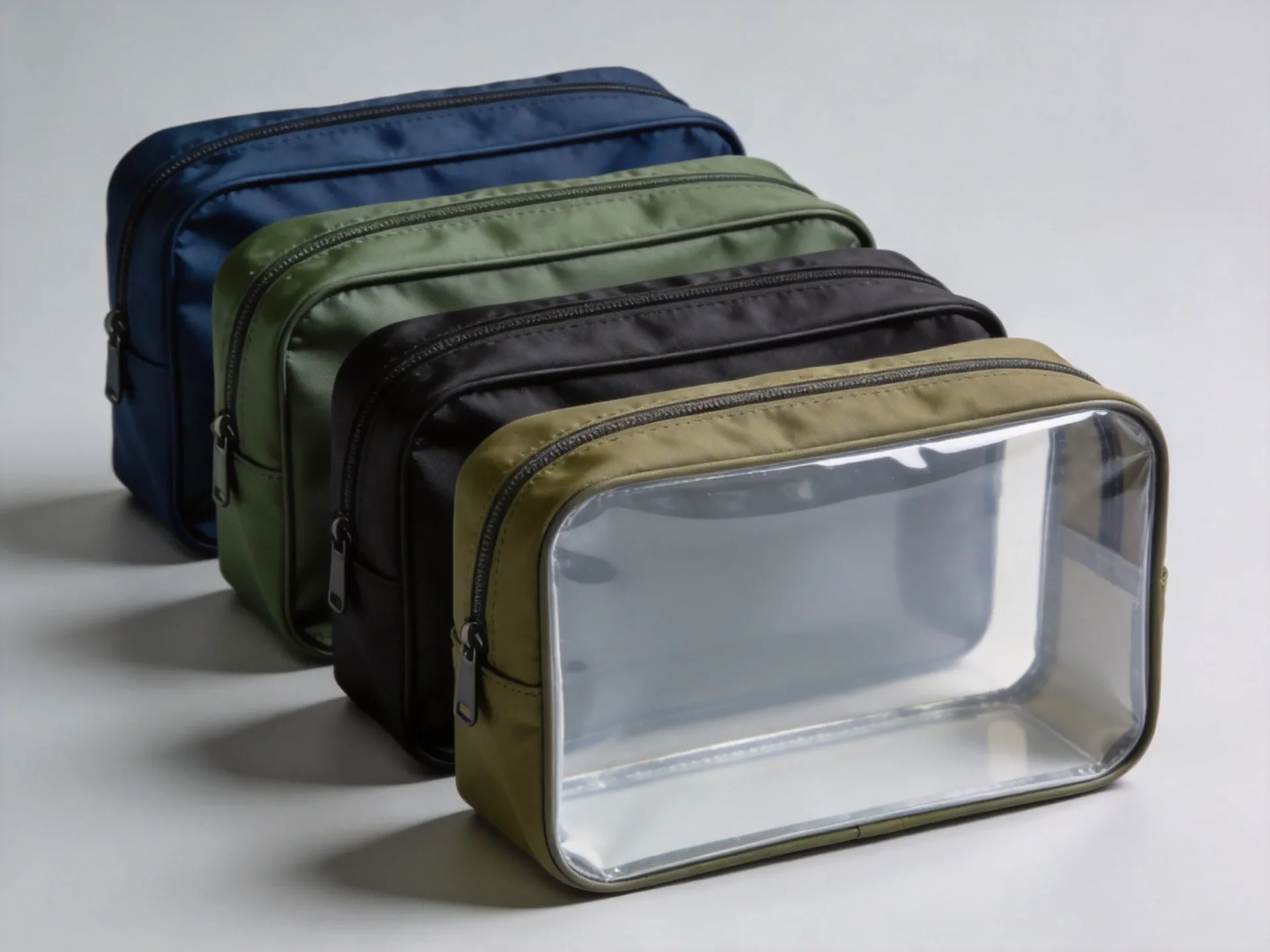
1. Where an Expensive Toiletry Bag’s Price Actually Goes
Strip away the marketing and a premium toiletry bag price splits into the same four layers as every bag in this series: materials, labor, brand and retail. Materials are the only layer a shopper is really paying for – and even there, only a handful of components do the heavy lifting.
- Materials & construction (the honest part): shell fabric, coated or PU-lined interior, zipper, hardware, stiffening, and – for the premium tiers – genuine leather and edge finishing. For a mid-grade bag this is typically a $4–$6 (typical) share of the build.
- Brand, design & marketing (the +50% to +300% layer): the label, the “lifestyle” story, the advertising spend, the salaried design studio and the retail merchandising that make a $6 build feel like a $60 product.
- Retail & distribution (the margin stack): wholesale-to-d2c markup, retail footprint, returns, warranty and payment overhead. Retailers commonly work on a 2.5x to 4x multiplier over factory price, so the retail price is often 3 to 8 times the cost to build.
- Certification & packaging (small but real): regional compliance, hang-tags, boxes and the brand kit that a private-label buyer may not need at all.
The short version: most of what you pay for a premium toiletry bag is brand and retail premium layered on top of a modestly more expensive – but very buyable – material spec. That is exactly why the same organized, TSA-friendly, waterproof-lined bag can be sourced as private label for a fraction of the leading-label price.
2. A Factory-Level Cost Ledger for a Toiletry Bag
Here is how the grades actually stack up on a typical production line in an affiliated bag factory. These are industry-typical build ranges used to explain cost structure – actual pricing depends on spec, volume and prevailing conditions (approx./typical labels apply).
| Grade | Typical Build Cost | Typical Retail | Build-to-Retail Multiplier | Signature Spec |
|---|---|---|---|---|
| Basic polyester dopp kit | $2.50–$5 | $15–$35 | ~6–8x | Plain nylon/poly shell, open top, cloth liner, basic zipper |
| Mid-grade waterproof / hanging bag | $5–$9 | $25–$60 | ~5–7x | Water-resistant shell, PU-coated interior, structured base, hanging hook |
| Premium wide-open / organized bag | $12–$18 | $60–$120 | ~5–7x | Coated lined interior, metal zipper, mesh dividers, TSA-ready, brand finishing |
| Full-grain / top-grain leather designer | $20–$34 | $120–$350 | ~6–10x | Genuine leather panels, edge-painted seams, brass hardware, premium liner |
Notice the pattern: the build-to-retail gap widens as you move up the tiers, which means the “premium” part of a luxury toiletry bag is mostly margin, not material. A full-grain leather designer bag builds for roughly the same component cost as a good mid-range laptop sleeve – the rest is the label.
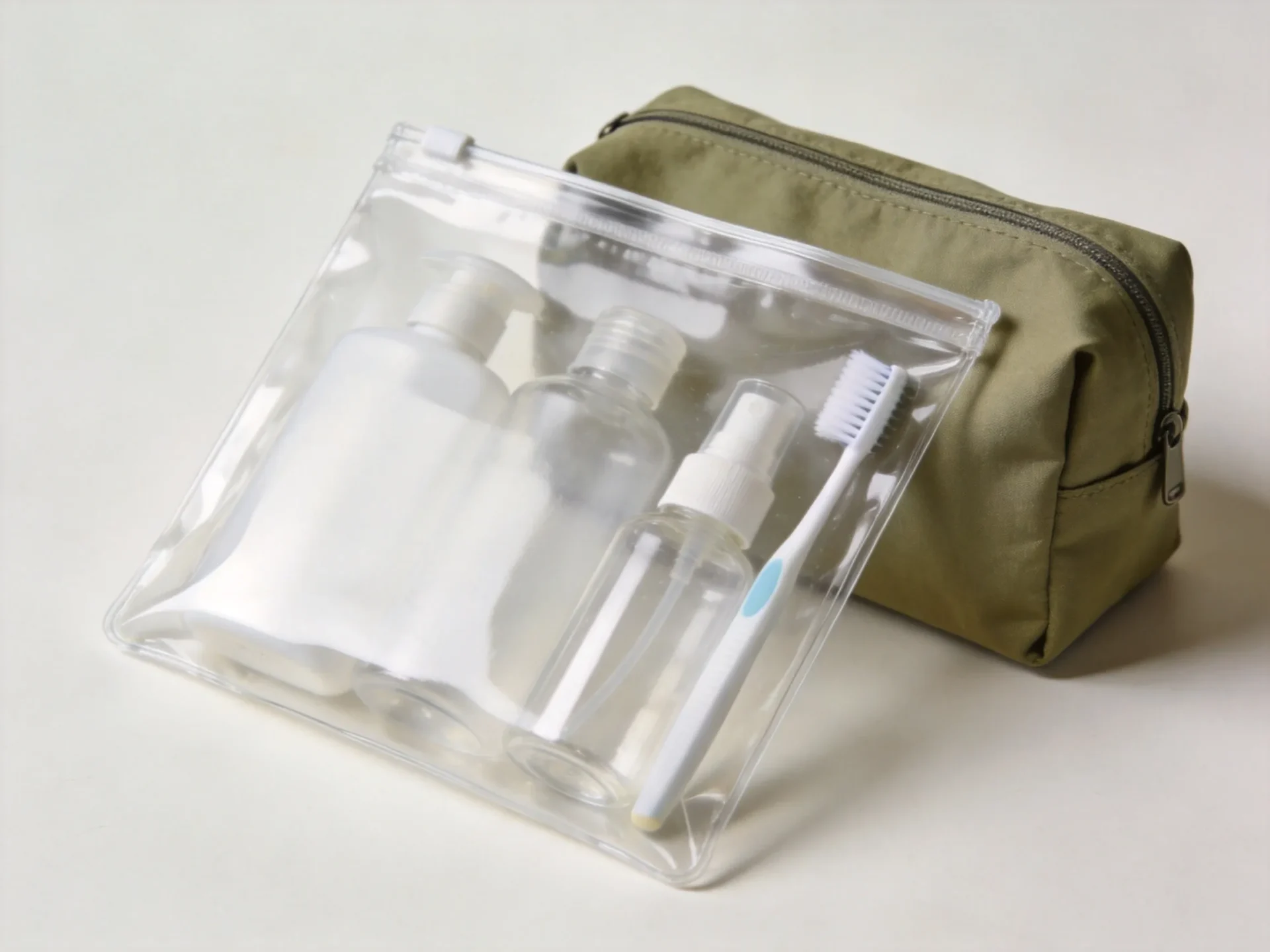
3. Materials That Are Genuinely Worth Paying For
If you are going to spend money, spend it on the components that change how the bag performs every single day. Here is the honest material comparison – what earns its cost and what is pure marketing.
| Component | Worth Paying For | Typical Build Cost Share | Marketing vs Real |
|---|---|---|---|
| Interior lining | Coated or PU-lined interior that wipes clean and resists spills | $0.80–$2.00 | Real – a bare cloth liner stains and absorbs |
| Zipper | Metal or coil zipper that runs smoothly and won’t jam | $0.50–$1.50 | Real – cheap stamped zips bind and break at the worst time |
| Structured base / stiffening | Rigid board or foam base so the bag opens wide and self-stands | $0.40–$1.00 | Real – floppy bags dump everything out when opened |
| TSA-friendly clear pocket | Integrated clear, compliant compartment for liquids | $0.40–$0.90 | Real – removes a security-step headache at airport checkpoints |
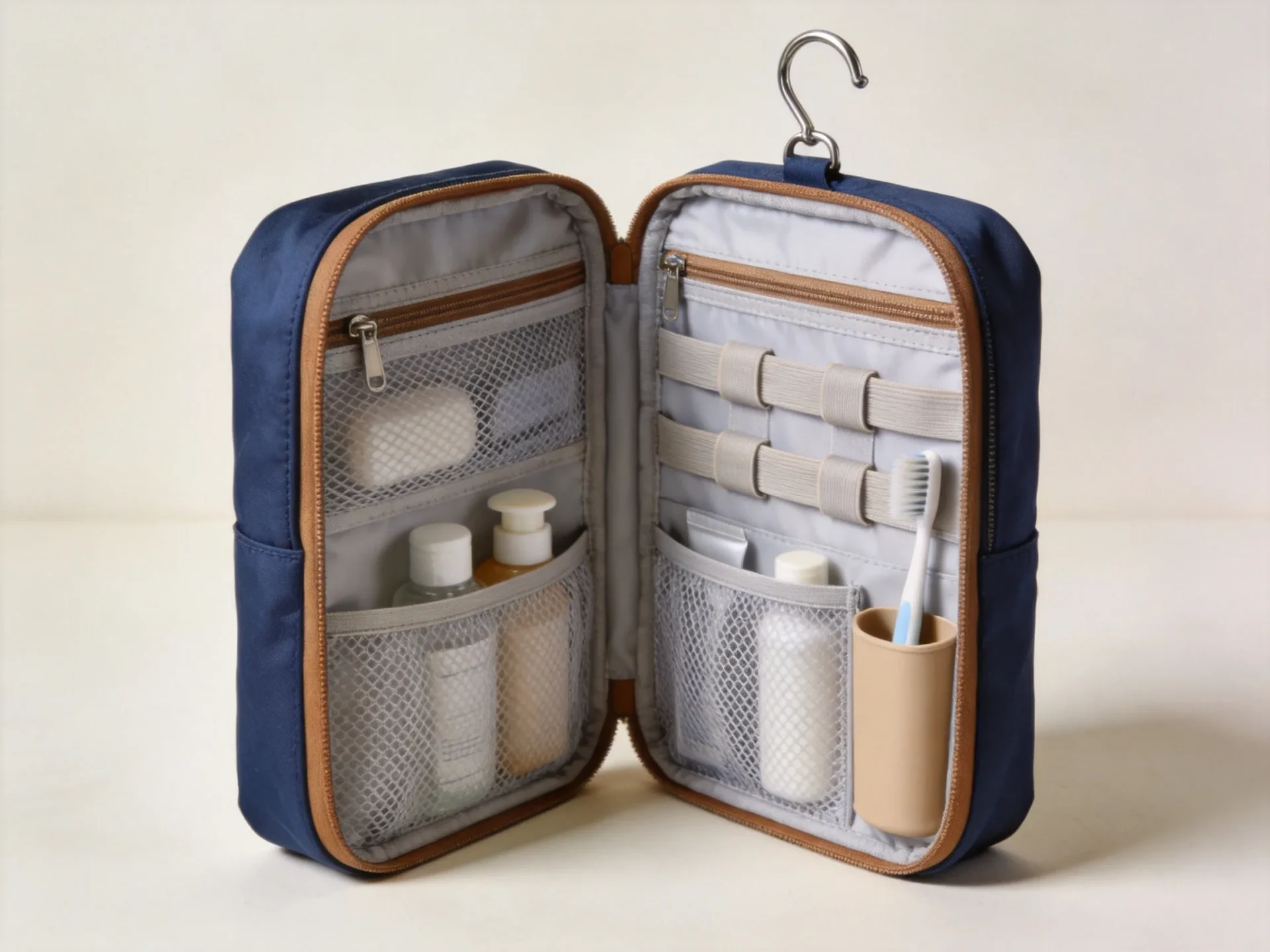
| Organization | Mesh dividers, elastic straps, brush loops | $0.30–$0.80 | Mixture – useful up to a point, then premium padding |
| Leather grade | Top-grain or full-grain (real, durable, ages well) | $6–$14 (leather tiers) | Critical – bonded leather / vinyl is the biggest fake “premium” trap |
| Extra panels, piping, embroidery | Decorative seams and branding | $2–$6 | Mostly marketing – adds price, little function |
The genuine “worth it” list is compact: a wipe-clean coated interior, a dependable metal zipper, a structured self-standing base, a TSA-friendly clear compartment, and real (not bonded) leather in the premium tiers. Everything else is finishing and brand. If a “premium” bag skips more than one of these, the premium is cosmetic.
4. Molds, Dies, Hardware & Testing That Add Cost
Toiletry bags are simpler than a structured backpack, but they still carry real tooling and QC cost that quietly shows up in the retail price. Here is the factory-side account.
| Cost Item | Typical One-Off / Unit Impact | What It Buys |
|---|---|---|
| Steel cutting dies & patterns | $150–$500 one-off | Consistent panel cutting across shell, liner and stiffening |
| Stiffening / foam-shaping tooling | $80–$300 one-off | Structured base and shaped dividers that hold the bag open |
| Hardware (hanging hook, zipper, pulls) | $0.40–$1.50 per unit | Load-rated hook, metal zips and pulls that survive daily use |
| QC & burst/zip/seam testing | $500–$3,000 one-off, amortized | Zip-cycle, seam-strength and water-resistance verification |
| Regional compliance & packaging | $0.20–$1.00 per unit | Labels, hang-tags, cert paperwork and brand kit |
The tooling is genuinely amortized down to pennies or a few dollars per bag at volume, so over a modest production run it is rarely the driver of a premium price. The big jumps – especially into the leather tiers – come from the material and finishing cost, not the dies. That is why the same organized spec can be built economically at OEM volume.
5. How a Premium Toiletry Bag Is Actually Built
To see where the money “is” and “isn’t”, trace the build. In a mid-volume affiliated factory that makes toiletry bags and soft goods for many brands (typical mid-size unit: roughly 4,950 sqm, 137 staff, 7 production lines, 149 machines including 126 sewing units, monthly capacity about 200,000 pieces, serving 200+ brands across 100+ countries, as of 2026), a lined organized toiletry bag passes through a clear sequence:
- Pattern & cutting – shell, liner and stiffening panels cut on steel dies to consistent tolerances.
- Lining build-up – coated or PU-lined interior and mesh dividers assembled into the shell.
- Stiffening & base – the rigid base and shaped dividers are set so the bag opens wide and self-stands.
- Zipper, hardware & organization – zips, hanging hook, brush loops and elastic straps installed with bar-tacked stress points.
- Finishing – edge finishing and, on leather tiers, edge-painting and hardware setting.
- Final QC – zip-smoothness, seam-strength, water-resistance and opening check before packing.
The short version: the part of a premium toiletry bag that is genuinely worth it is mostly a washable lined interior, dependable zipper, structured base and honest material – a discrete, buyable cost, not an unreachable secret. For deeper reference, our guide to custom toiletry bag manufacturing walks the whole build and sourcing path in more detail.
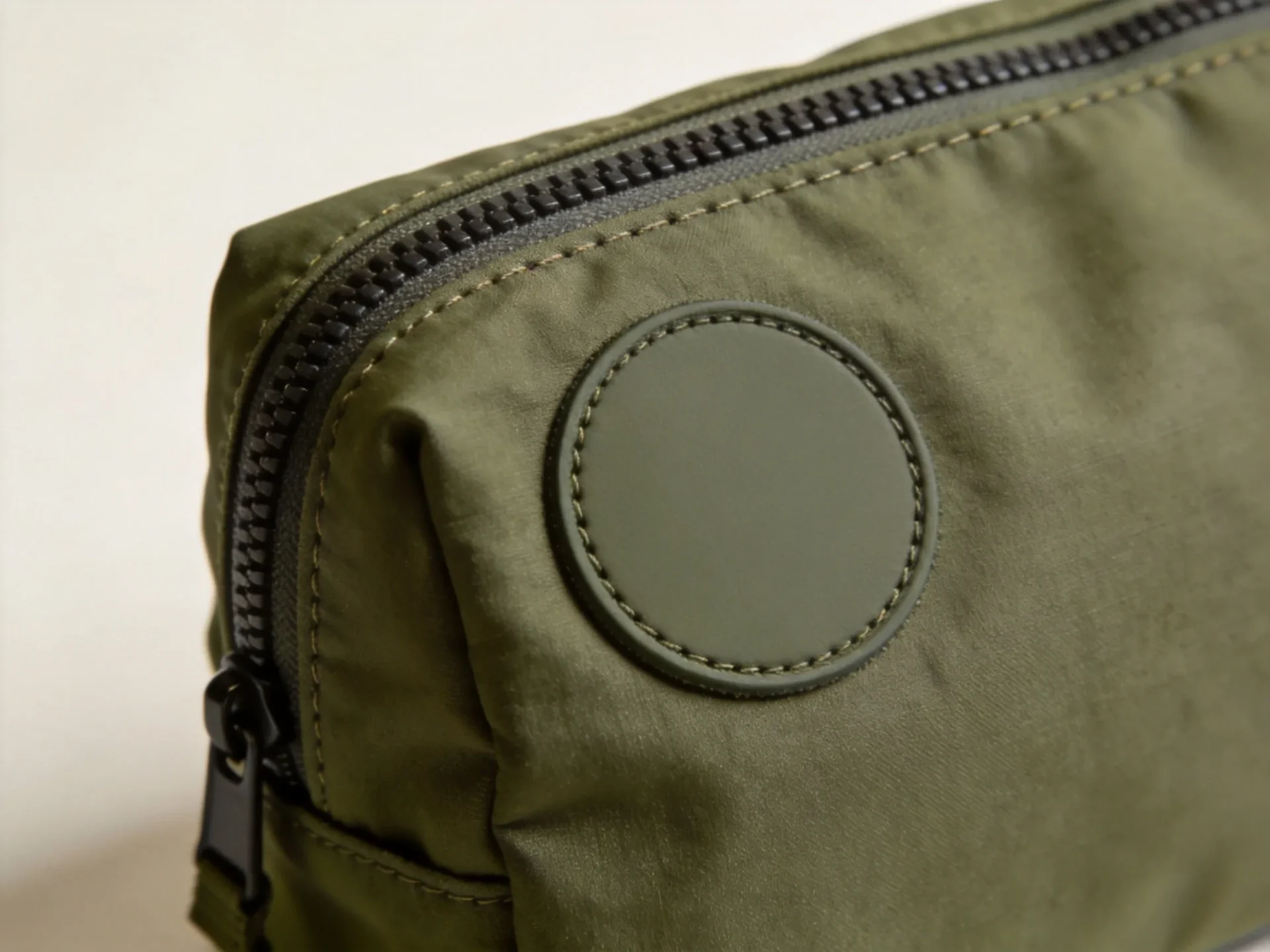
6. So Which Is Worth It? The Verdict
Whether a premium toiletry bag is worth the splurge comes down to the same rule as every premium in this series: separate the honest build quality from the brand.
- Genuinely worth paying for: a coated/PU-lined interior that wipes clean, a dependable metal or coil zipper, a structured base that opens wide and self-stands, a TSA-friendly clear compartment, and – in the leather tiers – real top-grain or full-grain leather instead of bonded leather or vinyl. These are real, and a $10 floppy unlined pouch has none of them.
- Probably not worth the sticker: the $30–$150 that runs above a well-built mid-grade bag comes from brand, lifestyle marketing, premium interior finishing, retail footprint and warranty overhead – all of which add to price, not to organization or durability.
- The honest alternative: buy a well-lined mid-grade bag with a structured base and metal zipper, or have the same organized, TSA-friendly spec built under your own label through OEM – getting the genuinely useful engineering without paying the badge tax.
The verdict: Premium toiletry bags are worth the splurge only where you are buying real materials – a wipe-clean lined interior, a smooth metal zipper, a structured standing base, a TSA-friendly clear pocket and, in the leather tiers, genuine not bonded leather. Buy the materials, not the logo. For everyone else, a well-built mid-grade bag or a private-label OEM build delivers the same organization and TSA-readiness for a fraction of the premium price. Where you land depends on how much of that premium is actually working for you on the road – and how much is just the label on the side. For a curated list of proven options, our guide to the best travel toiletry bags and men’s dopp kits cuts through the choice.
If you fly often or pack a dopp kit daily, the structured, waterproof-lined, TSA-friendly spec is genuinely worth a modest premium – maybe $4–$10 (approx.) over a bare bag. But the badge tax past that point is very large, and it buys branding, not function. The best value-per-dollar is a well-lined mid-grade bag or a private-label build matched to exactly the materials you use, rather than the premium tiers’ cosmetic extras.
Build a Premium Toiletry Bag Under Your Own Brand
Our affiliated factory builds lined, organized, TSA-friendly toiletry bags – nylon, TSA-clear and genuine leather tiers – to OEM/ODM spec. We handle coated lining, structured bases, metal hardware, edge finishing and QC, at a fraction of the leading-label retail price. Tell us the material grade and organization you need and we source it for you.
Toiletry Bag Manufacturing
Browse Cosmetic & Makeup Bag Collection
FAQ: Are Premium Toiletry Bags Worth the Splurge?
Do premium toiletry bags really perform better, or is it mostly branding?
Mostly branding, with a small real core. The features that genuinely perform are a coated/PU-lined interior that wipes clean, a dependable metal zipper, a structured base that opens wide and self-stands, a TSA-friendly clear compartment and – in the leather tiers – genuine top-grain or full-grain leather. A well-built mid-grade bag has all of those; the extra $30–$150 above that is largely brand, marketing and retail margin.
Which materials actually matter in a toiletry bag?
The four that matter most are: a water-resistant coated or PU-lined interior (spill-proof and washable), a smooth metal or coil zipper that won’t bind, a rigid structured base that keeps the bag open and standing, and a TSA-friendly clear compartment if you fly with liquids. In premium tiers, real full-grain or top-grain leather matters far more than bonded leather or vinyl, which crack and peel.
Is a leather toiletry bag worth the extra cost?
Only if you value it and you are buying genuine leather. Full-grain or top-grain leather ages well, resists abrasion and genuinely justifies a build cost of roughly $20–$34 (typical) versus $5–$9 (typical) for a top-quality nylon bag. But bonded leather or “vegan” vinyl masquerading as premium is the biggest false-splurge trap – check the label and the feel before paying a leather-tier price.
What is a TSA-friendly toiletry bag and is it worth it?
A TSA-friendly bag has a clear, compliant compartment so you can keep travel-sized liquids visible at airport security without unpacking everything. It builds for roughly $0.40–$0.90 (typical) of extra cost and is genuinely worth it if you fly – it removes a real security-step headache for a few dollars.
How much does it cost to make a premium toiletry bag?
It depends on the tier. A basic polyester kit builds for about $2.50–$5 (typical); a mid-grade waterproof or hanging bag with a structured base builds for $5–$9 (typical); a premium wide-open organized bag builds for $12–$18 (typical); and a full-grain leather designer piece builds for $20–$34 (typical). Retail pricing runs roughly 5 to 10 times those build figures depending on the brand.
Is a hanging toiletry bag worth more than a flat one?
Yes, for road or gym use. A hanging bag with a load-rated hook and open-wide structured design gives you better access to every pocket without digging, and builds for only a few dollars more over a flat bag. It is one of the more genuinely useful “premium” upgrades – worth it if you pack more than a toothbrush.
Do I need to spend a lot to get an organized, spill-proof bag?
No. A well-built mid-grade bag with a coated lining, metal zipper, structured base and a couple of mesh dividers delivers the practical spec – and builds for roughly $5–$9 (typical). The reliable way to get that exact organization without the premium badge is a private-label or OEM build; the same functional spec is buyable at a fraction of the leading-label price.
What makes a cheap toiletry bag fail quickly?
Three things: a cloth liner that stains and absorbs spills because it is not coated, a cheap stamped zipper that binds or breaks, and a floppy body with no structured base that dumps everything when opened. If a “premium” bag is thin and unstructured, resist paying the premium – the price is mostly the logo.
Disclaimer: Retail and factory figures in this article are industry-typical approximations used to explain cost structure – not precise quotes or guaranteed prices. Actual pricing depends on your specification, volumes and prevailing conditions. Approx./typical labels apply to every figure above. Always confirm material grades and any regional compliance with your bag manufacturer before sourcing.
OEM perspective note: JUNYUAN BAGS operates as a bag trading and sourcing organization backed by an affiliated factory and partner factories in Quanzhou, Fujian. We do not claim to manufacture for any named brand, nor do we represent any brand’s proprietary design. Figures describe the open, buyable spec that any brand can source.