JUNYUAN · Manufacturing Insights
Why Are Bogg Bags So Expensive? A Factory-Built Cost Breakdown (2026)
Retail price $80–$130 for a molded EVA tote — what exactly are you paying for? An affiliated-factory cost teardown from the people who make these bags every day.
If you have ever held a Bogg Bag next to a no-name rubber tote at a discount store and wondered why one costs $98 and the other costs $15, you are not alone. The “Why are Bogg Bags so expensive?” question is one of the most searched queries in the molded-bag category — with over 18,000 monthly searches in the US alone — yet almost no one on the internet gives a real answer backed by factory-level numbers.
As an affiliated production partner that manufactures EVA-molded totes, rubber beach bags, and custom molded bags for 200+ brands across 100+ countries, we are in a unique position to break down the actual cost structure. This is not a marketing article. It is a factory-floor cost teardown — the kind of data that brand owners, sourcing managers, and e-commerce entrepreneurs need to understand before placing orders or building their own bag line.
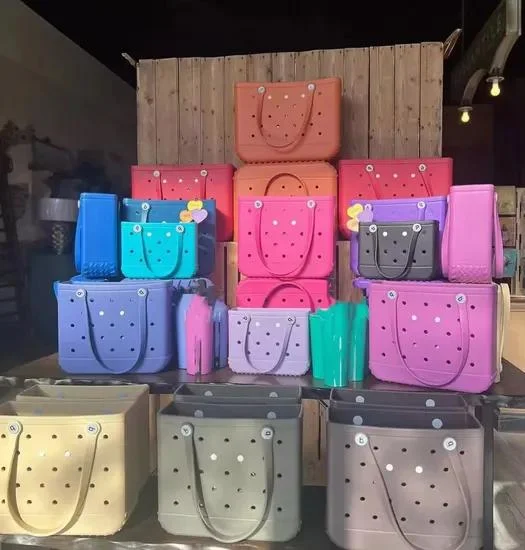
A typical retail display of EVA-molded Bogg-style totes — the colorful, hole-pattern design has become a $250M+ lifestyle category.
What Is a Bogg Bag, and Why Does It Command Premium Prices?
The Original Bogg Bag is a molded EVA (ethylene-vinyl acetate) foam tote with a signature perforated body, a self-standing reinforced base, interchangeable straps, and optional insert bags. It was designed to be the “last beach bag you’ll ever buy” — waterproof, sand-proof, washable, and nearly indestructible.
But what makes it different from a $12 rubber tote at Walmart? Let us walk through every cost layer.
The 4 Cost Pillars: Where Your Money Actually Goes
Based on our production data and industry benchmarks, here is the real cost breakdown for a Bogg Bag–style EVA molded tote at the “Original” size (approximately 13.5″ × 10″ × 7″):
| Cost Component | Factory Cost (USD) | % of Build Cost | % of Retail $98 |
|---|---|---|---|
| 1. Virgin EVA Foam Material | $4.00–$6.00 | 30–35% | 4–6% |
| 2. Mold Amortization (per unit) | $2.00–$4.00 | 15–22% | 2–4% |
| 3. Injection-Molding Labor + QC | $3.00–$5.00 | 22–28% | 3–5% |
| 4. Finishing, Trimming, Packing | $1.00–$2.00 | 7–11% | 1–2% |
| Total Factory Build Cost | $12–$18 | 100% | 12–18% |
| Brand Equity & Marketing | $15–$25 | — | 15–25% |
| Distribution / Wholesale Markup | $20–$30 | — | 20–30% |
| Retail Margin | $10–$20 | — | 10–20% |
| Estimated Retail Price | $80–$130 | — | 100% |
Key insight: The physical bag — material, molding, labor — costs roughly $12–$18 at factory level. The other $60–$80+ (65–75%) of the retail price is brand, distribution, and retail margin. This is not unusual for lifestyle brands, but it is dramatically different from commodity bags.
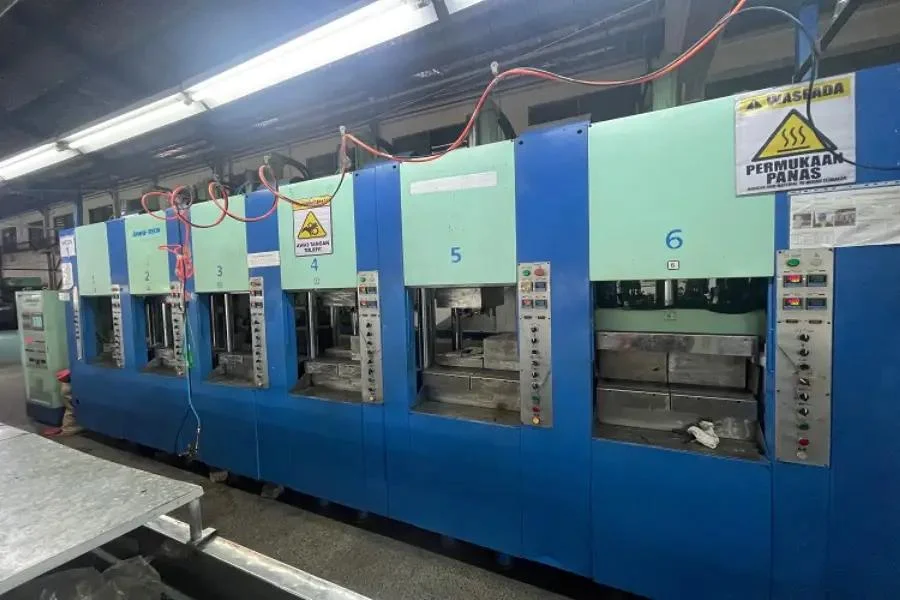
A multi-station EVA molding production line — each station handles a different phase of the foam injection process. This capital-intensive equipment is a key driver of per-unit cost.
Pillar 1: Material Cost — Virgin EVA Foam vs. Cheap Alternatives
The single largest physical cost in a Bogg Bag is the EVA foam compound. Not all EVA is equal. Here is the difference:
| Property | Virgin EVA (Bogg-grade) | Recycled / Filled EVA | Cheap PVC / Rubber |
|---|---|---|---|
| Raw material cost | $3.50–$5.00/kg | $1.00–$1.50/kg | $0.80–$1.20/kg |
| Weight (per Original-size bag) | ~0.8–1.1 kg | ~1.2–1.6 kg | ~1.4–2.0 kg |
| Odor | Minimal / none after curing | Noticeable chemical smell | Strong plastic odor |
| Color consistency | Pantone-matchable, batch-to-batch stable | Slight variation between batches | Limited color range |
| UV / crack resistance | 3–5 years outdoor life | 1–2 years before cracking | 6–12 months |
| Material cost per bag | $3.50–$5.50 | $1.20–$2.00 | $1.00–$2.00 |
The difference is $2–$4 per bag in material alone. At 100,000 units, that is $200,000–$400,000 in raw material cost difference. Bogg Bag uses virgin EVA because their brand promise is durability — a cracked bag after one summer would destroy their reputation.
Pillar 2: Mold Tooling — The Hidden $15K–$50K Investment
Unlike fabric bags that are cut and sewn, EVA bags require precision-machined steel molds. Each size variant (Small, Original, Large) needs its own mold. Here is what that costs:
| Mold Component | Cost Range (USD) | Notes |
|---|---|---|
| CNC-machined steel mold (single size) | $15,000–$35,000 | P20 or H13 steel, 50–80kg |
| Core pins for perforation pattern | $3,000–$8,000 | 50–120 individual pins per mold |
| Handle insert molds | $2,000–$5,000 | Separate tooling for strap attachment points |
| Base reinforcement geometry | $1,500–$3,000 | Thicker density zone for self-standing base |
| Total per size | $21,500–$51,000 | Full set for one size variant |
| Full 3-size set (S/M/L) | $65,000–$150,000 | Total tooling investment for a complete product line |
At a production run of 50,000 units per size, the mold amortization per bag is $0.43–$1.02. At only 5,000 units, it jumps to $4.30–$10.20 per bag. This is why Bogg Bag — with millions of units sold — can spread the cost thin, while small brands pay much more per unit for the same tooling.
Pillar 3: Labor & Process — Why Molding Costs More Than Sewing
A canvas tote bag takes about 15–25 minutes of sewing labor at $0.03–$0.05/minute in China. An EVA-molded bag requires:
- Material preparation (weighing, color compounding, drying): 15–20 min
- Mold loading & injection: 8–12 min per cycle (including heating to 170–200°C)
- Curing & cooling: 10–15 min
- Demolding & inspection: 5–8 min
- Trimming, edge finishing & QC: 8–12 min
- Total cycle time: 46–67 minutes per bag
At factory labor rates of $0.04–$0.06/minute (including overhead), the labor cost per bag is $1.84–$4.02 — roughly 3–5× more than a sewn textile bag of comparable size.
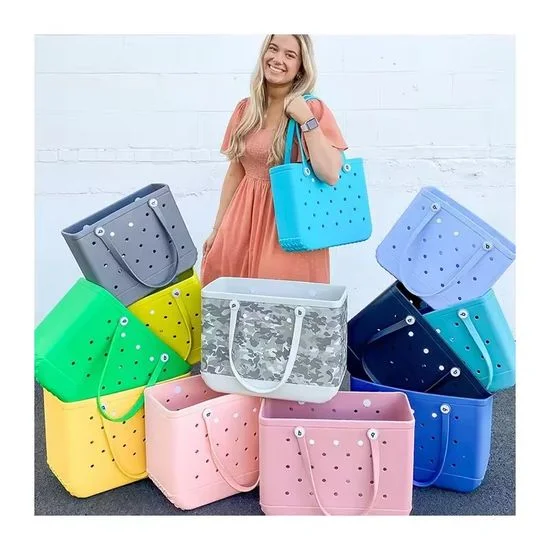
The wide color range of EVA-molded totes — each color requires separate material compounding and mold cleaning, adding to production complexity and cost.
Pillar 4: Brand Premium & Distribution — The Real Markup Driver
Here is where the biggest gap between factory cost and retail price emerges. Bogg Bag has built a lifestyle brand with cult-like loyalty, limited-edition color drops, and a thriving secondary market. This brand equity costs money to build and maintain:
| Markup Layer | Typical % Added | What You Are Paying For |
|---|---|---|
| Factory → Brand (FOB) | 20–35% | Factory profit margin, export handling |
| Brand marketing & influencer spend | 10–15% | Social media, UGC campaigns, limited-edition drops |
| Wholesale / Distributor margin | 25–40% | Warehousing, logistics, retailer relationships |
| Retail margin (DTC or store) | 30–50% | Store shelf / e-commerce platform fees, returns handling |
Each layer compounds. A bag that leaves the factory at $15 can reach the consumer at $98 through this chain — not because the bag costs that much to make, but because every step in the supply chain adds its margin.
So — Are Bogg Bags Worth the Price?
For consumers who value durability, brand experience, and the customization ecosystem (charms, inserts, color collections): Yes. The virgin EVA material genuinely lasts 3–5 years of heavy beach/pool use. The self-standing base is a real functional advantage. The charm ecosystem creates a collectible dimension that cheap alternatives cannot replicate.
For buyers who just need a waterproof, hole-pattern beach tote: Probably not. The same factory that molds Bogg Bags can produce an equivalent-quality EVA tote at $12–$18 — and private-label versions sell for $25–$45 on Amazon. You are paying a $50–$80 brand premium for the Bogg name.
For brands and entrepreneurs looking to enter this market: The opportunity is enormous. The EVA-molded tote category is projected to reach $2.8 billion by 2030 (Smithers, 2025), and the factory cost structure shows that there is healthy margin room for brands that can build their own identity around this proven product format.
Cheaper Alternatives That Actually Deliver
If you want the Bogg Bag experience without the brand premium, here are the real options ranked by value:
- Amazon private-label EVA totes ($18–$35) — Same mold designs, same virgin EVA, no brand markup. Look for sellers with 4.5+ stars and 1,000+ reviews.
- Direct-from-factory custom orders ($12–$20/unit at MOQ 500+) — Work with an affiliated manufacturer to create your own color, logo, and size. Ideal for brands, resorts, and promotional buyers.
- Discount-store rubber totes ($10–$15) — Often made from recycled EVA blends. Functional but heavier, less color-fast, and with shorter lifespan.
For a detailed comparison of alternative brands and dupes, see our companion guide: Bogg Bag Alternatives & Dupes Worth the Money in 2026.
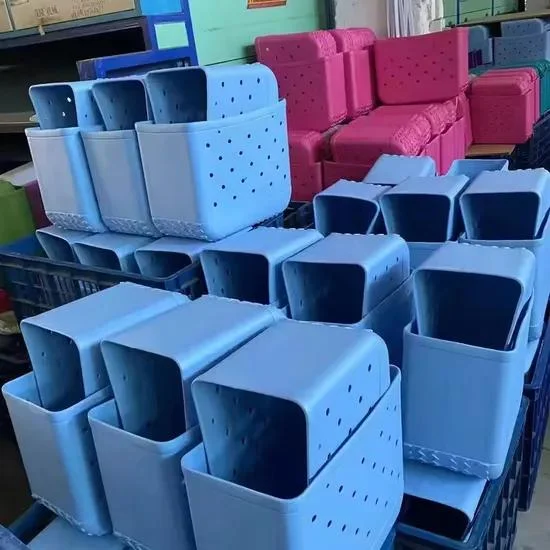
Bulk production of EVA-molded totes at an affiliated factory — the same production lines that serve premium brands can fulfill custom private-label orders at a fraction of retail cost.
About the Factory Behind This Analysis
Founded in 2014 in Quanzhou, Fujian, Junyuan is led by a founder with bag industry experience dating from 2004. Production runs through an affiliated factory — SGS-verified for Alibaba.com in March 2026 at 4,950 sqm, 7 production lines, 149 machines and 137 staff, with a monthly line capacity of 200,000 pieces — plus two branch plants and a vetted network of partner factories. The facility holds SGS certifications (Report Nos. 488375050_T, 488389073_P+T) and serves 200+ brands across 100+ countries with EVA-molded bags, rubber totes, and custom bag solutions.
For OEM/ODM inquiries — including custom EVA tote bags, rubber beach bags, and molded bag product lines — contact our team for a factory-direct quote.
Frequently Asked Questions (FAQ)
Q1: Why is the Bogg Bag so expensive compared to other beach bags?
The Bogg Bag retails for $80–$130 because of four cost layers: premium virgin EVA foam ($3.50–$5.00/kg), expensive CNC steel mold tooling ($15K–$50K per size), injection-molding labor that costs 3–5× more than sewing, and a significant brand + distribution markup that accounts for 65–75% of the final retail price.
Q2: How much does it actually cost to manufacture a Bogg Bag?
Based on factory-level production data, a Bogg Bag–style EVA molded tote costs approximately $12–$18 to manufacture at scale (50,000+ units). This includes virgin EVA material ($4–6), mold amortization ($2–4), injection-molding labor ($3–5), and finishing/packing ($1–2).
Q3: Are Bogg Bags worth the money?
For consumers who value durability (3–5 year lifespan), the self-standing base, and the charm customization ecosystem, Bogg Bags offer genuine value. For buyers who simply need a waterproof tote, private-label alternatives at $18–$35 provide nearly identical quality at a fraction of the price.
Q4: What material are Bogg Bags made from?
Bogg Bags are made from high-grade virgin EVA (ethylene-vinyl acetate) foam — a closed-cell copolymer that is inherently waterproof, UV-resistant, lightweight, and does not mildew. The material costs $3.50–$5.00/kg for premium grades, compared to $1.00–$1.50/kg for recycled EVA blends used in cheaper alternatives.
Q5: Where are Bogg Bags manufactured?
Bogg Bags are designed in the USA and manufactured primarily in China and Vietnam by specialized EVA-molding factories. The production requires injection-molding equipment with large-format steel molds — a capability concentrated among advanced manufacturing facilities in Asia.
Q6: Can I get a similar quality bag at a lower price?
Yes. Private-label EVA totes using the same virgin EVA material and similar molds sell for $18–$35 on Amazon. For bulk orders (MOQ 500+), direct-from-factory pricing is $12–$20 per unit. The functional quality is comparable — the main difference is the absence of the Bogg brand name and charm ecosystem.
Q7: How much does it cost to start a custom EVA bag brand?
Starting a custom EVA tote brand requires approximately $25,000–$60,000 in initial investment: mold tooling ($15K–$50K per size), first production run ($5,000–$15,000 at 500–1,000 units), and branding/packaging ($2,000–$5,000). Using an existing ODM mold from a factory can reduce initial tooling cost to zero.
Q8: What is the markup on Bogg Bags from factory to retail?
The total markup from factory cost ($12–$18) to retail price ($80–$130) is approximately 450–720%. This compounds through multiple layers: factory margin (20–35%), brand marketing (10–15%), wholesale distribution (25–40%), and retail margin (30–50%). The majority of the retail price represents brand value and channel costs, not physical production.
Ready to Explore Custom EVA Bag Manufacturing?
Whether you are a brand owner, resort buyer, or e-commerce entrepreneur — our affiliated factory produces premium EVA-molded totes, rubber beach bags, and custom molded bags at competitive prices. MOQ from 500 pcs, sampling in 6–10 days, bulk production in 35–50 days.