Quick facts: programme parameters for a club or retailer order
| Parameter | Figure | Why it decides the supplier shortlist |
|---|---|---|
| Supplier type that accepts club branding | OEM/ODM manufacturer | Brand owners do not take third-party artwork on their bags |
| Minimum order quantity | 500 pcs per style and colour | One minimum per colourway, not per order |
| Sampling lead time | 6–10 business days | Trading companies typically quote 3–5 days and miss it |
| Bulk production | 35–50 days after written proof approval | Clock starts on approval, not on the PO date |
| Pre-shipment inspection | AQL 2.5 major / 4.0 minor | Inspection report releases final payment |
| Shell fabric range | 420D–1680D polyester or nylon | 600D is the volume standard, 1680D the premium one |
| Frame protection | 5–10 mm EVA or PE foam per compartment | Pad the dividers, not just the outer walls |
| Incoterm and warranty | FOB Xiamen, 12-month workmanship | Buyer controls freight and the arrival date |
Brand Owner vs OEM/ODM Manufacturer: Which One Can Actually Take Your Order
The single most expensive misunderstanding in racket bag sourcing is treating a famous tennis brand as a factory. They occupy different positions in the supply chain, and only one of them sells production capacity.
What a brand owner can and cannot do for a club
A brand owner designs, markets and sells finished bags under its own trademark. A club can buy its bags through a distributor or a team dealer, usually at a team discount, and can sometimes add a club logo through an authorised decoration service. What a brand owner will not do is build a bag to the club’s specification and put the club’s label on it, because that competes with its own trademark and its own distribution.
What an OEM/ODM factory can and cannot do
An OEM/ODM factory builds to a buyer’s specification and label. It controls fabric sourcing, foam and hardware specification, compartment geometry, branding method and packaging, and it will produce a construction sample before the bulk run. What it will not do is supply a famous brand’s bag or copy a protected design, and it will not run below its minimum order quantity, which is typically 500 pcs per style and colour.
How to tell the two apart in five minutes
- Look for the words private label, OEM or ODM on the site. A brand owner’s site sells products; a manufacturer’s site sells capability.
- Check whether the range is finite and trademarked. A brand owner shows one design per model; a manufacturer shows constructions and asks what you want changed.
- Ask what the sampling lead time is. 6–10 business days implies a real sample room; “we can do 3 days” usually means a catalogue bag with a logo added.
- Ask which factory will run the order and who signs the inspection report. A trading company cannot name either with confidence.
Reference table: the two supplier types side by side
| Question | Brand owner | OEM/ODM manufacturer |
|---|---|---|
| Can the bag carry my club or store logo? | Only via authorised decoration on their own design | Yes, on your own construction |
| Can I change the compartment layout? | No | Yes, from the first sample |
| Who owns the design and tooling? | The brand | The buyer, under an OEM/ODM agreement |
| Typical minimum | One carton from a distributor | 500 pcs per style and colour |
| Sampling | Not applicable | 6–10 business days, physical sample |
| Best used for | Off-the-shelf club kit, retail stocking | Club crest programmes, private label, academy kits |
How This List Was Evaluated
The ten names below were assessed on four criteria that matter to a club or retailer placing a programme order, not on brand recognition. Where a supplier is a brand owner, the entry states that plainly and describes what it can still do for a club.
- Custom capability: whether the supplier accepts third-party artwork, changes compartment geometry, and offers OEM or ODM development.
- Order mechanics: minimum order quantity, sampling lead time and bulk lead time, stated as figures rather than as adjectives.
- Specification depth: whether shell fabric, foam, hardware and lining are named and controllable.
- Programme support: inspection standard, warranty, packaging and reorder handling across a season.
Two of the ten are manufacturers or specialist workshops that can take a club order; seven are brand owners included because they are the names a club will be offered first, and one is a specialist brand with a narrow, high-craft range. The list is ordered so that the supplier that can actually build your programme comes first, not so that the most famous name comes first.
The 10 Suppliers at a Glance
| Supplier | Type | Takes club or private label? | Typical minimum | Best for |
|---|---|---|---|---|
| JUNYUAN BAGS | OEM/ODM manufacturer, China | Yes | 500 pcs per style and colour | Club crest programmes, private label, academy kits |
| Wilson | Brand owner, USA | No | One carton via distributor | Off-the-shelf club kit and retail stocking |
| Babolat | Brand owner, France | No | One carton via distributor | Club kit with racket and string alignment |
| Head | Brand owner, Austria | No | One carton via distributor | Team kit for clubs already on Head equipment |
| Yonex | Brand owner, Japan | No | One carton via distributor | Badminton and tennis dual-use club kit |
| Dunlop | Brand owner, UK-origin | No | One carton via distributor | Value-priced club and school programmes |
| adidas | Brand owner, Germany | No | One carton via distributor | Apparel-led club merchandising |
| Tecnifibre | Brand owner, France | No | One carton via distributor | Premium player-level bags |
| Geau Sport | Specialist brand, USA | Limited | Small batch, brand-led | Design-led premium retail |
| Tennis C Williams | Specialist workshop, UK | Limited | Small batch, brand-led | Craft-led bespoke and small club runs |
1. JUNYUAN BAGS — OEM/ODM Manufacturer, China
The only entry on this list built specifically to take a club or retailer programme from specification to shipment. JUNYUAN BAGS has supplied OEM and ODM bags since 2014, with a founding team in the bag trade since 2004, working through affiliated and partner factories in Fujian. Racket bag programmes run at 500 pcs per style and colour, sample in 6–10 business days, produce in 35–50 days after written proof approval, and are inspected to AQL 2.5 major / 4.0 minor before shipping FOB Xiamen under a 12-month workmanship warranty. Construction is buyer-controlled: 420D to 1680D shells, 5–10 mm EVA or PE foam in the frame compartments, thermal lining and ventilated shoe sections as options, fence hooks and strap hardware specified by finish, and screen print, heat transfer, embroidery or woven labels per panel.
For a club, that means one colourway and one branding system across a racket bag, a backpack and a duffel, with each style meeting its own 500-piece minimum. See the custom tennis bag manufacturing page for the full capability set.
2. Wilson — Brand Owner, USA
A performance brand with one of the widest racket bag ranges in the market, from 3-racket club bags to 12-racket tour formats. Wilson does not produce private-label bags for third parties, so a club works through a team dealer or distributor and can usually add a club logo through an authorised decoration service. The advantage is availability and resale value; the limitation is that the compartment layout, fabric and hardware are fixed.
3. Babolat — Brand Owner, France
A French brand built around rackets and strings, with racket bags designed to match its frame ranges. For clubs already standardised on Babolat equipment, buying bags from the same brand keeps the kit visually consistent. As with every brand owner on this list, third-party private-label bag production is not part of the offer, so a club wanting its own construction has to look elsewhere.
4. Head — Brand Owner, Austria
Head’s racket bag range covers club, team and tour formats, with thermal compartments and shoe sections on the upper models. It is a strong default for a club whose coaching staff already use Head frames. The same structural limitation applies: the design is the brand’s, the minimum is a distributor carton, and the club logo is a decoration rather than a construction.
5. Yonex — Brand Owner, Japan
Yonex covers both tennis and badminton, which makes it useful for multi-sport clubs and schools where one equipment brand serves two programmes. Bag construction is oriented towards the brand’s own frame dimensions and its pro-stock formats. Custom construction and private label are not offered.
6. Dunlop — Brand Owner, UK-origin
A UK-origin brand now under Sumitomo Rubber Industries, positioned in the value-to-mid segment. That positioning makes Dunlop a common choice for school and club starter programmes where the equipment budget per player is tight. The bags are finished products sold through distribution; a club crest is a decoration, not a specification.
7. adidas — Brand Owner, Germany
adidas enters racket bags through its broader tennis and training range, and its strength for a club is apparel-led merchandising rather than bag engineering. A club standardising on adidas apparel often wants matching bags for visual consistency. As with the other brand owners here, private-label bag production for third parties is not offered.
8. Tecnifibre — Brand Owner, France
A French brand in the Lacoste group since 2018, focused on strings, rackets and player-level bags. Tecnifibre’s bag range sits at the premium end, with thermal compartments and considered internal layout, and it is aimed at committed players rather than at club fleets. No private-label production.
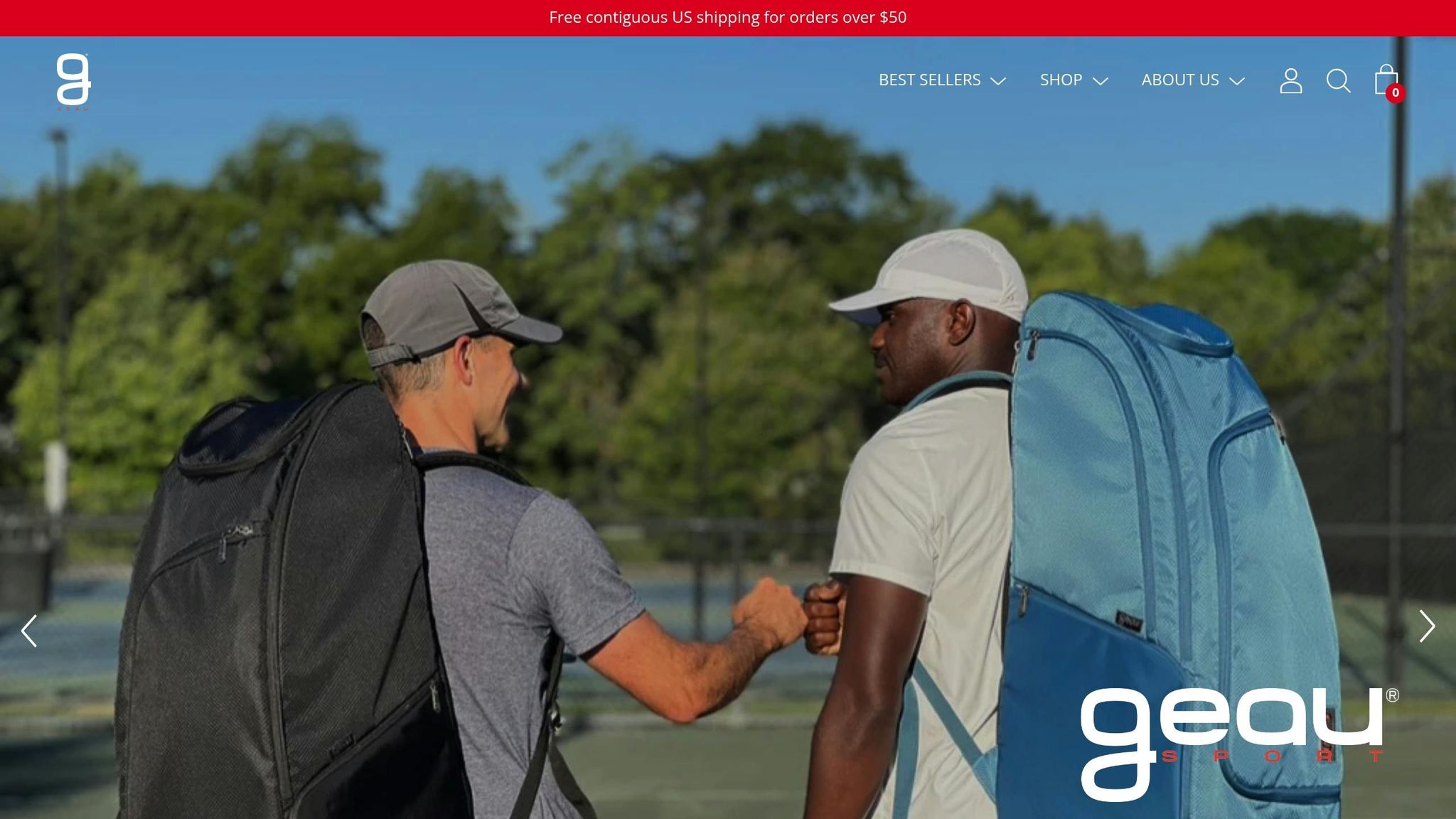
9. Geau Sport — Specialist Brand, USA
A design-led specialist rather than a performance equipment house, with a narrow range and a strong visual identity. For a retailer curating a premium wall, that narrowness is the appeal. For a club wanting 500 bags with its own crest, the range is brand-led and small-batch, so it is not a substitute for a contract manufacturer.
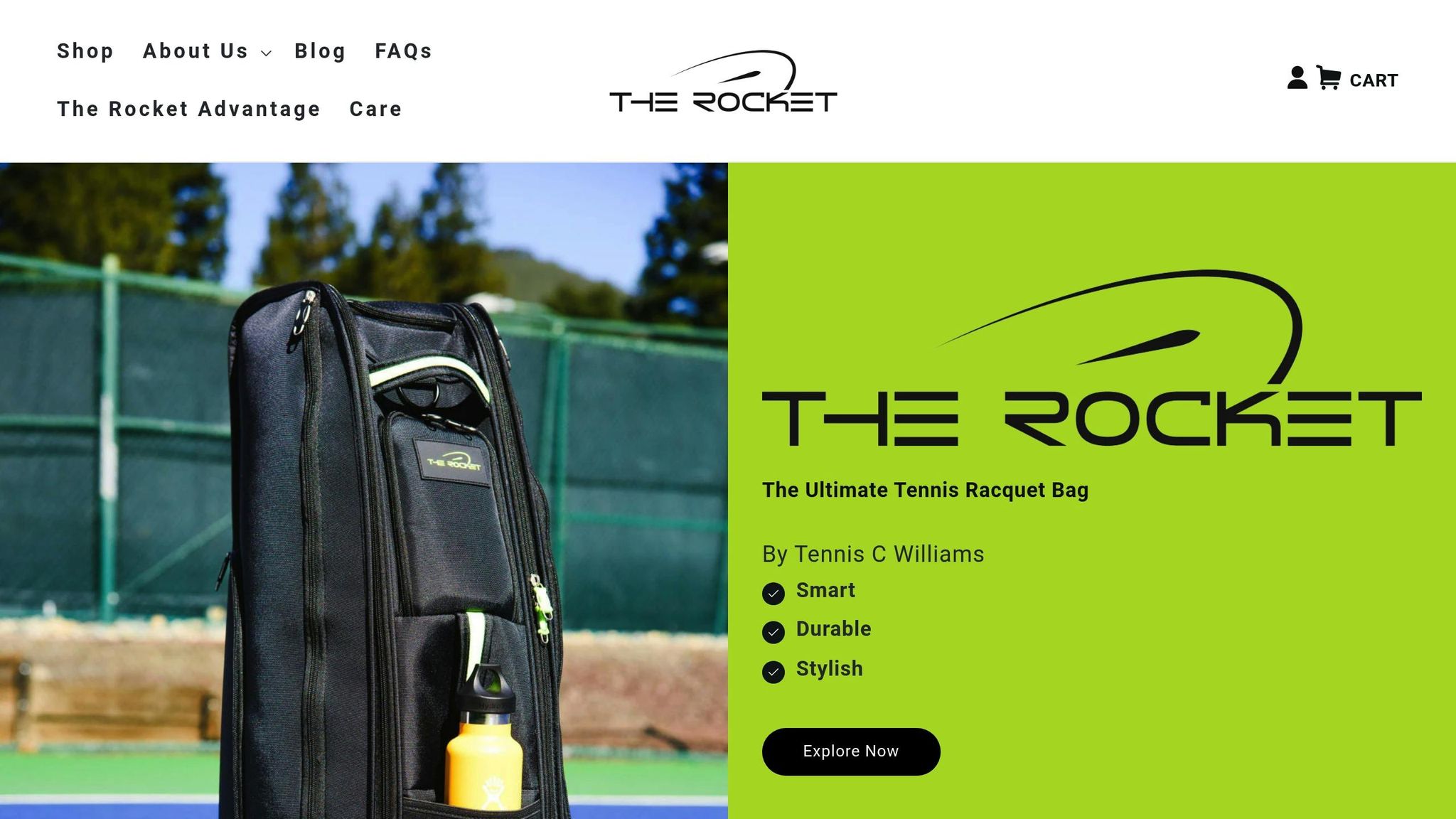
10. Tennis C Williams — Specialist Workshop, UK
A UK specialist known for the Rocket Bag, working at craft scale with a strong emphasis on construction and materials. It is the closest entry on this list to a bespoke maker, and it suits a club or retailer wanting a small, high-specification run. Volume programmes at 500-plus pieces per colourway sit outside its model, which is why it is listed as limited rather than as a manufacturing option.
What a Racket Bag Spec Sheet Must Contain
Whether the bag is built in Asia or bought from a brand, the same physical decisions determine whether it works. These are the three that are most often left vague on a first brief.
Compartment layout: 3, 6, 9 or 12 rackets
Capacity is a layout decision, not a number. A 6-racket bag is usually two compartments of three, a 9-racket bag three of three, and a 12-racket bag either four of three or two of six. The divider between compartments is the part that protects frames, so specify its padding separately from the outer wall padding.
Thermal lining, ventilation and shoe separation
Thermal lining slows heat transfer into the frame compartment and matters in hot climates. Ventilation matters only where shoes are carried: it needs a separate lining, a mesh or grommet vent and a sealed base. Combining the two in one compartment is the usual cause of a bag that smells of rubber and no longer holds tension.
Hardware: fence hooks, straps and base panels
Hardware is where a cheap bag reveals itself in season two. Specify the fence hook and its finish, the strap webbing width and attachment, the zip type and the base panel reinforcement. A reinforced base panel is the single cheapest upgrade to the service life of a bag that gets put down on wet courts.
Reference table: racket bag specification ranges
| Component | Standard range | Upgrade | What it changes |
|---|---|---|---|
| Shell fabric | 600D polyester | 420D for weight, 1680D for abrasion | Base-corner wear and bag weight |
| Frame padding | 5 mm EVA in the compartment faces | 10 mm EVA plus padded dividers | Frame-to-frame impact protection |
| Lining | 210D polyester | Soft-touch or brushed tricot | Frame scratch risk and perceived quality |
| Thermal layer | None | Foil or foam-backed lining | Heat transfer into the frame compartment |
| Shoe compartment | None | Separate ventilated section | Odour control and separation from kit |
| Hardware | Standard zip and webbing strap | Fence hook, metal hardware, reinforced base | Service life and court practicality |
| Branding | One-panel screen print | Multi-panel print, embroidery, woven label | Retail presentation and durability |
How to Shortlist and Qualify a Racket Bag Supplier
- Decide the supplier type first. If the bag must carry your crest, only an OEM/ODM manufacturer qualifies; brand owners are a stocking decision, not a production decision.
- Send a seven-line brief, not a picture. Racket capacity, shell denier, padding, thermal lining, shoe compartment, hardware list and branding method per panel.
- Ask for a construction sample, not a catalogue photo. A real sample takes 6–10 business days; anything faster is a stock bag with a logo.
- Test the sample against the load it will see. Load the frame compartments, hang the bag by its strap, and check the dividers under load rather than the outer walls.
- Put the inspection plan in the PO. AQL 2.5 major / 4.0 minor, inspected after packing, with the report releasing final payment.
- Build the calendar forward. 6–10 days sampling, 1–3 days proof approval, 35–50 days production, 18–28 days sea freight — a 65–95 day window.
Sourcing Note: JUNYUAN BAGS for Club and Retailer Programmes
Who builds the bag, to what specification, and on what terms
JUNYUAN BAGS has supplied OEM and ODM bags since 2014, with a founding team in the bag trade since 2004, working through affiliated and partner factories in Fujian. Racket bag programmes run at 500 pcs per style and colour, sample in 6–10 business days, produce in 35–50 days after written proof approval, and ship FOB Xiamen under a 12-month workmanship warranty, inspected to AQL 2.5 major / 4.0 minor. The buyer controls shell denier, foam thickness, compartment layout, thermal and shoe options, hardware finish and branding method, and receives a physical construction sample before the bulk run starts.
Start from the custom tennis bag manufacturing page, compare custom tennis bags against standard options, read the pickleball and racket bag manufacturing guide for the sister category, or see recycled-material options for golf and tennis bags. The broader OEM / ODM service page covers the other bag categories. Send specs to [email protected] or +86 17750020688.
Frequently Asked Questions About Tennis Racket Bag Sourcing
Q1. Can Wilson, Babolat or Head make custom tennis bags for my club?
No. Wilson, Babolat, Head, Yonex, Dunlop, adidas and Tecnifibre are brand owners: they design and sell finished racket bags under their own trademarks and do not run private-label bag production for third parties. Their club and team programmes cover rackets, strings and apparel, not third-party branded bags. If you need 500 bags carrying your club crest, you need a contract manufacturer with an OEM/ODM line, not a performance brand.
Q2. What is the difference between a tennis brand and a tennis racket bag manufacturer?
A brand owner sells a finished product under its own name and controls design, marketing and price; a manufacturer sells production capacity and builds to somebody else’s specification and label. The practical difference is who owns the tooling and the artwork: at a brand owner the design is fixed and yours cannot change it, at an OEM/ODM factory the design, materials, hardware and branding are yours, provided you meet the minimum order quantity, which is typically 500 pcs per style and colour.
Q3. How do I check whether a supplier is a real manufacturer or a trading company?
Ask four questions and check the answers against each other: which factory will physically run the order, what is the sampling lead time, can they show the same construction on a previous customer’s bag with the branding removed, and who signs the inspection report. A trading company answers in generalities and quotes the fastest possible lead time; a manufacturer names the process, quotes 6–10 business days for sampling, and will show a construction sample rather than a catalogue photo.
Q4. Which supplier type should a club or academy choose for team bags?
A contract manufacturer, unless the club wants off-the-shelf bags with no club branding. For a club crest, a specific racket capacity and a matching backpack or duffel, only an OEM/ODM factory can deliver, because the brand owners do not accept third-party artwork on their bags. Retailers buying for resale follow the same rule: a private label needs a manufacturer, a stocked national brand needs a distributor.
Q5. How many rackets should a club team bag hold?
Match the capacity to the job: a 3-racket bag suits a single player’s match kit, a 6-racket bag is the standard club player bag, a 9-racket bag is the practical team bag for coaches carrying frames for several players, and a 12-racket bag is a tournament or pro-stock format. For club orders the 6 and 9 racket formats cover the majority of demand, and the 12-racket format is usually a small add-on quantity.
Q6. What is a thermal lined racket compartment and is it necessary?
It is a foil-backed or foam-backed lining that slows heat transfer into the compartment where the frames sit. It matters where bags spend time in a hot car or a sun-exposed court bag drop, because sustained heat degrades string tension and eventually the frame’s resin. For a club in a hot climate it is worth specifying; for a temperate-climate retail line it is a premium feature rather than a requirement.
Q7. Do custom racket bags need a ventilated shoe compartment?
Only if the bag is designed to carry shoes. A ventilated shoe compartment needs a separate lining, a mesh or grommet vent panel and a sealed base, which adds cost and construction complexity. For club team bags it is one of the most requested features because players travel with court shoes; for a minimal 3-racket bag it usually is not worth the added panel work.
Q8. What is a fence hook and which bags need one?
A fence hook is a metal or moulded hook on the bag that lets a player hang it on a court fence instead of putting it on the ground. It is standard on tournament and team bags and largely absent from entry-level retail bags. Specify it when the bag will be used on outdoor courts, and specify the hardware finish at the same time, because a hook that rusts in a season is worse than no hook.
Q9. What denier nylon is used for tennis racket bag shells?
Most racket bag shells sit between 420D and 1680D polyester or nylon, with 600D as the volume standard and 1680D used for premium and heavy-duty bags. Below 420D the shell abrades through at the base corners; above 1680D the bag becomes stiff and heavy. The lining is usually 210D polyester, and the padding that protects frames is 5–10 mm EVA or PE foam.
Q10. How should a racket bag be padded to protect frames?
Pad the frame compartment, not the whole bag. A 5–10 mm EVA or PE foam layer on the two faces of each racket compartment, plus a reinforced base panel and a padded divider between compartments, protects frames from the impacts that actually damage them. Padding the outer walls without padding the dividers leaves frames knocking against each other, which is the most common construction mistake on a first sample.
Q11. Can a racket bag programme include matching backpack and duffel styles?
Yes, and it is the usual way a club order is built: one fabric, one trim and one branding system across a racket bag, a backpack and a duffel, with each style meeting its own 500-piece minimum per colourway. Running three styles in one colourway keeps the trim and label purchasing efficient and gives the club a coherent look across travel, training and match use.
Q12. Can pickleball and padel bags be produced on the same racket bag line?
Yes. Pickleball and padel bags share the racket bag construction logic — padded compartments, thermal lining options, ventilated shoe sections and the same shell fabrics — so a factory that builds tennis racket bags can normally build them on the same line. The differences are paddle dimensions, pocket geometry and branding, not the manufacturing process.
Q13. What should a club order specify beyond logo and colour?
Seven lines decide the bag: racket capacity and compartment layout, shell fabric denier, padding thickness and placement, thermal lining yes or no, shoe compartment yes or no, hardware list including fence hook and strap type, and the branding method per panel. A brief with those seven lines answered is quotable and comparable between suppliers; a brief with only logo and colour is not.
Q14. How are club and retailer programme orders scheduled across a season?
Work backwards from the season start: allow 35–50 days of bulk production after written proof approval, 6–10 business days of sampling before that, 1–3 days for physical proof approval, and 18–28 days of sea freight from Xiamen to a US West Coast port. That is a 65–95 day planning window, so a spring season order should be specified in the preceding autumn, and a reorder inside the same season should be planned on air freight.
Sources and further reading
Figures and standards in this guide are cross-checked against the primary sources below.
· International Tennis Federation — Rules and Regulations
· International Tennis Federation — Rackets and Strings technical programme
· U.S. Customs and Border Protection — Basic Importing and Exporting
· eCFR — 16 CFR Part 260, Guides for the Use of Environmental Marketing Claims
Racket and string dimensions referenced above follow the ITF technical regulations. Manufacturing parameters reflect JUNYUAN BAGS’ own quotation terms as of 2026; brand-owned products are described by their published positioning and are not manufactured by JUNYUAN BAGS.