
Pickleball has become the fastest-growing sport in North America, and the equipment market — especially bags — is following suit. If you are a brand owner, retailer, or distributor looking to enter this space, understanding pickleball bag manufacturing is the single most important step you can take. From material selection and compartment design to OEM partnerships and compliance certifications, this comprehensive guide covers every aspect of producing high-quality pickleball and racket bags at scale.
At JUNYUAN, we have manufactured pickleball bags, padel bags, and racket bags for brands across North America, Europe, and Asia-Pacific. This guide draws on real production experience — not theory — to give you an actionable blueprint for launching or scaling your pickleball bag product line.
Quick Answer: JUNYUAN Bags is a BSCI & ISO 9001 certified pickleball and racket bag manufacturer led by a founder with bag industry experience dating from 2004, producing 200,000 per month (SGS-verified)+ bags annually. We offer custom divider systems, thermal-lined compartments, and modular designs for the fastest-growing sport in the US. Our wholesale services start from MOQ 100 units with 7-day sample turnaround and 25-35 day mass production lead time — serving 200+ brands in 100+ countries.
Why Pickleball & Racket Bags Are the Fastest-Growing Sports Bag Category
The numbers tell the story. According to the Sports & Fitness Industry Association (SFIA), pickleball participation in the United States reached approximately 36.5 million players in 2024 — a growth rate of over 223% in just three years. The International Pickleball Federation now counts members across 70+ countries, and the sport is being considered for inclusion in future Olympic programs. This explosive participation growth directly translates into equipment demand.
Every pickleball player needs a way to carry their paddle, balls, shoes, water bottle, and personal items. Unlike tennis, where players often use multi-purpose sports bags, pickleball players increasingly prefer purpose-built bags with dedicated paddle compartments, thermal-lined sections for balls, and ventilated shoe pockets. This specialization creates a significant opportunity for brands that invest in pickleball-specific bag designs.
The global pickleball equipment market was valued at approximately $2.1 billion in 2024 and is projected to grow at a CAGR of 8-12% through 2030. Bags and accessories represent roughly 15-20% of this market — a $300-400 million segment that is still underpenetrated compared to more established sports. For B2B buyers, this means first-mover advantage is real: brands that establish themselves now in pickleball bag manufacturing will benefit from years of market leadership before the category reaches maturity.
The growth is not limited to the US. Canada, Australia, India, and several European nations are experiencing similar participation surges. Asian markets, particularly China and Southeast Asia, are emerging as major manufacturing hubs and consumption markets simultaneously. This global expansion means pickleball bag brands need manufacturing partners who can serve multiple markets with consistent quality and compliance.
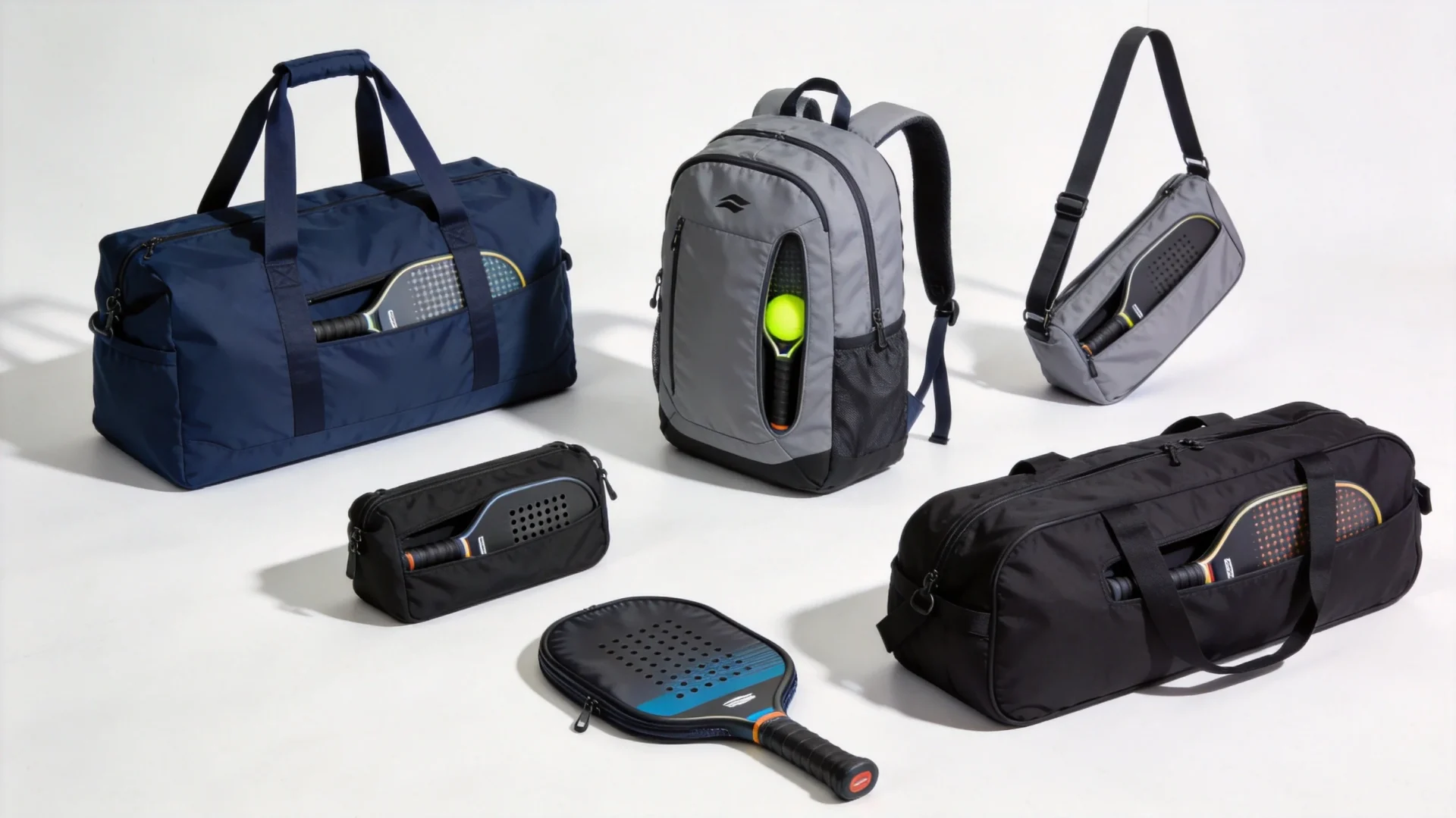
Types of Pickleball & Racket Bags: Totes, Backpacks, Sling Bags, Duffel Bags, Paddle Covers
Understanding the product categories within pickleball bag manufacturing is essential for building a complete product line. Each bag type serves different customer segments and use cases, and successful brands typically offer multiple styles to capture the broadest market.
Pickleball Tote Bags are the most popular entry-level style. They feature an open-top or zippered main compartment with dedicated paddle sleeves (usually holding 2-4 paddles). Totes appeal to casual players who want simple, stylish carry. They are the easiest bag to manufacture, making them ideal for brands entering the market with lower MOQ requirements. Price points typically range from $25-60 retail.
Pickleball Backpacks are the premium category, offering hands-free carry with ergonomic shoulder straps, back padding, and the largest storage capacity. High-end models include separate paddle compartments (holding 4-6 paddles), insulated ball pockets, ventilated shoe compartments, laptop sleeves, and organizational pockets for accessories. Backpacks command the highest margins ($60-150 retail) and require the most complex manufacturing processes, including multi-panel cutting, foam padding insertion, and reinforced strap attachment.
Pickleball Sling Bags occupy the sweet spot between totes and backpacks. They feature a single cross-body strap, compact form factor, and enough capacity for 2-3 paddles plus essentials. Sling bags are trending strongly among younger players and are the fastest-growing subcategory in the pickleball bag segment. Their compact design means less material cost while still commanding $35-70 retail prices.
Pickleball Duffel Bags are designed for tournament play and team use, offering the largest capacity with barrel-shaped main compartments. They typically hold 4-6 paddles plus multiple change-of-activity items, shoes, towels, and hydration systems. Duffels are popular for team branding programs and club partnerships. Some models convert between shoulder carry and backpack carry for versatility.
Paddle Covers and Cases are the simplest product in the pickleball bag category but represent high-volume, repeat-purchase items. Individual paddle covers protect during transport and storage, while multi-paddle cases serve tournament players. They are excellent entry products for brands testing the market before committing to larger bag SKUs.
Materials & Fabrics for Racket Bag Manufacturing
Material selection is arguably the most critical decision in pickleball bag manufacturing. The right materials determine durability, weather resistance, weight, aesthetics, and ultimately customer satisfaction. Here is a detailed breakdown of the materials used in professional pickleball bag production.
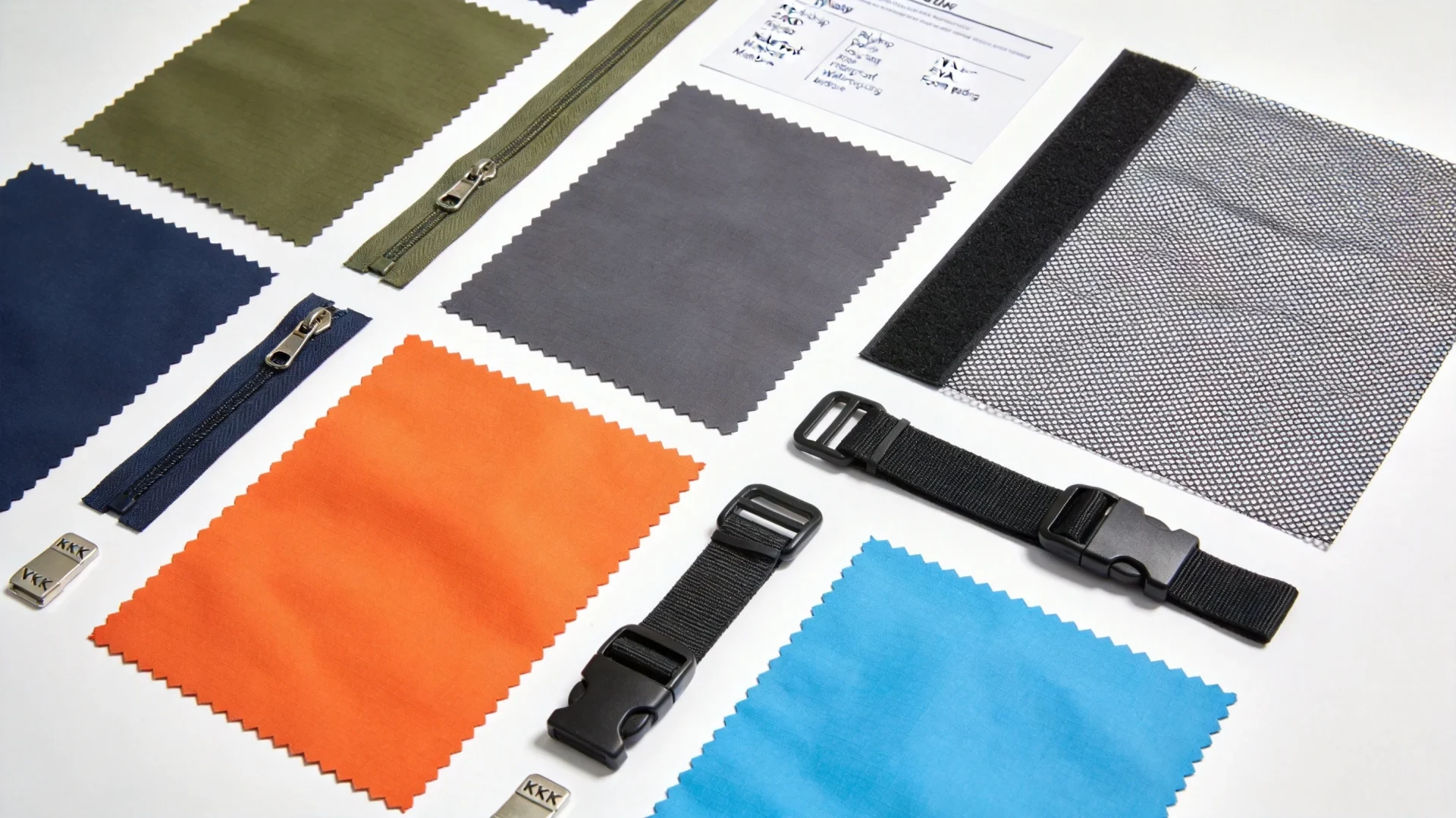
Nylon (600D, 840D, 1000D) is the workhorse fabric for premium pickleball bags. 600D nylon offers an excellent balance of durability and weight, making it the most popular choice for mid-range bags. 840D and 1000D nylon provide superior abrasion resistance for premium and tournament-grade bags. Nylon is valued for its high tensile strength, resistance to mildew, and ability to hold vibrant dye-sublimation prints. However, it is more expensive than polyester and requires careful seam sealing for waterproof performance.
Polyester (300D, 420D, 600D) is the most cost-effective option and dominates the value segment. Polyester offers good abrasion resistance, excellent color fastness under UV exposure, and lower water absorption than nylon. It is the preferred material for sublimation printing due to its superior ink bonding characteristics. Recycled polyester (rPET) is increasingly available, offering brands a sustainability story without significant cost premium.
TPU (Thermoplastic Polyurethane) laminates and coatings are used for waterproof pickleball bags. TPU provides superior waterproofing compared to traditional PVC coatings while remaining flexible in cold temperatures and free of harmful plasticizers. TPU-coated fabrics with welded seams can achieve IPX4 to IPX6 water resistance ratings, a key selling point for outdoor pickleball players. See our detailed guide on custom waterproof bags for golf and pickleball for more on waterproof construction techniques.
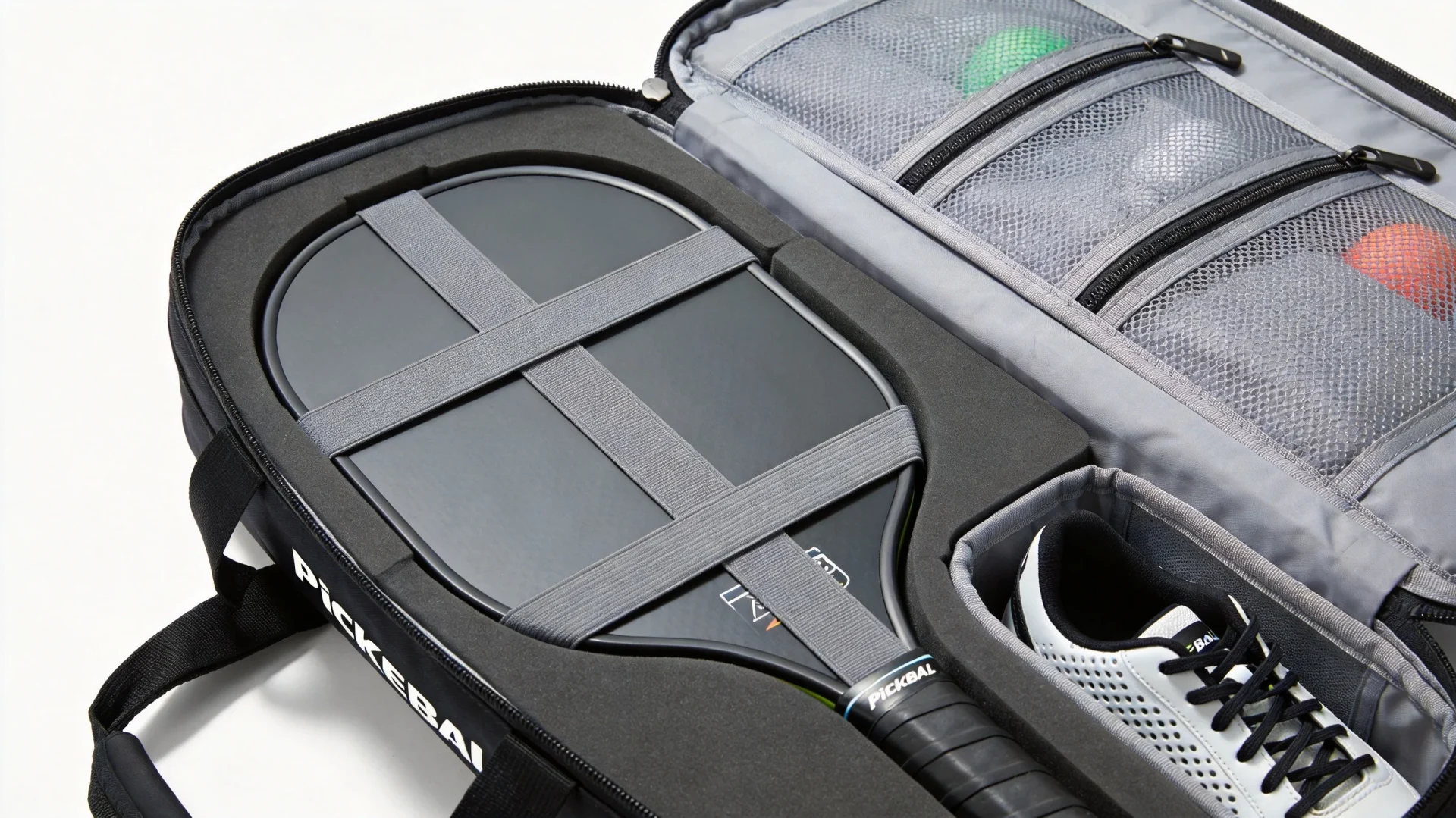
EVA (Ethylene-Vinyl Acetate) Foam is the standard padding material for paddle protection. Available in various densities (25-45 kg/m³), EVA foam is die-cut into custom shapes for paddle compartments, providing shock absorption and preventing paddle-to-paddle contact damage. Semi-rigid EVA molded shells are used for structured paddle cases and premium bag front panels.
Mesh Panels serve multiple functions in pickleball bag design. Breathable mesh in shoe compartments prevents odor buildup. Mesh interior pockets provide visibility for small accessories. Heavy-duty mesh in ventilation zones (airflow systems for sports bags) extends bag life by reducing moisture accumulation. The mesh weight and denier should be matched to its function — fine mesh for organizer pockets, coarse mesh for ventilation.
OEM vs ODM for Pickleball Bag Manufacturing
Choosing between OEM (Original Equipment Manufacturing) and ODM (Original Design Manufacturing) is a strategic decision that affects time-to-market, cost structure, and brand differentiation. Understanding both models is essential for pickleball bag brands at every stage.
OEM (Original Equipment Manufacturing) means you provide the complete design — tech packs, material specifications, CAD drawings, and branding assets — and the manufacturer produces exactly to your specifications. OEM is ideal for established brands with existing designs, pickleball equipment companies expanding into bags, or brands with unique design patents. You retain full IP control, but you invest more upfront in design and sampling. MOQs for OEM typically start at 300-500 pieces per SKU per color.
ODM (Original Design Manufacturing) means the manufacturer provides ready-made designs that you customize with your branding, colors, and minor modifications. ODM dramatically reduces development time (from 60-90 days to 30-45 days) and lowers minimum order quantities (sometimes to 100-200 pieces). It is ideal for startups, Kickstarter campaigns (see our pickleball bag guide for Kickstarter launches), and brands testing new markets. The trade-off is less differentiation — other brands may carry similar base designs.
Many successful pickleball bag brands start with ODM to validate their market and then transition to OEM as they scale and develop proprietary designs. Some manufacturers, including JUNYUAN, offer a hybrid model: semi-custom designs where the base structure is shared but compartment layouts, materials, colors, and branding are fully customizable. For a deeper comparison, read our detailed guide on OEM vs. ODM supplier models.
The Complete Pickleball Bag Manufacturing Process
Understanding the manufacturing process helps you communicate effectively with your factory, set realistic timelines, and identify potential quality issues before they become expensive problems. Here is the complete pickleball bag manufacturing workflow from concept to container.
Step 1: Design & Development (2-4 weeks). The process begins with design finalization. Whether starting from your tech pack or a manufacturer’s base design, this stage involves confirming dimensions, compartment layouts, material selections, colorways, and branding placement. CAD patterns are created, and a bill of materials (BOM) is generated. For OEM projects, this stage includes creating die-cut templates for EVA padding and confirming hardware specifications.
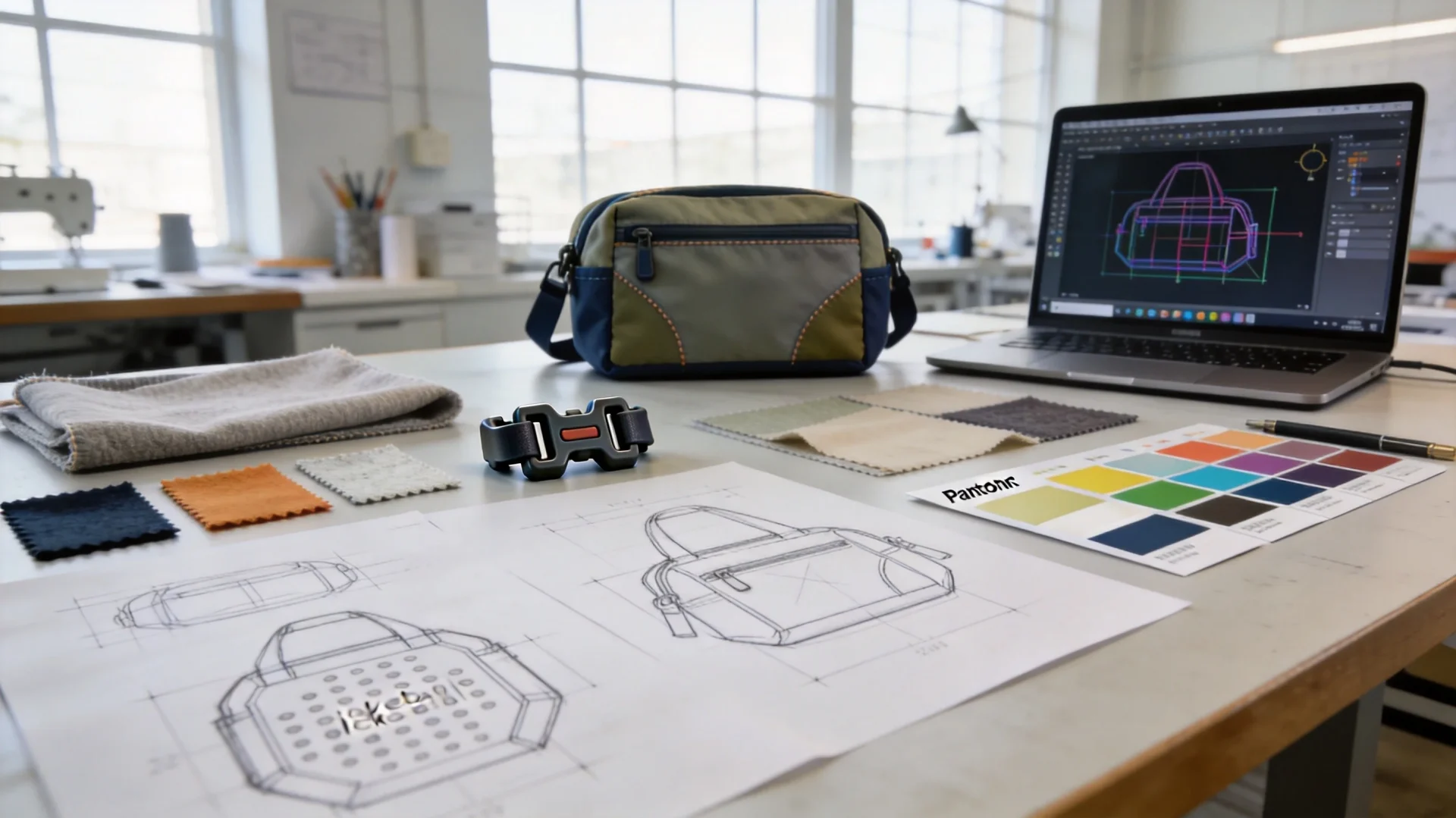
Step 2: Sampling (2-3 weeks). A pre-production sample is made to validate the design in physical form. This sample uses production-intent materials and construction methods. Brands review the sample for fit, function, aesthetics, and quality. Revisions are common — most projects require 1-3 sample rounds before approval. Each sample round adds 7-14 days to the timeline.
Step 3: Pre-Production (1-2 weeks). Once the final sample is approved, the factory prepares for mass production. This includes ordering raw materials in bulk, setting up cutting dies for foam and leather components, programming embroidery machines for logos, preparing sublimation print files, and conducting incoming material inspection. A pre-production meeting aligns the entire production team on quality standards.
Step 4: Production (3-5 weeks). Mass production follows a defined sequence: fabric cutting → panel printing/embroidery → sewing assembly → foam padding insertion → hardware attachment (zippers, buckles, D-rings) → final assembly → in-line quality checks. A typical order of 1,000-3,000 pickleball bags takes 3-5 weeks depending on complexity. Protective padding materials are installed during the assembly phase.
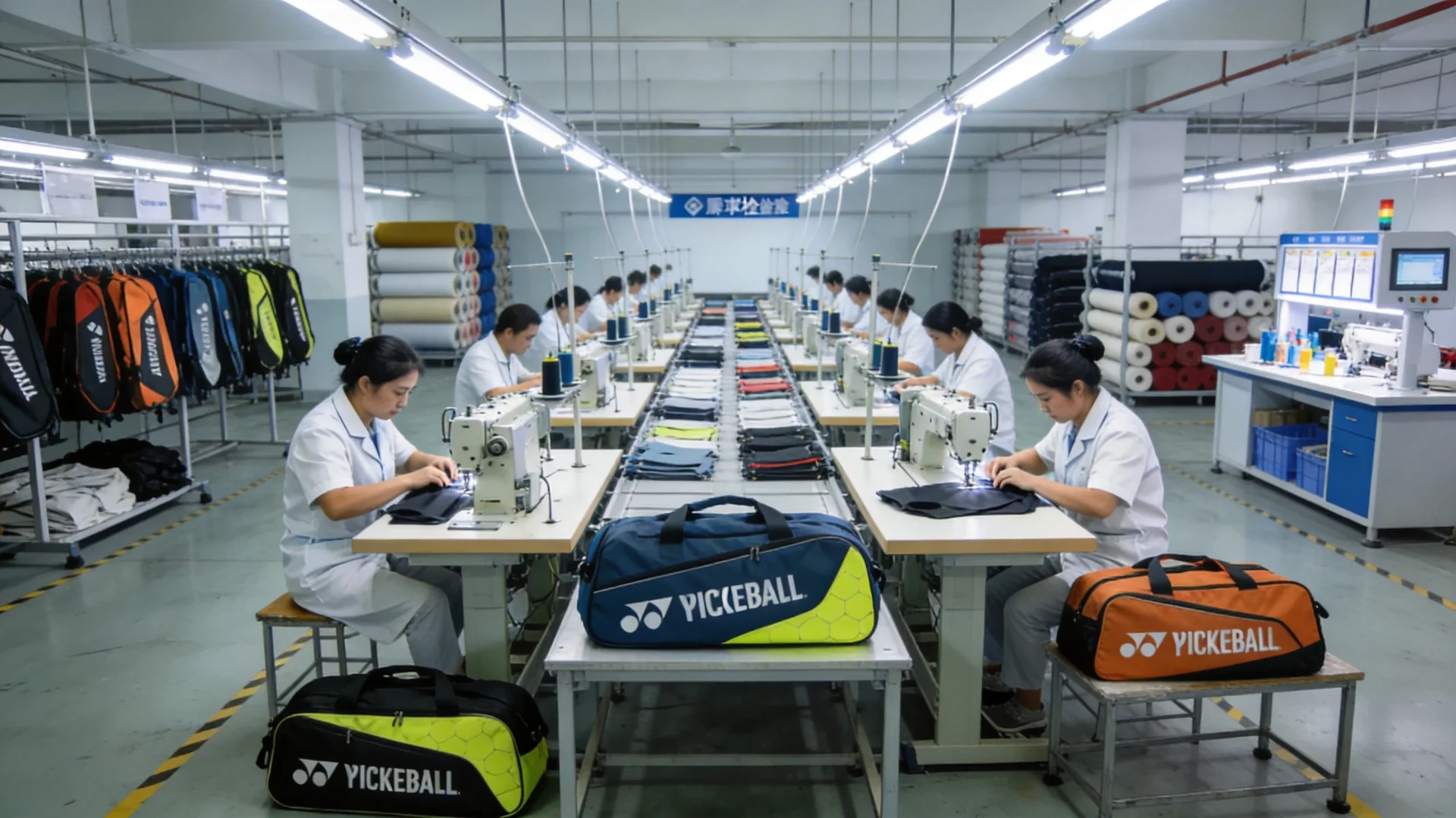
Step 5: Quality Control & Shipping (1-2 weeks). Final inspection follows AQL (Acceptable Quality Level) standards. Each bag is checked for stitching quality, zipper function, hardware integrity, printing accuracy, and dimensional accuracy. Approved bags are packed per client specifications and shipped via sea freight (30-45 days to US/EU), air freight (5-8 days), or express courier (3-5 days).
Design & Customization Options for Pickleball Bags
Design differentiation is what separates a $25 commodity bag from a $120 premium pickleball bag. The following customization options are available in professional pickleball bag manufacturing, each adding measurable value to your product line.
Paddle Compartment Configuration: The most important design element. Options include padded sleeves with elastic top closure (budget), molded EVA cradle compartments (mid-range), and adjustable hook-and-loop divider systems (premium). Compartment capacity ranges from 1-2 paddles for slings to 6+ paddles for tournament duffels. The padding thickness and foam density should be matched to the bag’s price positioning.
Thermal-Lined Ball Compartments: Pickleball performance is affected by temperature. Premium bags include insulated compartments lined with reflective thermal material (similar to lunch bag technology) that maintains ball temperature. This feature is a strong differentiator and resonates with competitive players who understand ball pressure dynamics.
Ventilated Shoe Pockets: Separate, externally accessible compartments with mesh ventilation panels prevent shoe odor from transferring to other bag contents. This is a standard feature in backpacks and duffels priced above $60. Proper ventilation system design includes grommet drainage and antimicrobial mesh treatments.
Adjustable Dividers: Premium bags offer removable or adjustable divider panels within the main compartment, allowing users to customize the internal layout. This is especially valuable for multi-sport athletes who need to carry pickleball paddles alongside other equipment.
Accessory Organization: Interior organizer panels with zippered mesh pockets, pen/phone holders, key clips, and water bottle pockets add functional value. Exterior features include quick-access phone pockets, carabiner clips for towels, bungee compression systems, and reflective accents for early-morning or evening play visibility.
Specialty Features: Additional options include USB charging port pass-throughs, built-in scorekeepers, ball dispensing systems, integrated rain covers, and luggage pass-through sleeves for travel. Each feature adds $2-8 to manufacturing cost but can justify $15-30 in retail price premium.
Quality Control & Testing Standards for Pickleball Bags
Quality control in pickleball bag manufacturing goes far beyond visual inspection. Professional factories maintain dedicated QC labs and follow standardized testing protocols to ensure bags perform under real-world conditions. Understanding these standards helps you specify requirements in your purchase orders and hold manufacturers accountable.
Paddle Protection Testing: The primary function of a pickleball bag is protecting paddles. Testing involves drop tests (bag dropped from 1 meter onto concrete), compression tests (simulating stacking in overhead bins), and vibration tests (simulating transport in vehicles). Paddles inside the bag are inspected for any damage after testing. Well-designed EVA compartments should prevent any visible paddle damage through these tests.
Zipper Endurance Testing: Zippers are the most common failure point in any bag. Testing includes 1,000+ cycle open/close tests on a zipper fatigue machine, lateral pull strength testing (minimum 80N for main compartment zippers), and slider retention testing. YKK zippers are the industry standard for premium pickleball bags, while SBS or generic zippers are used in value segments.
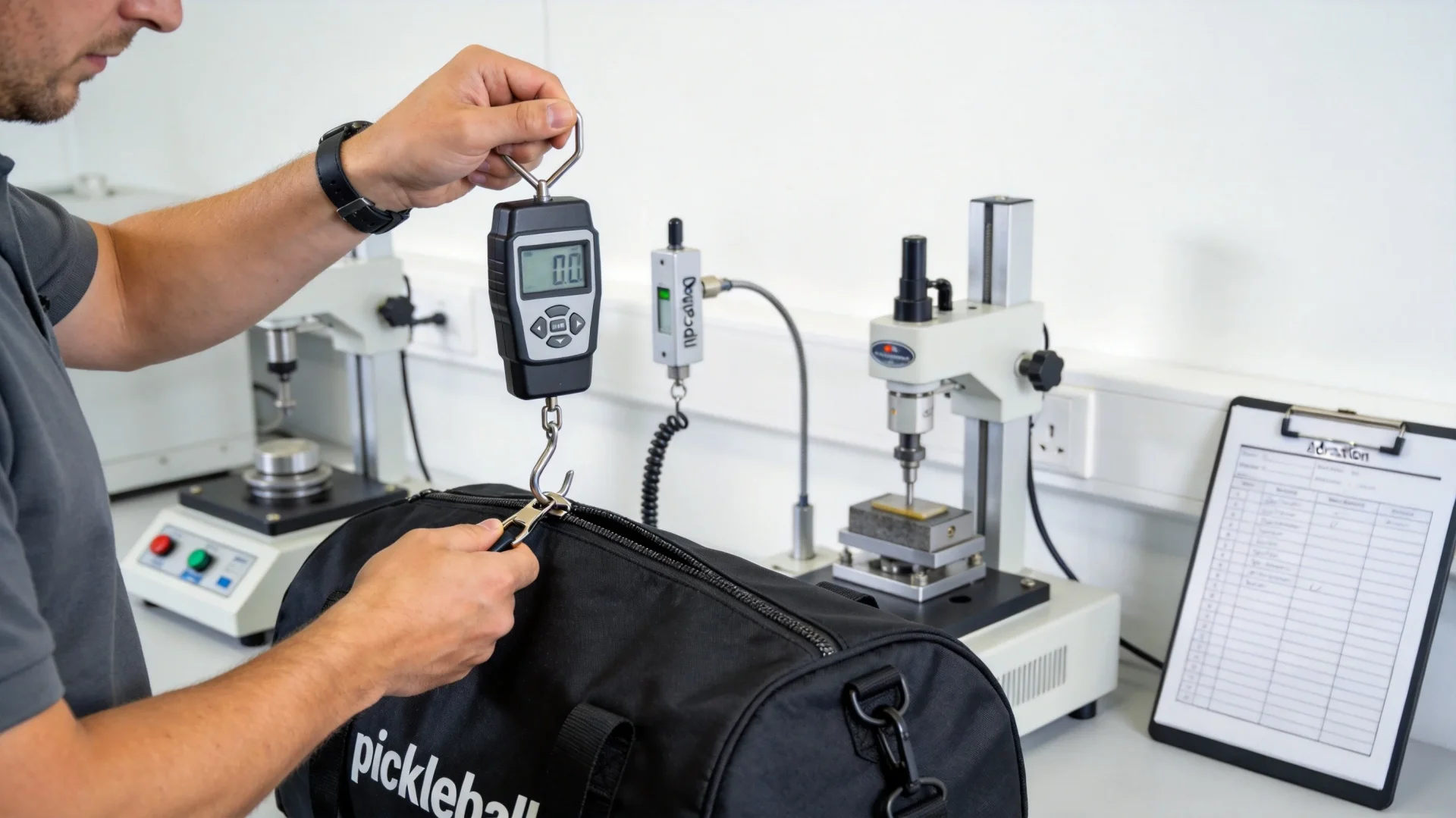
Load Capacity Testing: Shoulder straps and handles are tested with static loads (1.5x rated capacity held for 24 hours) and dynamic loads (simulating walking motion with weighted bags). Premium backpack straps should handle 15kg static load without deformation. Strap attachment points are reinforced with bartack stitching and tested separately for pull-out strength.
Abrasion Resistance Testing: Fabric panels are tested using Martindale or Taber abrasion testers to simulate wear from repeated use. Minimum standards for pickleball bag fabrics: 600D nylon should withstand 25,000+ cycles; 600D polyester should withstand 20,000+ cycles. Bottom panels, which see the most contact with court surfaces, should use heavier denier or reinforced panels.
Colorfastness Testing: Fabrics and prints are tested for resistance to UV fading (xenon arc testing), crocking (color transfer when rubbed), and washing. This is particularly important for sublimation-printed bags, where color consistency across production runs must be maintained. AATCC and ISO standards define the test methods and rating scales.
Seam Strength Testing: Stitched seams are tested for tensile strength to ensure they do not split under load. Minimum seam strength should be 70% of the fabric’s inherent tensile strength. Bartack reinforcement at stress points (strap attachment, zipper ends, handle bases) is verified through destructive testing of sample units from each production lot.
Branding & Packaging for Pickleball Bag Lines
Branding transforms a functional product into a brand asset. In pickleball bag manufacturing, several branding methods are available, each with different cost structures, visual effects, and minimum order implications.
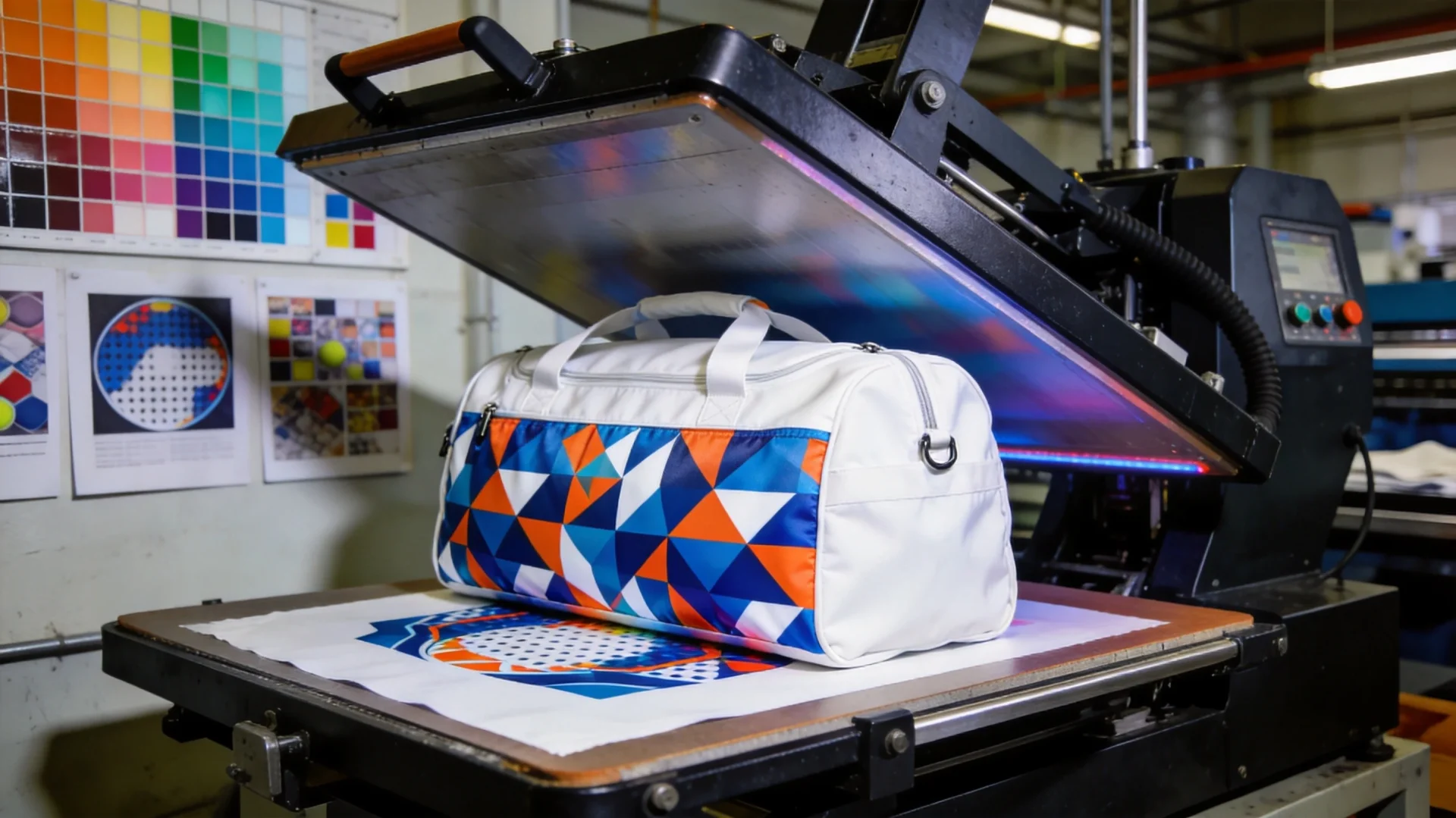
Sublimation Printing: The dominant decoration method for pickleball bags, sublimation allows all-over printing with unlimited colors, photographic detail, and no additional texture. The process transfers dye into polyester fabric using heat and pressure, creating permanent, wash-resistant graphics. Sublimation is ideal for bold geometric patterns, gradient designs, and full-coverage branding. Setup costs are relatively low (digital file only), making it economical even for small runs of 100+ units.
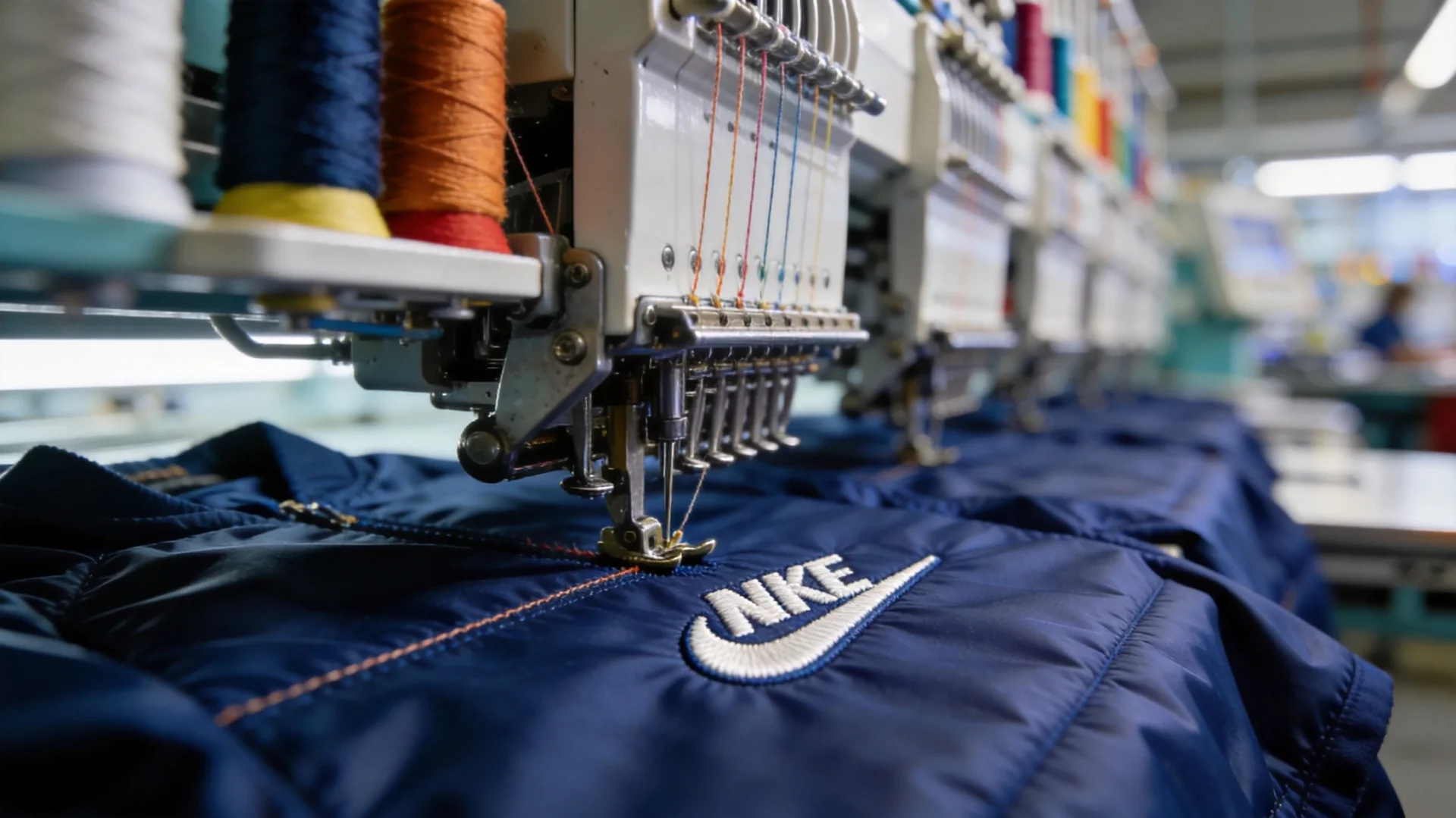
Embroidery: The premium branding option, embroidery adds a textured, high-end feel that sublimation cannot replicate. Multi-head computerized embroidery machines can reproduce logos with fine detail in up to 15 thread colors simultaneously. Embroidery works best on nylon bags and is commonly used on backpack front panels, zipper pulls, and interior labels. Cost is higher than printing — expect $0.50-3.00 per piece depending on stitch count.
Silicone Labels & Patches: Heat-applied or sewn silicone patches provide a modern, textured branding element. They can be produced in Pantone-matched colors with 3D raised effects. Silicone patches are waterproof, UV-resistant, and add a premium tactile quality that differentiates your bags in retail environments.
Custom Hardware: Branded zipper pulls, metal logo plates, custom buckles with embossed logos, and branded cord ends add subtle premium touches. Custom hardware requires mold investment ($200-800 per design) but creates brand recognition at the detail level that serious consumers notice.
Custom Paddle Clips & Accessories: Some brands add branded paddle clips, ball markers, or pickleball-themed zipper charms as value-added accessories. These items are low-cost to produce in bulk and significantly enhance the unboxing experience.
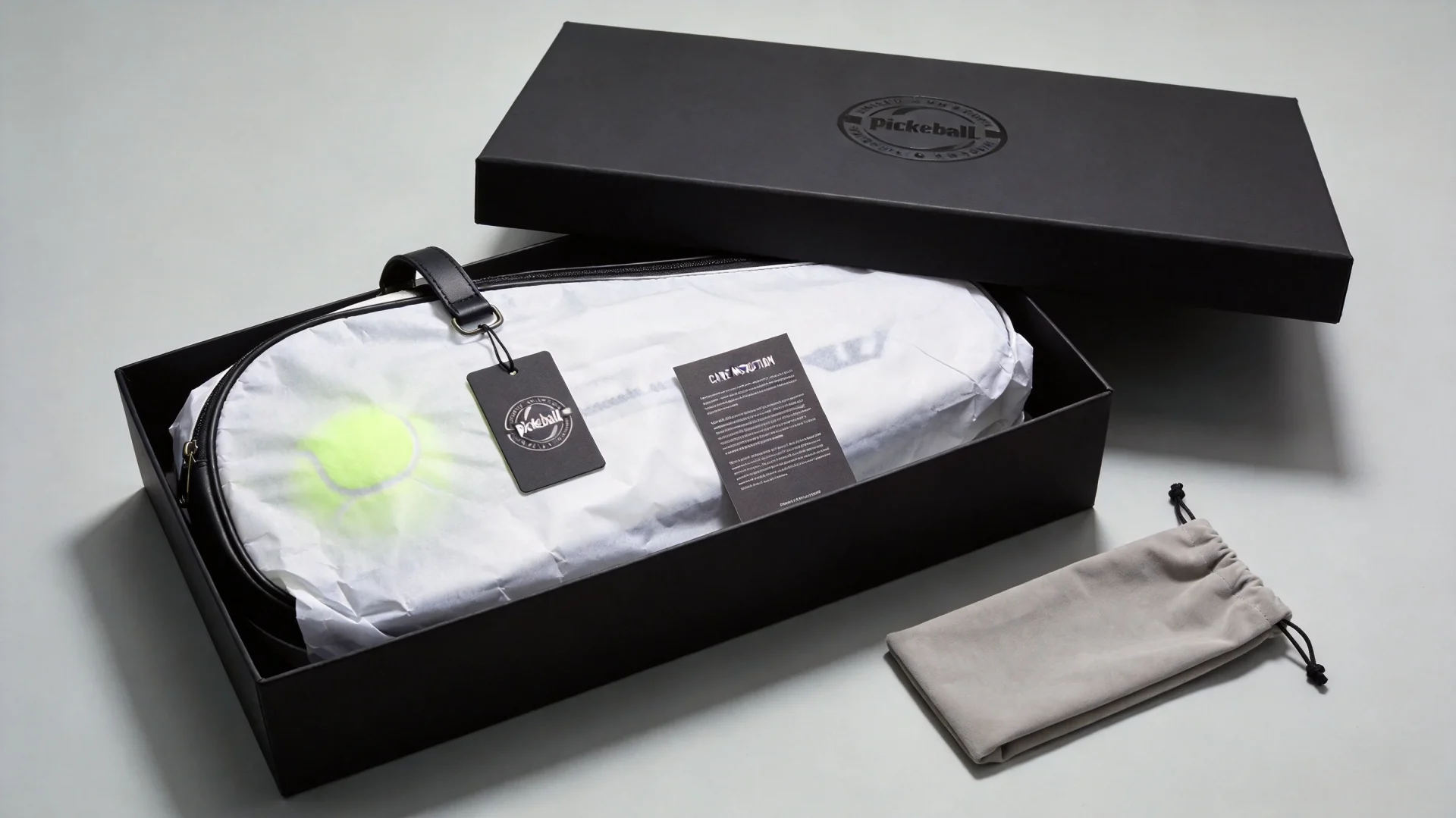
Packaging: Premium pickleball bags deserve premium packaging. Options include branded dust bags (cotton or non-woven), custom hang tags with product information, printed tissue paper, branded boxing for e-commerce fulfillment, and QR code labels linking to care instructions or video content. Sustainable packaging options (recycled cardboard, soy-based inks, minimal plastic) are increasingly important for eco-conscious brands.
Compliance & Certifications for Pickleball Bag Manufacturing
Compliance requirements vary by market but are non-negotiable for serious brands. Understanding certification requirements before starting production prevents costly delays and potential product recalls.
ISO 9001 (Quality Management): The baseline certification for any reputable bag manufacturer. ISO 9001 certifies that the factory maintains documented quality management processes, conducts regular internal audits, and follows corrective action procedures. Always verify your manufacturer’s ISO certificate is current and issued by an accredited body.
BSCI (Business Social Compliance Initiative): Required by most European brands and many North American retailers. BSCI audits assess fair wages, working hours, child labor prevention, and workplace safety. The audit process takes 1-2 days and results are valid for 2 years. Factories rated A or B are preferred by major retailers.
California Proposition 65: Mandatory for any product sold in California (which includes virtually all e-commerce brands). Prop 65 testing ensures bags do not contain chemicals above safe harbor levels, particularly lead, phthalates, and certain azo dyes. Testing costs $300-800 per colorway and should be conducted on production materials, not just sample materials.
OEKO-TEX Standard 100: An internationally recognized certification that tests textiles for harmful substances. While not legally required, OEKO-TEX certification is a strong marketing differentiator, especially for brands targeting health-conscious pickleball players. The certification covers all components including fabric, thread, foam padding, and even zipper coatings.
CPSIA (Consumer Product Safety Improvement Act): US federal law requiring third-party testing for children’s products. If your pickleball bags are marketed to or could reasonably be used by children under 12, CPSIA compliance is mandatory. This includes lead content limits (100ppm substrate, 90ppm paint/coating) and phthalates restrictions.
Sedex/SMETA Audits: An alternative to BSCI, widely accepted by UK, Australian, and Japanese buyers. Sedex is a supplier ethics database, while SMETA (Sedex Members Ethical Trade Audit) is the associated audit methodology. Both serve the same purpose as BSCI in demonstrating social compliance.
For pickleball bags that claim specific performance features (waterproof, impact protection), supporting test reports from accredited laboratories (SGS, TÜV, Intertek, Bureau Veritas) add credibility and protect against liability claims.
Sustainability in Racket Bag Manufacturing
Sustainability is no longer optional in sports bag manufacturing. Major retail platforms, conscious consumers, and regulatory bodies are all pushing the industry toward more responsible production. Pickleball bag brands that embrace sustainability gain both market access and brand equity.
Recycled Fabrics: Recycled polyester (rPET) made from post-consumer plastic bottles is now widely available and cost-competitive with virgin polyester — typically within 5-15% premium. Recycled nylon (ECONYL® or equivalent) is more expensive but offers premium positioning. Many leading pickleball bag brands have already launched rPET product lines, and retailer requirements for recycled content are increasing annually.
Eco-Friendly Coatings: Traditional PVC coatings are being replaced by water-based PU coatings, TPU laminates, and bio-based alternatives. These coatings provide equivalent waterproofing performance without the environmental and health concerns associated with PVC plasticizers. Switching to eco-friendly coatings typically adds 8-12% to fabric cost.
Sustainable Packaging: Replacing polybags with recycled paper wraps, using soy-based or water-based inks for printed packaging, and eliminating unnecessary packaging components are straightforward steps that resonate with environmentally conscious consumers. Many brands now include a “sustainability story” card in packaging explaining the materials used.
Waste Reduction: Lean manufacturing practices reduce fabric waste through optimized marker cutting (nesting software can improve fabric utilization from 75% to 85%+). Scraps are recycled where possible. Water recycling systems in dyeing and coating processes reduce water consumption by 40-60%.
Certifications: GRS (Global Recycled Standard) certification verifies recycled content claims. bluesign® certification covers the entire textile production chain for environmental and safety compliance. These certifications require annual audits but provide verifiable sustainability claims for marketing.
Quick Specification Reference
| Parameter | Details |
|---|---|
| Material Options | 600D polyester, nylon, neoprene, EVA molded shell, CORDURA, thermal-lined fabric |
| Bag Types | Totes, backpacks, sling bags, duffel bags, single/double/triple racket bags, team bags |
| MOQ | 100 units (test order), 300-500 units (mass production) |
| Sample Lead Time | 7 days |
| Mass Production Lead Time | 25-35 days |
| Certifications Available | ISO 9001, BSCI, REACH, CPSIA, OEKO-TEX, SGS |
| Customization Options | Custom divider systems, thermal compartments, embroidered logos, sublimation printing, custom pocket layouts |
| Packaging Options | Individual poly bags, branded cartons, hang tags, tissue paper wrapping, retail-ready packaging |
| Quality Standards | Foam padding 10mm+, zipper pull 80N+, strap strength 200N+, abrasion resistance 2000+ cycles, AQL 2.5 |
Cost Structure & Pricing for Custom Pickleball Bags
Understanding the cost structure of pickleball bag manufacturing helps you set realistic retail prices, negotiate effectively with manufacturers, and identify opportunities for margin optimization. Here is a detailed breakdown of typical cost components.
Material Costs (35-45% of total): Fabric is the largest single cost component. 600D polyester costs approximately $1.50-2.50 per yard; 600D nylon costs $2.50-4.00 per yard; TPU-laminated fabrics cost $4.00-7.00 per yard. Foam padding, zippers, buckles, and thread typically add 30-50% to the base fabric cost. Hardware (YKK zippers, branded buckles, metal clips) can represent 10-15% of material costs alone.
Labor Costs (25-35% of total): Labor costs vary significantly by manufacturing region. China remains the most cost-competitive for complex bag manufacturing ($3-8 per unit for a mid-range pickleball backpack). Vietnam offers 10-15% lower labor costs but less infrastructure for specialized bag production. Southeast Asian countries (Cambodia, Bangladesh) offer the lowest labor costs but limited technical capability for premium bags.
Overhead & Margin (15-25% of total): Factory overhead includes facility costs, equipment depreciation, quality control, management, and the manufacturer’s profit margin. Reputable factories with proper certifications and QC systems typically price 15-25% above pure production cost.
Typical Pricing Tiers (FOB):
- Simple tote bags: $4-8 FOB (MOQ 500+), retail $25-45
- Sling bags: $6-12 FOB (MOQ 300+), retail $35-65
- Mid-range backpacks: $12-22 FOB (MOQ 300+), retail $60-100
- Premium backpacks: $22-40 FOB (MOQ 200+), retail $100-160
- Tournament duffels: $18-35 FOB (MOQ 200+), retail $80-150
- Paddle covers: $1.50-4 FOB (MOQ 1000+), retail $10-25
Shipping Costs: Ocean freight from China to US West Coast adds approximately $0.50-1.50 per bag (based on CBM). Air freight adds $3-6 per bag. Express courier (DHL/FedEx) adds $5-12 per bag. Factor in customs duties (typically 17-20% for textile bags under HTS code 4202) and inland transportation.
How to Find & Vet a Pickleball Bag Manufacturer
Finding the right manufacturing partner is the single most important decision in your pickleball bag business. The wrong manufacturer will cost you time, money, and reputation. Here is a systematic approach to evaluating potential partners.
Step 1: Identify Candidates. Start with verified sources: Alibaba verified suppliers with “Trade Assurance” and minimum 3 years history, trade shows (Canton Fair, HK International Leather Goods & Bag Fair, ISPO Munich), industry referrals from other brands or sourcing agents, and direct outreach to factories you see producing competitor products. Look specifically for factories that list “sports bags” or “racket bags” as a core competency — not general bag factories taking any order.
Step 2: Initial Screening. Request company profiles, factory photos/videos, client lists (with permission to contact references), and copies of certifications (ISO, BSCI, OEKO-TEX). A professional manufacturer should provide these without hesitation. Red flags: reluctance to share factory images, vague answers about production capacity, no dedicated QC team, prices significantly below market average.
Step 3: Sample Evaluation. Always order samples before committing to production. Evaluate: stitch quality (even spacing, no loose threads, proper bartack at stress points), material feel and durability, zipper smoothness, padding density, and overall construction. Compare the sample against your specifications document line by line. The sample is your contract baseline.
Step 4: Factory Audit. For orders above $50,000, conduct an on-site factory audit (or hire a third-party inspection company like SGS, Bureau Veritas, or QIMA). Audit key areas: production capacity vs. quoted capacity, QC procedures and equipment, material storage conditions, worker skill levels, compliance certifications, and financial stability. A virtual audit via video call is acceptable for initial qualification but cannot replace an in-person visit for large commitments.
Step 5: Trial Order. Before committing to a full production order, place a trial order of 100-200 units to validate production consistency, packaging quality, communication responsiveness, and shipping timeline accuracy. Use this order to identify any systematic issues before scaling.
Launching a Pickleball Bag Brand: Market Entry Strategy
The pickleball bag market rewards brands that understand their target customer and execute with precision. Here is a practical market entry framework based on successful brand launches we have supported.
Phase 1: Market Validation (Month 1-3). Before investing in inventory, validate demand. Create a landing page, build an email list through pickleball community engagement (Facebook groups, Reddit, local clubs), and gauge interest through pre-orders or a Kickstarter campaign. Study competitor products on Amazon — read negative reviews to identify unmet needs. The Kickstarter route (see our Kickstarter launch guide) is particularly effective for pickleball bags because the community is highly engaged and supportive of new brands.
Phase 2: Product Development (Month 3-6). Work with your manufacturer on design and sampling. Start with 2-3 SKUs that cover the highest-demand categories: a tote (entry price point), a backpack (premium), and a sling (trending). Use ODM or semi-custom approaches to minimize upfront investment and time-to-market. Focus on 1-2 strong differentiators (unique paddle protection, standout design, or exceptional value) rather than trying to compete on every feature.
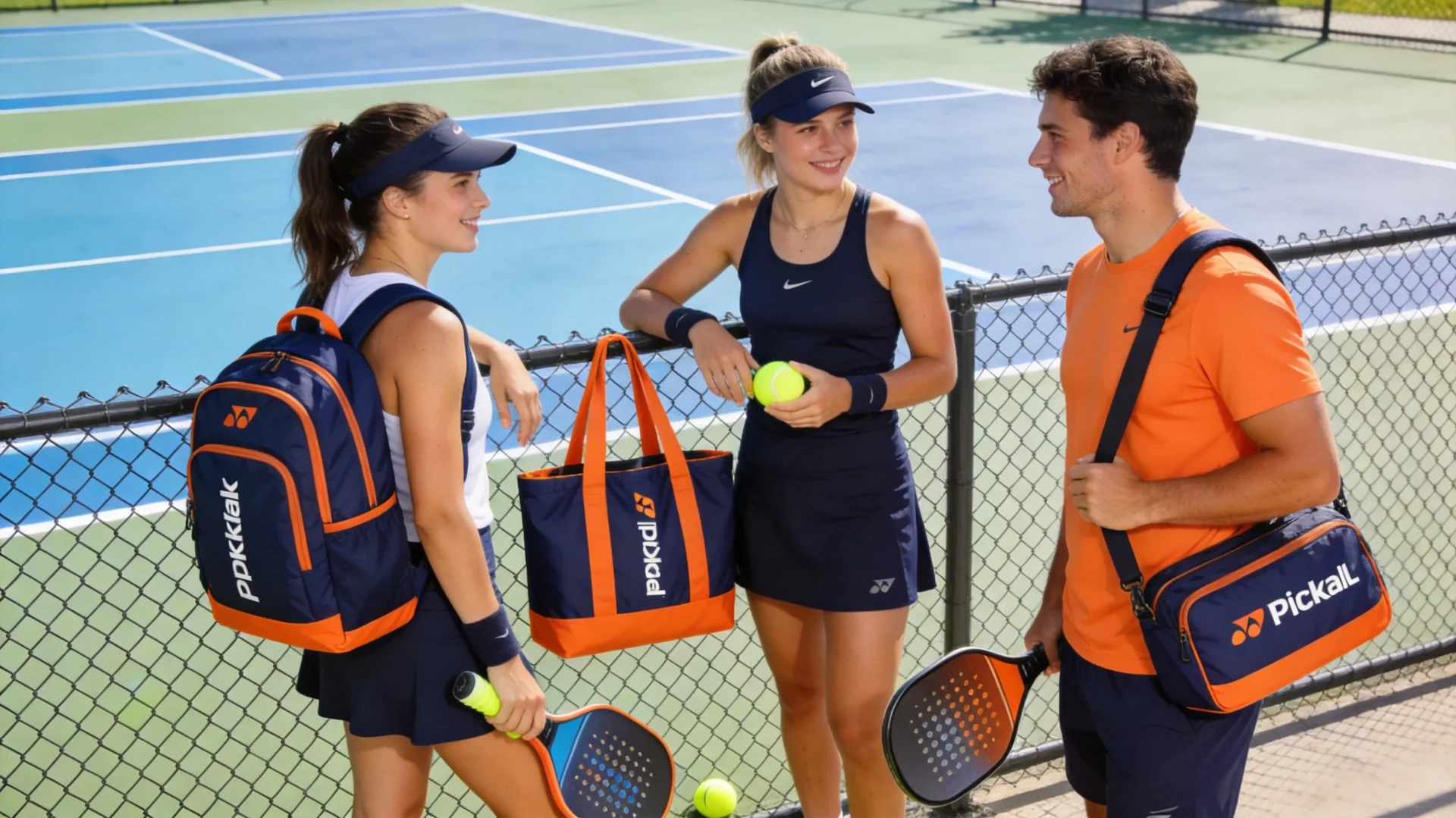
Phase 3: Launch (Month 6-9). Multi-channel launch strategy: Amazon (for search visibility and reviews), Shopify DTC website (for brand building and margin), and select retail partnerships (local pickleball pro shops, sporting goods stores). Invest in professional product photography and video content showing bags in use on pickleball courts. Leverage pickleball influencers and micro-ambassadors — the sport’s community-driven nature makes influencer marketing particularly effective.
Phase 4: Scale (Month 9-18). Expand SKU range based on sales data and customer feedback. Add complementary products (paddle covers, accessories) to increase average order value. Develop team/club customization programs for recurring B2B revenue. Consider wholesale expansion into sporting goods chains as your brand gains traction.
Frequently Asked Questions About Pickleball Bag Manufacturing
What is the minimum order quantity (MOQ) for custom pickleball bags?
MOQ varies by bag type and customization level. Simple tote bags typically require 500+ pieces per color. Backpacks and complex designs usually start at 200-300 pieces per color. Sling bags and paddle covers can go as low as 100-200 pieces with some manufacturers. ODM programs often have lower MOQs than full OEM programs.
How long does it take to manufacture pickleball bags from design to delivery?
The complete timeline from design approval to delivery is typically 10-16 weeks: 2-4 weeks for design and sampling, 1-2 weeks pre-production preparation, 3-5 weeks mass production, and 1-5 weeks shipping depending on method. Ocean freight takes 30-45 days; air freight takes 5-8 days. Allow extra time for compliance testing and certification.
What materials are best for waterproof pickleball bags?
For waterproof pickleball bags, the best combination is 600D or 840D nylon with TPU (Thermoplastic Polyurethane) coating and heat-welded seams. This construction can achieve IPX4 to IPX6 water resistance. For fully waterproof bags, TPU-laminated fabric with RF-welded seams provides the highest protection level.
Can I use my own designs for pickleball bag manufacturing?
Absolutely. Most pickleball bag manufacturers support both OEM (your complete design) and ODM (their designs with your customization). For OEM, you need to provide tech packs with detailed specifications including dimensions, materials, bill of materials, construction details, and branding artwork. The manufacturer will then create patterns and samples from your specifications.
How much does it cost to manufacture a custom pickleball bag?
FOB manufacturing costs range from $4-8 for simple tote bags, $6-12 for sling bags, $12-22 for mid-range backpacks, and $22-40 for premium backpacks. Costs depend on materials, complexity, customization level, and order quantity. Adding sublimation printing, custom hardware, or specialty features increases costs by $2-8 per unit.
What certifications do I need for pickleball bags?
Required certifications depend on your market. For the US: Prop 65 compliance (California), CPSIA if marketed to children, and FTC labeling requirements. For Europe: REACH compliance and CE marking if any electronic features are included. Recommended certifications: ISO 9001 (factory quality), BSCI or Sedex (social compliance), OEKO-TEX (textile safety). Your manufacturer should provide relevant test reports.
What is the difference between pickleball bags and tennis bags?
Pickleball bags are specifically designed for pickleball paddles, which are shorter and wider than tennis racquets. Pickleball paddle compartments are typically 16-18 inches long (vs. 27+ inches for tennis racquets). Pickleball bags also feature specialized ball storage (pickleballs are smaller and lighter than tennis balls), and often include ventilated shoe compartments designed for court shoes. The overall bag size is more compact since pickleball requires less equipment to transport.
How do I protect pickleball paddles during transport?
Effective paddle protection requires three layers: individual paddle sleeves with soft inner lining (fleece or microfiber), EVA foam compartment dividers that prevent paddle-to-paddle contact, and external bag structure that prevents crushing. Premium bags use molded EVA cradles that hold each paddle in a dedicated slot. Testing should include drop tests and compression tests to verify protection under real-world conditions.
Can pickleball bags be manufactured with recycled materials?
Yes. Recycled polyester (rPET) made from post-consumer plastic bottles is widely available and cost-competitive with virgin polyester. Recycled nylon options like ECONYL® are also available at a premium. Eco-friendly TPU coatings can replace traditional PVC. Most bag components — fabric, webbing, padding, and even packaging — can be sourced in recycled or sustainable alternatives with minimal cost impact (typically 5-15% premium).
What is the best decoration method for pickleball bags?
The best method depends on your design goals. Sublimation printing is ideal for all-over, full-color designs on polyester bags — it is cost-effective, permanent, and allows unlimited colors. Embroidery provides a premium, textured look on nylon or polyester bags — best for logos and text. Silicone patches offer modern 3D branding. Many brands combine methods: sublimation for the main body pattern and embroidery for the logo.
How do pickleball bag brands compete with established sports bag companies?
New pickleball bag brands compete through specialization, community engagement, and design innovation. Unlike large sports brands that treat pickleball as a side category, dedicated pickleball bag brands can go deeper on features that matter to serious players: superior paddle protection, innovative compartment designs, team customization programs, and authentic community presence. The pickleball community values brands that “get” the sport.
What packaging is needed for pickleball bags sold on Amazon?
Amazon requires products to arrive in sellable condition. For pickleball bags, this means: a poly bag or dust bag for primary protection, a branded insert card with product information and care instructions, proper FNSKU labeling, and sufficient structural packaging to survive Amazon fulfillment handling. Premium brands add branded boxes, tissue paper, and thank-you cards to enhance unboxing experience and encourage positive reviews.
Wholesale Pickleball Bag Supply: Custom Solutions for Brands
As a premier wholesale pickleball bag supplier, JUNYUAN Bags is positioned at the intersection of manufacturing excellence and the fastest-growing sport in the United States. With over 36 million players and a market that grew 223% between 2020 and 2023, the demand for quality pickleball bags has never been higher — and we are here to help brands meet it.
Our wholesale pickleball bag program offers complete customization for brands of all sizes. We produce single-racket sleeves, double-racket totes, 3-4 racket backpacks, 6+ racket team duffels, and hybrid designs that accommodate paddles alongside shoes, clothing, and accessories. Each bag type can be fully customized in terms of dimensions, compartment layout, material selection, and branding.
Our custom racket bag manufacturer capabilities include advanced features that differentiate your products in the market: thermal-lined compartments that protect paddles from extreme temperatures, custom-molded EVA shells for impact protection, ventilated shoe compartments to prevent odor buildup, and modular divider systems that prevent paddle face contact. We also offer insulated cooler pockets — a popular feature among tournament players.
For wholesale orders, we provide competitive pricing tiers based on volume. MOQ starts at 100 units per style, with per-unit costs decreasing at 500, 1000, and 5000 unit thresholds. Our 7 production lines can handle large wholesale orders efficiently, with typical lead times of 25-35 days for orders up to 5,000 units.
We hold ISO 9001, BSCI, and OEKO-TEX certifications, ensuring your wholesale pickleball bags meet international quality and safety standards. Our affiliated factory has served 200+ brands in 100+ countries with a 98.3% on-time delivery rate. Contact us for wholesale pricing and a custom quotation.
Partner with JUNYUAN for Your Pickleball Bag Manufacturing
With years of experience manufacturing pickleball bags, padel bags, and racket bags for brands worldwide, JUNYUAN is your trusted OEM/ODM partner for entering and scaling in the fastest-growing sports bag category. Our capabilities include:
- Full OEM and ODM services with dedicated pickleball bag design team
- Advanced sublimation printing, embroidery, and custom branding capabilities
- ISO 9001 certified facility with BSCI and OEKO-TEX compliance
- Flexible MOQ starting from 200 pieces for qualified orders
- Comprehensive QC program including paddle protection testing, zipper endurance, and load capacity verification
- Sustainable material options including rPET fabrics and eco-friendly coatings
- End-to-end service from design development through shipping and customs clearance
Whether you are launching your first pickleball bag brand through Kickstarter or scaling an existing line to meet surging demand, our team is ready to support your goals with competitive pricing, reliable quality, and responsive communication.
Ready to get started? Contact JUNYUAN for a Free OEM Quote →
Our team typically responds within 24 hours with preliminary pricing and production timeline estimates. Include your bag type preference, target quantity, desired materials, and branding requirements for the most accurate quote.