Launching a custom golf bag through crowdfunding requires balancing standout design, cost control, and scalable production. Here’s what you need to know:
Straight Answer
MOQ 200 pieces · Sampling 6-10 days · Production 35-50 days · AQL 2.5 inspection · Sample fee refunded on volume order. JUNYUAN BAGS (QUANZHOU JUNYUAN COMMERCIAL AND TRADING CO., LTD.), founded 2014, runs an SGS-verified factory (4,950 m2, 7 lines, 149 machines, 137 workers, ~200,000 pcs/month) serving 200+ brands in 100+ countries. We support Kickstarter bag projects end to end.
- Design Priorities: Backers value personalization (e.g., embroidered initials, club logos) and functional features like 14-way dividers or insulated cooler pockets. Customization costs vary, with embroidery adding around $50 per bag.
- Material Choices: Options include lightweight nylon, premium PU leather, or eco-friendly recycled materials like RPET. Material impacts weight, durability, and cost, with raw materials accounting for 40-50% of unit costs.
- Production Timelines: Manufacturing typically takes 30-45 days, with expedited options available. Low MOQs (50-100 units) help reduce upfront costs.
- Manufacturing Models: Choose between OEM for full creative control or ODM for faster, more affordable production.
- Shipping & Logistics: Plan for international shipping challenges, customs fees, and packaging to protect bulky items like golf bags. Use DDP to avoid surprise fees for backers.
Success hinges on thoughtful planning, clear communication, and attention to detail across design, production, and delivery stages. Keep backers engaged with regular updates and deliver a product that aligns with their expectations.
How Golf Bags Are Made? ? Inside a Professional Golf Bag Factory Tour
sbb-itb-1e6451b
Choosing Materials for Custom Golf Bags
After finalizing the design, the next big step is picking the right materials. This decision plays a huge role in shaping your project’s budget, timeline, and overall appeal to backers. Since raw materials typically make up 40% to 50% of your unit cost, a thoughtful choice here can save you headaches later. The wrong material could lead to higher returns, missed deadlines, or production overspending.
Material Options: Pros and Cons
Nylon and polyester are popular for lightweight and durable golf bags. Their high tensile strength and resistance to wear make them ideal for carry bags, especially for walking golfers who value a lighter load. Standard nylon bags weigh about 5.5 lbs, but Jacquard Nylon, a textured synthetic material trending for 2026, offers a more upscale look without adding extra weight. However, these materials might not feel premium unless paired with quality trims or weaves.
PU leather offers a high-end look that appeals to those who prefer tour-style bags. It’s waterproof, easy to clean, and visually striking, but it does come at a higher cost compared to synthetic fabrics. Lower-quality PU leather can scratch or peel over time, especially in humid conditions, so sourcing hydrolysis-resistant PU leather is key. This type lasts 3 to 5 years without degrading. For minimalist stand bags, matte black waterproof PU leather is a trendy choice for 2026.
Recycled materials like RPET (Recycled Polyethylene Terephthalate) and 100% recycled ripstop nylon are gaining popularity, particularly in European markets. For example, MNML Golf introduced bags made from these materials at a $349 price point – significantly undercutting traditional PU leather bags priced between $398 and $469. Their "Trade It Forward" program, which had diverted over 1,300 used bags from landfills by mid-2025, highlights the growing demand for sustainable options.
Sourcing and Lead Times
For standard materials, samples generally take 7–10 days to arrive. However, custom-dyed fabrics or specialized hardware like branded zippers can stretch this timeline to 20 to 25 days. Once materials are finalized, small production runs of 50 to 100 units require 30 to 45 days. Factoring these timelines into your schedule is crucial.
Manufacturers offering low Minimum Order Quantities (MOQs) – usually around 50 to 100 units – can help reduce upfront costs and better align with early-stage demand. Using open-mold designs can also save money, as custom molds range from $300 to $2,000 depending on complexity.
Pay close attention to zipper quality. High-grade options like YKK zippers, tested for 2,000 cycles, are essential for durability. In 2026, Chengsheng Golf reported a 0% product return rate after a client switched to a "Cross-Box X" stitching pattern with reinforced internal backing plates for strap anchor points. These small details can make a big difference in the long run.
Eco-Friendly Material Options
Using sustainable materials not only helps the environment but also strengthens trust with backers. Many are willing to pay a premium for eco-conscious designs. For instance, recycled ripstop bags typically retail for $299 to $349, compared to PU leather bags priced between $398 and $469. This makes eco-friendly options both appealing and competitive.
Recycled ripstop nylon is a standout choice for crowdfunding campaigns. It’s lightweight, tear-resistant, and comes with a compelling sustainability story. MNML Golf’s MR2 model, made entirely from recycled ripstop nylon, even replaces zippers with magnetic closures to tackle a common issue – broken zippers are the top reason for golf bag replacements. By eliminating zippers, they simplify manufacturing and reduce potential failure points.
"A good bag shouldn’t cost the Earth – with us, it doesn’t. Ocean plastics from the surf to the turf make MNML impact, maximum utility." – MNML Golf
Adding eco-friendly extras like biodegradable bamboo tees (around $8.99 per pack) or recycled microfiber towels can boost your campaign’s green appeal. Bamboo, which is 1.5 times stronger than traditional wood and fully biodegradable, offers a sustainable alternative to the 5 billion plastic golf tees that end up in landfills annually. These thoughtful touches resonate with backers who prioritize sustainability.
Designing Golf Bags for Crowdfunding Campaigns
When it comes to crowdfunding, transforming a solid concept into a market-ready product requires more than just great materials – it demands a design that balances innovation with practicality. A successful design doesn’t just catch the eye; it ensures the product can be manufactured efficiently and delivered on time. Backers are drawn to fresh ideas, but they also expect reliability.
Design Features That Attract Backers
Integrating smart technology into golf bags is a surefire way to grab attention. Features like solar phone chargers, Bluetooth speakers, and filming pockets (designed to hold phones for recording swings without a tripod) directly address common frustrations golfers face on the course.
Another standout feature is zipperless hardware, which replaces traditional zippers – often the first part to break – with magnetic closures. This innovation not only solves a major pain point but also elevates the bag’s overall appeal. For example, the MNML MR2, priced at $349, has been praised as the "Tesla of golf bags" for its sleek design and advanced tech.
Weight is another key factor. Lightweight bags, typically around 3.5 to 4 lbs, are easier to carry during long rounds. Pairing this with ergonomic elements – like interchangeable straps and lift-assist handles – enhances comfort without adding unnecessary bulk.
Storage is where design meets functionality. Features like thermal-lined cooler pockets (holding 2 to 6 beverages) and felt-lined compartments for valuables are highly appealing. Instead of over-complicating the design with excessive organizational pockets, simpler options like document sleeves and single compartments keep production costs down and usability high.
Customization offers a unique edge in the crowdfunding space. Options like hand-painted designs or bags crafted from upcycled materials, such as golf flags, create a personal connection. Take FlagBag, for instance. Their bags, made from "flown" golf flags and priced between $975 and $2,500, have received glowing reviews for their sentimental value.
"Every FlagBag is perfect for golf and walking; yet each one is distinct, handcrafted, and individualized. They don’t just carry clubs, they carry memories." – Bill Coore, FlagBag Customer
To ensure these features resonate with backers, rigorous prototyping is essential. This step validates both the appeal and functionality of the design.
Using Prototypes to Test Designs
Prototyping is where ideas become reality. Digital tools like CAD software allow you to refine designs and catch issues – like poorly placed pockets – before moving to physical samples. This not only saves money but also cuts down on material waste. Once the digital design is finalized, manufacturers can usually create custom digital mockups for branding in just 2 to 3 business days.
Physical prototypes are critical for testing real-world functionality. For example, loading a full set of clubs into the bag helps identify any weight distribution issues that could lead to discomfort – a common complaint among users. During this phase, it’s important to weigh every component, even down to the thread, to prevent unnecessary weight increases that might impact shipping costs or usability.
For stand bags, ergonomics testing is key. If you’re designing a cart bag, ensure it includes a "cart strap pass-through" to secure the bag without blocking access to its pockets.
Balancing Appearance and Production Costs
Striking the right balance between aesthetics and affordability is crucial. One way to keep costs down is by offering modular features. For example, hip belts or specialized straps can be sold as optional accessories, allowing budget-conscious backers to skip the extras while giving others the chance to upgrade. The Minaal team successfully used this approach on Kickstarter, keeping their base price low even as production costs rose by over 10%.
Standardizing internal frameworks is another smart strategy. By using consistent dividers and frames across all bags, you can offer customizable exterior designs without overcomplicating the assembly process. This approach not only reduces production complexity but also shortens timelines – express orders can be completed in as little as 15 days, while standard production typically takes 45 days.
Material selection also plays a big role. Durable, water-resistant synthetic blends like nylon and polyester provide a premium look without the high costs of materials like carbon fiber or genuine leather. Additionally, reducing the number of seams on the bag’s sides simplifies assembly and minimizes labor costs, while sleek, streamlined designs avoid bulky attachments (like external bottle holders) that can detract from the bag’s versatility and style.
Production and Manufacturing Approaches
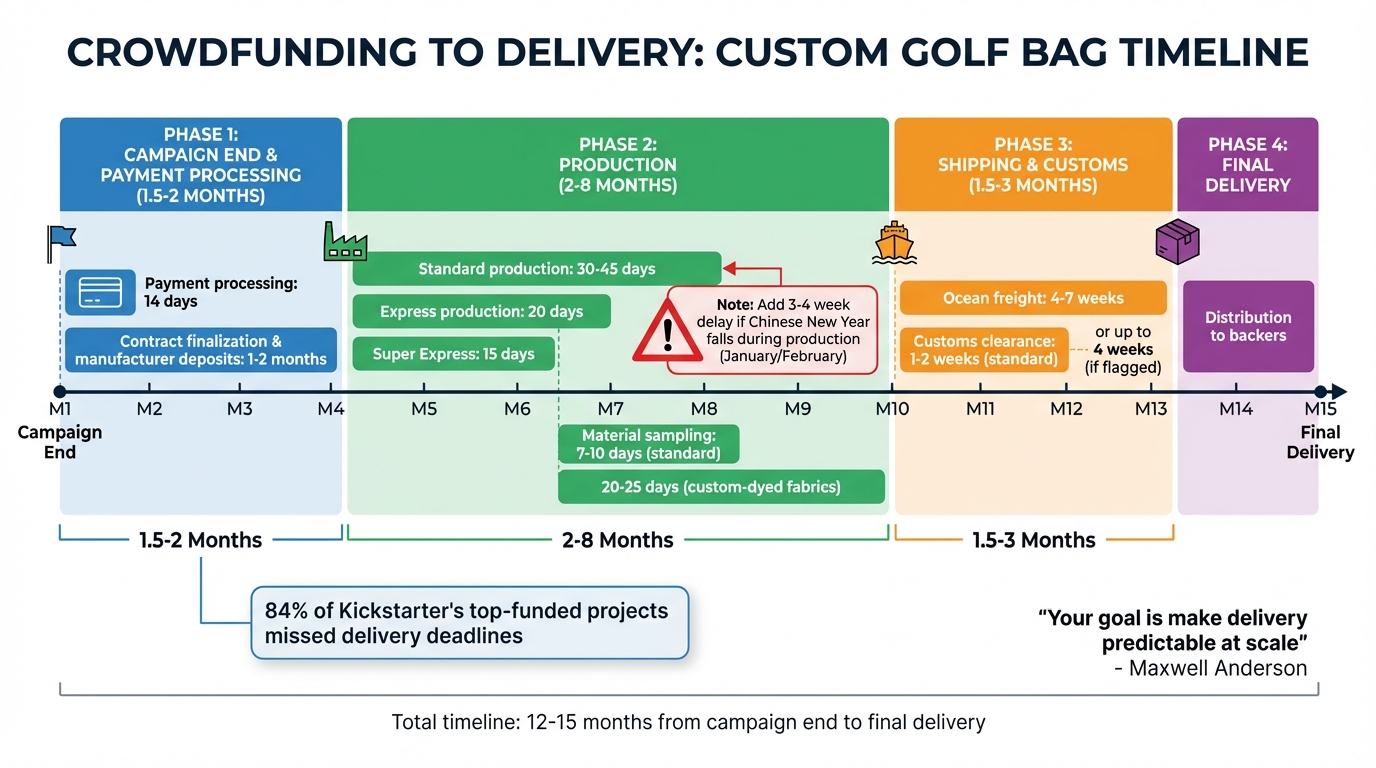
Custom Golf Bag Crowdfunding Timeline: 12-15 Month Production & Delivery Process
After perfecting your design, the next step is mass production – a stage where many crowdfunding campaigns hit roadblocks. Misjudging timelines, picking the wrong manufacturing partner, or neglecting quality checks can derail even the most promising projects. A solid production plan is crucial for maintaining the trust you’ve built during the design phase. Below, we’ll explore manufacturing options and highlight steps to keep quality high and timelines on track.
OEM vs. ODM Manufacturing
When it comes to manufacturing, you’ll typically choose between OEM (Original Equipment Manufacturer) and ODM (Original Design Manufacturer) models.
- OEM: This option gives you full creative control. You provide a complete design, and the manufacturer produces it to your exact specifications. If you’ve already developed detailed prototypes and want to retain full ownership of your design, OEM is your best bet. However, it requires comprehensive design documents and a higher level of involvement.
- ODM: This approach is more streamlined. The manufacturer offers pre-existing bag designs that you can customize with your branding, colors, and minor feature adjustments. It’s often faster and less expensive, making it ideal for first-time creators. Some manufacturers even allow a hybrid approach – starting with ODM for your initial run and moving to OEM as your brand grows.
Once you’ve selected your manufacturing model, the next big challenge is managing production timelines effectively.
Managing Production Timelines
Timing can make or break a crowdfunding campaign. Many creators underestimate how long it takes to fulfill orders. As Brandon Rollins, Director of Marketing at Fulfillrite, explains:
"It usually takes about a year from the day your campaign ends to the day your last backer receives their package".
For relatively simple products like golf bags, you should expect a timeline of 12 to 15 months from the end of your campaign to final delivery, factoring in inevitable delays.
Here’s a general breakdown of the timeline:
- Production: Typically takes 2–8 months, depending on volume and complexity.
- Payment Processing: After the campaign ends, processing payments takes roughly 14 days. This is followed by 1–2 months for finalizing contracts and transferring deposits to manufacturers.
- Shipping and Customs: Ocean freight adds 4–7 weeks, with customs clearance taking another 1–2 weeks – or up to 4 weeks if flagged.
Be mindful of external factors, like the Chinese New Year, which causes a 3–4 week production shutdown every January or February. Failing to account for this can delay your timeline by a full month. To stay ahead, finalize product specs and order samples before your campaign launches. This way, you can move straight into production once funding is secured.
Another key to success is communication. As Brandon Stosuy from Kickstarter notes:
"A slightly boring update is far better than radio silence!".
Send updates every 2–3 weeks, even if there’s no major news. Regular communication reassures backers and keeps their trust intact.
Quality Control and Testing Methods
Skipping quality control is a risky gamble. Before mass production, request physical samples and put them through rigorous testing. For example, load the bag with a full set of clubs and simulate a round of golf to check strap comfort, weight distribution, and pocket accessibility. Test zippers and magnetic closures by using them repeatedly to ensure durability.
Conduct thorough visual inspections to check for stitching quality, consistent materials, and proper branding placement. Are logos perfectly centered? Do colors match your approved samples? For functional features like cooler pockets, test them in real-world conditions – fill them with ice and beverages to ensure they perform as expected.
Consider hiring a third-party inspection service to review a random sample of your production run before shipment. This step can catch defects early, saving you from costly returns and unhappy backers. Document any issues and require the manufacturer to address them before approving the final production. Additionally, ask for photo updates at key stages – cutting, assembly, and packaging – to spot problems early and avoid surprises when the shipment arrives at your warehouse.
Custom Branding and Final Assembly
After a meticulous production process, the final stage transforms your golf bags into a polished, branded product ready to impress your backers. This step demands careful attention to detail in both branding and assembly to ensure your product aligns perfectly with your campaign’s identity.
Adding Custom Logos and Branding
Choosing the right branding method depends on your design needs and budget. Embroidery is often the top choice for a high-end, textured finish. It’s durable and works best for logos with up to eight colors, typically costing around $50 per application. For logos with vibrant, full-color details, heat transfer is a better option. This method adheres the design directly to the bag’s surface, creating crisp and colorful results for about $35 per application. If you’re working with bulk orders of 24 pieces or more, silk screening offers an affordable way to showcase simple, large-scale branding.
To ensure the best results, provide your artwork in vector (AI/EPS) format or as a high-resolution PNG/PDF (300dpi, transparent). Before moving forward, request a digital or 3D mock-up to confirm logo placement and color accuracy. For premium leather bags, debossing or hot stamping creates a sophisticated, recessed branding effect. If you want a bold, standout look, consider using twill fabric, which adds dimension and durability to your logo.
Once your branding decisions are finalized and approved, the process transitions smoothly into assembly.
Assembly and Packaging Steps
The final assembly process ensures both functionality and presentation are top-notch. A thorough quality check is essential to confirm that branding is applied correctly and packaging meets the standards of your campaign.
The unboxing experience is just as important as the product itself. Use branded poly bags, hang tags, and protective materials like dust or tissue paper to safeguard delicate surfaces such as PU leather or nylon during shipping. For high-tier rewards, consider including gift boxes to elevate the presentation. Even standard orders benefit from thoughtful packaging – features like barcode labels and branded hang tags create a professional impression from the moment backers open their packages.
Standard production timelines typically range from 30 to 45 days after sample approval. However, if you’re working under tight deadlines, expedited production can shorten this to 20 days for an additional fee.
With branding and assembly completed, the next step is planning logistics and delivery to bring your product to your backers.
Logistics, Shipping, and Delivery Planning
Once your branding and assembly are complete, the next critical step is planning logistics and delivery. This phase is essential for maintaining backer trust and ensuring your custom golf bags reach supporters on time. Poor logistics can tarnish your campaign’s reputation – especially since 84% of Kickstarter’s top-funded projects missed their delivery deadlines, and 81% of backers who experienced a failed project won’t support that creator again.
Protective Packaging for Shipping
Golf bags are bulky and prone to damage, so protective packaging is a must. Use individual polybags to guard against moisture, dust, and scuffs. For bulk shipping, reinforced cartons and proper palletization help maintain stability during long-distance transit. For premium rewards, consider adding dust bags and branded boxes to make the unboxing experience stand out. Before shipping, conduct a thorough five-stage quality control process, including random inspections (10–15%) and component testing for zippers, straps, and stands. Also, make sure your packaging complies with the requirements of any third-party fulfillment services you’re using.
Coordinating Shipping and Tracking
If your campaign involves shipping over 500 packages, partnering with a third-party logistics provider (3PL) can simplify the process. These providers handle storage, packaging, and large-scale deliveries. Basic pick-and-pack services typically cost $2 to $4 per order, while pledge managers like BackerKit or Gamefound can assist with address collection and add-on management, charging around 2% to 4% of collected funds plus transaction fees.
Set a strict deadline for locking addresses, and validate them in bulk to catch errors or missing details. Establish clear tracking milestones – like when a label is created, when a package departs, and when it reaches its destination region – to minimize "Where’s my package?" inquiries. If there’s no tracking update for 5–7 days, trigger an investigation and communicate proactively with backers. Since golf bags are large, carriers may charge based on dimensional weight (length × width × height divided by a divisor) rather than actual weight, which can inflate costs. To avoid surprises, include a 10–15% buffer in both your shipping budget and weight/dimension estimates.
"Your goal is not ‘ship faster.’ Your goal is make delivery predictable at scale: consistent landed cost, reliable tracking states, and a workflow that stays stable when you go from 300 to 5,000 orders." – Maxwell Anderson, Data Director, WinsBS Research
If your campaign has a strong international following (about 30% of U.S.-based campaigns), consider regional fulfillment. Shipping inventory in bulk to warehouses in the U.S., EU, or UK can improve tracking and reduce per-unit costs compared to direct international shipping.
Handling International Shipping
International shipping presents unique challenges that require careful planning to satisfy backers worldwide. Costs for international delivery are often 3 to 5 times higher than domestic shipping, and customs issues can disrupt even well-organized campaigns. Choose between two approaches:
- Delivered Duty Paid (DDP): You prepay all duties and taxes, ensuring a smooth delivery experience for backers.
- Delivered Duty Unpaid (DDU/DAP): Backers pay fees upon delivery, but this can lead to unexpected costs for them.
Make sure to prepare the correct documentation, including a commercial invoice (listing manufacturing cost, not retail price), a packing list, and Harmonized System (HS) codes for tariff calculations. Compliance requirements vary by region. For example:
- EU and UK: You’ll need VAT, EORI numbers, and a local General Product Safety Regulation (GPSR) representative.
- Australia: Strict biosecurity rules require fumigation for shipments between September and April, and timber pallets must be heat-treated or made of plastic.
"Do not use your fulfillment partner as the importer of record. It’s illegal." – Chris Matthews, ZATU
Be aware of recent regulatory changes that could impact costs. As of May 2, 2025, the U.S. has removed the $800 de minimis duty-free exemption for packages from certain countries, like China, imposing a 10% baseline tariff on all imports. Similarly, the EU now applies VAT to all imports, removing the previous €22 exemption. These updates highlight the need for careful cost planning in your international shipping strategy.
Key Takeaways for Crowdfunding Success
Launching a crowdfunding campaign for custom golf bags requires careful planning across design, production, and delivery stages. Start with high-quality materials like 1680D nylon or PU leather, and consider offering eco-friendly options to attract environmentally conscious backers. Your design should resonate emotionally – whether through upcycled materials or customization features that make every bag feel personal and unique. This approach lays the groundwork for decisions ranging from choosing a production partner to maintaining clear communication.
When selecting a manufacturer, prioritize transparency and certifications like ISO9001 and BSCI. Implement multi-stage quality controls, including material inspections, in-process checks, and pre-shipment audits using AQL Level II standards, as outlined in the production guidelines. A dependable partner should provide 3D mockups and physical samples before mass production and offer warranties (ideally 24 months) for key components like zippers, straps, and stitching.
Clear communication builds trust. Share design drawings within three business days and follow up with pre-shipment photos. This two-step approval process minimizes post-delivery issues and keeps backers engaged. To manage expectations, offer tiered production timelines such as 15-day "Super Express", 30-day "Express", and 45-day "Standard" options – giving backers flexibility based on their urgency.
"These bags do something no others can: tell stories." – Dottie Pepper, Professional Golfer
Once the design and production align, focus on logistics to ensure smooth delivery. Allocate a budget for shipping and use DDP (Delivered Duty Paid) for international orders to avoid surprise fees. Predictable delivery is key – establish tracking milestones and communicate proactively if delays occur.
Simplify the backer experience into three clear phases: Purchase/Selection, Design Consultation/Approval, and Delivery. Use web-based tools for real-time design visualization to enhance the customization process. This level of service not only supports premium pricing but also fosters long-term loyalty among your backers.
FAQs
What should my crowdfunding goal include beyond the bag’s unit cost?
When setting your crowdfunding goal, it’s important to think beyond just the bag’s unit cost. You’ll need to factor in production costs (materials and labor), shipping expenses, platform fees (typically 5-8%), and marketing or promotional costs (around 15-25%). On top of that, it’s smart to include a buffer for unexpected expenses, such as legal fees or fulfillment costs. Accounting for all these elements can help you avoid running into financial shortfalls during your campaign.
How do I choose OEM vs. ODM without risking delays or quality issues?
When deciding between OEM and ODM, it’s essential to weigh your priorities to avoid delays or quality hiccups:
- OEM (Original Equipment Manufacturer): You supply the design and product specifications, while the manufacturer focuses on production. This option works best if maintaining control over the product’s design is a top priority.
- ODM (Original Design Manufacturer): The manufacturer creates the design for you. This route is ideal if you want to tap into their expertise and streamline the design process.
To minimize risks, ensure clear communication of your expectations, request prototypes early in the process, and partner with a manufacturer with a solid track record.
What’s the safest way to handle duties and taxes for international backers?
Planning ahead is your best bet when it comes to avoiding surprises with duties and taxes. One way to simplify the process is by opting for Delivered Duty Paid (DDP) shipping services. With DDP, customs clearance becomes more straightforward, and import taxes are handled upfront. This not only helps you manage costs better but also creates a hassle-free delivery experience for your international backers, reducing the risk of delays or unexpected fees.
Frequently Asked Questions
What is the MOQ for custom golf bags?
For golf bags our MOQ is 200 pieces per design, flexible around campaign structure. This fits Kickstarter-level volumes for a dedicated golf bag.
How long does a golf bag sample take?
6-10 days after the tech pack and materials are confirmed, including pattern, stitching and hardware placement for a playable, camera-ready sample.
What accessories can be added?
Stand mechanisms, rain hoods, paddle and racket compartments, towel loops and multiple club dividers. Each spec is costed in the BOM.
What materials work for golf bags?
Waterproof or water-repellent nylon and polyester, PU-backed linings, and EVA or PE stiffening. We source materials that hold structure for sponsors and logos.
How long does a golf bag production run take?
35-50 days after sample approval, with AQL 2.5 pre-shipment inspection on stitching, zippers and hardware.
Do you help design a Kickstarter golf bag?
Yes, we offer ODM starting from proven golf bag designs plus OEM for your own spec, with tech pack and costing support.
Can golf bags be branded?
Yes, logos via embroidery, screen print, heat transfer or woven labels, plus retail packaging and hang tags.
How do I protect the golf bag design?
We sign NDAs and keep patterns and tooling private; your spec stays proprietary.
What is your golf bag production capacity?
Our roughly 200,000 pieces per month facility allocates dedicated lines; we scale with confirmed golf-bag forecasts.
Do you handle international shipping and duty paperwork?
We arrange export logistics and documentation; you choose the shipping method, and we help cost duties for US and EU backers.
Related Blog Posts
- From Concept to Delivery: A Step-by-Step Walkthrough of Our Custom Bag Production Process
- 10 Best Custom Golf Bag Manufacturers for OEM & Bulk Orders (2025 Guide)
- What is the industry standard minimum order quantity (MOQ) for custom golf bag manufacturing, and what factors, such as design complexity or material, influence it?
- What are the essential questions to ask a potential golf bag manufacturer to assess their experience, reputation, and specialization in my product category?
? Related: Looking for a comprehensive guide to custom golf bag manufacturing? Check out our Complete Guide to Custom Golf Bag Manufacturing — covering materials, OEM/ODM process, QC standards, branding, and cost structure.