
The global pet industry has undergone a seismic shift over the past decade, and at the heart of this transformation lies one product category that has experienced explosive growth: custom pet carrier bags. With the worldwide pet carrier market valued at over $2.2 billion in 2025 and projected to grow at a CAGR of 7.8% through 2030, B2B buyers — from retail brands and e-commerce entrepreneurs to airline accessory companies and veterinary supply distributors — are racing to launch or expand their private-label pet carrier lines.
But entering this market requires more than sourcing a generic bag from a wholesale catalog. Today’s consumers demand carriers that combine safety, comfort, airline compliance, aesthetic appeal, and brand identity. That means B2B buyers need a manufacturing partner who understands material science, safety regulations, ergonomic design, and scalable production — not just a factory that sews fabric.
This comprehensive guide covers everything you need to know about custom pet carrier bag manufacturing: from market dynamics and product types to materials, OEM/ODM processes, quality control, compliance certifications, branding, sustainability, cost structures, and how to find the right factory. Whether you are launching a new pet brand, expanding an existing product line, or sourcing carriers for retail distribution, this guide will serve as your complete reference.
Quick Answer: JUNYUAN Bags is a BSCI & ISO 9001 certified pet carrier manufacturer led by a founder with bag industry experience dating from 2004, producing 200,000 per month (SGS-verified)+ bags annually. We offer IATA-compliant, airline-approved pet carrier designs with ventilation-tested construction, starting from MOQ 50 units with 7-day sample turnaround. Our OEM/ODM services include private label manufacturing, REACH and CPSIA compliance, and custom sizes for pets from 3kg to 25kg — serving 200+ brands in 100+ countries.
Why Pet Carrier Bags Are a Booming B2B Market
The pet carrier market is not growing by accident. It is being driven by three powerful macro-trends that converge to create extraordinary opportunity for brands and buyers who move strategically.
First, the pet humanization megatrend. Globally, pet ownership has surged since 2020, with an estimated 57% of households worldwide now owning at least one pet. More importantly, the cultural perception of pets has shifted dramatically — from “animals” to “family members.” This humanization trend means pet owners are willing to spend significantly more on products that keep their pets safe, comfortable, and included in daily life. A quality pet carrier is no longer a luxury; it is a necessity for vet visits, travel, outdoor adventures, and even daily commutes.
Second, the pet travel boom. Airlines have progressively expanded pet-in-cabin policies, ride-sharing services like Uber now offer pet-friendly options, and pet-friendly hotels and restaurants are multiplying globally. This creates sustained demand for airline-approved carriers, expandable travel carriers, and versatile carriers that transition between car, plane, and foot. Brands that offer carriers specifically designed for these use cases capture premium pricing and repeat customers.
Third, the direct-to-consumer brand explosion. The barriers to launching a pet brand have never been lower. Shopify, Amazon FBA, and social commerce platforms enable entrepreneurs to build pet accessory brands without traditional retail infrastructure. These brands need manufacturing partners who can handle custom designs, small initial MOQs, private labeling, and scalable production as they grow. This creates a massive addressable market for flexible, brand-oriented pet carrier manufacturers.
For B2B buyers, the implication is clear: the window to establish a strong brand presence in the pet carrier category is open now. But success depends on choosing the right manufacturing partner, understanding product specifications, and executing with quality and compliance from day one.
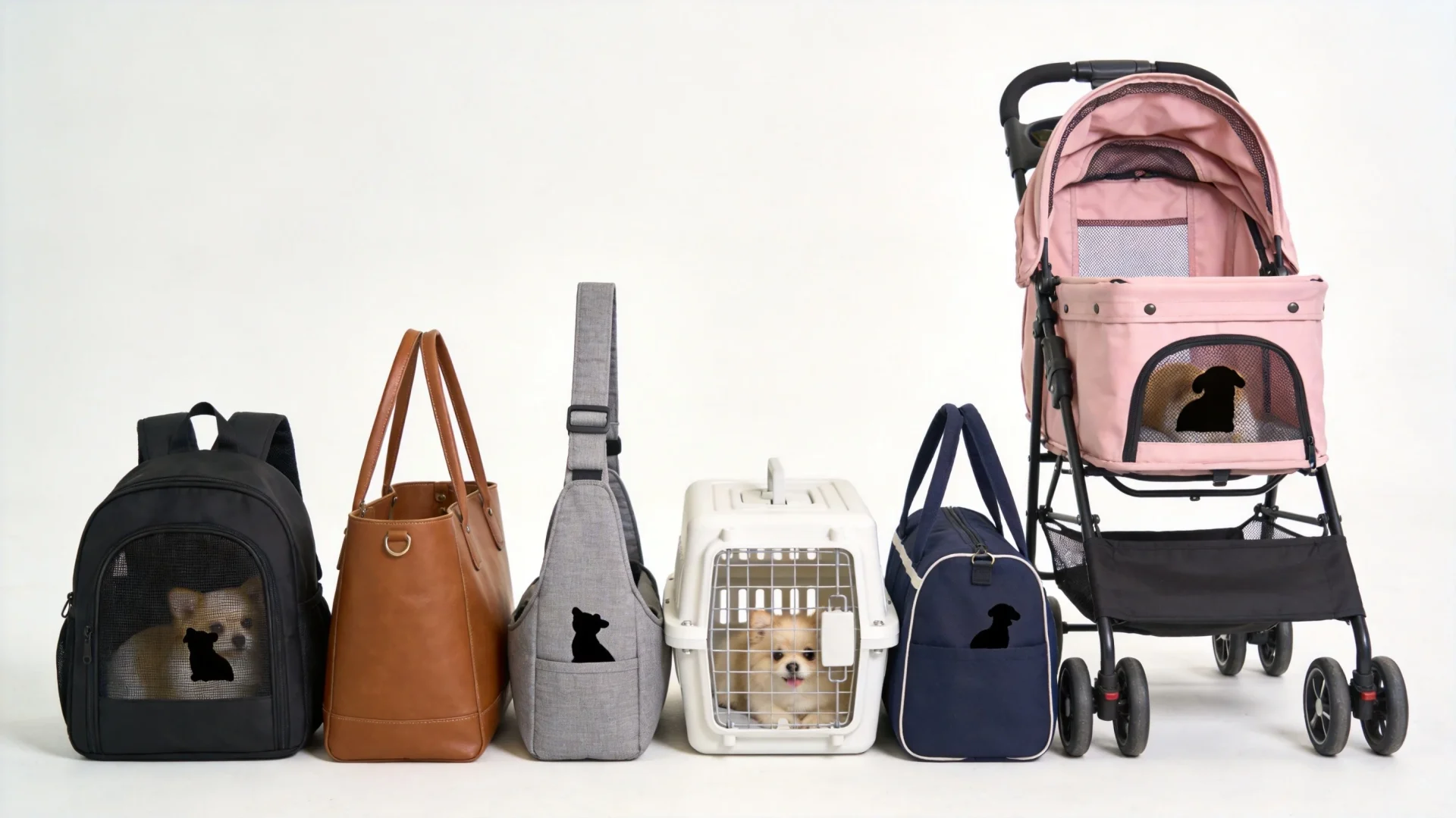
Types of Pet Carrier Bags: Backpacks, Totes, Slings, Hard-Sided, Soft-Sided & Strollers
Understanding the full spectrum of pet carrier types is essential for B2B buyers building a product line. Each category serves distinct consumer needs, price points, and manufacturing requirements. A well-rounded brand often offers carriers across multiple categories to capture different customer segments.
Pet Carrier Backpacks are the fastest-growing segment, driven by the outdoor adventure trend. These carriers feature ergonomic shoulder straps, ventilated mesh panels, and often a bubble window or expandable section. They appeal to hiking enthusiasts, urban commuters, and travelers. Manufacturing complexity is moderate to high, requiring reinforced stitching at stress points, breathable mesh integration, and padded strap construction. Price range for custom manufacturing typically falls between $8–$25 per unit depending on specifications.
Pet Carrier Totes occupy the fashion-meets-function space. These open-top or zippered bags resemble human handbags but are engineered with pet-safe interiors, leash attachments, and ventilation. They target style-conscious urban pet owners and are particularly popular in the small-dog and cat segments. Tote carriers often use premium materials like faux leather, canvas, or nylon with branded hardware, making them an excellent canvas for brand identity.
Pet Slings and Pouches are minimalist carriers worn across the body, ideal for small pets under 15 pounds. They require less material and simpler construction, making them the most cost-effective carrier type to manufacture. However, ergonomic design is critical — poorly designed slings cause discomfort for both pet and owner. Premium slings use padded mesh, adjustable straps, and safety buckles.
Hard-Sided Carriers are the traditional choice for airline travel and veterinary use. Constructed from molded plastic or fiberglass with metal doors and ventilation holes, they offer maximum protection but are heavier and less portable. Manufacturing hard-sided carriers requires injection molding capabilities, which significantly increases tooling costs but enables high-volume production at low per-unit cost.
Soft-Sided Carriers represent the largest market segment by volume. Combining fabric construction with internal frame support, they offer the portability of soft materials with the structure needed for pet safety. They are lighter than hard-sided carriers, often airline-compliant, and can be folded for storage. Manufacturing requires expertise in combining rigid frame elements with flexible fabric panels.
Pet Strollers represent the premium end of the market. Combining carrier functionality with wheeled mobility, they appeal to owners of older pets, small breeds, and post-surgery recovery animals. Manufacturing strollers requires additional components — wheels, axles, braking systems, and folding mechanisms — increasing both complexity and price point ($20–$60 per unit at OEM level).
Materials & Fabrics for Pet Carrier Manufacturing
Material selection is arguably the most critical decision in pet carrier manufacturing. The right materials determine product durability, pet comfort, safety compliance, brand positioning, and ultimately, customer satisfaction and repeat purchases. B2B buyers must understand the properties, costs, and trade-offs of each material option.
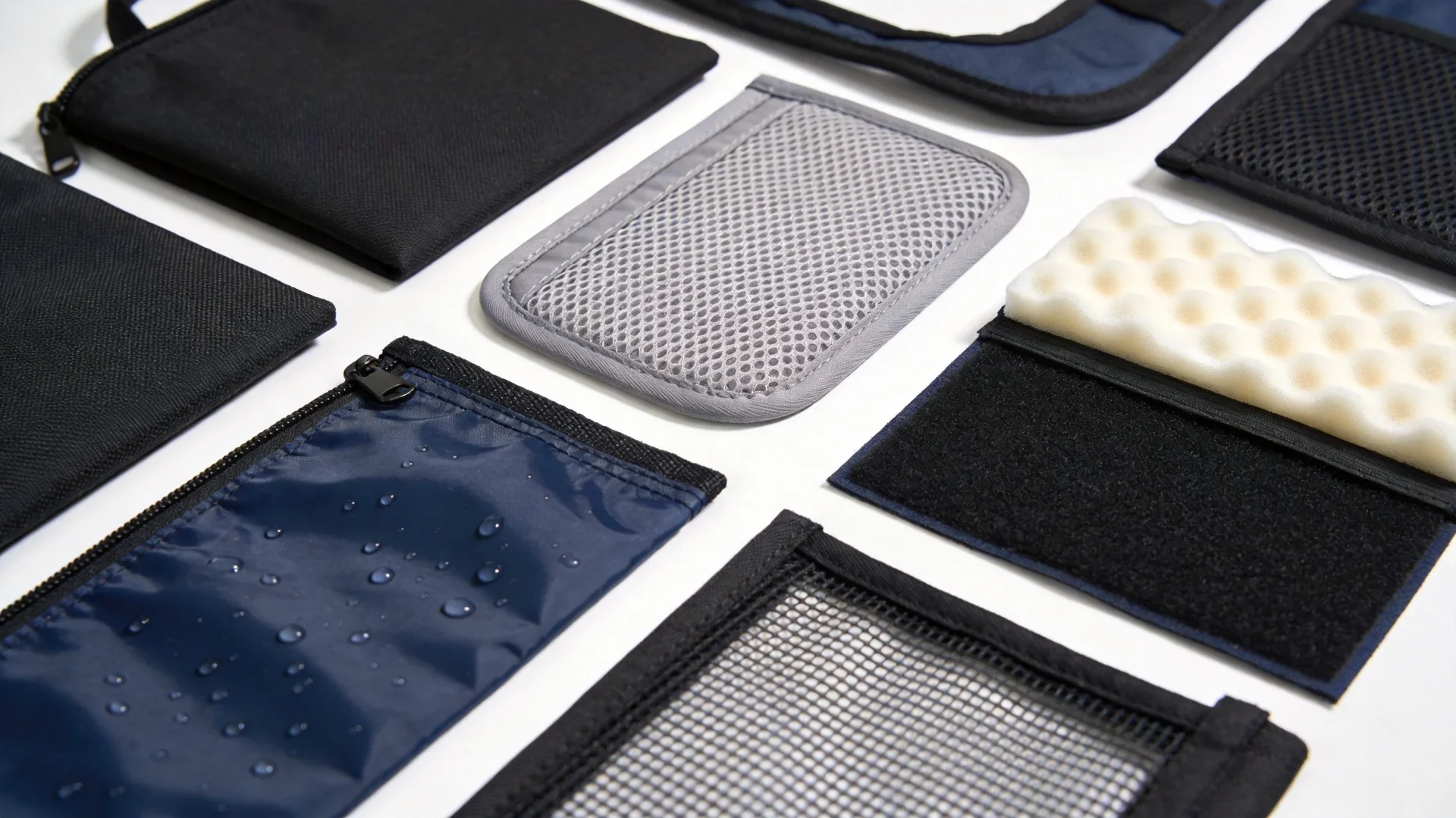
Oxford Cloth (600D–1680D) is the workhorse fabric for pet carriers. Its tight weave pattern provides exceptional tear resistance and abrasion durability. 600D Oxford offers a balance of strength and weight for standard carriers, while 1680D Oxford delivers military-grade durability for premium lines. Oxford cloth accepts PU coatings, PVC laminations, and DWR (Durable Water Repellent) treatments, making it versatile across climate conditions.
Breathable Mesh Fabrics are non-negotiable for pet safety and comfort. The most common options include honeycomb mesh (excellent airflow with moderate visibility), nylon tricot mesh (soft against pet skin), and micro-mesh (fine weave that prevents claw snagging). Mesh panels are typically positioned on carrier sides, tops, and front faces. The quality of mesh — measured by denier count, weave density, and tensile strength — directly impacts both ventilation performance and pet containment security.
Ripstop Nylon is used in premium carriers where weight reduction is prioritized without sacrificing strength. Its crosshatch reinforcement pattern prevents small tears from propagating — a critical safety feature when containing active pets. Ripstop nylon is particularly popular in backpack-style carriers and ultralight travel carriers.
Waterproof Coatings and Laminations transform standard fabrics into weather-resistant carriers. PU (polyurethane) coating is the most common, providing reliable water resistance at low cost. TPU (thermoplastic polyurethane) lamination offers superior waterproofing with better environmental credentials — no PVC, no phthalates. For premium lines, manufacturers may apply DWR finishes that cause water to bead and roll off the fabric surface.
Padded and Quilted Liners line the interior floor and walls of quality carriers. Common fillings include EPE foam (lightweight, affordable), memory foam (premium comfort), and polyester fiberfill (soft, washable). The liner fabric is typically removable and machine-washable — a feature that consumers rank among the top three purchase drivers for pet carriers.
OEM vs ODM for Pet Carrier Bag Manufacturing
Choosing between OEM (Original Equipment Manufacturing) and ODM (Original Design Manufacturing) is a foundational sourcing decision that affects timeline, cost, IP ownership, and brand differentiation. For a detailed comparison, see our comprehensive OEM vs ODM guide.
OEM Manufacturing means you provide the complete design — tech packs, material specifications, patterns, and branding assets — and the factory executes production to your exact specifications. You own the design IP entirely. OEM is ideal when you have an established design team, a differentiated product concept, or need to protect proprietary features. The trade-off: higher upfront investment in design development and sampling, with longer time-to-market.
ODM Manufacturing means the factory provides existing designs that you customize with your branding, color selections, and minor modifications. You benefit from proven designs, faster sampling (often 7–14 days vs 21–30 days for OEM), and lower development costs. ODM is ideal for brands entering the market quickly, testing new categories, or working with limited design resources. The trade-off: less differentiation, as other brands may use similar base designs.
The Hybrid Model is increasingly popular in pet carrier manufacturing. Brands select an ODM base design and then customize specific elements — adding proprietary ventilation systems, unique expansion mechanisms, custom-molded feet, or branded hardware. This approach balances speed-to-market with brand differentiation and is particularly effective for DTC brands launching their first carrier line.
At Junyuan Bags, we support all three models with equal commitment. Our led by a founder with bag industry experience dating from 2004 means we can work from your complete tech pack (OEM), modify our extensive design library (ODM), or collaborate on a hybrid approach that achieves your specific brand vision.
The Complete Pet Carrier Manufacturing Process
Understanding the manufacturing process helps B2B buyers set realistic timelines, identify quality checkpoints, and communicate effectively with their factory partner. Here is the complete workflow from concept to container.
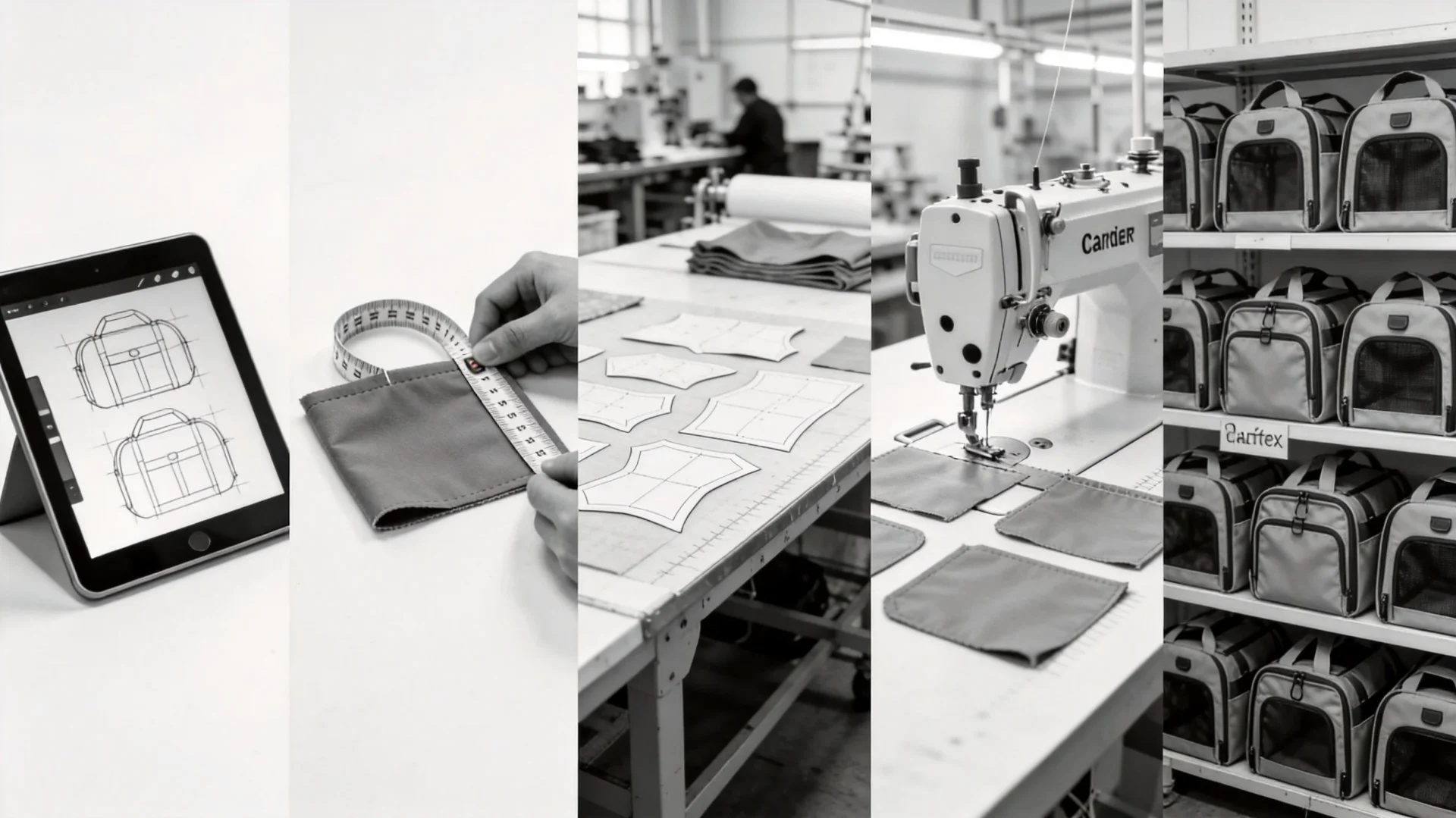
Phase 1: Design & Development (2–6 weeks). This phase begins with requirement gathering — target pet size, carrier type, intended use case, price point, and compliance requirements. Designers create technical drawings and 3D renderings for client approval. Material sourcing runs in parallel, with swatches and samples sent for client review. The output is a complete tech pack: Bill of Materials (BOM), construction specifications, colorways, and branding placement guide.
Phase 2: Sampling (2–4 weeks). The factory produces a first sample (proto sample) for fit, function, and aesthetics review. Clients evaluate the sample against specifications, test with actual pets if possible, and provide feedback. A revised sample (counter sample) addresses all corrections. For complex carriers with custom hardware or molded components, a pre-production sample (PP sample) is made using final materials and production tooling. Each sample round typically takes 7–15 days.
Phase 3: Pre-Production (1–2 weeks). Once the PP sample is approved, the factory procures bulk materials, sets up production lines, trains workers on new construction techniques, and creates production jigs and templates. A pre-production meeting aligns the entire team on quality standards, critical construction points, and inspection criteria.
Phase 4: Production (3–8 weeks). Cut, sew, assemble, and inspect. Production timelines depend on order quantity, carrier complexity, and factory capacity. A typical 500-unit order of soft-sided carriers takes 3–4 weeks; 2,000 units of backpack carriers with custom hardware may require 6–8 weeks. In-line inspections during production catch defects early and prevent costly rework.
Phase 5: Quality Control & Shipping (1–2 weeks). Final random inspection (typically AQL 2.5 standard) verifies quantity, workmanship, dimensions, function, and packaging. Approved goods are packed per client specifications, loaded into containers, and shipped. Sea freight adds 25–35 days for US West Coast delivery; air freight adds 5–7 days.
Design & Customization Options for Pet Carriers
Modern pet carriers offer remarkable design flexibility. Understanding the available customization options helps B2B buyers create products that stand out in competitive markets while meeting genuine consumer needs.
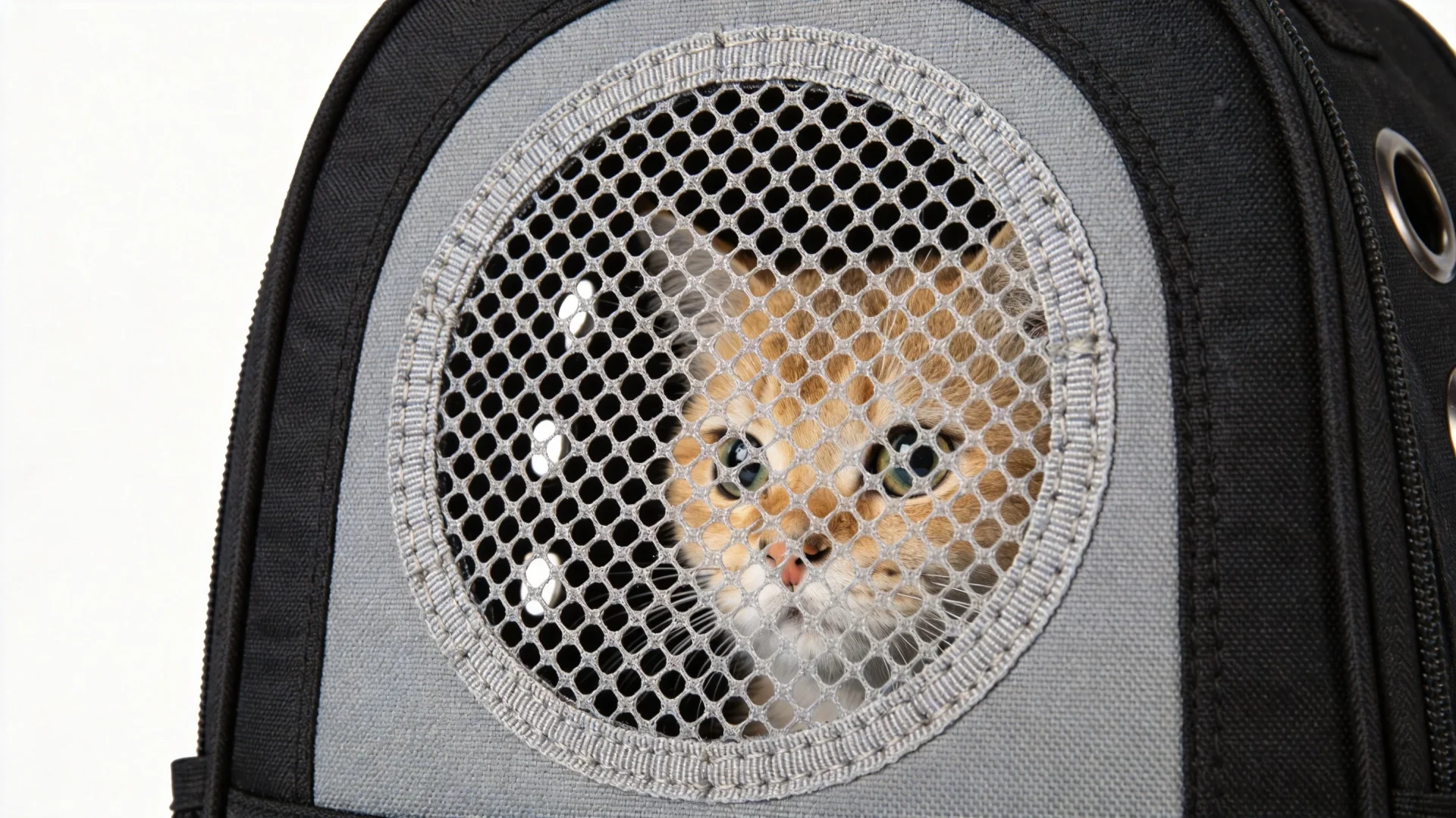
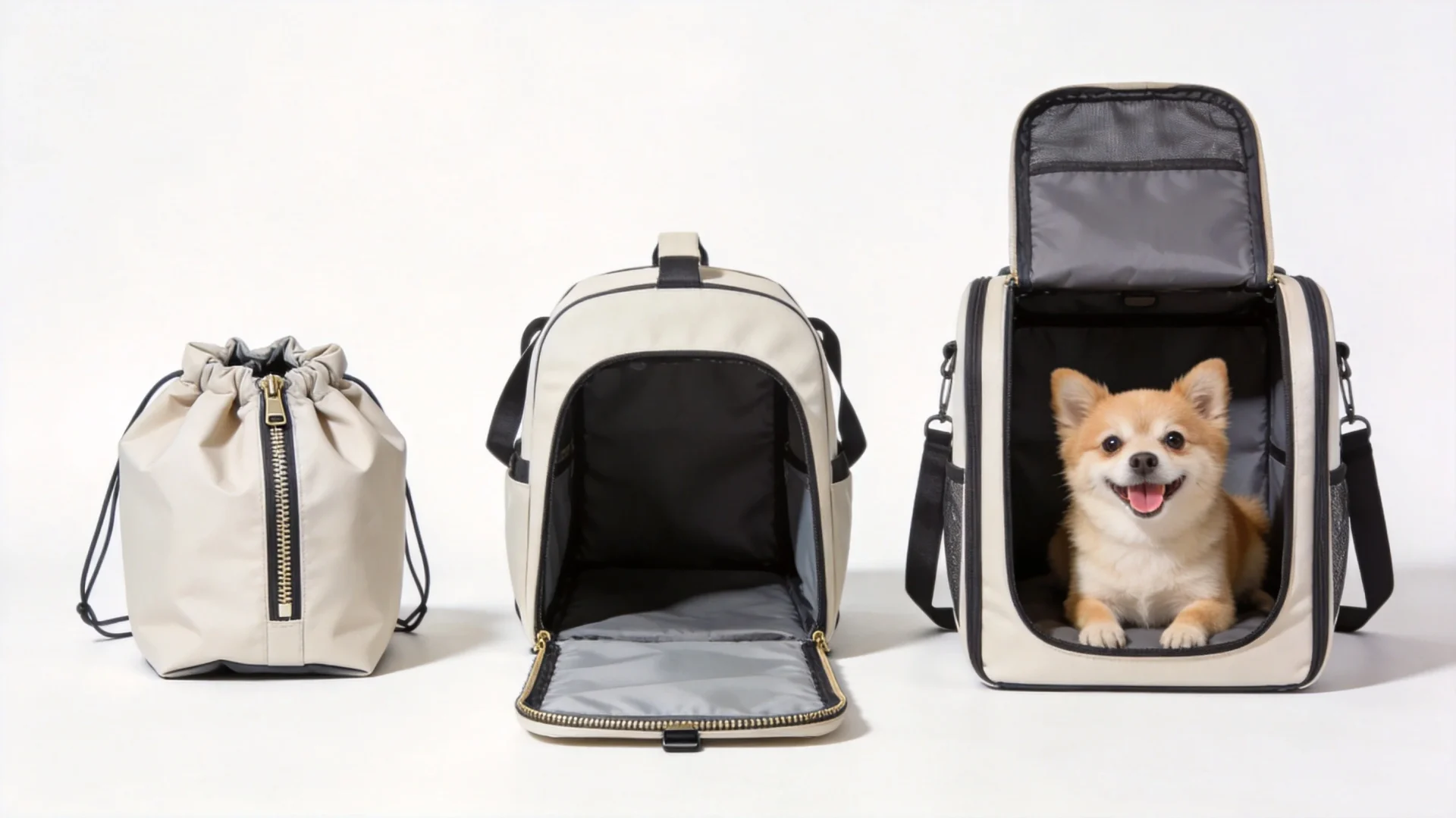
Ventilation Panel Design is the most impactful customization area. Options range from standard side mesh panels to full-wrap ventilation systems, bubble windows (transparent acrylic domes), panoramic mesh walls, and convertible tops that open for head-out positioning. The key engineering challenge is balancing maximum airflow with structural integrity and pet security — every ventilation panel must withstand claw pressure and pet weight without deformation.
Safety Hooks and Leash Attachments are essential interior features. A sturdy internal leash clip (typically stainless steel or reinforced plastic) prevents pets from escaping when the carrier is opened. Exterior safety features include reflective strips for nighttime visibility, reinforced grab handles, and anti-slip rubber feet.
Expandable Sections have become a major selling point. Zipper-activated expansion panels increase interior space by 30–50%, giving pets more room to move during extended use. Some designs feature dual-side expansion, allowing the carrier to convert from a compact under-seat size to a spacious cabin carrier.
Padded Straps and Back Panels are critical for backpack-style carriers. Memory foam padding, breathable 3D air mesh back panels, adjustable sternum straps, and load-distributing hip belts transform a basic carrier into a premium ergonomic product. Strap width, padding thickness, and foam density all affect both comfort and manufacturing cost.
Washable Removable Liners are the feature most frequently mentioned in positive customer reviews. Solutions include hook-and-loop attached pads, zip-out floor inserts, and fully removable machine-washable interior shells. The lining material — typically polyester fleece, sherpa, or microfiber — should be durable enough to withstand 50+ wash cycles without degradation.
Quality Control & Safety Testing for Pet Carriers
Pet carrier quality control is not optional — it is an ethical obligation and a business imperative. A failed carrier can injure a beloved pet, generating devastating reviews, product liability claims, and brand damage that no marketing budget can recover.
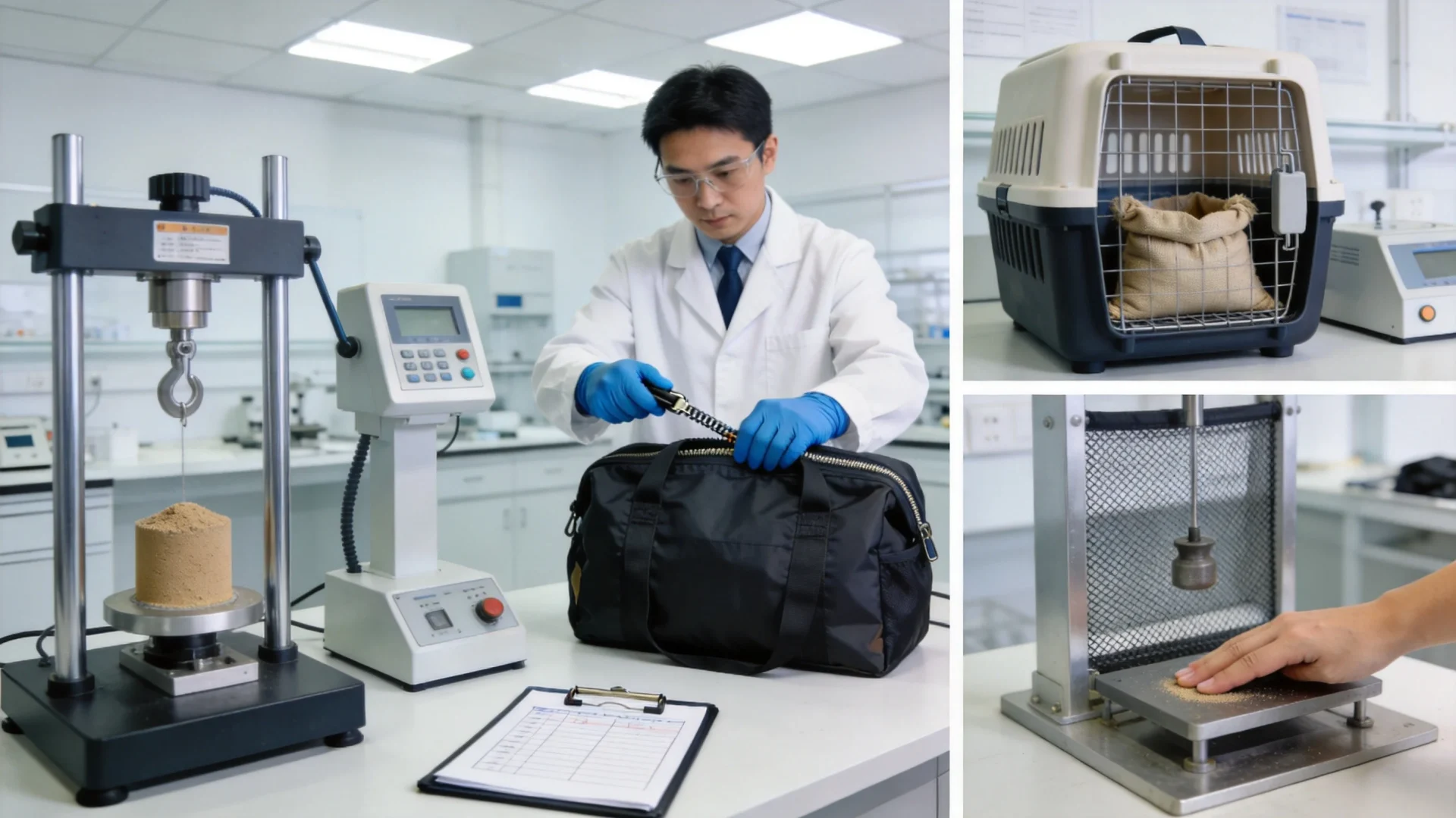
Weight Capacity Testing verifies that the carrier safely supports its rated load. Testing involves placing progressively heavier loads inside the carrier and subjecting it to dynamic stress — lifting, dropping from specified heights, and swinging. Handles, straps, and seams must withstand forces significantly exceeding the rated capacity (typically 3x safety factor).
Zipper Strength Testing uses specialized pull-test machines to measure the force required to separate zipper teeth. Zippers must survive 1,000+ open-close cycles without failure, and the zipper tape must remain securely stitched to the carrier fabric under load. YKK zippers are the industry standard for premium carriers; budget lines may use SBS or generic branded zippers.
Mesh Durability Testing simulates claw pressure and scratching to verify that ventilation panels resist tearing. Standard test methods include the ball burst test (measuring force to rupture the mesh) and the puncture resistance test. High-quality pet carrier mesh should withstand at least 50N of puncture force.
Ventilation Adequacy Testing measures actual airflow through the carrier’s ventilation system. While no universal standard exists for pet carriers, best practice is to ensure that at least 30% of the carrier surface area consists of breathable mesh or ventilation openings. For enclosed carriers (airline under-seat), this becomes critical for pet safety.
Non-Toxic Material Verification ensures all materials — fabrics, coatings, adhesives, dyes, plastics, and metals — are free from harmful chemicals. Testing covers formaldehyde content, heavy metals (lead, cadmium, mercury), phthalates, and azo dyes. Third-party testing from accredited laboratories (SGS, Bureau Veritas, Intertek) provides the documentation needed for compliance certifications.
Branding & Packaging for Pet Carrier Product Lines
Branding transforms a commodity pet carrier into a recognizable, premium product that commands higher margins and builds customer loyalty. The pet carrier market offers numerous branding touchpoints that B2B buyers should leverage strategically.
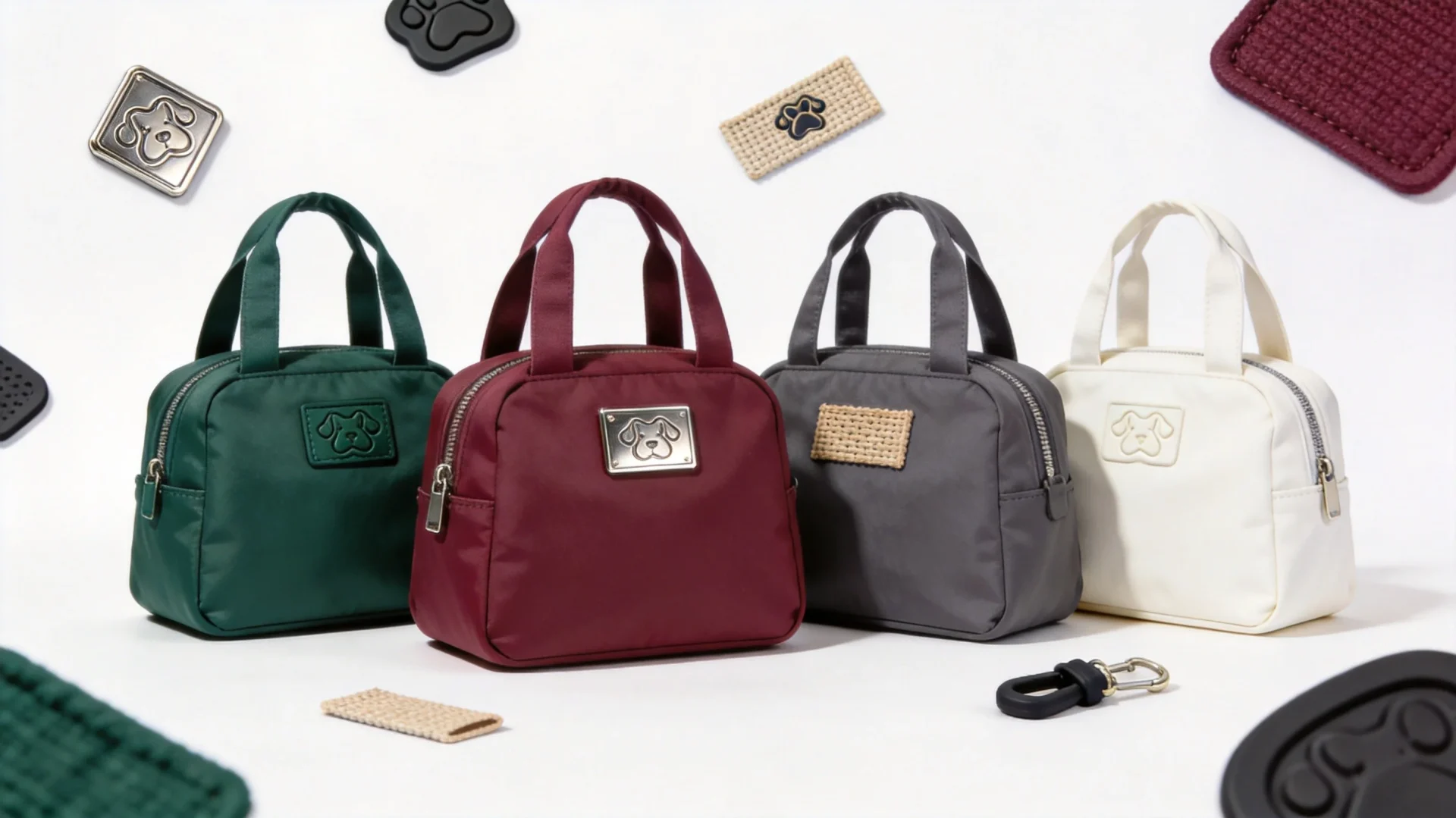
Logo Application Methods include embossing/debossing (pressed into leather or synthetic leather patches), metal logo plates (zinc alloy, aluminum, or stainless steel), woven labels (sewn into seams), rubber/silicone patches (modern, durable), heat transfer printing (full-color, ideal for complex logos), and screen printing (cost-effective for large runs).
Custom Colors and Patterns allow brands to create signature looks. Fabric can be custom-dyed to match Pantone colors, and hardware (zippers, buckles, D-rings) can be finished in gold, silver, gunmetal, rose gold, or custom colors. Some brands opt for signature patterns — camouflage, geometric prints, or branded textile patterns — created through custom fabric weaving or sublimation printing.
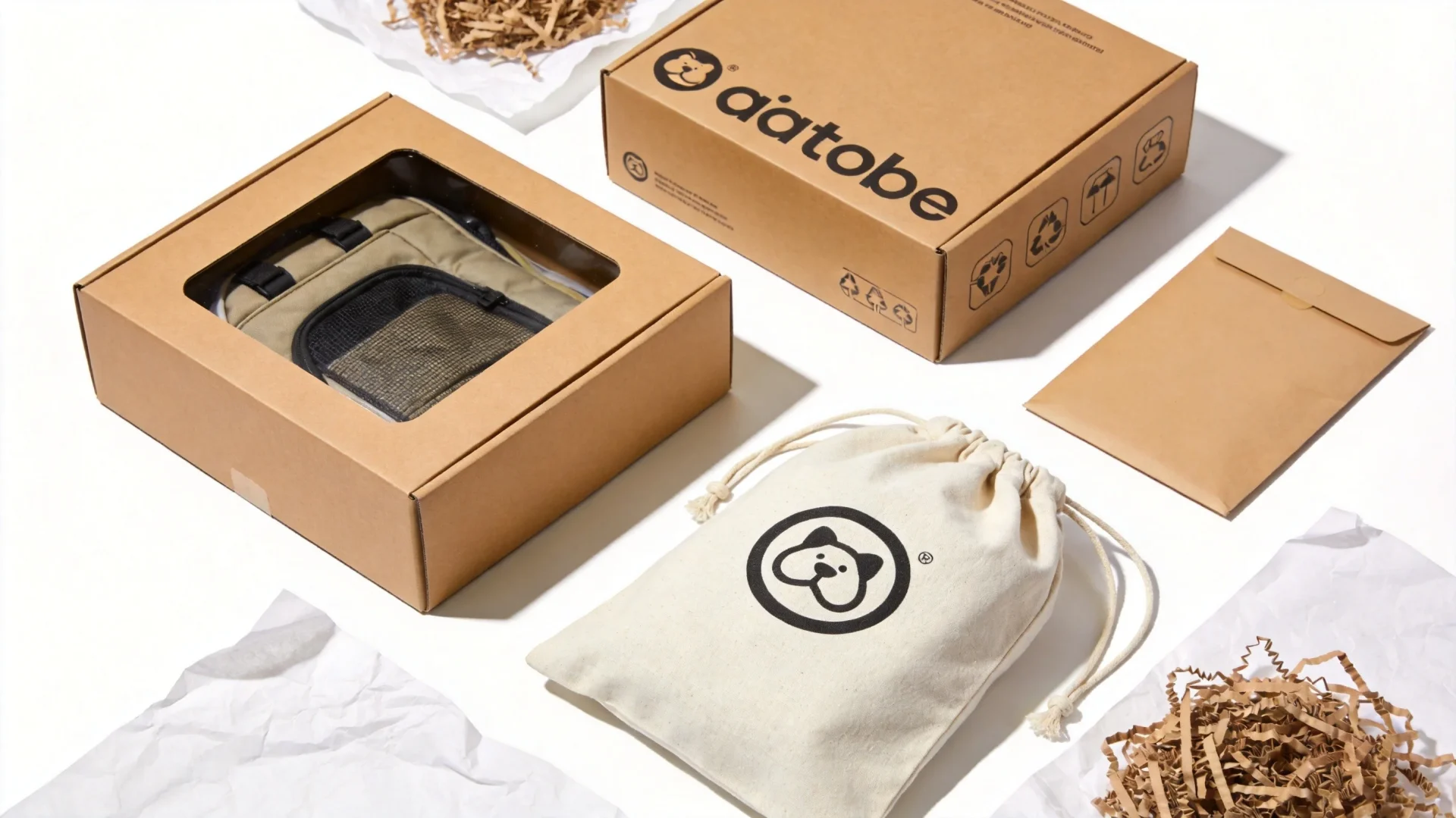
Retail Packaging is the first physical touchpoint between your brand and the customer. Options range from simple poly bags with branded stickers to premium boxes with window cutouts, magnetic closure boxes, and reusable storage bags. For e-commerce brands, the unboxing experience is a critical brand moment — tissue paper, branded tape, thank-you cards, and care instruction inserts all contribute to perceived value.
Eco-Friendly Packaging is increasingly expected by conscious consumers. Recyclable kraft boxes, FSC-certified cardboard, soy-based inks, biodegradable poly bags made from cornstarch, and minimal packaging designs all signal brand commitment to sustainability. Many retailers now require or strongly prefer suppliers who can provide eco-certified packaging documentation.
Compliance & Certifications for Pet Carrier Products
Navigating compliance requirements is essential for B2B buyers selling into regulated markets. While pet carriers do not face the same regulatory burden as children’s products or medical devices, several certifications and standards significantly impact marketability and legal risk.
CPSIA (Consumer Product Safety Improvement Act) compliance is required for any pet product sold in the United States that could be considered accessible to children. Since pets carry products into homes and some carriers are marketed for children’s small pets, CPSIA testing for lead content and phthalates is strongly recommended. Third-party testing from CPSC-accepted laboratories provides necessary documentation.
California Proposition 65 requires warning labels for products containing chemicals known to cause cancer or reproductive harm. Pet carriers containing certain dyes, coatings, or plastic components may trigger Prop 65 requirements. Proactive testing and compliance — rather than reactive labeling — protects brands from litigation and consumer concern.
OEKO-TEX Standard 100 certification verifies that all textiles used in the carrier have been tested for harmful substances. While not legally required, OEKO-TEX certification is increasingly requested by retailers and expected by premium consumers. It serves as a powerful marketing differentiator and signals commitment to pet and human safety.
ASTM Pet Product Standards are being developed as the pet product industry matures. While comprehensive mandatory standards for pet carriers are not yet finalized, ASTM F3673 (standard for pet carriers) is in development and covers structural integrity, ventilation requirements, and labeling. Forward-thinking manufacturers already design to these emerging standards.
Airline Compliance Specifications represent a de facto standard that drives significant sales volume. Major airlines publish specific carrier dimension requirements (typically 17.5″ x 11″ x 10.5″ for under-seat storage) and ventilation requirements. Carriers marketed as “airline-approved” or “airline-compliant” must meet these exact specifications — a powerful selling point that justifies premium pricing.
Sustainability in Pet Carrier Manufacturing
Sustainability is no longer a niche concern — it is a market expectation. A growing segment of pet owners (estimated at 40%+ in 2025) actively seek products from environmentally responsible brands. B2B buyers who integrate sustainability into their carrier lines capture this segment while future-proofing against tightening environmental regulations.
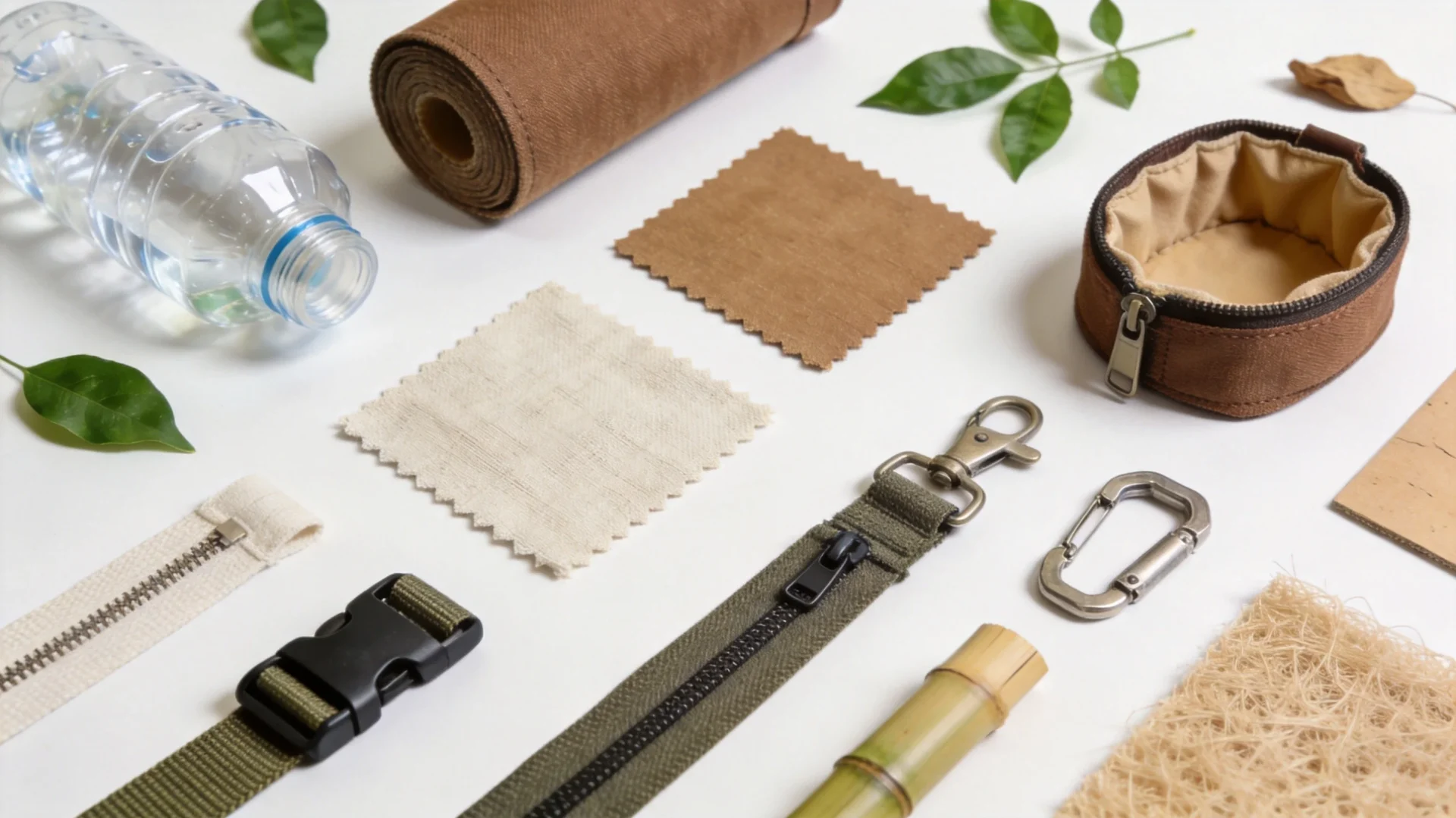
Recycled Materials have matured significantly in quality. Recycled polyester (rPET) made from post-consumer plastic bottles now matches virgin polyester in strength, color fastness, and durability — at comparable cost. Recycled nylon (such as ECONYL®) regenerated from fishing nets and industrial waste offers premium positioning. Recycled Oxford cloth and recycled mesh are commercially available and increasingly specified by brand-conscious buyers.
Biodegradable and Plant-Based Fabrics represent the next frontier. Organic cotton canvas, hemp blends, bamboo fiber linings, and corn-based PLA fabrics are viable alternatives to conventional materials for specific carrier components. While full biodegradability for the entire carrier remains challenging (zippers, buckles, and structural elements still rely on conventional materials), even partial integration of bio-based materials creates compelling sustainability stories.
Minimal and Recyclable Packaging completes the sustainability equation. Eliminating plastic poly bags in favor of recycled paper wraps, using FSC-certified cardboard for retail boxes, replacing EPS foam inserts with molded pulp, and designing packaging for easy consumer recycling — these choices reduce environmental impact while resonating with target consumers.
Certifications That Matter include GRS (Global Recycled Standard) for recycled content verification, GOTS (Global Organic Textile Standard) for organic materials, bluesign® for responsible textile production, and B Corp certification for overall corporate sustainability performance. These third-party verifications prevent greenwashing and build genuine consumer trust.
Quick Specification Reference
| Parameter | Details |
|---|---|
| Material Options | Oxford cloth, nylon, polyester mesh, neoprene, canvas, RPET recycled fabric, faux leather |
| Pet Carrier Types | Backpack carriers, tote bags, slings, hard-sided crates, soft-sided carriers, car seat carriers |
| MOQ | 50 units (test order), 300-500 units (mass production) |
| Sample Lead Time | 7-10 days |
| Mass Production Lead Time | 25-35 days |
| Certifications Available | ISO 9001, BSCI, REACH, CPSIA, OEKO-TEX, IATA-compliant designs, SGS |
| Customization Options | Size customization (3-25kg pets), ventilation design, removable liners, branded logos, custom colors |
| Packaging Options | Individual poly bags, branded boxes with carry handles, care instruction inserts, gift packaging |
| Quality Standards | Ventilation airflow testing, load-bearing 3x pet weight, zipper durability 5000+ cycles, AQL 2.5 |
Cost Structure & Pricing for Custom Pet Carriers
Understanding cost structure enables B2B buyers to set realistic budgets, negotiate effectively, and price their products competitively. Pet carrier manufacturing costs are influenced by materials, construction complexity, order quantity, customization level, and compliance requirements.
Material costs typically represent 30–45% of total manufacturing cost. A basic soft-sided carrier using 600D Oxford cloth, standard mesh, and polyester lining may require $2.50–$4.00 in materials. A premium backpack carrier with ripstop nylon, memory foam padding, YKK zippers, and custom-molded feet can require $8–$15 in materials alone.
Labor costs account for 25–35% of manufacturing cost. Complex carriers with many components (multiple panels, zippers, buckles, padding layers) require more sewing time and skill. A basic tote carrier may require 45 minutes of labor; a feature-rich backpack carrier may require 2.5–3 hours.
Overhead and factory margin typically represent 20–30% of cost, covering factory operations, equipment depreciation, quality control infrastructure, management, and profit.
MOQ and Pricing Tiers:
- 100–300 units: $15–$30 per unit (ideal for market testing, Kickstarter launches)
- 300–500 units: $12–$22 per unit (standard for emerging DTC brands)
- 500–1,000 units: $10–$18 per unit (established brands with proven products)
- 1,000–3,000 units: $8–$15 per unit (scaling brands, retail distribution)
- 3,000+ units: $6–$12 per unit (high-volume programs, big-box retail)
These ranges assume soft-sided carriers in standard materials. Hard-sided carriers, strollers, and carriers with custom molded components carry higher base costs but benefit more from volume pricing. For detailed pricing strategies, see our guide on how to price your custom bag for Kickstarter success.
Shipping costs add $1–$4 per unit for sea freight (FCL) or $5–$12 per unit for air freight. Pet carriers are relatively bulky, making volumetric weight a significant factor in air freight calculations. Smart buyers plan 3–4 months of lead time to maximize sea freight savings.
How to Find & Vet a Pet Carrier Manufacturer
Selecting the right manufacturing partner is the single most important decision in launching a successful pet carrier brand. The wrong factory leads to quality problems, missed deadlines, compliance failures, and damaged brand reputation. Here is a systematic approach to finding and vetting manufacturers.
Define Your Requirements First. Before contacting any factory, document your specifications: carrier types, target pet sizes, material preferences, compliance requirements, target price point, initial order quantity, and growth projections. Clear requirements attract serious manufacturers and enable accurate quotations.
Research Through Multiple Channels. Alibaba and Global Sources provide starting points for factory identification. Trade shows (Canton Fair, Pet Fair, ISPÓ) enable in-person evaluation. Industry referrals from other brand owners provide trusted recommendations. For China-based manufacturing — which accounts for 70%+ of global pet carrier production — verify the factory’s location in established bag manufacturing clusters (Guangzhou, Quanzhou, Xiamen regions).
Vet for Pet Carrier Expertise. Not all bag manufacturers understand pet-specific requirements. Evaluate each candidate on: pet carrier production experience (ask for client references and product samples), knowledge of safety standards and compliance requirements, willingness to customize and collaborate on design, quality control processes and documentation, and communication responsiveness.
Request Comprehensive Samples. Before committing to production, evaluate at least three samples: an existing design (to assess baseline quality), a customized version (to test flexibility), and a fully custom design (to evaluate development capability). Pay attention to stitching consistency, zipper quality, mesh integrity, padding comfort, and overall finish.
Verify Certifications and Audit History. Request copies of ISO 9001, BSCI, SEDEX, or other quality/social compliance certifications. Ask for third-party audit reports. If possible, arrange a factory audit — either personally or through a third-party inspection company. A clean, organized factory with documented processes is a strong indicator of production reliability.
Start With a Trial Order. Before committing to a large production run, place a trial order (100–300 units) to evaluate production quality, packaging, communication, timeline adherence, and post-sale support. A factory that performs well on a trial order has earned the right to larger commitments.
Launching a Pet Carrier Brand: From Concept to Market
Manufacturing is only one piece of the puzzle. Launching a successful pet carrier brand requires coordinated execution across product development, brand strategy, channel strategy, and marketing. Here is the roadmap from concept to market.
Step 1: Market Research & Positioning. Identify your target customer segment (urban millennials with small dogs? Adventure enthusiasts with active pets? Budget-conscious multi-pet households?) and your positioning within that segment (premium quality? innovative design? value pricing? eco-conscious?).
Step 2: Product Line Architecture. Plan your initial product range. Most successful pet carrier brands launch with 2–3 SKUs covering the most popular carrier types — typically a backpack carrier and a soft-sided carrier, with an optional tote or sling. This provides choice without overwhelming inventory investment. For insights on building broader pet product lines, explore our custom pet bag manufacturing guide.
Step 3: Sampling & Testing. Work with your manufacturing partner through the sampling process described above. Critically, test samples with real pets across your target size range. Observe how different pets react to the carrier — do they enter willingly? Do they show signs of stress? Is ventilation adequate? Real-world testing reveals issues that specifications alone cannot identify.
Step 4: Brand & Packaging Development. Develop your brand identity (name, logo, color palette, brand story) and packaging design simultaneously. Packaging should reflect your brand positioning and create a memorable unboxing experience. Include care instructions, sizing guides, and warranty information inside each package.
Step 5: Channel Strategy. Select your initial sales channels: DTC website (Shopify), Amazon FBA, specialty pet retail, or wholesale to pet boutiques. Each channel has different margin structures, marketing requirements, and inventory expectations. Many brands successfully launch DTC first to validate product-market fit before expanding to retail.
Step 6: Pre-Launch Marketing. Build anticipation through social media, influencer partnerships with pet content creators, email list building, and — if applicable — crowdfunding campaigns. Pet content is among the most shared categories on social media; leverage this organic potential.
Step 7: Launch & Iterate. Launch with initial inventory, collect customer feedback aggressively, monitor reviews, and iterate rapidly. The brands that win in the pet carrier market are those that listen to customers and continuously improve their products based on real-world use feedback.
Frequently Asked Questions
1. What is the minimum order quantity (MOQ) for custom pet carrier bags?
Most Chinese manufacturers set MOQ at 100–300 units per style per color for soft-sided carriers. Hard-sided carriers and carriers with custom molded components may require 500+ units MOQ. For startups testing the market, some manufacturers offer trial orders of 50–100 units at a slightly higher per-unit cost.
2. How long does it take to manufacture custom pet carriers?
The full timeline from design approval to delivery is typically 8–16 weeks. Sampling takes 2–4 weeks, production takes 3–8 weeks depending on quantity, and shipping adds 1–8 weeks depending on method. Plan for at least 12 weeks total for a first-time order.
3. What materials are best for airline-approved pet carriers?
Airline-compliant carriers typically use a combination of durable nylon or Oxford cloth exteriors, mesh ventilation panels (at least 30% of surface area), rigid internal frame support, and padded removable liners. The carrier must fit under standard airline seats (typically 17.5″ x 11″ x 10.5″) while maintaining structural integrity.
4. Can I customize every aspect of the pet carrier design?
Yes. With OEM manufacturing, you can customize the carrier dimensions, shape, materials, colors, hardware, ventilation design, interior padding, branding elements, and packaging. With ODM, you customize branding, colors, and select features from existing designs.
5. What safety certifications do pet carriers need?
There is no single mandatory certification for pet carriers. However, CPSIA compliance (for US market), Proposition 65 compliance (for California), OEKO-TEX certification (for textile safety), and material safety testing (heavy metals, formaldehyde, phthalates) are strongly recommended and increasingly required by retailers.
6. How much does it cost to develop a custom pet carrier from scratch?
Development costs include design ($500–$2,000), sampling ($200–$800 per sample round, typically 2–3 rounds), and custom tooling if needed ($500–$3,000 for custom buckles, molds, or hardware). Total development investment typically ranges from $2,000–$8,000 before production begins.
7. What is the difference between a pet carrier and a pet travel bag?
Pet carriers are structured bags designed specifically for safe pet transport, with ventilation, security features, and comfort elements. Pet travel bags are broader-category bags that may include carrier functionality but also offer additional storage, organizational features, and multi-use versatility. The manufacturing requirements overlap significantly.
8. Can pet carriers be made from eco-friendly materials?
Absolutely. Recycled polyester (from plastic bottles), recycled nylon, organic cotton, hemp, bamboo fiber, and plant-based alternatives are all commercially available for pet carrier manufacturing. Many components — recycled zippers, recycled webbing, biodegradable padding — are also available from specialized suppliers.
9. What weight capacity should a quality pet carrier support?
Standard small pet carriers should support 15–20 lbs. Medium carriers should support 25–35 lbs. Large carriers should support 40–50 lbs. Quality testing should verify that the carrier can withstand 3x the rated load without structural failure — this safety factor accounts for dynamic forces during lifting, setting down, and accidental drops.
10. How do I ensure my pet carrier factory maintains consistent quality?
Implement a three-tier quality system: in-line inspections during production (catching defects at the workstation), pre-shipment inspections (random sampling per AQL standards), and post-delivery quality feedback loops. Consider hiring a third-party inspection company (QIMA, AsiaInspection) for critical orders.
11. What is the profit margin on custom pet carriers?
Profit margins vary significantly by channel and positioning. DTC brands typically achieve 50–70% gross margins (manufacturing cost $10–15, retail price $45–$120). Wholesale margins are tighter at 30–45% (manufacturing cost $10–15, wholesale price $20–$30). Premium-positioned brands with strong identity can command even higher margins.
12. Can I manufacture pet carriers in China and sell in the US and EU?
Yes, China remains the dominant manufacturing base for pet carriers globally. To sell in the US, ensure CPSIA and Prop 65 compliance. To sell in the EU, comply with REACH regulations for chemical safety. Your manufacturing partner should be experienced with export documentation, including certificates of conformity and material test reports from accredited laboratories.
Private Label Pet Carrier Manufacturing: Complete OEM Guide
As an experienced private label pet carrier supplier, JUNYUAN Bags helps pet brands launch airline-approved, safety-tested carrier products that build customer loyalty and repeat purchases. Our led by a founder with bag industry experience dating from 2004 combined with specialized pet product knowledge makes us the ideal OEM partner for your pet carrier line.
Our private label pet carrier program covers the full product spectrum: soft-sided backpack carriers for cats and small dogs, airline-approved under-seat carriers meeting IATA cabin dimensions, hard-sided crates for air cargo, breathable mesh totes for veterinary visits, and car seat carriers for road trips. Each design is engineered with pet safety as the priority — featuring ventilation on 3+ sides, secure leash clips, and load-tested construction rated for 3x the intended pet weight.
Branding customization is extensive. We offer embroidered or printed logos, custom fabric colors matched to your Pantone specifications, branded interior labels, custom hang tags, and retail-ready packaging with product photography support. For premium lines, we can integrate custom-molded frames with your brand’s signature shape or add proprietary features like modular attachment systems or smart-tag pockets.
Every private label pet carrier undergoes rigorous testing: ventilation airflow measurement (minimum 3 CFM per side panel), load-bearing stress tests, zipper cycle testing (5,000+ cycles), and material safety screening for REACH and CPSIA compliance. We also conduct real-world testing with actual pets to validate comfort, ease of entry, and ventilation effectiveness.
With MOQ from 50 units and 7-10 day sample turnaround, we make it easy for new brands to launch and established brands to expand. We currently manufacture private label pet carriers for brands across 100+ countries. Get started with a free consultation and sample request.
Start Your Custom Pet Carrier Line with Junyuan Bags
With over led by a founder with bag industry experience dating from 2004, Junyuan Bags is a trusted OEM/ODM partner for brands launching and scaling custom pet carrier lines. From initial concept and material selection through sampling, production, quality control, and global shipping — we handle every step with precision and care.
Why partner with Junyuan?
- expertise dating from 2004 specializing in bags and carriers — deep manufacturing expertise
- Full OEM and ODM capabilities — from your tech pack or our design library
- Low MOQ (from 100 units) — ideal for startups and market testing
- Comprehensive quality control — AQL 2.5 inspection, material testing, safety verification
- Compliance expertise — CPSIA, Prop 65, OEKO-TEX, airline specifications
- Sustainable manufacturing — recycled materials, eco-friendly packaging options
- Scalable production — from 100 units to 50,000+ units per order
Ready to bring your custom pet carrier vision to life? Contact Junyuan Bags today for a free consultation and OEM quote.