
Your production order is confirmed and your 8,000 golf bags are about to be packed into export cartons — and suddenly your forwarder asks the question that decides a large slice of your landed cost: “LCL or FCL?” Get it right and you save thousands; get it wrong and you either pay for a half-empty container or bleed cash paying by the cubic meter. The short answer: if your shipment fills roughly 65% or more of a full container’s usable volume, book FCL — it is usually cheaper and faster; below that, LCL (shared space on a consolidated container) is the cost-sensible choice for importers of bags. This guide walks you through container sizes, how to estimate the volume of golf bags, backpacks and duffels, freight calculations, and the hidden LCL traps that can erase its savings.
Quick Answer / TL;DR
Estimate your shipment’s total volume (CBM), then compare. A 20ft container holds about 26–28 CBM of actual usable cargo, a 40ft about 56–60 CBM, and a 40ft High-Cube about 66–68 CBM. As a rule of thumb for bag imports: under ~14–15 CBM choose LCL; above ~17–18 CBM FCL starts to win; at 20+ CBM FCL is almost always cheaper per unit and faster. Because bags are bulky and compressible, volume — not weight — usually drives your freight cost, so measure cartons accurately and let the volume math, not a guess, pick the mode.
Container Sizes and Usable Volume First
Ocean containers come in standard sizes, and the confusion never comes from the gross capacity — it comes from usable capacity after packing realities. The table below shows the most common boxes you will be quoted for bag freight (industry-standard figures):
| Container type | Internal dimensions (L×W×H) | Nominal capacity | Usable cargo volume | Typical max cargo weight |
|---|---|---|---|---|
| 20ft Dry (20GP) | ~5.90 × 2.35 × 2.39 m | ≈ 33 CBM | ≈ 26–28 CBM | ~21–28 t (weight rarely an issue for bags) |
| 40ft Dry (40GP) | ~12.03 × 2.35 × 2.39 m | ≈ 67 CBM | ≈ 56–60 CBM | ~26–28 t |
| 40ft High-Cube (40HC) | ~12.03 × 2.35 × 2.69 m | ≈ 76 CBM | ≈ 66–68 CBM | ~26–28 t |
Dimensions and pay load follow widely used industry conventions (ISO standard container sizing). Actual usable volume depends on carton sizes and packing efficiency — that is why you calculate from your own carton dimensions, not from the container’s paper capacity.
The “usable” gap is your safety margin
You cannot load a 40GP to its nominal 67 CBM with rectangular cartons — doors, wall curvature, pallets, air gaps and carton packing inefficiency eat several cubic meters. Seasoned forwarders quote practical utilizations of roughly 85% for well-packed goods. Bags stack reasonably well, but golf bags in long cartons and odd-shaped duffels can leave surprisingly large voids. Always build your FCL decision on usable volume, and measure the actual packed cartons, not the bags.
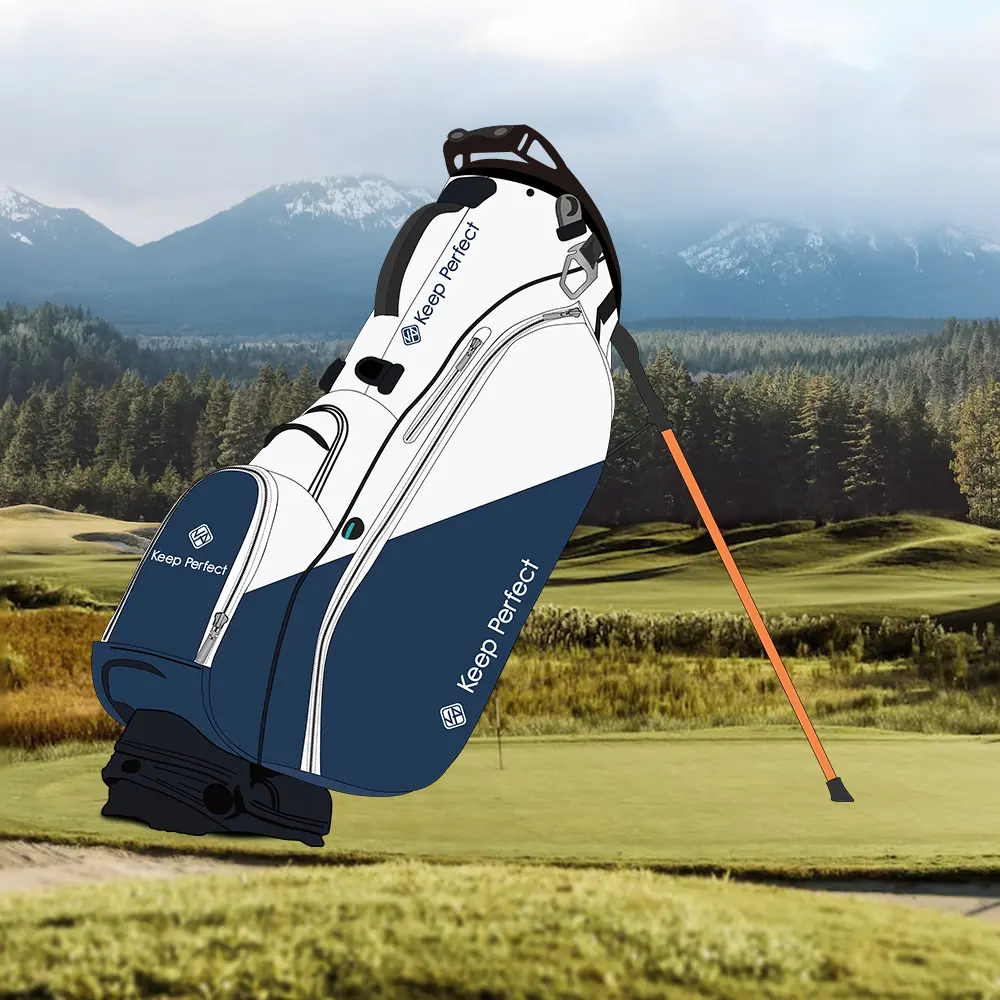
How Many Golf Bags Fit a Container? The Estimator
Building a reliable estimate means converting bags → cartons → CBM. The formula is simple but you must repeat it per carton type:
CBM of one carton = (length × width × height in meters) to 3–4 decimal places. Total CBM = per-carton CBM × number of cartons.
Here is a practical look at what typical bag programs occupy (figures are directional, based on common export carton sizes and packing densities):
| Product | Typical packed carton (L×W×H) | Qty per carton | CBM per carton | Rough volume for ~2,000 pcs |
|---|---|---|---|---|
| Golf stand/cart bag | ~130 × 35 × 28 cm | 3–4 pcs | ~0.127 m³ | ≈ 8–10 CBM |
| Travel/duffel bag | ~90 × 45 × 45 cm | 6–10 pcs | ~0.18 m³ | ≈ 6–9 CBM |
| Backpack | ~85 × 45 × 42 cm | 10–20 pcs | ~0.16 m³ | ≈ 4–6 CBM |
The bulk of the variance is the bag’s packed size and how many fit a carton — two suppliers packing the same 2,000 golf bags can land 20% apart in volume. That is why the final number must come from the actual final carton spec of your order, not a generic table.
Decision rule: compute your real total CBM from the confirmed carton dimensions. Then: < ~15 CBM → LCL ; ~15–20 CBM → quote both and compare (you need real rates); > ~20 CBM → FCL and size the box to fit (often 20GP or 40HC depending on total). Validate with your forwarder before booking.
LCL: Sharing a Container, Paying by the Cube
LCL (Less-than-Container-Load) means your cargo shares a consolidated container with other shippers’ goods, and you pay per cubic meter (and/or per ton, whichever the carrier applies — the “W/M”, weight-or-measurement basis). LCL is the entry point for most first-time importers whose order does not fill a box.
How LCL freight is calculated
The forwarder consolidates your cartons with others, and charges you by revenue CBM, subject to a minimum chargeable volume (often around 1 CBM). The billable volume is sometimes rounded up per carton (e.g., each carton rounded to the next 0.1 or 0.5 CBM), which can inflate your chargeable cube. Always ask your consolidator: “is my billable volume the actual measured CBM, or rounded per carton?”
The hidden LCL costs to watch
- Consolidation / deconsolidation (CFS) fees — charged at origin and destination for stuffing and stripping the shared container.
- Loading/unloading and handling charges per carton or per CBM.
- Origin + destination charges (OFC/THC, documentation, etc.) applied even on small boxes.
- Longer transit — the container may wait to fill, and it stops to load/de-load at multiple consolidator sites.
- Higher per-unit risk of handling — cartons are moved more times when consolidating and de-consolidating with other cargo.
Real trap: a forwarder may quote a seductive “per CBM” LCL rate that looks unbeatable, only to load on destination CFS, handling, customs-document, and freight-all-kinds charges that push the total above the FCL price for a borderline order. Ask for the all-in landed cost to your door , not just the per-CBM ocean rate, before comparing modes.
FCL: Your Own Box, Simpler and Often Cheaper at Volume
FCL (Full-Container-Load) means you book an entire container — 20GP, 40GP or 40HC — whether it is 100% full or not. The headline freight is a flat per-container price, not per CBM, which is exactly why, past a volume threshold, the per-unit cost of FCL drops sharply below LCL.
Why FCL wins on cost at volume
Once your cargo exceeds the usable volume threshold, paying a flat container rate instead of per-CBM charges removes the per-CBM multiplier, the CFS fees, and most rounding penalties. For the same 22 CBM of golf bags, an LCL bill would charge you 22 × LCL-rate plus CFS fees, while a 40GP (or sometimes a 20GP if the volume fits) is one flat number — typically far cheaper per bag and with far fewer line items.
Why FCL is often faster and cleaner
- Fewer stops — no consolidation waiting time or multi-stop stuffing.
- Less handling — your cartons are loaded at the factory/warehouse and effectively stay together until destination.
- Simpler documentation — a single, direct B/L instead of a consolidated one (and an easier telex-release process you can pair with payment terms — see import documents).
- Control — you pick the box, the carrier routing and the timing.
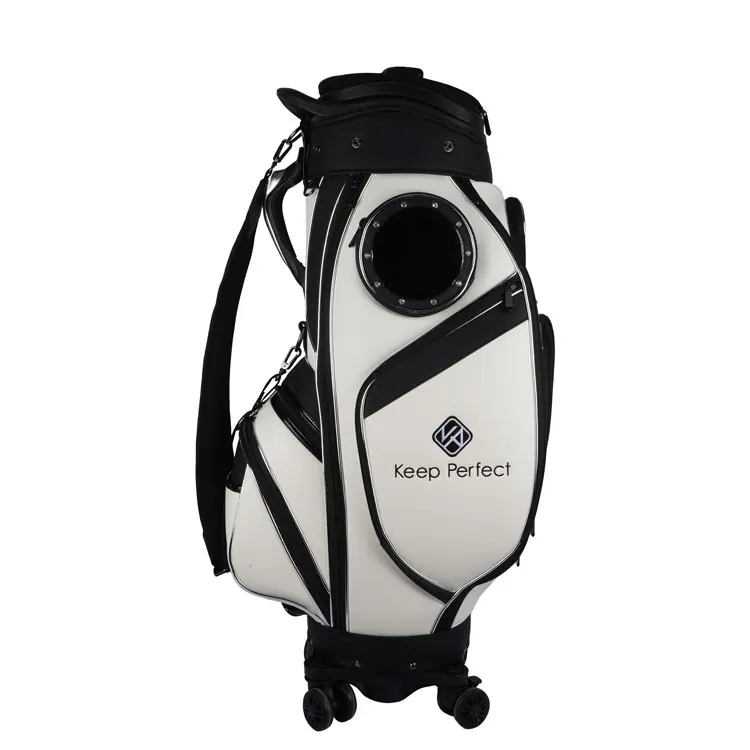
The 20GP for volume-light, weight-neutral cargo
Because bags are bulky but light, a 20GP is often the hidden winner for programs that are volume-heavy yet low in tonnage. A standard 20GP can carry far more in its 26–28 usable CBM than a typical bag order needs for weight — so for a mid-size order (say 14–20 CBM), a FCL 20GP can beat LCL on price while avoiding the 40GP overspend.
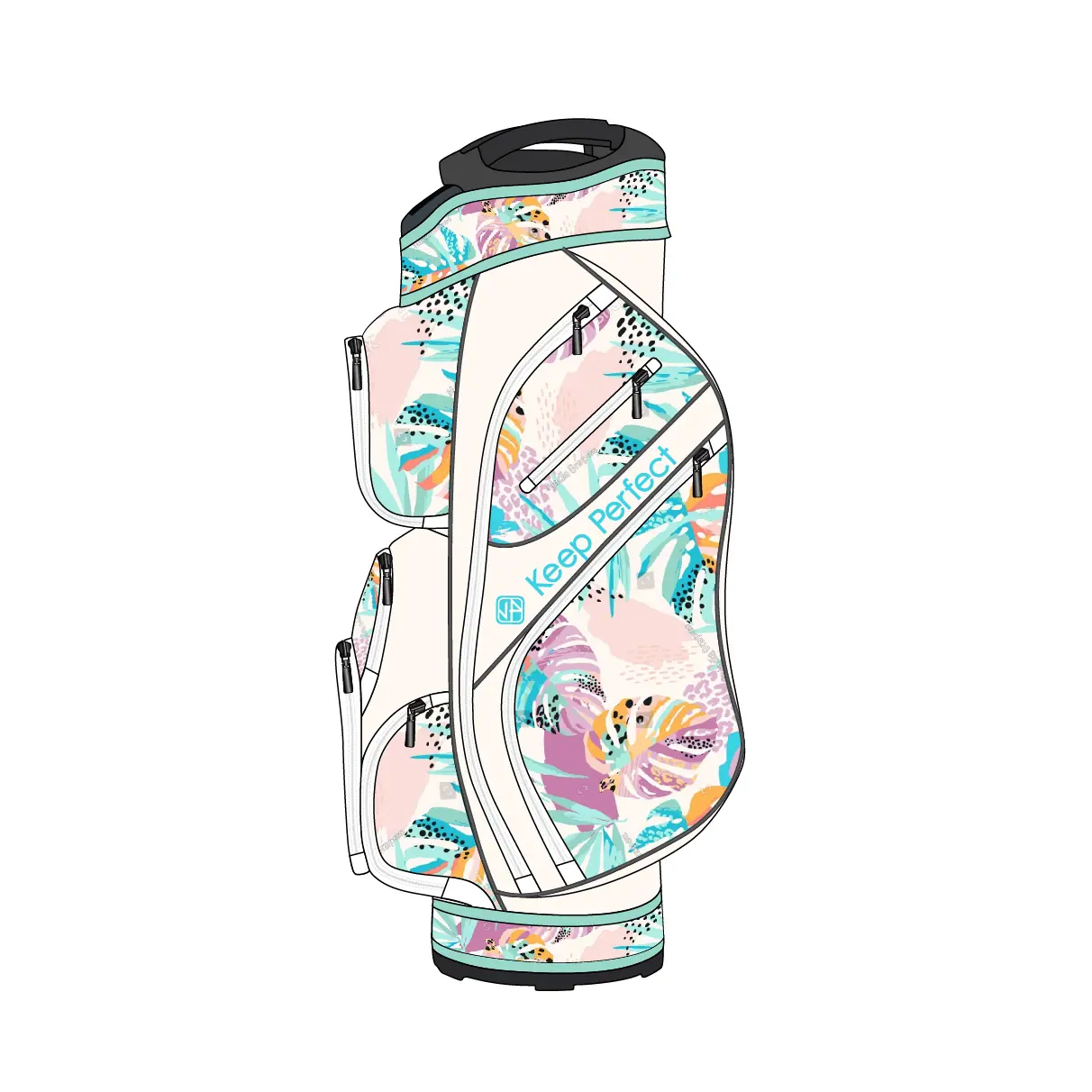
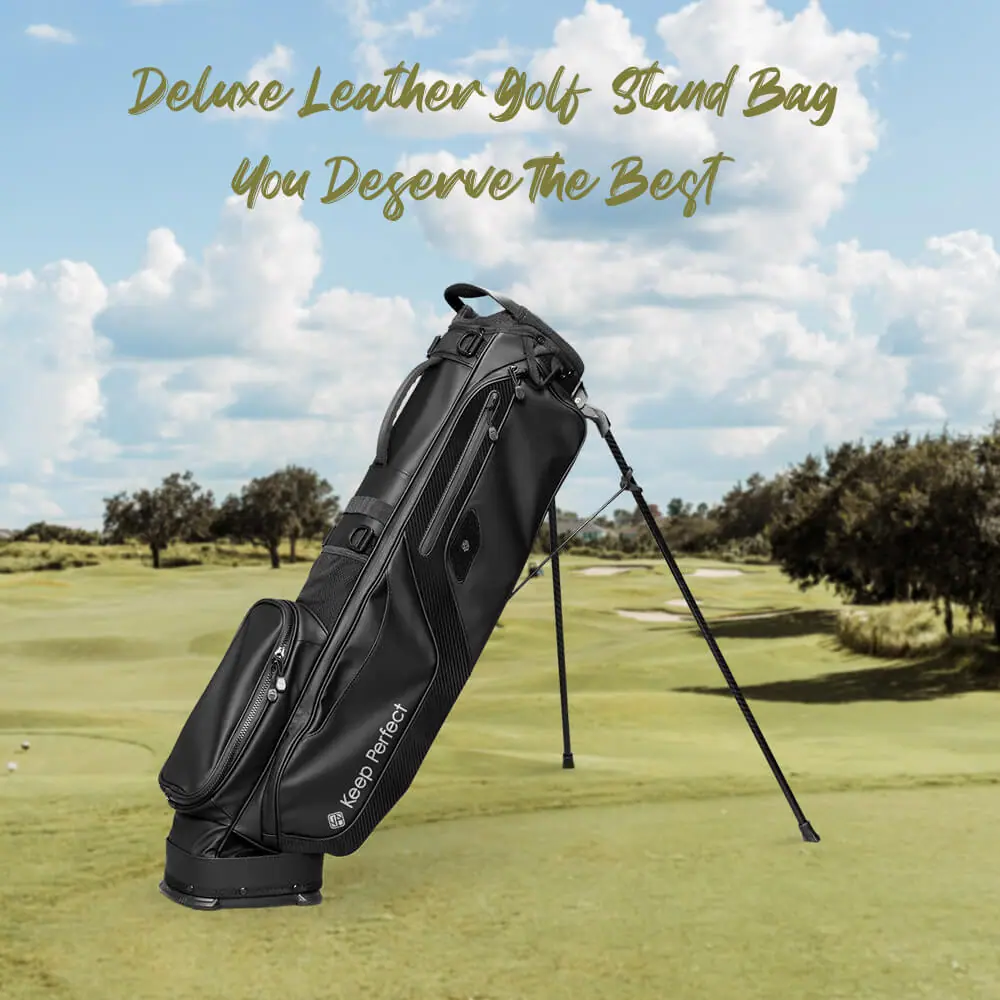
Which Ports and Transit Times to Expect
Most JUNYUAN bag orders ship through major South China and East China gateways — Xiamen, Shenzhen, Shanghai, Ningbo and Qingdao among the most common — to US (LA/Long Beach, NY/NJ), EU (Hamburg, Rotterdam, Antwerp), UK, Australia and the Middle East. Transit times vary by routing and carrier; typical ranges (sea time only, before inland drayage):
| Lane | Typical ocean transit |
|---|---|
| China → US West Coast | ~14–20 days |
| China → US East Coast / Gulf | ~28–40 days (via Panama or Suez routing) |
| China → North Europe (Hamburg/Rotterdam) | ~28–40 days |
| China → UK (Felixstowe/Southampton) | ~30–42 days |
| China → Australia | ~18–24 days |
Times are directional industry ranges and change with carrier schedules and routing (for example, disruptions such as Red Sea reroutes around the Cape can add time to Europe-bound cargo). Always confirm the current transit and cut-off with your forwarder for your sailing week.
LCL vs FCL: The Decision Table
| Factor | LCL | FCL |
|---|---|---|
| Best shipment size | ~1 – 15 CBM | ~17 – 68 CBM (20GP/40GP/40HC) |
| Charge basis | Per CBM (and W/M) | Flat per-container rate |
| Transit speed | Slower (consolidation waits, multi-stop) | Faster (single box, fewer stops) |
| Handling / damage-adjacent risk | Higher (more moves, shared cargo) | Lower (fewer moves) |
| Documentation | Consolidated B/L (house B/L) | Single direct B/L |
| Cost per unit at volume | Rises with volume (you pay for empty space in shared box) | Falls sharply as you fill the box |
| Best for | First/seasonal/test orders, samples | Replenishment, bulk programs, launch volume |
How JUNYUAN Helps You Pack and Book It Right
At QUANZHOU JUNYUAN COMMERCIAL AND TRADING CO., LTD. (founded 2014; founder’s bag-industry experience from 2004), we treat packing and freight as part of the product, not an afterthought. Because production runs through affiliated and partner facilities, we control the export carton spec and can give you measured, final CBM numbers before you book — the only reliable input to the LCL/FCL decision. Our affiliated factory is SGS-verified for Alibaba.com in March 2026 at 4,950 sqm, 7 production lines, 149 machines and 137 staff, with a monthly line capacity of 200,000 pieces, plus two branch plants and a vetted network of partner factories.
We routinely ship 20GP, 40GP and 40HC FCL loads and consolidated LCL via Xiamen, Shenzhen and Shanghai, and we’ll help you calculate volume, recommend the mode, and line up a forwarder — even on FOB terms where you take control of the booking (see our OEM/ODM export structure). For a broader freight view, our quote-request flow covers sea versus air and landed-cost guidance.
FAQ
Q: How do I choose between LCL and FCL for bag shipments?
Estimate your total CBM from real carton dimensions. Roughly, under ~15 cubic meters use LCL; above ~20 CBM FCL is usually cheaper per unit and faster; in the gap, quote both and compare all-in costs. Bags are volume-heavy, so the volume number — not weight — drives the decision.
Q: How many cubic meters (CBM) fit in a 20ft and 40ft container?
Nominal capacities are about 33 CBM for a 20ft and 67 CBM for a 40ft, but usable volume is lower — roughly 26–28 CBM for a 20ft, 56–60 for a 40ft, and 66–68 for a 40ft High-Cube after packing realities.
Q: How many golf bags fit in a container?
It depends on carton size and packing density. As a directional guide, a 20ft (≈26–28 usable CBM) often carries in the range of roughly several thousand golf bags depending on carton volume, while larger volumes of ~15–25 CBM may still go LCL or a 20GP/40GP. Estimate from your own carton CBM rather than a headline number.
Q: How is LCL freight calculated?
LCL is charged per cubic meter (and often per ton via the W/M basis), subject to a minimum chargeable volume (commonly ~1 CBM). Watch for per-carton volume rounding and add origin/destination CFS, handling and documentation fees — ask for the all-in landed price, not just the per-CBM ocean rate.
Q: Is FCL cheaper than LCL?
At small volumes no — LCL wins. Once your cargo exceeds roughly the usable capacity of a box (or ~17–20 CBM), a flat FCL rate plus fewer CFS/fees line items usually makes FCL cheaper per unit and faster. The crossover is where real quotes, not rules of thumb, settle it.
Q: How long does ocean shipping from China take?
Typical ocean transit (sea time only): ~14–20 days to the US West Coast, ~28–40 to the US East Coast, ~28–40 to North Europe, ~30–42 to the UK, ~18–24 to Australia. Add inland drayage and remember LCL can add consolidation waiting and multi-stop time.
Q: What container should I use for bulky bags?
For a mid-size volume-heavy but light order, a 20ft is often the hidden winner (bags fill space faster than weight). For larger loads use 40GP, and 40HC where extra height helps tall golf-bag cartons. Match the box to your real final CBM.
Q: Can you help me calculate volume and book freight?
Yes. We give you the final measured carton CBM from production, recommend LCL vs FCL, and help line up a forwarder from Xiamen, Shenzhen or Shanghai — including on FOB terms where you take control of the booking.
Next Step: Get Your Real CBM and Lock the Mode
Stop guessing between LCL and FCL on a headline per-CBM rate. Send us your bag design, quantity and destination port, and we’ll return the measured export-carton CBM, recommend a container mode, and help you secure a clean forwarder quote.
Get a Volume-Conscious Freight Quote
Tell us the product, carton count and target port — we’ll help you size LCL or FCL correctly before you pay a dollar of freight.
[email protected] · +86 17750020688
Explore our custom golf bags and contact pages.