
Top 10 Golf Bag Manufacturers & Suppliers in the USA 2026
The United States remains the single largest and most influential market for golf equipment worldwide, including golf bags. With more than 15,000 golf courses spread across all 50 states, over 24 million active golfers, and a deeply rooted collegiate and professional golf culture, the demand for high-quality, stylish, and functional golf bags continues to grow year after year. Whether you are a brand owner looking to launch a new line of cart bags, a retailer expanding your travel bag collection, or a PGA teaching professional sourcing customized staff bags, understanding the U.S. golf bag landscape is essential for making smart sourcing decisions.
This comprehensive guide covers everything you need to know about the top golf bag brands and manufacturers operating in the United States in 2026. We break down market dynamics, brand positioning, buyer preferences, Canadian market overlap, U.S. import regulations, and — most importantly — how to source custom golf bags from trusted Chinese manufacturers like Junyuan Bags, who has been delivering world-class OEM and ODM solutions to American brands led by a founder with bag industry experience dating from 2004. By the end of this article, you will have a clear roadmap for finding the right manufacturing partner, navigating compliance requirements, and launching products that resonate with American golfers.
Why the U.S. Golf Bag Market is Booming
The United States has long been the epicenter of the global golf industry, and the golf bag segment is no exception. Several structural and cultural factors combine to make this the most dynamic market for golf bag manufacturers and suppliers in the world.
Golf course density and player demographics. The USGA reports that there are approximately 15,000+ golf facilities in the United States, ranging from exclusive private country clubs to municipal daily-fee courses. According to the National Golf Foundation, there are over 24.7 million golfers in the U.S., a number that has been steadily climbing thanks to initiatives aimed at making the game more accessible to younger players, women, and minority communities. The post-pandemic golf boom — which saw participation surge by roughly 20% between 2020 and 2022 — has largely stabilized, but participation levels remain well above pre-2020 benchmarks, sustaining robust demand for equipment of all kinds, including bags.
The PGA Tour effect. The PGA Tour generates billions in annual revenue and its influence on equipment purchasing decisions cannot be overstated. When top professionals carry a particular brand of staff bag on television, it directly drives consumer demand. The 2024–2026 era has seen increased viewership and attendance across PGA Tour events, LIV Golf events, and major championships, all of which amplify the visibility of premium golf bags and fuel aspirational buying among amateurs.
Collegiate and junior golf culture. Unlike most other countries, the United States has a massive collegiate golf ecosystem. The NCAA sponsors Division I, II, and III golf championships, and hundreds of universities offer golf scholarships. This creates a built-in demand channel for team bags, travel bags, and customized carry bags that simply does not exist at the same scale elsewhere. Junior golf programs through organizations like the AJGA and First Tee add another layer of demand for age-appropriate bags and junior-sized stand bags.
Market growth drivers. The overall U.S. golf equipment market, including bags, is projected to grow at a CAGR of 4–6% through 2028. Key drivers include the continued premiumization of golf equipment, the rise of golf travel (which boosts demand for travel covers and premium cart bags), and the increasing popularity of lightweight, tech-integrated bags with GPS pockets, USB charging ports, and carbon-fiber stands. Golf bag manufacturers who can combine innovation with cost efficiency are exceptionally well-positioned in this expanding market.

Top Golf Bag Brands Dominating the USA
The American golf bag market is shaped by a mix of legacy golf giants and newer premium challengers. Below are the eight most influential brands that define what U.S. golfers look for in quality, design, and performance.
1. Titleist (FootJoy / Acushold). Titleist remains one of the most trusted names in American golf. Their golf bag line — ranging from the premium Players 4 stand bag to the Cart 15 and the Tour Staff bag — is known for clean, understated aesthetics and meticulous craftsmanship. Price points range from $300 to $600+. Titleist bags are a staple on the PGA Tour and at private clubs nationwide.
2. Callaway. As the parent company that also owns OGIO and TravisMathew, Callaway offers an expansive bag portfolio targeting every segment. The Callaway Org series and Chrome Soft-branded bags are top sellers at retail. Callaway bags are praised for innovative pocket configurations and bold colorways, typically priced between $200 and $500.
3. TaylorMade. TaylorMade’s golf bags are designed to match the performance ethos of their clubs and balls. The FlexTech series, with its dual-stand design and collapsible structure, is a bestseller. TaylorMade staff bags are frequently seen on tour. Their price range spans $250 to $550, with special editions and tour models reaching higher.
4. Sun Mountain. Based in Richland, Washington, Sun Mountain is a pure-play golf bag manufacturer that has earned fierce loyalty among American golfers. Known for exceptional quality-to-price ratios, their C-170 cart bag and Three-Jack stand bag are perennial bestsellers. Sun Mountain bags typically range from $200 to $450.
5. OGIO. Now a subsidiary of Callaway, OGIO has carved out a niche with bold, automotive-inspired designs. The Silencer and Alpha bags are instantly recognizable on American courses. OGIO appeals to golfers who want their bag to make a statement, with prices from $200 to $400.
6. PING. PING’s Hoofer and Glide bags are legendary in the U.S. market. The brand is known for its custom fitting philosophy that extends to bags, including extensive color and personalization options. PING bags are popular among serious club golfers and tour players alike, typically priced at $250 to $500.
7. Scotty Cameron (by Titleist). Scotty Cameron’s circle-gear branded staff bags and premium putter headcovers have a cult-like following in the U.S. While the bag line is narrower, the brand’s prestige commands premium pricing, with staff bags often exceeding $500.
8. Vessel. Founded by Matt Kuchar, Vessel represents the new wave of ultra-premium golf bags in America. Using high-end materials like vegan leather and magnetic closures, Vessel bags sell for $400 to $800+ and are increasingly visible on tour. For B2B buyers, Vessel’s success proves that there is strong appetite for luxury-positioned bags in the U.S. market.
Together, these brands set the benchmark for design, material quality, and functionality that American golfers expect. For OEM and ODM manufacturers, studying their product lines provides invaluable insight into what sells in the U.S. market. If you want to understand the broader manufacturing process behind these products, our complete guide to custom golf bag manufacturing offers a deep dive into every stage of production.
Golf Bag Market in Canada
While this article focuses primarily on the United States, no discussion of the North American golf bag market is complete without acknowledging Canada. With approximately 2,400 golf courses and over 5.7 million golfers, Canada represents a significant market that is deeply intertwined with the U.S. in terms of brand preferences, distribution channels, and seasonal buying patterns.

The Canadian golf bag market closely mirrors U.S. trends. The same major brands — Titleist, Callaway, TaylorMade, Sun Mountain, and PING — dominate retail shelves at Golf Town, TGW’s Canadian shipping operations, and independent pro shops across the country. Canadian golfers share American preferences for durable, waterproof cart bags with ample storage, and the demand for premium travel bags is equally strong given the popularity of golf vacations to destinations like Myrtle Beach, Scottsdale, and the Caribbean.
However, there are some Canada-specific considerations. Bilingual labeling requirements (English and French) apply to all consumer goods sold in Canada, including golf bags. Import duties under the USMCA (United States–Mexico–Canada Agreement) may differ from U.S. MFN rates, and Canadian importers must comply with regulations administered by the Canada Border Services Agency (CBSA). Additionally, Canada’s shorter golf season — roughly May through October in most provinces — means that inventory planning and order lead times must be adjusted accordingly, with spring shipments arriving well before the first tee time.
For manufacturers exporting from China, serving the North American market often means shipping to both the U.S. and Canada simultaneously. Many brands handle both markets from a single distribution hub in the U.S. Midwest. Junyuan Bags, for example, ships to distributors across North America and can accommodate Canadian-specific labeling and compliance needs as part of our OEM service offering.
Key Factors When Choosing a Golf Bag Manufacturer
Selecting the right manufacturing partner is the single most important decision for any golf bag brand or retailer. The quality of your bags — and ultimately your brand reputation — depends on the capabilities, processes, and reliability of your factory. Here are the critical factors to evaluate.

Material quality and selection. The materials used in a golf bag determine its durability, weight, water resistance, and aesthetic appeal. Premium bags use 1200D or higher polyester, genuine or synthetic leather, and high-denier nylon. Mid-range bags typically use 600D polyester with PU coating. A capable manufacturer should offer a wide range of material options and help you select the best combination for your target price point. For a detailed breakdown of material choices, see our guide to choosing golf bag materials.
Weight engineering. American golfers — particularly those who walk the course — are increasingly weight-conscious. A premium stand bag that weighs 4 lbs instead of 5.5 lbs can command a significantly higher retail price. Your manufacturer must have experience with lightweight construction techniques, including carbon-fiber stand mechanisms, minimal-frame designs, and lightweight yet durable zippers and hardware.
Waterproof and weather resistance. Golf is an outdoor sport played in all conditions. Waterproof zippers, sealed seams, waterproof fabric panels, and rain hoods are essential features for the U.S. market, particularly in regions like the Pacific Northwest, Southeast, and Northeast where rain is common. Your factory should be able to demonstrate proven waterproof construction methods and, ideally, hold relevant certifications.
Customization capability. In a market as competitive as the U.S., differentiation is everything. Your manufacturer must support extensive customization — from fabric colorways and zipper pulls to embroidered logos, custom liner prints, and molded EVA panels. Junyuan Bags offers full OEM and ODM services with our comprehensive logo customization options, including embroidery, screen printing, debossing, and our proprietary FlyKnit technology that allows for intricate, full-surface woven designs.
MOQ and lead time. Minimum order quantities and production timelines can make or break a product launch. For emerging brands, a factory that demands 1,000+ pieces per style per color is prohibitive. Junyuan Bags offers an accessible MOQ of just 300 pieces per style per color — one of the lowest in the industry — with typical lead times of 45–60 days for bulk orders. Our 48-hour 3D Tech Pack service allows you to review and approve a photorealistic digital prototype before any physical sampling begins, dramatically shortening the development cycle.
Quality control and certifications. Consistent quality is non-negotiable. Your factory should have a documented QC process covering incoming material inspection, in-process checks, and final random inspection (AQL standards). Certifications like BSCI (Business Social Compliance Initiative) and ISO 9001 demonstrate a factory’s commitment to quality management and ethical manufacturing. Junyuan Bags holds both BSCI and ISO 9001 certifications, and we follow rigorous quality control and inspection protocols at every stage of production. Our affiliated factory — SGS-verified for Alibaba.com in March 2026 at 4,950 sqm with 137 skilled staff at the SGS-verified main plant produces over monthly line capacity of 200,000 pieces (SGS-verified) for 200+ brands across 100+ countries.
U.S.-Specific Market Insights & Buyer Preferences
Understanding what American golf bag buyers actually want — and how they buy — is essential for sourcing products that sell. Here are the key market insights for 2026.
Category mix: Cart bags lead, travel bags surge. The U.S. market skews heavily toward cart bags, which account for approximately 50–55% of all golf bag sales. This reflects the American preference for riding in golf carts — a cultural norm at most U.S. courses. Stand bags hold roughly 25–30% of the market, with carry bags and travel bags making up the remainder. Travel bags have seen particularly strong growth, driven by the post-pandemic surge in golf tourism. If you are sourcing for the U.S. market, a product lineup weighted toward cart bags and travel covers is the smartest strategy.
Color and design preferences. American golf bag buyers tend to prefer a balance between classic and bold. Black, navy, and white remain the top-selling base colors, but there is strong demand for accent colors — particularly red, royal blue, and lime green — in zippers, piping, and pocket panels. Camo patterns remain surprisingly popular in the Southeast and Midwest. Tour-inspired designs — clean lines, minimal branding, premium materials — are the dominant aesthetic trend in 2026, with many consumers seeking bags that look like what they see their favorite pros carrying.
Price sensitivity and purchasing channels. The U.S. golf bag market spans a wide price spectrum. Entry-level bags sell for $50–$150, mid-range bags for $150–$350, and premium bags for $350–$800+. The sweet spot for volume sales is the $150–$300 range. Purchasing channels include big-box retailers (Dick’s Sporting Goods, Golf Galaxy), e-commerce (Amazon, TGW, GlobalGolf), direct-to-consumer brand websites, and pro shops at golf courses. For brands, selling through multiple channels simultaneously is increasingly the norm.
Emerging trends. Sustainability is beginning to influence purchasing decisions, particularly among younger golfers. Recycled polyester, PFC-free water repellent treatments, and vegan leather alternatives are no longer niche features. Additionally, smart features — such as built-in GPS mounts, Bluetooth tracker pockets (for Apple AirTag or Tile), and integrated USB charging ports — are moving from novelty to expectation in the premium segment. Manufacturers who can integrate these features without significantly increasing weight or cost will have a competitive advantage.

How to Source Custom Golf Bags from China
China remains the world’s dominant manufacturing hub for golf bags, producing an estimated 70–80% of all golf bags sold globally. For American brands and retailers, sourcing from China offers unmatched advantages in cost efficiency, production capacity, material availability, and customization flexibility. Here is how the process works and what to watch for.
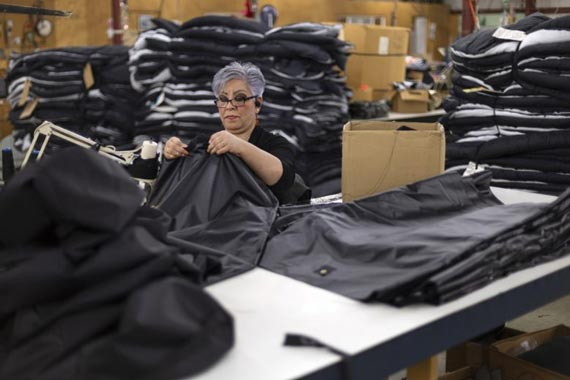
OEM vs. ODM explained. OEM (Original Equipment Manufacturing) means you provide the designs, specifications, and branding, and the factory produces to your exact requirements. ODM (Original Design Manufacturing) means the factory provides existing designs that you customize with your branding and minor modifications. Most American golf bag brands use OEM, as the U.S. market demands high levels of differentiation. Junyuan Bags supports both OEM and ODM, with our 48-hour 3D Tech Pack service making the OEM process faster and more accessible than ever. You can learn more about the full workflow in our sample development and prototyping guide.
Sample development and approval. Before committing to bulk production, always request and approve physical samples. The typical process involves: (1) tech pack review or 3D design approval, (2) first physical sample in 7–15 days, (3) revision sample if needed, (4) pre-production sample for final sign-off. Junyuan Bags provides comprehensive support throughout this cycle, with dedicated project managers who understand Western brand expectations and communicate fluently in English.
Quality control at scale. When ordering thousands of units, consistency is critical. Your factory should provide in-line inspection reports, pre-shipment inspection reports with photos, and comply with AQL 2.5 or better for major defects. Junyuan Bags maintains rigorous quality control and inspection standards, with third-party audit capabilities available upon request.
Shipping and logistics. Ocean freight from China to U.S. West Coast ports typically takes 14–20 days; to East Coast ports, 25–35 days via Panama Canal. Air freight is available for urgent orders but is significantly more expensive. Proper packaging and shipping planning is essential to avoid stockouts and minimize landed costs. Junyuan Bags can arrange FOB, CIF, or DDP shipping based on your needs.
Section 301 tariffs. Since 2019, golf bags imported from China into the United States have been subject to Section 301 tariffs, currently at 7.5% in addition to the standard MFN duty rate of approximately 17.6% (HTS code 4202.92). This brings the total duty to roughly 25%. Savvy importers factor this into their costing models and work with customs brokers to optimize classification and duty management. Despite these tariffs, Chinese manufacturing remains cost-competitive due to the scale advantages, material infrastructure, and labor expertise that simply cannot be replicated in other sourcing countries at comparable quality levels.
U.S. Import Regulations & Compliance for Golf Bags
Importing golf bags into the United States requires compliance with several federal regulations. Understanding these requirements before placing orders prevents costly delays and penalties at customs.
Harmonized Tariff Schedule (HTS) classification. Golf bags are classified under HTS Chapter 42, specifically heading 4202 (trunks, suitcases, bags, and similar containers). The exact subheading depends on the outer material: bags with outer surfaces of textile materials fall under 4202.92, while bags with plastic or leather outer surfaces fall under different subheadings. Correct classification determines your duty rate and is essential for accurate cost calculations.
Country of origin marking. U.S. Customs and Border Protection (CBP) requires all imported goods to be marked with their country of origin in a conspicuous and permanent manner. For golf bags, this means a permanently attached label or tag stating “Made in China” (or the applicable country). Failure to properly mark goods can result in additional duties, penalties, or refusal of entry.
Material compliance. Golf bags sold in certain U.S. states — most notably California under Proposition 65 — may require warning labels if they contain chemicals known to cause cancer or reproductive harm. This can include certain phthalates in PVC materials, lead in metal hardware, or specific azo dyes in textiles. Responsible manufacturers test materials for compliance with CPSC guidelines and state-level regulations. Junyuan Bags can provide Prop 65-compliant products and supply necessary test documentation.
Intellectual property. The U.S. market is particularly sensitive to IP issues. Importing bags that infringe on registered trademarks, design patents, or trade dress can result in CBP seizure and legal liability. Always ensure your designs are original or properly licensed. Working with an established OEM partner like Junyuan Bags — who has served 200+ brands across 100+ countries and understands Western IP standards — significantly reduces this risk.
FAQ
1. How many golf bags are sold in the U.S. each year?
The U.S. golf bag market sells approximately 2.5–3 million units annually across all categories, including cart bags, stand bags, carry bags, and travel covers. Cart bags represent the largest category by volume.
2. What is the average price of a golf bag in the USA?
The average retail price for a quality golf bag in the U.S. ranges from $150 to $350 for mid-range models. Premium brands like Vessel, Titleist, and Scotty Cameron command $400 to $800+. Entry-level bags start around $50.
3. What is the tariff rate for importing golf bags from China to the USA?
Golf bags from China face a base MFN duty of approximately 17.6% (HTS 4202.92) plus a 7.5% Section 301 tariff, bringing the total to roughly 25%. Duty rates can vary based on specific material composition and classification.
4. What MOQ do I need to order custom golf bags from Junyuan Bags?
Junyuan Bags offers a minimum order quantity of just 300 pieces per style per color — one of the lowest in the industry. This makes it accessible for emerging brands, startup labels, and small pro shops to launch custom bag lines without excessive upfront investment.
5. How long does it take to develop a custom golf bag sample?
With Junyuan Bags’ 48-hour 3D Tech Pack service, you can review a photorealistic digital prototype within two days. Physical samples typically take 7–15 days. Full sample development, including revisions and pre-production approval, usually takes 3–5 weeks total.
6. Can I manufacture eco-friendly golf bags in China?
Yes. Many Chinese manufacturers, including Junyuan Bags, can produce golf bags using recycled polyester (rPET), PFC-free DWR treatments, organic cotton linings, and vegan leather alternatives. Sustainability-certified materials are increasingly available and can help your brand meet growing consumer demand for responsible products.
7. Do I need any certifications to sell golf bags in the USA?
Unlike electronics or children’s products, golf bags do not require mandatory federal certifications. However, compliance with California Proposition 65, proper country-of-origin labeling, and HTS classification are required. BSCI and ISO 9001 certifications for your factory are strongly recommended as they demonstrate quality and ethical standards to retailers and consumers.
8. Does Junyuan Bags ship directly to the United States?
Yes. Junyuan Bags regularly ships to the United States and supports FOB, CIF, and DDP terms. We can ship to any U.S. port or directly to your warehouse or third-party logistics provider. Our packaging and shipping team handles all documentation, customs clearance support, and logistics coordination.
Conclusion
The U.S. golf bag market in 2026 offers tremendous opportunity for brands, retailers, and entrepreneurs who understand what American golfers want and who they partner with for manufacturing. The market is large, sophisticated, and competitive — but it rewards quality, innovation, and smart sourcing.
The brands dominating the U.S. market — from Titleist and Callaway to Sun Mountain and Vessel — have succeeded by consistently delivering products that meet the exacting expectations of American golfers. For B2B buyers, the path to competing in this market runs through finding a manufacturing partner who combines world-class quality with the flexibility to support custom designs, reasonable MOQs, and reliable delivery.
Junyuan Bags, Established in 2014, is that partner. With a SGS-verified 4,950 sqm affiliated manufacturing facility, 137 skilled staff at the SGS-verified main plant, BSCI and ISO 9001 certifications, monthly line capacity of 200,000 pieces (SGS-verified), and a track record of serving 200+ brands in over 100 countries, we are uniquely equipped to help you succeed in the American market. Our FlyKnit technology, 48-hour 3D Tech Pack service, and MOQ of just 300 pieces make it easier than ever to launch premium custom golf bags.
Ready to start your next golf bag project? Contact us at [email protected] or call +86 17750020688 to request a quote and discover why leading American brands trust Junyuan Bags as their manufacturing partner.