
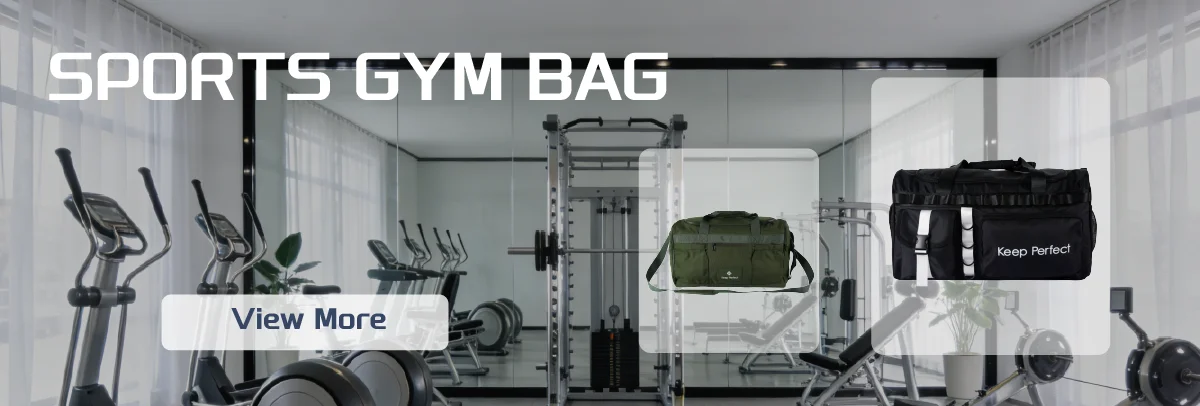
China produces over 65% of the world’s sports bags, with an annual output exceeding 1.8 billion units valued at approximately $12.4 billion in 2025. Whether you’re a brand launching a gym bag line, a sports team sourcing equipment bags, or a retailer building a private-label program, understanding how custom sports bag manufacturing works in China is the single most important step toward a profitable product.
This guide covers every stage — from materials and manufacturing processes to cost structures, quality standards, and import logistics — so you can make informed sourcing decisions with confidence.
What Is Custom Sports Bag Manufacturing
Material Selection and Sourcing
Custom sports bag manufacturing is the end-to-end process of designing, prototyping, and mass-producing sports bags to a buyer’s exact specifications — including dimensions, materials, colors, branding, hardware, and packaging — typically through a established bag factory in a manufacturing hub like China.
Unlike buying wholesale bag factory or off-the-shelf products, custom manufacturing gives brands full control over every detail. The process starts with a tech pack or design brief, moves through sample development (usually 2–3 rounds), and culminates in bulk production runs that can range from 500 to 100,000+ units per order.
Material Selection and Sourcing (Continued)
Key market data: The global sports bag market was valued at $15.3 billion in 2025 and is projected to grow at a CAGR of 5.8% through 2030, reaching approximately $20.2 billion. China remains the dominant manufacturing base, accounting for roughly 65–70% of global production volume.
Key advantages of manufacturing custom sports bags in China include:
- Cost efficiency: Production costs are typically 30–50% lower than in Vietnam or India for comparable quality levels
- Supply chain density: Guangzhou, Quanzhou, and Xiamen host over 3,000 bag manufacturers within a 200 km radius
- Material availability: China produces over 80% of the world’s polyester and nylon fabrics used in bag manufacturing
- Scalability: Factories can handle orders from 500 pieces (for startups) to 500,000+ pieces (for major brands)
Design and Prototyping Process
For a deeper look at how custom bags are designed from concept to production, see our Ultimate Guide to Custom Bag Design for Businesses.
Types of Sports Bags
Material Selection and Sourcing
Sports bags come in a wide range of styles, each engineered for specific use cases, carrying needs, and target demographics. Below is a comprehensive breakdown of the most common categories manufactured in China.

| Type | Typical Size (L) | Common Use | Price Range (FOB) | Popular Materials |
|---|---|---|---|---|
| Gym Bag / Duffel Bag | 25–50L | Personal fitness, travel | $3.50–$8.00 | 600D Polyester, Nylon |
| Team Sports Bag | 40–80L | Team equipment transport | $5.00–$12.00 | 1680D Ballistic Nylon |
| Equipment Bag | 30–60L | Sport-specific gear (hockey, baseball) | $6.00–$15.00 | 1680D, Tarpaulin |
| Shoe Bag | 5–15L | Shoe storage, separate compartment | $1.50–$4.00 | 420D–600D Polyester |
| Backpack Sports Bag | 20–40L | Multi-use athletic carry | $4.00–$10.00 | Ripstop Nylon, Polyester |
| Tennis/Racquet Bag | 15–30L | Racquet + accessory carry | $4.00–$9.00 | 600D Polyester, PVC |
| Swim Bag | 10–25L | Wet/dry separation for swim gear | $2.50–$6.00 | TPU-coated Polyester |
| Drawstring Bag | 5–12L | Lightweight gym, events, promos | $0.80–$2.50 | 210D–420D Polyester |
| Cooler Sports Bag | 15–30L | Insulated food/drink transport | $4.00–$10.00 | TPEVA + PEVA lining |
| Wheeled Sports Bag | 50–100L | Heavy equipment, travel teams | $12.00–$28.00 | 1680D + ABS frame |
Design and Prototyping Process
By Sport Category
- Football/Soccer bags: Usually duffel or backpack style, 35–60L, with ventilated compartments
- Basketball bags: Open-top duffel or mesh bags, designed for ball + shoe separation
- Baseball/Softball bags: Barrel-style or backpack, bat compartment required
- Golf bags: Hybrid stand bags or cart bags, specialized structural design — explore our Custom Golf Bag OEM Guide
- Yoga/Pilates bags: Slim profile, mat carrier strap, 10–20L
- Cycling bags: Pannier-style or backpack, reflective elements, waterproof construction
OEM/ODM Process and Requirements
Over 60% of custom sports bag orders in China fall into the gym bag/duffel and team equipment categories, according to 2025 industry export data.
Materials for Sports Bag Manufacturing
Material Selection and Sourcing
Material selection is the single largest factor influencing durability, weight, water resistance, print quality, and cost. Here’s a detailed comparison of the most widely used materials in sports bag manufacturing.

| Material | Denier | Weight (g/m²) | Tensile Strength | Water Resistance | Cost Index | Best For |
|---|---|---|---|---|---|---|
| 210D Polyester | 210 | 80–90 | Moderate | Low (unless coated) | ★☆☆☆☆ | Promotional drawstring bags |
| 420D Polyester | 420 | 140–160 | Good | Medium | ★★☆☆☆ | Lightweight gym bags, shoe bags |
| 600D Polyester | 600 | 200–240 | High | Medium-High | ★★★☆☆ | Standard duffel, team bags |
| 900D Polyester | 900 | 280–320 | Very High | High | ★★★★☆ | Premium equipment bags |
| 1680D Ballistic Nylon | 1680 | 400–450 | Excellent | High | ★★★★★ | Heavy-duty, luxury sports bags |
| Cordura Nylon (500D/1000D) | 500–1000 | 200–380 | Excellent | High | ★★★★★ | Tactical/premium sports gear |
| Ripstop Nylon | 20–40 ripstop | 60–120 | Very High (tear-resist.) | Medium | ★★★☆☆ | Ultralight sports backpacks |
| TPU-coated Polyester | Varies | 200–350 | High | Very High (waterproof) | ★★★★☆ | Swim bags, wet/dry bags |
| PVC Tarpaulin | N/A | 400–650 | Very High | Waterproof | ★★★★☆ | Outdoor equipment, wet gear |
| Recycled Polyester (rPET) | 300–600D eq. | 180–250 | Good-High | Medium | ★★★☆☆ | Eco-conscious brands |
Material Selection and Sourcing (Continued)
Key Material Considerations
Denier refers to the weight in grams of 9,000 meters of yarn. Higher denier means thicker, heavier, and more durable fabric. For sports bags, 600D polyester is the industry standard for mid-range products, while 1680D ballistic nylon is used for premium lines.
Cordura® nylon, developed by INVISTA, is a trademarked fabric known for exceptional abrasion resistance. It is 3× more abrasion-resistant than standard nylon and 10× more than cotton canvas. Cordura 1000D is the go-to choice for tactical and premium sports bags.
Material Selection and Sourcing
Waterproofing is achieved through coatings (PU, PVC, TPU) or laminated membranes. A PU coating with a 3,000mm+ hydrostatic head rating is sufficient for most sports bags. For swim bags and wet/dry separation bags, TPU welding is preferred over sewn-and-taped construction. For more details, see our guide on Custom-Treated Materials for Sports Bags.
Industry stat: Approximately 72% of sports bags exported from China use polyester-based fabrics, with nylon accounting for 18% and specialty materials (tarpaulin, cotton blends, recycled fabrics) making up the remaining 10%.
Sports Bag Manufacturing Process Step by Step
Material Selection and Sourcing
The manufacturing of custom sports bags follows a standardized 12-step process, from initial design to final shipment. Understanding each step helps buyers plan timelines, manage expectations, and identify where to insert quality checks.

Step 1: Design & Tech Pack Development (5–7 days)
The buyer submits a design brief or tech pack specifying dimensions, materials, colors (Pantone references), logo placement, hardware, stitching details, and packaging instructions. If the buyer lacks a tech pack, the factory’s design team creates one based on reference images or sketches.
Material Selection and Sourcing (Continued)
Step 2: Material Sourcing & Procurement (3–5 days)
Factories source fabrics, zippers (YKK, SBS, or generic), buckles, webbing, foam padding, and lining from their material supplier network. Material lead time is typically 3–5 days for stock items and 7–10 days for custom-dyed fabrics.
Step 3: Pattern Making & Cutting (2–3 days)
CAD software generates cutting patterns optimized for fabric yield. Fabric is laid in piles (up to 100 layers) and cut using computer-controlled cutting machines or manual band cutters for smaller runs.
Production and Assembly Techniques
Step 4: Printing / Embroidery / Branding (2–4 days)
Logos and graphics are applied via screen printing, heat transfer, embroidery, sublimation, or rubber/silicone patches. This step runs in parallel with cutting for efficiency. See our Ultimate Guide to Custom Branding for Promotional Bags for branding options in detail.
Step 5: Sewing & Assembly (5–10 days)
Cut panels are assembled by skilled sewing operators. A standard gym bag requires 25–45 minutes of sewing time per unit. Complex bags with multiple compartments, reinforced stitching, or welded seams may take 60–90 minutes.
Production and Assembly Techniques (Continued)
Step 6: Quality Inspection – In-Process (Ongoing)
Line QC inspectors check seam strength, zipper function, logo accuracy, color consistency, and dimensional accuracy at each production stage. Target defect rate is below 2%.
Step 7: Finishing & Trimming (1–2 days)
Loose threads are trimmed, zippers are tested, straps are adjusted, and any protective film or stuffing is inserted to maintain bag shape.
Production and Assembly Techniques
Step 8: Final Quality Inspection – AQL 2.5 (1–2 days)
Finished goods undergo AQL 2.5 (Acceptable Quality Limit) random inspection per ISO 2859-1. For major brands, AQL 1.5 or zero-defect programs may apply. See the Quality Control Standards section below for detailed benchmarks.
Step 9: Packing & Labeling (1–3 days)
Bags are poly-bagged (usually in individual PE bags), labeled with UPC/EAN barcodes, hang tags, and packed into master cartons. Standard carton dimensions and weight limits are confirmed before production.
Quality Control and Testing Standards
Step 10: Warehousing & Container Loading (1–3 days)
Finished cartons are staged in the factory warehouse. Loading plans are optimized for container utilization — a 40HQ container typically holds 8,000–15,000 gym bags depending on packing configuration.
Step 11: Shipping Documentation & Customs (1–2 days)
Export documentation is prepared: commercial invoice, packing list, bill of lading, certificate of origin, and any required test reports.
Design and Prototyping Process
Step 12: Ocean/Air Freight Transit (7–35 days)
Ocean freight to the US West Coast takes 14–18 days; to Europe takes 25–30 days. Air freight takes 5–7 days but costs 4–6× more per kilogram.
For a detailed walkthrough of the sampling process specifically, see our Bag Sample Development Guide.
Cost Breakdown for Custom Sports Bags
Material Selection and Sourcing
Understanding the cost structure is essential for pricing decisions and negotiation. Below is a typical cost breakdown for a standard 600D polyester gym bag with custom logo, ordered at 3,000 pieces.
| Cost Component | Amount (USD) | % of Total |
|---|---|---|
| Fabric (600D polyester, 0.6m per bag) | $0.85 | 17% |
| Lining (210D polyester) | $0.25 | 5% |
| Zippers (SBS #8, 2 pcs) | $0.30 | 6% |
| Webbing, buckles, D-rings | $0.20 | 4% |
| Padding/foam (shoulder strap) | $0.15 | 3% |
| Cutting & Sewing labor | $1.10 | 22% |
| Logo printing (screen print, 2-color) | $0.35 | 7% |
| QC, finishing, packing | $0.30 | 6% |
| Poly bag, hang tag, carton share | $0.15 | 3% |
| Factory overhead & profit (15–20%) | $1.05 | 21% |
| Total FOB Price | $4.70 | 100% |
Material Selection and Sourcing (Continued)
How Order Quantity Affects Unit Price
| Order Quantity | Estimated Unit Price (same spec) | Price Change vs. 500 pcs |
|---|---|---|
| 500 pcs | $5.80 | — (baseline) |
| 1,000 pcs | $5.10 | -12.1% |
| 3,000 pcs | $4.70 | -19.0% |
| 5,000 pcs | $4.35 | -25.0% |
| 10,000 pcs | $3.90 | -32.8% |
| 50,000 pcs | $3.50 | -39.7% |
Cost Factors That Impact Price
- Material choice: Upgrading from 600D polyester to 1680D nylon adds 40–60% to fabric cost
- Hardware brand: YKK zippers cost 2–3× more than SBS; generic zippers are 50% cheaper than SBS
- Logo complexity: Embroidery costs $0.40–$0.80/unit; sublimation $0.25–$0.50; rubber patches $0.60–$1.20
- Custom dyeing: Custom Pantone colors require minimum 1,000m fabric per color, adding $0.10–$0.20/unit
- Structural complexity: Each additional compartment adds approximately $0.15–$0.30 to labor cost
MOQ and Lead Time
Production and Assembly Techniques
Minimum order quantities and lead times are two of the most practical concerns when sourcing custom sports bags from China. The table below summarizes typical ranges by bag type.
Minimum Order Quantities (MOQ)
| Product Type | Standard MOQ | Negotiable MOQ (with surcharge) |
|---|---|---|
| Gym Bag / Duffel | 500 pcs | 200–300 pcs (+10–15%) |
| Team Equipment Bag | 500 pcs | 300 pcs (+8–12%) |
| Shoe Bag | 1,000 pcs | 500 pcs (+5–10%) |
| Drawstring Bag | 1,000 pcs | 500 pcs (+5–8%) |
| Specialized Sport Bag (e.g., golf, hockey) | 500 pcs | 300 pcs (+10–15%) |
| Cooler Sports Bag | 1,000 pcs | 500 pcs (+10–15%) |
Material Selection and Sourcing
Key insight: MOQs are primarily driven by fabric minimums. If you can accept stock fabric colors (black, navy, grey, red), factories can often reduce MOQs significantly because they don’t need to meet dyeing minimums.
Lead Time Summary
| Stage | Duration |
|---|---|
| Sample development (1st prototype) | 10–15 days |
| Revision samples (each round) | 7–10 days |
| Sample approval to production start | 3–5 days (material procurement) |
| Bulk production | 25–35 days |
| QC + packing | 3–5 days |
| Total (sample to ship-ready) | 50–70 days |
Material Selection and Sourcing (Continued)
Factors That Extend Lead Time
- Custom fabric dyeing: +7–10 days
- Holiday periods (Chinese New Year, Golden Week): +15–20 days
- Complex multi-compartment designs: +5–7 days
- Sublimation or all-over print: +5–7 days
- Third-party inspection coordination: +2–3 days
Pro tip: Place orders in March–April or September–October to avoid peak-season bottlenecks. Chinese New Year (January–February) and Golden Week (October 1–7) cause 2–4 week factory shutdowns.
How to Choose a Sports Bag Manufacturer in China
Material Selection and Sourcing
Selecting the right factory is the most critical decision in your sourcing journey. Here’s a structured evaluation framework used by professional sourcing teams.

Evaluation Criteria & Scoring
| Criterion | Weight | What to Verify |
|---|---|---|
| Years in sports bag production | 15% | Minimum 5 years; prefer 10+ |
| Annual revenue | 10% | $3M+ for reliable mid-size factory |
| Certifications | 15% | BSCI, SEDEX, ISO 9001, WRAP |
| Sample quality | 20% | Stitching consistency, material accuracy, finish |
| Communication responsiveness | 10% | Reply within 24 hours, English proficiency |
| QC system | 10% | In-line + final inspection, AQL reports |
| Price competitiveness | 10% | Within 10% of market average |
| Flexibility (MOQ, customization) | 10% | Willingness to accommodate trial orders |
Production and Assembly Techniques
Where to Find Verified Manufacturers
- Alibaba.com: Largest directory; filter by “Verified Supplier,” “Trade Assurance,” and “Sport Bags” category. Over 12,000 sports bag suppliers are listed, but only approximately 15–20% are true manufacturers (the rest are trading companies).
- Global Sources: Stronger for established, export-oriented factories. Approximately 3,000+ sports bag manufacturers listed.
- Canton Fair (Guangzhou): Phase 2 (April 23 – May 4, October 23 – November 4) features a dedicated sports bags section with 400+ exhibitors.
- Industry clusters: Visit factories directly in Quanzhou (Fujian), Guangzhou (Guangdong), and Xiamen (Fujian) — these three cities account for over 60% of China’s sports bag exports.
Design and Prototyping Process
Red Flags to Avoid
- Cannot provide business license or factory audit report
- Quoted price is 30%+ below market average (likely trading company markup or hidden costs)
- No physical factory address or refuses factory visits
- Demands 100% payment upfront
- Sample quality differs significantly from what was shown online
Customization Options: Printing, Embroidery, Sublimation, Patches
Material Selection and Sourcing
Custom branding transforms a generic sports bag into a branded product. Here’s a comparison of the major decoration methods used in sports bag manufacturing.

| Method | Cost per Unit | Durability | Color Limit | Best Application | MOQ |
|---|---|---|---|---|---|
| Screen Printing | $0.15–$0.40 | High | 1–6 colors | Large logos, simple graphics | 300 pcs |
| Heat Transfer | $0.20–$0.50 | Medium-High | Full color (CMYK) | Photographic images, gradients | 200 pcs |
| Embroidery | $0.40–$1.20 | Very High | Up to 12 thread colors | Premium logos, text | 100 pcs |
| Dye Sublimation | $0.25–$0.60 | Very High | Full color, unlimited | All-over prints, vibrant designs | 200 pcs |
| Rubber/Silicone Patches | $0.50–$1.50 | Very High | Up to 4 colors per patch | 3D logos, premium branding | 200 pcs |
| Woven Labels | $0.10–$0.30 | Very High | Up to 8 colors | Interior branding, care labels | 500 pcs |
| PVC Patches | $0.30–$0.80 | High | Up to 4 colors | Outdoor/tactical style | 200 pcs |
| Metal Badges/Charms | $0.50–$2.00 | Very High | Enamel fill colors | Luxury branding accents | 300 pcs |
| Jacquard Weaving (integrated) | $0.80–$2.00 | Very High | Up to 4 colors | Zipper pulls, integrated logos | 500 pcs |
Material Selection and Sourcing (Continued)
Choosing the Right Method
- Budget orders (promotional, events): Screen printing or heat transfer
- Premium brands: Embroidery or rubber patches
- All-over patterns: Dye sublimation (requires polyester fabric)
- Mixed branding: Combine embroidery (main logo) + woven label (interior) + printed lining
Over 55% of custom sports bag orders in 2025 used screen printing as the primary branding method, followed by embroidery at 25% and heat transfer at 12%.
Quality Control Standards for Sports Bags
Material Selection and Sourcing
Quality control (QC) in sports bag manufacturing follows internationally recognized standards. Here’s the framework used by leading factories and third-party inspection companies.

Inspection Standards
| Parameter | Standard | Test Method |
|---|---|---|
| Seam strength | Minimum 70N per seam | ASTM D1683 |
| Zipper durability | 1,000+ open/close cycles | QB/T 2171 |
| Strap pull strength | Minimum 150N | ASTM D5171 |
| Color fastness (rubbing) | Grade 4+ (ISO scale) | ISO 105-X12 |
| Color fastness (light) | Grade 4+ | ISO 105-B02 |
| Fabric tear strength | Minimum 30N (600D polyester) | ASTM D1424 |
| Buckle/Snap pull | Minimum 80N | ASTM D5171 |
| Water resistance (coated fabric) | 2,000mm+ hydrostatic head | ISO 811 |
| Weight verification | ±5% of spec weight | Scale measurement |
| Dimensional accuracy | ±10mm of spec | Tape measurement |
Material Selection and Sourcing (Continued)
AQL Sampling Levels
| Defect Classification | AQL Level | Defects Allowed (per 1,000 pcs, General Inspection Level II) |
|---|---|---|
| Critical (safety hazard) | AQL 0 | 0 |
| Major (functional defect) | AQL 2.5 | 14 |
| Minor (cosmetic defect) | AQL 4.0 | 21 |
Common Defects Found in Sports Bags
| Defect Type | Frequency (%) | Severity |
|---|---|---|
| Uneven stitching / skipped stitches | 22% | Major |
| Color mismatch vs. approved sample | 18% | Major |
| Zipper malfunction | 15% | Major |
| Logo placement error (>5mm deviation) | 12% | Minor |
| Loose threads | 15% | Minor |
| Incorrect dimensions (>10mm) | 10% | Major |
| Wrinkles / fabric damage | 8% | Minor |
Quality Control and Testing Standards
Third-Party Inspection Providers
Major inspection companies serving the sports bag industry include SGS, Bureau Veritas, Intertek, and TÜV Rheinland. A standard pre-shipment inspection costs $250–$350 per man-day and covers 2–3 factory locations in the same region.
Importing Sports Bags from China
Design and Prototyping Process
Importing sports bags from China involves navigating customs regulations, shipping logistics, and compliance requirements. Here’s what buyers need to know for a smooth import process.
Shipping Methods Comparison
| Method | Transit Time (to US) | Transit Time (to EU) | Cost per CBM | Best For |
|---|---|---|---|---|
| Ocean FCL (Full Container) | 14–18 days | 25–30 days | $1,500–$3,500/40HQ | Large orders (5,000+ pcs) |
| Ocean LCL (Less than Container) | 18–25 days | 28–35 days | $30–$60/CBM | Medium orders (1,000–5,000 pcs) |
| Air Freight | 5–7 days | 7–10 days | $4–$7/kg | Urgent orders, samples |
| Express (DHL/FedEx/UPS) | 3–5 days | 4–6 days | $6–$12/kg | Samples, small urgent orders |
Material Selection and Sourcing
HS Codes & Tariffs
Sports bags typically fall under these Harmonized System codes:
| HS Code | Description | US Tariff Rate (2025) | EU Tariff Rate |
|---|---|---|---|
| 4202.92 | Travel bags, sports bags with outer surface of textile materials | 17.6% | 16% |
| 4202.12 | Trunks, suitcases with outer surface of plastics/textile | 17.6% | 16% |
| 4202.99 | Sports bags with other outer surfaces | 20% | 16% |
Note: US tariffs on Chinese goods under Section 301 may add an additional 7.5–25% to the base tariff rate. Always verify current rates with a licensed customs broker.
Production and Assembly Techniques
Required Documentation
- Commercial Invoice: Item description, unit price, total value, HS code, country of origin
- Packing List: Carton dimensions, gross/net weight, quantity per carton
- Bill of Lading (B/L): Issued by the shipping line or freight forwarder
- Certificate of Origin: Required for preferential tariff treatment in some countries
- Test Reports: CPSIA (US children’s products), REACH (EU), Proposition 65 (California)
- Fumigation Certificate: Required if using wooden pallets (not needed for plastic pallets)
Material Selection and Sourcing
Compliance Requirements by Market
| Market | Key Regulation | What It Covers |
|---|---|---|
| United States | CPSIA (if marketed to children under 12) | Lead content, phthalates, tracking labels |
| United States | California Proposition 65 | Chemical safety warnings |
| European Union | REACH Regulation | Restricted substances (SVHC list) |
| European Union | EN 71-3 (if children’s product) | Heavy metals migration |
| Australia | ACCC Safety Standards | Lead limits in surface coatings |
| Japan | JIS standards | Formaldehyde limits for textiles |
Production and Assembly Techniques
Pro tip: Request test reports from your factory before placing the bulk order. Testing costs $200–$500 per report but prevents costly customs holds or product recalls. Learn more about choosing the right supplier model for your business.
FAQ
Design and Prototyping Process
What is the minimum order quantity for custom sports bags from China?
Most factories set MOQ at 500 pieces per style per color for standard gym bags and duffel bags. For simpler products like drawstring bags or shoe bags, MOQ may be 1,000 pieces. Some factories accept trial orders of 200–300 pieces with a 10–15% price surcharge.
How long does it take to produce custom sports bags?
The typical total lead time is 50–70 days from design approval to ship-ready goods. This includes 10–15 days for sample development, 25–35 days for bulk production, and 3–5 days for final QC and packing. Ocean freight adds another 14–35 days depending on destination.
Material Selection and Sourcing
How much does a custom sports bag cost to manufacture in China?
A standard 600D polyester gym bag with custom logo costs approximately $3.50–$6.00 FOB at 3,000-piece quantities. Premium bags using 1680D nylon or Cordura with complex construction range from $8.00–$20.00 FOB. Simple drawstring bags start as low as $0.80–$2.00 FOB at 1,000+ quantities.
Can I get a sample before placing a bulk order?
Yes. Factories provide samples at a cost of $50–$150 per sample (including shipping), which is typically refundable against your bulk order. Sample development takes 10–15 days for the first prototype and 7–10 days for each revision round. Most buyers go through 2–3 sample rounds before approval. For details, see our Bag Sample Development Guide.
Material Selection and Sourcing (Continued)
What materials are best for durable sports bags?
1680D ballistic nylon offers the highest durability for heavy-use sports bags, followed by Cordura 1000D nylon and 900D polyester. For waterproof applications, TPU-coated polyester or PVC tarpaulin are the best options. For most mid-range sports bags, 600D polyester with PU coating provides the best balance of durability and cost.
What certifications should a sports bag factory have?
Production and Assembly Techniques
Look for BSCI (Business Social Compliance Initiative), SEDEX/SMETA, ISO 9001 (quality management), and WRAP (Worldwide Responsible Accredited Production) certifications. For product safety, require test reports for CPSIA (US), REACH (EU), or Proposition 65 (California) depending on your target market.
How do I ensure quality when manufacturing sports bags in China?
Implement a three-tier QC system: (1) in-line inspection during production to catch defects early, (2) mid-production inspection at the 50% completion point, and (3) final pre-shipment inspection using AQL 2.5 sampling standards. Hire a third-party inspection company (SGS, Intertek, Bureau Veritas) for unbiased assessment at $250–$350 per inspection.
Material Selection and Sourcing
What is the best way to ship sports bags from China?
For orders over 5,000 pieces, ocean FCL (Full Container Load) is the most cost-effective method at $1,500–$3,500 per 40HQ container. For 1,000–5,000 pieces, ocean LCL (shared container) works at $30–$60 per CBM. Air freight and express shipping are only recommended for samples or emergency restocks due to 4–6× higher costs.
Can I use my own fabric or trims for custom sports bags?
Material Selection and Sourcing (Continued)
Yes, this is called customer-supplied materials or “customer fabric.” Most factories accept this practice. However, you’ll need to ship the materials to the factory at your own cost and coordinate delivery timing. The factory will still charge for cutting, sewing, and overhead. This approach is most common for large brands with established fabric supplier relationships.
What printing method is best for sports bag logos?
Material Selection and Sourcing
Embroidery offers the most premium look and highest durability, ideal for brand logos on mid-to-high-end bags. Screen printing is the most cost-effective for large logos with limited colors. Dye sublimation is the best choice for all-over prints or photographic-quality graphics on polyester bags. Rubber/silicone patches provide a 3D premium feel for luxury or tactical-positioned brands.
Regional Manufacturing Clusters for Sports Bags in China
Material Selection and Sourcing
Understanding China’s bag manufacturing geography helps buyers identify the right factory for their specific needs. The industry is concentrated in three major clusters, each with distinct specializations and advantages.
| Region | Province | Key Specialization | Factory Count (est.) | Avg. MOQ |
|---|---|---|---|---|
| Quanzhou | Fujian | Sports bags, backpacks, outdoor gear | 1,200+ | 500 pcs |
| Guangzhou | Guangdong | Premium bags, leather goods, fashion | 1,500+ | 300–500 pcs |
| Xiamen | Fujian | Export-oriented sports bags, technical bags | 800+ | 500 pcs |
| Shiling (Huadu) | Guangdong | Luggage, trolley bags, hard cases | 600+ | 300 pcs |
| Yiwu | Zhejiang | Promotional bags, drawstring bags, low-cost | 900+ | 1,000–2,000 pcs |
Material Selection and Sourcing (Continued)
Buyer’s tip: Quanzhou and Xiamen factories specialize in sports-specific bags and tend to have deeper expertise in performance materials like Cordura nylon and TPU-coated fabrics. Guangzhou factories excel at premium and fashion-forward designs. Yiwu factories are ideal for high-volume promotional bags at the lowest price points.
The concentration of factories in these regions creates a competitive ecosystem that benefits buyers: material suppliers, hardware vendors, printing houses, and testing labs are all within a short driving distance. This vertical integration is a key reason why China maintains its cost advantage despite rising labor costs.
Sustainability Trends in Sports Bag Manufacturing
Material Selection and Sourcing
The global shift toward sustainable manufacturing has significantly impacted the sports bag industry. In 2025, an estimated 28% of custom sports bag orders from China included at least one sustainable material or process — up from just 12% in 2022.
| Sustainable Option | Cost Premium | Availability | Lead Time Impact |
|---|---|---|---|
| rPET (recycled polyester) | +10–20% | Widely available | +3–5 days |
| Recycled nylon (ECONYL®) | +30–50% | Moderate | +5–10 days |
| Organic cotton canvas | +15–25% | Available | +5–7 days |
| Water-based printing (vs. plastisol) | +5–10% | Widely available | No change |
| Recycled zippers (YKK Natulon®) | +10–15% | Moderate | +2–3 days |
| Biodegradable packaging | +5–8% | Available | No change |
Design and Prototyping Process
Leading factories now hold GRS (Global Recycled Standard) and Oeko-Tex Standard 100 certifications, which verify that recycled content claims are accurate and that finished products are free from harmful substances. Brands targeting the European and North American markets should prioritize factories with these certifications to meet increasing regulatory requirements under the EU’s Ecodesign for Sustainable Products Regulation (ESPR) and similar frameworks.
Material Selection and Sourcing
For more information on sustainable material options, see our guide on Custom-Treated Materials for Sports Bags and Top Abrasion-Resistant Fabrics for Sports Bags.
Common Mistakes to Avoid When Ordering Custom Sports Bags
Material Selection and Sourcing
Based on industry data, the following mistakes account for over 70% of sourcing failures in custom sports bag manufacturing:
- Skipping the sampling phase: 35% of quality issues trace back to inadequate sampling. Always produce at least 2 sample rounds before approving bulk production.
- Choosing the cheapest fabric: 210D polyester bags fail within 6 months of regular use. For gym bags, minimum 420D is recommended; for team bags, 600D or higher.
- Ignoring zipper quality: Zippers account for 25% of all warranty claims. Specify YKK or SBS zippers for mid-to-premium bags.
- No written QC agreement: Without a written AQL standard and inspection protocol, disputes over defect rates become unresolvable.
- Ordering during peak season: Placing orders in June–August (pre-holiday rush) or December–January (post-holiday catch-up) extends lead times by 2–4 weeks.
- Not verifying certifications independently: Some factories present forged certificates. Always verify BSCI, ISO, and SEDEX certificates directly with the issuing body.
Production and Assembly Techniques
Avoiding these mistakes alone can save $5,000–$20,000 per product launch in rework costs, delayed shipments, and customer complaints.
Payment Terms and Trade Protection
Understanding standard payment terms helps protect your investment during the manufacturing process.
| Payment Method | Typical Terms | Buyer Risk Level | Best For |
|---|---|---|---|
| T/T (Bank Transfer) | 30% deposit, 70% before shipment | Medium | Established relationships |
| Alibaba Trade Assurance | 30% deposit, 70% after QC pass | Low | New suppliers |
| Letter of Credit (L/C) | At sight or 30-day usance | Very Low | Orders over $50,000 |
| Western Union / PayPal | 100% upfront | Very High | Sample payments only |
Best practice: For first-time orders, use Alibaba Trade Assurance or a Letter of Credit for orders above $30,000. Never pay more than 30% upfront for production orders. Hold the final 70% payment until third-party inspection confirms AQL compliance.
Conclusion
Material Selection and Sourcing
Custom sports bag manufacturing in China offers unmatched advantages in cost, scalability, material variety, and supply chain efficiency. By understanding the manufacturing process, material options, cost structures, and quality standards outlined in this guide, you can source sports bags with confidence — whether you’re launching a startup brand or scaling an established product line.
The key success factors are: choosing the right factory partner, investing in proper sampling before bulk production, implementing rigorous quality control, and planning your timeline around Chinese manufacturing calendars. With the right approach, you can bring high-quality, competitively priced custom sports bags to market in as little as 3 months from concept to delivery.
Design and Prototyping Process
Ready to start your custom sports bag project? Explore our Custom Bag Design Guide or review our OEM vs ODM comparison to take the next step.
? Related: Looking for a comprehensive guide to custom leather bag manufacturing? Check out our Complete Guide to Custom Leather Bag Manufacturing — covering leather types, tanning methods, OEM/ODM process, QC standards, and branding.
? Related: Looking for a comprehensive guide to custom leather bag manufacturing? Check out our Complete Guide to Custom Leather Bag Manufacturing — covering leather types, tanning methods, OEM/ODM process, QC standards, and branding.

JUNYUAN BAGS — Professional Bag Manufacturer
JUNYUAN BAGS is a China-based bag manufacturer established in 2014, with a founder who has 20+ years of experience in bag manufacturing. We specialize in custom OEM/ODM bag manufacturing — from backpacks and handbags to golf bags and travel bags — with the factory holding SGS-audited certifications. Whether you need low MOQ sampling or full container production, the engineering and QA teams support customers from concept to final delivery. For customization inquiries, contact us at [email protected] or WhatsApp +86 17750020688.