What materials are suitable for backpacks? Four fabric families cover almost every commercial backpack: polyester oxford (600D is the industry default), nylon (210D–420D ripstop for weight-critical packs), brushed or matte polyester (300D for retail-facing softness), and cotton canvas (12–18 oz for structure and print). Everything else — CORDURA, X-PAC, recycled rPET, TPU-coated laminates — is a variant of those four with a different yarn, weave or coating. The specification that actually decides whether a backpack survives its warranty is not the fabric name but the combination of denier, grams per square metre (GSM) and coating type, quoted together. JUNYUAN BAGS builds custom backpacks to a standard MOQ of 500 pcs per style and colour, samples in 6–10 business days, runs bulk production in 35–50 days, and inspects to AQL 2.5 / 4.0 at FOB Xiamen with DDP available by arrangement.
Material choice is where most backpack programmes quietly fail. A buyer approves a swatch in a meeting room, the factory sources “600D polyester” from a second mill three months later, and the delivered bags read as a different product — thinner hand, harsher sheen, and a coating that starts to craze at the fold lines by month eight. The fabric name on the tech pack never changed. Everything underneath it did.
This guide sets out what each material family actually delivers, the three numbers that need to appear on every specification, how to test a fabric before you commit to 500 pieces, and what each choice adds to landed cost.
Backpack Material Quick-Selection Matrix
The table below is the short version. If you only read one section, read this one — then use the rest of the guide to pressure-test the specific choice.
| Fabric | Typical denier | GSM range | Best for | Water resistance (uncoated / PU-coated) | Relative fabric cost |
|---|---|---|---|---|---|
| Polyester oxford | 420D / 600D / 900D | 180–320 | School, promotional, laptop, everyday carry | None / 800–1,500 mm | Baseline (1.0×) |
| Nylon (incl. ripstop) | 210D / 420D | 110–200 | Hiking, daypacks, ultralight travel | None / 1,000–2,000 mm | 1.2–1.6× |
| Nylon 6.6 high-tenacity | 500D / 1000D | 240–420 | Mountaineering, tactical, tool bags | None / 1,500–3,000 mm | 2.0–3.0× |
| Brushed / matte polyester | 300D / 600D | 200–300 | Fashion retail, branded giveaways | None / 600–1,200 mm | 1.1–1.3× |
| Cotton canvas | 12 oz / 16 oz / 18 oz | 340–610 | Tote-backpacks, print-heavy programmes, heritage styling | None (wax or PU for water resistance) | 1.3–1.8× |
| Recycled rPET | 300D–600D | 190–310 | Any programme with a sustainability claim | None / 800–1,500 mm | 1.15–1.4× vs virgin |
Two caveats on that table. First, GSM matters more than denier for hand feel and tear strength, and two fabrics both labelled 600D can differ by 100 GSM. Second, “water resistant” without a hydrostatic head figure is a marketing claim, not a specification — ask for the mm rating or do not print the claim.
The Four Core Fabric Families, and What Each One Actually Delivers
1. Polyester oxford: the industry default, and why
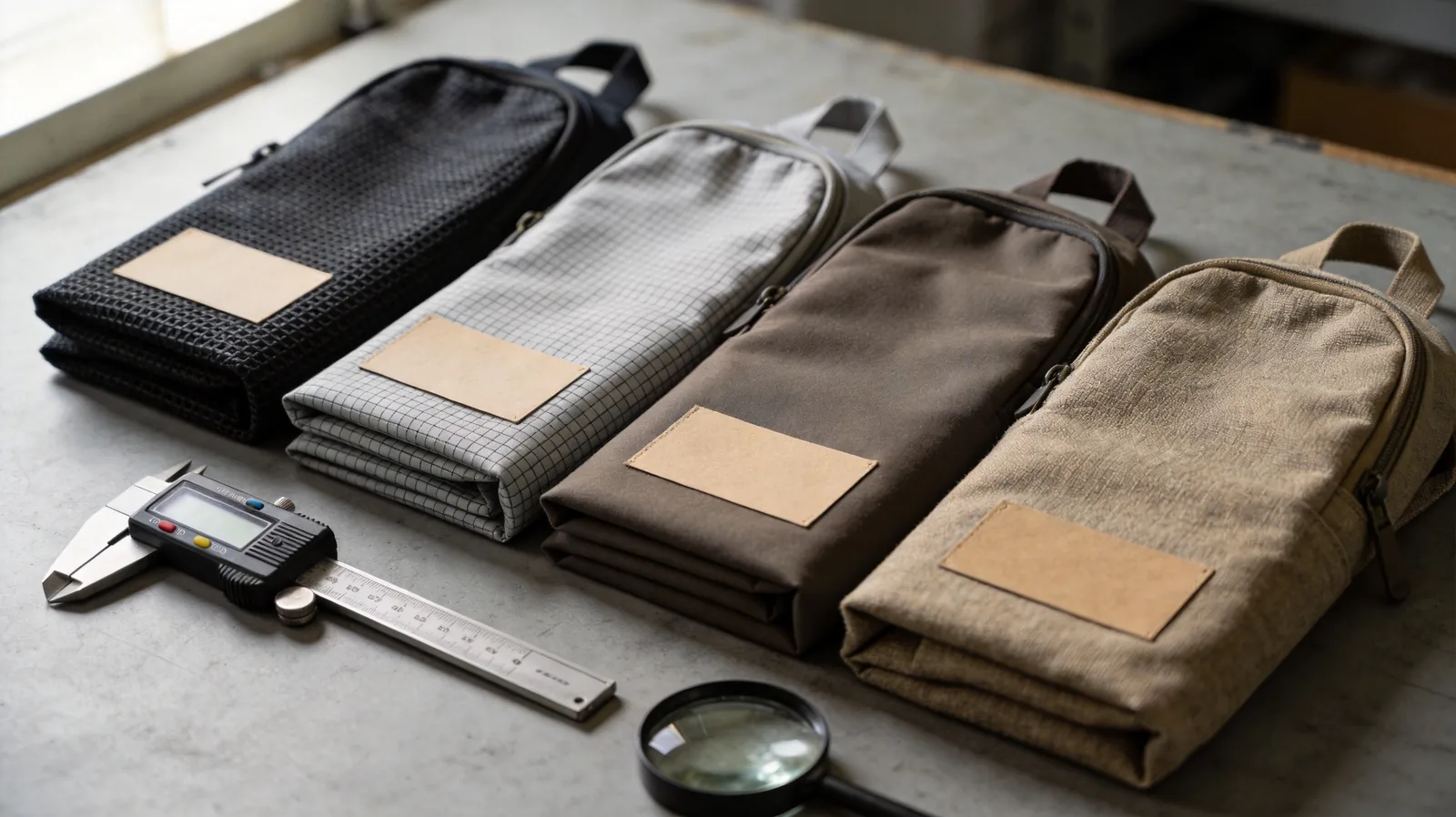
Oxford is a basket-weave fabric, traditionally two yarns crossing two yarns, which gives it a visible grid texture and good dimensional stability. In the bag trade the word has drifted: “oxford” now usually means a 600D polyester plain or basket weave with a PU backing, regardless of the original weave definition.
Its advantages are real. Polyester oxford is cheap per metre, holds colour well, resists UV better than untreated nylon, does not shrink much in cutting, and takes screen print and heat transfer cleanly. For a school backpack, a promotional bag or a laptop pack at a mass price point, 600D PU-backed oxford is the correct default and choosing anything else needs a reason.
Its limits are equally real. Standard 600D oxford at 200–240 GSM has modest tear strength, and the PU backing is where failures appear: cheap PU at low add-on weight (under 30 g/m²) will hydrolyse in humid storage, showing as a white bloom and eventual flaking at fold lines. If your bags ship to tropical markets or sit in a warehouse for a season, specify hydrolysis-resistant PU or move to TPU.
2. Nylon: lighter, stronger, and fussier to print
Nylon (polyamide) has higher tensile and tear strength per gram than polyester, which is why weight-critical categories — hiking daypacks, packable travel bags, ultralight summit packs — default to it. A 210D nylon ripstop can match the tear performance of a 420D polyester at roughly half the weight.
Ripstop construction matters here. A grid of heavier yarns at 5–10 mm intervals stops a tear from propagating, which is why almost all lightweight hiking fabric is sold as ripstop rather than plain weave. When a supplier quotes “210D nylon” without stating ripstop or plain, the tear performance is undefined.
Two practical frictions. Nylon takes dye deeply but is harder to print on with heat transfer at high temperature, and it degrades under prolonged UV unless solution-dyed or UV-stabilised. For a programme that will sit in shop windows, polyester usually photographs and ages better; for a programme that will be carried on a mountain, nylon is worth the premium.
3. Brushed and matte polyester: the retail-facing choice
Standard oxford has a technical sheen that reads as “promotional” to a retail buyer. Brushing the surface (or using a matte-spun yarn) softens the hand and kills the shine, at roughly 10–30% fabric cost premium. Most fashion-adjacent backpack programmes, brand giveaways at retail level, and lifestyle packs specify brushed 300D or 600D for exactly this reason.
The trade-off is abrasion: brushing raises fibres that pill under friction. A brushed 300D will show wear at the base corners faster than a plain 600D. If the bag has a flat bottom that contacts the ground, either add a reinforced base panel or accept a shorter visual life.
4. Cotton canvas: structure, print and weight
Canvas is a plain-weave cotton (or cotton-linen) fabric, historically named for sailcloth, specified by weight in ounces per square yard rather than denier. 12 oz is a light tote weight, 16 oz is the standard for structured totes and canvas backpacks, 18 oz and above reads as heavy heritage product.
Canvas brings three things synthetics do not: a matte, tactile surface that takes screen print and embroidery beautifully; structural body that holds a shape without a frame; and a sustainability story that consumers accept without certification gymnastics. It also brings weight — a 16 oz canvas backpack body typically weighs 30–50% more than the equivalent 600D oxford construction.
Canvas is not water resistant. Untreated canvas absorbs water and gains weight; waxed canvas sheds light rain but marks and requires care instructions; PU-backed canvas is the practical middle option for a bag that must survive a commute. Any canvas programme claiming water resistance needs a stated treatment, not a claim.
Denier, GSM and Coating: The Three Numbers That Decide Performance
Denier tells you yarn size, not fabric strength
Denier is the weight in grams of 9,000 metres of yarn. 600D means the yarn is heavier than 300D, nothing more. It says nothing about yarn count per inch, weave density, or the fineness of the filament — which is why a well-woven 420D high-tenacity nylon can outperform a loosely woven 600D polyester on every mechanical test that matters.
Treat denier as a shorthand for “how coarse does the surface look” and use GSM plus a tear test for everything else.
GSM is the number to put in the contract
Grams per square metre is the single most useful fabric specification because it is directly measurable and directly tied to cost. Practical bands for backpack fabrics:
- 110–180 GSM: lightweight nylon and packable fabrics. Suitable for stuff sacks and packable daypacks; too light for a load-bearing body panel.
- 180–260 GSM: the mainstream band. Most 600D PU-backed oxford and 420D nylon sits here. Correct for school, laptop and promotional backpacks.
- 260–420 GSM: heavy-duty band. High-tenacity nylon, 900D–1000D oxford, laminated fabrics. Correct for tool bags, mountaineering packs and load-bearing base panels.
- 340–610 GSM: cotton canvas by ounce weight. 12 oz ≈ 340 GSM, 16 oz ≈ 450 GSM, 18 oz ≈ 510 GSM.
A tolerance of ±5% on GSM is normal mill practice. Write the tolerance into the purchase order, and state that a delivery outside it is a defect — otherwise a 220 GSM substitution for a 260 GSM specification is technically compliant and commercially invisible until the bags are in market.
Coating: where the waterproof claim lives or dies
Coating is applied to the back of the fabric to block water and stabilise the weave. Four types dominate:
- PU (polyurethane): flexible, cheap, widely available. Vulnerable to hydrolysis — it absorbs atmospheric moisture and degrades, showing as a white haze and then flaking. Standard PU is fine for dry climates and short product lives; specify hydrolysis-resistant PU for humid markets.
- PVC (polyvinyl chloride): highly water resistant and cheap, but heavy, stiffens with cold, and is increasingly restricted by retailer chemical policies and EU marketing rules. Avoid for any programme selling into the EU or into retail chains with restricted-substance lists.
- TPU (thermoplastic polyurethane): the current performance default for technical bags. Better hydrolysis resistance than PU, more flexible than PVC, weldable rather than sewn, and recyclable in some streams. Costs meaningfully more per metre.
- Aqueous / water-based coating: the low-VOC option, increasingly requested by brands with sustainability targets. Requires the factory to control drying temperature and line speed tightly — a capability question rather than a material question, so ask for the coating line specification, not just the chemical name.
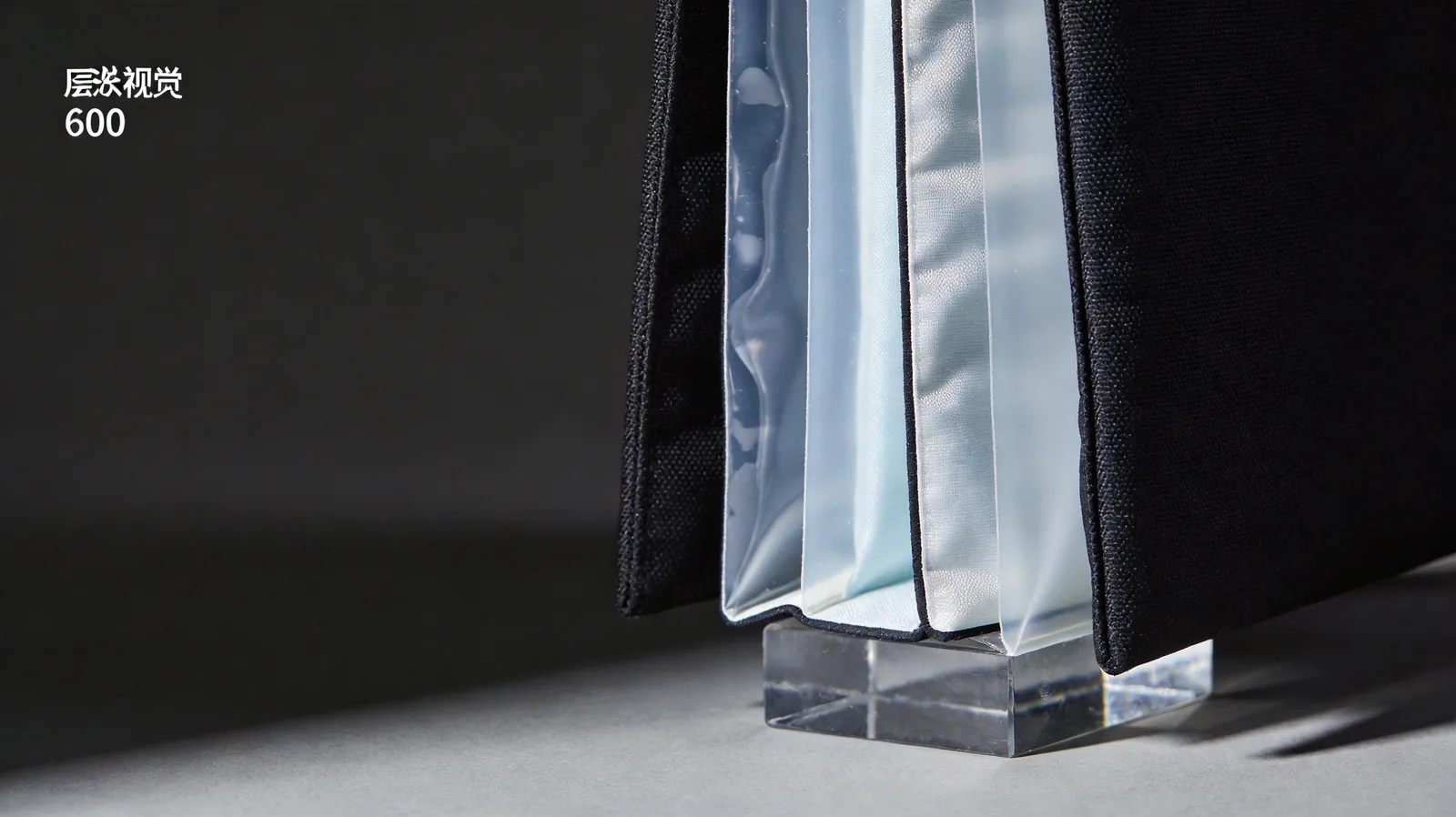
Coating weight is quoted in g/m² add-on. Under 30 g/m² is a light backing that improves hand and stability but will not stop sustained rain. 40–80 g/m² is a genuine water-resistant build. Above 100 g/m² you are into laminated territory, where a film is bonded rather than coated, and hydrostatic performance jumps into the 5,000 mm+ range.
How to Test a Fabric Before You Commit to 500 Pieces
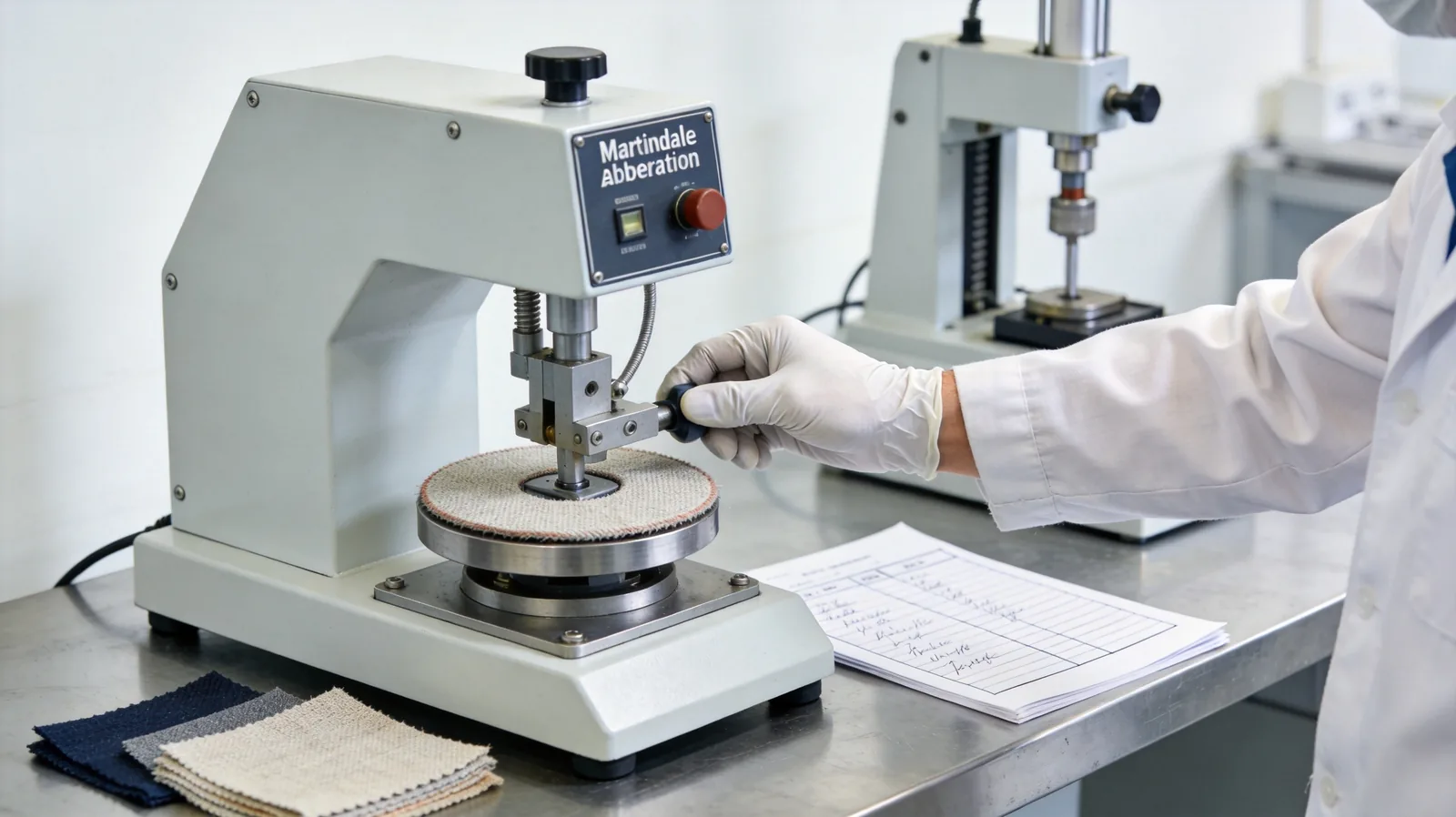
You do not need a laboratory to de-risk a fabric decision. You need one metre of each candidate and six tests, five of which any bag factory can run in-house within a week.
| Test | What it measures | Practical pass mark for a backpack body |
|---|---|---|
| Martindale abrasion | Cycles to surface wear | 20,000 cycles minimum; 30,000+ for daily-carry and tool bags |
| Tongue tear (ISO 13937) | Force to propagate a tear | 25 N warp/weft minimum for 600D class; 40 N+ for load-bearing panels |
| Tensile (ISO 13934) | Breaking force | 800 N+ warp for main body fabric |
| Hydrostatic head (AATCC 127) | Water pressure before leakage | 800 mm for “water repellent”; 1,500 mm+ for “water resistant” |
| Coating adhesion / peel | Bond strength of coating to fabric | 3 N/cm minimum; below 2 N/cm expect delamination at folds |
| Colour fastness to rubbing | Dye transfer | Grade 4 minimum dry, grade 3 minimum wet |
Run these on the actual production fabric lot, not on a sales swatch. The most common material failure in custom backpack programmes is not a bad fabric — it is a good fabric followed by a mill substitution on the production run, with no incoming inspection to catch it. A documented incoming fabric inspection with GSM weight check and a retained sample per lot closes that gap for the cost of a few minutes per roll.
Material Selection by Backpack Type
The category determines the specification more than any preference does. These are the builds that survive real use in each segment.
Laptop and commuter backpacks
Body: 600D PU-backed polyester oxford at 240–280 GSM, or 900D on the base panel. Lining: 210D polyester taffeta. Padding: 8–10 mm EVA or PE foam on the back panel, 5–8 mm on the shoulder straps. Water resistance is usually handled by a coated zipper and a small storm flap rather than a fully waterproof fabric, because the laptop compartment needs breathability more than it needs a hydrostatic rating.
Hiking and trekking daypacks
Body: 210D–420D nylon ripstop at 130–200 GSM, with a 420D–500D reinforcement on the base and the lower side panels. Weight matters more here than in any other category, so the specification should state total bag weight alongside fabric GSM. Lining: 210D polyester. Add a rain cover in 190T nylon with a PU coating rather than paying for a waterproof body fabric — covers are cheaper, replaceable and more effective in sustained rain.
Mountaineering and load-bearing packs
Body: 500D–1000D high-tenacity nylon (CORDURA-class) or a TPU-laminated ripstop, 260 GSM and above. The specification that separates a real mountaineering pack is the stitch schedule and the frame interface, not the fabric — but the fabric has to hold the stitches, which is why 210D nylon is the wrong answer here regardless of its tear rating. Read the full technical audit framework in our mountaineering backpack manufacturer guide.
School and campus backpacks
Body: 600D polyester oxford at 220–260 GSM, ideally with a printed or heat-transferred panel. Base: 600D with a PVC-free coating, or a 900D panel. This is the most price-sensitive category in the market and the one where mill substitution is most common — a 200 GSM fabric against a 260 GSM specification is the single most frequent hidden downgrade we see in competitive quotations.
Promotional and giveaway bags
Body: 210D–420D polyester at 110–180 GSM, or 80–100 GSM non-woven polypropylene for the lowest tier. Print area and colour reproduction drive the decision more than durability, because the product life is measured in months. Specify the print method explicitly — screen print, heat transfer or dye sublimation behave very differently on a 210D weave.
Waterproof and dry bags
Body: TPU-laminated 210D–500D ripstop, welded rather than sewn. Sewn seams in a waterproof bag are a contradiction: every needle hole is a leak, so the construction decision (welded vs sewn-and-taped) precedes the fabric decision. For the full construction comparison see our waterproof bag manufacturer guide.
What Each Material Adds to Landed Cost
Material is typically 35–50% of a backpack’s FOB cost, so fabric choice moves the price more than any other single decision. Indicative FOB bands for a 500-piece order of a standard 20–25 L backpack, quoted FOB Xiamen:
| Build | Body fabric | Indicative FOB (USD/pc) | Primary cost driver |
|---|---|---|---|
| Entry promotional | 210D polyester, 110–150 GSM | 2.20–3.80 | Labour and print, not fabric |
| Standard school | 600D oxford, 220–240 GSM | 4.50–7.50 | Fabric GSM and hardware count |
| Retail laptop | 600D brushed oxford, 260–280 GSM | 7.00–12.00 | Foam, lining, zipper brand |
| Hiking daypack | 420D nylon ripstop, 160–200 GSM | 9.00–16.00 | Nylon premium plus harness |
| Technical mountaineering | 500D–1000D high-tenacity nylon | 18.00–38.00 | Frame, hardware, stitch schedule |
| Premium canvas | 16–18 oz cotton canvas | 8.00–15.00 | Canvas weight plus leather trim |
These bands exclude logo tooling, custom moulds, retail packaging and freight. They are useful for screening quotations rather than for budgeting a final order: a quotation 30% below the band for a given build is usually a fabric downgrade, a hardware downgrade, or both.
Sustainability and Compliance: What You Can Actually Claim
Sustainability claims have moved from marketing to procurement risk in three years. The claim has to be traceable to a certification or it should not appear on the bag, the hangtag or the product page.
- rPET (recycled polyester): mechanically recycled post-consumer PET, typically 300D–600D at 190–310 GSM. Requires GRS (Global Recycled Standard) transaction certificates tracing the batch from recycler to mill to bag factory. Without the transaction certificate chain, “recycled” is unsubstantiated. Read the sourcing framework in our rPET backpack manufacturer guide.
- GRS vs RCS: GRS covers recycled content plus chemical, environmental and social criteria; RCS covers recycled content only. Both require certification at every tier. Specify which one you are claiming, because they are not interchangeable.
- REACH and EU chemical limits: azo dyes, APEO, phthalates and heavy metals are restricted in the EU market. PVC and certain plasticisers are the usual failure points; ask for the test report per colourway, not per programme.
- GPSR (EU General Product Safety Regulation): requires an EU-based responsible economic operator and traceable batch identification on the product or packaging. This changes the label design, not the fabric — but it has to be designed in before production. See our GPSR compliance guide for custom bags.
- Prop 65 (California): relevant for US retail channels, particularly on PVC components, printed inks and leather trims.
Seven Material Specification Failures We See Repeatedly
- Denier quoted without GSM. The most common gap. Two 600D fabrics can differ by 100 GSM and by 40% in tear strength.
- Mill substitution on the production run. The approved swatch and the delivered roll come from different mills. Only incoming inspection with retained samples catches this.
- PU coating that hydrolyses in storage. Cheap PU at low add-on weight fails in humid climates within 12–18 months, often before the bags reach the shelf.
- Water resistance claimed without a hydrostatic head. “Waterproof fabric” with no mm rating and sewn seams is a claim the product cannot support.
- Lining treated as an afterthought. A 210D taffeta lining that pills or shines makes a well-built bag feel cheap on the first unzip.
- No colour fastness specification on dark shades. Navy and black canvas crocking onto light clothing generates more returns than fabric failure does.
- Trim mismatch. Webbing, thread and binding specified in a different material family from the body, so the bag ages unevenly and the trim fails first.
How to Brief a Factory on Material: The Six-Line Tech Pack
A material brief does not need to be a 40-page document. It needs to be unambiguous on six lines, because ambiguity is what the factory will resolve in its own favour:
- Face fabric: construction + denier + GSM + tolerance (e.g. 600D polyester oxford, basket weave, 260 GSM ±5%).
- Coating: chemistry + add-on weight (e.g. hydrolysis-resistant PU, 45 g/m²).
- Lining: construction + denier (e.g. 210D polyester taffeta).
- Reinforcement: which panels, which fabric (e.g. base panel 900D oxford, same coating).
- Performance tests: the six tests and pass marks from the table above, stated as acceptance criteria.
- Retained sample: one signed/sealed 30 cm × 30 cm swatch per lot, held by both parties as the reference against which production is measured.
That is the whole brief. Everything else — colours, hardware, stitch density, packaging — sits in the rest of the tech pack, but the fabric section is where disputes originate, so it should be the least ambiguous page.
Why Buyers Bring Material Programmes to JUNYUAN BAGS
JUNYUAN BAGS has manufactured bags since 2014 from Quanzhou, Fujian, working with affiliated and partner factories whose collective experience in bag production runs to more than twenty years across school, laptop, hiking, promotional, cooler, tool and technical pack categories. Material sourcing is handled through qualified mills with documented lot traceability, and every incoming fabric lot is weight-checked against the specified GSM before cutting.
The commercial terms are deliberately simple: standard MOQ 500 pcs per style and colour, sampling in 6–10 business days with sample charges refunded against the first bulk order, bulk production in 35–50 days depending on material lead times, and AQL 2.5 / 4.0 inspection before shipment. FOB Xiamen is standard; DDP is available by arrangement.
If you are at the stage of choosing between fabric options rather than between factories, send us the six-line brief and we will return a material recommendation with test data and a costed comparison, before any order is discussed. Start from our custom backpack manufacturer page, or see how we structure OEM and ODM programmes on the OEM/ODM service page.
Frequently Asked Questions About Backpack Materials
What is the best material for a backpack?
There is no single best material — there is a correct material for a load and a price point. For a school, laptop or promotional backpack at a mass price, 600D PU-backed polyester oxford at 220–260 GSM is the right default. For a hiking daypack where weight matters, 210D–420D nylon ripstop at 130–200 GSM. For a load-bearing mountaineering or tool pack, 500D–1000D high-tenacity nylon. For a structured, print-led or heritage-styled bag, 16 oz cotton canvas.
Is 600D or 900D better for a backpack?
900D is heavier, coarser and more abrasion resistant, and it costs more per metre. It is the correct choice for base panels and high-wear zones, not usually for the whole bag — a full 900D body makes the bag stiff and unnecessarily heavy. The most cost-effective build uses 600D on the body and 900D on the base and lower side panels.
Is polyester or nylon better for backpacks?
Nylon is stronger and lighter per gram, which is why technical and hiking packs use it. Polyester is cheaper, holds colour and UV better, prints more cleanly and is more dimensionally stable, which is why retail, school and promotional packs use it. For a bag that will be carried under load in the outdoors, choose nylon; for a bag that will be bought on appearance and price, choose polyester.
What does GSM mean in backpack fabric?
Grams per square metre — the weight of one square metre of fabric. It is the most useful single fabric specification because it is directly measurable and directly tied to cost and hand feel. For backpack body fabric, 180–260 GSM is the mainstream band, 260–420 GSM is heavy-duty, and cotton canvas runs 340–610 GSM depending on ounce weight.
What denier is best for a backpack?
For an everyday or school backpack, 600D is the industry default and hard to improve on at the price. For lightweight hiking, 210D–420D ripstop. For heavy-duty and technical packs, 500D–1000D. Denier should always be quoted together with GSM and coating — denier alone does not define strength.
Are canvas backpacks waterproof?
Untreated cotton canvas is not waterproof; it absorbs water and gains weight. Waxed canvas sheds light rain but marks and needs care instructions. PU-backed canvas is the practical water-resistant option. If the programme needs genuine water resistance, a synthetic fabric with a stated hydrostatic head (1,500 mm+) is the correct specification, not canvas.
What is the difference between PU, PVC and TPU coating?
PU is flexible and cheap but degrades through hydrolysis, especially in humid storage. PVC is highly water resistant and cheap but heavy, stiffens in cold, and is restricted by many retailer chemical policies and EU rules. TPU is the performance default for technical bags — better hydrolysis resistance, more flexible, weldable, and more expensive. Aqueous coatings are the low-VOC option and depend on the factory’s drying-line control.
How many millimetres of hydrostatic head do I need for a backpack?
Around 800 mm supports a “water repellent” claim. 1,500 mm and above supports “water resistant”. Above 5,000 mm you are in laminated, near-waterproof territory. Any water claim without a mm figure and a seam strategy should not be printed on the product.
How do I test backpack fabric before ordering?
Request one metre of each candidate and run six tests: Martindale abrasion (20,000 cycles minimum for a body panel), tongue tear (25 N+ for 600D class), tensile strength (800 N+ warp), hydrostatic head (800–1,500 mm depending on the claim), coating peel adhesion (3 N/cm minimum) and colour fastness to rubbing (grade 4 dry). Five of the six can be run in a bag factory lab within a week.
What is the minimum order quantity for custom backpacks?
At JUNYUAN BAGS the standard MOQ is 500 pcs per style and colour. Sampling takes 6–10 business days, bulk production 35–50 days depending on material lead time, and inspection is to AQL 2.5 / 4.0 before shipment from FOB Xiamen.
Can I use recycled fabric without a certification?
You can use it, but you cannot legally or commercially claim it as recycled in most retail channels without traceability. rPET claims normally require GRS transaction certificates running from recycler to mill to bag factory. Without that chain, the claim is unsubstantiated and creates a compliance exposure rather than a marketing benefit.
Why does my backpack fabric peel or flake after a year?
Almost always PU hydrolysis — the coating absorbs atmospheric moisture and degrades, appearing as a white haze and then flaking at fold lines. It is driven by coating chemistry, add-on weight and storage humidity. The fix is hydrolysis-resistant PU or TPU at 40 g/m² or above, plus dry storage. It cannot be repaired after the fact.
How much does fabric choice add to backpack cost?
Material is typically 35–50% of a backpack’s FOB cost. Moving from 210D promotional polyester to 600D retail-grade oxford typically adds USD 2–4 per piece at 500 pcs. Moving from 600D polyester to 420D nylon ripstop adds USD 2–5. Moving to high-tenacity 500D+ nylon for a technical pack can add USD 8–20, driven as much by the harness and stitch schedule as by the fabric.
What material should a laptop backpack be made of?
600D PU-backed polyester oxford at 240–280 GSM for the body, 900D on the base, and 210D polyester taffeta lining, with 8–10 mm EVA foam on the back panel and 5–8 mm on the straps. Water resistance is better handled by a coated zipper and storm flap than by a fully waterproof body fabric, because the laptop compartment needs to breathe.
Can you match a specific fabric from a reference bag?
Usually yes. Send the reference bag or a 20 cm × 20 cm swatch and we will identify construction, denier, GSM and coating, then propose the closest available mill equivalent with test data and a cost comparison. Where an exact match is not available, we quote the nearest specification and state the difference explicitly rather than substituting silently.
Related Reading on Backpack Sourcing
- Top Backpack Factories in China: What to Verify
- Custom Backpack Manufacturer: OEM/ODM Capability Guide
- Custom Backpacks: Choosing a Backpack Manufacturer
- A Guide to Bulk Purchasing Backpacks
- 5 Reasons to Choose a Backpack Made in China
- Custom Backpack Manufacturer in China: OEM/ODM Guide
- Mountaineering Backpack Manufacturers: 5 Technical Systems to Audit
- Waterproof Bag Manufacturing: Construction and Seam Strategy
- rPET Backpack Manufacturing and GRS Traceability
- GPSR Compliance for Custom Bags