
The best backpack factories in China for OEM and custom production are concentrated in Guangdong and Fujian provinces, led by established manufacturers such as JUNYUAN BAGS (Quanzhou, est. 2014) with MOQs from 500 pieces per style per color and 6–10 day sampling. To choose one, verify audited certifications, request a pre-production sample, and confirm production capacity before order commitment.
- China makes over 60% of the world’s backpacks by volume, with the largest clusters in Guangdong (Guangzhou, Dongguan) and Fujian (Quanzhou, Xiamen).
- Established Guangzhou and Fujian OEM factories typically quote MOQ 500 pieces per style per color; sampling takes 6–10 days and mass production 35–50 days.
- Always verify SGS/audited certifications and approve a pre-production sample before bulk order—this single step avoids most sourcing failures.
- For a full evaluation framework, see our 10 criteria for choosing a bag manufacturer in China.
Quick Comparison: Top 6 China Backpack Manufacturers
| Manufacturer | Location | Founded | Specialty | MOQ | Best For |
|---|---|---|---|---|---|
| DDHBA | Guangzhou, Guangdong | 2006 | Business, gym, diaper bags | Inquire | Turnkey ODM projects |
| JUNYUAN BAGS | Quanzhou, Fujian | 2014 | Golf, laptop, travel, school, RPET backpacks | 500 pcs | Full-service OEM/ODM, 200+ brands |
| OMASKA | Baoding, Hebei | 2010 | Luggage, trolley, USB backpacks | Inquire | Luggage & tech backpacks |
| Guanghui Bags | Quanzhou, Fujian | 2021 | School, beach, cooler, diaper bags | Inquire | Budget-friendly standard lines |
| Guangzhou Liangsi | Guangzhou, Guangdong | 2009 | Leather goods, gift sets, backpacks | Inquire | Leather goods & gift packaging |
| YC Bag Making | Fuzhou, Fujian | 2005 | Laptop, foldable, PVC, eco bags | Inquire | Highly customized, eco-friendly bags |
1. DDHBA
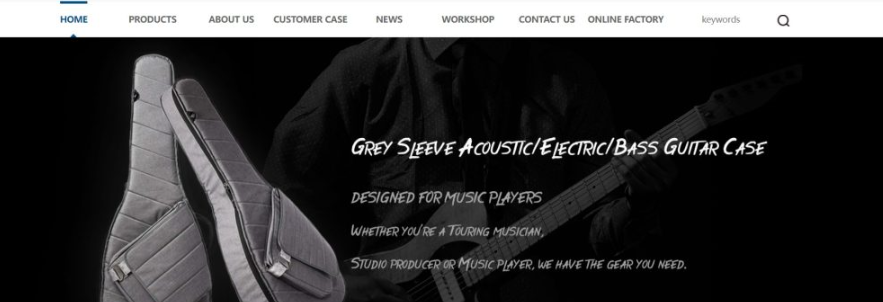
Founded: 2006
Location: Baiyun District, Guangzhou, Guangdong, China
Main products: business daily and travel bags, gym and sports bags, diaper bags, pet carriers, photography backpacks.
DDHBA operates across export-import trade, manufacturing, supply chain management, and retail, serving Europe, North America, and Japan. The company offers turnkey projects alongside ODM, OEM, and OBM solutions across design, production, and distribution.
2. JUNYUAN BAGS

Founded: 2014
Location: Fengze District, Quanzhou, Fujian, China—one of China’s largest bag production clusters
Website: junyuanbags.com
Key products:
- Custom golf bags and stand bags
- Laptop and business backpacks
- Travel backpacks and school backpacks
- Sports, sneaker, and athletic backpacks
- Diaper bags, cooler bags, and baby carriers
- RPET and eco-friendly recycled material bags
JUNYUAN BAGS is a specialized affiliate backpack manufacturer based in Quanzhou, Fujian, serving more than 200 brands across 100+ countries with full OEM/ODM services—from design and sampling through mass production and export logistics. The affiliated factory operates across nylon, polyester, canvas, RPET, and specialty technical fabrics with in-house pattern-making, cutting, printing, stitching, and assembly.
The standard MOQ is 500 pieces per style per color, with a 6–10 day sampling window and 35–50 day mass production lead time. Each client is assigned a dedicated account manager who tracks every production milestone from PO confirmation to shipment. For full capabilities, see the custom backpack manufacturer page.
3. OMASKA
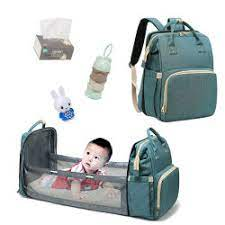
Founded: 2010
Location: Baigou, Baoding, Hebei, China
Main products: nylon trolley bags, PU luggage, PC/ABS suitcases, USB charging backpacks, school bags, ladies’ bags.
OMASKA is a Hebei-based manufacturer specializing in luggage and tech-integrated backpacks, with offices in Baoding and Shenzhen serving international customers. It focuses on trolley-bag construction and USB charging features.
4. Guanghui Bags
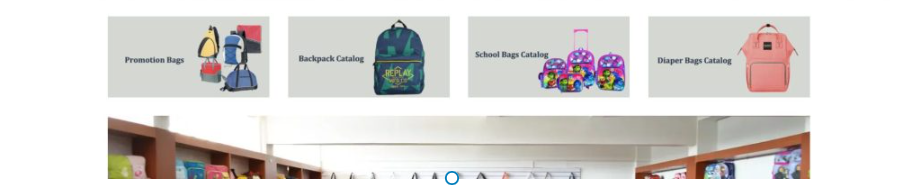
Founded: 2021
Location: Licheng District, Quanzhou, Fujian, China
Main products: backpacks, school bags, beach bags, cooler bags, cosmetic bags, diaper bags.
Guanghui Bags is a Quanzhou-based manufacturer specializing in school, beach, and cooler bags, focusing on competitive pricing and reliable delivery for export customers from Fujian’s backpack cluster.

5. Guangzhou Liangsi Co., Ltd.

Founded: 2009
Location: Tianhe District, Guangzhou, Guangdong, China
Main products: leather goods and bags, gift sets and packaging cases, backpacks.
Guangzhou Liangsi is a Guangzhou-based manufacturer of leather goods, gifts, and packaging, with over 15 years of industry experience serving gift-set and heritage-leather product lines.
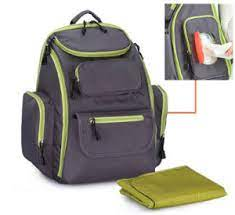
6. YC Bag Making (China Bags)
Founded: 2005
Location: Fuzhou, Fujian, China
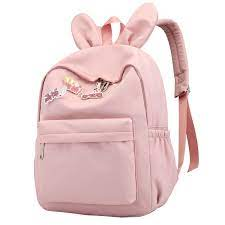
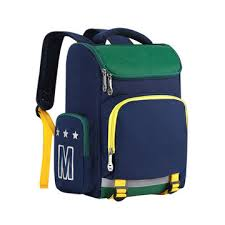
Main products: laptop backpacks, leather and foldable backpacks, PVC backpacks, eco-friendly reusable bags.
YC Bag Making is a Fuzhou-based manufacturer with nearly 20 years of experience producing custom, trendsetting, and eco-friendly bags built to buyer specifications, for both domestic Chinese and international clients.

How to Choose a Backpack Factory in China
Evaluating a Chinese backpack manufacturer requires due diligence across capacity, certifications, communication, and sampling. The five most critical checks are:
- Production capacity — verify monthly output, assembly lines, and ability to scale during peak season.
- Audited certifications — confirm valid SGS factory audits, ISO-style quality management, and social compliance reports; request dated copies, not just claims.
- Material expertise — review proven samples of the specific fabrics and hardware your product requires (nylon, RPET, YKK zippers, technical fabrics).
- Export track record — confirm experience with your target market’s labeling, documentation, and compliance requirements.
- Pre-production sample quality — never commit to bulk before approving a physical sample that meets your specifications.
For a comprehensive 10-point evaluation framework including red flags and audit checklists, read our full guide: How to Choose the Right Bag Manufacturer in China. Buyers exploring alternatives outside China may also want to compare Vietnam backpack manufacturers.
How to Source Backpacks from a China OEM Factory (B2B Step-by-Step)
For buyers planning a custom backpack line, the sourcing path is:
- Define your spec sheet — capacity (20–45 L), fabrics (nylon, polyester, canvas, RPET), hardware (YKK zippers, buckles), and target MOQ.
- Shortlist factories — prioritize those with audited certifications and experience in your product category and target market.
- Request quotations — compare MOQ, unit price, sampling fee, and production lead time across at least 3 vendors.
- Approve a sample — order a paid pre-production sample (typically credited against bulk) and verify construction, zippers, and branding.
- Lock a contract — agree on payment terms, AQL 2.5 quality inspection, and shipping terms before mass production.
With standard parameters—MOQ 500, sampling 6–10 days, mass production 35–50 days, AQL 2.5—most custom backpack programs go from spec to shipment in about 45–90 days.
Which Backpack Factory Is Right for Your Brand?
Because no single factory fits every buyer, match a manufacturer to your sourcing constraints:
- Best for startups and low-MOQ brands: JUNYUAN BAGS (MOQ 500) and YC Bag Making are the most flexible options for first orders, with paid samples credited against bulk.
- Best for EU and US compliance: prioritize SGS-audited factories that document REACH and CPSIA material compliance—JUNYUAN BAGS and DDHBA are suitable starting points, but always verify dated certificates.
- Best for large-volume programs: DDHBA and Guanghui Bags are suited to higher-volume standard and turnkey programs where capacity and unit price outweigh customization depth.
- Best for tech and luggage backpacks: OMASKA leads on trolley bags and USB-charging construction.
- Best for leather goods and gift sets: Guangzhou Liangsi targets heritage-leather and packaging lines.
The deciding factors are always your MOQ ceiling, required certifications, and product complexity—clarify these three before shortlisting, and the right factory becomes obvious.
Conclusion
China remains the world’s leading backpack manufacturing hub, with factories offering a wide range of capabilities across price points and categories. The six manufacturers profiled above represent established options for B2B buyers seeking OEM, ODM, or private label production.
DDHBA and Guangzhou Liangsi suit business bags and leather goods; OMASKA specializes in luggage and tech-integrated backpacks from Hebei; Guanghui and YC Bag Making offer competitive pricing on standard categories from Fujian. For buyers prioritizing scale, audited quality, and full-service OEM/ODM across a broad product range, JUNYUAN BAGS combines an affiliated factory (est. 2014), MOQ 500, and export experience serving 200+ brands in 100+ countries.
Ready to start your custom backpack project? Contact JUNYUAN BAGS for a free consultation and sample quote, or explore the OEM/ODM service page for material options, MOQ details, and production timelines.
Related Guides
- Custom Backpack Manufacturing: Complete B2B Guide 2026
- How to Choose the Right Bag Manufacturer in China: 10 Key Criteria
- Bag Manufacturing Cost Breakdown: Pricing Guide for B2B Buyers
- How to Launch a Private Label Backpack Brand
- How to Audit a Bag Factory in China: Complete B2B Guide
- Custom Hardware & Branding Options for Backpacks
Frequently Asked Questions
What country produces the most backpacks?
China produces over 60% of the world’s backpacks by volume, with major manufacturing clusters in Guangdong Province (Guangzhou, Shenzhen, Dongguan) and Fujian Province (Quanzhou, Xiamen). Vietnam is the second-largest producer, followed by India, Cambodia, and Bangladesh.
What is the typical MOQ for custom backpack production in China?
Established Chinese backpack factories typically require 500 pieces per style per color for custom OEM/ODM. Larger factories may set minimums of 1,000–3,000 pieces, while smaller workshops sometimes accept 100–200 piece orders with less consistent quality control. Most buyers start with a paid sample order, often credited against bulk.
How long does custom backpack production take from order to delivery?
The typical timeline is 45–90 days total: 6–10 days for sampling, 35–50 days for mass production after sample approval, and 15–30 days for ocean shipping. Reorders with confirmed specifications are faster, usually 25–35 days for production. Air freight can reduce shipping to 5–7 days but costs significantly more.
Which Chinese backpack manufacturing region is best for my product?
It depends on your category. Guangzhou (Guangdong) is strongest in leather goods, fashion bags, business backpacks, and mid-to-high-end products. Quanzhou (Fujian) specializes in sports bags, backpacks, travel bags, and golf bags, with deep supply chains for nylon and polyester. Baoding/Hebei is known for luggage and budget-friendly backpacks.
What certifications should I look for in a Chinese backpack factory?
At minimum, look for a valid SGS factory audit and an active social compliance audit. If you sell in the EU or US, confirm REACH, CPSIA, or California Prop 65 compliance for materials. Always request dated copies of certificates and verify them directly with the issuing body, as expired or fabricated certificates are not uncommon.
What is the difference between backpack OEM and ODM?
OEM means the factory manufactures to your existing design and specifications; ODM means the factory designs the product for you, typically adapting its existing patterns and tooling. Most Chinese backpack factories offer both, with ODM preferred by brands that want custom styling without a full in-house design team.
What is AQL 2.5 and why does it matter for backpack orders?
AQL (Acceptable Quality Limit) 2.5 is the most common inspection standard for backpack mass production, allowing a defined small percentage of defective units while requiring most to pass inspection. Agreeing on AQL 2.5 in your contract before production protects you by setting a clear, third-party-verifiable quality bar.
Can I get a sample before placing a bulk order?
Yes. Reputable Chinese backpack factories issue pre-production samples, usually within 6–10 days of spec confirmation. Samples are commonly paid (often $50–$150) and credited against the bulk order once placed. Always approve a physical sample before committing to mass production.
What fabrics do Chinese backpack factories work with?
Common materials include nylon (including ripstop), polyester, canvas, PU leather, and eco-friendly RPET recycled fabric. Technical backpacks may use waterproof or coated fabrics. Confirm your factory has proven experience with your specific fabric and any required coatings before sampling.
How do I verify a backpack factory is legitimate in China?
Request dated audit certificates and verify them with the issuing body, ask for a video call or facility visit, order a pre-production sample, and check export records and client references in your market. For a deeper check, use the factory audit guide.
How much does it cost to manufacture a custom backpack in China?
Cost varies mainly with material, construction, and order size. Budget-grade nylon or polyester backpacks typically range from roughly $4–$12 per unit at MOQ 500, while canvas, PU/leather, RPET, or hardware-heavy technical packs trend higher. Your best lever is product-level cost engineering during sampling—verify your target price against the factory quote before bulk.
When is the best time to place a custom backpack order with a Chinese factory?
Place your order 6–8 weeks before you need stock, because sampling (6–10 days) plus mass production (35–50 days) plus shipping adds up to roughly 45–90 days. If you sell backpacks for the back-to-school or retail seasons, finalize specifications and samples at least 3–4 months in advance so you avoid peak-season queueing.
Which backpack factory is best for a startup brand?
Startups and low-MOQ brands are best served by a full-service OEM/ODM factory that accepts MOQ 500, offers paid samples credited against bulk, and assigns a dedicated account manager—for example JUNYUAN BAGS (Quanzhou, Fujian, est. 2014) or YC Bag Making. Avoid committing to MOQ 1,000+ minimums until your order volumes justify them.
Why are Fujian and Guangdong China’s main backpack factory regions?
Guangdong (Guangzhou, Shenzhen, Dongguan) developed a dense supply chain for leather goods, fashion bags, and hardware, while Fujian (Quanzhou, Xiamen) grew a specialized cluster for sports, travel, school, and performance backpacks. Both provide short raw-material lead times, skilled stitching talent, and fast access to export ports—Fujian’s Quanzhou cluster is where JUNYUAN BAGS operates.