
If you are sourcing custom golf bags for your brand, retail chain, or distribution business, one of the first questions you need answered is: how much does a custom golf bag actually cost? The answer depends on material selection, order quantity, customization complexity, and supply chain logistics. In this comprehensive pricing guide, we break down every cost factor so you can plan your budget with confidence — from prototype sampling through to mass production and international shipping.
Before diving into pricing, it helps to understand the full production workflow. We recommend reading our custom golf bag manufacturing guide first, as it covers materials, production processes, and customization options that directly influence cost. With that foundation in place, let us walk you through the numbers.
Whether you are a startup launching your first golf accessories line or an established brand expanding your product range, this guide will help you make informed decisions about custom golf bag cost, set realistic budgets, and negotiate effectively with manufacturers.
What Determines the Cost of a Custom Golf Bag?
The custom golf bag cost is influenced by six primary variables. Understanding each one will help you identify where savings are possible and where spending more delivers better returns.
1. Material Selection. The fabric and hardware you choose represent the single largest cost component. Premium full-grain leather bags can cost five to ten times more than basic nylon equivalents. We detail specific price ranges by material type in the next section.
2. Order Quantity and MOQ. Manufacturers price based on volume. A 50-unit order will carry a significantly higher per-unit cost than a 500-unit order. Economies of scale apply to both materials and labor.
3. Customization Level. Simple logo embroidery adds minimal cost. Full custom printing, bespoke hardware molds, monogrammed zippers, and custom-molded base plates require dedicated tooling — which adds upfront charges that amortize across your order.
4. Bag Type and Complexity. A basic Sunday carry bag with two pockets costs far less to produce than a premium cart bag with 14 individual club dividers, insulated cooler pockets, GPS mounts, and waterproof construction.
5. Packaging Requirements. Standard poly bag packaging is inexpensive. Custom branded boxes, dust bags, hang tags, and retail-ready packaging can add $1–$5 per unit depending on complexity.
6. Compliance and Testing. If your target market requires specific certifications — such as REACH compliance for Europe or Prop 65 testing for California — testing fees typically range from $200 to $1,500 per order.
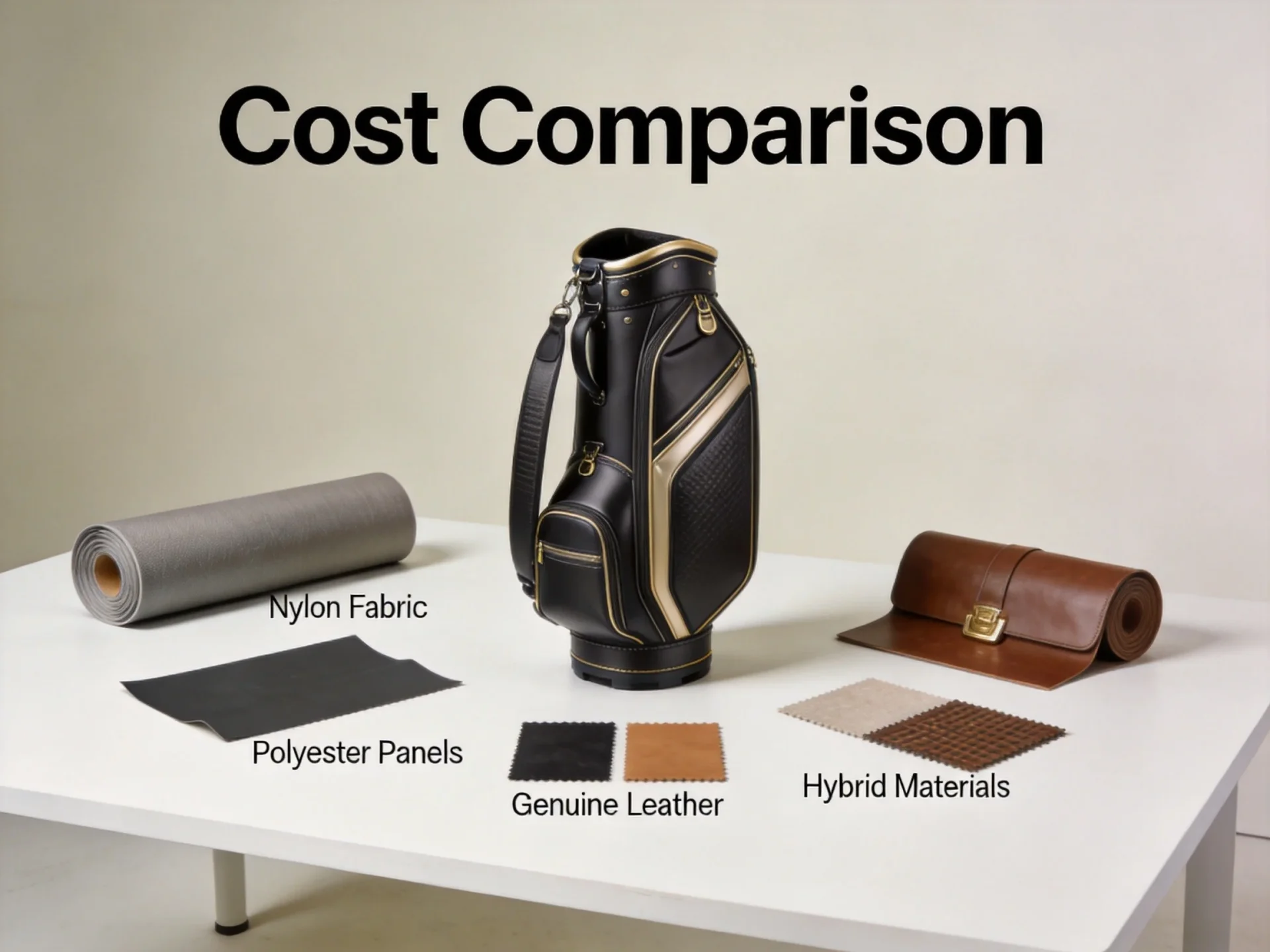
Material selection is the single largest cost driver in custom golf bag manufacturing.
Price Ranges by Material Type
Material choice directly determines your golf bag wholesale price. Below are typical factory-gate price ranges for common golf bag materials, based on wholesale orders of 200–500 units. Prices are per unit in USD.
| Material | Price Range (FOB) | Best For | Durability |
|---|---|---|---|
| Nylon (210D–600D) | $18 – $35 | Lightweight carry bags, travel bags | High |
| Polyester (600D–1680D) | $15 – $30 | Cart bags, promotional bags, entry-level lines | Medium-High |
| Genuine Leather | $85 – $200+ | Premium brands, luxury cart bags, staff bags | Very High |
| Hybrid (Leather + Synthetic) | $45 – $95 | Mid-range premium, limited-edition designs | High |
| PU / Vegan Leather | $25 – $50 | Eco-conscious brands, fashion-forward lines | Medium |
Key insight: Nylon and polyester dominate the mid-market because they offer the best balance of cost, weight, and durability. Leather commands premium pricing but targets a different buyer segment. Hybrid constructions let you offer a premium look at a fraction of the full-leather cost — an increasingly popular choice for brands launching their first premium tier.
How MOQ Affects Unit Pricing
Custom golf bag MOQ (Minimum Order Quantity) is one of the most critical levers controlling your per-unit price. Most manufacturers set tiered pricing structures where the cost per bag drops significantly as order volumes increase.
Here is a typical MOQ-based pricing structure for a standard nylon cart bag with logo embroidery:
| Order Quantity | Unit Price (FOB) | Price Reduction |
|---|---|---|
| 50–99 units | $38 – $45 | Baseline |
| 100–299 units | $28 – $35 | -20% to -25% |
| 300–499 units | $22 – $28 | -35% to -40% |
| 500–999 units | $18 – $24 | -45% to -50% |
| 1,000+ units | $15 – $20 | -50% to -60% |
Strategic tip: If your initial forecast is 150 units but the 300-unit price tier offers dramatically better margins, consider placing a single larger order and warehousing the excess. The per-unit savings often outweigh storage costs, especially for non-seasonal products.
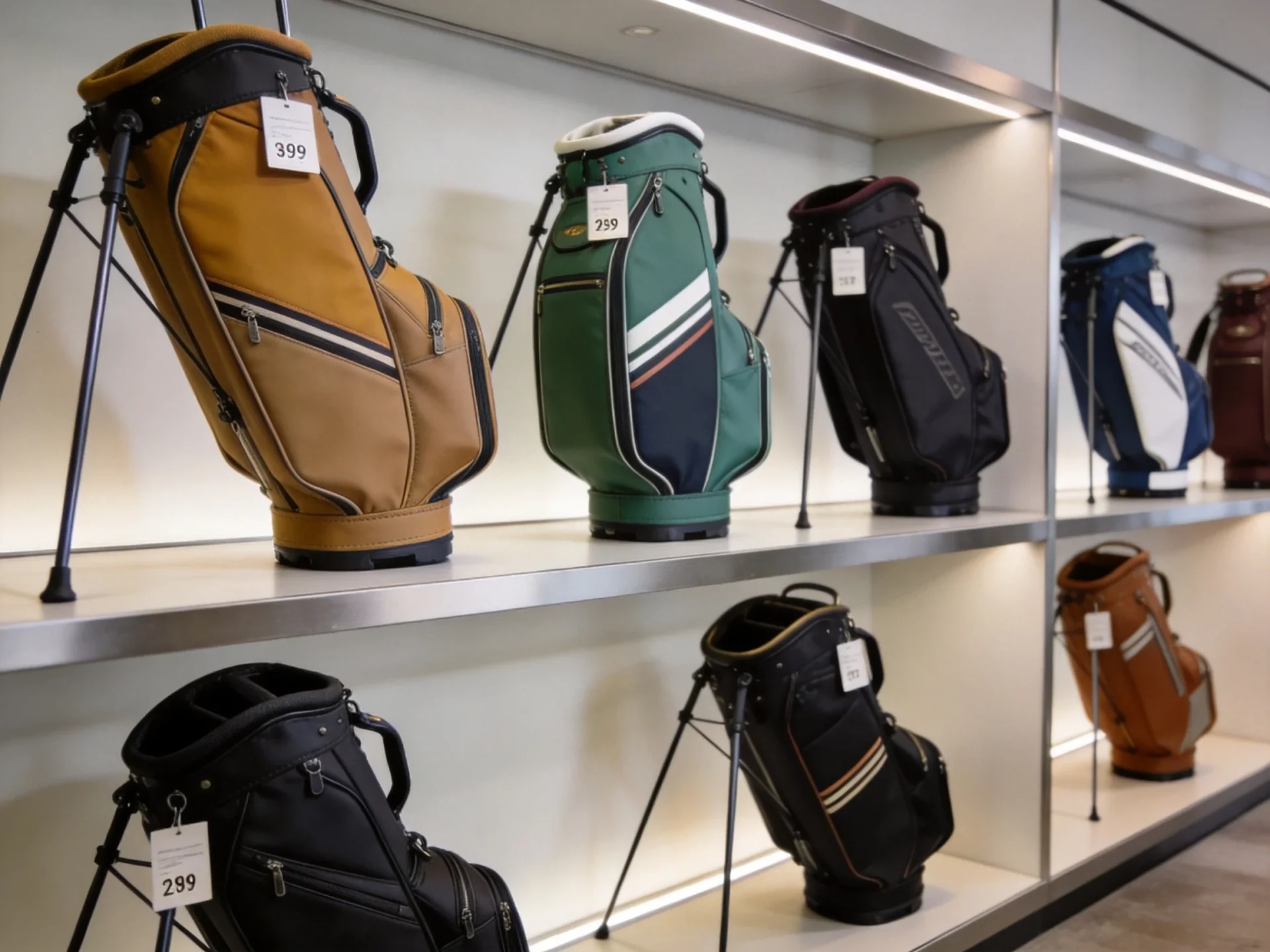
Efficient manufacturing processes help reduce per-unit costs at scale.
Cost Breakdown: Materials, Labor, Customization & Packaging
Understanding where every dollar goes helps you identify optimization opportunities. Here is a typical cost breakdown for a mid-range nylon golf bag (approximately $28 FOB unit cost at 300-unit MOQ):
- Raw materials (fabric, lining, zippers, buckles, straps): 40–50% — $11.20 – $14.00
- Labor (cutting, sewing, assembly, QC): 20–25% — $5.60 – $7.00
- Customization (logo embroidery, printing, custom hardware): 10–15% — $2.80 – $4.20
- Packaging (poly bag, hang tag, instruction card): 5–8% — $1.40 – $2.24
- Factory overhead and profit margin: 10–15% — $2.80 – $4.20
The materials component is where you have the most control. Switching from YKK zippers to equivalent-quality alternatives, using stock color fabrics instead of custom-dyed ones, or simplifying pocket construction can each save $1–$3 per unit without visible quality differences.
Customization costs vary dramatically based on technique. Screen printing is the most economical option for large graphics. Embroidery costs more per stitch but delivers a premium feel. Debossing, metallic foil stamping, and custom molded hardware require dedicated tooling — expect $300–$2,000 in one-time charges amortized across your order.
Hidden Costs to Watch Out For
Beyond the quoted FOB price, several additional costs can surprise unprepared buyers. Factor these into your total landed cost calculation:
Sampling and Prototyping. Most factories charge $50–$200 per sample revision. If your design requires three rounds of sampling before approval, budget $150–$600 before production even begins. Some manufacturers credit sample costs against your first production order — always negotiate this.
Tooling and Mold Fees. Custom zipper pulls, branded buckle molds, embroidered logo digitizing fees, and custom base plates typically cost $200–$1,500 each. These are one-time fees, but they add up if your design involves multiple custom components.
Shipping and Logistics. Ocean freight from China to the US West Coast typically costs $3–$8 per golf bag based on container load. Air freight is 5–8x more expensive. Do not overlook inland transportation costs, port fees, and customs brokerage — these add $1–$3 per unit.
Import Duties and Tariffs. Golf bags typically fall under HTS code 4202.92, subject to 17.6% duty in the United States. However, exact rates vary by material composition. A leather golf bag may face different rates than a nylon one. Always confirm tariff classification with a licensed customs broker before placing orders.
Quality Control Inspections. Third-party inspections (SGS, Bureau Veritas, Intertek) cost $250–$400 per man-day. Budget for at least one pre-shipment inspection, especially for your first few orders with a new factory.
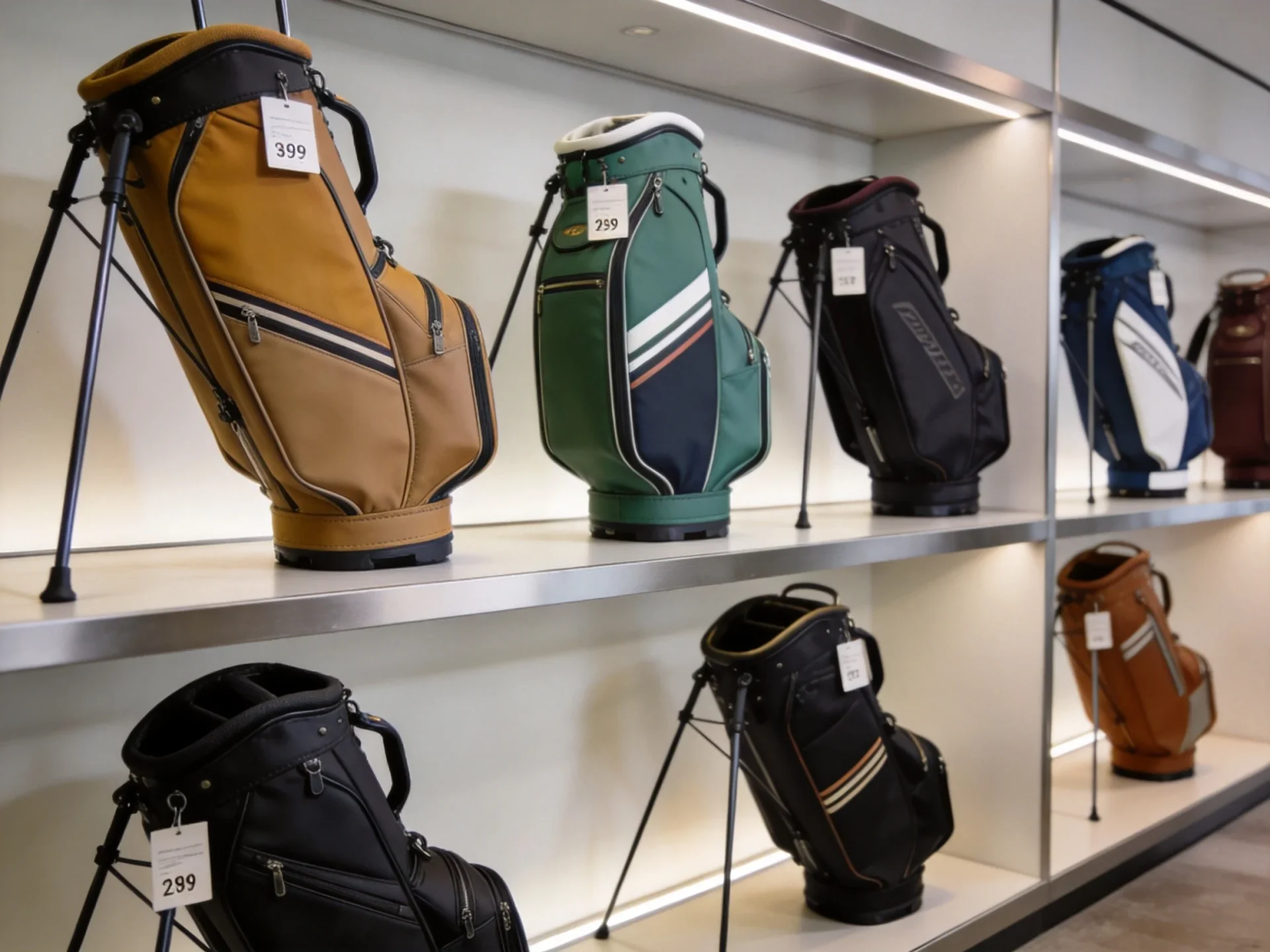
Sample evaluation helps validate quality before committing to mass production.
How to Negotiate Better Pricing with Your Golf Bag Supplier
Negotiation is expected in B2B manufacturing. Here are proven strategies that procurement managers use to secure better golf bag pricing:
1. Commit to Volume. The strongest negotiating lever is order quantity. Even promising a 12-month blanket order with quarterly releases gives the factory production certainty — which translates to lower prices.
2. Simplify Your Design. Ask your supplier to review your specifications and identify cost-saving alternatives. A factory with years of production experience can often suggest material swaps or construction simplifications that save 10–20% with no perceptible quality loss.
3. Pay Deposits Promptly. Factories in China often offer 2–5% discounts for 50% or full prepayment. Cash flow certainty is valuable to manufacturers, especially smaller operations.
4. Build a Long-Term Relationship. Suppliers reward repeat customers. Your third order will almost always cost less than your first — both because of pricing tiers and because the factory has already absorbed your tooling costs.
5. Request Itemized Quotations. Ask for a cost breakdown showing materials, labor, customization, and packaging separately. This transparency reveals exactly where costs can be optimized and prevents hidden margins from inflating your price.
6. Compare Multiple Suppliers. Obtain quotes from at least three qualified manufacturers. Use competitive bids as leverage — but never sacrifice quality for the lowest price. The cheapest golf bag often costs more in returns, complaints, and brand damage.
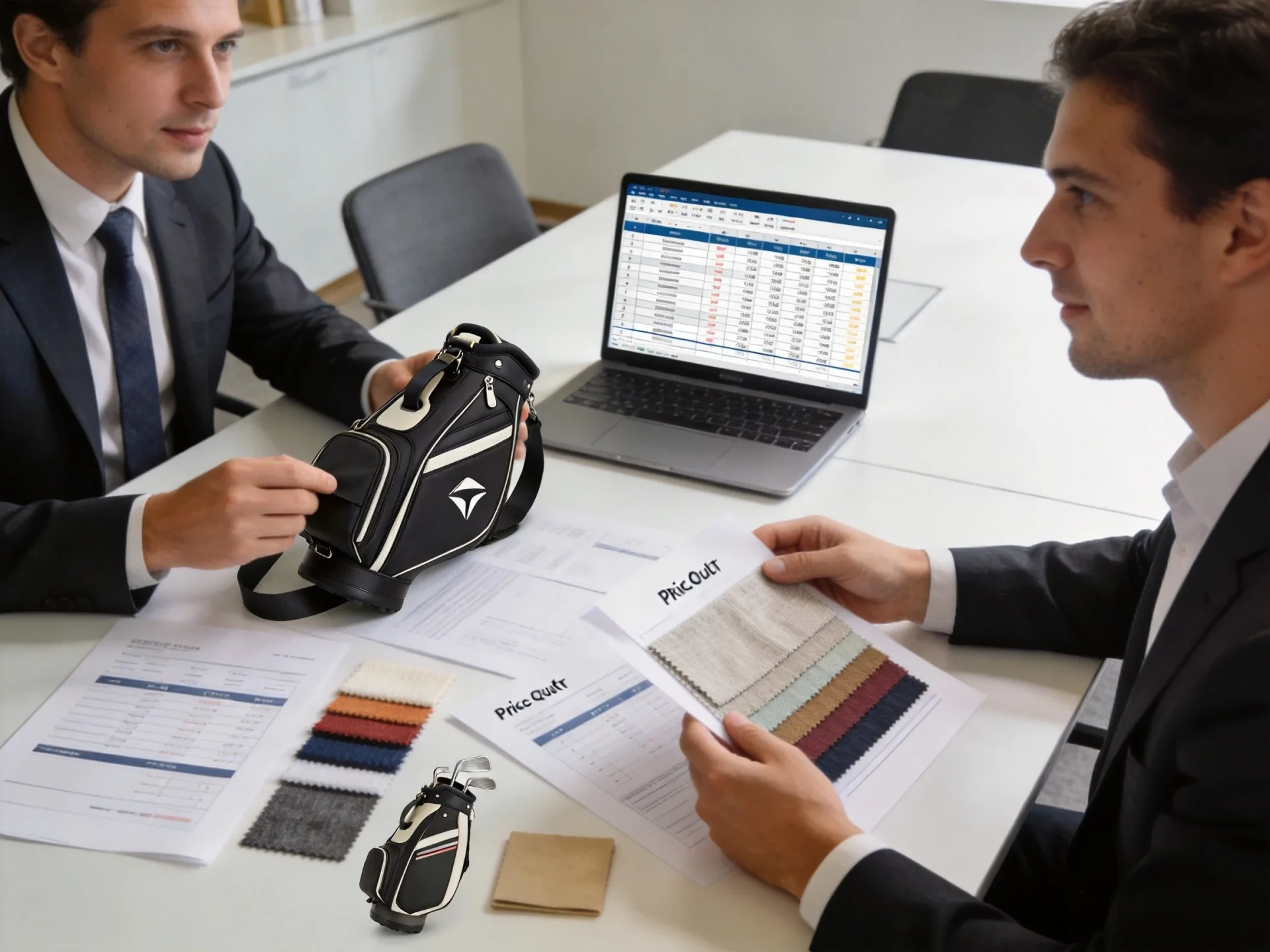
Strategic negotiation with suppliers can significantly reduce your per-unit golf bag cost.
Budget Planning: From Prototype to Mass Production
Planning a realistic budget requires looking beyond the unit price. Here is a typical budget framework for launching a line of custom golf bags — assuming a mid-range nylon cart bag with logo embroidery, 300-unit initial order:
| Phase | Estimated Cost | Timeline |
|---|---|---|
| Design and sampling (2–3 rounds) | $300 – $600 | 3–5 weeks |
| Tooling and mold preparation | $500 – $2,000 | 2–3 weeks |
| Production (300 units @ $25) | $7,500 | 4–6 weeks |
| Quality inspection | $250 – $400 | 1–2 days |
| Ocean freight + duties | $2,500 – $4,000 | 3–5 weeks |
| Total Estimated Budget | $11,050 – $14,500 | 10–16 weeks total |
| Landed Cost Per Unit | $36.83 – $48.33 (including freight and duties) | |
These numbers give you a realistic baseline. Your actual costs will vary based on specific design requirements, supplier location, and shipping method. The key takeaway is to always calculate landed cost per unit — not just FOB price — when comparing suppliers and planning retail pricing.
Start Your Custom Golf Bag Project with Confidence
Understanding the true cost of custom golf bag manufacturing empowers you to make smarter sourcing decisions. From material selection to MOQ strategy, from hidden fees to negotiation tactics — every insight in this guide helps you build a more accurate budget and a more competitive product.
At JUNYUAN, we specialize in custom golf bag manufacturing for brands worldwide. With over 18 years of production experience, we offer transparent pricing, flexible MOQs starting from 100 units, and end-to-end support from design to delivery. Our team can provide a detailed quotation within 48 hours based on your specifications.
Ready to get a quote? Contact our sales team today and let us help you build a golf bag product line that fits your brand and your budget.
Frequently Asked Questions
1. What is the typical MOQ for custom golf bags?
Most golf bag manufacturers set MOQs between 100 and 300 units per style per color. Some factories accept orders as low as 50 units for established customers or simpler designs. Higher MOQs unlock significantly better per-unit pricing — orders above 500 units typically see 40–50% cost reduction compared to minimum-quantity pricing.
2. How long does it take to produce custom golf bags?
The full cycle from design approval to delivery typically takes 10–16 weeks. Sampling takes 3–5 weeks, production takes 4–6 weeks, and shipping takes 3–5 weeks by ocean freight. Air freight reduces transit time to 5–7 days but costs 5–8x more. Rush production is sometimes available for an additional 15–25% surcharge.
3. What is the cheapest material for custom golf bags?
Polyester (600D) is generally the most cost-effective material for golf bags, with FOB prices starting around $15 per unit at 300+ MOQ. However, the “cheapest” option is not always the best value. Nylon offers superior strength-to-weight ratio, while polyester is more abrasion-resistant. Choose based on your target market positioning, not just raw cost.
4. How much does custom logo printing add to the cost?
Simple single-color screen printing adds $0.50–$1.50 per unit. Multi-color printing or full-wrap sublimation adds $2–$5 per unit. Embroidery ranges from $1–$4 depending on stitch count. Custom hardware (branded zipper pulls, metal logos) requires mold fees of $300–$800 plus $1–$3 per unit for production. Logo digitizing for embroidery is typically a one-time fee of $50–$150.
5. What are the total landed costs I should budget for importing custom golf bags?
Beyond the FOB factory price, budget for: ocean freight ($3–$8 per unit), import duties (typically 17.6% for textile bags entering the US), customs brokerage ($150–$300 per shipment), inland transportation ($1–$3 per unit), and quality inspections ($250–$400 per visit). As a rule of thumb, add 25–35% to the FOB price to estimate total landed cost. Always confirm exact duty rates with a licensed customs broker before committing to large orders.
? Related: Need a full overview of the golf bag manufacturing process? Explore our Custom Golf Bag Manufacturing Complete Guide — covering materials, production workflows, customization options, and more.